As you navigate the ever-evolving landscape of education, you’re likely aware that online learning is becoming increasingly prevalent. Your ability to adapt to this shift will be vital in preparing you for success. You will develop skills that are highly valued in the digital age, such as self-motivation, technical proficiency, and effective time management. By embracing online learning, you will be well-equipped to thrive in a world where technology is constantly advancing.
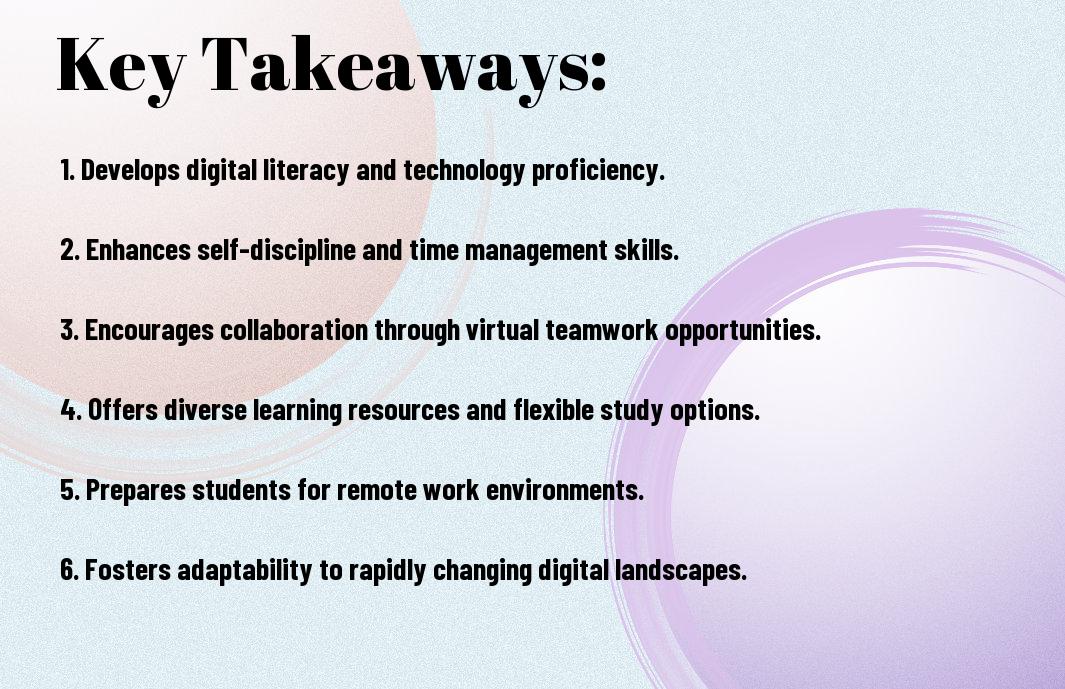
Key Takeaways:
- Online learning helps students develop digital literacy skills, which are vital for success in the digital world, by teaching them how to navigate and utilize various online platforms and tools.
- Through online learning, students can improve their time management and self-discipline skills, as they learn to prioritize tasks and manage their time effectively in a virtual environment.
- Online learning provides students with opportunities to develop collaboration and communication skills, as they interact with peers and instructors from diverse backgrounds and locations.
- Online learning platforms offer students flexibility and accessibility, allowing them to learn at their own pace and from any location, which is particularly beneficial for students with busy schedules or those living in remote areas.
- By engaging in online learning, students can gain technical skills and familiarize themselves with digital tools, such as learning management systems, online libraries, and multimedia resources, which are commonly used in the digital world.
Foundations of Online Learning
Your journey to understanding how online learning prepares students for the digital world begins with recognizing the benefits of virtual education, as outlined in How Virtual Learning Prepares Students For The Real World, which highlights the significance of adapting to new learning environments.
Evolution of Digital Education
The rise of digital technologies has transformed the way you learn, with online platforms offering flexibility and accessibility, enabling you to access educational resources from anywhere, at any time.
Key Components of Virtual Classrooms
The key to successful online learning lies in the design of virtual classrooms, which provide you with a structured environment that fosters engagement and interaction, allowing you to connect with peers and instructors remotely.
Understanding the components of virtual classrooms is important to navigating online learning effectively, as you will encounter various tools and features, such as discussion forums, video conferencing, and multimedia resources, all designed to enhance your learning experience and prepare you for the digital world.
Developing Digital Literacy
Some of the most significant benefits of online learning involve developing your digital literacy skills, which are crucial for success in today’s technology-driven world. You will learn to effectively navigate digital platforms, tools, and resources, preparing you for a lifetime of learning and professional growth.
Navigating Online Resources
Over the internet, you’ll discover a vast array of online resources, including educational websites, tutorials, and forums, all designed to support your learning journey. You’ll develop the skills to evaluate and utilize these resources efficiently, enhancing your overall learning experience.
Critical Thinking in the Digital Age
Beneath the surface of online learning lies a complex web of information, requiring you to develop sharp critical thinking skills to discern fact from fiction. You’ll learn to analyze and evaluate online sources, making informed decisions about the information you encounter.
Considering the sheer volume of information available online, it’s crucial that you develop the ability to think critically about the sources you consult. As you navigate online learning platforms, you’ll encounter a wide range of perspectives and opinions, and it’s up to you to evaluate the credibility and reliability of each source, developing a nuanced understanding of the subjects you’re studying. You’ll become adept at identifying biases, evaluating evidence, and making informed decisions, all of which are crucial skills for success in the digital age.
Communication and Collaboration Tools
After enrolling in online courses, you will discover a wide range of digital tools designed to facilitate communication and collaboration with your peers and instructors, preparing you for the digital world.
Platforms for Virtual Interaction
Among the various platforms available, you will find virtual classrooms, discussion forums, and video conferencing tools that enable you to interact with others remotely, simulating real-world collaborations.
Effective Online Communication Strategies
An important aspect of online learning is developing strategies for effective communication, which you can achieve by being clear, concise, and respectful in your digital interactions, allowing you to build strong relationships with your online community.
Further, as you develop your online communication skills, you will learn to articulate your thoughts, ask informed questions, and engage in constructive debates, all of which are valuable skills that you can apply in various digital contexts, enhancing your overall online presence and preparing you for success in the digital world.
Adapting to the Digital Work Environment
For students, online learning provides an opportunity to develop skills necessary for success in the digital world, as you can learn more about Digital Citizenship: Preparing Students for the Online World and its impact on your future career.
Remote Work Skills and Practices
One of the key benefits of online learning is that it helps you develop remote work skills, such as self-motivation, discipline, and communication, which are necessary for success in the digital workforce.
Time Management in Online Settings
Digitally savvy students learn to manage their time effectively in online settings, prioritizing tasks and meeting deadlines, which helps you stay organized and focused.
A key aspect of time management in online settings is creating a schedule and sticking to it, allowing you to balance your academic and personal responsibilities, and helping you develop a routine that works for you, enabling you to achieve your goals and succeed in the digital world.
Access to Global Perspectives and Resources
All online learning platforms provide you with the opportunity to connect with people from diverse backgrounds, exposing your mind to various viewpoints and ideas that can broaden your understanding of the world.
Expanding Educational Horizons
Although traditional classroom settings have limitations, online learning breaks geographical barriers, allowing you to explore subjects beyond your local curriculum and engage with international educators and students, enriching your educational experience.
Leveraging Digital Libraries and Archives
For your academic growth, online learning offers access to vast digital libraries and archives, where you can find a wealth of information, including e-books, research papers, and historical documents, to support your learning and research needs.
To further enhance your learning experience, you can utilize these digital resources to examine deeper into topics of interest, accessing materials that might not be available in physical libraries, and explore new subjects, all from the comfort of your own space, at your own pace, making your learning experience more flexible and enjoyable.

Overcoming Challenges in Online Learning
Keep in mind that online learning requires discipline and self-motivation. You will face challenges, but with the right approach, you can overcome them and achieve your goals.
Addressing Technical Issues
With the help of online support resources, you can troubleshoot technical problems and continue with your coursework. You will learn to navigate these issues and find solutions quickly.
Staying Motivated in Virtual Courses
Any concerns about motivation can be addressed by setting clear goals and deadlines for your online coursework. You will find that staying organized helps you stay focused and motivated.
Consequently, as you progress through your online courses, you will develop strategies to maintain your motivation and engagement. You will learn to utilize digital tools and resources to stay connected with instructors and peers, and to track your progress, which will help you stay motivated and committed to your academic goals.
Summing up
Hence, you now understand how online learning prepares you for the digital world. As you initiate on this journey, you will find that your skills are sharpened to tackle the challenges of the digital age. To further enhance your knowledge, you can explore resources like How To Prepare the Students for the Digital Age? which provides valuable insights, enabling you to navigate your digital path with confidence and ease.
FAQ
Q: What skills do online learning platforms help students develop to succeed in the digital world?
A: Online learning platforms help students develop a range of skills that are vital for success in the digital world. These skills include digital literacy, self-motivation, and the ability to work independently. Through online learning, students become proficient in using digital tools and technologies, which enhances their ability to navigate and interact with digital environments. Moreover, online learning fosters critical thinking, problem-solving, and communication skills, all of which are vital in today’s technology-driven workforce.
Q: How does online learning prepare students for the collaborative aspects of the digital world?
A: Online learning prepares students for the collaborative aspects of the digital world by providing them with opportunities to engage in virtual team projects, discussions, and peer review activities. These collaborative experiences help students develop vital soft skills such as teamwork, adaptability, and effective communication. Additionally, online learning platforms often include tools that facilitate real-time interaction and feedback, mirroring the collaborative environments found in many modern workplaces. By participating in these virtual collaborations, students gain experience in managing digital communications, resolving conflicts, and building professional relationships in a remote setting.
Q: What role does online learning play in helping students adapt to the ever-changing nature of technology and digital trends?
A: Online learning plays a significant role in helping students adapt to the ever-changing nature of technology and digital trends. Online courses and programs are often designed to be flexible and responsive to the latest developments in technology, ensuring that students are exposed to the most current tools, software, and methodologies. Furthermore, the nature of online learning encourages students to adopt a mindset of continuous learning and professional development, which is vital in the digital world where technologies and trends evolve rapidly. By staying engaged with online learning, students can quickly acquire new skills and knowledge, enabling them to stay relevant and competitive in an increasingly digital job market.