Online Courses

Top Tips for Success in Virtual Classrooms

As you step into the virtual classroom, you’re about to begin on a new learning journey. You’ll need to adapt and evolve to succeed. To help you thrive, you can explore Student Engagement Strategies for Virtual Classroom Success and discover how to make the most of your online education. Your path to success starts here, with practical advice and expert insights to guide you through the virtual learning landscape.

Key Takeaways:

To achieve success in virtual classrooms, consider the following points:

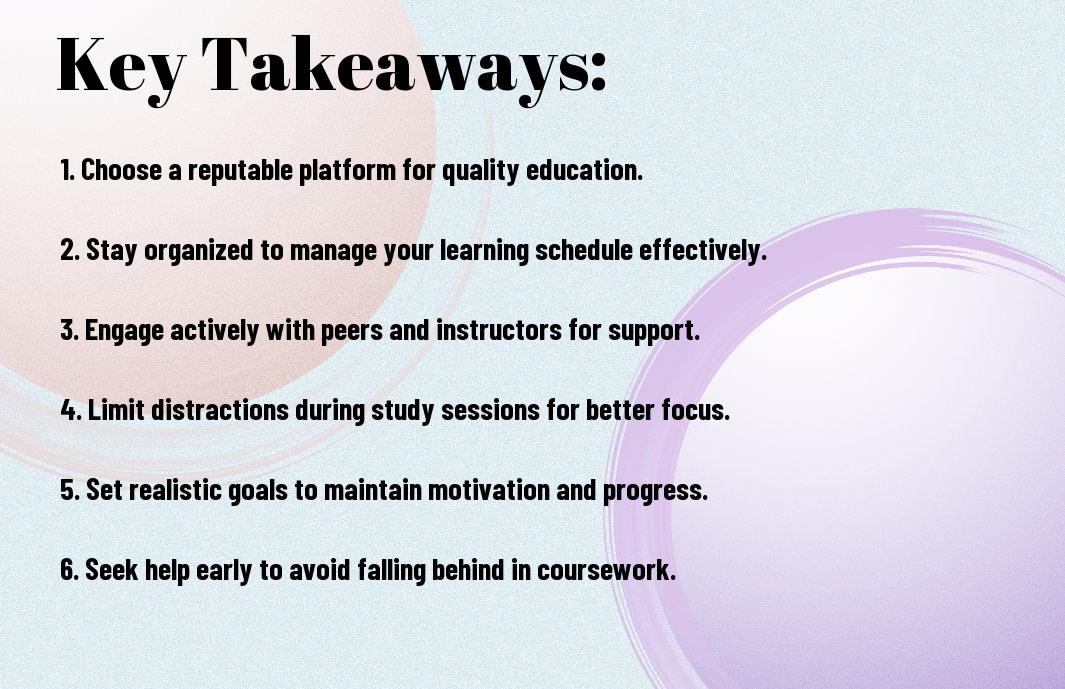
  • Establish a Virtual Routine to maintain a sense of structure and normalcy for students, helping them stay engaged and motivated throughout the learning process.
  • Utilize Interactive Tools such as video conferencing software, online whiteboards, and collaboration platforms to facilitate Real-Time Feedback and encourage student participation.
  • Foster a Supportive Learning Environment by promoting open communication, addressing technical issues promptly, and providing Personalized Support to students who need it.
  • Develop Engaging Content that incorporates multimedia elements, such as videos and gamification, to keep students interested and invested in the learning material.
  • Monitor Student Progress regularly, using data and analytics to identify areas where students may need extra help, and adjust the virtual classroom strategy accordingly to ensure Optimal Learning Outcomes.

Setting Up for Success

To ensure a smooth virtual learning experience, you’ll want to lay the groundwork for success. You can find helpful guidance by visiting 10 Tips Critical for Online Learning Success | ODUGlobal to get started.

Creating a Conducive Learning Environment

Before you begin, consider your physical space and how it will impact your learning. You’ll want to create a dedicated area that is quiet, comfortable, and free from distractions to help you stay focused.

Essential Tools and Technologies

One of the key components of virtual classroom success is having the right tools and technologies at your disposal. You’ll need a reliable computer, internet connection, and necessary software to participate fully in your courses.

Hence, it’s imperative to familiarize yourself with the various platforms and tools you’ll be using, such as video conferencing software, online discussion forums, and digital assignment submission systems, to ensure a seamless learning experience. You’ll find that having the right tools and technologies will help you stay organized and engaged throughout your virtual courses.
Effective Communication

Clearly, effective communication is the backbone of a successful virtual classroom, and you’ll need to establish a strong foundation to ensure your students stay engaged and motivated. Your ability to convey complex ideas in a clear and concise manner will help your students understand the material and participate fully in the learning process.

Clear Instruction and Feedback

Besides having a well-structured lesson plan, you’ll need to provide regular feedback to your students, guiding them through the learning process and helping them stay on track. Your instruction should be easy to follow, and your feedback should be timely and constructive, allowing your students to learn from their mistakes.

Encouraging Student Participation

Following the lead of your instruction, you’ll want to encourage your students to participate actively in the virtual classroom, sharing their thoughts and ideas with their peers. Your goal is to create a collaborative learning environment where students feel comfortable contributing to the discussion and learning from one another.

Further, to foster a sense of community and encourage student participation, you can use various tools and strategies, such as discussion forums, live chats, and group activities, to help your students connect with one another and engage with the course material. As you create a supportive and inclusive learning environment, you’ll find that your students become more confident and motivated, leading to a more successful and effective virtual classroom experience.

Engagement Strategies

Not every student is alike, and you need to tailor your approach to keep your virtual classroom engaged. You can achieve this by incorporating various techniques to stimulate participation and interest.

Interactive Activities and Games

Interacting with your students through activities and games can be an effective way to boost engagement. You can use virtual breakout rooms, polls, and quizzes to create a more dynamic learning environment, encouraging your students to participate and learn from one another.

Real-World Applications and Examples

After presenting theoretical concepts, you can illustrate their practical uses to help your students understand the relevance of the material. You can use case studies, videos, or guest speakers to make the learning experience more relatable and interesting.

Understanding how to apply theoretical concepts to real-world situations is key to making your virtual classroom more engaging. You can help your students see the connections between the course material and their own lives, making the learning experience more meaningful and memorable. By doing so, you can increase student motivation and encourage them to take a more active role in the learning process.

Managing Virtual Classroom Dynamics

Unlike traditional classrooms, virtual classrooms require intentional effort to establish a productive and respectful environment. You’ll need to be mindful of the unique challenges and opportunities that come with remote learning, and adapt your teaching strategies to meet the needs of your students.

Establishing Ground Rules and Expectations

Expectantly, you will want to set clear guidelines for behavior and communication in your virtual classroom. You should outline your expectations for student participation, engagement, and interaction, and make sure your students understand what is expected of them.

Handling Technical Issues and Distractions

Any issues that arise during a virtual class can be distracting and disruptive. You should have a plan in place for dealing with technical problems, such as internet connectivity issues or audio problems, and be prepared to minimize their impact on the learning experience.

And as you navigate the challenges of virtual classroom dynamics, you’ll find that being prepared and flexible is key. You’ll need to think on your feet and come up with creative solutions to unexpected problems, all while keeping your students engaged and motivated. By doing so, you’ll be able to create a positive and productive learning environment that supports the success of all your students.

Fostering Community and Collaboration

Keep your virtual classroom engaging by encouraging interaction among students. This helps to create a sense of community, making your students feel more connected and invested in the learning process.

Building Student Relationships and Trust

Among the most effective ways to foster a sense of community is to prioritize building relationships with your students. As you get to know them, you’ll be able to tailor your teaching to their needs, making your virtual classroom a more inclusive and supportive environment.

Group Projects and Peer Review

For a more collaborative approach, consider assigning group projects that encourage students to work together and share their ideas. This helps to foster a sense of teamwork and mutual respect, important for a positive and productive virtual classroom.

Building on the idea of group projects, you’ll find that peer review is an excellent way to promote critical thinking and constructive feedback. As you guide your students through this process, you’ll see them develop their communication skills, learn from one another, and grow as individuals. By providing a platform for your students to share their thoughts and opinions, you’ll create a vibrant and dynamic virtual classroom that’s conducive to learning and growth.

Assessment and Evaluation

Despite the challenges of assessing student learning in a virtual classroom, you can still evaluate their progress effectively. You will need to adapt your assessment strategies to the online environment, using tools such as quizzes, discussions, and assignments to gauge student understanding.

Designing Effective Online Assessments

Alongside traditional assessment methods, you can use technology to create interactive and engaging assessments that cater to different learning styles. You can use online quiz tools, discussion forums, and peer review activities to assess student learning and understanding.

Providing Constructive Feedback and Grading

Alike a guide, you will need to provide your students with constructive feedback that helps them improve their performance. You should strive to make your feedback specific, timely, and action-oriented, helping your students to identify areas of strength and weakness.

To provide effective feedback, you will need to establish clear expectations and criteria for assessment, and use a variety of feedback tools, such as audio and video recordings, to reach your students. You can also use peer review and self-assessment activities to encourage students to take an active role in their own learning, and help them develop a growth mindset that will serve them well in their academic and professional careers.

Conclusion

So, as you begin on your virtual learning journey, you’ll find that your success depends on your ability to stay engaged, motivated, and organized. By implementing the top tips outlined, you’ll be able to navigate your virtual classroom with ease, making the most of your educational experience. You’ll discover that with practice and patience, you can achieve your academic goals and unlock your full potential in the virtual learning environment.

FAQ

Q: What are the most effective ways to prepare for a virtual classroom session?

A: To get the most out of a virtual classroom, it’s crucial to prepare your environment and materials in advance. This includes selecting a quiet and distraction-free workspace, ensuring your computer and internet connection are reliable, and having all necessary materials, such as headphones, a webcam, and relevant documents, readily available. Additionally, familiarizing yourself with the virtual classroom platform and its features before the session can help you navigate it smoothly and focus on the learning content.

Q: How can I stay engaged and motivated during virtual classroom sessions?

A: Staying engaged in a virtual classroom requires active participation and a proactive approach to learning. This can be achieved by setting clear goals for what you want to achieve from the session, asking questions and contributing to discussions, and using interactive features such as chat boxes and polls. Moreover, minimizing digital distractions by closing unnecessary tabs and finding ways to stay comfortable and focused, such as taking breaks and staying hydrated, can help maintain your motivation and engagement throughout the session.

Q: What strategies can I use to effectively interact with instructors and peers in a virtual classroom setting?

A: Effective interaction in a virtual classroom is key to a successful learning experience. Strategies for enhancing interaction include being responsive and communicative through the use of video and audio functions, participating in group activities and discussions, and reaching out to instructors and peers via messaging or email for support or clarification. Furthermore, being open to feedback and willing to provide constructive feedback to others can foster a collaborative and supportive learning environment, which is beneficial for everyone involved in the virtual classroom.

How Online Learning Helps Parents Upskill

As a parent, you strive to provide the best possible life for your family, and upskilling is a great way to do so. You can now acquire new skills and knowledge from the comfort of your own home, thanks to online learning. Your career prospects and earning potential can significantly improve with online courses, allowing you to better support your loved ones and achieve your personal goals. You can balance your family responsibilities while enhancing your professional skills, making online learning an ideal solution for you.

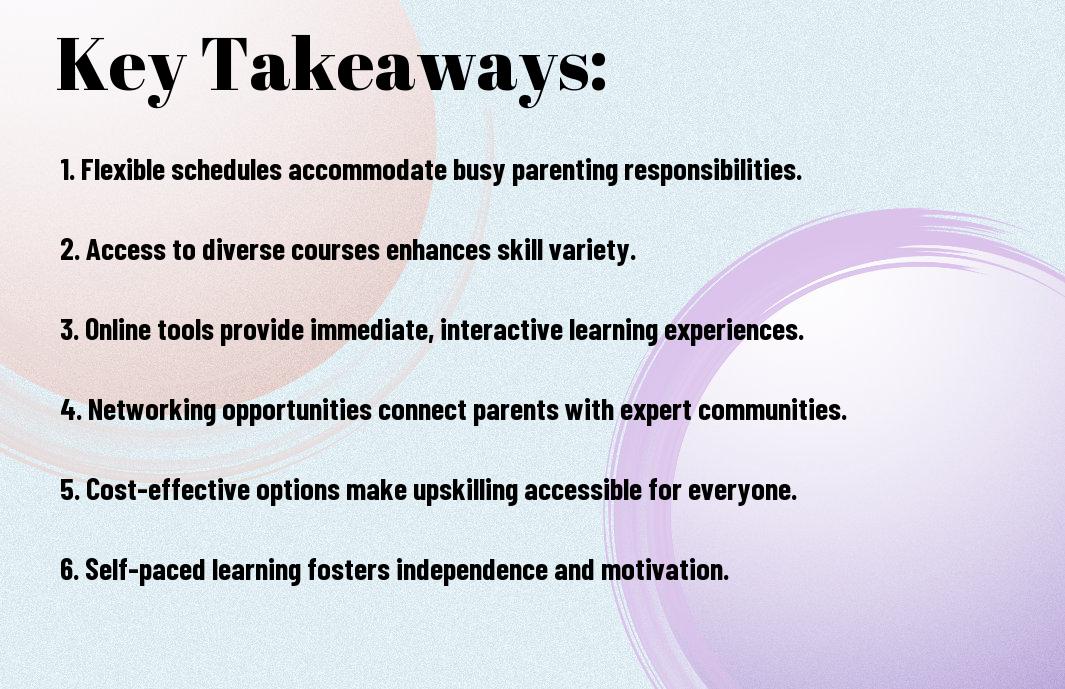
Key Takeaways:

To understand the benefits of online learning for parents, consider the following points:

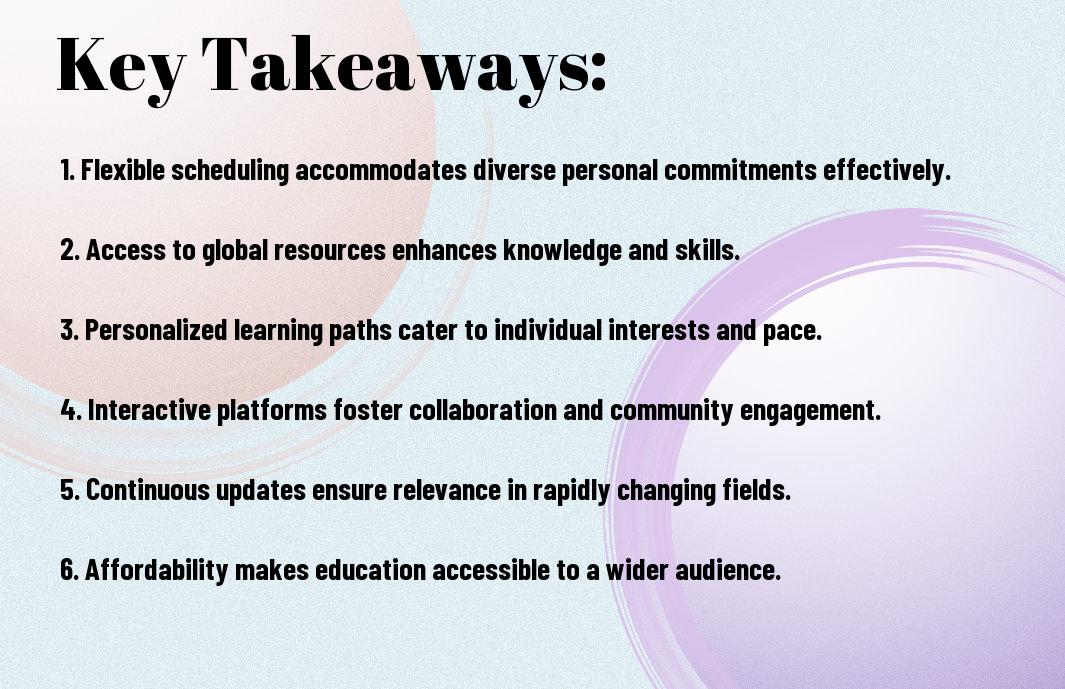
  • Online learning provides flexibility in scheduling, allowing parents to balance work, family, and education, making it easier to upskill and enhance their career prospects.
  • Parents can access a wide range of courses and training programs online, which can help them develop new skills and gain knowledge in specific areas of interest.
  • Online learning platforms offer affordability and convenience, enabling parents to learn at their own pace and from the comfort of their own homes, reducing the need for commuting.
  • Through online learning, parents can network with other learners and professionals in their field, potentially leading to new career opportunities and business partnerships.
  • By upskilling through online learning, parents can set a positive example for their children, demonstrating the importance of lifelong learning and personal development.

    Benefits for Working Parents

    To balance work and family responsibilities, you can leverage online learning. You can learn more about what every parent should know about online learning to make informed decisions.

    Flexibility in Learning

    Benefits like flexible scheduling allow you to learn at your own pace, making it easier to manage your time and prioritize your responsibilities.

    Career Advancement Opportunities

    Against the backdrop of a busy schedule, you can still pursue your career goals through online learning, which offers a wide range of courses and specializations to enhance your skills.

    To take your career to the next level, you can explore various online courses that align with your interests and career aspirations, and gain the necessary skills to stay competitive in your field, ultimately leading to better career advancement opportunities for you.

    Accessibility of Online Courses

    Assuming you have a stable internet connection, you can access online courses from anywhere, at any time, making it easier for you to balance your work and family responsibilities while acquiring new skills.

    Variety of Courses Available

    Online, you have the opportunity to choose from a wide range of courses that cater to your interests and career goals, allowing you to upskill in a field that you’re passionate about.

    Self-Paced Learning

    Oneness with your learning pace is achieved through online courses, as you can complete them at your own speed, revisiting topics that you find challenging and moving quickly through material that you already know.

    SelfPaced learning enables you to take control of your learning experience, allowing you to pause, rewind, or fast-forward through lessons as needed, ensuring that you understand the material before moving on to the next topic, which helps you to make the most out of your online learning experience.

    Improved Productivity

    Now that you have the flexibility to learn from anywhere, you can manage your time more effectively, allowing you to be more productive and achieve your goals.

    Effective Time Management

    Like never before, you can prioritize your tasks and focus on your learning objectives, enabling you to make the most of your time and energy, and you will see an improvement in your overall productivity.

    Reduced Commuting Time

    Above all, online learning saves you time that would be spent commuting to a physical classroom, and this extra time can be utilized for other important activities, allowing you to have a better work-life balance, and you can use this saved time to focus on your learning.

    Understanding the value of reduced commuting time, you will appreciate how it can significantly impact your daily routine, allowing you to allocate more time to your family, work, or other responsibilities, and you will find that you have more time to devote to your personal and professional development, ultimately leading to a more fulfilling life.

    Enhanced Skills and Knowledge

    Despite the challenges of balancing work and family life, online learning allows you to acquire new skills and knowledge that can enhance your career prospects and boost your confidence, enabling you to stay up-to-date with the latest developments in your field.

    Latest Industry Trends

    Following your decision to upskill, you can access courses and resources that keep you informed about the latest industry trends, allowing you to stay ahead of the curve and make informed decisions about your career path, with the flexibility to learn at your own pace.

    Practical Applications

    Above all, online learning provides you with practical skills and applications that you can apply directly to your work or business, enabling you to see the immediate benefits of your new knowledge and skills, and make a positive impact on your career and personal life.

    Industry demands are constantly evolving, and as you apply your new skills and knowledge in practical ways, you will find that online learning helps you to develop a more nuanced understanding of your field, and enables you to tackle complex challenges with confidence, leveraging your skills to drive your career forward and achieve your goals, with your newfound expertise opening up new opportunities for you to grow and succeed.

    Support and Community

    For parents looking to upskill, online learning provides a unique opportunity to connect with others who share similar goals and interests. You can engage with fellow learners, share experiences, and gain valuable insights from their perspectives.

    Online Forums and Discussions

    Above all, online forums and discussions offer a platform for you to interact with peers and instructors, facilitating a sense of community and support. You can participate in discussions, ask questions, and learn from others in a collaborative environment.

    Mentorship and Guidance

    Among the many benefits of online learning, mentorship and guidance stand out as particularly valuable. You can expect personalized support and feedback from experienced instructors, helping you to stay motivated and focused on your goals.

    Guidance from experienced professionals can help you navigate the learning process, identify areas for improvement, and develop a tailored plan to achieve your objectives. As you progress, you will have the opportunity to reflect on your learning, set new goals, and adjust your approach with the help of your mentors, ensuring you get the most out of your online learning experience.

    Overcoming Challenges

    Your ability to overcome challenges is key to successful online learning, and as a parent, you face unique obstacles, such as balancing family responsibilities with study time, which can be daunting, but with the right mindset and strategy, you can achieve your goals.

    Staying Motivated and Focused

    To stay on track, you need to set clear objectives and celebrate your progress, breaking down larger goals into smaller, manageable tasks, helping you stay motivated and engaged throughout your online learning journey, and you will find that your confidence grows with each accomplishment.

    Managing Work-Life Balance

    For many parents, finding a balance between work, family, and study is the most significant challenge, and you will need to prioritize your tasks, allocating specific times for learning, work, and family responsibilities, ensuring that you meet all your obligations without compromising your well-being.

    It is vital to establish a routine that works for you and your family, and you may need to make some adjustments as you go along, but with time and practice, you will find a balance that allows you to pursue your online learning goals while still being present for your loved ones, and you will discover that the benefits of upskilling far outweigh the challenges, leading to a more fulfilling and rewarding life.

    To wrap up

    Following this, you can see how online learning benefits your career as a working parent. You can upskill at your own pace, making it easier to balance work and family life. To learn more about the benefits, visit What are the advantages of E-Learning for working parents? and discover how you can enhance your skills and advance your career.

    FAQ

    Q: What are the benefits of online learning for parents who want to upskill?

    A: Online learning provides parents with the flexibility to balance their work and family responsibilities while acquiring new skills. With online courses, parents can learn at their own pace, anytime and anywhere, allowing them to manage their time more effectively. This flexibility is particularly beneficial for parents with young children or those who have non-traditional work schedules. Additionally, online learning platforms often offer a wide range of courses and programs, enabling parents to choose topics that align with their interests and career goals.

    Q: How does online learning help parents stay updated with the latest industry trends and technologies?

    A: Online learning platforms provide parents with access to a vast array of courses, tutorials, and workshops that cover the latest industry trends and technologies. This enables parents to stay current with the rapidly changing job market and enhance their professional development. Many online courses are designed and taught by industry experts, ensuring that parents gain relevant and practical knowledge. Furthermore, online learning communities and forums allow parents to network with peers and professionals, providing opportunities for collaboration, feedback, and mentorship.

    Q: Can online learning help parents transition to a new career or start their own business?

    A: Yes, online learning can be a valuable resource for parents who want to transition to a new career or start their own business. Online courses and programs can provide parents with the necessary skills, knowledge, and confidence to pursue new career paths or entrepreneurial ventures. Many online platforms offer specialized courses in areas such as entrepreneurship, marketing, and business management, which can be particularly helpful for parents who want to start their own businesses. Moreover, online learning can help parents develop a range of transferable skills, including communication, problem-solving, and project management, which are imperative for success in any career or business endeavor.

How Online Education Supports Lifelong Learning Goals

You can achieve your learning objectives with online education, which provides flexibility and accessibility. As you pursue your goals, you’ll find that online education supports your development. For more information on the intersection of online learning and lifelong learning, you can explore the relationship between Lifelong And Distance Learning, and discover how it can enrich your educational journey.

Key Takeaways:

To achieve lifelong learning goals, online education offers a flexible and accessible platform. Here are the key points to consider:

  • Online education supports flexible scheduling, allowing individuals to balance their personal and professional lives while pursuing their learning objectives.
  • With online education, learners can access a wide range of specialized courses and degree programs that may not be available in their local area, facilitating skill development and career advancement.
  • The self-paced nature of online learning enables individuals to set their own goals and work at their own speed, which can be particularly beneficial for those with diverse learning styles.
  • Online education provides opportunities for global connections and networking, allowing learners to engage with peers and instructors from diverse cultural backgrounds and industries.
  • Through online education, individuals can continuously update their skills and knowledge to stay competitive in the ever-changing job market, supporting their long-term career goals.

Benefits of Online Education

Before delving into the specifics, you should know that online education offers numerous advantages that cater to your needs and goals. You can access a wide range of courses and programs that help you develop new skills and expand your knowledge.

Flexibility and Accessibility

Above all, online education provides you with the flexibility to learn at your own pace, allowing you to balance your studies with other aspects of your life. You can access course materials and participate in discussions from anywhere, making it an ideal option for those with busy schedules.

Personalized Learning Experience

Any online course you take is designed to provide you with a personalized learning experience, tailored to your learning style and preferences. You can choose from various formats, such as videos, podcasts, and interactive modules, to engage with the material in a way that suits you best.

But what really sets online education apart is the ability to revisit and review course materials as many times as you need, allowing you to reinforce your understanding of complex concepts and solidify your knowledge. You can also interact with instructors and peers through discussion forums and live chats, getting feedback and support whenever you need it, which helps you stay motivated and focused on your learning goals.

Learning Opportunities

Some online education platforms provide you with numerous options to achieve your lifelong learning goals, allowing you to explore various subjects and interests at your own pace.

Diverse Course Offerings

Anytime you want to learn something new, online education offers a wide range of courses, from academic to vocational, helping you to select the ones that suit your needs and expand your knowledge.

Skill Development and Enhancement

Across various online platforms, you can develop and enhance your skills, gaining expertise in areas that interest you, and staying up-to-date with the latest trends and technologies in your field.

Learning new skills and enhancing existing ones helps you to stay competitive in the job market, and online education provides you with the flexibility to do so at your convenience, allowing you to balance your learning with your personal and professional life, and ultimately achieving your lifelong learning goals, as you progress in your career, you will find that your skills and knowledge are highly valued by employers, and you will have more opportunities to advance in your field.

Technological Advancements

For online education, technological advancements have been a driving force, enabling you to access a wide range of courses and resources from anywhere in the world. This has opened up new opportunities for you to pursue your lifelong learning goals.

Innovative Learning Platforms

One of the key benefits of online education is the innovative learning platforms that have been developed, providing you with a personalized and engaging learning experience. These platforms use artificial intelligence and data analytics to tailor the learning content to your needs and abilities.

Virtual Collaborations and Interactions

Behind the success of online education is the ability to facilitate virtual collaborations and interactions, allowing you to connect with peers and instructors from diverse backgrounds. This helps you to gain new perspectives and insights, enhancing your learning experience.

But as you probe deeper into virtual collaborations and interactions, you will discover that they offer more than just social benefits. You will be able to participate in discussions, share your work, and receive feedback, all of which will help you to develop your critical thinking and problem-solving skills, ultimately supporting your lifelong learning goals.

Overcoming Barriers

Keep in mind that online education offers numerous solutions to help you achieve your lifelong learning goals, and you can learn more about 5 Ways Higher Education Can Enhance E-Learning to get started.

Time and Location Constraints

Affording you the flexibility to learn at your own pace, online education allows you to fit learning into your busy schedule, regardless of your location, making it easier for you to access courses and resources.

Financial and Resource Limitations

Across various platforms, online education provides you with affordable options, enabling you to access quality educational content without excessive costs, and helping you to overcome financial and resource limitations that may have hindered your learning in the past.

To further address financial and resource limitations, you can explore scholarships, financial aid, and free online courses, which can help you minimize costs and make online education more accessible, allowing you to focus on achieving your lifelong learning goals without added financial stress.

Effective Implementation

Many online education platforms offer tools and features that support your lifelong learning goals, allowing you to set a personalized learning path and track your progress.

Strategic Planning and Goal Setting

Across various online learning platforms, you can define your objectives and create a roadmap to achieve them, enabling you to stay focused on your goals.

Support Systems and Resources

Before venturing into online learning, you can explore the support systems and resources available, such as virtual mentorship programs, online communities, and technical support teams.

With access to these support systems and resources, you can overcome obstacles, gain new insights, and develop a deeper understanding of the subject matter, ultimately enhancing your overall learning experience and helping you achieve your lifelong learning goals.

Evaluation and Assessment

After completing online courses, you can track your progress and identify areas for improvement, allowing you to adjust your learning plan and stay on track to achieve your lifelong learning goals.

Measuring Progress and Success

At this stage, you assess your knowledge and skills, using various evaluation tools to measure your progress and success, helping you to refine your approach and make informed decisions about your future learning.

Continuous Improvement and Feedback

For effective learning, you need to engage with the assessment process, using feedback to refine your understanding and adjust your strategy, ensuring that you get the most out of your online education experience.

To achieve continuous improvement, you will need to reflect on the feedback you receive, identifying areas where you need to focus your efforts and develop a plan to address any gaps in your knowledge or skills, enabling you to take ownership of your learning and make steady progress towards your goals.

Summing up

Following this, you can see how online education supports your lifelong learning goals, enabling you to pursue your interests and career advancement at your own pace. You can enhance your skills and knowledge by exploring Lifelong Learning: Enhance Your Skills With Champlain, which provides valuable resources to help you achieve your objectives and stay competitive in today’s fast-paced world, ultimately supporting your continued growth and development.

FAQ

Q: What are the benefits of online education in supporting lifelong learning goals?

A: Online education offers numerous benefits that support lifelong learning goals, including flexibility, accessibility, and personalized learning experiences. With online education, individuals can learn at their own pace, anytime and anywhere, making it an ideal option for those with busy schedules or living in remote areas. Additionally, online education provides access to a wide range of courses and programs, allowing individuals to explore various fields and interests, and gain new skills and knowledge that can enhance their personal and professional development.

Q: How does online education facilitate continuous skill development and upskilling?

A: Online education facilitates continuous skill development and upskilling by providing individuals with the opportunity to acquire new skills and knowledge in a timely and efficient manner. Online courses and programs are often designed to be concise and focused, allowing individuals to quickly gain the skills and knowledge they need to enhance their career prospects or pursue new opportunities. Furthermore, online education platforms often offer certification and badge programs, which can help individuals demonstrate their expertise and commitment to continuous learning, making them more competitive in the job market.

Q: Can online education help individuals achieve their long-term career goals and stay relevant in a rapidly changing job market?

A: Yes, online education can play a significant role in helping individuals achieve their long-term career goals and stay relevant in a rapidly changing job market. By providing access to the latest knowledge, skills, and industry trends, online education enables individuals to stay up-to-date with the changing demands of their field and adapt to new technologies and innovations. Moreover, online education can help individuals develop a growth mindset, allowing them to be more agile and responsive to changing circumstances, and to continuously update their skills and knowledge to remain competitive and achieve their long-term career aspirations.

Top 10 Mistakes to Avoid in Online Education

As you begin on your online learning journey, you’ll want to set yourself up for success. Your approach to online education can significantly impact your outcomes. You need to be aware of common pitfalls that can hinder your progress. By understanding what mistakes to avoid, you can optimize your learning experience and achieve your goals more efficiently. This post will guide you through the most common errors, helping you to make the most of your online education and ensure a successful learning experience.

Key Takeaways:

To succeed in online education, it’s necessary to be aware of common pitfalls. Here are the main points to consider:

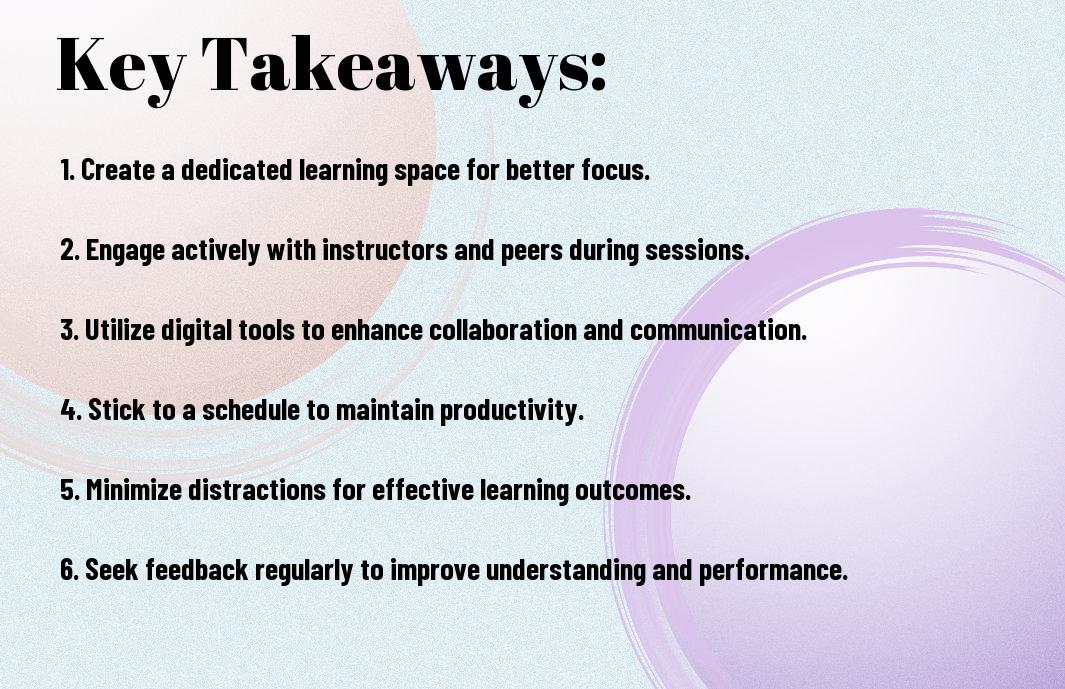
  • Avoid poorly designed courses that lack clear objectives and structure, which can hinder the learning experience.
  • Inadequate technical support can lead to frustration and hinder progress, so it’s vital to have reliable resources available.
  • Insufficient interaction with instructors and peers can make online learning feel isolating, so seek out opportunities for engagement and feedback.
  • Ineffective time management can lead to falling behind, so establish a schedule and stick to it to stay on track.
  • of self-motivation can be a significant obstacle, so set goals and track progress to maintain momentum and achieve success.

Preparation Mistakes

While preparing for online education, you need to be aware of common pitfalls that can hinder your success. Your preparation is key to achieving your goals, and neglecting certain aspects can lead to poor performance.

Insufficient Technology

Across the online learning landscape, you will encounter various platforms and tools that require specific technological specifications. You should ensure that your device meets these requirements to avoid technical issues that can disrupt your learning experience.

Poor Time Management

Timing is everything when it comes to online education, and you should create a schedule that allows you to balance your coursework with other responsibilities. You need to prioritize your tasks and allocate sufficient time for each activity to stay on track.

Considering your busy schedule, you should also be flexible and adapt to changes that may occur during your online course. You can use calendars, reminders, and other tools to stay organized and focused, helping you to manage your time effectively and make the most out of your online learning experience.

Course Selection Errors

Clearly, selecting the right course is vital to your success in online education, and making mistakes can lead to frustration and disappointment, you should be aware of common errors to avoid them.

Choosing the Wrong Course

The most common mistake you can make is choosing a course that doesn’t align with your goals or interests, which can lead to boredom and lack of motivation.

Not Checking Prerequisites

Above all, you need to ensure you have the necessary prerequisites to succeed in your chosen course, or you may struggle to keep up with the coursework.

Course prerequisites are designed to ensure you have the necessary foundation to succeed, and not checking them can lead to difficulties in completing assignments and understanding course materials, so you should always review the prerequisites before enrolling in a course to determine if you are adequately prepared.

Communication Breakdowns

Despite the importance of communication in online education, breakdowns can occur. You can learn more about common mistakes in online course creation by visiting 10 mistakes to avoid when creating online courses to improve your online learning experience.

Not Reading Instructor Messages

Messages from your instructors are necessary to your success in online education. You should regularly check your inbox for updates, announcements, and feedback to stay on track and avoid missing important deadlines.

Failing to Ask for Help

Around the time you encounter difficulties, do not hesitate to ask for help. You can reach out to your instructors, peers, or support staff to clarify doubts and get assistance when needed.

The failure to ask for help can lead to falling behind in your coursework, which can negatively impact your overall performance. You should not be afraid to ask questions or seek guidance, as it is a normal part of the learning process, and it will help you to better understand the course material and achieve your academic goals.

Study Habit Mistakes

To succeed in online education, you should be aware of common pitfalls, as outlined in Avoiding Common Online Learning Mistakes guides. This will help you avoid mistakes and stay focused on your goals.

Procrastination

One of the most common mistakes you can make is putting off your studies until the last minute, which can lead to poor grades and increased stress.

Lack of Note-Taking

Mistakes in note-taking can hinder your understanding of the material, making it harder to retain information and apply it to future lessons.

At the start of each course, you should develop a note-taking system that works for you, allowing you to efficiently organize and review your notes, which will help you stay on top of your coursework and achieve your academic goals.

Technical Issues

Now that you’re engaged in online education, you’ll encounter various technical issues that can hinder your learning experience. These issues can be frustrating, but being aware of them can help you prepare and find solutions.

Poor Internet Connection

Connecting to a stable internet connection is crucial for online learning, as a weak signal can cause delays and disruptions, affecting your ability to participate in classes or submit assignments on time, you should ensure your internet connection is reliable.

Incompatible Software

Beneath the surface of online learning platforms lies a complex system of software and tools, and using incompatible software can lead to compatibility issues, causing you frustration and wasting your time, you should check the system requirements before enrolling in an online course.

This incompatible software issue can be avoided by checking the system requirements before enrolling in an online course, and you can also contact your instructor or the technical support team to ensure that your device meets the necessary specifications, this will help you to have a smooth learning experience, and you will be able to focus on your studies without any technical difficulties.

Evaluation Errors

Keep in mind that evaluation errors can make or break your online educational experience. You need to be aware of the common mistakes to avoid them and achieve your goals.

Not Meeting Deadlines

Delays in submitting assignments can negatively impact your performance, so you must prioritize your tasks and manage your time effectively to meet the deadlines set by your instructor.

Ignoring Feedback

Once you receive feedback on your assignments, you should take it seriously and use it to improve your work, as it provides valuable insights into your strengths and weaknesses.

Further, ignoring feedback can hinder your progress, and you may miss out on opportunities to learn and grow, so take the time to carefully evaluate the comments and suggestions provided by your instructor and incorporate them into your future work.

To wrap up

With this in mind, you can now make informed decisions about your online education. You have learned about the top 10 mistakes to avoid, and you are better equipped to navigate the online learning landscape. By being aware of these pitfalls, you can create a successful and effective learning experience, achieving your goals and maximizing your potential in your online educational pursuits, and ultimately, enhancing your overall learning journey.

FAQ

Q: What are some common mistakes students make when choosing online courses, and how can they be avoided?

A: When opting for online courses, students often make mistakes such as not researching the course provider, not checking the course curriculum, and not evaluating the level of support offered. To avoid these mistakes, students should thoroughly research the course provider, ensuring they are accredited and have positive reviews. They should also carefully review the course curriculum to ensure it aligns with their goals and needs. Additionally, students should evaluate the level of support offered, including access to instructors, mentors, and technical support, to ensure they will have the help they need to succeed.

Q: How can students effectively manage their time and stay motivated in online education, and what pitfalls should they avoid?

A: To effectively manage their time and stay motivated in online education, students should create a schedule and stick to it, setting aside dedicated time for studying and completing assignments. They should also establish a dedicated study space, free from distractions, and minimize procrastination by breaking tasks into smaller, manageable chunks. Pitfalls to avoid include overcommitting and taking on too many courses at once, failing to take breaks and practice self-care, and not seeking help when needed. By avoiding these pitfalls and staying organized, students can maintain their motivation and achieve their academic goals.

Q: What are some technical issues that can hinder the online learning experience, and how can students troubleshoot them to ensure continuity in their studies?

A: Technical issues such as poor internet connectivity, incompatible software, and hardware problems can significantly hinder the online learning experience. To troubleshoot these issues, students should first ensure their internet connection is stable and meets the course requirements. They should also check that their computer or device meets the minimum technical requirements for the course, including having the necessary software and browser versions. If issues persist, students should contact their course provider’s technical support team for assistance. Additionally, students should have a backup plan in place, such as a secondary computer or internet connection, to minimize downtime and ensure continuity in their studies.

The Best Online Resources for Learning New Skills

You’re looking to expand your knowledge and acquire new skills, but your schedule is tight. You need flexible and accessible learning tools. Your search ends here. With numerous online resources available, you can now learn at your own pace, anytime and anywhere. You’ll discover a wealth of opportunities to enhance your skills and stay ahead in your career, and this post will guide you through the best online resources to get you started.

Key Takeaways:

To enhance your learning experience and acquire new skills, consider the following online resources:

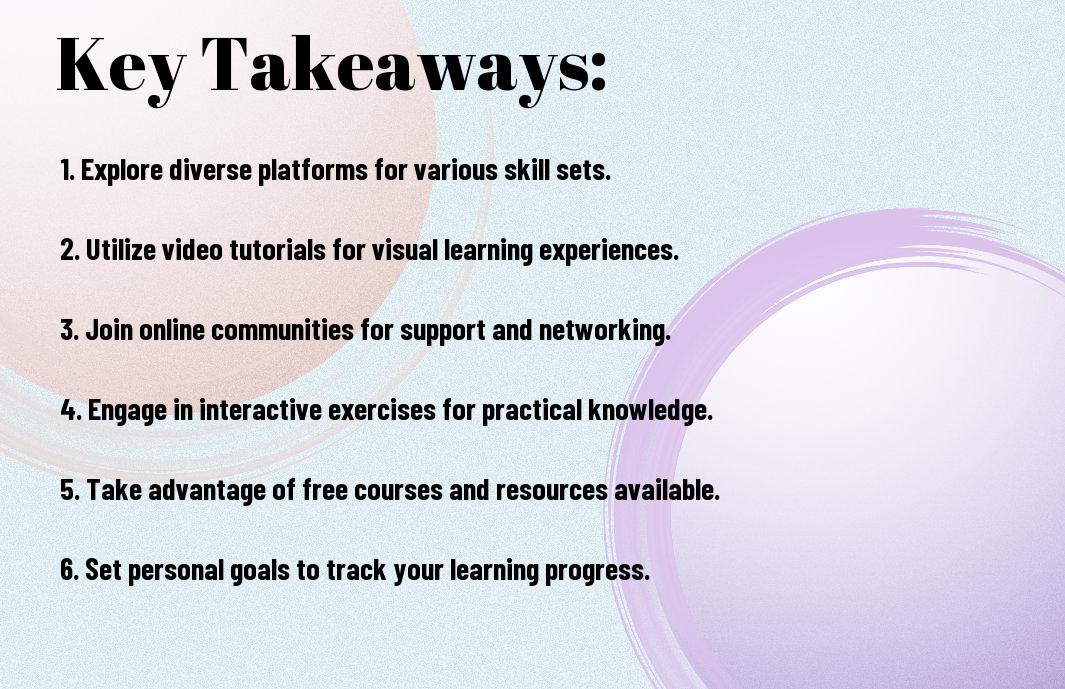
  • Online Courses platforms such as Coursera, Udemy, and edX offer a wide range of courses and certifications to help you develop new skills and enhance your knowledge in various fields.
  • Virtual Workshops and webinars provide an opportunity to learn from industry experts and gain hands-on experience in a specific area of interest.
  • eBooks and online libraries like Kindle, Scribd, and Google Books offer access to a vast collection of books, articles, and research papers on various subjects, making it easy to learn new skills at your own pace.
  • YouTube Channels and online tutorials are an excellent source of information, with many experts and educators sharing their knowledge and skills through video content, covering topics from technology and programming to art and design.
  • Podcasts and online forums provide a great way to stay updated with the latest trends and developments in your field of interest, while also allowing you to connect with like-minded individuals and learn from their experiences.

Identifying Online Resources

The internet offers a vast array of online resources for learning new skills, and you can find something that suits your needs. You’ll discover various websites, courses, and tutorials that cater to different interests and skill levels.

Websites for Skill-Building

Between numerous options, you’ll find platforms like Udemy, Coursera, and LinkedIn Learning, which provide valuable resources for skill-building. You can explore these websites to find the perfect fit for your learning goals.

Online Courses and Tutorials

Typically, tutorials are designed to be interactive and engaging, making it easier for you to learn new skills. You can find tutorials on YouTube, Skillshare, and other online platforms that offer step-by-step guidance.

With online courses and tutorials, you can learn at your own pace and revisit the material as many times as you need. You’ll have access to a wide range of topics, from creative skills like writing and graphic design to technical skills like coding and data analysis, allowing you to enhance your knowledge and skills in a flexible and convenient way.

Learning Platforms

You can find numerous online learning platforms that offer a wide range of courses and tutorials to help you acquire new skills. These platforms provide you with the flexibility to learn at your own pace and explore various subjects.

MOOCs and Online Universities

Platforms like Coursera, edX, and Udacity offer massive open online courses and degree programs from top universities, allowing you to access high-quality education from anywhere in the world.

Specialized Platforms for Creative Skills

To hone your creative skills, you can utilize platforms like Skillshare, Udemy, and CreativeLive, which provide courses and workshops on topics like graphic design, photography, and writing.

The variety of courses on these platforms is vast, and you can choose the ones that fit your interests and skill level, helping you to improve your creative skills and stay up-to-date with the latest trends and techniques in your chosen field.

Utilizing Social Media

Despite the numerous online resources available, social media platforms are often overlooked as a means of learning new skills. You can leverage these platforms to connect with experts, join communities, and gain valuable insights in your desired field.

Facebook Groups and Online Communities

Betwixt the various social media platforms, Facebook groups stand out as a valuable resource for learning. You can join groups related to your interests and engage with like-minded individuals, sharing knowledge and experiences to enhance your skills.

Twitter Chats and LinkedIn Groups

Alongside Facebook, Twitter and LinkedIn offer excellent opportunities for skill development. You can participate in Twitter chats, where experts and enthusiasts discuss specific topics, and join LinkedIn groups to connect with professionals in your industry.

Facebook may be your primary social media platform, but Twitter and LinkedIn have their own unique advantages when it comes to learning new skills. You can use Twitter to follow industry leaders, participate in chats, and stay updated on the latest trends, while LinkedIn groups provide a more professional setting to network and learn from others in your field, helping you to expand your knowledge and skills.

Accessing Free Resources

Keep in mind that you can find numerous free resources online to learn new skills, and you can start by exploring websites like 10 Best Places to Learn New Skills in 2024 to get an idea of what’s available.

Public Domain Materials and Open-Source Software

Around the web, you’ll discover a wealth of public domain materials and open-source software that can aid in your learning journey, offering you a chance to acquire new skills without spending a dime.

Free Online Libraries and Archives

Regarding your search for free online resources, resources such as digital libraries and archives can provide you with a vast array of learning materials, from e-books to educational videos, all at your fingertips.

Further exploration of free online libraries and archives will yield a treasure trove of information, allowing you to probe deeper into your chosen subject and expand your knowledge, as you take advantage of the numerous resources available to you, helping you to learn new skills and achieve your goals.

Evaluating Resource Quality

Many online resources claim to offer high-quality learning experiences, but you need to carefully assess their effectiveness. You should consider several factors, such as the qualifications of the instructors and the relevance of the content to your needs.

User Reviews and Ratings

Any potential learner can benefit from checking the opinions of others who have used the resource. You can gain valuable insights from user reviews and ratings, helping you make a more informed decision about the quality of the resource.

Expert Recommendations and Endorsements

After researching various resources, you may come across expert recommendations and endorsements. You can trust these opinions, as they often come from experienced professionals in the field, and they can help you choose a high-quality resource that meets your learning needs.

For instance, if you’re looking to learn a new programming language, you might look for resources endorsed by well-known developers or industry leaders. Their recommendations can give you confidence in the resource’s ability to provide you with the skills and knowledge you need to succeed. You can then use this information to make a more informed decision about which resource to use, and get the most out of your learning experience.

Staying Motivated

Once again, you find yourself struggling to stay on track with your learning goals. It’s easy to get discouraged, but with the right mindset and tools, you can overcome obstacles and achieve your objectives.

Setting Goals and Tracking Progress

For instance, setting specific, achievable goals and tracking your progress can help you stay focused and motivated. You can use tools like habit trackers or progress journals to monitor your advancement and make adjustments as needed.

Finding Accountability and Support

Similarly, having a support system in place can make a big difference in your learning journey. You can join online communities or find a study buddy to share your goals and progress with, providing an added motivation to stay on track.

In fact, surrounding yourself with like-minded individuals who share your interests and passions can be a great way to stay motivated and engaged. You can participate in online forums, join social media groups, or attend webinars to connect with others who are learning similar skills, and gain valuable insights and advice from their experiences.

Summing up

With this in mind, you now have the tools to enhance your skills. You can explore 8 free online resources for learning new skills to discover what works best for your needs, and take your learning to the next level, shaping your future with your newfound knowledge and expertise, and unlocking your full potential.

FAQ

Q: What are the best online resources for learning new skills in the field of technology?

A: There are numerous online resources available for learning new skills in technology, including platforms such as Udemy, Coursera, and edX, which offer a wide range of courses on topics like programming, data science, and cybersecurity. Additionally, websites like Codecademy and FreeCodeCamp provide interactive coding lessons and exercises, while YouTube channels like TechCrunch and WIRED offer informative videos and tutorials on the latest tech trends and innovations.

Q: How can I effectively use online resources to learn new skills in creative fields like writing, design, or art?

A: To learn new skills in creative fields, online resources like Skillshare, LinkedIn Learning, and CreativeLive offer a vast array of courses and workshops on topics like graphic design, digital photography, and creative writing. Furthermore, websites like Behance and DeviantArt provide platforms for artists and designers to showcase their work and get feedback from the community, while blogs like The Creative Penn and ProBlogger offer valuable tips and advice on writing, marketing, and self-publishing.

Q: Are there any free online resources available for learning new skills, and how can I stay motivated and disciplined while learning online?

A: Yes, there are many free online resources available for learning new skills, including websites like Khan Academy, Open Culture, and MIT OpenCourseWare, which offer free courses and educational materials on a wide range of subjects. To stay motivated and disciplined while learning online, it’s important to set clear goals and deadlines, create a schedule and stick to it, and join online communities or forums related to your field of interest to connect with others and get support and feedback. Additionally, using tools like project management software and productivity apps can help you stay organized and focused, and tracking your progress can help you see how far you’ve come and stay motivated to continue learning.

Skip to content