Online Courses

How Online Education Benefits Stay-at-Home Parents

As a stay-at-home parent, you face unique challenges in pursuing your educational goals. Your daily schedule is filled with caring for your family, leaving little time for traditional classroom learning. However, with online education, you can now access a wide range of courses and degree programs from the comfort of your own home. You can learn at your own pace, balancing your family responsibilities with your desire for personal and professional growth, and online education can be a convenient and flexible solution for you.

Key Takeaways:

  • Online education provides flexibility for stay-at-home parents, allowing them to balance their parenting responsibilities with their desire to learn and gain new skills.
  • Through online courses, stay-at-home parents can access a wide range of academic programs and career development opportunities that may not be available in their local area.
  • Online education enables stay-at-home parents to learn at their own pace, which is particularly beneficial for those with non-traditional schedules or caregiving responsibilities.
  • Participating in online education can help stay-at-home parents build confidence and network with other learners, potentially leading to new career opportunities in the future.
  • By pursuing online education, stay-at-home parents can enhance their skills and increase their earning potential, which can have a positive impact on their family’s financial stability and overall well-being.

Benefits of Flexibility

The flexibility of online education is a significant advantage for stay-at-home parents like you. You can attend classes and complete coursework on your own schedule, allowing you to balance your parenting responsibilities with your educational pursuits.

Balancing Parenting and Learning

Blending your parenting duties with learning is made easier through online education. You can care for your children while also pursuing your educational goals, making the most of your time and energy.

Creating a Personalized Schedule

For your convenience, online education allows you to create a schedule that suits your needs. You can plan your study time around your child’s naptime, mealtime, or playtime, ensuring that you can fulfill your responsibilities as a parent while also making progress in your studies.

The ability to create a personalized schedule also enables you to prioritize your tasks and manage your time more effectively. You can focus on the most challenging topics or assignments during your most productive hours, and save less demanding tasks for when your child needs attention, allowing you to make the most of your time and energy.
Accessibility and Convenience

Some of the most significant advantages of online education for stay-at-home parents like you are the flexibility and convenience it offers, allowing you to balance your parenting responsibilities with your educational pursuits.

Access to Global Resources

With the vast array of online educational resources available, you can access courses and programs from institutions worldwide, giving you unparalleled opportunities to expand your knowledge and skills from the comfort of your own home.

Reduced Commuting Time

For you, online education means no more worrying about commuting to a physical campus, saving you time and energy that can be better spent on your family and studies.

The reduction in commuting time also means you can create a schedule that suits your needs, allowing you to attend to your children, manage your household, and pursue your educational goals without the hassle of traveling to a traditional classroom setting, giving you more control over your daily routine and enabling you to make the most of your time.

Improved Productivity

Unlike traditional education, online education allows you to manage your time more efficiently, enabling you to balance your parental duties and academic pursuits. You can learn more about How Online Education Benefits Stay At Home Moms and discover the flexibility it offers.

Managing Time Effectively

On the other hand, online education helps you prioritize your tasks, allowing you to allocate your time wisely and make the most out of your day. You can attend to your family’s needs while pursuing your academic goals.

Increased Motivation

Improved by the flexibility of online education, you can now pursue your degree without sacrificing your family responsibilities, which can be a significant motivator for you to stay focused and driven.

In fact, as you progress in your online course, you will feel a sense of accomplishment and pride in balancing your roles as a parent and a student, which will further boost your motivation to succeed and create a better future for yourself and your family. You will be able to apply the skills and knowledge you gain to enhance your parenting and contribute to your community, making your online education a worthwhile investment.

Enhanced Career Opportunities

Now that you have more time to focus on your career, online education can help you enhance your job prospects and advance in your field. You can pursue courses that align with your interests and goals, making you a more competitive candidate in the job market.

Acquiring New Skills

On top of your existing skills, you can acquire new ones through online courses, enabling you to take on new challenges and increase your earning potential. You can learn at your own pace, fitting your studies around your family commitments.

Expanding Professional Network

Opportunities to connect with other professionals and like-minded individuals are plentiful in online education. You can engage with instructors and peers from diverse backgrounds, potentially leading to valuable connections and collaborations that can benefit your career.

Expanding your professional network through online education can have a significant impact on your career. You can participate in online discussions, join professional organizations, and attend virtual events, all of which can help you build relationships with people in your industry, potentially leading to new job opportunities or business partnerships that can help you achieve your career goals.

Supporting Personal Growth

Despite the demands of caring for your family, online education can help you grow as an individual. You can learn more about How Virtual Learning Benefits the Whole Family and discover new opportunities for personal development.

Developing New Interests

Betwixt your daily responsibilities, you can explore new hobbies and interests through online courses, helping you discover new passions and expand your knowledge.

Building Confidence

By taking online courses, you can build your confidence and self-esteem, as you achieve your educational goals and develop new skills.

Also, as you progress in your online education, you will become more self-assured in your ability to learn and adapt, which will have a positive impact on your personal and professional life, allowing you to make informed decisions about your future and pursue your goals with renewed confidence.

Overcoming Challenges

Keep in mind that online education can be a game-changer for stay-at-home parents, as you can learn more about The Advantages of Online Education for Stay-at-Home Moms and how it can benefit your lifestyle.

Staying Motivated and Focused

About the challenges you face, you’ll find that setting goals and creating a schedule helps you stay on track and motivated throughout your online course.

Managing Distractions and Procrastination

Below are some tips to help you avoid distractions and stay focused on your online education, which is imperative for your success as a stay-at-home parent.

Staying disciplined and committed to your online education is key to managing distractions and procrastination, as you’ll be able to create a dedicated learning space and establish a routine that works for you and your family, allowing you to balance your responsibilities and achieve your goals.

Final Words

Hence, you can leverage online education to balance your parenting responsibilities with your own learning goals. You gain flexibility and convenience, allowing you to learn at your own pace, around your family’s schedule. Your ability to manage time effectively is enhanced, and you can prioritize your family’s needs while pursuing your educational aspirations, making online education an ideal solution for stay-at-home parents like you.

FAQ

Q: What are the benefits of online education for stay-at-home parents in terms of flexibility?

A: Online education offers stay-at-home parents the flexibility to create their own schedule, allowing them to balance their parenting responsibilities with their educational pursuits. With online courses, parents can attend classes and complete assignments at any time, from anywhere, as long as they have a stable internet connection. This flexibility is particularly beneficial for parents with young children, as it enables them to care for their kids while also pursuing their educational goals.

Q: How does online education help stay-at-home parents in terms of career advancement and personal development?

A: Online education provides stay-at-home parents with the opportunity to upgrade their skills, gain new knowledge, and enhance their career prospects. By pursuing online courses or degree programs, parents can acquire new skills and certifications that can boost their confidence and prepare them for re-entry into the workforce when their children are older. Furthermore, online education can also foster personal growth and development, helping parents to expand their social networks, develop time management skills, and enhance their self-esteem.

Q: What kinds of support and resources are available to stay-at-home parents pursuing online education?

A: Many online educational institutions offer a range of support services and resources tailored to the needs of stay-at-home parents. These may include dedicated student advisors, online tutoring, and technical support. Additionally, some institutions provide resources such as parenting support groups, flexible payment plans, and childcare resources to help parents balance their family and educational responsibilities. Moreover, online communities and forums can connect stay-at-home parents with peers who are facing similar challenges, providing a sense of connection and community that can be invaluable in navigating the demands of online education while parenting.

How to Get the Most Out of Online Webinars

As you attend online webinars, you want to maximize your learning experience. Your goal is to gain valuable insights and knowledge that can benefit your professional growth. To achieve this, you can start by checking out 5 Tips To Get The Most Out Of Webinars – FMG Suite, which provides expert advice on making the most of these online sessions. By following the right strategies, you can enhance your webinar experience and take away actionable tips to apply in your field.

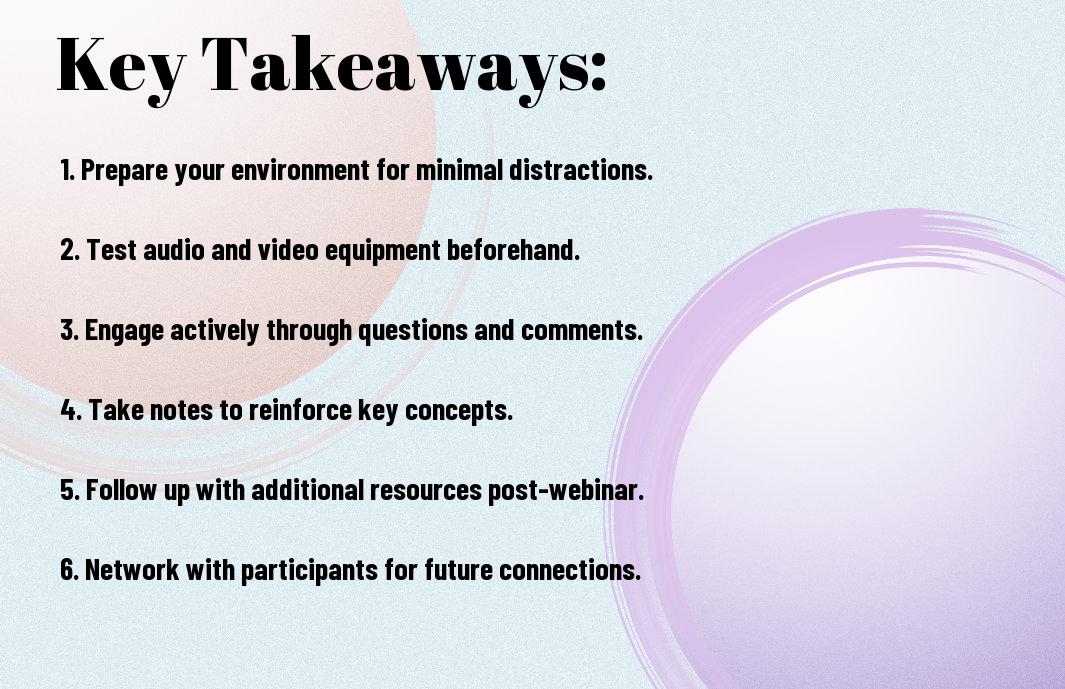
Key Takeaways:

To maximize the benefits of online webinars, consider the following points:

  • Set Clear Objectives: Establishing a clear understanding of what you want to achieve from the webinar is imperative to get the most out of it. This helps in focusing on the key aspects and staying engaged throughout the session.
  • Prepare in Advance: Having the necessary Technical Requirements in place, such as a stable internet connection and required software, ensures a smooth experience. Additionally, Familiarizing yourself with the webinar platform and its features can help you navigate easily.
  • Engage Actively: Participating in Live Discussions and asking questions enhances your learning experience. It also provides an opportunity to Network with other attendees and speakers, potentially leading to valuable connections.
  • Take Notes: Note-taking is an effective way to retain information and refer back to the key points discussed during the webinar. Organizing your notes using Summonable Keywords can make it easier to review and apply the learned concepts.
  • Follow Up: After the webinar, Reviewing the recorded session and Implementing the learned strategies can help reinforce your understanding and achieve the desired outcomes. This step is vital to Maximizing the value of the webinar.

    Preparing for Online Webinars

    For a productive online webinar experience, it’s crucial to prepare in advance. You’ll want to ensure you have a stable internet connection, a compatible device, and a quiet workspace. This will help you stay focused and engaged throughout the webinar.

    Setting Up Your Environment

    One key aspect of preparation is setting up your environment to minimize distractions. You’ll want to choose a quiet, private space with minimal noise and interruptions, allowing you to concentrate on the webinar content.

    Choosing the Right Equipment

    Between your computer, tablet, or smartphone, you have several options for attending online webinars. You’ll want to select the device that best suits your needs, considering factors such as screen size, audio quality, and internet connectivity.

    In addition to selecting the right device, you’ll also want to consider investing in a good quality webcam, microphone, and headphones. This will enable you to engage fully with the webinar, ask questions, and participate in discussions, making the most of your online learning experience. You’ll be able to see and hear the presenter clearly, and they’ll be able to hear you, ensuring a more interactive and effective webinar experience.

    Engaging with the Content

    You can greatly enhance your webinar experience by engaging with the content presented. This involves being an active participant, rather than a passive listener, and utilizing techniques that help you retain information and stay focused.

    Active Listening Techniques

    Alongside the presentation, ask yourself questions about the topic, and think about how you can apply the information to your own situation. This will help you stay engaged and interested in the content.

    Taking Effective Notes

    Consistently, the most effective notes are those that are concise and well-organized, allowing you to easily review and reference the material later.

    With your notes organized, you can quickly identify key points and refer back to them as needed, helping you to reinforce your understanding of the material and making it easier to apply the knowledge in the future. You will be able to review your notes and retain the information presented in the webinar, allowing you to get the most out of the experience.

    Interacting with the Speaker and Fellow Attendees

    Keep in mind that online webinars offer a unique opportunity to engage with the speaker and other attendees in real-time. You can ask questions, share your insights, and learn from others, making the experience more dynamic and valuable.

    Asking Relevant Questions

    Around the time the speaker opens the floor for questions, prepare to ask thoughtful and relevant ones that add value to the discussion. You will benefit from the speaker’s expertise and get clarification on any points you’re unsure about.

    Participating in Discussions

    Similar to a traditional classroom setting, the speaker will often encourage you to participate in discussions, share your experiences, and provide feedback. You can do this through live chats, polls, or Q&A sessions, allowing you to engage with the content on a deeper level.

    With the ability to participate in discussions, you can take your learning experience to the next level. You will be able to share your perspectives, learn from others, and get feedback from the speaker and fellow attendees, making the webinar a truly interactive and enriching experience for you.

    Overcoming Technical Challenges

    After registering for a webinar, you may encounter technical issues that hinder your experience. To avoid this, ensure your device meets the system requirements and test your audio and video before the webinar.

    Troubleshooting Common Issues

    Around the time the webinar starts, about 10-15 minutes prior, log in to troubleshoot any common issues, such as connectivity problems or audio delays, to ensure a smooth experience.

    Staying Connected and Focused

    Above all, about maintaining your engagement, you should minimize distractions, close unnecessary tabs, and take notes to stay focused during the webinar.

    Another key aspect of staying connected is to participate in live discussions, ask questions, and engage with the speaker and other attendees to get the most out of the webinar, as this will help you retain information and apply it to your own situation, allowing you to achieve your goals and make the most of your time.

    Maximizing Learning and Retention

    Once again, to get the most out of online webinars, you can apply strategies to enhance your learning experience, such as taking notes and setting goals, and for more insights, you can check 18 Webinar Tips To Keep Your Audience Engaged to maximize your engagement.

    Applying New Knowledge and Skills

    For instance, you can apply the skills and knowledge you gained from the webinar to your real-life situations, which will help solidify your understanding and retention of the material.

    Reviewing and Reflecting on the Content

    After the webinar, you should take time to reflect on what you learned, identifying key takeaways and areas where you need more practice or study.

    Further, you can reinforce your learning by summarizing the main points in your own words, creating concept maps or flashcards, and discussing the content with others to gain new perspectives and insights, which will help you to better understand and apply the knowledge you acquired during the webinar.

    Staying Motivated and Focused

    Despite the comfort of attending webinars from your own space, it’s easy to lose concentration. You need to stay motivated and focused to get the most out of online webinars.

    Setting Goals and Objectives

    For maximum benefit, you should set clear goals and objectives for what you want to achieve from the webinar, helping you stay on track and engaged throughout the session.

    Minimizing Distractions and Staying Engaged

    Goals aside, you must minimize distractions to stay engaged, closing unnecessary tabs on your computer and finding a quiet workspace to help you concentrate on the webinar content.

    Due to the flexibility of online webinars, you can take steps to minimize distractions, such as turning off notifications on your phone or finding a dedicated workspace, allowing you to stay focused and get the most out of your webinar experience, and enabling you to apply the knowledge and skills you gain to your own projects and goals.

    Conclusion

    Now that you have learned the strategies for maximizing your online webinar experience, you can effectively utilize these events to enhance your knowledge and skills. You will be able to engage with the content, interact with speakers, and achieve your learning objectives. By implementing these tips, you will get the most out of your online webinars and make the most of your time and investment, ultimately benefiting your personal and professional development.

    FAQ

    Q: What are the key steps to prepare for an online webinar to get the most out of it?

    A: To get the most out of an online webinar, it’s important to prepare in advance. First, ensure you have a stable internet connection and the necessary software or platform installed and tested. Next, review the webinar’s agenda and objectives to understand what will be covered. Also, prepare any materials you might need, such as a notebook and pen for taking notes, or any specific software or tools required by the webinar. Lastly, plan to join the webinar a few minutes early to avoid technical issues and to get settled before the presentation starts.

    Q: How can I effectively engage with the content and speaker during an online webinar?

    A: Engaging with the content and speaker is vital for a productive webinar experience. Actively listen to the presentation, and take notes on key points that interest you or that you find important. Many webinars offer interactive features such as live chat, Q&A sessions, or polls, so participate in these to deepen your understanding and ask questions. If the webinar allows it, use the chat function to ask questions or share your thoughts with other attendees, which can help in networking and gaining different perspectives. Additionally, try to minimize distractions by choosing a quiet workspace and silencing notifications on your devices.

    Q: What should I do after an online webinar to reinforce my learning and follow up on the topics discussed?

    A: After the webinar, there are several steps you can take to reinforce your learning and follow up on the topics discussed. Start by reviewing your notes and summarizing the key points in your own words. Look into any additional resources provided by the webinar, such as slides, videos, or further reading materials, to probe deeper into the subjects covered. If the webinar offered any downloadable materials or links, make sure to access them and explore the information provided. You can also reach out to the speaker or other attendees via email or professional networking sites to continue the conversation, ask follow-up questions, or seek advice. Finally, apply what you’ve learned to your work or personal projects as soon as possible to reinforce your new knowledge and skills.

The Rise of Micro-Learning in Online Education

As you explore the evolving landscape of online education, you’ll notice a significant shift towards micro-learning. You can learn more about this trend by visiting What is Microlearning: All you Need to Know in 2025. This approach is revolutionizing the way you acquire new skills and knowledge, allowing you to learn in bite-sized chunks, at your own pace. Your ability to adapt to this new learning style will be crucial in staying ahead of the curve in today’s fast-paced digital world.

Key Takeaways:

  • The shift towards micro-learning in online education is driven by the need for flexible and personalized learning experiences, allowing learners to access bite-sized content on-demand.
  • Bite-sized learning modules are designed to be concise and focused, enabling learners to quickly absorb and retain information, making it an effective way to bridge knowledge gaps.
  • With the rise of mobile devices, micro-learning has become more accessible, enabling learners to access learning content anytime and anywhere, at their own pace.
  • The use of interactive and engaging content, such as videos, quizzes, and games, is a key component of micro-learning, making the learning experience more enjoyable and effective.
  • The tracking and analysis of learner progress through micro-learning platforms provides valuable insights into learning behaviors and knowledge gaps, enabling educators to tailor their teaching strategies to meet the needs of their learners.

    History of Micro-Learning

    While exploring the concept of micro-learning, you’ll discover that its roots date back to the early 20th century, with the introduction of bite-sized learning modules. This approach has since evolved, adapting to technological advancements and changing learner needs.

    Evolution of Online Education

    Alongside the development of digital platforms, your understanding of online education has transformed, enabling more flexible and accessible learning experiences. As a result, you can now engage with various educational content formats, from videos to interactive simulations.

    Key Milestones in Micro-Learning Development

    Microlearning has undergone significant transformations, and as you explore deeper, you’ll find that key milestones include the introduction of mobile learning and the incorporation of artificial intelligence in educational platforms.

    In fact, as you explore the history of micro-learning, you’ll notice that these developments have enabled you to access personalized learning paths, allowing you to focus on specific skills and topics that interest you, making your learning journey more efficient and effective. You can now take advantage of these advancements to enhance your knowledge and stay up-to-date with the latest industry trends.

    Benefits of Micro-Learning

    Now that you’re familiar with micro-learning, let’s explore its advantages. You’ll find that micro-learning offers numerous benefits, including improved knowledge retention and increased learner engagement, making it an effective way to enhance your online learning experience.

    Improved Knowledge Retention

    About the time you spend on traditional learning methods, micro-learning helps you retain information better by breaking it down into manageable chunks, allowing you to focus on specific topics and reinforce your understanding.

    Increased Learner Engagement

    Increased interaction with bite-sized content keeps you engaged, as you can easily fit learning into your busy schedule and track your progress, making the learning process more enjoyable and motivating.

    And as you explore deeper into micro-learning, you’ll discover that it also enables you to take ownership of your learning journey, allowing you to choose what you want to learn, when you want to learn it, and how you want to learn it, which can lead to a more personalized and effective learning experience.

    Effective Micro-Learning Strategies

    To create a successful micro-learning experience, you need to consider several key factors. You can develop a comprehensive approach that addresses your learning objectives and engages your audience.

    Bite-Sized Learning Modules

    Bridging the gap between traditional and modern learning methods, you can design bite-sized modules that cater to your learners’ needs, providing them with focused, manageable chunks of information.

    Interactive and Immersive Content

    Beneath the surface of micro-learning lies a wealth of opportunities for interactive and immersive content, which you can leverage to enhance your learning experience, making it more engaging and effective for your audience.

    Immersive technologies, such as virtual and augmented reality, can be used to create interactive simulations, allowing you to practice real-world scenarios in a safe and controlled environment, which enables you to develop practical skills and apply your knowledge more effectively.

    Platforms and Tools for Micro-Learning

    Unlike traditional learning methods, micro-learning utilizes various platforms and tools to deliver bite-sized content, making it easily accessible to you. You can explore different options to find what suits your needs.

    Online Course Platforms

    Microlearning platforms offer you a range of features to create and share your content, allowing you to focus on what matters most – your learning experience. You can customize your courses to fit your schedule and learning style.

    Mobile Learning Apps

    Anytime, you can access micro-learning content through mobile apps, designed to provide you with a seamless learning experience on-the-go. You can download apps that align with your interests and learning goals.

    But as you probe deeper into mobile learning apps, you’ll find that they offer more than just convenience. You can track your progress, set reminders, and engage with others who share similar interests, making your learning experience more engaging and interactive. You can explore various apps to find the one that best suits your learning needs and preferences.

    Challenges and Limitations

    Many educators and learners face obstacles when implementing micro-learning in online education. You can learn more about The Future of Microlearning to understand its potential.

    Limited Context and Depth

    Among the limitations, you will find that micro-learning often lacks the context and depth of traditional learning methods, which can hinder your understanding of complex topics.

    Technical and Accessibility Issues

    Issues such as poor internet connectivity, outdated devices, and incompatible software can affect your micro-learning experience.

    Considering these technical and accessibility issues, you should ensure that your learning platform is user-friendly, accessible, and compatible with various devices to provide a seamless learning experience, enabling you to focus on the content rather than struggling with technical problems.

    Future of Micro-Learning

    Keep in mind that micro-learning is evolving rapidly, and its future looks promising, as you can expect to see more personalized and interactive content, making online education more engaging and effective for you.

    Emerging Trends and Technologies

    Previously, online education platforms were limited, but now you have access to various tools and technologies that support micro-learning, enabling you to learn at your own pace and track your progress easily.

    Potential Impact on Traditional Education

    Above all, you should consider how micro-learning might change the way you approach traditional education, as it offers a more flexible and accessible alternative, allowing you to learn anywhere and at any time.

    Impact on traditional education will be significant, as you will have more control over your learning experience, and educators will need to adapt to these changes, creating new opportunities for you to engage with course materials in a more meaningful way, and potentially leading to better learning outcomes for you.

    Summing up

    From above, you can see that micro-learning is revolutionizing online education, offering you a flexible and efficient way to acquire new skills. As you explore this approach, you’ll find that your learning experience is enhanced, with bite-sized chunks of information that fit your schedule. Your ability to retain information and apply it in practical situations will also improve, making micro-learning an excellent choice for your educational needs. You can expect to see significant benefits in your learning journey with micro-learning.

    FAQ

    Q: What is micro-learning and how is it changing the landscape of online education?

    A: Micro-learning refers to the delivery of educational content in short, bite-sized chunks, typically ranging from a few minutes to an hour. This approach is revolutionizing online education by providing learners with flexible, accessible, and personalized learning experiences. With micro-learning, students can acquire new skills and knowledge at their own pace, anytime and anywhere, using a variety of devices. This shift is particularly beneficial for individuals with busy schedules or those who prefer to learn in focused, intervals. As a result, micro-learning is becoming an increasingly popular trend in online education, allowing learners to take control of their learning journey and making it more engaging, effective, and enjoyable.

    Q: How does micro-learning improve learner engagement and retention in online education?

    A: Micro-learning improves learner engagement and retention by providing a more interactive and immersive experience. By breaking down complex topics into smaller, manageable modules, micro-learning reduces cognitive overload and makes it easier for learners to focus and absorb the material. Additionally, micro-learning often incorporates multimedia elements such as videos, quizzes, and gamification, which can increase learner motivation and participation. The concise nature of micro-learning also enables learners to quickly apply what they have learned, reinforcing their understanding and retention of the material. Overall, micro-learning’s interactive and bite-sized approach helps to maintain learners’ interest and attention, leading to higher completion rates and better learning outcomes.

    Q: What are the benefits of implementing micro-learning in online education, and how can educators and institutions effectively integrate it into their curricula?

    A: The benefits of micro-learning in online education are numerous, including increased learner flexibility, improved knowledge retention, and enhanced engagement. To effectively integrate micro-learning into their curricula, educators and institutions can start by identifying areas where micro-learning can complement or replace traditional teaching methods. They can then develop bite-sized learning modules that align with learning objectives and outcomes, using a variety of formats such as videos, podcasts, and interactive simulations. Institutions can also leverage learning management systems and other digital tools to deliver and track micro-learning content, providing valuable insights into learner behavior and performance. By incorporating micro-learning into their online education offerings, educators and institutions can create more effective, efficient, and learner-centered educational experiences that cater to the diverse needs of modern learners.

How to Find Affordable Online Courses

You’re looking to enhance your skills, but costly courses are holding you back. Your search for affordable online courses can be overwhelming, with numerous options available. You want to invest in your education without breaking the bank. Fortunately, you can find quality courses at budget-friendly prices. In this post, you’ll discover how to navigate the world of online learning and find affordable courses that fit your needs and budget, helping you achieve your goals without financial strain.

Key Takeaways:

To find affordable online courses, consider the following points:

  • Look for discounts and promotions offered by online course providers, as they can significantly reduce the cost of the course.
  • Utilize online platforms such as Coursera, Udemy, and edX, which offer a wide range of cost-effective courses from top universities and institutions.
  • Consider free or low-cost courses, such as MOOCs (Massive Open Online Courses), which can provide a flexible and accessible learning experience.
  • Check with professional associations and industry organizations in your field, as they often offer affordable online courses and training programs for members.
  • Use search engines and course comparison websites to compare prices and find the best value for your money when selecting an online course.

Getting Started

The first step in finding affordable online courses is to understand your goals and what you want to achieve. You will need to consider your interests, skills, and career aspirations to make an informed decision. This will help you narrow down your options and focus on courses that align with your objectives.

Identifying Course Needs

Before you begin your search, you should assess your current skills and knowledge to identify areas where you need improvement. You can then look for courses that cater to your needs and provide the necessary training and development to enhance your skills.

Setting a Budget

Behind every successful online course search is a well-planned budget. You should determine how much you are willing to spend on your education and look for courses that fit within your budget. This will help you avoid overspending and ensure that you get the best value for your money.

In addition to setting a budget, you should also consider the cost of any additional resources or materials that may be required for the course. You can also look for courses that offer financing options, scholarships, or discounts to help make them more affordable. By doing your research and planning carefully, you can find an online course that meets your needs and fits your budget, helping you achieve your goals and enhance your skills.

Search Strategies

Assuming you’re looking for affordable online courses, you’ll need to develop effective search strategies to find the best options. You can start by using specific keywords, filtering results by price, and exploring various course platforms.

Utilizing Online Platforms

Behind the success of online learning lies the numerous platforms that offer affordable courses. You can search for courses on websites like Coursera, Udemy, and edX, which provide a wide range of courses at discounted prices.

Leveraging Social Media

For instance, you can utilize social media to discover affordable online courses. You can follow your favorite instructors, educational institutions, and course providers to stay updated on their latest offerings and promotions.

Indeed, leveraging social media can be an excellent way to find affordable online courses. You can join online communities, forums, and groups related to your field of interest, where members often share information about discounted courses, scholarships, and other learning opportunities. This way, you can stay informed and make the most of your online learning experience.

Evaluating Courses

Where is the best place (quality) to get free/affordable online education courses to get an idea of what’s available.

Assessing Course Quality

Along with considering the course content, you should also look at the instructor’s qualifications and the course’s accreditation to ensure it meets your standards.

Reading Reviews and Testimonials

Quality is key when it comes to online courses, and reading reviews from other students can give you a sense of what to expect from the course.

At this stage, you’ll want to dig deeper into the reviews and testimonials to get a well-rounded view of the course. You should look for reviews from students with similar goals and backgrounds to yours, and pay attention to any red flags or common complaints. By doing your due diligence, you can make an informed decision about which course is right for you.

Affordable Options

To find affordable online courses, you can explore various platforms that offer budget-friendly options. You can start by searching for courses on websites that specialize in online learning, and filter your search by price to find the most affordable options.

Free and Low-Cost Courses

Besides traditional paid courses, you can also find free and low-cost courses that can help you achieve your learning goals. You can search for Massive Open Online Courses (MOOCs) or open-source courses that are available at little to no cost.

Subscription-Based Models

Freely available subscription-based models offer you access to a wide range of courses for a fixed monthly fee. You can choose from various platforms that offer subscription-based models, allowing you to learn at your own pace.

The subscription-based models provide you with the flexibility to access multiple courses, and you can cancel your subscription at any time. You can explore different platforms to find the one that best fits your needs and budget, and take advantage of the free trials or introductory offers to test the platform before committing to a subscription. As you explore these options, you can consider your learning goals and choose the platform that offers the most relevant courses for your needs.

Additional Resources

Keep in mind that online courses often come with additional resources to support your learning journey, such as online communities, forums, and tutorials, which can enhance your learning experience and provide valuable connections.

Scholarships and Financial Aid

Before you start your online course, you can explore available scholarships and financial aid options, as many institutions offer these to help you fund your education and make it more affordable.

Community Support

With the help of online communities and forums, you can connect with fellow learners, ask questions, and get support from instructors and peers, which can be a great motivator and help you stay on track.

Also, participating in community support groups can give you access to exclusive resources, such as study groups, webinars, and workshops, where you can learn from others, share your own experiences, and get feedback on your progress, ultimately enriching your online learning experience and helping you achieve your goals.

Making a Decision

Many factors come into play when selecting an online course, and it’s necessary to weigh your options carefully. You’ll want to compare features, consider your personal goals, and think about your budget.

Comparing Course Features

Features such as pricing, duration, and curriculum play a significant role in your decision. The following table highlights key aspects to consider:

Course Features Description
Pricing Varying price points
Duration Short-term or long-term options

Considering Personal Goals

Considering your objectives and motivations will help guide your decision. You should think about what you want to achieve with the course and how it aligns with your interests.

Comparing your goals to the course offerings will allow you to make a more informed decision. You can ask yourself if the course will help you develop new skills, advance in your career, or simply explore a new hobby. By doing so, you’ll be able to choose a course that meets your needs and sets you up for success.

Summing up

With this in mind, you can now navigate the world of online courses with confidence. You have the tools to find affordable options that fit your budget and learning style. By considering your goals, searching for discounts, and exploring various platforms, you can access quality education without breaking the bank, and take your skills to the next level, making the most of your online learning experience.

FAQ

Q: What are the best ways to search for affordable online courses?

A: To find affordable online courses, you can start by using online search engines and filtering the results by price. You can also check websites like Coursera, Udemy, and edX, which often offer a wide range of courses at discounted prices. Additionally, many universities and colleges now offer online courses, so it’s worth checking their websites as well. You can also use online course platforms like LinkedIn Learning (formerly Lynda.com) and Skillshare, which offer a subscription-based model that can be more affordable than paying for individual courses.

Q: How can I evaluate the quality of an affordable online course?

A: When evaluating the quality of an affordable online course, consider factors such as the instructor’s qualifications and experience, the course content and curriculum, and the level of support provided. Check for reviews and ratings from other students to get an idea of the course’s effectiveness and whether it meets its learning objectives. You should also look for courses that offer a clear and comprehensive syllabus, and that provide opportunities for interaction and engagement with the instructor and other students. Furthermore, check if the course is accredited by a reputable institution or organization, and if it offers any certification or credits upon completion.

Q: Are there any additional resources or discounts available for affordable online courses?

A: Yes, there are several additional resources and discounts available for affordable online courses. Many online course platforms offer discounts for students, seniors, and military personnel, so it’s worth checking for these when you’re searching for courses. You can also look for bundle deals or packages that include multiple courses at a discounted price. Some websites, like Class Central, offer a comprehensive list of online courses and provide information on discounts and promotions. Moreover, you can follow your favorite course providers on social media to stay informed about upcoming sales, discounts, and new course releases. By taking advantage of these resources and discounts, you can make online learning even more affordable and accessible.

The Role of Peer Learning in Online Education

As you explore online education, you’ll discover that peer learning plays a significant role in enhancing your learning experience. Your interactions with fellow learners can foster a sense of community, promoting collaborative learning and knowledge sharing. You’ll find that peer learning helps you gain new insights, develop problem-solving skills, and stay motivated throughout your online courses. By leveraging peer learning, you can maximize your online education and achieve your academic goals more effectively.

Key Takeaways:

To understand the impact of peer learning in online education, several factors come into play. Here are key points to consider:

  • The effectiveness of online learning environments can be significantly enhanced by incorporating peer interaction, as it allows students to share knowledge and learn from one another’s experiences.
  • Collaborative learning platforms and tools facilitate group work and discussions, enabling students to engage in meaningful interactions that foster deeper understanding of the subject matter.
  • The use of social learning theories in online education emphasizes the importance of community building and student engagement, which can lead to higher retention rates and improved academic performance.
  • Self-directed learning is also a key aspect of peer learning in online education, as students take an active role in their learning process, often with the support and guidance of their peers.
  • Technology integration plays a vital role in facilitating peer learning in online education, providing the necessary tools and platforms for students to interact, share resources, and collaborate on projects and assignments.

The Benefits of Peer Learning

The benefits of peer learning are numerous, and you will find that it enhances your online learning experience. You can learn from others, share your knowledge, and develop new skills. This collaborative approach helps you stay motivated and engaged in your studies.

Enhanced Engagement

Along with increased interaction, peer learning fosters a sense of community, allowing you to connect with your peers and build meaningful relationships. You will find that you are more likely to participate in discussions and engage with course materials when learning with others.

Improved Knowledge Retention

Retaining information is easier when you learn from your peers, as you can discuss and apply concepts in a practical way. You will find that you can reinforce your understanding of key concepts and retain information more effectively.

Hence, as you engage in peer learning, you will notice that your knowledge retention improves significantly. You will be able to recall information more easily and apply it to real-world scenarios, making you a more confident and competent learner. Your ability to retain knowledge will also help you to build a stronger foundation for future learning, allowing you to take on more challenging topics and pursue your academic and professional goals with greater ease.

Effective Strategies for Online Peer Learning

There’s a growing recognition of the importance of peer learning in online education, and as you explore this approach, you’ll find various strategies to enhance your learning experience. You can engage with your peers, share knowledge, and learn from one another in a supportive online environment.

Discussion Forums

Among the most popular online peer learning tools are discussion forums, where you can interact with your peers, share thoughts, and discuss topics of interest. You can participate in online discussions, ask questions, and provide feedback to your peers, fostering a sense of community and shared learning.

Collaborative Projects

Strategically designed collaborative projects enable you to work together with your peers on a shared goal, promoting teamwork, communication, and problem-solving skills. You can collaborate on assignments, share resources, and learn from one another’s strengths and weaknesses, developing a deeper understanding of the subject matter.

Another aspect of collaborative projects is the opportunity to develop your leadership and management skills, as you work together with your peers to achieve a common objective. You can take on different roles, assign tasks, and track progress, allowing you to apply theoretical concepts to real-world scenarios and develop a sense of accountability and responsibility.

The Role of Technology in Facilitating Peer Learning

For effective peer learning, you can leverage technology to enhance your online education experience, as discussed in The Role of Peer Learning in Online Education. This enables you to connect with peers and engage in collaborative learning.

Social Learning Platforms

By utilizing social learning platforms, you can interact with your peers, share resources, and participate in discussions, fostering a sense of community and promoting peer learning.

Video Conferencing Tools

Tools like video conferencing software enable you to connect with your peers in real-time, facilitating face-to-face interactions and enhancing your online learning experience.

Facilitating video conferencing tools allows you to engage in virtual meetings, collaborate on projects, and participate in group discussions, making peer learning more interactive and effective, helping you to stay connected with your peers and instructors, and promoting a more collaborative learning environment.

Overcoming Challenges in Online Peer Learning

Once again, you will encounter obstacles in online peer learning, but with the right strategies, you can overcome them and create a successful learning environment.

Building Trust and Community

Against the backdrop of a virtual setting, you need to establish a sense of trust and community among your peers to facilitate effective learning, and this can be achieved through regular interactions and open communication.

Managing Conflicting Opinions

With the diversity of opinions and perspectives in online peer learning, you will inevitably encounter conflicts, and it is important to manage them constructively to maintain a positive learning environment.

Plus, when you learn to navigate these conflicts, you will develop important skills in negotiation, empathy, and critical thinking, which will benefit you in all aspects of your life, and you will become a more effective and confident learner, capable of handling complex discussions and debates in a respectful and professional manner.

Best Practices for Implementing Peer Learning

Your implementation of peer learning can be enhanced by exploring resources such as Transforming Education: The Power of Peer-to-Peer Learning, which offers valuable insights into collaborative learning strategies.

Clear Guidelines and Expectations

For effective peer learning, establish clear guidelines and expectations to ensure participants understand their roles and responsibilities, fostering a productive and respectful learning environment.

Regular Feedback and Assessment

After implementing peer learning, you’ll need to monitor progress and provide feedback to participants, helping them adjust and improve their learning strategies.

Peer learning thrives on regular feedback and assessment, allowing you to identify areas of improvement and make data-driven decisions to refine your approach, ultimately enhancing the overall learning experience for your students.

The Future of Peer Learning in Online Education

All signs point to a significant expansion of peer learning in online education, as you explore new ways to enhance your online learning experience.

Emerging Trends and Technologies

Technological advancements are transforming the landscape of peer learning, enabling you to connect with peers worldwide and access a vast array of educational resources.

Potential Impact on Student Outcomes

Students will likely experience improved learning outcomes as peer learning becomes more prevalent, allowing you to learn from one another and gain new insights.

Consequently, you can expect to see a significant improvement in your academic performance, as peer learning helps you develop vital skills, such as communication, collaboration, and problem-solving, which are valuable in your future career.

Summing up

On the whole, you can leverage peer learning to enhance your online education experience. You will find that collaborative efforts with peers lead to better engagement and understanding of course materials. As you explore the role of peer learning, consider reading the Full article: Online education next wave: peer to peer learning to deepen your understanding of this emerging trend in online education, and discover how your learning can be improved through peer interactions.

FAQ

Q: What is the significance of peer learning in online education, and how does it enhance the learning experience?

A: Peer learning plays a vital role in online education as it provides students with the opportunity to engage with their peers, share knowledge, and learn from one another. This collaborative approach to learning helps to foster a sense of community, promoting active participation, and encouraging students to take an active role in their learning process. Through peer learning, students can gain new insights, develop critical thinking skills, and develop a deeper understanding of the subject matter, ultimately leading to improved academic performance and a more satisfying online learning experience.

Q: How does peer learning in online education facilitate the development of important skills such as communication, teamwork, and problem-solving?

A: Peer learning in online education provides a platform for students to interact with one another, share ideas, and work collaboratively on assignments and projects. This helps to develop important skills such as communication, teamwork, and problem-solving, as students learn to articulate their thoughts, listen to others, and collaborate to achieve a common goal. Through online discussions, group projects, and peer review, students can refine their communication skills, develop a sense of accountability, and learn to approach problems from different perspectives, all of which are valuable skills in both academic and professional settings.

Q: What strategies can educators use to effectively facilitate peer learning in online education, and what tools can they utilize to support this approach?

A: Educators can facilitate peer learning in online education by incorporating strategies such as discussion forums, group projects, peer review, and collaborative assignments into their courses. They can also use various tools, such as learning management systems, online collaboration platforms, and social media, to support peer learning and provide students with opportunities to interact and engage with one another. Additionally, educators can encourage peer learning by providing clear guidelines, setting expectations, and offering feedback, all of which help to create a supportive and inclusive online learning environment that fosters collaboration, creativity, and academic success.

Skip to content