Online Courses

The Future of Online Education Post-Pandemic

As you navigate the new landscape of learning, you’re likely wondering what the future holds for online education. You’ve experienced the rapid shift to virtual classrooms and remote learning, and now you’re considering how this will impact your educational journey. Your questions about the long-term effects of the pandemic on online education are valid, and this post will explore the emerging trends and innovations that will shape your learning experience in the years to come.

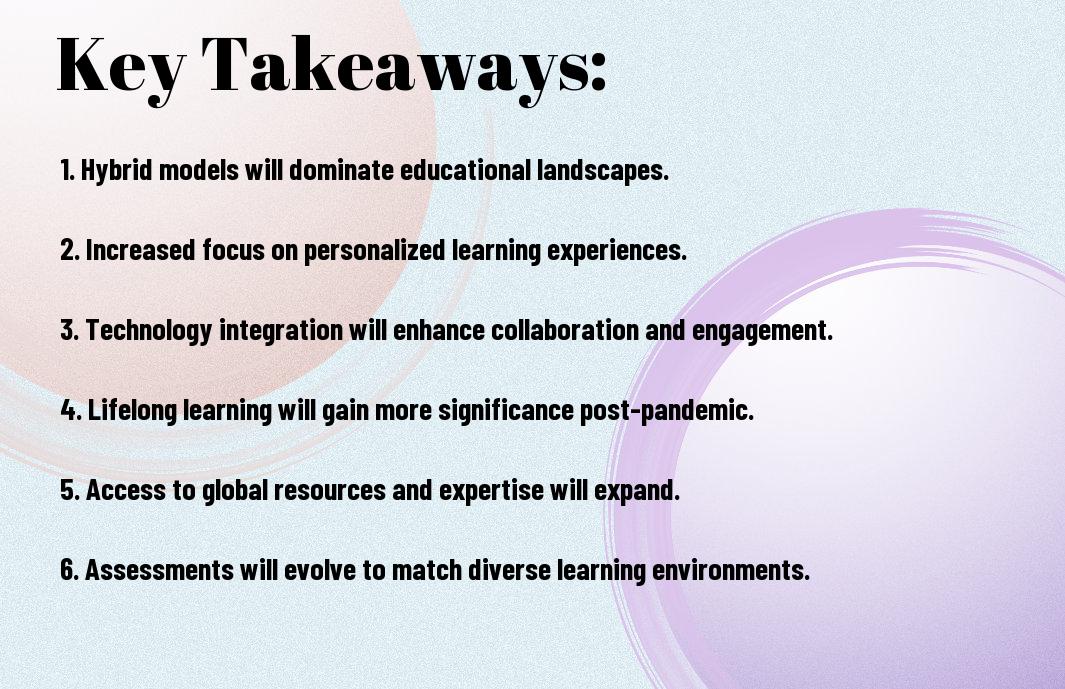
Key Takeaways:

Here are the main points to consider about the future of online education post-pandemic:

  • The shift to online learning has accelerated the development of new technologies, making online education more accessible and affordable for students worldwide.
  • Personalized learning experiences will become more prevalent, as artificial intelligence and machine learning help tailor education to individual students’ needs and abilities.
  • Virtual and augmented reality technologies will play a larger role in online education, providing immersive and interactive learning experiences that enhance student engagement and understanding.
  • Flexible learning pathways will become more common, allowing students to pursue education at their own pace and on their own schedule, whether through asynchronous or synchronous learning models.
  • Collaboration and community-building will be crucial components of online education, as students, teachers, and institutions work together to create supportive and inclusive online learning environments.

Current State of Online Education

Before exploring into the future, you need to understand the current landscape. You can learn more about How the Pandemic Impacted Online Education for Gen Z and its effects on your educational journey.

Impact of the Pandemic

Similarly, the status of online education has undergone significant changes, and you are likely aware of the pandemic’s influence on your learning experience.

Shift to Remote Learning

About the changes in online education, you have probably noticed a significant shift towards remote learning, which has become the new norm for many students like you.

The shift to remote learning has enabled you to access educational resources from anywhere, at any time, and has provided you with more flexibility in your learning schedule, allowing you to balance your education with other aspects of your life, and you can expect this trend to continue in the future, with institutions investing more in digital infrastructure and online course development to support your learning needs.
Technological Advancements

You will notice significant changes in online education post-pandemic, driven by technological advancements, as you explore Unpacking the Evolution and Future of Online Education, which will shape your learning experience.

Artificial Intelligence in Education

On the horizon, artificial intelligence will play a significant role in personalizing your learning experience, making it more efficient and effective, as you navigate through online courses.

Virtual and Augmented Reality Integration

Before entering into the world of online education, consider how virtual and augmented reality will enhance your engagement and interaction with course materials, making learning more immersive and fun.

In addition, as you explore deeper into virtual and augmented reality integration, you will discover new possibilities for simulating real-world experiences, allowing you to practice and apply your skills in a risk-free environment, which will revolutionize the way you learn and retain information.

Accessibility and Equity

Unlike traditional classrooms, online education offers you the opportunity to access learning materials from anywhere, promoting equity and accessibility in your educational journey.

Bridging the Digital Divide

Alongside the growth of online education, you will notice efforts to bridge the digital divide, ensuring that you have access to the necessary tools and resources to succeed in your online learning environment.

Inclusive Learning Environments

Along with the development of online education, you will see the creation of more inclusive learning environments, allowing you to feel comfortable and supported throughout your educational experience.

Considering the importance of inclusivity, you will find that online educational platforms are being designed to accommodate diverse needs, enabling you to learn in a way that suits you best, and providing you with the necessary accommodations to ensure your success.

Personalized Learning Experiences

Many educators and students have witnessed the benefits of personalized learning, which can be tailored to your individual needs and goals. You can expect to see more adaptive and interactive approaches to learning that address your unique strengths and weaknesses.

Adaptive Learning Platforms

Leveraging advanced technologies, adaptive learning platforms will offer you a more effective and efficient way to learn, providing real-time feedback and adjusting the difficulty level of course materials to suit your pace and learning style.

Competency-Based Progression

Around the globe, education systems are shifting towards competency-based progression, allowing you to progress through courses at your own speed, demonstrating mastery of specific skills and knowledge before moving on to the next level.

Learning through competency-based progression, you will be able to focus on developing a deep understanding of the subject matter, rather than just accumulating credits or completing a set of courses. You will have the flexibility to learn at your own pace, and your progress will be measured by your ability to demonstrate specific competencies, rather than your age or grade level. This approach will enable you to take ownership of your learning, making it more engaging, effective, and relevant to your needs and goals.

Teacher Training and Support

After the pandemic, you will need to prioritize teacher training and support to ensure a smooth transition to online education. You will have to invest in programs that enhance your teachers’ digital literacy and pedagogical skills, enabling them to create engaging online courses and effectively manage virtual classrooms.

Professional Development Opportunities

Above all, you should consider providing your teachers with ongoing professional development opportunities to stay up-to-date with the latest online education trends and technologies. You can offer workshops, webinars, and online courses that focus on topics such as instructional design, online assessment, and student engagement.

Mentoring and Coaching Programs

Behind every successful online educator is a supportive mentor or coach who guides them in developing their online teaching skills. You can establish mentoring and coaching programs that pair experienced educators with new teachers, providing them with personalized support and feedback to enhance their online teaching practices.

Coaching is an necessary aspect of mentoring and coaching programs, as it helps your teachers to reflect on their teaching practices, identify areas for improvement, and develop strategies to enhance student learning outcomes. You can provide your teachers with access to coaching services, such as one-on-one coaching sessions or peer coaching groups, to help them develop the skills and confidence they need to succeed in online education.

Future Trends and Challenges

To navigate the future of online education, you will need to consider the potential trends and challenges that lie ahead, and how they will impact your learning experience.

Emerging Technologies and Innovations

Astonishing advancements in technologies like AI and VR will revolutionize your online learning experience, making it more immersive and interactive.

Addressing Cybersecurity Concerns

Evolving threats to online security will require you to be vigilant about protecting your personal data and ensuring the integrity of your online education platform.

But as you investigate deeper into the world of online education, you will realize that addressing cybersecurity concerns is an ongoing process that requires your attention and cooperation, as you will need to adopt best practices such as using strong passwords, keeping your software up-to-date, and being cautious when clicking on links or downloading attachments from unknown sources, to safeguard your online learning environment.

To wrap up

Upon reflecting on the future of online education post-pandemic, you will realize that your learning experience is about to undergo a significant transformation. You can expect more personalized and interactive online courses, allowing you to learn at your own pace. Your access to quality education will increase, and you will have the opportunity to connect with a global community of learners, making your educational journey more engaging and effective. As you initiate on this new era of online learning, you will discover new ways to achieve your academic goals.

FAQ

Q: What will be the impact of the pandemic on the future of online education?

A: The pandemic has accelerated the shift towards online education, and its impact will be long-lasting. As a result, educational institutions will need to invest in digital infrastructure, including learning management systems, video conferencing tools, and high-speed internet connectivity. This will enable them to offer high-quality online courses and programs that cater to the diverse needs of students. Moreover, the pandemic has shown that online education can be an effective way to increase access to education, particularly for students who may not have had access to traditional brick-and-mortar institutions.

Q: How will online education change the way teachers interact with students in the post-pandemic era?

A: The future of online education will require teachers to develop new skills and strategies to engage with students in a virtual environment. This may include using interactive tools, such as gamification, virtual reality, and artificial intelligence, to create immersive learning experiences. Additionally, teachers will need to be more responsive to student needs, using data analytics and other technologies to provide personalized feedback and support. Online education will also enable teachers to reach a broader audience, including students from different geographical locations and cultural backgrounds, which will enrich the learning experience and promote global understanding.

Q: What are the potential benefits and drawbacks of online education in the post-pandemic world?

A: The potential benefits of online education include increased flexibility, accessibility, and affordability, as well as the ability to offer a wider range of courses and programs. Online education can also provide students with the opportunity to learn at their own pace, using a variety of digital resources and tools. However, there are also potential drawbacks, such as the lack of face-to-face interaction, technical issues, and the need for self-motivation and discipline. Furthermore, online education may exacerbate existing inequalities, particularly for students who do not have access to reliable internet connectivity or digital devices. To mitigate these drawbacks, educational institutions will need to invest in digital literacy programs and provide ongoing support to students, to ensure that they have the skills and resources they need to succeed in an online learning environment.

How Online Education Empowers Lifelong Learners

As you navigate your personal and professional life, you’re likely to encounter various opportunities for growth and development. You have the ability to pursue new skills and interests at your own pace, and online education makes this possible. With online learning, you can access a wide range of courses and resources, allowing you to take control of your learning journey and expand your knowledge in a flexible and convenient manner, tailored to your unique needs and goals.

Key Takeaways:

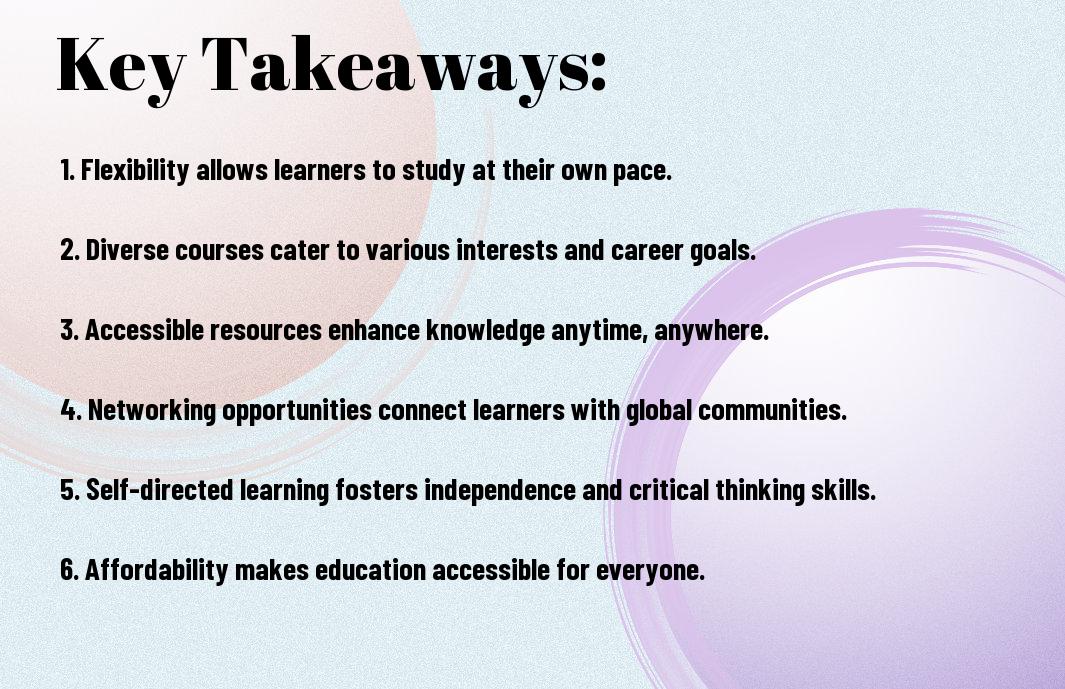
  • Flexibility is a significant advantage of online education, allowing learners to access courses and study materials at their own pace and on their own schedule.
  • Online education platforms provide a wide range of courses and programs, enabling learners to explore different fields and interests without geographical limitations.
  • The accessibility of online education enables learners with physical or financial constraints to pursue their educational goals and gain new skills.
  • Online education tools and resources facilitate self-directed learning, allowing learners to take ownership of their educational journey and progress at their own rate.
  • Online education communities and networks offer opportunities for learners to connect with peers and experts, fostering a sense of belonging and support in the learning process.

Benefits of Online Education

While exploring online education, you’ll discover numerous advantages that enhance your learning experience. Online education offers flexibility, accessibility, and a personalized learning environment, making it an ideal choice for you to acquire new skills and knowledge at your own pace.

Flexibility and Accessibility

Across various platforms and devices, online education provides you with the freedom to access course materials and learn from anywhere, allowing you to balance your educational pursuits with other responsibilities.

Personalized Learning Experience

After enrolling in an online course, you can tailor your learning experience to suit your needs, learning style, and goals, enabling you to focus on areas that interest you the most and progress at your own speed.

For instance, you can pause and rewind video lectures, re-read text-based materials, and engage in interactive discussions with peers and instructors, all of which facilitate a deeper understanding of the subject matter and help you stay motivated throughout your learning journey.

Overcoming Barriers

If you’re considering online education, you can overcome barriers by exploring resources like Empowering Learners: The Rise of Online Education | Blog, which provides valuable insights into the world of online learning.

Technological Advancements

Around the globe, technological advancements have made online education more accessible, enabling you to learn from anywhere with a stable internet connection, and opening up new opportunities for your personal and professional growth.

Changing Mindsets

By embracing online education, you can challenge traditional notions of learning and develop a more flexible approach to acquiring new skills and knowledge, which can have a significant impact on your life and career.

Overcoming traditional mindsets and embracing online education can be a transformative experience, allowing you to take control of your learning journey and pursue your interests and passions in a more autonomous and self-directed way, which can lead to increased motivation and a greater sense of accomplishment as you achieve your goals.

Empowering Learners

To become a lifelong learner, you can leverage online education, which provides access to various resources, including Online Learning Platforms: Empowering Lifelong Education. This enables you to take control of your learning journey.

Acquisition of New Skills

The ability to acquire new skills is at your fingertips with online education, allowing you to enhance your knowledge and stay updated in your field of interest.

Enhanced Career Opportunities

Across various industries, online education opens doors to new career opportunities, enabling you to upskill and reskill, thereby boosting your professional growth.

Career advancement is highly dependent on your ability to continuously learn and adapt to new technologies and trends. As you begin on this journey of lifelong learning, you’ll find that your career prospects expand, and you become more competitive in the job market, with your newly acquired skills and knowledge making you a more attractive candidate to potential employers.

The Role of Technology

Once again, you find yourself at the forefront of a revolution, with technology paving the way for online education to thrive, enabling you to access a vast array of courses and resources from anywhere in the world.

Innovative Platforms and Tools

On the cutting edge of this revolution, you have innovative platforms and tools that provide you with personalized learning experiences, allowing you to learn at your own pace and explore topics that interest you the most.

Virtual Learning Environments

Above all, virtual learning environments offer you a unique opportunity to engage with your peers and instructors in a collaborative and interactive setting, simulating a traditional classroom experience.

It is in these virtual learning environments that you can fully immerse yourself in the subject matter, participating in discussions, sharing your thoughts and ideas, and receiving feedback from your instructors, all of which contribute to a rich and rewarding learning experience that is tailored to your needs and goals.

Success Stories

Now that you’ve explored the world of online education, it’s time to probe into the achievements of those who have benefited from it. You’ll find numerous examples of individuals who have transformed their lives through online learning.

Inspiring Examples of Online Learners

Like-minded individuals have found online education to be a game-changer, allowing you to pursue your passions and interests at your own pace. You can learn from their experiences and get inspired to take the leap towards online learning.

Achievements and Accomplishments

Successful learners have achieved their goals, and you can too, by leveraging online education to enhance your skills and knowledge. You’ll be amazed at what you can accomplish with dedication and the right resources.

It is impressive to see how online education has enabled you to earn degrees, certifications, and diplomas, leading to better career opportunities and higher salaries. You can join the ranks of accomplished online learners who have improved their lives and achieved their objectives through online education.

Challenges and Limitations

Not all online education platforms are created equal, and you may encounter challenges such as poor internet connectivity, outdated course materials, and lack of support from instructors.

Addressing Digital Divide

The digital divide can be a significant barrier to online education, and you need to consider factors such as access to devices and internet connectivity to ensure that you can participate fully in online courses.

Ensuring Quality and Accountability

Below the surface of online education lies the issue of quality and accountability, and you must be diligent in researching the credentials of online institutions and instructors to ensure that you receive a high-quality education.

Even as you navigate the complexities of online education, you can take steps to ensure that you receive a high-quality education by setting clear goals, seeking support from instructors and peers, and regularly evaluating your progress, which will help you to get the most out of your online learning experience and achieve your goals.

Conclusion

With this in mind, you can see how online education empowers your pursuit of lifelong learning. You have the flexibility to learn at your own pace, accessing a wide range of courses and resources. Your ability to acquire new skills and knowledge is enhanced, enabling you to stay up-to-date in your field and achieve your goals. You are in control of your educational journey, and online education provides the tools you need to succeed.

FAQ

Q: What role does online education play in empowering lifelong learners to achieve their goals?

A: Online education empowers lifelong learners by providing them with flexible and accessible learning opportunities. Through online courses and degree programs, individuals can acquire new skills, enhance their knowledge, and pursue their interests at their own pace. This flexibility is especially beneficial for those with busy schedules or living in remote areas, as it allows them to balance their learning with other responsibilities. Moreover, online education offers a wide range of resources and tools that cater to different learning styles, making it easier for learners to engage with the material and stay motivated.

Q: How does online education facilitate personalized learning experiences for lifelong learners?

A: Online education facilitates personalized learning experiences through various technologies and strategies. For instance, learning management systems can tailor course content to individual learners’ needs and abilities, while analytics tools can track progress and identify areas where learners need extra support. Additionally, online discussion forums and social media groups enable learners to connect with peers and instructors, fostering a sense of community and facilitating collaborative learning. This personalized approach helps lifelong learners to stay engaged, build confidence, and develop a deeper understanding of the subject matter.

Q: What opportunities and benefits does online education offer to lifelong learners in terms of career development and professional growth?

A: Online education offers numerous opportunities and benefits for lifelong learners seeking to advance their careers or transition to new fields. By taking online courses or earning certifications, individuals can acquire specialized skills and knowledge that are in high demand by employers. Moreover, online education provides access to a global network of professionals and experts, enabling learners to establish valuable connections and stay updated on industry trends. The flexibility of online learning also allows working professionals to pursue further education without having to leave their jobs, making it easier to balance career and learning responsibilities. As a result, online education can lead to improved job prospects, higher salaries, and enhanced career satisfaction for lifelong learners.

The Role of AI in Online Education

As you navigate the evolving landscape of online education, you will inevitably encounter the concept of artificial intelligence (AI). You may wonder how AI is transforming the way you learn and interact with educational content. Your curiosity is justified, as AI is increasingly being integrated into online learning platforms, changing the dynamics of education. You will discover how AI enhances your learning experience, making it more personalized and efficient, in this exploration of its role in online education.

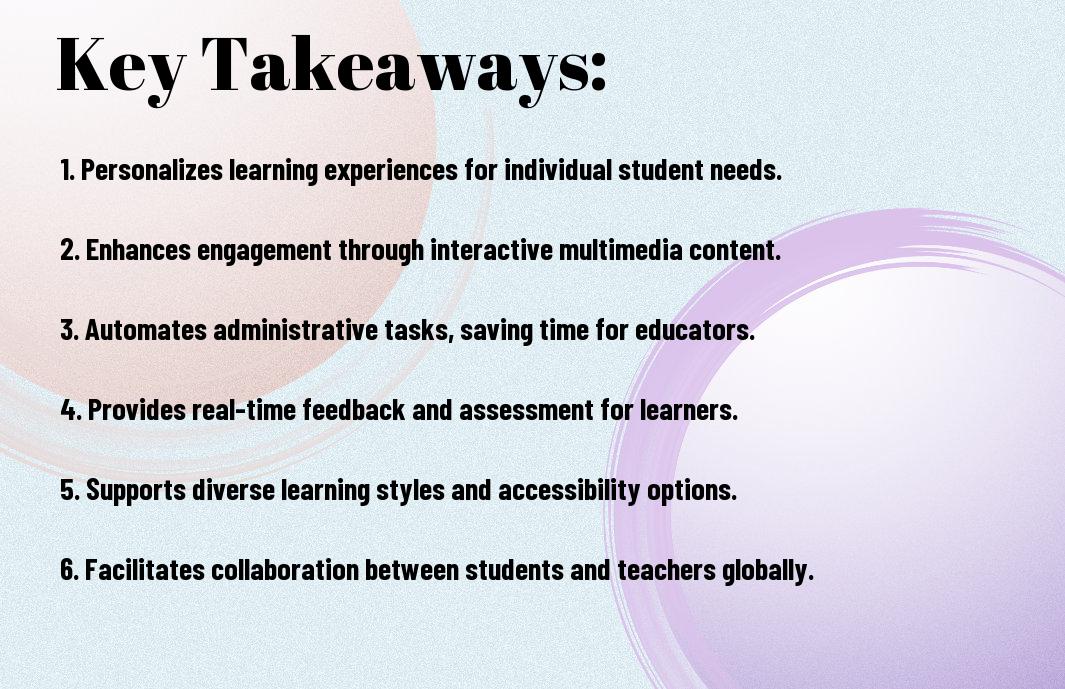
Key Takeaways:

  • The integration of Artificial Intelligence (AI) in online education has transformed the learning experience, making it more personalized and interactive for students.
  • AI-powered tools can help automate administrative tasks, such as grading and feedback, allowing instructors to focus on more hands-on and human-centric aspects of teaching.
  • Intelligent tutoring systems can provide students with real-time feedback and adaptive learning pathways, helping to improve learning outcomes and increase student engagement.
  • The use of machine learning algorithms can help educators identify knowledge gaps and develop targeted interventions to support students who are struggling with specific concepts or skills.
  • As AI technology continues to evolve, it is likely to play an increasingly significant role in shaping the future of online education, enabling more efficient, effective, and accessible learning opportunities for students around the world.

The Impact of AI on Online Learning

A significant transformation is underway in online education, as AI assumes a prominent role in shaping your learning experience. You will notice a marked difference in the way you interact with course materials and instructors, as AI-powered tools facilitate more efficient and effective learning pathways.

Personalized Education

Along with the advent of AI, you can expect a more tailored approach to your education, as adaptive learning systems adjust to your individual needs and abilities. You will find that your learning experience is more engaging and relevant, as AI-driven platforms provide personalized recommendations and feedback.

Automated Grading Systems

An added benefit of AI in online education is the introduction of automated grading systems, which enable instructors to assess your work more accurately and efficiently. You will appreciate the prompt feedback and objective evaluation of your assignments, as AI-powered grading tools help to minimize bias and inconsistency.

Even as you become more accustomed to automated grading systems, you may wonder about the implications of relying on AI to evaluate your work. You can be assured that these systems are designed to enhance the learning process, freeing instructors to focus on providing guidance and support, while AI handles the more mundane aspects of grading and assessment, allowing you to concentrate on your academic goals.

Benefits of AI in Online Education

Clearly, the integration of AI in online education offers numerous advantages, as outlined in the Artificial Intelligence and the Future of Teaching and Learning report. You can explore how AI enhances your educational experience.

Increased Accessibility

Accessibly, online education platforms with AI provide you with flexible learning options, allowing you to access course materials and lectures at your convenience, making it easier to balance your studies with other responsibilities.

Enhanced Student Engagement

Below the surface of traditional teaching methods, AI-powered tools offer personalized learning experiences, enabling you to engage more effectively with course materials and interact with instructors in a more meaningful way.

To further enhance your engagement, AI-driven systems can analyze your learning patterns and adapt the curriculum to your needs, providing real-time feedback and guidance, which helps you stay motivated and focused on your academic goals.

The Role of AI in Course Development

Now, as you explore the role of AI in online education, you will discover its significance in course development, where AI-powered tools facilitate the creation of personalized learning paths and automate administrative tasks, enabling educators to focus on what matters most – teaching.

Intelligent Tutoring Systems

Structures like intelligent tutoring systems are being developed to provide one-on-one support to students, using AI algorithms to offer real-time feedback and guidance, thereby enhancing your learning experience.

Adaptive Learning Platforms

Tailoring learning to individual needs, adaptive learning platforms utilize AI to adjust the difficulty level of course materials, ensuring that you engage with content that is neither too easy nor too challenging, thus optimizing your learning outcomes.

Another advantage of adaptive learning platforms is that they allow you to learn at your own pace, with AI-driven systems continuously assessing your knowledge gaps and suggesting additional resources to fill them, thereby making your learning journey more efficient and effective.

Challenges and Limitations of AI in Online Education

Not everything about AI in online education is perfect, as you will encounter several challenges that can hinder its effectiveness, and it is important to consider these limitations when implementing AI in your online learning environment.

Technical Issues

Any attempt to integrate AI into online education platforms can be fraught with technical difficulties, such as system crashes, slow loading times, and compatibility issues, which can frustrate you and hinder your learning experience.

Data Privacy Concerns

About the use of AI in online education, you should be aware that your personal data may be at risk, as AI systems often rely on collecting and analyzing large amounts of student data, which can be vulnerable to cyber attacks and unauthorized access.

Issues related to data privacy are a significant concern when using AI in online education, as you may be worried about how your data is being used, shared, and protected, and it is important to ensure that your online learning environment has robust security measures in place to safeguard your personal information.

The Future of AI in Online Education

Keep in mind that the integration of AI in online education is an ongoing process, and you can expect significant advancements in the coming years, transforming the way you learn and interact with educational materials.

Emerging Trends

Contrary to traditional methods, AI-powered adaptive learning systems are gaining popularity, allowing you to personalize your learning experience and paving the way for more effective education.

Potential Applications

Potentially, AI can revolutionize online education by providing you with real-time feedback, automated grading, and intelligent tutoring systems, making your learning journey more efficient and engaging.

In addition, as you explore the potential applications of AI in online education, you will discover that it can help you identify knowledge gaps, offer customized learning paths, and facilitate collaboration with peers, ultimately enhancing your overall educational experience.

Implementation Strategies for AI in Online Education

All educators and institutions seeking to integrate AI into their online platforms can learn from existing research, such as the article on AI and College: The Impact on Online Learning, to inform your decisions.

Teacher Training

Beneath the surface of successful AI implementation lies effective teacher training, which enables you to harness the full potential of AI tools and create engaging online learning experiences.

Infrastructure Development

Accross your institution, you will need to assess and develop your technological infrastructure to support AI-powered online education, ensuring seamless integration and optimal performance.

In addition, as you develop your infrastructure, you should prioritize scalability, security, and accessibility to guarantee that your online learning environment is reliable and efficient, allowing you to focus on what matters most – providing high-quality education to your students.

Summing up

Conclusively, as you examine into online education, you will find that AI plays a significant role in shaping your learning experience. You can explore more about the impact of AI on online learning through resources such as How AI Impacts Online Learning, which provides valuable insights into the future of education, and how you can leverage AI to enhance your online learning journey.

FAQ

Q: What is the role of AI in online education, and how is it transforming the learning experience?

A: The role of AI in online education is multifaceted, involving the use of artificial intelligence to create personalized learning paths, automate grading, and enhance student engagement. AI algorithms analyze student data to identify knowledge gaps and learning patterns, enabling the creation of tailored educational content. This not only improves learning outcomes but also makes the educational process more efficient and accessible. Moreover, AI-powered chatbots and virtual assistants provide immediate support to students, answering queries and offering guidance throughout their learning journey.

Q: How does AI contribute to improving accessibility in online education, particularly for students with disabilities?

A: AI plays a significant role in making online education more accessible, especially for students with disabilities. For instance, AI-powered tools can convert text-to-speech, enabling visually impaired students to listen to written content. Additionally, speech-to-text functionalities assist students with mobility or dexterity impairments to interact with digital materials more easily. AI-driven platforms can also automatically generate closed captions for video lectures, ensuring that students with hearing impairments can follow along. By incorporating these features, AI helps in creating a more inclusive online learning environment.

Q: Can AI replace human teachers in online education, or is it seen as a complementary tool to enhance teaching methods?

A: While AI is revolutionizing online education, it is not intended to replace human teachers. Instead, AI is viewed as a complementary tool designed to enhance teaching methods and support the role of educators. AI can handle administrative tasks such as grading and data analysis, freeing up instructors to focus on what matters most: providing high-quality instruction, mentoring, and creating meaningful interactions with students. The integration of AI in online education aims to augment the capabilities of teachers, making the educational process more effective, engaging, and student-centered, rather than replacing the invaluable human element that educators bring to the learning experience.

Tips for Staying Organized in Online Classes

As you navigate the world of online learning, you’ll find that staying organized is key to your success. You’ll need to manage your time effectively and keep track of your assignments to get the most out of your courses. For a head start, you can check out 15 Tips to Succeed in an Online Class to set yourself up for achievement. By implementing a few simple strategies, you can stay on top of your work and achieve your academic goals.

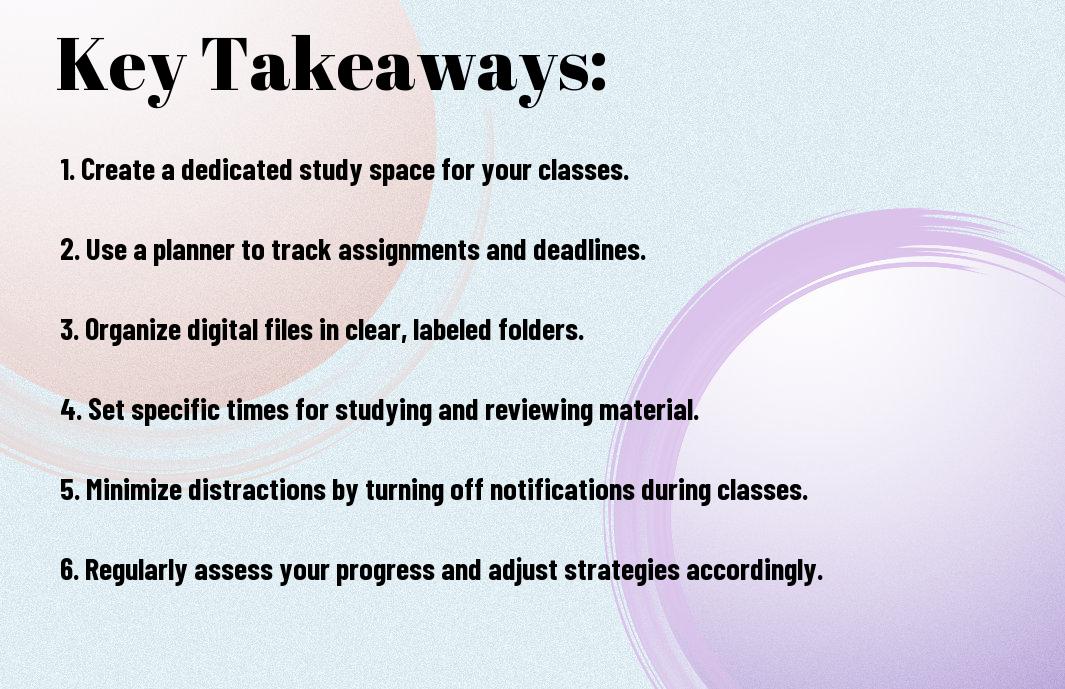
Key Takeaways:

To succeed in online classes, it’s important to develop effective strategies for staying organized. Here are some key points to consider:

  • Set a schedule and stick to it, treating online classes as you would traditional classes to maintain a routine and avoid procrastination.
  • Create a dedicated workspace that is quiet, comfortable, and free from distractions to help you stay focused and engaged during online lectures and assignments.
  • Use technology to your advantage by leveraging tools such as digital calendars, reminders, and task lists to stay on top of assignments and deadlines.
  • Develop a note-taking system that works for you, whether it’s typing notes, handwriting them, or using a combination of both, to help you review and retain course material.
  • Establish regular communication with your instructor and classmates through discussion boards, email, or video conferencing to stay connected and address any questions or concerns that may arise during the course.

Setting Up Your Space

While taking online classes, your physical environment plays a significant role in your productivity and focus. You need to set up a space that promotes learning and helps you stay organized.

Designate a dedicated study area

Behind every successful online learner is a well-organized and dedicated study space, you will be able to focus better and avoid distractions when you have a specific area for studying.

Minimize distractions and optimize comfort

Studying in a comfortable and quiet space will help you to stay focused, you should choose a location with minimal noise and distractions, and invest in a comfortable and ergonomic chair and desk.

To minimize distractions, consider turning off notifications on your phone or using a website blocker to avoid procrastination, you can also optimize your comfort by adjusting the lighting and temperature in your study space to suit your needs, this will help you to stay focused and retain information better.

Managing Your Time

One of the most significant advantages of online classes is flexibility, but it can also lead to procrastination. You need to develop a routine to stay on track and make the most of your time.

Create a schedule and stick to it

The key to successful time management is creating a schedule that works for you. You should plan out your day, week, and month, and set specific times for studying, attending virtual classes, and completing assignments.

Prioritize tasks and break them down into manageable chunks

An effective way to manage your time is to prioritize your tasks and break them down into smaller, manageable chunks. You will be able to focus on one task at a time and make steady progress towards your goals.

Them being smaller and manageable, you can tackle each task with confidence, and as you complete each one, you will feel a sense of accomplishment and motivation to move on to the next task. You can use tools like to-do lists or calendars to help you prioritize and stay organized, and adjust your schedule as needed to ensure you are meeting your goals.

Staying Engaged

Keep yourself motivated and focused in online classes by exploring resources like 5 Tips for Staying Organized in Online School to help you stay on track.

Actively participate in online discussions

Against all distractions, make sure you contribute to online forums and discussions to enhance your learning experience and engage with your peers.

Use video conferencing tools to connect with instructors and peers

Conferencing with your instructors and peers through video calls can help you stay connected and engaged in your online classes.

Instructors can provide you with personalized feedback and guidance through video conferencing, which can be incredibly valuable for your academic success. You can also use these tools to collaborate with your peers on group projects and discuss topics in real-time, making your online learning experience more interactive and enjoyable.

Organizing Digital Materials

All your digital materials, including lecture notes, readings, and assignments, can be organized using various tools and strategies. This will help you stay on top of your work and ensure that you can easily access the resources you need.

Use cloud storage for easy access to course materials

Among the many options available, you can use cloud storage services like Google Drive or Dropbox to store and access your files from anywhere, at any time, allowing you to work efficiently and effectively.

Keep track of assignments and deadlines with digital calendars

At the start of each course, you can set up a digital calendar to keep track of upcoming assignments and deadlines, helping you plan your time and stay organized throughout the semester.

This digital calendar can be synced across all your devices, sending you notifications and reminders, so you never miss a deadline, and you can prioritize your tasks and focus on the most important ones, making it easier for you to manage your workload and achieve your academic goals.

Avoiding Procrastination

Once again, staying organized is key to avoiding procrastination in online classes. You can find helpful advice on how to stay organized by checking out discussions like Any way to be more organized with online classes?, where you can learn from others who have experienced similar challenges.

Break tasks into smaller, manageable tasks

At the beginning of each week, break down larger tasks into smaller ones to help you stay on track and avoid feeling overwhelmed by your workload, allowing you to make steady progress towards your goals.

Use productivity tools to stay focused and on track

Tools such as calendars, to-do lists, and website blockers can help you stay organized and avoid distractions, making it easier for you to concentrate on your studies.

To get the most out of these tools, you should experiment with different options to find what works best for you, and then incorporate them into your daily routine, helping you to develop habits that will serve you well throughout your online courses.

Seeking Help When Needed

Many online students hesitate to ask for help, but it’s crucial to your success. You can seek help from instructors, classmates, or online resources to clarify doubts and stay on track.

Reach out to instructors for clarification and support

Around the time you’re struggling with a concept, don’t hesitate to reach out to your instructors for help. You can send them an email or use the course messaging system to ask questions and get feedback.

Connect with classmates for collaboration and study groups

Connecting with your classmates can be a great way to get help and support. You can participate in online discussions, join study groups, or collaborate on projects to learn from each other and stay motivated.

Classmates can be a valuable resource for you, offering different perspectives and insights that can help you understand the course material better. You can work together to complete assignments, prepare for exams, and share knowledge and experiences, which can enhance your learning and help you achieve your goals.

To wrap up

Presently, you have learned various strategies to enhance your online learning experience. You can maximize your productivity by creating a schedule and sticking to it, while also minimizing distractions and staying engaged in your virtual classes. By implementing these tips, you will be able to effectively manage your time and stay organized, which will help you achieve your academic goals and make the most out of your online classes, making your learning journey more efficient and successful.

FAQ

Q: What are some effective ways to manage my time in online classes?

A: To stay organized in online classes, it’s helpful to create a schedule and stick to it. Set specific times for attending virtual lectures, completing assignments, and studying. Utilize digital calendars or planners to keep track of deadlines and upcoming events. Additionally, prioritize tasks based on their importance and deadlines to ensure you’re making the most of your time. Breaking down larger tasks into smaller, manageable chunks can also aid in maintaining a smooth workflow.

Q: How can I minimize distractions and stay focused during online classes?

A: Minimizing distractions is key to staying focused in online classes. Identify a quiet, dedicated workspace that is free from interruptions. Consider using website blockers or apps that help you stay on track by limiting access to non-crucial websites or social media during class hours. Furthermore, establishing a routine of logging off from social media and notifications before class can significantly enhance your ability to concentrate. It’s also beneficial to take breaks to refresh your mind and recharge, allowing you to come back to your studies with renewed focus.

Q: What tools or resources can I use to keep my online class materials organized?

A: There are numerous tools and resources available to help you stay organized in online classes. Digital organizers, such as Trello or Asana, can be used to keep track of assignments, projects, and deadlines. Cloud storage services like Google Drive, Dropbox, or OneDrive are excellent for storing and accessing your class materials from anywhere. Additionally, taking advantage of digital note-taking tools can help you keep all your notes and handouts in one place, making it easier to study and prepare for exams. Utilizing these tools can significantly streamline your workflow and help you maintain a high level of organization throughout the course.

Online Learning Strategies for Working Professionals

As you navigate your career, you’re likely seeking ways to enhance your skills and stay ahead in your field. Your profession is evolving, and you need to adapt to thrive. You’re aware that learning is a lifelong process, and online education can be a powerful tool to boost your professional growth. You can leverage online learning to gain new insights, expand your network, and increase your earning potential, all while balancing your work and personal life. You will discover how to make the most of online learning opportunities.

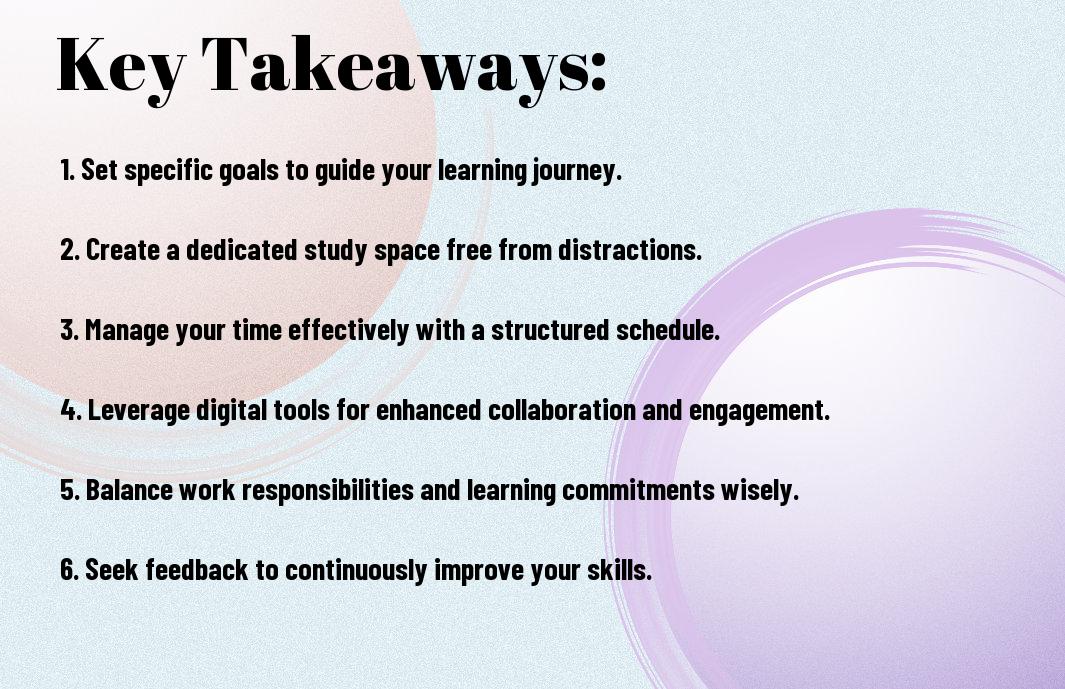
Key Takeaways:

To succeed in online learning as a working professional, consider the following strategies:

  • Develop a personalized learning plan that fits your schedule and learning style to maximize your productivity and achieve your career goals.
  • Utilize time management techniques to balance work, family, and online courses, ensuring you can complete assignments and participate in discussions without feeling overwhelmed.
  • Leverage technology to your advantage by using learning management systems, video conferencing tools, and mobile apps to access course materials, collaborate with peers, and stay organized.
  • Focus on self-motivation and discipline to stay engaged and motivated throughout the online learning process, even when faced with challenging coursework or deadlines.
  • Seek support from instructors, peers, and mentors to help you navigate online learning platforms, resolve technical issues, and gain valuable industry insights and feedback.

Setting Goals

Before you start your online learning journey, it’s vital to establish clear objectives. You need to define what you want to achieve and set specific, measurable goals. This will help you stay focused and motivated throughout the process.

Identifying Priorities

Previously, you may have thought about what you want to accomplish, but now it’s time to identify your priorities. You should consider your current skills, interests, and career aspirations to determine what’s most important to you.

Creating a Schedule

At this stage, you’ll need to plan out when and how you’ll achieve your goals. You should create a schedule that balances your work, personal life, and online learning commitments.

But as you create your schedule, you’ll need to be realistic about your available time and energy. You should consider your most productive hours, your learning style, and the amount of time required for each course or activity, and make adjustments accordingly to ensure you can stick to your plan and make steady progress towards your goals.

Effective Time Management

Even with a busy schedule, you can manage your time effectively to accommodate online learning. You need to prioritize your tasks, set realistic goals, and create a schedule that works for you.

Minimizing Distractions

To achieve this, you will need to identify and eliminate distractions that can hinder your learning process, such as turning off notifications on your phone or finding a quiet study space.

Maximizing Productivity

Before you start your online course, you should prepare your study environment to maximize your productivity, including having all the necessary materials and resources within reach.

Effective management of your time is key to maximizing productivity. You can achieve this by breaking down your study sessions into manageable chunks, taking regular breaks to avoid burnout, and staying focused on your goals. As you progress in your online course, you will find that your ability to manage your time effectively will have a significant impact on your overall success.

Choosing Online Courses

All working professionals seeking to enhance their skills and knowledge should consider online courses. You can explore various platforms and topics to find the best fit for your needs.

Selecting Relevant Topics

Avoiding unnecessary courses, you should focus on topics that align with your career goals and interests. You will be more motivated to learn when the subject matter is relevant to your profession.

Evaluating Course Quality

Aligning your expectations with the course outcomes, you should assess the course content, instructor expertise, and reviews from other learners. You want to ensure that the course will provide you with valuable insights and skills.

For instance, when evaluating course quality, you should look for courses that offer interactive learning experiences, such as discussions, quizzes, and hands-on activities. You can also check if the course is accredited by a reputable institution or organization, and if it offers any recognition or certification upon completion. By doing so, you can make an informed decision and choose a course that will help you achieve your learning objectives and enhance your professional development.

Staying Motivated

After establishing your online learning routine, maintaining motivation is key to your success. You need to set clear goals and track your progress to stay focused and driven.

Overcoming Obstacles

Across various challenges you may face, developing a growth mindset will help you navigate through difficulties and stay committed to your learning objectives, enabling you to overcome any hurdles that come your way.

Building a Support Network

Among the strategies to enhance your online learning experience, surrounding yourself with like-minded individuals can provide valuable encouragement and support, helping you stay motivated and accountable throughout your journey.

But as you build your support network, you will discover that having people who understand your goals and challenges can make a significant difference in your learning experience. You will be able to share your successes and setbacks with them, and gain valuable insights and advice that will help you stay on track and achieve your objectives, ultimately leading to a more fulfilling and effective learning experience.

Leveraging Technology

Despite the demands of your job, you can stay ahead of the curve by embracing online learning. You can access a wide range of courses and resources, allowing you to learn at your own pace and convenience.

Utilizing Online Tools

With numerous online tools available, you can streamline your learning process. You can utilize platforms that offer personalized learning paths, interactive simulations, and real-time feedback to enhance your learning experience.

Enhancing Collaboration

Utilizing collaboration tools, you can connect with peers and mentors from around the world. You can participate in online discussions, share knowledge, and learn from others, which can be a valuable addition to your learning journey.

Due to the flexibility of online collaboration, you can engage with others at any time, from any location, allowing you to balance your work and learning commitments effectively. As you collaborate with others, you will develop vital skills, such as communication, problem-solving, and teamwork, which are vital for your personal and professional growth.

Balancing Work and Learning

Unlike traditional students, you have the added challenge of managing your work and learning responsibilities. To achieve success, you can learn How to Balance Work and Online College Classes and find a routine that works for you.

Managing Responsibilities

Beneath the surface of your busy schedule, you need to prioritize your tasks and allocate specific times for work, study, and relaxation to maintain productivity.

Maintaining a Healthy Balance

Around your priorities, you will find that establishing a healthy balance between work, learning, and personal life is crucial for your well-being and success.

Considering your unique situation, you must be intentional about allocating time for self-care, exercise, and spending time with loved ones, as these activities will help you recharge and stay motivated to achieve your goals.

Conclusion

On the whole, you now have the tools to enhance your online learning experience as a working professional. You can apply these strategies to boost your productivity, balance work and learning, and achieve your personal goals. By integrating these approaches into your daily routine, you will be able to maximize your learning outcomes and advance in your career, ultimately transforming your life and unlocking your full potential.

FAQ

Q: What are the most effective online learning strategies for working professionals with limited time?

A: For working professionals with limited time, effective online learning strategies include creating a schedule and sticking to it, setting specific learning goals, and utilizing bite-sized learning modules. Breaking down larger courses into smaller, manageable chunks allows for flexible learning, and leveraging mobile apps or podcasts for learning on-the-go can also be beneficial. Additionally, prioritizing courses that offer flexible pacing and asynchronous learning can help professionals balance work and learning responsibilities.

Q: How can working professionals stay motivated and engaged in online learning, especially when faced with the demands of a full-time job and other responsibilities?

A: Staying motivated and engaged in online learning requires a combination of strategies. Setting clear, achievable goals and tracking progress can help maintain motivation. Engaging with online communities or finding a study buddy can provide support and accountability. Celebrating small victories along the way and aligning learning objectives with career advancement can also boost motivation. Moreover, selecting courses that are directly relevant to current job challenges or future career aspirations can enhance engagement, as the learning is immediately applicable and valuable.

Q: What role does self-discipline play in the success of working professionals in online learning, and how can it be developed or strengthened?

A: Self-discipline is important for the success of working professionals in online learning as it enables them to stay committed to their learning goals despite busy schedules and competing demands. Developing or strengthening self-discipline involves establishing a routine, eliminating distractions during study times, and using tools or apps that help track time and stay focused. Additionally, creating a dedicated learning space, both physically and digitally, can help in minimizing procrastination and maximizing productivity. Regularly reviewing progress and adjusting the learning strategy as needed also plays a significant role in maintaining discipline and ensuring the successful completion of online courses.

Skip to content