Online Courses

How Online Education is Bridging the Knowledge Gap

As you explore the world of learning, you’ll find that online education is revolutionizing the way you access knowledge. Your location and background no longer limit your ability to gain new skills and information. With online education, you can bridge the knowledge gap that once existed, accessing courses and resources from anywhere in the world, at any time, and advancing your learning at your own pace.

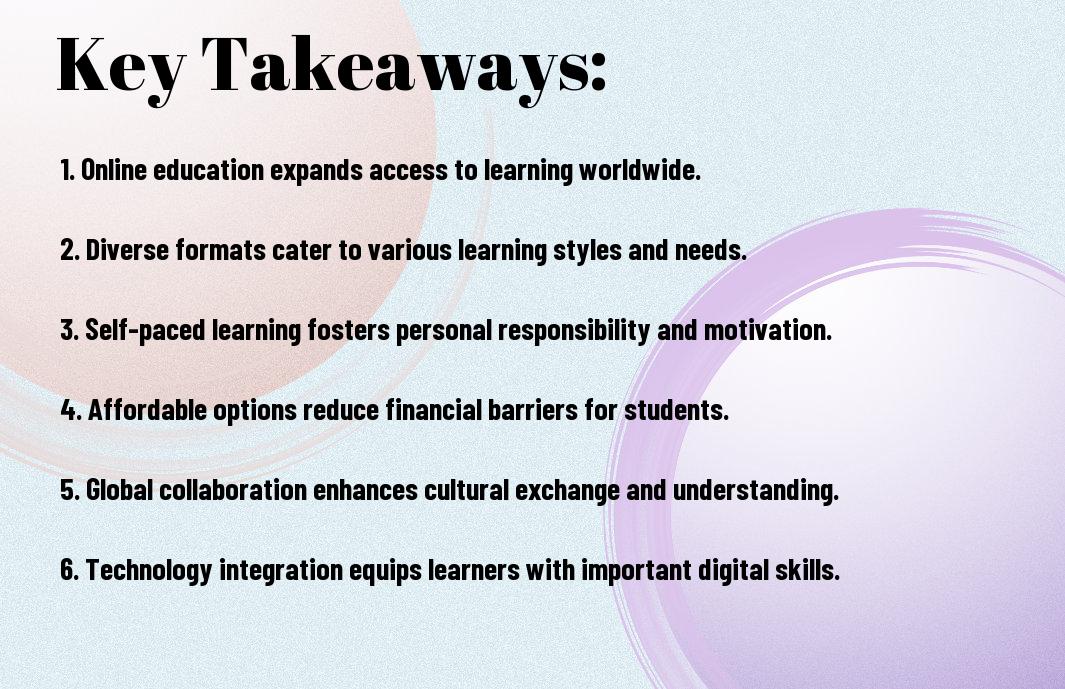
Key Takeaways:

  • Online education is democratizing access to high-quality educational resources, making it possible for people from all over the world to acquire new skills and knowledge, regardless of their geographical location or financial background.
  • The flexibility of online education allows learners to balances their academic pursuits with work, family, or other responsibilities, making it an attractive option for those who cannot attend traditional brick-and-mortar institutions.
  • Online education is bridging the knowledge gap by providing equal opportunities for underprivileged communities, rural areas, and people with disabilities to access quality education, thereby promoting social equity and inclusion.
  • The personalization of online education enables learners to learn at their own pace, interact with instructors and peers, and access a wide range of educational resources, including videos, simulations, and virtual labs.
  • Online education is enhancing employability by providing learners with the skills and knowledge required by the modern workforce, such as digital literacy, critical thinking, and problem-solving, making them more competitive in the job market.

    Benefits of Online Education

    To take advantage of online education, you can experience a wide range of benefits that enhance your learning journey. You can access courses from anywhere, at any time, and learn at your own pace, making it an ideal option for those with busy schedules.

    Increased accessibility

    By expanding your access to educational resources, you can now learn from institutions and instructors from all over the world, allowing you to gain new perspectives and insights that might not be available locally.

    Personalized learning experiences

    At the heart of online education lies the ability to create personalized learning experiences tailored to your needs and interests. You can choose from a variety of courses and programs that fit your goals and learning style, making your educational journey more effective and enjoyable.

    Indeed, with personalized learning experiences, you have the power to dictate the pace and direction of your learning. You can review material as many times as you need, skip ahead when you feel confident, and even engage with instructors and peers through discussion forums and live sessions, creating a rich and immersive learning environment that caters to your unique needs and preferences.
    Overcoming Geographical Barriers

    Some of the most significant advantages of online education are that you can access it from anywhere, and it helps to Bridging the Gap in Online Learning Anxiety Among Diverse Learners, breaking down geographical barriers that once limited your educational opportunities.

    Reaching remote communities

    Reaching out to remote communities is now possible through online education, allowing you to connect with learners from all over the world and providing your educational services to those who need them most.

    Global connectivity

    Beyond geographical boundaries, online education enables global connectivity, letting you learn from and interact with people from diverse backgrounds and cultures, broadening your perspective and understanding of the world.

    With the advent of online education, you can now access a wide range of courses and programs from institutions all over the world, giving you the opportunity to learn from the best and gain a global perspective, which can be a significant advantage in your personal and professional life, allowing you to make informed decisions and stay ahead of the curve in your field.

    Technological Advancements

    Unlike traditional learning methods, online education leverages technological advancements to make learning more accessible and engaging, allowing you to access a vast array of courses and resources from anywhere in the world.

    Innovative learning platforms

    Any moment you decide to learn something new, you can use innovative learning platforms that offer personalized learning experiences, enabling you to learn at your own pace and explore topics that interest you the most.

    Artificial intelligence integration

    Around the globe, artificial intelligence is being integrated into online education, enabling you to enjoy a more immersive and interactive learning experience, with AI-powered tools providing you with real-time feedback and guidance.

    It is through artificial intelligence integration that you can now experience adaptive learning, where the difficulty level of the course materials adjusts to your learning pace, ensuring that you are always challenged and engaged, and helping you to achieve your learning goals more efficiently, with your progress being continually assessed and analyzed to provide you with the best possible learning experience.

    Affordable and Flexible

    Once again, online education proves to be a game-changer, offering you the opportunity to access quality educational resources without breaking the bank. You can now pursue your interests and careers without being held back by financial constraints.

    Cost-effective solutions

    Averse to the high costs of traditional education, online learning provides you with cost-effective solutions that fit your budget. You can access a wide range of courses and degree programs at a fraction of the cost of traditional institutions.

    Self-paced learning

    By giving you the freedom to learn at your own pace, online education allows you to balance your studies with other aspects of your life. You can create a schedule that suits your needs, ensuring that you can learn effectively without feeling overwhelmed.

    Also, with self-paced learning, you have the ability to revisit and review material as many times as you need, helping you to better understand and retain the information. You can take your time to work through challenging topics, and you can also accelerate your learning when you feel confident in your understanding of the subject matter.

    Enhanced Student Engagement

    Many online education platforms offer personalized learning experiences, allowing you to interact with course materials in a more engaging way, which leads to better knowledge retention and overall learning outcomes.

    Interactive learning materials

    Previously, educational content was often static, but now you can access interactive simulations, videos, and gamified lessons that make learning more enjoyable and effective for your academic growth.

    Virtual collaboration tools

    Around the same time, virtual collaboration tools began to emerge, enabling you to work with peers on group projects, share resources, and participate in discussions, all of which facilitate a sense of community and teamwork in your online learning environment.

    Also, as you explore virtual collaboration tools, you’ll find that they offer a range of features, such as video conferencing, screen sharing, and instant messaging, which allow you to communicate with your instructors and fellow students in real-time, fostering a more dynamic and supportive learning experience that caters to your needs and preferences.

    E-Learning for the Future

    For the sake of your personal and professional growth, online education is becoming an vital tool, enabling you to access a wide range of courses and programs from anywhere in the world.

    Skill development and training

    Albeit slowly, you are becoming aware that e-learning platforms offer numerous opportunities for skill development and training, helping you to enhance your knowledge and stay up-to-date with the latest industry trends.

    Preparing for a digital workforce

    Alongside the rise of online education, you are also preparing yourself for a digital workforce, where you will be able to work remotely and collaborate with colleagues from diverse backgrounds and industries.

    Even as you initiate on this journey, you will find that online education provides you with the flexibility to learn at your own pace, allowing you to balance your work and personal life while acquiring new skills and knowledge that will make you more competitive in the digital job market, and enabling you to make informed decisions about your career path and professional development.

    Summing up

    Upon reflecting on the potential of online education, you can see how it is bridging the knowledge gap. As you explore the benefits of digital learning, you will find that it offers unparalleled access to information, helping you to stay ahead. You can learn more about Bridging the Technology Knowledge Gap in Higher Ed, and discover how your educational pursuits can be enhanced through online platforms, ultimately enriching your learning experience.

    FAQ

    Q: What role is online education playing in bridging the knowledge gap globally?

    A: Online education is playing a significant role in bridging the knowledge gap globally by providing access to quality educational resources to individuals all over the world, regardless of their geographical location. This has been particularly beneficial for individuals in remote or underprivileged areas who may not have had access to quality educational institutions otherwise. With the help of digital platforms and tools, online education is helping to level the playing field and provide equal opportunities for all individuals to acquire new skills and knowledge.

    Q: How is online education helping to increase accessibility and reach a wider audience?

    A: Online education is helping to increase accessibility and reach a wider audience by providing flexible and self-paced learning options. This allows individuals to learn at their own convenience, regardless of their schedule or location. Additionally, online education platforms often offer a wide range of courses and programs, catering to different learning styles and preferences. This has helped to increase participation in education, particularly among individuals who may have been excluded from traditional educational institutions due to various barriers such as distance, cost, or disability.

    Q: What are the potential long-term benefits of online education in bridging the knowledge gap, and how can it contribute to societal development?

    A: The potential long-term benefits of online education in bridging the knowledge gap are numerous. By providing access to quality education, online education can help to increase the overall level of knowledge and skills in a society, leading to economic growth and development. Additionally, online education can help to promote social mobility and reduce inequality by providing opportunities for individuals from disadvantaged backgrounds to acquire new skills and knowledge. In the long term, this can contribute to a more educated and skilled workforce, which can drive innovation, entrepreneurship, and societal progress, ultimately leading to a more prosperous and equitable society.

The Impact of Online Learning on Career Advancement

As you navigate your professional journey, you may be considering how online learning can enhance your career prospects. Your ability to access a wide range of courses and training programs online can significantly influence your career advancement. You can acquire new skills and knowledge at your own pace, which can be beneficial for your professional growth. By leveraging online learning, you can stay competitive in the job market and increase your chances of achieving your career goals.

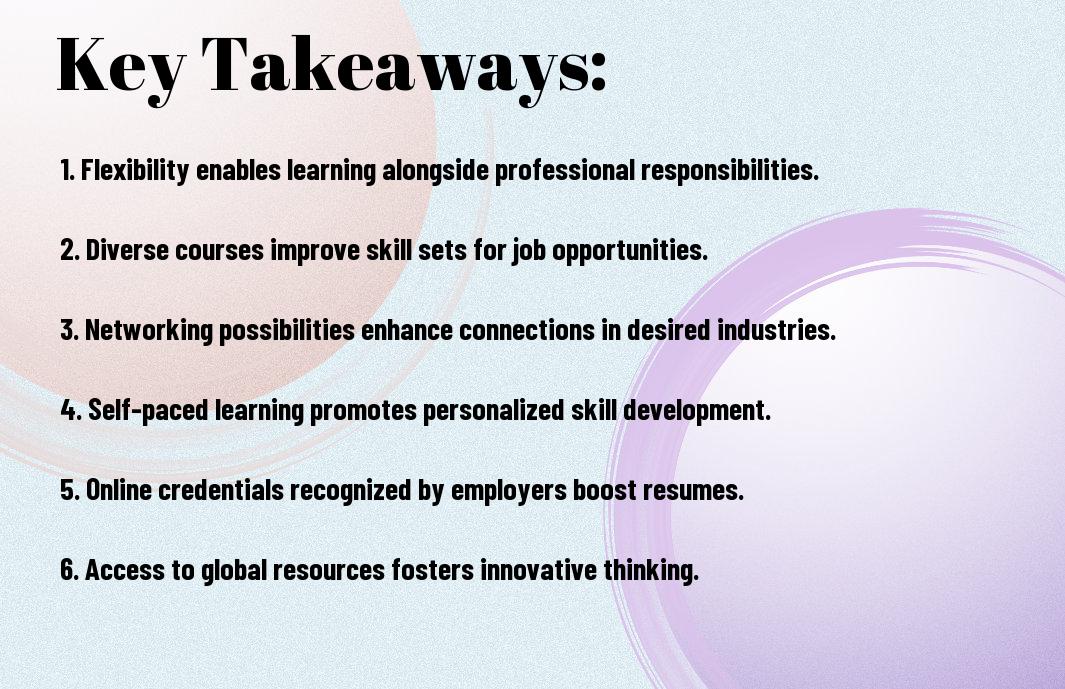
Key Takeaways:

The rise of online learning has significantly influenced the way professionals approach career advancement. Here are some key points to consider:

  • Flexibility is a major advantage of online learning, allowing individuals to balance their work schedules and personal lives while pursuing professional development.
  • Online learning provides access to a wide range of specialized courses and degree programs, enabling professionals to acquire new skills and enhance their career prospects.
  • The cost-effectiveness of online learning makes it an attractive option for those looking to advance their careers without incurring significant financial burdens.
  • Networking opportunities are also available through online learning platforms, allowing professionals to connect with peers and industry experts from around the world.
  • The self-paced nature of online learning enables individuals to take ownership of their learning process, setting their own goals and achieving milestones at their own pace, which can be beneficial for career growth and advancement.

Benefits of Online Learning

The numerous advantages of online learning have been extensively discussed, including its impact on your career advancement, as seen in The Impact of Online Courses and Certifications on Skill Development and Career Progression, which highlights the significance of upskilling in today’s digital landscape.

Enhanced Accessibility

On one hand, online learning provides you with the flexibility to access courses and degree programs from anywhere, at any time, allowing you to balance your work and personal life while pursuing your educational goals.

Personalized Learning Experience

After enrolling in an online course, you will have the opportunity to tailor your learning experience to your individual needs and preferences, enabling you to focus on specific areas of interest and learn at your own pace.

Due to the personalized nature of online learning, you can track your progress, identify knowledge gaps, and adjust your learning strategy accordingly, ultimately leading to a more effective and efficient learning experience that supports your career advancement goals.

Career Advancement Opportunities

It is evident that online learning has opened up numerous avenues for career advancement, allowing you to acquire new skills and knowledge that can significantly enhance your professional prospects.

Skill Development and Acquisition

Across various industries, you can leverage online learning platforms to develop and acquire skills that are in high demand, thereby increasing your chances of career advancement and making you a more competitive candidate in the job market.

Networking and Professional Connections

Across different sectors, online learning provides you with opportunities to connect with professionals and like-minded individuals, facilitating the establishment of valuable networks that can aid in your career growth and development.

Indeed, as you engage in online learning, you will find that networking and professional connections play a significant role in shaping your career trajectory, allowing you to access new job opportunities, gain insights into your industry, and stay updated on the latest trends and developments, all of which can contribute to your long-term career success.

Online Learning Platforms and Resources

To succeed in your career, you need to leverage online learning platforms and resources. They offer a wide range of courses and training programs that can help you develop new skills and enhance your knowledge.

Overview of Popular Platforms

Online education has led to the emergence of various platforms, such as Coursera, Udemy, and LinkedIn Learning, which provide you with access to high-quality educational content and enable you to learn at your own pace.

Evaluation of Resource Quality and Effectiveness

Platforms like these allow you to evaluate the quality and effectiveness of resources, ensuring that you get the most out of your online learning experience, and enabling you to make informed decisions about your career advancement.

Resource assessment is an vital step in your online learning journey, as it helps you determine whether the courses or training programs you are considering will meet your needs and support your career goals, and you can use this information to create a personalized learning plan that aligns with your objectives.

Challenges and Limitations

Your career advancement through online learning may be hindered by various obstacles, as discussed in The Impact of Online Education on Career Advancement blog post, which highlights the need for careful consideration.

Technological and Infrastructure Challenges

Restrictions in internet accessibility and digital literacy can pose significant challenges, affecting your ability to participate in online courses and limiting your potential for career growth.

Self-Motivation and Discipline Requirements

Any online learner must possess a high degree of self-motivation and discipline to succeed, as the absence of a traditional classroom setting can lead to procrastination and decreased productivity.

For instance, you will need to establish a dedicated study space, set realistic goals, and create a schedule to stay on track with your online courses, ensuring that you make the most of the online learning experience and achieve your career objectives.

Success Stories and Examples

All individuals who have invested in online learning have seen significant improvements in their career prospects, with many achieving their desired career goals.

Real-Life Examples of Career Advancement

Among the numerous examples of successful online learners, you will find individuals who have transitioned into new roles, taken on additional responsibilities, and increased their earning potential as a direct result of your online education.

Insights from Industry Experts and Researchers

From the perspectives of industry experts and researchers, you gain valuable insights into the effectiveness of online learning in advancing your career, highlighting the skills and knowledge that are most in demand by employers.

A key aspect of online learning that you should consider is its ability to provide you with personalized learning experiences, allowing you to focus on areas that are most relevant to your career goals, and enabling you to develop a competitive edge in the job market, as you navigate the ever-changing landscape of your industry.

Future of Online Learning and Career Development

Unlike traditional learning methods, online learning offers flexibility and accessibility, as you can learn more about The 10 Benefits of Online Learning – School of Education and how it can impact your career advancement.

Emerging Trends and Technologies

Around the globe, you will see emerging technologies shaping the future of online learning, enabling you to acquire new skills and knowledge from anywhere.

Implications for Career Advancement and Workforce Development

Among the benefits of online learning, you will find improved career prospects and enhanced workforce development, as you can gain specialized skills and certifications to advance in your profession.

Development of your career is heavily influenced by your ability to adapt to new technologies and trends, and as you continue to learn and grow through online platforms, you will be better equipped to navigate the evolving job market and make informed decisions about your professional path, ultimately leading to greater career satisfaction and success.

Conclusion

With these considerations, you can see that online learning has a significant impact on your career advancement. You will have greater flexibility and accessibility to courses, allowing you to enhance your skills and knowledge. As you invest in your online education, you will be better equipped to pursue your career goals and increase your earning potential, ultimately leading to a more successful and fulfilling professional life. Your future career prospects will be brighter with the benefits of online learning.

FAQ

Q: How does online learning impact career advancement in terms of flexibility and accessibility?

A: Online learning provides unparalleled flexibility and accessibility, enabling individuals to pursue career advancement opportunities regardless of their geographical location or schedule constraints. With online courses and degree programs, professionals can acquire new skills and knowledge at their own pace, thereby enhancing their career prospects without having to compromise on their current commitments. This flexibility is particularly beneficial for those with demanding work schedules or family obligations, allowing them to balance their personal and professional lives effectively.

Q: Can online learning platforms provide the same level of networking opportunities as traditional educational settings for career advancement?

A: While traditional educational settings offer face-to-face interactions, online learning platforms have evolved to provide equally effective networking opportunities. Many online courses and programs incorporate discussion forums, virtual group projects, and social media groups, enabling learners to connect with peers and instructors from diverse backgrounds. Moreover, online learning platforms often host webinars, workshops, and conferences that bring together industry experts and professionals, offering valuable networking opportunities that can lead to career advancement. By actively participating in these online communities, individuals can establish meaningful connections that can benefit their careers.

Q: How can individuals ensure that the online learning programs they choose are reputable and recognized by employers for career advancement purposes?

A: To ensure that an online learning program is reputable and recognized by employers, individuals should conduct thorough research on the institution offering the program. This includes checking for accreditation from recognized accrediting agencies, reading reviews from current and past students, and verifying the program’s curriculum and faculty credentials. Additionally, individuals should look for programs that offer career services, such as resume building, interview preparation, and job placement assistance, which can significantly enhance their career advancement prospects. It is also advisable to consult with professionals in the desired field to gain insights into the most valued online learning programs and certifications.

How Online Education is Revolutionizing Rural Access to Learning

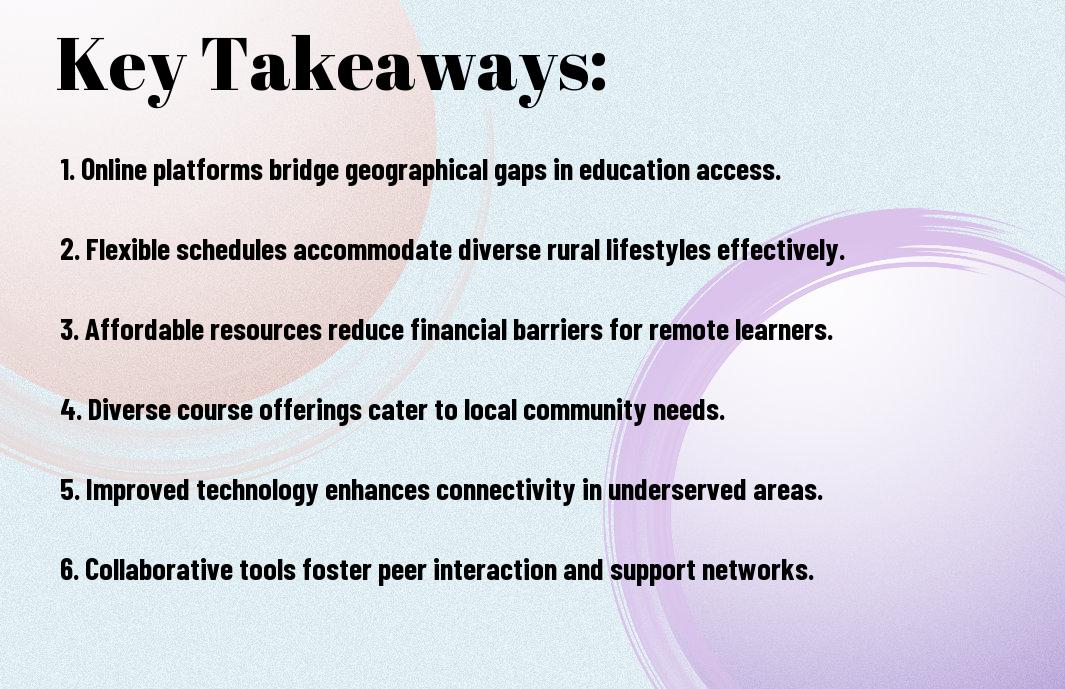
As you consider the state of education in rural areas, you may wonder how technology is changing the landscape. You are likely aware that online education is expanding opportunities for rural students. By exploring the benefits of online learning, you can see how it is bridging the gap in rural areas. For instance, you can discover 5 new benefits of online learning in rural areas that are transforming your understanding of education. Your perspective on rural education is about to shift.

Key Takeaways:

To understand the impact of online education on rural areas, consider the following points:

  • Online education is increasing Accessibility to learning resources for rural students, providing them with opportunities that were previously out of reach due to geographical constraints.
  • The use of Technology in online education is helping to bridge the gap between urban and rural areas, enabling students to access high-quality educational content and interact with teachers and peers remotely.
  • Personalization of learning is another significant benefit of online education in rural areas, as students can learn at their own pace and focus on areas where they need improvement, rather than being limited by a one-size-fits-all approach.
  • Online education is also promoting Equity in rural areas by providing access to educational resources that are often limited or unavailable in these regions, helping to level the playing field for rural students.
  • The growth of online education in rural areas is driving Innovation in the education sector, with new platforms, tools, and approaches being developed to meet the unique needs of rural students and communities.

Expansion of Educational Opportunities

Before the advent of online education, your access to learning was largely determined by your geographical location. However, with the rise of digital platforms, you can now access a wide range of educational resources from anywhere in the world.

Increased accessibility for rural students

Accessibility to quality education has increased significantly for rural students, allowing you to pursue courses and degrees that were previously out of reach due to geographical constraints.

Reduced geographical barriers to learning

Any distance or location is no longer a barrier to learning, as you can now access educational resources and interact with instructors and peers from all over the world.

Plus, with online education, you can learn at your own pace, anytime and anywhere, which is particularly beneficial for rural students who may have limited access to traditional educational institutions. You can explore various subjects, from science and technology to arts and humanities, and engage with a diverse community of learners, broadening your perspectives and understanding of the world.

Technological Advancements

You are likely aware that technological advancements have been a key driver in increasing access to online education, particularly in rural areas. As you explore the landscape of online learning, you’ll notice significant developments that have transformed the way people access educational resources.

Development of online learning platforms

One notable aspect of this transformation is the proliferation of online learning platforms, which have made it possible for you to access high-quality educational content from anywhere with an internet connection, thereby bridging the gap between urban and rural areas.

Improvement of internet infrastructure in rural areas

With the expansion of internet infrastructure in rural areas, you now have greater opportunities to connect with online educational resources, which has been a significant factor in promoting rural access to learning, and this trend is expected to continue as technology advances.

This improvement in internet infrastructure has enabled you to participate in online courses, access digital libraries, and engage with educators and peers from around the world, thereby enriching your learning experience and providing you with opportunities that may not have been available otherwise, allowing you to broaden your knowledge and skills in a way that was previously unimaginable.

Personalized Learning Experiences

Once again, you find yourself at the forefront of a revolution, as online education brings personalized learning experiences to your doorstep, regardless of your geographical location.

Adaptive learning technologies

Beneath the surface of traditional teaching methods, adaptive learning technologies are emerging, allowing you to learn at your own pace and tailored to your individual needs and abilities.

Self-paced learning opportunities

Learning from the comfort of your own home, you can now access a wide range of courses and degree programs, designed to fit your schedule and learning style, giving you the flexibility you need to succeed.

Also, as you commence on this self-paced learning journey, you will discover that you have the freedom to pause, rewind, and revisit difficult concepts, allowing you to grasp complex ideas and reinforce your understanding, ultimately taking control of your educational path and unlocking your full potential.

Overcoming Traditional Limitations

Now, as you investigate into the world of online education, you’ll find that it’s breaking down barriers that once hindered rural access to learning, offering a beacon of hope for a more equitable future.

Lack of qualified teachers in rural areas

On one hand, you face the challenge of finding qualified teachers in rural areas, but online education provides a solution by connecting you with instructors from all over the world.

Insufficient resources and facilities

Around the globe, you see rural areas struggling with insufficient resources and facilities, but online education helps bridge this gap by providing access to digital tools and materials.

Due to the limitations of traditional educational settings, you may have previously felt constrained by the lack of resources and facilities in rural areas, but online education offers a wealth of digital materials, virtual labs, and interactive simulations that can enhance your learning experience, allowing you to explore subjects in greater depth and detail, and engage with course materials in a more immersive and interactive way.

New Opportunities for Skill Development

Unlike traditional educational settings, online education offers you a range of opportunities to develop new skills, as you can learn more about How Online Education Is Shaping the Future Workforce and its impact on your career.

Access to vocational training and certification programs

Accessibility to online platforms provides you with the chance to enroll in vocational training and certification programs, helping you acquire specialized skills and enhance your employability.

Development of digital literacy skills

The development of digital literacy skills is an crucial aspect of online education, as you learn to navigate and utilize various digital tools and platforms to access educational resources and connect with instructors and peers.

With the ability to access online educational resources, you can further develop your digital literacy skills, enabling you to effectively use technology to learn, work, and communicate in today’s digital age, and as you proceed, you will find that your ability to adapt to new technologies and learn new skills will be invaluable in your future endeavors.

Challenges and Limitations

Your journey to online education in rural areas is not without obstacles, as several challenges hinder the progress of this innovative approach, affecting your ability to access quality learning opportunities.

Digital divide and unequal access to technology

Dynamically, the gap in technology access affects your learning experience, as not all rural students have equal opportunities to utilize digital tools and devices, thus limiting their potential for growth and development.

Limited internet connectivity and speed

Beneath the surface of online education lies the issue of inadequate internet connectivity, which hampers your ability to participate in virtual classes and access digital resources, ultimately affecting your learning outcomes.

Access to reliable and fast internet is important for online learning, and you will encounter numerous difficulties if your connection is slow or interrupted, including poor video quality, dropped sessions, and delayed assignments, all of which can hinder your progress and engagement in the learning process.

To wrap up

To wrap up, as you consider the effects of online education, you see how it is bridging the gap in rural areas, providing your community with unprecedented access to knowledge and opportunities, and you must think critically about how this shift will shape your understanding of learning and its role in your life.

FAQ

Q: What role is online education playing in increasing access to learning in rural areas?

A: Online education is revolutionizing rural access to learning by providing individuals with the opportunity to access a wide range of courses and educational resources from anywhere, at any time. This is particularly significant in rural areas where access to traditional educational institutions may be limited due to geographical constraints. With online education, students in rural areas can now access high-quality educational content, interact with instructors and peers, and participate in virtual classrooms, thereby bridging the gap in educational opportunities.

Q: How is online education addressing the issue of limited educational resources in rural areas?

A: Online education is addressing the issue of limited educational resources in rural areas by providing access to a vast array of digital resources, including e-books, online libraries, and educational software. These resources can be accessed from any device with an internet connection, reducing the need for physical infrastructure and making learning more accessible and affordable. Additionally, online education platforms are also providing opportunities for rural students to connect with educators and experts from around the world, exposing them to new ideas, perspectives, and teaching methods that may not be available locally.

Q: What are the potential long-term benefits of online education for rural communities?

A: The potential long-term benefits of online education for rural communities are numerous. By increasing access to education, online learning can help to improve academic achievement, increase economic opportunities, and enhance the overall quality of life for individuals in rural areas. Furthermore, online education can also help to promote social mobility, reduce poverty, and foster community development by providing rural communities with the skills and knowledge needed to compete in the global economy. As online education continues to evolve, it is likely to play an increasingly important role in bridging the educational divide between rural and urban areas, and in promoting more equitable access to learning opportunities for all.

Why Online Education is Ideal for Busy Adults

Benefits

A key advantage of online education is that it offers numerous benefits that cater to your needs as a busy adult, allowing you to balance your personal and professional life while pursuing higher education.

Flexibility and Convenience

Against the constraints of traditional learning, online education provides you with the flexibility to create your own schedule, allowing you to learn at your own pace and convenience, which suits your busy lifestyle.

Accessibility and Affordability

On top of the flexibility, online education also offers you accessibility to a wide range of courses and programs, and affordability in terms of cost, making it an ideal option for you to acquire new skills and knowledge.

Plus, with online education, you can access course materials and lectures from anywhere, at any time, and you can also choose from a variety of payment plans and scholarships, making it more affordable and accessible to you, which can help you achieve your educational goals without breaking the bank or compromising your other responsibilities.

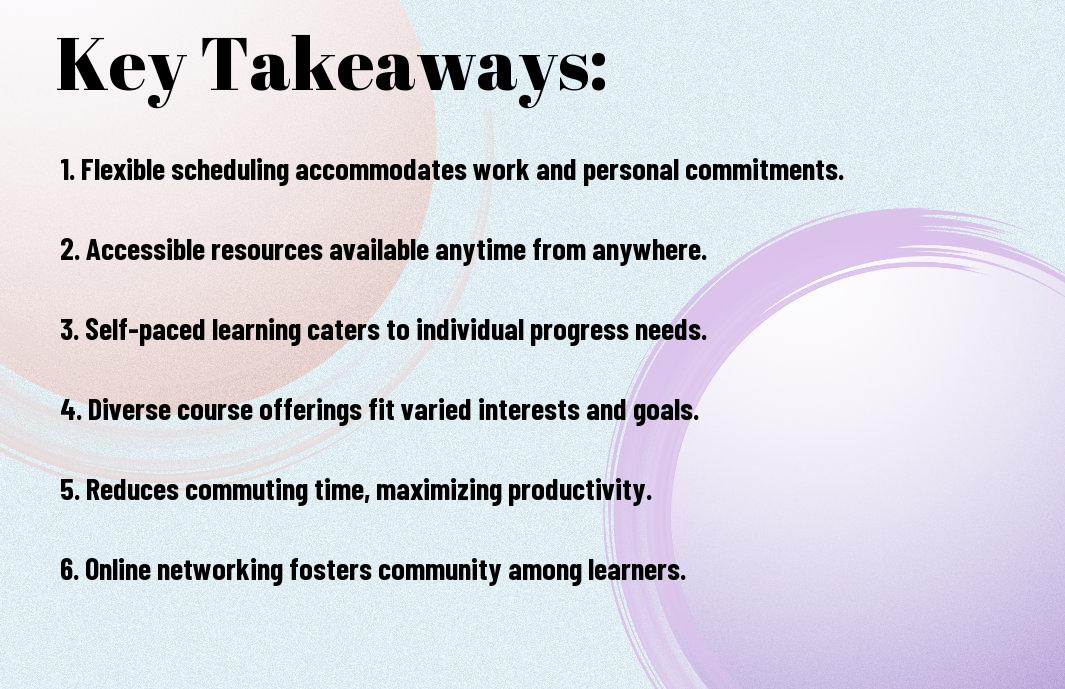
Key Takeaways:

  • Flexibility is a major advantage of online education, allowing busy adults to balance work, family, and other responsibilities while pursuing their educational goals at their own pace.
  • Online education provides Accessibility to a wide range of courses and programs, enabling busy adults to access high-quality educational resources from anywhere with an internet connection.
  • Self-paced Learning is another significant benefit of online education, enabling busy adults to learn at their own speed, review material as needed, and skip ahead when they’re ready.
  • Online education offers a Cost-effective alternative to traditional brick-and-mortar institutions, with reduced costs for tuition, textbooks, and transportation, making it an attractive option for busy adults on a budget.
  • Personalization is also a key aspect of online education, allowing busy adults to tailor their learning experience to their individual needs, interests, and learning style, leading to a more effective and engaging learning experience.

Challenges

While pursuing online education, you will encounter various obstacles that can hinder your progress, including balancing work and study responsibilities, managing your time effectively, and dealing with technical issues.

Self-Motivation and Discipline

At the outset, you need to develop a strong sense of self-motivation and discipline to stay focused and committed to your online course, as you will be studying independently without direct supervision.

Technical Issues and Support

Around the clock, you may experience technical difficulties, such as connectivity problems or platform glitches, which can disrupt your learning experience and cause frustration.

Consequently, it is necessary to have reliable technical support available to you, so you can quickly resolve any issues that arise and continue with your studies without significant interruption, allowing you to stay on track and achieve your educational goals.

Opportunities

Once again, online education proves to be a game-changer, offering you a wide range of opportunities to enhance your skills and knowledge. With online courses, you can pursue your interests and advance your career without sacrificing your current commitments.

Career Advancement and Networking

Career-focused individuals like you can benefit from online education, which provides access to specialized courses and certifications that can boost your professional profile and open doors to new networking opportunities.

Skill Enhancement and Personal Growth

Across various disciplines, online education enables you to acquire new skills and expand your knowledge, helping you to stay competitive in the job market and achieve your personal goals.

To take your skills to the next level, you can explore a wide range of online courses and programs tailored to your needs and interests, from professional certifications to personal development workshops, all designed to help you grow both personally and professionally.

Effectiveness

All online education platforms are designed to provide you with a flexible and self-paced learning experience, allowing you to balance your work and personal life while pursuing your educational goals. You can access course materials and participate in discussions at your convenience, making it easier to stay on track and achieve your objectives.

Learning Outcomes and Assessment

Around the time you start your online course, you will be introduced to a clear set of learning outcomes and assessment criteria, helping you understand what is expected of you and how your progress will be evaluated. You will be able to track your performance and identify areas where you need to focus your efforts.

Student Engagement and Participation

Between the various interactive features and collaborative tools, you will find that online education encourages your active participation and engagement with the course material. You will be able to interact with your instructors and peers, share your thoughts and ideas, and learn from others in a supportive online community.

Plus, as you participate in online discussions and activities, you will develop imperative skills such as communication, problem-solving, and critical thinking, which will benefit you in both your personal and professional life. You will be able to apply what you learn to real-world scenarios, making your educational experience more meaningful and relevant to your goals.

Comparison

Despite the numerous benefits of online education, you may still be wondering how it compares to traditional education. You can find more information on Four reasons why adult learners should choose online learning. Here is a comparison:

Traditional Education Online Education
Classroom-based Online-based

Traditional vs Online Education

Beneath the surface, traditional and online education have distinct differences. You’ll find that online education offers more flexibility, allowing you to balance your work and family commitments with your studies.

Pros and Cons of Online Learning

Between the benefits and drawbacks, you’ll want to consider the following:

Pros Cons
Flexibility Technical issues
Affordability Limited interaction

For instance, as you weigh the pros and cons of online learning, you’ll consider factors like flexibility and affordability, which are significant advantages. Here is a more detailed comparison:

Pros Cons
Personalized learning Self-motivation required
Accessibility Technical requirements
Cost-effective Potential distractions

Implementation

To implement online education into your busy schedule, you can explore various resources, such as 4 Reasons Online Classes Can Benefit Working Adults, to find the best fit for your needs.

Tips for Success in Online Courses

Beneath the surface of online learning, you’ll find that success depends on several factors, including:

  • creating a dedicated study space
  • setting achievable goals

Knowing your learning style will help you navigate online courses more effectively.

Strategies for Effective Time Management

Online courses offer flexibility, but you must manage your time wisely to get the most out of them. You can start by prioritizing tasks and allocating specific times for study.

Indeed, effective time management is key to balancing work, life, and online education, and you can achieve this by using calendars, reminders, and breaking down larger tasks into smaller, manageable chunks, allowing you to stay organized and focused on your goals, as you progress through your online courses.

As you balance your career and personal life, you may find it challenging to pursue further education. However, with the rise of online learning, you can now access courses and degree programs from the comfort of your own space. Your busy schedule no longer has to be a barrier to learning, as online education offers flexibility and convenience, allowing you to learn at your own pace and achieve your educational goals.

To wrap up

So, you can see that online education is tailored to fit your busy schedule, allowing you to balance your work and personal life while pursuing your educational goals. You can learn at your own pace, anytime and anywhere, making it an ideal solution for you to enhance your skills and knowledge, and ultimately, advance your career, giving you the flexibility and autonomy you need to succeed.

FAQ

Q: What are the benefits of online education for busy adults with tight schedules?

A: Online education offers flexible scheduling, allowing busy adults to balance work, family, and academic responsibilities. With online courses, adults can access study materials, attend virtual classes, and submit assignments at their convenience, making it ideal for those with tight schedules. This flexibility enables them to learn at their own pace, without having to compromise their other commitments.

Q: How does online education help busy adults manage their time more effectively?

A: Online education provides busy adults with the ability to manage their time more effectively by allowing them to create a personalized study schedule. They can allocate specific times of the day or week to focus on their studies, ensuring that they meet their academic goals without neglecting their professional and personal obligations. Additionally, online education platforms often offer tools and resources to help adults stay organized and on track, such as digital calendars, reminders, and progress tracking.

Q: Can online education provide busy adults with the same level of support and interaction as traditional classroom-based education?

A: Yes, online education can provide busy adults with a similar level of support and interaction as traditional classroom-based education. Many online education platforms offer virtual support services, such as live chats, video conferencing, and online discussion forums, where adults can interact with instructors and peers, ask questions, and participate in discussions. Furthermore, online education often includes interactive multimedia content, such as videos, simulations, and gamification, which can enhance engagement and learning outcomes. This allows busy adults to feel connected and supported throughout their learning journey, despite the physical distance.

The Best Online Learning Tools for Students

As you navigate the vast expanse of online learning, you’re likely to encounter a plethora of tools designed to make your educational journey smoother. Your quest for knowledge is about to get a whole lot easier, as you discover the hidden gems that will help you learn, grow, and thrive in a digital landscape. With a multitude of options at your fingertips, you’ll soon be unlocking your full potential and making the most of your online learning experience.

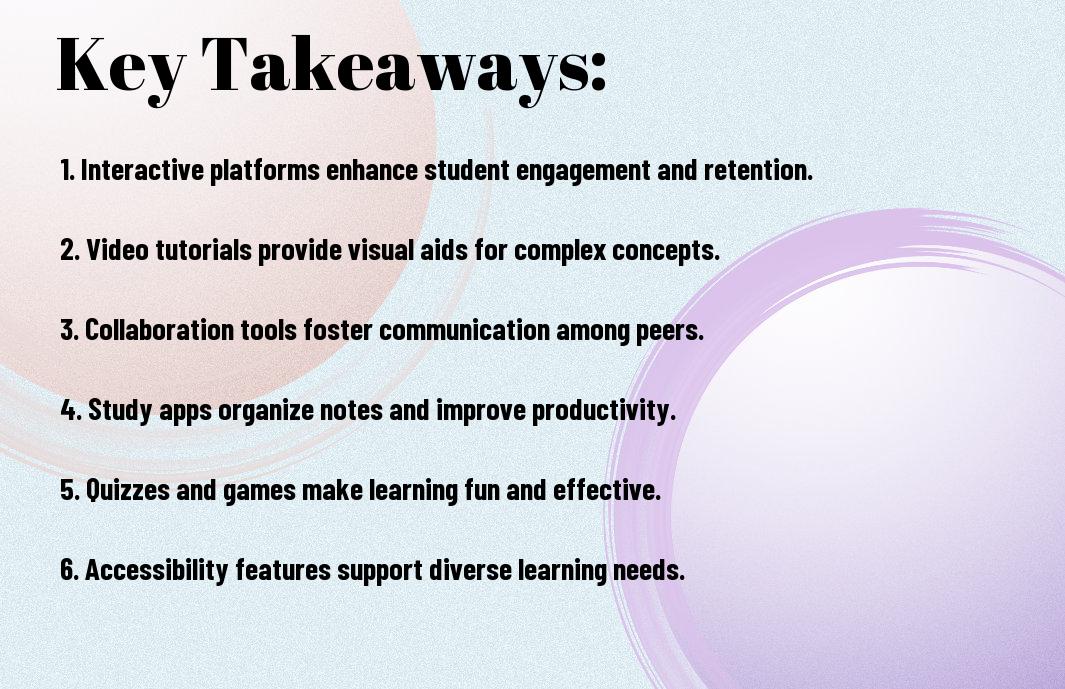
Key Takeaways:

To enhance the online learning experience, several tools and platforms are available. Here are some key points to consider:

  • Utilizing interactive learning tools such as Khan Academy, Coursera, and edX can provide students with a wide range of academic courses and resources.
  • Virtual classrooms and collaboration tools like Zoom, Google Meet, and Slack can facilitate communication and teamwork among students and instructors.
  • Personalized learning platforms such as Duolingo and Grammarly offer adaptive technology that caters to individual learning styles and needs.
  • Organizational tools like Trello, Evernote, and Todoist help students manage their time, tasks, and assignments more effectively.
  • Access to digital libraries and online research databases such as JSTOR and PubMed can provide students with a wealth of information and resources for their studies.

Online Learning Platforms

A wealth of online learning platforms are available to you, offering a range of tools and resources to enhance your educational experience. You can explore various platforms to find the one that suits your needs, from interactive lessons to collaborative workspaces.

MOOCs and Online Courses

Beneath the surface of traditional education, you’ll find MOOCs (Massive Open Online Courses) and online courses that provide flexible learning opportunities. You can access courses from top universities and institutions, allowing you to learn at your own pace.

Virtual Classrooms and Lecture Series

Alongside traditional teaching methods, you’ll discover virtual classrooms and lecture series that bring education to life. You can engage with instructors and peers in real-time, creating a more immersive learning experience.

Lecturing in a virtual classroom is an art that instructors have perfected, using multimedia tools to convey complex ideas in an engaging way. As you participate in virtual lectures, you’ll find that the interactive elements and discussion forums help to clarify your understanding of the subject matter, making it easier for you to apply what you’ve learned to your own projects and assignments.

Educational Resources

Some of the most valuable online learning tools for you as a student are those that provide access to educational content, helping you to expand your knowledge and skills in a specific area of study. You can explore various types of resources that cater to your learning style and preferences.

Digital Textbooks and eBooks

Educative materials like digital textbooks and eBooks offer you a convenient and accessible way to access course materials, allowing you to study anywhere, at any time, and making it easier for you to organize your studying.

Online Libraries and Research Tools

Research-oriented platforms like online libraries and research tools enable you to examine deeper into your subject matter, providing you with a wealth of information and resources to support your learning and academic pursuits, helping you to find credible sources for your assignments and projects.

Digital archives and research databases are especially useful for you, as they provide access to a vast array of academic journals, articles, and books, allowing you to conduct thorough research and stay up-to-date with the latest developments in your field of study, which can be incredibly helpful in completing your assignments and achieving your academic goals.

Productivity and Organization Tools

All students need the right tools to stay organized and focused. You can discover the Top 10 distance learning tools to maximize student success and explore various options to find what works best for you.

Task Management and Scheduling Apps

Task management is necessary to your success, and with the right apps, you can prioritize your assignments and stay on track, making the most of your time.

Note-taking and Collaboration Software

Around the globe, students are using digital tools to take notes and collaborate with their peers, making learning more efficient and fun, and helping you to achieve your academic goals.

For instance, you can use note-taking software to organize your thoughts, tag important information, and share your notes with classmates, making group projects and study sessions more productive and enjoyable, allowing you to learn from each other and grow together.

Interactive Learning Tools

Once again, you’re in luck because there are countless online resources available to enhance your learning experience. Check out the discussion on Favorite Online Learning Tools? : r/nerdfighters to discover new platforms tailored to your needs.

Gamification and Simulation Platforms

Besides traditional learning methods, you can engage with interactive tools that make learning fun. Gamification platforms offer an immersive experience, allowing you to explore complex concepts in a virtual environment.

Virtual Labs and Science Tools

Laboratory settings can be replicated online, giving you access to experiments and investigations that might not be possible in a physical classroom. You can conduct virtual dissections, explore the human body, or analyze data in a safe and controlled environment.

Also, as you probe into virtual labs and science tools, you’ll find that they cater to various learning styles, providing you with interactive simulations, 3D models, and real-time data analysis. This will enable you to visualize complex concepts, making your learning experience more engaging and effective.

Accessibility and Support

Not all online learning tools are created equal, and as you navigate the vast landscape of digital education, you’ll want to consider the accessibility and support options available to you. This is particularly important if you have specific needs or requirements that must be met in order to succeed.

Tools for Students with Disabilities

Among the many tools designed to help students with disabilities, you’ll find text-to-speech software, speech-to-text software, and other assistive technologies that can help level the playing field and provide equal access to educational resources.

Online Tutoring and Mentorship Programs

Accessible to you from anywhere, online tutoring and mentorship programs can provide one-on-one support and guidance, helping you to stay on track and achieve your academic goals.

It is worth exploring the various online tutoring and mentorship programs available, as they can offer a range of benefits, from personalized learning plans to ongoing support and encouragement, all of which can help you succeed in your online learning journey, and you can choose the ones that best fit your needs and learning style.

Staying Motivated and Engaged

Unlike traditional learning methods, online learning requires you to be self-motivated and disciplined to stay on track. You can achieve this by setting realistic goals and rewarding yourself for milestones achieved, making the learning process more enjoyable and rewarding.

Time Management and Goal Setting Strategies

Conversely, developing effective time management skills will help you prioritize tasks and allocate sufficient time for each activity, enabling you to stay focused and avoid procrastination, allowing you to make the most of your online learning experience.

Online Communities and Forums for Students

Anyway, joining online communities and forums can provide you with a sense of belonging and connection with fellow students, where you can share knowledge, ask questions, and learn from one another, making your online learning journey more engaging and interactive.

Understanding the benefits of online communities and forums, you can leverage these platforms to get feedback on your work, participate in discussions, and collaborate on projects, which can help you develop vital skills such as communication, teamwork, and problem-solving, ultimately enhancing your overall learning experience and preparing you for real-world challenges.

Summing up

As a reminder, you now have a treasure trove of online learning tools at your fingertips. You can explore, discover, and learn with ease, making your educational journey a wondrous adventure. With these tools, you’ll unlock your full potential, and your learning experience will be tailored to your unique needs and interests, helping you to grow and thrive in a world of endless possibilities.

FAQ

Q: What are the benefits of using online learning tools for students?

A: The best online learning tools for students offer a range of benefits, including increased flexibility and accessibility, allowing students to learn at their own pace and from any location. These tools also provide a wealth of interactive and engaging content, such as videos, quizzes, and games, which can help to make learning more enjoyable and effective. Additionally, online learning tools can help students to develop important skills, such as time management, self-motivation, and digital literacy.

Q: How can students choose the best online learning tools to suit their needs?

A: To choose the best online learning tools, students should consider their individual learning style, goals, and needs. They should look for tools that offer a user-friendly interface, high-quality content, and opportunities for interaction and feedback. Students should also read reviews and ask for recommendations from teachers, peers, or mentors to find the most effective tools. Furthermore, many online learning platforms offer free trials or demos, which can help students to test and evaluate different tools before committing to a particular one.

Q: Are online learning tools effective for students with different learning abilities and needs?

A: Yes, the best online learning tools can be highly effective for students with different learning abilities and needs. Many online platforms offer personalized learning pathways, adaptive technology, and accessibility features, such as text-to-speech functionality, font size adjustment, and closed captions, which can help students with disabilities or learning difficulties. Additionally, online learning tools can provide opportunities for students to work at their own pace, review material as needed, and access additional support resources, such as tutoring or mentoring, which can help to level the playing field and promote inclusive learning.

Skip to content