The Role of Peer Learning in Online Education

As you explore online education, you’ll discover that peer learning plays a significant role in enhancing your learning experience. Your interactions with fellow learners can foster a sense of community, promoting collaborative learning and knowledge sharing. You’ll find that peer learning helps you gain new insights, develop problem-solving skills, and stay motivated throughout your online courses. By leveraging peer learning, you can maximize your online education and achieve your academic goals more effectively.

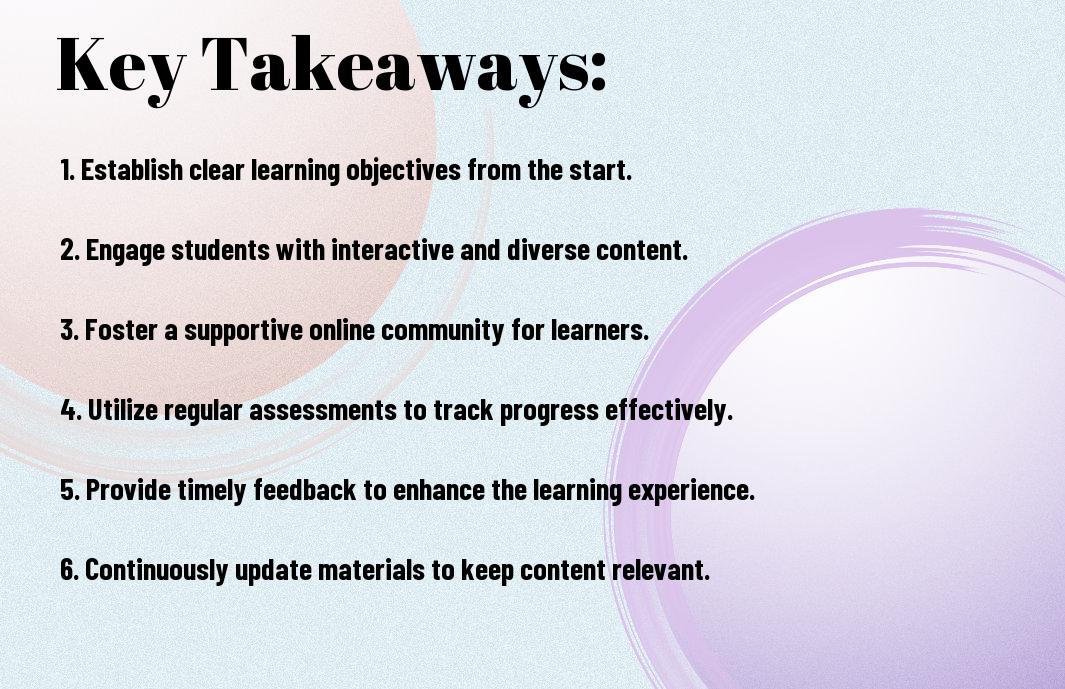
Key Takeaways:

To understand the impact of peer learning in online education, several factors come into play. Here are key points to consider:

  • The effectiveness of online learning environments can be significantly enhanced by incorporating peer interaction, as it allows students to share knowledge and learn from one another’s experiences.
  • Collaborative learning platforms and tools facilitate group work and discussions, enabling students to engage in meaningful interactions that foster deeper understanding of the subject matter.
  • The use of social learning theories in online education emphasizes the importance of community building and student engagement, which can lead to higher retention rates and improved academic performance.
  • Self-directed learning is also a key aspect of peer learning in online education, as students take an active role in their learning process, often with the support and guidance of their peers.
  • Technology integration plays a vital role in facilitating peer learning in online education, providing the necessary tools and platforms for students to interact, share resources, and collaborate on projects and assignments.

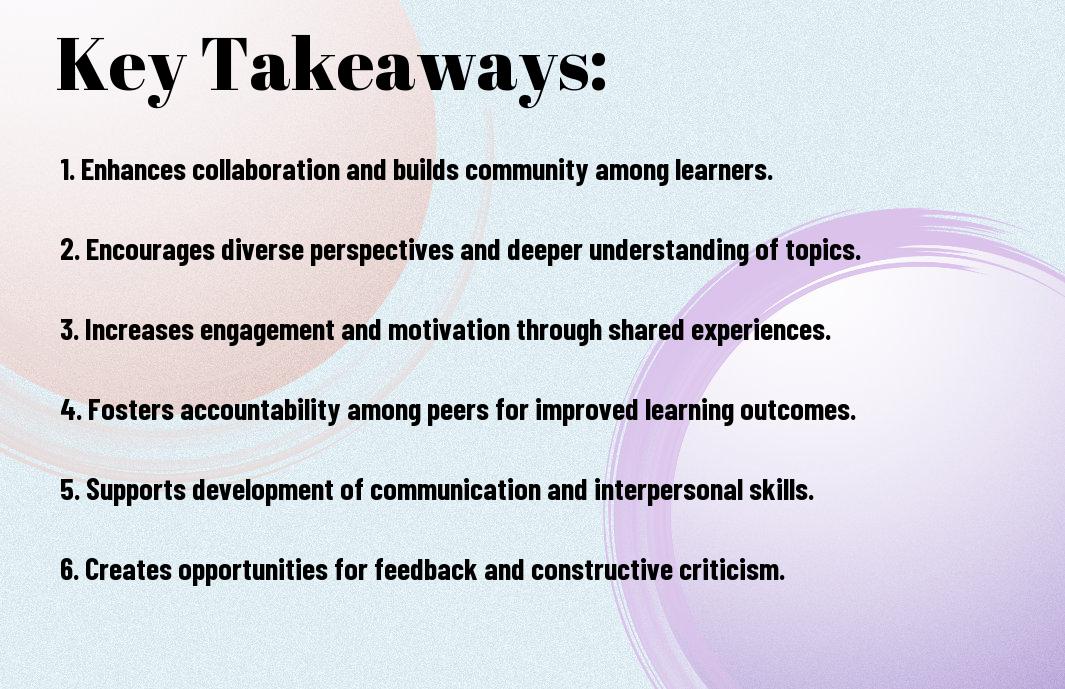
The Benefits of Peer Learning

The benefits of peer learning are numerous, and you will find that it enhances your online learning experience. You can learn from others, share your knowledge, and develop new skills. This collaborative approach helps you stay motivated and engaged in your studies.

Enhanced Engagement

Along with increased interaction, peer learning fosters a sense of community, allowing you to connect with your peers and build meaningful relationships. You will find that you are more likely to participate in discussions and engage with course materials when learning with others.

Improved Knowledge Retention

Retaining information is easier when you learn from your peers, as you can discuss and apply concepts in a practical way. You will find that you can reinforce your understanding of key concepts and retain information more effectively.

Hence, as you engage in peer learning, you will notice that your knowledge retention improves significantly. You will be able to recall information more easily and apply it to real-world scenarios, making you a more confident and competent learner. Your ability to retain knowledge will also help you to build a stronger foundation for future learning, allowing you to take on more challenging topics and pursue your academic and professional goals with greater ease.

Effective Strategies for Online Peer Learning

There’s a growing recognition of the importance of peer learning in online education, and as you explore this approach, you’ll find various strategies to enhance your learning experience. You can engage with your peers, share knowledge, and learn from one another in a supportive online environment.

Discussion Forums

Among the most popular online peer learning tools are discussion forums, where you can interact with your peers, share thoughts, and discuss topics of interest. You can participate in online discussions, ask questions, and provide feedback to your peers, fostering a sense of community and shared learning.

Collaborative Projects

Strategically designed collaborative projects enable you to work together with your peers on a shared goal, promoting teamwork, communication, and problem-solving skills. You can collaborate on assignments, share resources, and learn from one another’s strengths and weaknesses, developing a deeper understanding of the subject matter.

Another aspect of collaborative projects is the opportunity to develop your leadership and management skills, as you work together with your peers to achieve a common objective. You can take on different roles, assign tasks, and track progress, allowing you to apply theoretical concepts to real-world scenarios and develop a sense of accountability and responsibility.

The Role of Technology in Facilitating Peer Learning

For effective peer learning, you can leverage technology to enhance your online education experience, as discussed in The Role of Peer Learning in Online Education. This enables you to connect with peers and engage in collaborative learning.

Social Learning Platforms

By utilizing social learning platforms, you can interact with your peers, share resources, and participate in discussions, fostering a sense of community and promoting peer learning.

Video Conferencing Tools

Tools like video conferencing software enable you to connect with your peers in real-time, facilitating face-to-face interactions and enhancing your online learning experience.

Facilitating video conferencing tools allows you to engage in virtual meetings, collaborate on projects, and participate in group discussions, making peer learning more interactive and effective, helping you to stay connected with your peers and instructors, and promoting a more collaborative learning environment.

Overcoming Challenges in Online Peer Learning

Once again, you will encounter obstacles in online peer learning, but with the right strategies, you can overcome them and create a successful learning environment.

Building Trust and Community

Against the backdrop of a virtual setting, you need to establish a sense of trust and community among your peers to facilitate effective learning, and this can be achieved through regular interactions and open communication.

Managing Conflicting Opinions

With the diversity of opinions and perspectives in online peer learning, you will inevitably encounter conflicts, and it is important to manage them constructively to maintain a positive learning environment.

Plus, when you learn to navigate these conflicts, you will develop important skills in negotiation, empathy, and critical thinking, which will benefit you in all aspects of your life, and you will become a more effective and confident learner, capable of handling complex discussions and debates in a respectful and professional manner.

Best Practices for Implementing Peer Learning

Your implementation of peer learning can be enhanced by exploring resources such as Transforming Education: The Power of Peer-to-Peer Learning, which offers valuable insights into collaborative learning strategies.

Clear Guidelines and Expectations

For effective peer learning, establish clear guidelines and expectations to ensure participants understand their roles and responsibilities, fostering a productive and respectful learning environment.

Regular Feedback and Assessment

After implementing peer learning, you’ll need to monitor progress and provide feedback to participants, helping them adjust and improve their learning strategies.

Peer learning thrives on regular feedback and assessment, allowing you to identify areas of improvement and make data-driven decisions to refine your approach, ultimately enhancing the overall learning experience for your students.

The Future of Peer Learning in Online Education

All signs point to a significant expansion of peer learning in online education, as you explore new ways to enhance your online learning experience.

Emerging Trends and Technologies

Technological advancements are transforming the landscape of peer learning, enabling you to connect with peers worldwide and access a vast array of educational resources.

Potential Impact on Student Outcomes

Students will likely experience improved learning outcomes as peer learning becomes more prevalent, allowing you to learn from one another and gain new insights.

Consequently, you can expect to see a significant improvement in your academic performance, as peer learning helps you develop vital skills, such as communication, collaboration, and problem-solving, which are valuable in your future career.

Summing up

On the whole, you can leverage peer learning to enhance your online education experience. You will find that collaborative efforts with peers lead to better engagement and understanding of course materials. As you explore the role of peer learning, consider reading the Full article: Online education next wave: peer to peer learning to deepen your understanding of this emerging trend in online education, and discover how your learning can be improved through peer interactions.

FAQ

Q: What is the significance of peer learning in online education, and how does it enhance the learning experience?

A: Peer learning plays a vital role in online education as it provides students with the opportunity to engage with their peers, share knowledge, and learn from one another. This collaborative approach to learning helps to foster a sense of community, promoting active participation, and encouraging students to take an active role in their learning process. Through peer learning, students can gain new insights, develop critical thinking skills, and develop a deeper understanding of the subject matter, ultimately leading to improved academic performance and a more satisfying online learning experience.

Q: How does peer learning in online education facilitate the development of important skills such as communication, teamwork, and problem-solving?

A: Peer learning in online education provides a platform for students to interact with one another, share ideas, and work collaboratively on assignments and projects. This helps to develop important skills such as communication, teamwork, and problem-solving, as students learn to articulate their thoughts, listen to others, and collaborate to achieve a common goal. Through online discussions, group projects, and peer review, students can refine their communication skills, develop a sense of accountability, and learn to approach problems from different perspectives, all of which are valuable skills in both academic and professional settings.

Q: What strategies can educators use to effectively facilitate peer learning in online education, and what tools can they utilize to support this approach?

A: Educators can facilitate peer learning in online education by incorporating strategies such as discussion forums, group projects, peer review, and collaborative assignments into their courses. They can also use various tools, such as learning management systems, online collaboration platforms, and social media, to support peer learning and provide students with opportunities to interact and engage with one another. Additionally, educators can encourage peer learning by providing clear guidelines, setting expectations, and offering feedback, all of which help to create a supportive and inclusive online learning environment that fosters collaboration, creativity, and academic success.

How to Manage Distractions in Online Learning

As you pursue online learning, you will encounter numerous distractions that can hinder your progress. Your ability to focus is key to successful online learning. You need to develop strategies to minimize distractions and stay on track. In this post, you will learn effective techniques to manage distractions and create a conducive learning environment that suits your needs, helping you to achieve your academic goals. You will discover how to optimize your learning space and develop habits that promote productivity.

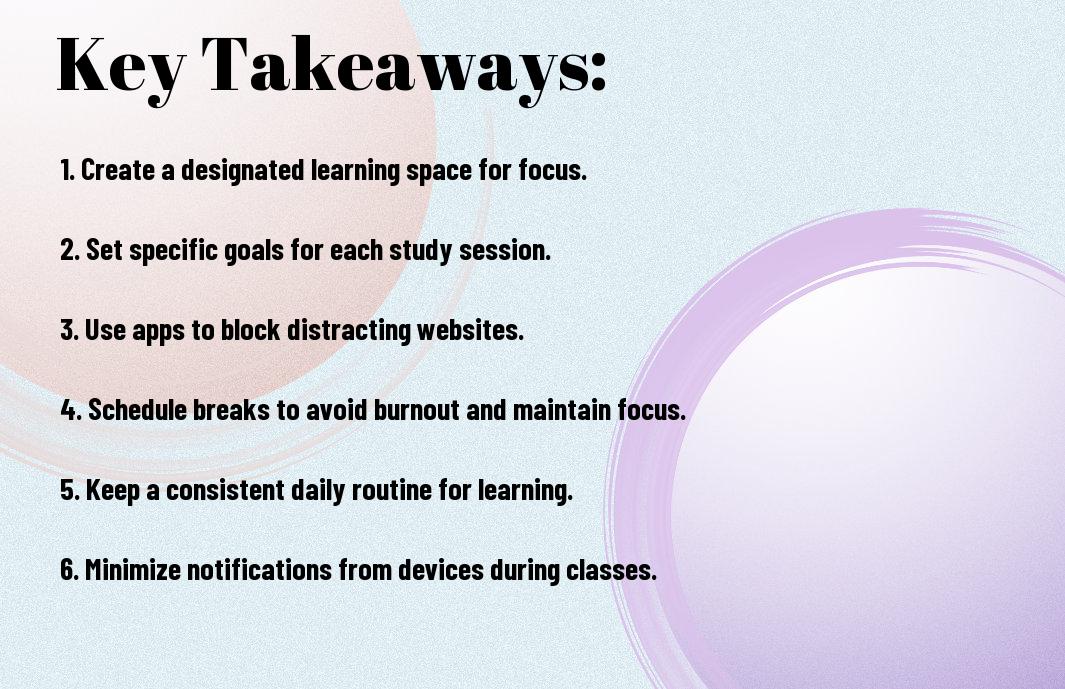
Key Takeaways:

  • Identify and minimize distractions by creating a dedicated learning space that is quiet, comfortable, and free from interruptions, allowing you to focus on your online course materials.
  • Use time management techniques such as the Pomodoro Technique, which involves working in focused 25-minute increments, followed by a 5-minute break, to help you stay on track and avoid procrastination.
  • Develop a schedule and stick to it, setting specific times for learning, breaks, and leisure activities, to help you maintain a healthy balance between online learning and other aspects of your life.
  • Leverage technology to your advantage by using tools such as website blockers, apps, and extensions that help you stay focused and avoid diversions, such as social media and email notifications.
  • Establish a support system by connecting with fellow online learners, joining online communities, or finding a study buddy, to help you stay motivated, engaged, and accountable throughout your online learning journey.

    Setting Up a Conducive Learning Environment

    For optimal online learning, you need to create an environment that fosters focus and productivity. This involves setting up a dedicated space that is quiet, comfortable, and free from distractions.

    Minimizing Digital Distractions

    Beneath the surface of online learning lies a multitude of digital distractions, and you must take steps to minimize them. You can achieve this by turning off notifications, logging out of social media, and using website blockers to limit access to non-necessary sites.

    Creating a Dedicated Learning Space

    With a few simple adjustments, you can create a dedicated learning space that meets your needs. You can start by designating a specific area for learning, investing in a comfortable chair and desk, and ensuring good lighting and ventilation.

    Learning in a dedicated space helps you establish a routine and get into a productive mindset. You can personalize your space to suit your learning style, adding plants, artwork, or other elements that inspire you to stay focused and motivated. As you settle into your space, you’ll find that you’re better able to concentrate and absorb the material, leading to greater success in your online learning endeavors.

    Managing Digital Distractions

    One of the most significant challenges in online learning is managing digital distractions. You can learn about 7 ways to avoid distractions and stay focused on studying to help you stay on track.

    Notifications and Social Media

    For instance, turning off notifications and logging out of social media can help you minimize digital distractions and stay focused on your online courses.

    Email and Messaging Apps

    Before starting your online study session, consider closing email and messaging apps to avoid interruptions and maintain your concentration.

    Apps like website blockers can help you stay focused by restricting access to distracting websites and apps, allowing you to make the most of your online learning experience, and you can utilize them to boost your productivity.

    Staying Focused and Motivated

    After establishing a dedicated study space, you can minimize distractions and stay on track with your online learning goals, helping you to achieve your objectives more efficiently.

    Breaking Down Study Sessions

    Motivated by your goals, you break down study sessions into manageable chunks, allowing you to maintain concentration and retain information better, which aids in your overall understanding of the material.

    Rewarding Progress

    Beside the sense of accomplishment, you can reward yourself for reaching milestones, which helps to reinforce positive habits and encourages you to continue making progress in your online learning journey.

    Down the line, as you consistently reward your progress, you will find that your motivation and engagement with the course material increase, leading to a more enjoyable and productive learning experience, and you will be able to reflect on your accomplishments with a sense of pride and satisfaction, further motivating you to continue striving for excellence in your online learning endeavors.

    Effective Time Management

    Keep a schedule and stick to it to effectively manage your time while learning online. This helps you stay organized and focused, ensuring you complete your coursework on time.

    Scheduling Study Time

    For a successful online learning experience, you will need to plan out your study time in advance, setting specific times for learning and breaks to maintain a healthy balance.

    Avoiding Procrastination

    With a solid plan in place, you can avoid procrastination by breaking down large tasks into smaller, manageable chunks, helping you stay on track and motivated.

    Understanding that procrastination is a common obstacle in online learning, you can take steps to overcome it by identifying your distractions and eliminating them while you study, creating a conducive learning environment that helps you stay focused on your goals, and celebrating your small wins to boost your motivation and confidence in your ability to succeed in your online coursework.

    Strategies for Online Engagement

    Many online learning platforms offer various tools to help you stay engaged, such as live chats, video conferencing, and interactive quizzes, which can help you stay focused and motivated.

    Active Participation in Online Discussions

    Online, you can participate in discussions by posting comments, asking questions, and responding to others, which helps to create a sense of community and encourages you to think critically about the course material.

    Engaging with Multimedia Content

    Media-rich content, such as videos and animations, can help to break up text and make your learning experience more enjoyable, allowing you to engage with the material in a more interactive way and helping you to understand complex concepts more easily.

    Consequently, as you engage with multimedia content, you will find that it helps to reinforce your understanding of the subject matter, and you can use it to review and revisit topics as needed, which can be especially helpful when preparing for assessments or exams.

    Overcoming Common Challenges

    Not all online learning experiences are smooth, but with the right strategies, you can overcome them. For more tips on managing distractions, visit Managing Distractions as an Online Student | CCA to improve your online learning experience.

    Dealing with Technical Issues

    Issues with technology can be a significant obstacle in online learning. You will encounter problems with your internet connection, software, or hardware, but staying calm and seeking help from your institution’s support team can help resolve them quickly.

    Staying Connected with Instructors and Peers

    Between online discussions, video conferences, and email, you have various ways to stay connected with your instructors and peers, which helps you stay engaged and motivated throughout your course.

    A key aspect of online learning is building relationships with your instructors and peers, and you can achieve this by actively participating in online discussions, attending virtual office hours, and collaborating with your peers on group projects, which helps you feel more connected to your learning community and enhances your overall learning experience.

    To wrap up

    Following this guide, you can develop strategies to minimize distractions and stay focused on your online learning goals. You will be able to create a conducive learning environment and avoid multitasking. For more information, visit How To Stay Focused and Avoid Distractions in Online Classes to enhance your online learning experience and achieve your academic objectives. Your ability to manage distractions will improve your overall learning outcomes.

    FAQ

    Q: What are some common distractions that I should be aware of while engaging in online learning?

    A: Some common distractions that can hinder your online learning experience include social media notifications, email alerts, phone calls, text messages, and noisy surroundings. Additionally, online distractions such as online shopping, gaming, and browsing non-academic websites can also derail your focus. Being aware of these potential distractions is the first step to managing them effectively and staying on track with your online coursework.

    Q: How can I create a conducive online learning environment to minimize distractions?

    A: To create a conducive online learning environment, start by dedicating a specific space for learning, free from clutter and noise. Consider using a desk or table instead of learning from your bed, as this can help you establish a clear boundary between learning and leisure time. Also, inform your family and friends about your online learning schedule to avoid interruptions. Furthermore, use tools like website blockers or apps that help you stay focused on your tasks, and prioritize your online learning sessions during times when you are most alert and focused.

    Q: What strategies can I use to stay focused and motivated during online learning sessions?

    A: To stay focused and motivated during online learning sessions, breaking your study material into manageable chunks can help. Set specific, achievable goals for each session, and use the Pomodoro Technique, which involves studying in focused 25-minute increments, followed by a 5-minute break. This technique can help you stay on track and avoid burnout. Additionally, engaging with your online community, participating in discussions, and seeking help when needed can enhance your motivation and overall learning experience. Regularly rewarding yourself for milestones achieved can also serve as a powerful motivator to keep you on track with your online learning goals.

The Best Strategies for Online Course Success

As you commence on your online learning journey, you need effective strategies to achieve your goals. You will encounter various challenges, but with the right approach, you can overcome them. Your success depends on your ability to stay motivated, manage your time, and engage with the course material. You will learn how to create a productive learning environment, set achievable goals, and develop a study routine that works for you, setting you up for success in your online course.

Key Takeaways:

To achieve success in online courses, consider the following strategies:

  • Set clear goals and define what you want to accomplish, helping you stay focused and motivated throughout the course.
  • Develop a schedule and stick to it, ensuring you allocate sufficient time for learning and completing assignments.
  • Engage in active learning by participating in discussions, asking questions, and seeking feedback from instructors and peers.
  • Leverage technology to your advantage, utilizing tools and resources that enhance your learning experience and help you stay organized.
  • Practice self-assessment and evaluation, regularly reviewing your progress and making adjustments as needed to optimize your learning outcomes.

Effective Time Management

For online course success, managing your time wisely is key. You need to balance your coursework with other responsibilities, ensuring you allocate enough time for studying and completing assignments.

Prioritizing Tasks

Efficiently, you will need to prioritize tasks, focusing on the most important ones first, to make the most of your study time and meet deadlines.

Setting Goals

About setting goals, you should define what you want to achieve in your online course, breaking down larger goals into smaller, manageable tasks to help you stay on track.

But as you set your goals, you will need to make sure they are specific, measurable, and attainable, allowing you to track your progress and make adjustments as needed to ensure your success in the online course.

Active Learning Techniques

One key aspect of achieving success in online courses is to adopt effective learning strategies, such as those outlined in 5 Tips to Succeed in Online Learning, which can help you stay engaged and motivated throughout your course.

Engaging with Course Materials

Techniques such as note-taking, summarizing, and self-quizzing can help you engage more deeply with your course materials and retain information better, allowing you to get the most out of your online learning experience.

Participating in Discussions

With regular participation in online discussions, you can share your perspectives, learn from others, and develop a sense of community with your fellow students, which is important for your overall learning experience.

And as you participate in discussions, you will find that your understanding of the course materials deepens, and you are able to apply what you have learned to real-world scenarios, making your online learning experience more meaningful and relevant to your goals.

Staying Motivated

Many online course students face challenges in staying motivated. You need to find ways to keep yourself engaged and interested in the course material to achieve your goals. Setting specific, achievable objectives and tracking your progress can help you stay motivated and focused throughout the course.

Overcoming Procrastination

Motivated individuals understand that procrastination is a common obstacle. You can overcome it by breaking down tasks into smaller, manageable chunks, and creating a schedule to stay on track. This will help you make steady progress and maintain your momentum.

Celebrating Progress

By acknowledging and celebrating your progress, you can reinforce positive habits and stay motivated. You can do this by treating yourself to something special or sharing your achievements with friends and family, which will help you feel a sense of accomplishment and pride in your work.

Plus, celebrating your progress can also help you identify areas where you need to improve, allowing you to adjust your strategy and make adjustments as needed. You can use this information to refine your approach and stay on track to achieving your goals, which will help you get the most out of your online course experience.

Utilizing Resources

Keep in mind that having access to the right resources can make a significant difference in your online course success. You can find helpful tips and advice on websites like 15 Tips to Succeed in an Online Class, which can help you stay on track and achieve your goals.

Seeking Help from Instructors

About the time you need help, don’t hesitate to reach out to your instructors, as they are there to support you throughout your online course journey, and you can ask them for guidance and feedback to improve your performance.

Leveraging Online Tools

Beneath the surface of online learning, there are numerous tools and platforms that can aid you in your studies, such as online libraries, discussion forums, and video conferencing software, which can enhance your learning experience and help you stay connected with your peers.

In addition, leveraging online tools can help you stay organized, manage your time more effectively, and access a wealth of information and resources that can support your learning, allowing you to take your online course to the next level and achieve your academic goals.

Building a Support Network

After enrolling in an online course, you’ll want to establish a support system to help you stay on track. You can find valuable advice on how to succeed as an online student by visiting Tips to Succeed as an Online Student, which offers guidance on effective learning strategies.

Connecting with Peers

After joining your online course, you’ll have opportunities to connect with fellow students, sharing experiences and ideas that can enrich your learning journey.

Joining Study Groups

At this stage, you may consider joining study groups, where you can collaborate with peers on assignments and discussions, fostering a sense of community and cooperation.

Further, participating in study groups allows you to learn from others, gain new insights, and stay motivated, as you work together towards common goals, enhancing your overall online learning experience.

Managing Stress and Burnout

Not managing stress can have severe consequences on your online course success, leading to burnout and decreased productivity.

Maintaining a Healthy Work-Life Balance

Before exploring into your coursework, prioritize your personal life to avoid exhaustion and maintain motivation, ensuring you can tackle your studies with a clear mind.

Practicing Self-Care

Among the many strategies for managing stress, taking care of your physical and mental well-being is important to staying focused and driven throughout your online course.

It is important to develop habits that promote relaxation and stress reduction, such as meditation, exercise, or hobbies, to help you cope with the demands of online learning and maintain your overall well-being, allowing you to perform at your best and achieve your academic goals.

Summing up

Conclusively, you now have the tools to succeed in online courses. You can optimize your learning by setting goals, creating a schedule, and engaging with your course materials. By implementing these strategies, you will enhance your online learning experience, achieving your academic goals and expanding your knowledge, which will ultimately benefit your career and personal growth, as you continue to develop your skills and abilities through continuous learning. You will be able to tackle challenges and stay motivated throughout your online course journey.

FAQ

Q: What are the most effective ways to stay motivated and engaged in an online course?

A: To stay motivated and engaged in an online course, it’s vital to set clear goals and deadlines for yourself. Break down larger assignments into smaller, manageable tasks, and create a schedule to help you stay on track. Additionally, interacting with your instructor and fellow students through discussion forums and live sessions can help you feel more connected to the course material and build a sense of community. Regularly tracking your progress and rewarding yourself for milestones achieved can also help maintain motivation.

Q: How can I best manage my time to balance online coursework with other responsibilities?

A: Effective time management is key to balancing online coursework with other responsibilities. Start by planning out your day, week, and month in advance, making sure to allocate sufficient time for studying, completing assignments, and participating in online activities. Utilize calendars, planners, or apps to stay organized and set reminders for upcoming deadlines. Prioritizing tasks based on their urgency and importance, and avoiding procrastination by using techniques like the Pomodoro Technique, can also help you make the most of your time. Establishing a dedicated study space free from distractions is also vital for focusing on your coursework.

Q: What strategies can I use to overcome technical issues and ensure I have the necessary resources to complete an online course successfully?

A: To overcome technical issues and ensure you have the necessary resources, it’s a good idea to familiarize yourself with the online learning platform and its technical requirements before the course starts. Ensure your computer, internet connection, and other necessary software meet these requirements. Keeping the contact information of your course’s technical support team handy can be helpful in case you encounter any issues. Moreover, having a backup plan, such as access to a different computer or internet connection, can prevent last-minute stresses. Regularly saving your work and using reliable antivirus software can prevent data loss and protect your devices from malware.

How Online Education Encourages Creative Thinking

As you explore the world of online education, you’ll discover that it offers a unique platform for fostering creative thinking. You can leverage online resources to enhance your learning experience and unlock your full potential. For instance, you can find valuable insights on 8 Tips To Nurture Creativity In eLearning to help you get started. By embracing online education, you can develop innovative skills and think outside the box, leading to a more engaging and effective learning experience.

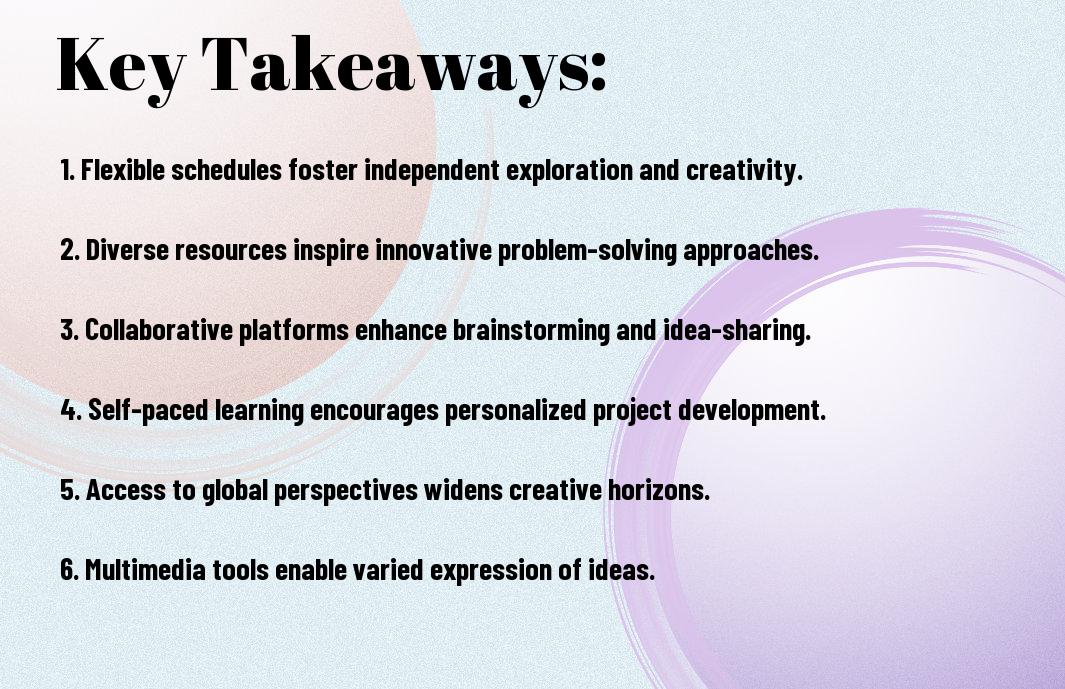
Key Takeaways:

To foster a deeper understanding of how online education promotes innovative thought processes, consider the following points:

  • Online education platforms offer flexible learning pathways that allow students to explore topics at their own pace, which can help stimulate creativity and encourage students to think outside the box.
  • The use of digital tools and multimedia resources in online education can provide students with a wide range of interactive experiences that promote creative problem-solving skills.
  • Online education provides students with access to a global community of learners, which can expose them to diverse perspectives and ideas, helping to foster creativity and innovation.
  • The self-directed nature of online learning requires students to take an active role in their education, which can help develop critical thinking and analytical skills, both important for creative thinking.
  • Online education can provide students with opportunities to engage in project-based learning, which involves working on real-world projects that require creative thinking and innovative solutions to complex problems.

Fostering Creativity

The online education platform provides you with the opportunity to explore various subjects and topics, allowing your creative thinking to flourish. You can engage with course materials, share ideas, and learn from others, all of which contribute to a creative learning environment.

Encouraging Self-Directed Learning

At this stage, you take ownership of your learning, setting goals and pacing yourself. You can explore topics in-depth, making connections and generating new ideas, which helps to develop your creative thinking skills.

Promoting Interactive Learning Experiences

Between online discussions, collaborative projects, and interactive assignments, you experience a engaging learning environment. You are able to share your thoughts, learn from others, and develop creative solutions to problems.

It is through these interactive experiences that you develop a deeper understanding of the subject matter, and your creative thinking skills are refined. You begin to see connections between ideas, and your ability to approach problems from unique angles is enhanced, allowing you to develop innovative solutions.

Breaking Down Barriers

Any online educational platform helps you to think creatively by giving you the opportunity to explore different topics and subjects from the comfort of your own space.

Overcoming Geographical Constraints

Bridging the gap between you and educational resources, online education allows you to access courses and programs from anywhere in the world, helping you to expand your knowledge and skills.

Providing Access to Diverse Perspectives

Beneath the surface of online education lies a wealth of information and viewpoints from people all over the world, enabling you to engage with your peers and instructors from diverse backgrounds.

Providing you with access to a wide range of perspectives, online education helps you to develop a more nuanced understanding of the world and its complexities, allowing you to think creatively and approach problems from different angles, which in turn enhances your ability to find innovative solutions, making you a more skilled and adaptable individual in your chosen field.

Developing Critical Thinking

To enhance your critical thinking skills, online education provides a platform for you to analyze information and make informed decisions. You can explore resources like Encouraging Creativity in Online Courses to understand how online courses foster creative thinking.

Encouraging Analysis and Evaluation

Around the same time, you’ll find that online education encourages you to evaluate information, identify patterns, and think critically about the material presented to you. This helps you develop a deeper understanding of the subject matter and improves your ability to analyze complex information.

Cultivating Problem-Solving Skills

At this point, you’ll start to notice that online education helps you develop problem-solving skills by presenting you with real-world scenarios and asking you to find solutions. You’ll learn to approach problems from different angles and think creatively to find innovative solutions.

Thinking about how to apply problem-solving skills in real-life situations, you’ll realize that online education provides you with a unique opportunity to practice and refine your skills in a safe and supportive environment. As you work through online courses, you’ll be encouraged to think critically and develop well-informed solutions to complex problems, preparing you for success in your personal and professional life.

Technology-Enhanced Learning

Utilizing Multimedia Resources

Across various online platforms, you can access a plethora of multimedia resources, including videos, podcasts, and interactive simulations, which enable you to engage with complex concepts in an immersive and interactive way, promoting your creative thinking skills.

Leveraging Collaborative Tools

This collaborative environment allows you to engage in discussions, share your work, and learn from others, helping you develop a unique perspective and approach to problem-solving, as you navigate through the online learning landscape and make the most of the technology-enhanced learning experience designed to support your growth.

Personalized Learning

Many online educational platforms offer personalized learning experiences, allowing you to learn at your own pace and explore topics that interest you. This approach helps you stay engaged and motivated, as you can focus on your strengths and weaknesses.

Tailoring Education to Individual Needs

Any obstacles that may hinder your learning process can be addressed through personalized learning. You can access resources and support tailored to your individual needs, ensuring that you receive the best possible education.

Supporting Student Autonomy

Beside the flexibility that online education provides, you are also given the freedom to make choices about your learning. You can select courses, set goals, and create a schedule that suits your lifestyle, allowing you to take ownership of your education.

Also, as you progress through your online courses, you will develop self-directed learning skills, enabling you to navigate complex topics and make informed decisions about your educational path. You will become more confident in your ability to learn and adapt, preparing you for success in an ever-changing world.

Real-World Applications

Now that you have explored the benefits of online education, it’s time to consider how it applies to the real world. You will notice that online education provides you with skills that are highly valued in various industries, enabling you to tackle complex problems and adapt to new situations.

Preparing Students for the Modern Workplace

The modern workplace demands flexibility, innovation, and creativity. You will find that online education helps you develop these skills, preparing you for a career that requires collaboration, critical thinking, and problem-solving.

Fostering Entrepreneurial Spirit

Above all, online education empowers you to think outside the box and explore new ideas. You will discover that it encourages you to take calculated risks and pursue your passions, leading to a more fulfilling career.

Applications of online education in fostering entrepreneurial spirit are numerous. You can develop your own business ideas, create innovative products, or offer services that solve real-world problems. As you navigate the online educational landscape, you will find that your creative thinking skills are sharpened, enabling you to identify opportunities and turn them into successful ventures.

To wrap up

Upon reflecting on the benefits of online education, you will find that it fosters an environment where your creative thinking is encouraged to flourish. As you explore various online courses, you are exposed to diverse perspectives, allowing you to think outside the box and develop innovative ideas. Your ability to think creatively is enhanced, enabling you to approach problems with a unique mindset and find solutions that are tailored to your needs.

FAQ

Q: What role does online education play in fostering creative thinking in students?

A: Online education provides students with a flexible and autonomous learning environment that allows them to explore and express their ideas freely. This independence enables students to think creatively, as they are not limited by traditional classroom settings or rigid teaching methods. Online resources, such as interactive tutorials, virtual labs, and collaborative tools, also facilitate hands-on learning experiences that promote innovative thinking and problem-solving skills.

Q: How do online educational platforms and tools encourage creative thinking in learners?

A: Online educational platforms and tools offer a wide range of resources and features that stimulate creative thinking. For instance, online discussions forums and social media groups allow students to engage with peers from diverse backgrounds, share ideas, and learn from one another. Additionally, digital tools like mind mapping software, multimedia presentation platforms, and virtual whiteboards enable students to visually express their ideas, experiment with different formats, and develop unique solutions to complex problems. These tools help learners develop a creative mindset and think outside the box.

Q: Can online education help students develop creative thinking skills that are applicable in real-world scenarios?

A: Yes, online education can effectively help students develop creative thinking skills that are highly applicable in real-world scenarios. By providing students with project-based learning opportunities, online education enables them to work on realistic problems and challenges that require innovative solutions. Moreover, online education often incorporates industry partnerships, expert guest lectures, and real-world case studies, which help students understand the practical applications of creative thinking in various fields. As a result, students develop a deeper understanding of how to apply creative thinking to solve real-world problems, making them more competitive and adaptable in the workforce.

How to Track Progress in Online Classes

You’re taking online classes, and your goal is to stay on top of your work. You need to monitor your progress to achieve your objectives. Your success depends on tracking your assignments, grades, and deadlines. You’ll learn how to do this effectively, making the most of your online learning experience, in this guide.

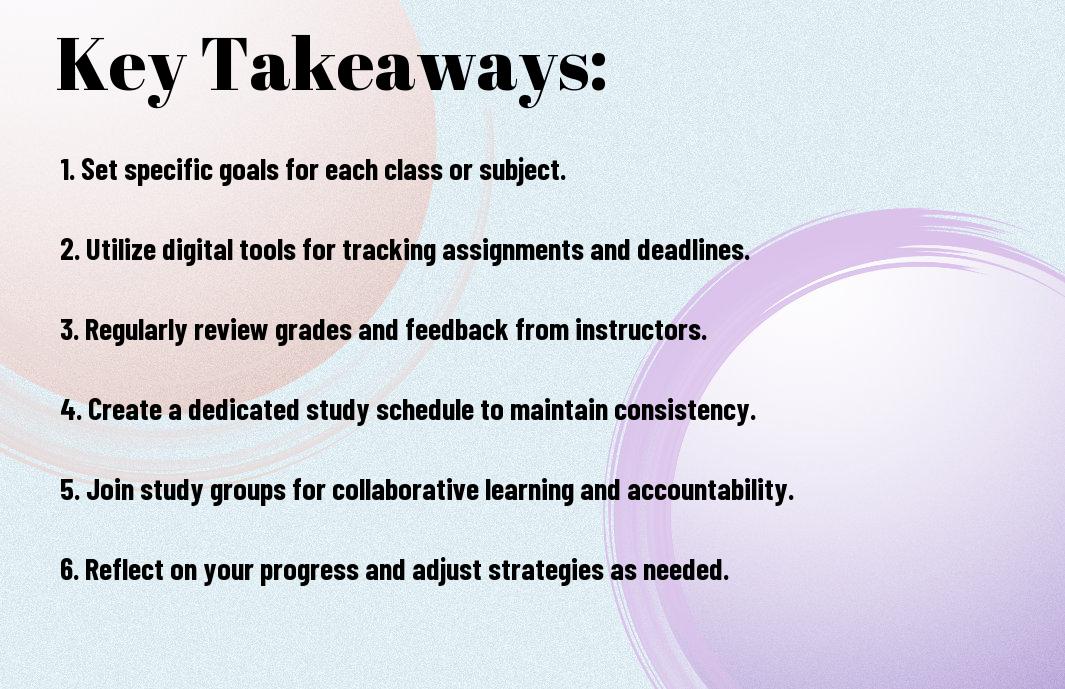
Key Takeaways:

To effectively monitor your advancement in online courses, consider the following points:

  • Set Clear Goals to help you stay focused and motivated throughout the duration of the class, ensuring you understand what needs to be achieved.
  • Utilize Tracking Tools such as calendars, planners, or apps designed to help students organize assignments and deadlines, keeping you on schedule.
  • Establish a Regular Routine for studying and participating in online activities, maintaining consistency is key to staying on top of your coursework.
  • Engage in Self-Assessment regularly, evaluating your understanding of the material and identifying areas where you may need extra support or review.
  • Leverage Feedback Mechanisms provided by the course, such as discussion forums or direct communication with instructors, to gauge your performance and adjust your approach as necessary.

Setting Up Tracking Systems

Before you start tracking your progress, consider how you will set up your systems. You can learn more about How to Let Your Students Track Their Own Course Progress to get started.

Identifying Key Performance Indicators

For your tracking to be effective, you need to identify the key metrics that matter most to your learning goals, allowing you to focus on what’s working and what’s not.

Using Online Tools for Progress Monitoring

Below are some tools to help you monitor your progress, from built-in LMS features to third-party apps and plugins that simplify tracking and analysis.

Monitoring your progress regularly helps you stay on top of your coursework and make adjustments as needed, and by leveraging online tools, you can streamline this process and make the most of your time, allowing you to adjust your approach and achieve your goals more efficiently.

Establishing Goals and Objectives

While setting up your online class, you need to define what you want to achieve. Check out Tracking Online Learners’ Progress: Effective Strategies to get insights on how to monitor your progress. This will help you stay focused and motivated throughout your course.

Creating a Personalized Learning Plan

Any successful online learner knows that having a tailored plan is key. You should assess your strengths, weaknesses, and learning style to create a plan that suits your needs, allowing you to make the most of your online class.

Breaking Down Larger Goals into Smaller Tasks

To tackle your objectives, break them down into manageable tasks. This approach will make your goals less overwhelming, helping you to track your progress and make adjustments as needed.

Breaking down larger goals into smaller tasks is a simple yet effective way to stay on top of your work. You can create a schedule with specific deadlines for each task, allowing you to monitor your progress and make adjustments as needed, ensuring you’re always moving closer to achieving your objectives in your online class.

Monitoring Progress

Now that you’ve started your online class, tracking your progress is key. You’ll want to stay on top of your assignments, quizzes, and participation to ensure you’re meeting your goals.

Regularly Reviewing Assignments and Quizzes

Across the duration of your course, you’ll need to keep tabs on your assignments and quizzes, making sure you’re completing them on time and to the best of your ability.

Tracking Participation and Engagement

One way to gauge your progress is by tracking your participation and engagement in online discussions and activities, allowing you to identify areas where you need to improve.

And as you track your participation, you’ll start to see patterns emerge, helping you understand what’s working and what’s not, enabling you to make adjustments to stay on track and achieve your goals in the online class.

Adjusting the Learning Plan

Many online learners find that their initial plan needs tweaking as they progress through their course. You will likely encounter areas where you need more practice or review, and your plan should reflect these changes.

Identifying Areas for Improvement

Among the key steps in adjusting your learning plan is pinpointing where you need extra help. You can do this by tracking your assignments and test scores to see where you’re struggling.

Making Adjustments to Stay on Track

Identifying your weaknesses is the first step, and then you can make adjustments to your study schedule to focus on those areas. You will be able to allocate more time to the topics that are giving you trouble.

Hence, by making these adjustments, you can ensure that you’re using your study time effectively and making progress towards your goals. You can take additional online resources, such as video tutorials or practice quizzes, to supplement your learning in areas where you’re struggling, and this will help you to stay on track and achieve your objectives.

Staying Motivated

Your online classes demand a steady effort, and staying motivated is key to success. You need to focus on your goals and push through challenges to reach them.

Celebrating Small Victories

Against the tide of tough coursework, acknowledging small wins will help you stay afloat. You complete a difficult assignment, and that’s a victory – acknowledge it.

Finding Support from Peers and Instructors

Minimal as it may seem, connecting with your peers and instructors can help you stay on track. You can join online forums or discussion groups to get support.

Also, your instructors are there to guide you, so don’t hesitate to reach out when you need help. You can ask for feedback on your progress, and they can provide valuable insights to keep you motivated and focused on your goals.

Overcoming Obstacles

Once again, you’ll face challenges in online classes. Your progress may slow, but don’t get discouraged. Identify the obstacles and find ways to overcome them.

Managing Time Effectively

Above all, after setting your schedule, stick to it. You’ll stay on track and make steady progress in your online classes.

Seeking Help When Needed

When you’re struggling, don’t hesitate to ask for help. You can reach out to your instructor or peers for support, and get back on track with your online classes.

With the right mindset, you’ll be able to seek help when you need it. You’ll find that your instructor and peers are willing to lend a hand, and you’ll be able to overcome any obstacles that come your way. You’ll stay focused, and your progress will reflect your hard work and determination.

Summing up

On the whole, you’ve got the tools to track your progress in online classes. You can set goals, use calendars, and analyze your grades. Your progress is in your hands. You can adjust your approach as you go, staying on top of your work and achieving your goals. You’ll stay focused and motivated, pushing through challenges to succeed in your online courses.

FAQ

Q: What are the best ways to track progress in online classes?

A: To track progress in online classes, utilize the learning management system’s built-in tracking features, such as progress bars, quizzes, and assignment submission trackers. Additionally, create a schedule and set reminders for upcoming deadlines, and maintain a log or journal to record notes and reflections on your learning journey. Regularly reviewing course materials and asking instructors for feedback can also help you stay on top of your progress.

Q: How can I stay organized and keep track of assignments and deadlines in online classes?

Q: What role does self-assessment play in tracking progress in online classes, and how can I effectively self-assess my learning?

A: Self-assessment plays a significant role in tracking progress in online classes, as it enables you to evaluate your own learning and identify areas for improvement. To effectively self-assess, set clear learning goals and objectives, and regularly evaluate your progress towards achieving them. Use self-assessment rubrics and quizzes to gauge your understanding of course materials, and solicit feedback from instructors and peers to gain new insights into your learning. Reflecting on your learning experiences, identifying what works and what doesn’t, and adjusting your approach as needed can also help you stay on track and achieve your learning objectives.

Skip to content