How Online Education Shapes the Future Workforce

As you consider the evolving landscape of learning, you may wonder how online education is redefining your professional prospects. You are likely aware that the way you acquire skills and knowledge today will significantly impact your career tomorrow. Your ability to adapt to this shift will be necessary in navigating the future workforce, where technological advancements and digital literacy are increasingly valued. You will need to understand the implications of online education on your future career.

Key Takeaways:

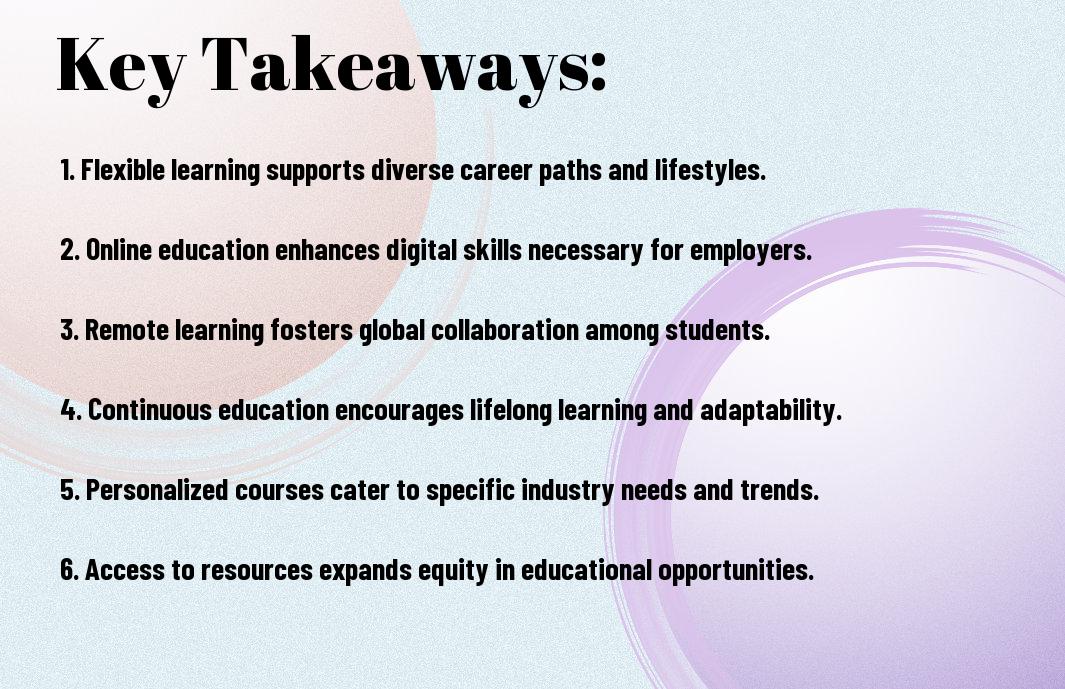
  • The digitalization of education is transforming the way we learn and acquire skills, preparing the future workforce for an increasingly tech-driven economy.
  • Online learning platforms are making education more accessible and affordable, allowing people to acquire new skills and knowledge from anywhere in the world.
  • The flexibility of online education enables students to balance work and learning, making it an attractive option for those who need to upskill or reskill to remain competitive in the job market.
  • Artificial intelligence and data analytics are being used to create personalized learning experiences, helping students develop the skills and competencies required by the future workforce.
  • The shift to online education is driving a paradigm shift in the way we think about work and learning, with a focus on lifelong learning and continuous skill development to stay relevant in a rapidly changing job market.

The Rise of Online Education

The advent of online education has transformed the way you learn, offering a plethora of opportunities for skill development and knowledge acquisition. As you navigate this digital landscape, you’ll find that online courses and degree programs are becoming increasingly popular, catering to diverse learning styles and preferences.

Changing Learning Environments

Following the shift towards online learning, you’ll notice that traditional classroom settings are giving way to virtual environments, allowing you to learn at your own pace and convenience. As you adapt to these new environments, you’ll discover that they provide a more personalized and interactive learning experience.

Accessibility and Flexibility

With the rise of online education, you’ll find that accessing educational resources has become easier, enabling you to balance your learning with other aspects of your life. You can now learn from anywhere, at any time, as long as you have a stable internet connection.

It is worth noting that this increased accessibility and flexibility have significant implications for your future career prospects, as you’ll be able to acquire new skills and knowledge that are relevant to the modern workforce, making you a more competitive candidate in the job market.
Skills for the Digital Age

There’s a shift in the skills you need to succeed in the digital age, and online education is leading the way. You can learn more about The Role Of Online Learning In The Future Of Work and how it’s changing the workforce.

Critical Thinking and Problem-Solving

Around the concept of critical thinking, you’ll find that online education helps you develop skills to analyze information and make informed decisions, preparing you for the future workforce.

Collaboration and Communication

The ability to work with others and communicate effectively is vital in the digital age, and online education provides you with opportunities to develop these skills through virtual team projects and discussions.

But as you probe deeper into the concept of collaboration and communication, you’ll find that online education offers you a unique chance to work with people from diverse backgrounds and industries, helping you to develop a global perspective and prepares you to navigate the complexities of the modern workforce, allowing you to thrive in a world where technology is constantly evolving, and you must be able to adapt and innovate to stay ahead.

The Impact on Traditional Education

Once again, you find yourself at the forefront of a revolution, as online education transforms the way you learn and interact with educational institutions. Your traditional classroom experience is evolving, and you must adapt to the changing landscape.

Shifts in Teaching Methods

Along with the rise of online education, you notice a significant change in the way teachers approach their craft. Your instructors are now more focused on facilitating online discussions and creating interactive content, making your learning experience more engaging and personalized.

New Roles for Educators

By embracing technology, you begin to see educators taking on new roles, such as content curators and learning coaches, helping you navigate the vast amounts of information available online. Your teachers are now more focused on guiding you towards the most relevant and accurate sources.

Impact of these new roles on your education is profound, as you start to take more ownership of your learning process. You begin to appreciate the value of self-directed learning, and your educators are there to support and mentor you, rather than simply lecturing. As you progress, you will find that your ability to learn and adapt will be more valuable than ever, and your educators will be there to help you develop these skills.

Preparing Students for the Future

Despite the challenges, online education plays a significant role in shaping the future workforce by providing you with the skills and knowledge required to succeed in an ever-changing job market.

Career Readiness and Employability

Alongside traditional subjects, online education offers you courses that focus on developing your soft skills, making you more attractive to potential employers and better prepared for the workforce.

Lifelong Learning and Adaptation

Likewise, online education fosters a mindset of continuous learning, allowing you to stay up-to-date with the latest developments in your field and adapt to new technologies and methodologies.

Even as you graduate and enter the workforce, you will find that online education has prepared you to be flexible and responsive to the evolving needs of your profession, enabling you to pursue ongoing learning and professional development opportunities that will enhance your career prospects and keep your skills relevant in a rapidly changing world, and you will be able to navigate the complexities of your chosen field with confidence and expertise.

Challenges and Limitations

Keep in mind that online education is not without its challenges, and as you consider its impact on the future workforce, you must acknowledge the limitations that come with it.

Equity and Access to Technology

One of the primary concerns is that not all individuals have equal access to the technology needed for online education, and as you think about the implications, you should consider how this affects your own understanding of the issue.

Social Isolation and Motivation

Motivated students may thrive in online environments, but as you ponder the effects of social isolation, you should think about how it might influence your own ability to stay engaged and motivated in a virtual setting.

But as you investigate deeper into the issue of social isolation and motivation, you will find that it is a complex problem, and you must consider how the lack of face-to-face interaction can affect your emotional and psychological well-being, ultimately impacting your overall learning experience and preparation for the future workforce.

Innovative Solutions and Technologies

All the advancements in online education are driven by innovative solutions and technologies, and as you explore this landscape, you can learn more about Shaping the Future of Online Learning to understand the evolving needs of the workforce.

Artificial Intelligence and Personalization

At the forefront of online education, you will find artificial intelligence and personalization, which are being used to create customized learning experiences tailored to your needs and learning style, enabling more effective knowledge acquisition.

Virtual and Augmented Reality

Among the most significant technological advancements in online education, virtual and augmented reality are changing the way you interact with educational content, making it more immersive and engaging, and you can expect to see more of these technologies in the future.

Hence, as you examine deeper into virtual and augmented reality, you will discover new possibilities for experiential learning, where you can practice and apply your skills in simulated environments, preparing you for the complexities of the real world, and enabling you to develop a more nuanced understanding of the subjects you study, which will ultimately shape your future in the workforce.

Summing up

Following this exploration of online education, you begin to see how it reshapes your understanding of the future workforce. As you consider the implications, you realize that your skills and knowledge will be constantly evolving. Your ability to adapt to new technologies and learning platforms will be vital in this new landscape, and you must be prepared to navigate the changing demands of the job market, ultimately transforming your role in the workforce.

FAQ

Q: How is online education changing the skills required for the future workforce?

A: Online education is revolutionizing the skills required for the future workforce by shifting the focus from traditional classroom learning to a more flexible and technology-driven approach. With the rise of online learning, students can now access a wide range of courses and training programs that equip them with the skills needed to succeed in an increasingly digital and interconnected world. These skills include digital literacy, data analysis, problem-solving, and collaboration, which are vital for professionals to stay competitive in the job market.

Q: What role does online education play in preparing students for the gig economy and remote work?

A: Online education plays a significant role in preparing students for the gig economy and remote work by providing them with the skills and knowledge needed to thrive in a flexible and ever-changing work environment. Online courses and training programs can help students develop the skills required for freelance work, such as self-motivation, time management, and communication, as well as the technical skills needed for remote work, such as video conferencing and digital project management. Additionally, online education can help students develop a mindset that is adaptable to change and open to continuous learning, which is vital for success in the gig economy.

Q: How does online education impact the accessibility and diversity of the future workforce?

A: Online education has a profound impact on the accessibility and diversity of the future workforce by breaking down geographical and socio-economic barriers to education and career advancement. With online learning, students from all over the world can access high-quality educational resources and training programs, regardless of their location or financial means. This has led to a more diverse and inclusive workforce, where individuals from underrepresented groups can now participate and contribute their unique perspectives and skills. Furthermore, online education can also help address issues of inequality and social mobility by providing opportunities for people with disabilities, caregivers, and those in remote or underserved communities to access education and job opportunities that may have been inaccessible to them otherwise.

How to Stay Ahead with Online Upskilling

You are constantly looking for ways to enhance your skills and stay competitive in the job market. Your career growth depends on your ability to adapt to new technologies and trends. By leveraging online upskilling, you can acquire new skills and knowledge at your own pace, giving you a significant edge over others. This approach allows you to take control of your professional development, ensuring you stay relevant and ahead in your field.

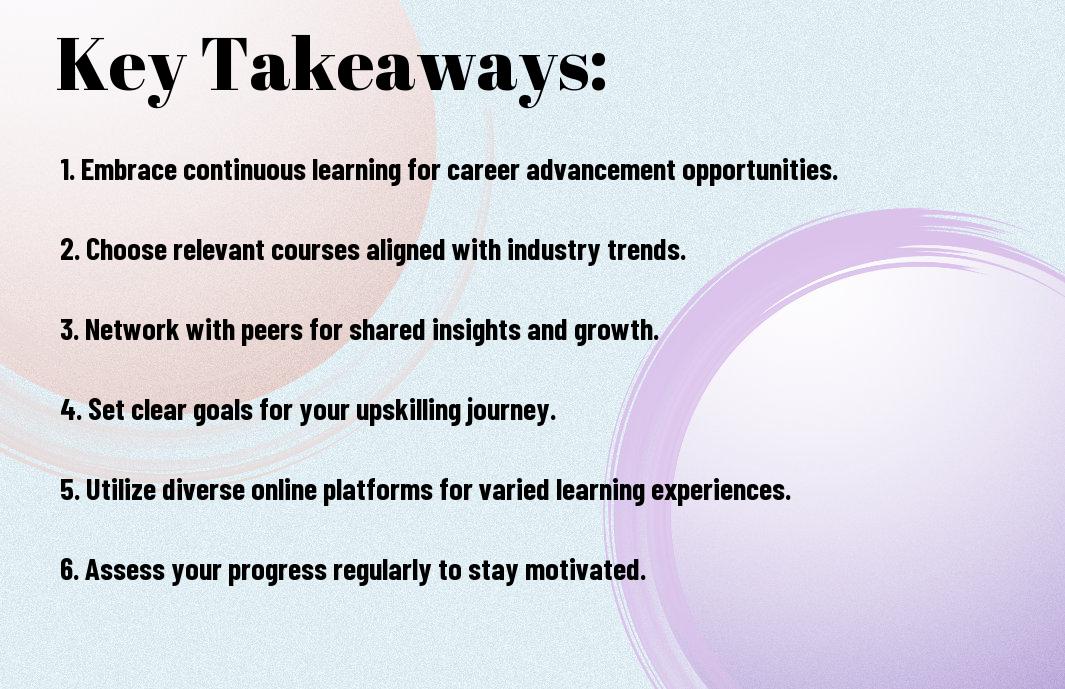
Key Takeaways:

To stay ahead in the competitive job market, continuous learning is necessary. Here are the key points to consider for online upskilling:

  • Stay updated with industry trends by taking online courses and attending webinars to enhance your skills and knowledge in your field.
  • Focus on developing in-demand skills such as digital marketing, data analysis, and cloud computing to increase your job prospects.
  • Utilize online platforms such as MOOCs (Massive Open Online Courses) and online tutorials to access a wide range of courses and training programs.
  • Set learning goals and create a personalized learning plan to help you stay focused and motivated throughout your upskilling journey.
  • Leverage professional networks and online communities to connect with industry experts and like-minded individuals, and to stay informed about new opportunities and best practices.

Identifying Skills in Demand

For your career growth, it’s important to identify skills in demand. You can find valuable insights on How to Stay Ahead of the Curve to help you make informed decisions.

Emerging Trends

By exploring industry reports, you can discover emerging trends shaping your profession, enabling you to focus on acquiring relevant skills.

Market Analysis

By conducting thorough market analysis, you gain a deeper understanding of the job market and the skills required to stay competitive.

Identifying your target industry’s needs is vital for your career development. You should analyze job postings, industry reports, and market research to determine the skills in high demand, allowing you to tailor your upskilling efforts accordingly and increase your chances of success in your chosen field.

Choosing the Right Online Platform

The selection of an online platform is a significant step in your upskilling journey. You need to consider various factors to ensure that the platform you choose aligns with your goals and learning style.

Overview of Popular Platforms

For instance, platforms like Coursera, Udemy, and LinkedIn Learning offer a wide range of courses and specializations. You can explore these options to find the one that suits your needs.

Key Features to Consider

Overview of the key features is necessary to make an informed decision. You should look for features such as:

  • Course variety and relevance
  • Flexible learning schedules
  • Interactive learning tools
  • Certification and accreditation

Thou should prioritize the features that matter most to your learning goals and objectives.

Further evaluation of the key features is crucial to ensure that you get the most out of your online learning experience. You should consider features such as:

  • Personalized learning paths
  • Real-time feedback and assessment
  • Collaboration and discussion forums
  • Lifetime access to course materials

Thou should take the time to explore and evaluate these features to find the platform that best supports your upskilling journey.

Creating a Personalized Learning Plan

After identifying your learning needs, you can create a personalized learning plan. To get started, you can check out Top 5 Ways to Upskill to Stay Ahead in the Game to understand the importance of upskilling in today’s competitive job market.

Assessing Current Skills

Along with understanding industry trends, you need to assess your current skills to identify areas for improvement. This will help you create a focused learning plan that addresses your knowledge gaps.

Setting Realistic Goals

Above all, setting realistic goals is vital to achieving success in your upskilling journey. You should define what you want to achieve and set specific, measurable objectives.

Due to the ever-changing job market, you will need to regularly update your skills to stay relevant. As you work towards your goals, you will be able to track your progress and make adjustments to your learning plan as needed, ensuring that you stay on track and achieve your desired outcomes.

Effective Learning Strategies

Many online learners struggle to stay on track, but with the right approach, you can achieve your goals. You need to develop strategies that work for you, such as setting schedules and tracking progress.

Active Learning Techniques

To maximize your learning, you should engage with the material, ask questions, and participate in discussions, allowing you to retain information better and stay focused on your objectives.

Staying Motivated

AFTER you’ve started your online course, maintaining motivation is key, and you can do this by setting achievable milestones and rewarding yourself for your progress, helping you stay driven and committed to your goals.

With your motivation intact, you’ll be able to overcome obstacles and stay engaged in your learning journey, and as you progress, you’ll find that your confidence and skills will grow, enabling you to take on new challenges and pursue your career aspirations with renewed enthusiasm and purpose, helping you to stay ahead in your field.

Overcoming Common Challenges

Unlike traditional learning, online upskilling requires discipline and self-motivation to overcome common challenges, and you will need to develop strategies to stay on track and achieve your goals.

Managing Time Effectively

Above all, you must prioritize your time and create a schedule that allows you to balance your online learning with other responsibilities, ensuring you make the most of your time.

Dealing with Distractions

Between your work, family, and social life, distractions can be a significant obstacle to your online learning, and you need to find ways to minimize them and stay focused on your goals.

To minimize distractions, you can start by identifying the most common distractions, such as social media or email notifications, and finding ways to eliminate them while you study, allowing you to concentrate on your learning and make progress towards your goals, and you will be able to stay motivated and engaged in your online upskilling journey.

Measuring Progress and Success

Your ability to measure progress and success is vital in online upskilling, as it helps you identify areas of improvement and track your growth over time.

Tracking Progress

On a regular basis, you should assess your performance and adjust your learning strategy to achieve your goals, ensuring you stay on track and motivated throughout your upskilling journey.

Evaluating Outcomes

An crucial aspect of measuring success is evaluating the outcomes of your upskilling efforts, which involves assessing the skills and knowledge you have acquired and how they align with your career objectives.

Considering the outcomes of your upskilling efforts, you will be able to determine the effectiveness of your learning strategy and make informed decisions about future investments in your professional development, enabling you to maximize your return on investment and achieve your long-term career goals.

Summing up

Drawing together the points, you now have a clear understanding of how to stay ahead with online upskilling. As you continue on your journey, you can stay competitive by exploring Reskilling and Upskilling: The Key to Staying Competitive, which will help you make informed decisions about your professional development and enhance your skills to achieve your goals. You will be well-equipped to navigate the ever-changing job market with your newfound knowledge and skills.

FAQ

Q: What are the benefits of online upskilling, and how can it help me stay ahead in my career?

A: Online upskilling offers numerous benefits, including increased flexibility, accessibility, and affordability. By leveraging online courses and training programs, you can acquire new skills and knowledge in a self-paced and convenient manner, allowing you to enhance your career prospects and stay competitive in the job market. With online upskilling, you can fill gaps in your skillset, explore new areas of interest, and demonstrate your commitment to continuous learning and professional development, ultimately leading to greater career advancement opportunities and improved job satisfaction.

Q: How can I choose the right online upskilling platform and courses that align with my career goals and interests?

A: To choose the right online upskilling platform and courses, start by identifying your career objectives and the skills you need to acquire. Research various online learning platforms, such as Coursera, Udemy, and LinkedIn Learning, and explore their course offerings, reviews, and ratings. Consider factors like course format, duration, and level of difficulty, as well as the credibility and expertise of the instructors. You can also seek recommendations from colleagues, mentors, or industry professionals and read reviews from other learners to ensure that the platform and courses you choose are reliable, engaging, and relevant to your career aspirations.

Q: How can I balance online upskilling with my existing work and personal commitments, and ensure that I stay motivated and engaged throughout the learning process?

A: To balance online upskilling with your existing work and personal commitments, create a schedule that allows you to dedicate a specific time slot each day or week to learning. Set realistic goals and deadlines, and break down larger courses into smaller, manageable chunks. Establish a dedicated learning space, free from distractions, and use tools like calendars, reminders, and to-do lists to stay organized and on track. Additionally, connect with fellow learners or join online communities to build a support network, share knowledge, and stay motivated. By celebrating your progress, rewarding yourself for milestones achieved, and applying your new skills and knowledge in practical contexts, you can maintain your enthusiasm and commitment to online upskilling, even in the face of competing demands and responsibilities.

The Importance of Goal Setting in Online Education

As you commence on your online educational journey, you will find that setting goals is crucial to your success. You will be able to stay focused and motivated by establishing clear objectives, which will help you navigate your courses and assignments. Your ability to achieve your academic goals will be directly impacted by your capacity to set and work towards specific targets, making goal setting a vital skill to master in online education.

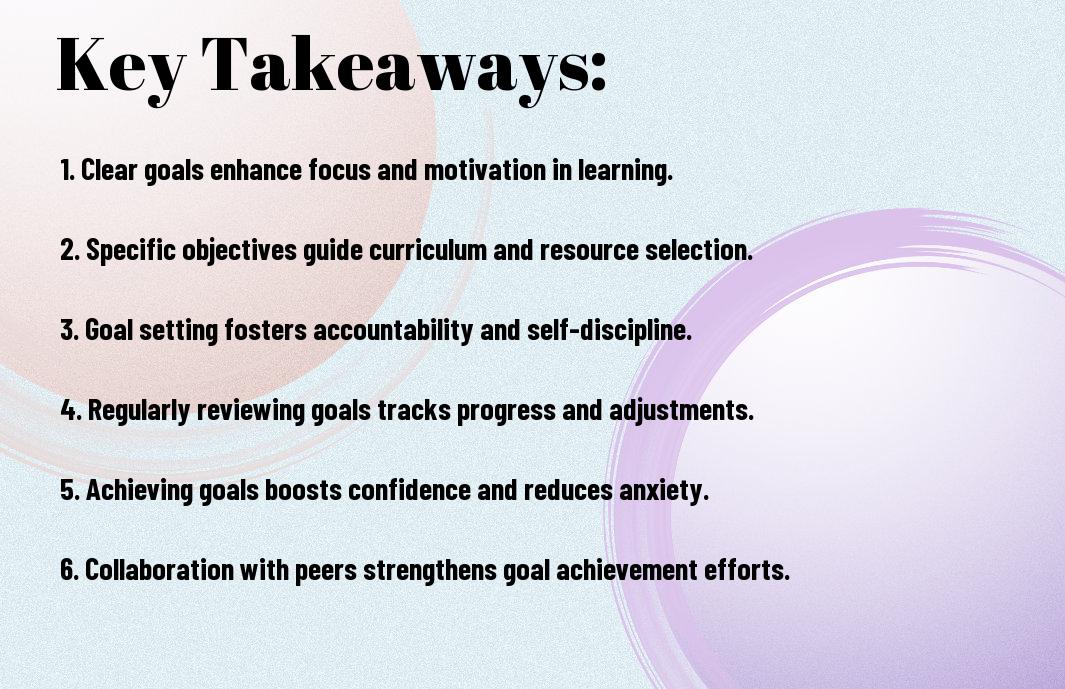
Key Takeaways:

  • The effectiveness of online education is highly dependent on clearly defined goals, which help learners stay focused and motivated throughout their course.
  • Setting goals in online education enables learners to track progress, identify areas for improvement, and make informed decisions about their learning path.
  • Well-defined goals in online education help to increase engagement, boost confidence, and enhance overall learning outcomes by providing a sense of direction and purpose.
  • The process of goal setting in online education encourages learners to develop a growth mindset, take ownership of their learning, and develop self-regulation skills crucial for academic success.
  • Aligning goals with learning objectives in online education ensures that learners are working towards meaningful outcomes, which can lead to better retention rates and improved job prospects upon completion of their course.

Benefits of Goal Setting

For online learners, setting goals can have a significant impact on your success. As you navigate your courses, you can benefit from The effect of goal-setting prompts in a blended learning environment, which can enhance your overall learning experience.

Improved Motivation

The very act of setting goals can boost your motivation to learn, as you become more invested in achieving your objectives, and you start to see progress towards your desired outcomes.

Increased Focus

Along with motivation, goal setting helps you to concentrate on what you want to achieve, allowing you to prioritize your time and energy more effectively, which in turn, enhances your learning experience.

Setting clear goals enables you to concentrate on the most important aspects of your course, helping you to stay focused on what you need to accomplish, and you will be able to make steady progress towards your objectives, as you work towards achieving your goals.

Effective Goal Setting Strategies

Now that you’re aware of the importance of goal setting, you can explore strategies to achieve your objectives. You can learn more about The Role of Motivation in Online Professional Learning to understand what drives your success.

Setting SMART Goals

Generally, your goals should be specific, measurable, achievable, relevant, and time-bound to ensure you stay on track and motivated throughout your online education journey.

Creating an Action Plan

Once you have set your goals, you can start creating a roadmap to achieve them, outlining the steps you need to take to succeed in your online courses.

Plan your schedule, identify potential obstacles, and develop strategies to overcome them, allowing you to stay focused and motivated as you work towards your goals, and you will be able to track your progress and make adjustments as needed to ensure your success in online education.

Overcoming Obstacles

All online learners face obstacles, but setting goals helps you stay focused and motivated. You can overcome these challenges by developing strategies to navigate through difficulties and stay committed to your objectives.

Identifying Challenges

Beneath the surface of online education, you will find various obstacles that can hinder your progress. You need to identify these challenges, such as lack of motivation or technical issues, to develop effective solutions and stay on track with your goals.

Developing Resilience

Against the odds, you can develop resilience by learning from your mistakes and using them as opportunities for growth. You will be able to bounce back from setbacks and maintain your momentum towards achieving your goals.

Challenges are an inevitable part of online education, but by developing resilience, you can turn them into stepping stones for success. You will be able to analyze your failures, learn from them, and use that knowledge to improve your approach, ultimately helping you to stay motivated and focused on your goals.

The Role of Technology

Your online education experience is greatly enhanced by the role of technology, which provides you with access to a wide range of resources and tools that can help you achieve your goals.

Utilizing Online Resources

By accessing online libraries, educational websites, and online courses, you can gather information, learn new skills, and stay up-to-date with the latest developments in your field of study.

Leveraging Digital Tools

One of the key benefits of online education is the ability to leverage digital tools, such as learning management systems, online collaboration platforms, and multimedia resources, to enhance your learning experience.

At the heart of leveraging digital tools is the ability to personalize your learning experience, allowing you to learn at your own pace, access course materials anywhere, and engage with instructors and peers in a more flexible and convenient way, which can help you stay motivated and engaged throughout your online education journey, and ultimately, achieve your academic goals.

Measuring Progress

Despite the challenges you may face in online education, setting goals helps you stay focused and motivated. By tracking your progress, you can identify areas for improvement and make adjustments to achieve your objectives.

Tracking Success

Successfully monitoring your progress enables you to evaluate your performance and make data-driven decisions. You can use various tools and metrics to assess your success and adjust your strategy accordingly.

Evaluating Outcomes

Around the midpoint of your course, you should assess your outcomes to determine if you are on track to meet your goals. You can evaluate your understanding of the material and identify areas where you need extra support.

And as you continue to evaluate your outcomes, you will be able to refine your approach and make adjustments to optimize your learning experience. You will be able to identify what works best for you and make informed decisions about your education, ultimately leading to greater success in your online education journey.

Staying on Track

Unlike traditional learning, online education requires discipline to stay on track, and setting goals helps you achieve this by providing a clear direction and focus, enabling you to prioritize your tasks and manage your time effectively.

Maintaining Momentum

Between balancing coursework and other responsibilities, you need to maintain a steady pace to achieve your goals, and breaking down larger tasks into smaller ones helps you stay motivated and engaged in your online learning journey.

Avoiding Distractions

Any form of distraction can hinder your progress, and as you work towards your goals, you need to identify and eliminate potential distractions, such as turning off notifications or finding a quiet workspace, to help you stay focused on your objectives.

Momentum is key to avoiding distractions, and once you’ve established a routine, you’ll find it easier to stay on track, but it’s also important to be aware of your weaknesses and take steps to mitigate them, such as using website blockers or scheduling breaks, to help you maintain your focus and achieve your goals in online education.

Summing up

Hence, as you navigate your online education journey, you will find that setting goals is vital to your success. You will be able to focus on your objectives, prioritize your tasks, and track your progress. By doing so, you will be able to achieve your desired outcomes and make the most out of your online learning experience, which will ultimately enhance your overall performance and satisfaction with your education.

FAQ

Q: What is the significance of setting goals in online education, and how does it impact student motivation?

A: Setting goals in online education is vital as it provides students with direction, focus, and a sense of purpose. By establishing clear objectives, students can prioritize their efforts, allocate their time more efficiently, and stay motivated throughout their course. Effective goal setting helps students to maintain a high level of engagement, which is vital for achieving academic success in online education. It also enables them to track their progress, identify areas that require improvement, and make necessary adjustments to optimize their learning outcomes.

Q: How can online educators help students develop effective goal-setting strategies, and what tools or resources can be utilized to support this process?

A: Online educators can assist students in developing effective goal-setting strategies by providing them with personalized support, guidance, and feedback. They can encourage students to set Specific, Measurable, Achievable, Relevant, and Time-bound (SMART) goals, which are tailored to their individual needs and learning objectives. Utilizing digital tools, such as learning management systems, online planners, and goal-setting apps, can also facilitate the goal-setting process. Additionally, educators can offer workshops, webinars, or online resources that focus on time management, self-regulation, and self-motivation to help students develop the skills necessary for successful goal attainment.

Q: What are the long-term benefits of goal setting in online education, and how can students apply these skills in their future academic and professional pursuits?

A: The long-term benefits of goal setting in online education are numerous and far-reaching. By developing effective goal-setting skills, students can enhance their self-directed learning abilities, improve their academic performance, and increase their overall confidence. These skills are highly transferable and can be applied in various contexts, including future academic and professional pursuits. Students who master goal setting can better navigate complex projects, manage their time more efficiently, and make informed decisions about their career paths. Moreover, the ability to set and achieve goals is highly valued by employers, making online education students who possess this skill more competitive in the job market and better equipped to achieve their long-term career aspirations.

How Online Learning Prepares Students for Leadership Roles

As you pursue your academic and professional goals, you may wonder how online learning can shape your future. You will discover that online learning provides a unique set of skills and experiences that prepare you for leadership roles. Your ability to work independently, think critically, and solve problems will be refined, setting you up for success in leadership positions, where you will be expected to make informed decisions and guide others. You will be equipped to take on new challenges and thrive in a rapidly changing world.

Key Takeaways:

To succeed in leadership positions, students must acquire a set of skills that can be developed through online learning. Here are a few key points to consider:

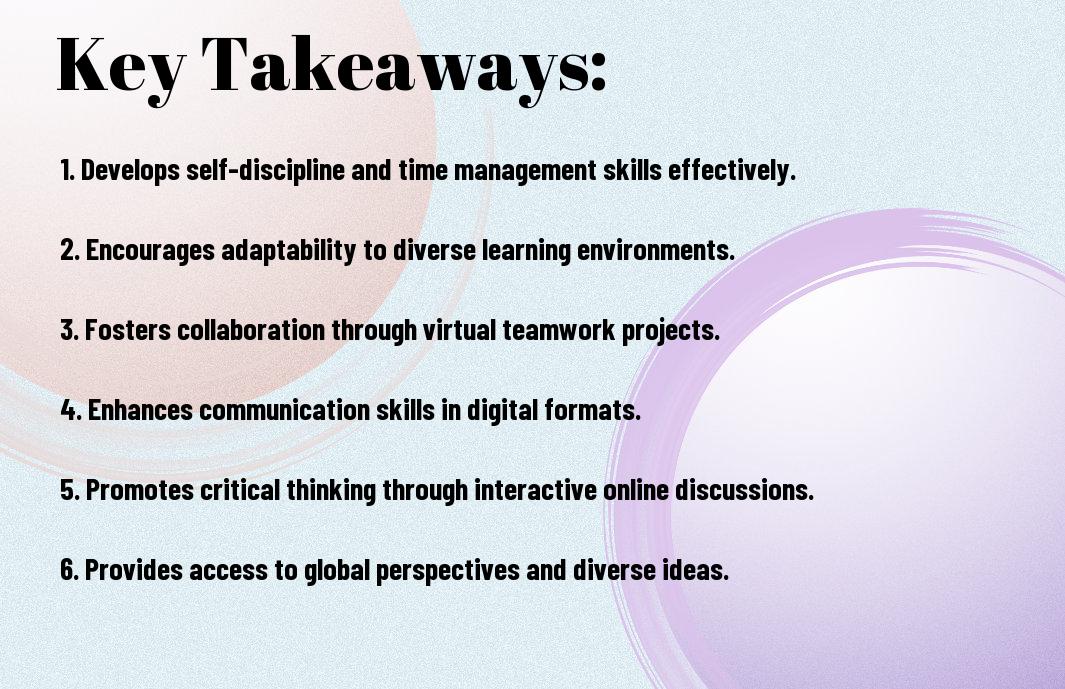
  • Develops self-motivation and time management skills, which are vital for leaders to prioritize tasks and achieve goals.
  • Enhances collaboration and communication skills through virtual interactions with peers and instructors, preparing students for team management roles.
  • Fosters adaptability and flexibility, as online learners must navigate different learning platforms and technologies, a skill valuable in fast-paced business environments.
  • Provides opportunities for global connectivity, exposing students to diverse perspectives and cultures, which can help them develop empathy and strategic thinking as future leaders.
  • Cultivates problem-solving and critical thinking skills, as online learners often encounter and overcome technical challenges, preparing them for complex decision-making in leadership roles.

Developing Essential Skills

Before entering leadership roles, you need to develop skills that will set you up for success. Online learning helps you build a strong foundation in areas such as critical thinking, problem-solving, and communication.

Critical Thinking and Problem-Solving

Above all, online learning encourages you to think critically and approach problems in a logical and methodical way, allowing you to develop effective solutions to complex challenges.

Effective Communication and Collaboration

Below the surface of online learning, you will find opportunities to develop your communication and collaboration skills, working with peers and instructors to achieve common goals.

Consequently, as you engage in online learning, you will find that your ability to communicate effectively and collaborate with others will improve, allowing you to work seamlessly with team members and lead with confidence, making you a more effective leader in your future roles.

Leadership Fundamentals

The fundamentals of leadership are imperative for students to master, and online learning provides a platform to develop these skills. You will learn to analyze situations, make informed decisions, and collaborate with others to achieve common goals.

Setting Goals and Priorities

By focusing on your strengths and weaknesses, you can set realistic goals and prioritize tasks to achieve success. You will develop a sense of direction and purpose, enabling you to make progress towards your objectives.

Time Management and Organization

Setting a schedule and sticking to it is vital in online learning, allowing you to balance coursework and other responsibilities. You will learn to allocate time effectively, minimizing distractions and maximizing productivity.

Considering your individual needs and learning style, you can tailor your approach to time management and organization. You will discover how to use tools and resources to stay organized, ensuring that you meet deadlines and achieve your goals, and as you progress, you will become more confident in your ability to manage your time and prioritize tasks, preparing you for leadership roles that require strong organizational skills.

Online Learning Platforms

Your online learning journey begins with a platform that provides access to a wide range of courses and resources, helping you develop the skills and knowledge needed for leadership roles.

Access to Global Resources

Above all, online learning platforms offer you access to global resources, enabling you to learn from renowned experts and institutions worldwide, broadening your perspective and understanding of different cultures and practices.

Personalized Learning Experiences

Platforms like these provide you with personalized learning experiences, allowing you to learn at your own pace and focus on areas that interest you the most, making your learning experience more engaging and effective.

This personalized approach helps you to identify your strengths and weaknesses, set goals, and track your progress, enabling you to take ownership of your learning and develop a growth mindset, crucial for leadership roles where adaptability and continuous learning are key to success.

Real-World Applications

Now, as you explore the advantages of online learning, you will discover that it offers numerous opportunities for applying theoretical knowledge to practical problems. You can learn more about How to Develop Leadership Skills in Virtual School and how it prepares students for future challenges.

Applying Theories to Practical Problems

For instance, you will be able to analyze case studies and develop solutions, allowing you to think critically and make informed decisions, preparing you for leadership roles.

Developing Adaptability and Resilience

Among the key benefits of online learning is the development of adaptability and resilience, as you navigate different learning platforms and collaborate with peers from diverse backgrounds.

Problems that you encounter during online learning, such as technical issues or difficulties with time management, can actually help you build your resilience and adaptability, important skills for future leaders, as you learn to approach challenges with a growth mindset and develop creative solutions to overcome them, preparing you for the demands of leadership roles.

Navigating Online Communities

All online learning platforms provide you with the opportunity to engage with peers and instructors from diverse backgrounds, helping you develop your communication and collaboration skills, imperative for leadership roles.

Building Professional Networks

Besides the academic benefits, online learning enables you to establish connections with professionals in your field, potentially leading to valuable mentorship and career opportunities that can aid in your growth as a leader.

Participating in Discussions and Feedback

Among the key aspects of online learning, participating in discussions and providing feedback allows you to hone your critical thinking and problem-solving skills, which are vital for effective leadership.

Participating in online discussions and giving feedback helps you develop a deeper understanding of different perspectives and ideas, enabling you to make informed decisions and lead teams more efficiently, which is a key aspect of your development as a leader in your chosen field, and you will find that your ability to analyze information and provide constructive feedback will serve you well in your future leadership roles.

Overcoming Challenges

Once again, you will face challenges in online learning, but these obstacles can help you develop valuable skills for leadership roles, such as resilience and adaptability.

Managing Distractions and Staying Motivated

By minimizing distractions and creating a conducive learning environment, you can stay focused and motivated, developing self-discipline and time management skills that will serve you well in leadership positions.

Seeking Support and Guidance

Before tackling a difficult task or assignment, you can seek help from instructors, peers, or mentors, learning to ask for support when needed and building a network of valuable contacts.

Indeed, seeking support and guidance is a key aspect of online learning, as you learn to navigate resources, ask questions, and collaborate with others, all of which are imperative skills for effective leadership, enabling you to make informed decisions and drive your team forward.

Final Words

On the whole, you will find that online learning plays a significant role in preparing you for leadership roles by fostering skills such as self-motivation and independence. As you navigate virtual classrooms, you develop strong communication and collaboration skills, important for effective leadership. To learn more about how virtual learning can benefit you, visit How Virtual Learning Prepares Students For The Real World to discover your potential and unlock your future leadership opportunities.

FAQ

Q: How does online learning help students develop the skills needed for leadership roles?

A: Online learning provides students with a unique opportunity to develop vital skills for leadership roles, such as self-motivation, time management, and independence. Through online courses, students learn to take ownership of their learning, set goals, and prioritize tasks, which are valuable skills for any leader. Additionally, online learning platforms often incorporate collaborative tools, allowing students to engage with peers and instructors, fostering teamwork, communication, and problem-solving skills, all of which are vital for effective leadership.

Q: Can online learning prepare students for the technological demands of modern leadership roles?

A: Yes, online learning is well-equipped to prepare students for the technological demands of modern leadership roles. Online courses often utilize cutting-edge technology, such as learning management systems, video conferencing tools, and digital collaboration platforms, which provide students with hands-on experience using the latest technologies. This exposure helps students develop the technical skills and digital literacy necessary to succeed in today’s fast-paced, technology-driven business environment. Moreover, online learning encourages students to adapt to new tools and platforms, making them more agile and responsive to changing technological landscapes.

Q: How does online learning foster the development of soft skills, such as emotional intelligence and adaptability, which are vital for leadership success?

A: Online learning offers a range of opportunities for students to develop soft skills, such as emotional intelligence and adaptability, which are vital for leadership success. Through online discussions, students engage with peers from diverse backgrounds, fostering empathy, active listening, and effective communication. Online learning also encourages students to be self-reflective, setting goals, and tracking progress, which helps develop self-awareness, a key component of emotional intelligence. Furthermore, online courses often incorporate real-world case studies and scenario-based learning, allowing students to develop adaptability, critical thinking, and creative problem-solving skills, all of which are vital for effective leadership in today’s complex and rapidly changing world.

The Best Online Education Platforms for Teachers

As you navigate the ever-evolving landscape of education, you’re likely searching for innovative tools to enhance your teaching practice. Your quest for effective online platforms can be daunting, given the numerous options available. You want to leverage technology to create engaging lessons, streamline your workflow, and foster a collaborative learning environment. In this post, you’ll discover the top online education platforms designed to support your teaching goals, helping you to make informed decisions and take your teaching to the next level.

Key Takeaways:

To effectively utilize online education platforms, consider the following points:

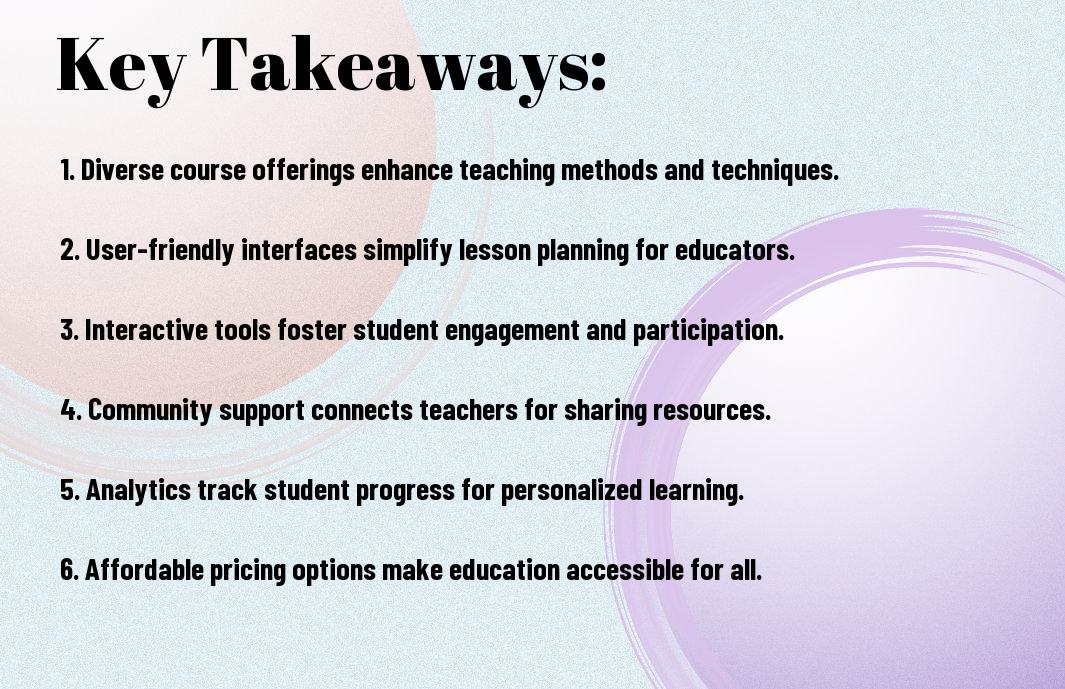
  • The flexibility of online platforms allows teachers to create and manage their courses with ease, making it possible to reach a wider audience and cater to different learning styles.
  • Interactive tools and features, such as discussion forums, video conferencing, and gamification, can enhance the learning experience and increase student engagement.
  • Personalized learning paths can be created using online platforms, enabling teachers to tailor their instruction to meet the unique needs and abilities of each student.
  • Many online education platforms offer analytical tools, providing teachers with valuable insights into student performance and helping them to identify areas where students may need extra support.
  • When dicking out an online education platform, consider the user experience, ensuring that the platform is intuitive and easy to navigate for both teachers and students, and that it provides the necessary support and resources to facilitate successful online learning.

Top Online Platforms

Your search for the best online education platforms can be overwhelming, but you can find valuable insights at The 12 Best Online Teaching Platforms (2025) to make an informed decision.

Overview of Popular Choices

Above all, popular platforms offer a range of features to support your teaching needs, from course creation to student engagement, providing you with the tools to succeed.

Key Features and Benefits

Before choosing a platform, consider the key features, including:

  • Interactive content creation tools
  • Personalized learning paths
  • Real-time feedback and assessment

After exploring these features, you’ll be well-equipped to select the best platform for your teaching style.

Even with numerous options available, you can narrow down your choices by focusing on the key features that matter most to you, such as:

  • Intuitive interface
  • Collaboration tools
  • Analytics and reporting

After considering these factors, you’ll be able to create engaging and effective online courses that meet your students’ needs.

Course Creation Tools

You can create and deliver high-quality courses using online platforms, making it easier to reach a wider audience. These tools provide features such as quiz creation, grading, and progress tracking, allowing you to focus on teaching.

Designing Engaging Lessons

Among the many benefits of online course creation tools is the ability to design engaging lessons. You can use multimedia content, discussions, and interactive exercises to keep your students interested and motivated, making your teaching more effective.

Multimedia Integration Options

With the ability to integrate multimedia content, you can enhance your lessons and make them more engaging. You can add videos, images, and audio files to your courses, making it easier for your students to understand complex concepts.

Also, as you explore the multimedia integration options, you’ll find that many platforms offer a range of features, such as screen recording, video editing, and podcasting tools, allowing you to create high-quality content that cater to different learning styles, making your teaching more inclusive and effective, and enabling you to connect with your students on a deeper level.

Student Engagement Strategies

Keep your students invested in their learning by leveraging the right online education platforms, which offer a range of tools to boost engagement and motivation, allowing you to tailor your approach to your students’ unique needs and interests.

Encouraging Participation and Feedback

Around the globe, teachers are using online platforms to facilitate discussion, solicit feedback, and encourage participation, helping you to create a more collaborative and inclusive learning environment that values your students’ input and perspectives.

Gamification and Motivation Techniques

Alongside traditional teaching methods, you can use gamification and motivation techniques to make learning more enjoyable and interactive, helping to increase your students’ enthusiasm and dedication to their studies.

Encouraging healthy competition and rewarding progress, you can use these techniques to help your students stay motivated and engaged, as they work towards achieving their academic goals, and you can track their development and provide targeted support where needed, helping to ensure their success.

Assessment and Evaluation Methods

For effective online education, you need to explore various assessment and evaluation methods, which you can discover in The 10 Best Online Teaching Platforms to Make Money, to create engaging experiences for your students.

Quizzes, Tests, and Exams

Exams help you gauge your students’ understanding of the material, and you can use online platforms to create and administer quizzes, tests, and exams that are interactive and easy to grade.

Project-Based Assessments and Peer Review

Besides traditional assessments, you can use project-based evaluations that allow students to demonstrate their skills and knowledge in a more practical way, and peer review can provide valuable feedback to help them improve.

Quizzes aside, project-based assessments and peer review offer a more comprehensive picture of your students’ abilities, allowing you to identify areas where they need extra support, and by using these methods, you can create a more well-rounded and effective assessment strategy that helps your students succeed in the long run, as you research into the world of online teaching, you’ll find that these methods can be a game-changer for your students’ learning experience.

Teacher Support and Resources

Unlike other professions, teaching requires a unique blend of subject matter expertise and interpersonal skills, making comprehensive support and resources necessary for your success.

Training and Professional Development

Along with the demands of teaching, you’ll find that ongoing training and professional development opportunities are vital to stay updated on best practices and technologies, enabling you to refine your craft and adapt to changing educational landscapes.

Community Forums and Mentorship

Collectively, community-driven initiatives, such as forums and mentorship programs, provide you with a platform to connect with peers, share experiences, and gain valuable insights from fellow educators who understand your challenges and triumphs.

With the right community forums and mentorship, you can tap into a wealth of knowledge, gain new perspectives, and develop your teaching style, ultimately enhancing your ability to create engaging and effective learning experiences for your students, and fostering a sense of belonging to a larger educational community that supports your growth and development as a teacher.

Implementation and Integration

Not all online education platforms are created equal, and as you research the best options for your teaching needs, you may want to explore The 10 Highest Paying Online Teaching Job Platforms in 2023 to find the perfect fit.

Technical Requirements and Setup

Among the key considerations for implementing an online education platform, you’ll need to assess your technical capabilities and ensure that your system meets the necessary requirements for seamless operation.

Seamless Integration with Existing Systems

Setup is just the beginning, as you’ll also want to consider how your chosen platform integrates with your existing systems and tools, allowing you to streamline your workflow and focus on what matters most – teaching.

For instance, when you choose a platform that integrates effortlessly with your learning management system, you can easily track student progress, assign tasks, and communicate with parents, all from one convenient dashboard, making your job as a teacher much easier and more efficient, allowing you to devote more time to helping your students succeed.

Summing up

Presently, you have a wealth of options at your fingertips, and the best online education platforms for teachers are those that cater to your unique needs. As you weigh your choices, consider what will enhance your teaching style and help your students thrive. With the right platform, you can unlock new possibilities and create a more engaging learning environment, ultimately shaping the next generation of learners and making a lasting impact on your students’ lives.

FAQ

Q: What are the key features to look for in an online education platform for teachers?

A: When opting for an online education platform, teachers should look for features such as ease of use, interactive tools, and the ability to track student progress. The platform should also offer a range of educational resources, including video lessons, quizzes, and assignments. Additionally, it’s imperative to consider the level of support provided, including technical support, training, and community forums. A good online education platform should also be accessible on various devices, including desktops, laptops, tablets, and smartphones, to cater to different teaching styles and student needs.

Q: How can online education platforms help teachers create and deliver engaging lessons?

A: Online education platforms can help teachers create and deliver engaging lessons by providing a range of tools and resources. For example, teachers can use multimedia content, such as videos, animations, and interactive simulations, to make lessons more engaging and interactive. Many platforms also offer collaboration tools, allowing teachers to work with other educators to develop and share lesson plans. Furthermore, online education platforms can help teachers deliver personalized learning experiences, using data and analytics to identify areas where students need extra support or enrichment. This enables teachers to tailor their instruction to meet the unique needs of each student, making lessons more effective and enjoyable.

Q: What are some popular online education platforms for teachers, and how do they compare in terms of features and pricing?

A: Some popular online education platforms for teachers include Canvas, Blackboard, and Moodle. These platforms offer a range of features, including course management, grading tools, and communication features. Canvas and Blackboard are commercial platforms that offer advanced features, such as analytics and integration with other educational tools, but come with a cost. Moodle, on the other hand, is an open-source platform that is free to use, but may require more technical expertise to set up and customize. Other platforms, such as Google Classroom and Edmodo, offer more basic features, but are free or low-cost and easy to use. When choosing a platform, teachers should consider their specific needs and budget, as well as the level of support and training provided, to ensure they select the best option for their teaching practice.

Skip to content