Online Learning Strategies for Working Professionals

As you navigate your career, you’re likely seeking ways to enhance your skills and stay ahead in your field. Your profession is evolving, and you need to adapt to thrive. You’re aware that learning is a lifelong process, and online education can be a powerful tool to boost your professional growth. You can leverage online learning to gain new insights, expand your network, and increase your earning potential, all while balancing your work and personal life. You will discover how to make the most of online learning opportunities.

Key Takeaways:

To succeed in online learning as a working professional, consider the following strategies:

  • Develop a personalized learning plan that fits your schedule and learning style to maximize your productivity and achieve your career goals.
  • Utilize time management techniques to balance work, family, and online courses, ensuring you can complete assignments and participate in discussions without feeling overwhelmed.
  • Leverage technology to your advantage by using learning management systems, video conferencing tools, and mobile apps to access course materials, collaborate with peers, and stay organized.
  • Focus on self-motivation and discipline to stay engaged and motivated throughout the online learning process, even when faced with challenging coursework or deadlines.
  • Seek support from instructors, peers, and mentors to help you navigate online learning platforms, resolve technical issues, and gain valuable industry insights and feedback.

Setting Goals

Before you start your online learning journey, it’s vital to establish clear objectives. You need to define what you want to achieve and set specific, measurable goals. This will help you stay focused and motivated throughout the process.

Identifying Priorities

Previously, you may have thought about what you want to accomplish, but now it’s time to identify your priorities. You should consider your current skills, interests, and career aspirations to determine what’s most important to you.

Creating a Schedule

At this stage, you’ll need to plan out when and how you’ll achieve your goals. You should create a schedule that balances your work, personal life, and online learning commitments.

But as you create your schedule, you’ll need to be realistic about your available time and energy. You should consider your most productive hours, your learning style, and the amount of time required for each course or activity, and make adjustments accordingly to ensure you can stick to your plan and make steady progress towards your goals.
Effective Time Management

Even with a busy schedule, you can manage your time effectively to accommodate online learning. You need to prioritize your tasks, set realistic goals, and create a schedule that works for you.

Minimizing Distractions

To achieve this, you will need to identify and eliminate distractions that can hinder your learning process, such as turning off notifications on your phone or finding a quiet study space.

Maximizing Productivity

Before you start your online course, you should prepare your study environment to maximize your productivity, including having all the necessary materials and resources within reach.

Effective management of your time is key to maximizing productivity. You can achieve this by breaking down your study sessions into manageable chunks, taking regular breaks to avoid burnout, and staying focused on your goals. As you progress in your online course, you will find that your ability to manage your time effectively will have a significant impact on your overall success.

Choosing Online Courses

All working professionals seeking to enhance their skills and knowledge should consider online courses. You can explore various platforms and topics to find the best fit for your needs.

Selecting Relevant Topics

Avoiding unnecessary courses, you should focus on topics that align with your career goals and interests. You will be more motivated to learn when the subject matter is relevant to your profession.

Evaluating Course Quality

Aligning your expectations with the course outcomes, you should assess the course content, instructor expertise, and reviews from other learners. You want to ensure that the course will provide you with valuable insights and skills.

For instance, when evaluating course quality, you should look for courses that offer interactive learning experiences, such as discussions, quizzes, and hands-on activities. You can also check if the course is accredited by a reputable institution or organization, and if it offers any recognition or certification upon completion. By doing so, you can make an informed decision and choose a course that will help you achieve your learning objectives and enhance your professional development.

Staying Motivated

After establishing your online learning routine, maintaining motivation is key to your success. You need to set clear goals and track your progress to stay focused and driven.

Overcoming Obstacles

Across various challenges you may face, developing a growth mindset will help you navigate through difficulties and stay committed to your learning objectives, enabling you to overcome any hurdles that come your way.

Building a Support Network

Among the strategies to enhance your online learning experience, surrounding yourself with like-minded individuals can provide valuable encouragement and support, helping you stay motivated and accountable throughout your journey.

But as you build your support network, you will discover that having people who understand your goals and challenges can make a significant difference in your learning experience. You will be able to share your successes and setbacks with them, and gain valuable insights and advice that will help you stay on track and achieve your objectives, ultimately leading to a more fulfilling and effective learning experience.

Leveraging Technology

Despite the demands of your job, you can stay ahead of the curve by embracing online learning. You can access a wide range of courses and resources, allowing you to learn at your own pace and convenience.

Utilizing Online Tools

With numerous online tools available, you can streamline your learning process. You can utilize platforms that offer personalized learning paths, interactive simulations, and real-time feedback to enhance your learning experience.

Enhancing Collaboration

Utilizing collaboration tools, you can connect with peers and mentors from around the world. You can participate in online discussions, share knowledge, and learn from others, which can be a valuable addition to your learning journey.

Due to the flexibility of online collaboration, you can engage with others at any time, from any location, allowing you to balance your work and learning commitments effectively. As you collaborate with others, you will develop vital skills, such as communication, problem-solving, and teamwork, which are vital for your personal and professional growth.

Balancing Work and Learning

Unlike traditional students, you have the added challenge of managing your work and learning responsibilities. To achieve success, you can learn How to Balance Work and Online College Classes and find a routine that works for you.

Managing Responsibilities

Beneath the surface of your busy schedule, you need to prioritize your tasks and allocate specific times for work, study, and relaxation to maintain productivity.

Maintaining a Healthy Balance

Around your priorities, you will find that establishing a healthy balance between work, learning, and personal life is crucial for your well-being and success.

Considering your unique situation, you must be intentional about allocating time for self-care, exercise, and spending time with loved ones, as these activities will help you recharge and stay motivated to achieve your goals.

Conclusion

On the whole, you now have the tools to enhance your online learning experience as a working professional. You can apply these strategies to boost your productivity, balance work and learning, and achieve your personal goals. By integrating these approaches into your daily routine, you will be able to maximize your learning outcomes and advance in your career, ultimately transforming your life and unlocking your full potential.

FAQ

Q: What are the most effective online learning strategies for working professionals with limited time?

A: For working professionals with limited time, effective online learning strategies include creating a schedule and sticking to it, setting specific learning goals, and utilizing bite-sized learning modules. Breaking down larger courses into smaller, manageable chunks allows for flexible learning, and leveraging mobile apps or podcasts for learning on-the-go can also be beneficial. Additionally, prioritizing courses that offer flexible pacing and asynchronous learning can help professionals balance work and learning responsibilities.

Q: How can working professionals stay motivated and engaged in online learning, especially when faced with the demands of a full-time job and other responsibilities?

A: Staying motivated and engaged in online learning requires a combination of strategies. Setting clear, achievable goals and tracking progress can help maintain motivation. Engaging with online communities or finding a study buddy can provide support and accountability. Celebrating small victories along the way and aligning learning objectives with career advancement can also boost motivation. Moreover, selecting courses that are directly relevant to current job challenges or future career aspirations can enhance engagement, as the learning is immediately applicable and valuable.

Q: What role does self-discipline play in the success of working professionals in online learning, and how can it be developed or strengthened?

A: Self-discipline is important for the success of working professionals in online learning as it enables them to stay committed to their learning goals despite busy schedules and competing demands. Developing or strengthening self-discipline involves establishing a routine, eliminating distractions during study times, and using tools or apps that help track time and stay focused. Additionally, creating a dedicated learning space, both physically and digitally, can help in minimizing procrastination and maximizing productivity. Regularly reviewing progress and adjusting the learning strategy as needed also plays a significant role in maintaining discipline and ensuring the successful completion of online courses.
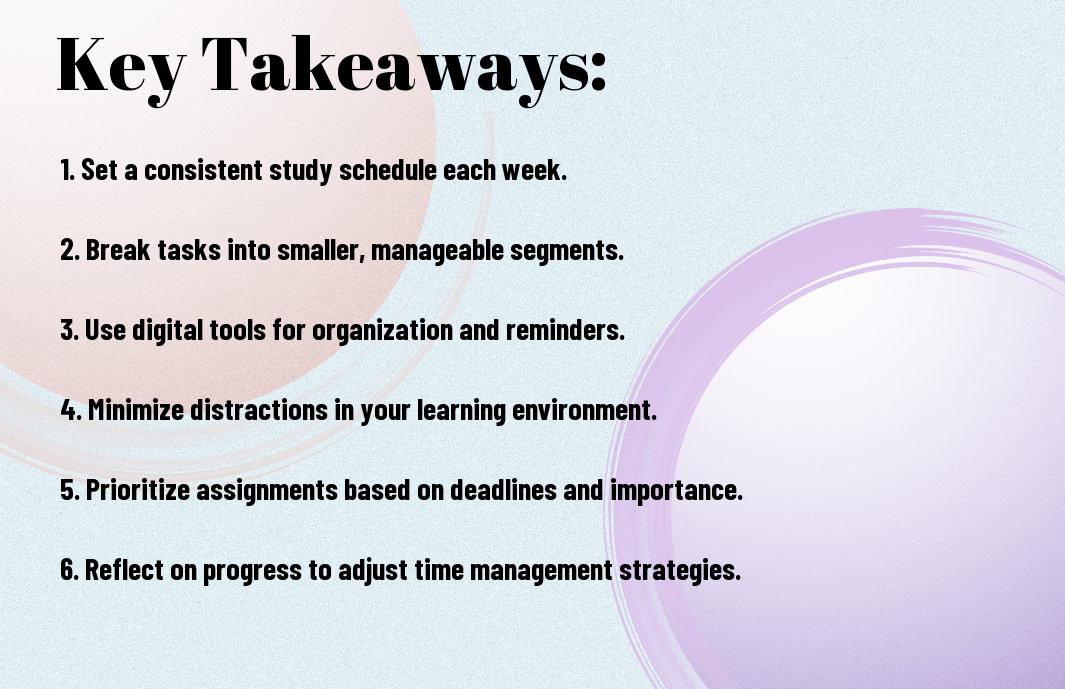

How to Manage Time in Online Learning

Key Takeaways:

To effectively manage your time in online learning, consider the following points:

  • Set a schedule and stick to it, treating online classes as you would traditional ones to maintain a routine and avoid procrastination.
  • Establish a dedicated workspace that is quiet, comfortable, and free from distractions to help you stay focused on your online coursework.
  • Use time management tools such as calendars, planners, or apps to keep track of assignments, deadlines, and study sessions, helping you stay organized and on top of your work.
  • Prioritize your goals and break down larger tasks into smaller, manageable chunks, allowing you to make steady progress and avoid feeling overwhelmed by the volume of work.
  • Regularly review and adjust your time management strategy as needed, ensuring it continues to support your learning objectives and adapts to any changes in your online course schedule or personal commitments.

Setting Goals

The first step in managing your time effectively is setting clear goals. You can achieve this by visiting 7 Time Management Tips for Online Students to get insights on how to plan your online learning journey.

Prioritizing Tasks

About your tasks, you need to prioritize them based on importance and deadlines, allowing you to focus on the most significant ones first, making your learning process more efficient.

Creating a Schedule

By organizing your day, you can create a schedule that balances study time with other activities, ensuring you stay on track with your online learning.

It is necessary to consider your learning style, pace, and available time when creating a schedule, as this will help you allocate sufficient time for each task and make adjustments as needed to ensure you meet your goals, enabling you to make the most out of your online learning experience.

Managing Distractions

One of the biggest challenges you will face in online learning is managing distractions, which can hinder your progress and affect your overall performance. You need to develop strategies to minimize distractions and stay focused on your goals.

Minimizing Digital Interruptions

The key to avoiding digital distractions is to turn off notifications on your devices or use website blockers to limit access to social media and other non-necessary sites while you study, allowing you to concentrate on your coursework.

Creating a Conducive Learning Environment

About the space where you learn, you should consider creating a dedicated area that is quiet, comfortable, and free from distractions, which will help you to stay focused and retain information better, ensuring that you make the most of your online learning experience.

Due to the flexibility of online learning, you can create a learning environment that suits your needs and schedule, allowing you to study at any time and from any location, as long as you have a stable internet connection, giving you the freedom to manage your time effectively and achieve your academic goals.

Staying Organized

All online learners need to establish a system to stay organized, as this helps you prioritize tasks and manage your time effectively. You can achieve this by creating a schedule and setting deadlines for your assignments and study sessions.

Using Productivity Tools

Around utilizing technology, you can explore various tools to boost your productivity, such as calendars, reminders, and task management apps, which help you stay on track and focused on your goals.

Keeping Track of Progress

Along with setting goals, you need to monitor your progress to identify areas that require improvement, allowing you to adjust your strategy and make necessary changes to stay on track.

Considering your progress is necessary to understanding what works best for you, you can use journals or spreadsheets to log your activities, track your time, and evaluate your performance, helping you make data-driven decisions to optimize your online learning experience.

Effective Time Allocation

After establishing your goals, you need to allocate your time effectively. You can learn from common mistakes by visiting 10 Time Management Mistakes You Might Be Making As An Online Student to improve your time management skills.

Breaking Down Large Tasks

Across various online learning platforms, you will encounter large tasks that require significant time and effort. You can break them down into smaller, manageable tasks to help you stay on track and make steady progress.

Avoiding Procrastination

Largely, procrastination is a major obstacle to effective time allocation. You can avoid it by creating a schedule and sticking to it, ensuring that you have enough time for each task.

In addition, to avoid procrastination, you need to identify the reasons behind it and address them. You can use techniques such as the Pomodoro Technique, which involves working in focused 25-minute increments, followed by a five-minute break, to help you stay focused and motivated throughout your online learning journey.

Self-Care and Motivation

Not taking care of your mental and physical health can negatively impact your online learning experience. You need to prioritize self-care to stay motivated and focused on your goals.

Taking Breaks and Avoiding Burnout

The key to maintaining productivity is taking regular breaks to recharge and refresh your mind. You should schedule breaks into your study routine to avoid burnout and stay energized.

Celebrating Small Wins

Among the most effective ways to stay motivated is to acknowledge and celebrate your small achievements. You can do this by treating yourself to something special or sharing your success with friends and family.

Motivation is what drives you to achieve your goals, and celebrating small wins is an excellent way to boost your motivation. You can reflect on your progress, identify what’s working for you, and make adjustments to your learning strategy as needed. By doing so, you’ll be able to stay motivated and engaged throughout your online learning journey, and ultimately achieve your academic goals.

Overcoming Challenges

Unlike traditional learning, online learning requires more self-discipline and time management skills, and you will face unique challenges that can hinder your progress, but with the right strategies, you can overcome them.

Identifying Common Obstacles

Comparable to other learning environments, common challenges in online learning include procrastination, lack of motivation, and technical issues, and you need to identify these obstacles to develop effective solutions.

Developing Strategies for Success

About the most effective ways to manage your time, you will find that creating a schedule, setting goals, and using productivity tools can help you stay on track and achieve your objectives.

Overcoming obstacles in online learning requires a proactive approach, and by developing strategies for success, you can minimize distractions, stay motivated, and make the most out of your online learning experience, and you will be able to adjust your approach as needed to ensure you reach your full potential.

Summing up

From above, you can see that managing your time effectively is crucial to succeed in online learning. You will be able to balance your schedule and complete tasks on time. For more information, visit Time Management Tips for Online Students to learn how to prioritize your tasks and achieve your goals. You can take control of your learning and stay organized with the right strategies and tools.

FAQ

Q: What are the best strategies for managing my time effectively in online learning environments?

A: Managing time in online learning requires discipline and a structured approach. Start by setting clear goals and priorities for each study session. Create a schedule that balances study time with other responsibilities and adhere to it. Utilize time management tools like calendars, planners, or apps to stay organized. Break down large tasks into smaller, manageable chunks, and allocate specific time slots for each task. Regularly reviewing and adjusting your schedule as needed will help you stay on track and make the most out of your online learning experience.

Q: How can I minimize distractions and stay focused during online learning sessions?

A: Minimizing distractions is key to effective online learning. Identify a dedicated study space that is quiet, comfortable, and free from distractions. Turn off notifications on your phone, TV, and other electronic devices that may interrupt your study sessions. Use website blockers or apps that help you stay focused on your learning materials. Taking regular breaks can also help maintain concentration and retain information better. Additionally, communicate your study schedule to family and friends to ensure they understand your availability and can support your learning process.

Q: What tools and resources can I use to enhance my time management skills in online learning?

A: There are numerous tools and resources available to help enhance time management skills in online learning. Utilize digital calendars like Google Calendar or Apple Calendar to schedule study sessions and set reminders. Apps such as Trello, Todoist, or RescueTime can help track time spent on tasks, set deadlines, and prioritize activities. Many learning management systems also offer built-in tools for organizing coursework, tracking progress, and setting reminders. Furthermore, consider using browser extensions that help block distracting websites or manage tabs more efficiently. Exploring and finding the right combination of tools that suit your learning style can significantly improve your time management and learning outcomes.

The Evolution of Online Education in the Last Decade

As you reflect on your own learning journey, you’ve likely noticed a significant shift in the way education is delivered. Over the past decade, online education has undergone a remarkable transformation, changing the way you access and engage with knowledge. Your curiosity about this phenomenon has led you to explore the history of online learning, perhaps starting with the early days of Distance Education and the Evolution of Online Learning in Higher Education, and now you’re ready to investigate into the latest developments that have revolutionized your educational experience.

Key Takeaways:

  • The last decade has seen a significant shift towards online learning, with an increasing number of institutions and organizations offering digital courses and degree programs.
  • The rise of massive open online courses (MOOCs) has made high-quality educational content more accessible to a wider audience, with many top universities and companies offering free online courses and certification programs.
  • The development of learning management systems (LMS) and other educational technologies has improved the online learning experience, enabling more interactive and engaging learning environments.
  • The growth of artificial intelligence (AI) and machine learning (ML) has enhanced personalized learning, allowing students to learn at their own pace and receive tailored feedback and support.
  • The increasing demand for flexible learning options has led to the development of microlearning and competency-based education, which focus on specific skills and knowledge areas, providing learners with more autonomy and control over their learning pathway.

Early Beginnings

While exploring the history of online education, you’ll notice that its roots date back to the early 2000s, when universities first began to offer web-based courses, paving the way for a seismic shift in the way you learn.

Rise of Online Courses

By the mid-2000s, you started to see a surge in online courses, as institutions and organizations began to develop and offer a wide range of web-based educational programs, making it possible for you to access learning materials from anywhere.

Initial Challenges and Criticisms

About a decade ago, as online education started to gain traction, you may have encountered skepticism about its effectiveness, with many questioning the quality of online courses and the ability of students to stay engaged in a virtual learning environment.

Challenges such as lack of face-to-face interaction, limited feedback, and concerns about academic integrity plagued the early days of online education, making you wonder if this new approach to learning would ever be able to replace traditional classroom instruction, but as you’ll see, these obstacles only spurred innovation.

Development and Growth

Now, as you reflect on the last decade, you’ll notice that online education has undergone significant transformations, paving the way for a new era of learning. You’ve seen the rise of innovative platforms, cutting-edge tools, and shifting perspectives on what it means to learn and teach.

Advancements in Technology

Alongside the rapid evolution of technology, you’ve witnessed the development of more sophisticated learning management systems, allowing for seamless interactions and personalized learning experiences. You can now access a wide range of courses and degree programs from anywhere in the world.

Increased Accessibility and Affordability

Availability of online education has led to increased accessibility, allowing you to access quality educational resources from the comfort of your own home. You can now pursue your interests and career goals without being restricted by geographical boundaries or financial constraints.

Hence, as you explore the world of online education, you’ll find that increased accessibility and affordability have opened doors to new opportunities, enabling you to take control of your learning journey. You can choose from a diverse range of courses, interact with instructors and peers from around the globe, and acquire new skills at your own pace, thereby transforming your educational experience and empowering your personal and professional growth.

Shift in Pedagogy

Many educators have witnessed a significant transformation in the way online education is delivered, with a focus on more effective teaching methods. You’ve likely noticed that traditional lecture-based approaches are being replaced by more interactive and flexible models.

From Traditional to Personalized Learning

Across the online education landscape, you’re seeing a move towards tailored learning experiences that cater to your individual needs and preferences. This shift enables you to learn at your own pace and explore topics that interest you the most.

Emphasis on Student Engagement and Interaction

Beside the benefits of personalized learning, online education now emphasizes student engagement and interaction, allowing you to collaborate with peers and instructors in real-time. You can participate in discussions, share ideas, and receive feedback, making the learning process more enjoyable and effective.

In addition, as you probe deeper into online courses, you’ll notice that emphasis on student engagement and interaction is not just about technology, but also about creating a sense of community and belonging. You’ll have opportunities to connect with like-minded individuals, join study groups, and participate in virtual events, which can enhance your motivation and overall learning experience.

Impact on Traditional Education

Once again, you find yourself wondering how online education has changed the way you learn, and the answer lies in its impact on traditional education, which has undergone significant transformations in the last decade, affecting the way you interact with educational institutions and resources.

Changes in Classroom Dynamics

AFTER considering the rise of online learning, you notice that classroom dynamics have shifted, with more emphasis on discussions and hands-on activities, as you are no longer limited to traditional lectures and textbooks, allowing you to engage more deeply with the material.

New Opportunities for Collaboration and Resource Sharing

BEFORE the widespread adoption of online education, you had limited access to resources and collaboration tools, but now you can connect with peers and instructors from around the world, sharing knowledge and expertise in ways that were previously unimaginable, opening up new avenues for learning and growth.

In addition, as you explore the new opportunities for collaboration and resource sharing, you will discover that online education platforms provide you with a wealth of tools and features that enable you to work with others on projects, share resources and knowledge, and learn from one another’s experiences, which can be a powerful way to enhance your learning and achieve your goals.

The Role of Artificial Intelligence

All technological advancements in online education have been influenced by artificial intelligence in some way, as you explore the last decade of developments in this field, you’ll notice AI’s impact on personalizing your learning experience.

Intelligent Tutoring Systems and Adaptive Learning

Aiding your educational journey, intelligent tutoring systems have emerged, using adaptive learning to tailor the curriculum to your individual needs, thus enhancing your overall learning experience.

Enhanced Assessment and Feedback Mechanisms

Among the benefits of AI in education, you’ll find that enhanced assessment and feedback mechanisms allow for a more precise evaluation of your performance, providing you with valuable insights into your strengths and weaknesses.

Mechanisms like automated grading and natural language processing enable immediate feedback, giving you the opportunity to adjust your approach and improve your understanding of the subject matter, as you navigate the evolving landscape of online education, you’ll likely encounter more sophisticated tools designed to support your academic growth.

Challenges and Controversies

To understand the evolution of online education, you must consider the obstacles it has faced. You will encounter issues that have hindered its growth and sparked debate among educators and students alike.

Digital Divide and Accessibility Issues

Above all, the digital divide has been a significant barrier, as you may have experienced firsthand. You see, not everyone has equal access to technology and internet connectivity, which can limit your ability to participate in online education.

Concerns about Quality and Accreditation

To address the concerns surrounding online education, you should consider the issues of quality and accreditation. You will find that these concerns stem from the variability in standards and the lack of regulation in the online education sector.

Controversies surrounding the quality of online courses have led you to question the value of an online degree. You may wonder whether the flexibility and convenience of online education come at the cost of academic rigor and accountability, and you are not alone in your concerns, as many educators and policymakers are working to ensure that online education meets the highest standards.

Final Words

Taking this into account, you’ve witnessed the rapid growth of online education over the last decade. Your understanding of its evolution has likely shifted, and you now see the vast possibilities it offers. As you reflect on the advancements, you’ll notice how online education has become an integral part of your learning journey, providing unparalleled flexibility and accessibility. You can now leverage this knowledge to navigate the ever-changing educational landscape with confidence.

FAQ

Q: What significant changes have occurred in the online education landscape over the last decade?

A: Over the last decade, online education has undergone a transformative shift, driven by advancements in technology, changing learner behaviors, and the need for increased accessibility. The proliferation of mobile devices and high-speed internet has enabled learners to access educational content anytime, anywhere. Furthermore, the adoption of learning management systems, online platforms, and digital tools has streamlined the learning process, making it more engaging and personalized. The rise of massive open online courses (MOOCs) and microlearning has also democratized access to education, allowing learners to acquire specific skills and knowledge at their own pace.

Q: How have advancements in technology influenced the development of online education platforms and tools?

A: Technological advancements have played a pivotal role in shaping the online education sector. The integration of artificial intelligence, machine learning, and data analytics has enabled the creation of adaptive learning systems that tailor the learning experience to individual learners’ needs. Moreover, the development of virtual and augmented reality tools has enhanced the immersive and interactive nature of online learning, allowing learners to engage with complex concepts in a more meaningful way. Additionally, the proliferation of social media and online communities has facilitated collaboration and social learning, enabling learners to connect with peers and instructors from around the world.

Q: What are the key benefits and challenges associated with the evolution of online education, and how are institutions addressing these issues?

A: The evolution of online education has brought numerous benefits, including increased flexibility, accessibility, and affordability. Online learning has also enabled institutions to reach a broader audience, expand their brand presence, and provide learners with a range of programs and courses that cater to diverse needs and interests. However, institutions also face challenges related to ensuring academic integrity, providing adequate support services, and addressing issues of equity and digital divides. To address these challenges, institutions are investing in robust monitoring systems, developing comprehensive support services, and implementing inclusive strategies to ensure that all learners have access to the resources and tools they need to succeed in online environments.

How to Make the Most of Virtual Learning

You’re navigating the world of virtual learning, and you want to get the most out of your experience. As you explore this new landscape, you’ll find that staying engaged and motivated is key to your success. To help you achieve your goals, you can check out 7 Pro Tips for Engaging & Successful Virtual Classes to enhance your virtual learning experience and make the most of your time.

Key Takeaways:

To get the most out of virtual learning, consider the following points:

  • Establish a dedicated workspace to help you stay focused and avoid distractions during online classes.
  • Develop a schedule and stick to it, setting aside specific times for learning, breaks, and self-care.
  • Leverage technology to your advantage by utilizing digital tools and resources that enhance your online learning experience.
  • Active participation is key to getting the most out of virtual learning, so engage with instructors, ask questions, and contribute to discussions.
  • Seek support when needed, whether it’s from instructors, peers, or online communities, to help you stay motivated and overcome challenges.

Setting Up for Success

A well-structured approach is vital to achieving your virtual learning goals. You need to set yourself up for success by creating an environment that fosters productivity and focus.

Creating a Dedicated Learning Space

For the most effective learning experience, you should designate a specific area for studying, free from distractions and interruptions, where you can concentrate on your coursework.

Establishing a Routine

One of the key factors in successful virtual learning is establishing a routine that works for you, allowing you to stay organized and on track with your assignments and study schedule.

Indeed, having a routine helps you develop a sense of discipline and accountability, enabling you to make the most of your virtual learning experience, and you will find that you are better able to manage your time, prioritize tasks, and achieve your goals, as you progress through your course.

Effective Time Management

You need to manage your time wisely to get the most out of virtual learning, setting a schedule and sticking to it.

Prioritizing Tasks and Goals

To maximize your productivity, prioritize tasks based on importance and deadlines, focusing on the most significant ones first.

Avoiding Distractions and Staying Focused

Staying on track is important; eliminate distractions by creating a conducive learning environment and minimizing interruptions.

Further, to minimize procrastination, break down large tasks into smaller, manageable chunks, and take regular breaks to maintain your concentration and retain information better.

Engaging with Course Materials

Keep your virtual learning experience engaging by exploring the various course materials provided to you. You can access textbooks, articles, and other resources from the comfort of your own space, allowing you to learn at your own pace.

Actively Participating in Online Discussions

Across the online learning platform, you will find discussion forums where you can interact with your peers and instructors. You will be able to share your thoughts, ask questions, and learn from others, making your learning experience more collaborative and dynamic.

Utilizing Multimedia Resources

Around the clock, you will have access to a variety of multimedia resources, including videos, podcasts, and interactive tutorials. You can use these resources to supplement your learning, revisit complex topics, and explore new concepts in a more engaging way.

Understanding how to effectively utilize multimedia resources is key to enhancing your virtual learning experience. You can use videos to watch lectures, podcasts to listen to discussions, and interactive tutorials to practice what you have learned. By incorporating these resources into your study routine, you will be able to deepen your understanding of the course materials and stay motivated throughout your learning journey.

Staying Motivated and Accountable

Once again, your motivation and accountability are key to success in virtual learning. You need to find ways to stay engaged and motivated, such as setting goals and tracking progress, to get the most out of your virtual learning experience.

Setting Realistic Expectations and Rewards

The key to motivating yourself is to set achievable goals and reward your progress. You can set specific targets and deadlines, and reward yourself when you achieve them, helping you stay motivated and focused throughout your virtual learning journey.

Building a Support Network

With a support network, you can stay connected and motivated. You can join online communities, forums, or social media groups to connect with other learners, share experiences, and get help when you need it, making your virtual learning experience more enjoyable and effective.

Even as you build your support network, you will find that it becomes an imperative part of your virtual learning experience. You will have access to a community of learners who understand your challenges and can offer valuable advice and support, helping you to overcome obstacles and achieve your goals. By engaging with your support network, you can stay motivated, get feedback, and develop a sense of belonging, all of which are imperative for success in virtual learning.

Overcoming Technical Challenges

After encountering technical issues, you can take steps to resolve them and continue with your virtual learning. This involves identifying the problem, seeking help, and finding alternative solutions to stay on track.

Troubleshooting Common Issues

With patience and practice, you will become proficient in troubleshooting common technical problems, such as internet connectivity and software compatibility, allowing you to quickly get back to your online learning.

Accessing Technical Support

Beside your own problem-solving skills, you can also rely on your institution’s technical support team to help you overcome any technical hurdles that may arise during your virtual learning journey.

Indeed, accessing technical support is an crucial part of virtual learning, and you should be aware of the various channels available to you, such as email, phone, or live chat, to get the help you need in a timely and efficient manner, ensuring that your learning experience is not disrupted by technical issues.

Evaluating Progress and Achievements

Your progress in virtual learning can be evaluated by tracking your performance and grades, and reflecting on your learning experiences. You can find helpful Tips for Learning Online to improve your learning outcomes.

Tracking Performance and Grades

At this stage, you will be monitoring your grades and performance regularly, identifying areas of improvement and adjusting your learning plan accordingly.

Reflecting on Learning Experiences

Along with tracking your grades, you will also be reflecting on your learning experiences, thinking about what you have learned and how you can apply it in real-life situations.

Another aspect of reflecting on your learning experiences is to think about what worked well for you and what didn’t, and use this information to make adjustments to your learning approach, helping you to make the most of your virtual learning experience and achieve your goals.

To wrap up

Ultimately, you can maximize your virtual learning experience by staying organized and engaged. You will find it helpful to check out 15 Tips to Succeed in an Online Class for more guidance. By following these tips, you can make the most of your online courses and achieve your academic goals. You will be able to take control of your learning and make steady progress in your educational journey.

FAQ

Q: What are the key components to a successful virtual learning environment?

A: To make the most of virtual learning, it is crucial to have a dedicated workspace with minimal distractions, a reliable computer or device, and a stable internet connection. Additionally, a headset or speakers, a webcam, and a microphone are necessary for effective communication and engagement. Having the right tools and technology in place will help you stay focused and ensure a seamless learning experience.

Q: How can I stay organized and manage my time effectively in a virtual learning setting?

A: To stay organized, create a schedule and stick to it, just as you would in a traditional classroom. Set reminders for upcoming assignments, deadlines, and virtual meetings. Utilize digital calendars, planners, or apps to keep track of your tasks and submissions. It is also vital to establish a routine for checking and responding to messages from instructors and peers to avoid missing important updates or discussion opportunities. By prioritizing tasks and managing your time wisely, you can maintain a healthy balance between learning and other aspects of your life.

Q: What strategies can I use to engage actively with the course material and interact with my virtual classmates?

A: To engage actively with the course material, participate in online discussions by posting thoughtful questions, insights, and reflections. Engage with multimedia content such as videos, podcasts, and interactive simulations to deepen your understanding of the subject matter. Collaborate with your peers on group projects and assignments to foster teamwork and shared knowledge. Moreover, take advantage of virtual office hours to ask instructors questions and seek feedback on your progress. By being an active participant in the virtual learning community, you can enhance your learning outcomes and develop meaningful connections with your classmates.

How to Create an Effective Study Routine for Online Education

As you commence on your online educational journey, you will need to establish a study routine that suits your needs. You will have to balance your daily life with your academic obligations, and your ability to manage your time effectively will be key to your success. Your goal is to create a schedule that allows you to stay on top of your coursework, without feeling overwhelmed. In this guide, you will learn how to do just that, and set yourself up for achievement in your online studies.

Key Takeaways:

To succeed in online education, establishing a well-structured study routine is crucial. Here are the key points to consider:

  • Set specific goals and objectives for each study session to help you stay focused and motivated.
  • Create a schedule that balances study time with other activities, allowing for flexibility and breaks to avoid burnout.
  • Choose a dedicated study space with minimal distractions, ensuring you can concentrate on your online coursework.
  • Utilize technology strategically, leveraging tools and resources that enhance your learning experience, such as video lectures and online forums.
  • Establish a routine for reviewing and practicing what you’ve learned, reinforcing your understanding and retention of the material.

Setting Goals

Your academic success in online education depends on setting clear objectives. You can start by defining what you want to achieve and creating a schedule to help you stay on track. For guidance on Planning a Better Study Schedule, visit this resource to learn more.

Defining Academic Objectives

About your goals, consider what you want to accomplish in your online courses. You should identify your strengths and weaknesses to set realistic targets, allowing you to focus your efforts and make the most of your study time.

Creating a Study Schedule

Study habits vary, but a well-structured schedule helps you stay organized. You can allocate specific times for learning, reviewing, and practicing, ensuring a balanced approach to your online education.

Indeed, creating a study schedule is an ongoing process that requires regular adjustments. As you progress through your courses, you will need to assess your progress, identify areas for improvement, and make changes to your schedule to optimize your learning experience. You should prioritize your tasks, set achievable milestones, and use time-management tools to stay on track and maintain a healthy work-life balance.

Choosing Online Resources

Now that you have set your goals, it’s time to choose the right online resources to support your learning. You will need to select relevant course materials and utilize digital tools and platforms to stay organized and focused.

Selecting Relevant Course Materials

Beneath the surface of online education lies a wealth of resources, and you must sift through them to find the materials that align with your needs. You should look for courses and materials that are accredited and have good reviews from other students.

Utilizing Digital Tools and Platforms

About the various digital tools available, you have numerous options to consider, including learning management systems, online libraries, and collaboration software. You should explore these tools to determine which ones work best for your learning style and needs.

Platforms such as online course providers, educational apps, and virtual classrooms can provide you with a structured learning environment and access to a wide range of resources. You can use these platforms to access video lectures, interactive tutorials, and online discussions, helping you to stay engaged and motivated throughout your online education journey.

Creating a Conducive Learning Environment

Not all study spaces are created equal, and you must carefully consider your surroundings to optimize your learning experience. You will be more focused and productive when your environment is quiet, comfortable, and free from distractions.

Eliminating Distractions and Minimizing Procrastination

Eradicating distractions is vital to maintaining your focus, and you can achieve this by turning off your phone, finding a quiet space, and using tools that help you stay on track.

Setting Up a Dedicated Study Space

Acquiring a dedicated study space is vital, and you should choose a area that is quiet, comfortable, and equipped with the necessary resources, allowing you to concentrate and retain information more effectively.

Learning in a dedicated space helps you associate that space with studying, making it easier to get into a productive mindset. You can enhance your study space by adding a desk, chair, and good lighting, creating an environment that fosters focus and productivity, allowing you to make the most of your online education.

Developing Effective Study Habits

All successful online students develop a set of habits that help them stay focused and motivated. You will need to identify what works best for you and stick to it. Your routine should include dedicated time for studying, regular breaks, and a quiet workspace.

Active Learning Techniques and Strategies

Above all, you should engage with the material you are studying. You can use flashcards, make concept maps, or discuss topics with your peers to deepen your understanding and stay engaged.

Managing Time and Prioritizing Tasks

At the start of each week, you should plan out your tasks and set achievable goals. You will need to allocate specific times for studying, attending virtual classes, and completing assignments to stay on track.

Effective time management is key to your success in online education. You will need to balance your study schedule with other aspects of your life, such as work or family commitments. By prioritizing your tasks and avoiding procrastination, you can make steady progress and achieve your academic goals. You should also learn to say no to non-crucial activities that can derail your study plans.

Staying Motivated and Engaged

Many online students face challenges in staying motivated. To overcome this, you can visit How to Make an Effective Study Plan – Campus Resources for guidance. By following these tips, you will be able to create a study routine that keeps you engaged and motivated throughout your online education journey.

Building a Support Network and Community

Remaining connected with your peers and instructors is vital. You can join online forums, discussion groups, and social media platforms to build a support network and community that will help you stay on track and motivated.

Tracking Progress and Celebrating Achievements

Above all, monitoring your progress is key to staying motivated. You can use a planner, spreadsheet, or mobile app to track your progress and celebrate your achievements along the way.

Progress is a significant aspect of your online education journey. As you track your progress, you will be able to identify areas where you need improvement and make adjustments to your study routine accordingly. By celebrating your achievements, you will stay motivated and encouraged to continue working towards your goals. You can set small rewards for yourself when you reach certain milestones, which will help you stay focused and driven throughout your online education journey.

Overcoming Challenges and Obstacles

Despite the flexibility of online education, you will inevitably face challenges. Developing a study routine helps you stay on track and overcome these obstacles, ensuring your success in online courses.

Identifying and Addressing Learning Gaps

Beneath the surface of your study routine, you must identify areas where you need improvement. By recognizing your learning gaps, you can adjust your routine to focus on those topics, strengthening your understanding and improving your overall performance.

Seeking Help and Resources When Needed

Obviously, obstacles will arise, and you may need additional support. Your online institution likely offers resources such as tutoring or online forums where you can seek help from instructors or peers.

With these resources at your disposal, you can overcome the hurdles that stand in your way. You can access online tutorials, video lectures, and discussion forums to clarify concepts and gain a deeper understanding of the subject matter, allowing you to refine your study routine and stay on track to achieve your academic goals.

Final Words

With this in mind, you now have the tools to create a study routine that suits your needs. You can tailor your schedule to fit your learning style, making your online education experience more efficient. By sticking to your routine, you will be able to stay on track and achieve your academic goals. Your dedication and persistence will ultimately determine your success in online education.

FAQ

Q: What are the initial steps to create an effective study routine for online education?

A: To create an effective study routine for online education, start by setting clear goals for what you want to achieve. Identify your strengths and weaknesses, and assess the time you have available for studying. Make a list of the courses or topics you need to cover, and break them down into manageable chunks. Create a dedicated study space that is quiet, comfortable, and free from distractions. Establishing a routine also involves deciding on the best time of day for you to study, and how long each study session should be. Use a planner, calendar, or app to schedule your study sessions and stick to your plan.

Q: How can I stay organized and motivated while following my online education study routine?

A: Staying organized involves keeping track of your study materials, including notes, readings, and assignments. Use digital tools like folders, tags, and bookmarks to keep your resources in order. To stay motivated, set small rewards for yourself after reaching certain milestones. Connect with fellow students or join online study groups for support and discussion. Regularly review your progress, adjust your study routine as needed, and celebrate your achievements. It’s also helpful to establish a routine that includes regular breaks, exercise, and healthy eating to maintain your physical and mental health.

Q: What strategies can I use to optimize my study sessions for better learning outcomes in online education?

A: To optimize your study sessions, use the Pomodoro Technique, which involves studying in focused 25-minute increments, followed by a 5-minute break. This technique can help you stay focused and avoid burnout. Active learning strategies, such as summarizing notes in your own words, creating concept maps, or making flashcards, can also enhance your understanding and retention of the material. Additionally, engage with the course content by asking questions, participating in online discussions, and seeking help when needed. Reviewing material regularly, rather than cramming, can also significantly improve your learning outcomes. Use technology to your advantage by exploring different study apps, videos, and podcasts that can supplement your learning.

Skip to content