Key Takeaways:
To build a strong sense of community in virtual learning environments, consider the following points:
- Establish a Sense of Belonging by creating opportunities for students to interact with each other and with instructors through Virtual Meetings and Discussion Forums.
- Foster Open Communication by setting clear expectations and encouraging students to share their thoughts and ideas through Regular Feedback and Live Sessions.
- Use Collaborative Tools such as Group Projects and Peer Review to promote teamwork and Social Learning among students.
- Encourage Student Engagement by incorporating Gamification and Interactive Activities that promote Participation and Motivation.
- Provide Technical Support and Training to ensure that students have the necessary skills to navigate the virtual learning environment and Access to all the necessary resources.

Setting the Foundation
A strong foundation is vital for building community in virtual learning. As you commence on this journey, you’ll need to establish a sense of belonging and connection among your learners. This involves creating a shared space where everyone feels welcome and valued.
Building Trust in a Virtual Environment
By taking the time to get to know your learners, you can foster a sense of trust and camaraderie. You’ll need to be approachable, responsive, and transparent in your interactions, setting the tone for a positive and supportive community.
Encouraging Open Communication
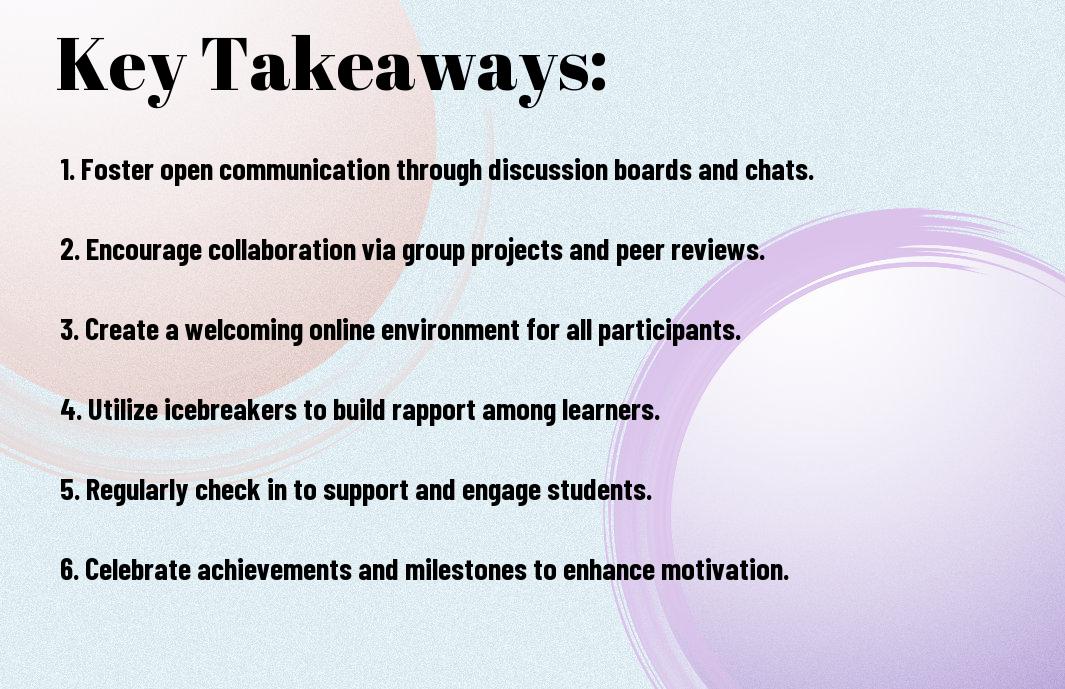
Across the virtual landscape, you’ll want to create opportunities for your learners to share their thoughts, ideas, and concerns. You can do this by using discussion forums, live chats, and video conferencing to facilitate open and honest communication.
Communication is the lifeblood of any community, and in a virtual learning environment, it’s especially vital. As you encourage your learners to share their perspectives and engage with one another, you’ll begin to see a rich tapestry of connections and relationships emerge. You’ll notice that your learners are more likely to participate, to take risks, and to support one another, and this, in turn, will help to build a strong and resilient community that will thrive in the virtual space.
Creating Engaging Content
If you want to capture your students’ attention, you’ll need to craft content that sparks their curiosity and ignites their passion for learning. As you design your virtual lessons, consider what will resonate with your audience and leave a lasting impression.
Interactive Lessons and Activities
Betwixt the screens and software, you’ll find a world of possibilities for interactive learning. You can create immersive experiences that draw your students in and encourage them to participate, share, and collaborate with one another.
Utilizing Multimedia Resources
Only by incorporating a variety of multimedia resources can you create a rich and dynamic learning environment. You can use videos, podcasts, and images to convey complex ideas in an engaging and accessible way, making your content more enjoyable and effective for your students.
Lessons that incorporate multimedia resources can be particularly effective in a virtual setting, as they allow you to cater to different learning styles and abilities. As you explore the possibilities of multimedia, you’ll discover new ways to make your content more engaging, interactive, and memorable, helping your students to stay motivated and invested in their learning journey.
Fostering Connections
Once again, you find yourself wondering how to bring your virtual students together. You can learn How to Forge a Strong Community in an Online Classroom by exploring successful strategies from educators who have paved the way.
Virtual Icebreakers and Team-Building Exercises
By introducing engaging activities, you can help your students feel more connected. Virtual icebreakers and team-building exercises are an excellent way to initiate meaningful interactions among your students, making your online classroom feel more like a community.
Encouraging Student Participation and Feedback
Similarly, icebreakers can lead to increased participation, as students become more comfortable sharing their thoughts and ideas with their peers. You can design activities that encourage feedback, allowing students to reflect on their learning and provide insights on how to improve the virtual learning experience.
Participation is the key to a thriving online community, and as you encourage your students to take an active role, you’ll notice a significant shift in their engagement. You’ll see them supporting one another, sharing their perspectives, and collaborating on projects, all of which will help to foster a sense of belonging and connection in your virtual classroom, making the learning experience more enjoyable and effective for everyone involved.
Establishing a Sense of Community
Not every virtual learning environment feels welcoming, but you can change that by creating a sense of belonging. You can learn from experts at Making Virtual Vibes Real: How to Build a Strong Classroom Community Online, and discover new ways to engage your students.
Creating a Shared Online Space
Shared online spaces can foster a sense of togetherness, and you can use platforms to create a virtual hub for your students to connect and collaborate, making your virtual learning environment feel more intimate.
Hosting Virtual Events and Workshops
Behind the scenes, you’re working hard to create an engaging experience, and hosting virtual events can help you achieve that, allowing you to bring your students together in a way that feels dynamic and interactive.
For instance, you can host webinars, virtual office hours, or online discussions, and use tools like video conferencing software to make these events feel more personal, allowing you to see your students’ faces and gauge their reactions, making the experience feel more immersive and engaging for everyone involved, and helping you build a stronger sense of community in your virtual learning environment.
Overcoming Challenges
After establishing your virtual learning community, you’ll likely encounter obstacles that test your resolve and creativity. Your ability to adapt and innovate will be important in overcoming these hurdles and fostering a thriving online environment.
Addressing Technical Issues and Accessibility Concerns
Issues such as connectivity problems and inadequate digital resources can hinder your progress, but you can mitigate these by providing clear guidelines and support for your students, ensuring that everyone has an equal opportunity to participate and learn.
Managing Conflict and Maintaining a Positive Online Environment
With a diverse group of students, conflicts can arise, but you can address them by establishing clear expectations and encouraging open communication, creating a safe and respectful space for all participants to engage and grow.
Addressing conflicts in a timely and constructive manner is vital to maintaining a positive online environment, and you can achieve this by actively listening to your students’ concerns, remaining empathetic and impartial, and seeking solutions that benefit the entire community, allowing your virtual learning space to flourish and become a vibrant hub of collaboration and discovery.
Evaluating Success
Now that you’ve built your virtual learning community, it’s time to evaluate its success. You’ll want to assess what’s working and what areas need improvement. This will help you refine your approach and create a more effective learning environment for your students.
Assessing Student Engagement and Participation
Among the key indicators of a thriving virtual learning community is student engagement. You’ll want to look at metrics such as login frequency, discussion board participation, and assignment completion rates to gauge student involvement.
Gathering Feedback and Making Improvements
Along with assessing student engagement, you’ll also want to gather feedback from your students. You can use surveys, polls, or one-on-one check-ins to collect feedback and identify areas for improvement.
The feedback you gather will be invaluable in helping you refine your virtual learning community. You’ll be able to identify what’s working and what’s not, and make adjustments to better meet the needs of your students. As you make improvements, you’ll find that your community becomes more vibrant and effective, and your students will thrive in this supportive and engaging environment. You’ll be able to tailor your approach to their needs, and watch as they grow and succeed.
Summing up
The path to building community in virtual learning is yours to forge, and as you begin on this journey, you’ll discover that your connections with others are the very fabric that weaves a rich and immersive experience. You’ll find that your interactions, your shared moments, and your collective discoveries all blend together to create a sense of belonging that transcends the virtual realm, and as you look back, you’ll see that your community has become a vibrant, thriving entity that illuminates your learning path.
FAQ
Q: What are the key elements to consider when building a community in virtual learning environments?
A: When building a community in virtual learning environments, it’s necessary to consider several key elements. First, establish clear expectations and goals for the community, ensuring all participants understand their roles and responsibilities. Second, foster open communication by utilizing various tools such as discussion forums, video conferencing, and instant messaging. Third, encourage active participation by incorporating interactive activities, group projects, and peer-to-peer feedback. Lastly, ensure accessibility and inclusivity by providing accommodations and support for diverse learners. By considering these elements, you can create a vibrant and engaging community that supports the academic and social growth of all participants.
Q: How can instructors effectively facilitate meaningful interactions among students in a virtual learning setting?
A: Instructors can facilitate meaningful interactions among students in a virtual learning setting by implementing strategies that promote collaboration and socialization. One approach is to design group projects that require students to work together to achieve a common goal, promoting teamwork and problem-solving skills. Another strategy is to use breakout rooms or small group discussions, allowing students to engage in more intimate conversations and build relationships. Additionally, instructors can create social spaces, such as virtual cafes or lounges, where students can informally interact and connect with one another. By providing these opportunities, instructors can help students develop a sense of belonging and connection in the virtual learning environment.
Q: What role do technology and digital tools play in building and maintaining a virtual learning community?
A: Technology and digital tools play a significant role in building and maintaining a virtual learning community. They provide the infrastructure for communication, collaboration, and socialization among participants. Learning management systems, online discussion forums, and video conferencing tools enable instructors to share resources, facilitate discussions, and engage with students in real-time. Social media platforms and online communities can also be leveraged to extend the virtual learning environment, allowing students to connect with one another and with the broader academic community. Furthermore, digital tools such as polls, quizzes, and gamification elements can be used to increase student engagement and motivation, helping to foster a sense of community and shared purpose among participants.