Courses

Why Online Courses Are the Future of Education

As you consider your educational options, you’re likely aware that the traditional classroom model is evolving. You can now access a wide range of courses online, allowing you to learn at your own pace and on your own schedule. Your ability to pursue knowledge and skills from anywhere in the world is becoming increasingly valuable, and online courses are leading the way in this shift towards flexible and accessible education, offering you a personalized and effective way to achieve your goals.

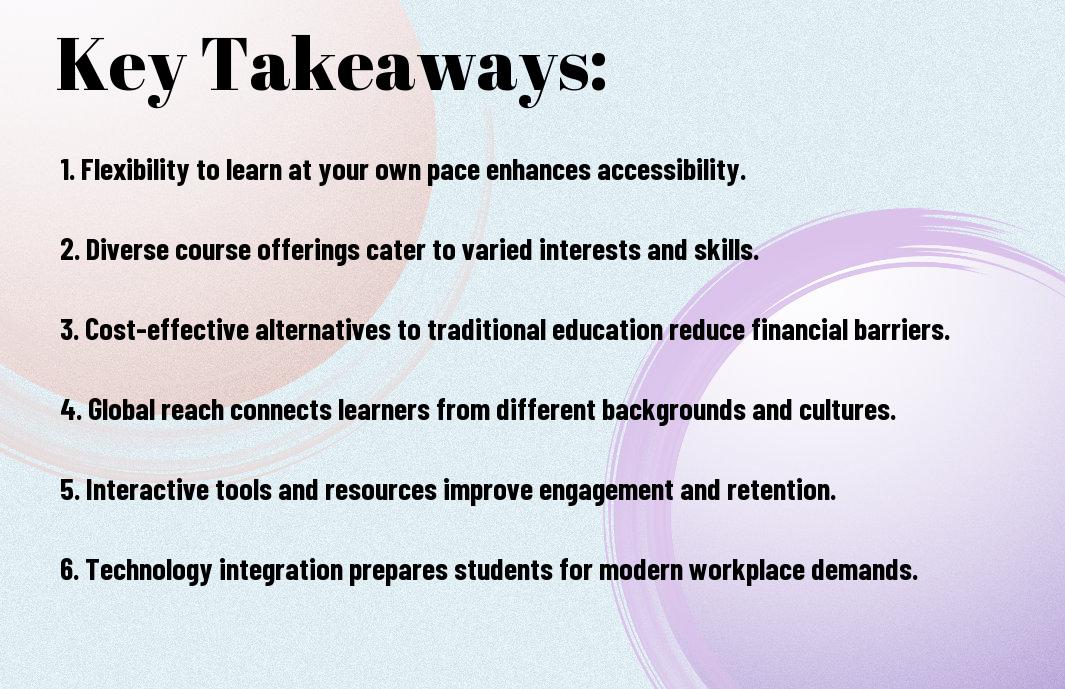
Key Takeaways:

To understand the significance of online courses in the future of education, consider the following points:

  • Flexibility is a key advantage of online courses, allowing students to access course materials and learn at their own pace and from any location.
  • Online courses provide equal access to education for everyone, regardless of their geographical location or socio-economic background.
  • The use of technology in online courses enables the creation of interactive and engaging learning experiences that can enhance student retention and understanding.
  • Online courses offer a cost-effective alternative to traditional classroom-based education, reducing the need for infrastructure and transportation costs.
  • The personalization of online courses allows students to focus on specific skills or subjects that interest them, enabling a more tailored and effective learning experience.

Advantages of Online Courses

While online courses offer numerous benefits, one of the most significant advantages is the flexibility they provide. You can access course materials and learn at your own pace, allowing you to balance your education with other aspects of your life.

Increased Accessibility

The rise of online courses has made education more accessible to you, regardless of your location or schedule. You can now access high-quality educational resources from anywhere in the world, at any time.

Personalized Learning Experience

Experiencing a personalized learning environment is one of the key benefits of online courses. You can tailor your learning experience to suit your needs and interests, allowing you to engage more deeply with the material.

Accessibility to a personalized learning experience is also enhanced through online courses, as you can interact with course materials and instructors in a way that feels most comfortable and effective for you. This allows you to take ownership of your learning, setting goals and milestones that align with your aspirations, and tracking your progress in a way that motivates you to succeed.
The Rise of Digital Learning

The shift towards online education is transforming the way you learn, with digital courses offering flexibility and accessibility like never before. You can now access high-quality educational content from anywhere, at any time, making it easier to fit learning into your busy schedule.

Technological Advancements

Following the development of new technologies, you now have access to a wide range of digital tools and platforms that enhance your learning experience. You can engage with interactive content, collaborate with peers, and receive personalized feedback, making online learning more effective and engaging.

Shifting Student Preferences

Rising demand for online courses reflects a change in your preferences, as you seek more flexible and self-paced learning options. You value the ability to learn at your own pace, reviewing material as many times as needed, and accessing courses from reputable institutions worldwide.

But as you consider online courses, you may also be thinking about the potential benefits for your career and personal development. With the ability to learn new skills and gain certifications, you can enhance your professional prospects, increase your earning potential, and achieve your goals, all while balancing work, family, and other responsibilities.

Benefits for Educators

Keep in mind that online courses offer numerous advantages for educators, including increased flexibility and reach, allowing you to teach a broader audience and create content that can be easily updated and shared.

Efficient Content Delivery

Around the clock, you can deliver high-quality content to your students, leveraging technology to streamline your teaching process and make it more effective, enabling you to focus on what matters most – providing your students with the best possible education.

Enhanced Student Engagement

Against the backdrop of traditional teaching methods, online courses enable you to create interactive and immersive learning experiences that cater to different learning styles, allowing you to engage your students more effectively and increase their participation in your courses.

At the heart of enhanced student engagement is the ability to tailor your teaching approach to meet the diverse needs of your students, and with online courses, you can use various tools and strategies to achieve this, such as discussion forums, quizzes, and multimedia content, which enables you to create a more dynamic and inclusive learning environment that supports your students’ success.

Overcoming Traditional Limitations

Your access to education is no longer limited by geographical location, thanks to online courses. You can now explore various learning opportunities, such as those discussed in 5 Reasons Why Online Learning is the Future of Education article, which highlights the benefits of online learning.

Addressing Quality Concerns

Concerns about the quality of online education are being addressed through rigorous accreditation processes and high standards of instruction, ensuring that you receive a top-notch education.

Ensuring Equal Opportunities

On the issue of equal access, online courses are bridging the gap, allowing you to learn from anywhere and at any time, making education more inclusive and diverse.

Indeed, as you consider online courses, you’ll find that they offer a range of benefits, including flexible scheduling, personalized learning, and access to a global community of learners, which can enhance your overall educational experience and provide you with a more comprehensive understanding of the subject matter, helping you to achieve your academic and professional goals.

The Future of Education

Not only are online courses changing the way you learn, but they are also revolutionizing the education system as a whole, providing you with flexibility and accessibility like never before.

Emerging Trends

Prior to this shift, traditional classroom settings were the norm, but now you have the opportunity to explore various online courses and platforms that cater to your needs and preferences, allowing you to learn at your own pace.

Potential Breakthroughs

Towards a more personalized and effective learning experience, you can expect online courses to incorporate innovative technologies, such as AI and virtual reality, to enhance your engagement and understanding of complex subjects.

In addition, as you explore into the world of online courses, you will discover that potential breakthroughs in education technology can lead to more affordable and accessible learning opportunities, enabling you to acquire new skills and knowledge that can significantly impact your career and personal growth, and you will be able to track your progress and stay motivated throughout your learning journey.

Implementation and Adoption

Now that you’re considering online courses, it’s vital to think about how they’ll be implemented and adopted in your educational journey. You’ll need to evaluate the resources and support available to ensure a smooth transition.

Institutional Support

Around the concept of online courses, you’ll find that institutional support plays a significant role. About the time you start your online course, you’ll need to know that your institution is invested in providing the necessary infrastructure and resources for your success.

Student Preparedness

Besides the technical aspects, you should also consider your own preparedness for online learning. Beside the flexibility and convenience, you’ll need to develop skills like self-motivation and time management to get the most out of your online course.

Considering your own learning style and needs, you’ll want to assess whether online courses are the right fit for you. You’ll need to evaluate your ability to stay engaged and motivated in a virtual environment, and consider how you’ll interact with instructors and peers in an online setting. This will help you make an informed decision about your educational path and ensure that you get the most out of your online learning experience.

To wrap up

So, as you consider the future of education, you’ll find that online courses offer a flexible and accessible way to learn. You can enhance your skills and knowledge at your own pace, and from any location. For more information, visit The 10 Benefits of Online Learning – School of Education to discover how online learning can benefit your educational journey, and shape your future.

FAQ

Q: What makes online courses a better option for students compared to traditional classroom learning?

A: Online courses offer flexibility and accessibility, allowing students to learn at their own pace and from any location. This is particularly beneficial for those with busy schedules or living in remote areas. With online courses, students can easily access course materials, interact with instructors, and complete assignments at a time that suits them, making it an ideal option for those who value convenience and autonomy in their learning experience.

Q: How do online courses provide personalized learning experiences for students with different learning styles and abilities?

A: Online courses often incorporate a variety of multimedia resources, such as videos, interactive simulations, and gamification elements, which cater to different learning styles and abilities. Additionally, many online courses utilize artificial intelligence and machine learning algorithms to adapt the learning content to individual students’ needs, abilities, and learning pace. This personalized approach helps students to engage more effectively with the course materials, leading to better learning outcomes and increased student satisfaction.

Q: What role do online courses play in making high-quality education more accessible and affordable for a wider audience?

A: Online courses have the potential to democratize access to high-quality education by breaking down geographical and socio-economic barriers. With online courses, students from all over the world can access courses and degree programs offered by top universities and institutions, without the need to relocate or pay hefty tuition fees. Moreover, online courses often offer affordable pricing options, scholarships, and financial aid, making it possible for students from diverse backgrounds to pursue their educational goals and acquire new skills, thereby promoting social mobility and economic growth.

How to Build a Successful Career Through Online Courses

As you commence on your career journey, you’re likely thinking about how to give yourself a competitive edge. You’re not alone in this quest, and the good news is that online courses can be a game-changer. By investing in your skills and knowledge, you can unlock new opportunities and take your career to the next level. To learn more about how online courses can help, check out How HBS Online Courses Can Help Advance Your Career, and get ready to transform your professional trajectory.

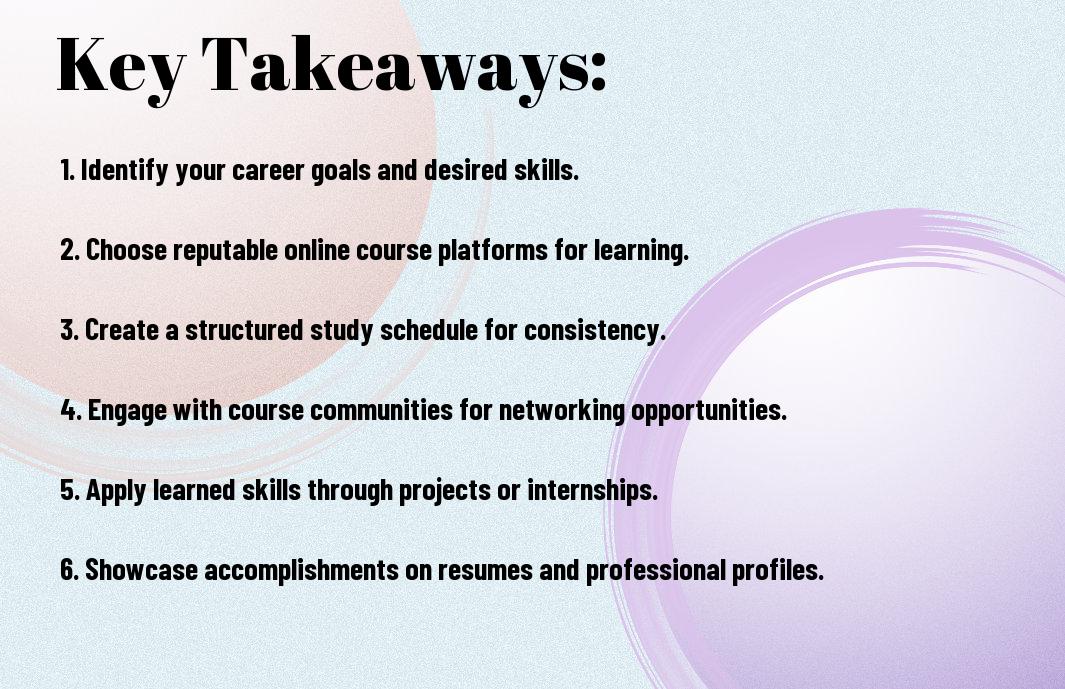
Key Takeaways:

To build a successful career through online courses, consider the following points:

  • Developing a Specialized Skillset is vital to stand out in a competitive job market, and online courses can provide the necessary training and knowledge to achieve this.
  • Creating a Personal Brand is vital to showcase your skills and experience to potential employers, and online courses can help you build a professional online presence.
  • Staying Up-to-Date with industry trends and developments is necessary to remain relevant in your field, and online courses can provide the latest information and best practices.
  • Building a Professional Network can open up new career opportunities, and online courses can provide a platform to connect with like-minded professionals and industry experts.
  • Setting Clear Goals and having a strategy in place is necessary to achieve success in your career, and online courses can help you define your objectives and create a plan to achieve them.

Setting Career Goals

The first step in building a successful career through online courses is to set clear career goals. You need to define what you want to achieve and where you want to be in your career. This will help you choose the right online courses and stay focused on your objectives.

Identifying Strengths and Weaknesses

Objectives guide your decisions, and you’ll want to assess your skills and abilities to determine which areas need improvement. As you explore your strengths and weaknesses, you’ll be able to select online courses that complement your skills and address your weaknesses.

Creating a Career Roadmap

Beneath the surface of your career aspirations, a clear plan is necessary. You’ll want to outline the steps you need to take to achieve your goals, including the online courses you’ll take and the skills you’ll acquire.

Indeed, creating a career roadmap is an crucial part of setting career goals. You’ll be able to track your progress, make adjustments as needed, and stay motivated as you work towards your objectives. As you create your roadmap, consider your long-term vision and break it down into smaller, manageable milestones that you can achieve through online courses.

Choosing Online Courses

One of the most significant decisions you’ll make in building your career is selecting the right online courses, as they can shape your skills and knowledge, ultimately defining your professional path.

Researching Course Options

Beneath the surface of numerous online courses lies a world of opportunities, and you need to explore them to find the ones that align with your goals and interests, considering factors like duration, cost, and reputation.

Evaluating Course Quality

Once you’ve narrowed down your options, you need to assess the quality of the courses, looking into the curriculum, instructors, and reviews from past students to ensure you’re investing your time and money wisely.

Also, as you examine deeper into evaluating course quality, you’ll want to consider the learning style and format, whether it’s video-based, interactive, or a combination of both, to determine which one suits your needs and preferences, allowing you to stay engaged and motivated throughout your learning journey, and ultimately, achieve your career aspirations.

Building a Strong Foundation

Your journey to a successful career starts with a solid base, and online courses can help you achieve that. You can explore various options, including Best Career Development Courses & Certificates [2025] to find the perfect fit for your needs.

Developing Essential Skills

Before plunging into specialized courses, you’ll want to develop a set of crucial skills that will serve as the backbone of your career. You’ll need to identify the skills that are in high demand in your industry and focus on acquiring those first.

Staying Motivated and Focused

Staying motivated and focused is key to making the most out of online courses. You’ll need to create a schedule and stick to it, ensuring that you’re making progress towards your goals.

Due to the flexibility of online courses, it’s easy to get distracted or lose momentum. You’ll need to find ways to keep yourself engaged, such as setting achievable milestones, tracking your progress, and rewarding yourself for your accomplishments. As you stay on track, you’ll start to see the benefits of your hard work, and that will motivate you to keep pushing forward.

Networking and Community

Many online courses offer opportunities to connect with others in your field, which can be a great way to build relationships and learn from their experiences. You can use these connections to get feedback on your work, find new opportunities, and stay motivated to continue learning.

Connecting with Peers and Mentors

Any opportunity to engage with others who share your interests can be beneficial to your career. You can join discussion forums, attend virtual events, or reach out to instructors and ask for advice, and this will help you build a network of peers and mentors who can support you.

Participating in Online Communities

With the rise of online learning, it’s easier than ever to connect with others who share your interests. You can join online forums, social media groups, or specialized platforms to connect with others, share your work, and get feedback.

Also, as you participate in online communities, you’ll start to see the value in sharing your own knowledge and experiences with others. You can help others who are just starting out, and you’ll find that teaching others is a great way to reinforce your own learning, and you’ll be surprised at how much you can learn from others in the process, which will help you grow both personally and professionally.

Staying Up-to-Date

Keep your skills sharp and your knowledge current by committing to lifelong learning, as the online landscape is constantly evolving, and you need to stay ahead of the curve to succeed in your career.

Following Industry Trends

The key to success lies in your ability to adapt to changing industry trends, and you can do this by following industry leaders, reading relevant blogs, and attending webinars to stay informed about the latest developments in your field.

Continuously Learning and Improving

Consistently, you will find that your career is a journey, not a destination, and you must continually update your skills to remain relevant, which means taking online courses, seeking feedback, and being open to new ideas and perspectives.

And as you focus on continuously learning and improving, you’ll find that your confidence grows, and your career starts to flourish, because you’re able to tackle new challenges, take on new projects, and make meaningful contributions to your field, which ultimately leads to greater job satisfaction and a sense of fulfillment, as you’re doing work that truly matters to you.

Overcoming Challenges

Once again, you’ll find that building a successful career through online courses requires perseverance and determination, as you’ll inevitably face obstacles that test your resolve and motivation.

Managing Time and Priorities

At this stage, you need to assess your schedule and allocate time for learning, ensuring that your priorities are aligned with your career goals, and that you’re making progress towards achieving them.

Dealing with Self-Doubt and Fear

The biggest hurdle you’ll encounter is likely to be your own self-doubt and fear of failure, which can be debilitating if you let it consume you, but you have the power to overcome it.

Due to the fact that you’re investing time and effort into your online courses, you’ll begin to see progress and achieve small wins, which will help to boost your confidence and alleviate self-doubt, allowing you to stay focused on your goals and push through challenges with renewed determination and purpose.

Conclusion

The path to building a successful career through online courses is now yours to begin on. You’ve got the tools, the knowledge, and the drive. Your future is waiting, and with each new skill you acquire, you’ll be one step closer to turning your dreams into reality. You will unlock new opportunities, and your career will flourish as you continue to learn and grow. Keep pushing forward, and you’ll be amazed at what you can achieve.

FAQ

Q: What are the benefits of building a career through online courses?

A: Building a career through online courses offers flexibility, accessibility, and affordability. Online courses provide the opportunity to learn at your own pace, from anywhere in the world, and at a lower cost compared to traditional educational institutions. This flexibility is particularly beneficial for those with busy schedules or living in remote areas. Moreover, online courses often cater to a wide range of interests and skill levels, allowing you to choose courses that align with your career goals and interests.

Q: How do I choose the right online courses to enhance my career prospects?

A: Choosing the right online courses requires careful consideration of your career goals, current skill set, and the job market demand. Start by identifying the skills and knowledge required for your desired role. Then, research online platforms and courses that offer those skills, reading reviews and ratings from other learners to ensure the quality and relevance of the course content. It’s also beneficial to look for courses that offer certification upon completion, as this can significantly enhance your career prospects and demonstrate your expertise to potential employers.

Q: What strategies can I use to stay motivated and engaged while taking online courses?

A: Staying motivated and engaged in online courses requires discipline and a well-structured approach. Setting clear goals and deadlines for completing courses can help maintain motivation. Creating a dedicated learning space, free from distractions, is also vital for effective learning. Furthermore, engaging with the course community, participating in discussions, and seeking help when needed can enhance the learning experience and keep you motivated. Regularly tracking your progress and rewarding yourself upon achieving milestones can also boost motivation and encourage consistent effort.

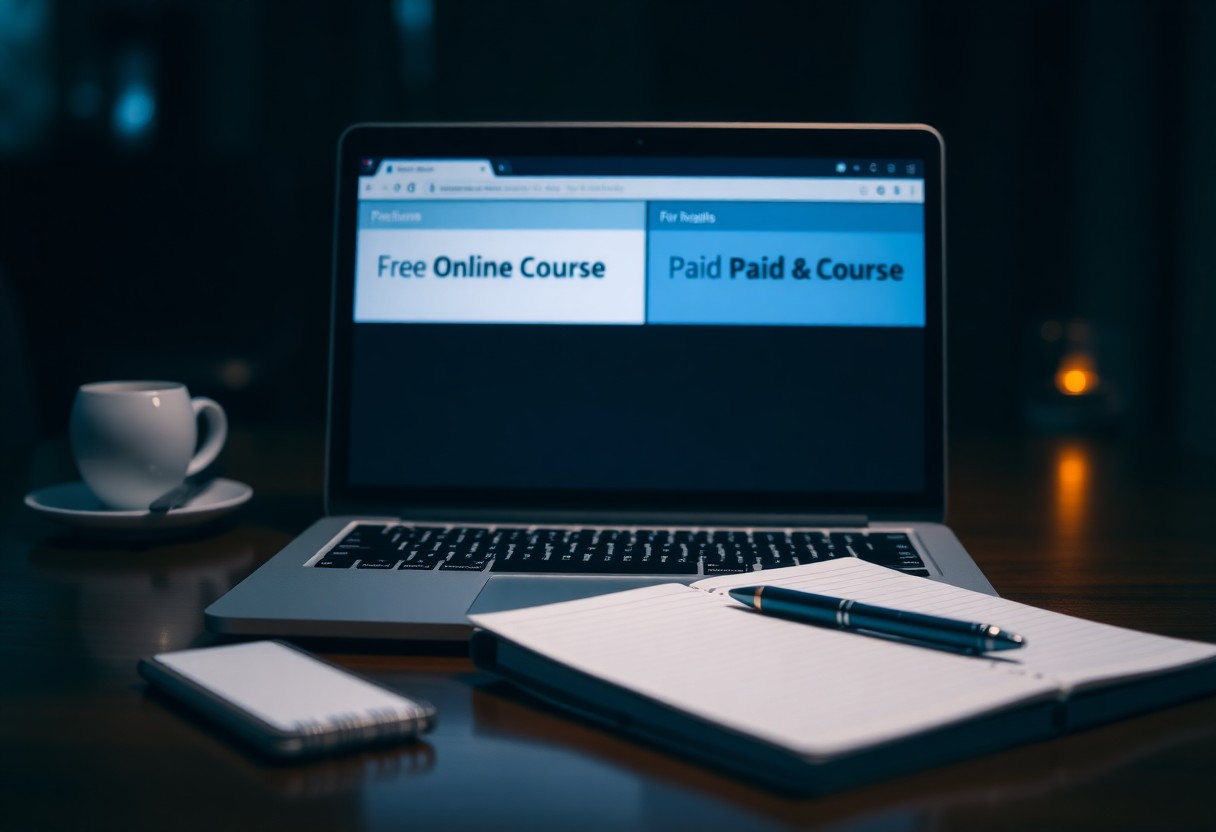
How to Choose Between Free and Paid Online Courses

As you consider expanding your knowledge and skills, you face a dilemma: whether to enroll in free or paid online courses. Your decision will depend on your goals, budget, and learning style. You must weigh the benefits of free courses, such as accessibility and flexibility, against the potential drawbacks, like limited support and recognition. On the other hand, paid courses offer structured learning and certification, but at a cost. You must evaluate your priorities to make an informed decision that suits your needs.

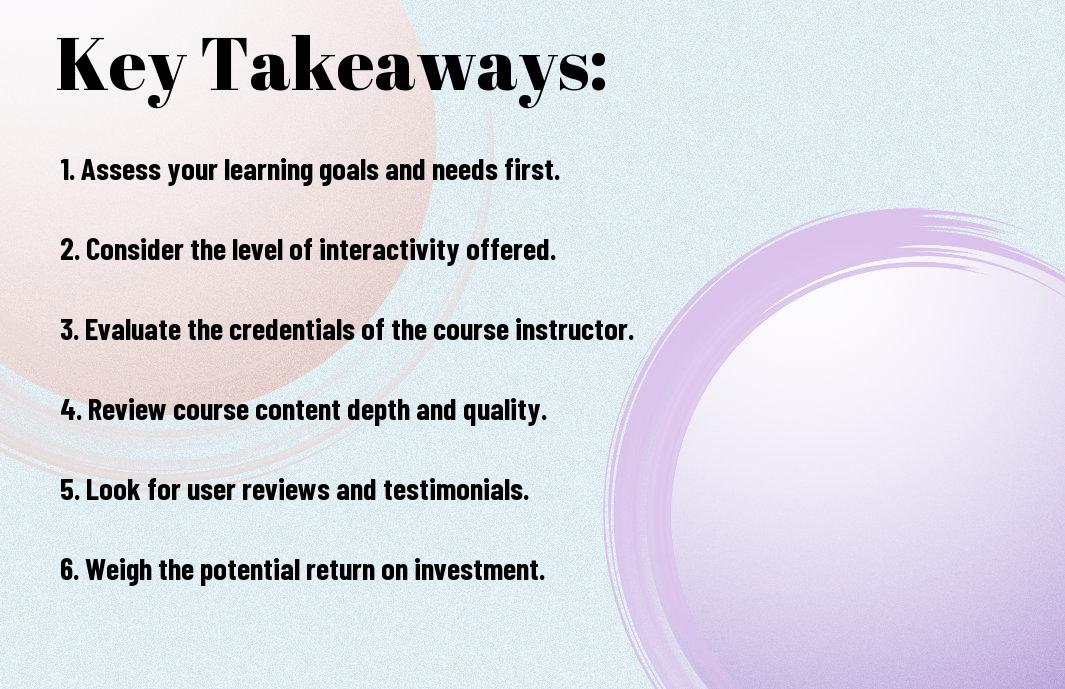
Key Takeaways:

To make an informed decision between free and paid online courses, consider the following points:

  • Understand your learning goals and what you want to achieve from the course, as this will help you determine whether a free or paid option is more suitable.
  • Assess the quality of the course content, instructor expertise, and support provided, as paid courses often offer more comprehensive materials and guidance.
  • Consider the level of interactivity and engagement you need, as paid courses may offer more opportunities for feedback, discussion, and collaboration.
  • Evaluate the certification and credibility of the course, as paid courses are more likely to offer recognized certificates and transferable credits.
  • Think about your budget and investment in your education, as paid courses may require a significant financial commitment, but can also lead to greater career benefits and return on investment.

    Course Options

    Your online learning journey begins with choosing between free and paid courses, each with its own set of benefits and drawbacks that you should consider before making a decision.

    Free Online Courses

    Above all, free online courses offer an excellent starting point, allowing you to explore various subjects without financial commitment, and you can discover your interests and strengths before investing in a paid course.

    Paid Online Courses

    For those willing to invest, paid online courses provide structured learning, often with expert instruction and personalized feedback, which can enhance your learning experience and provide you with a more comprehensive understanding of the subject matter.

    Due to the varied nature of paid online courses, you will find that they cater to different learning styles, from video lectures to interactive simulations, and you can select the one that best suits your needs, ensuring that you get the most out of your investment and achieve your learning goals.

    Learning Objectives

    One of the primary considerations when choosing between free and paid online courses is your learning objectives. You need to determine what you want to achieve from the course and whether it aligns with your goals.

    Setting Goals

    To determine your learning objectives, you must establish what you want to accomplish through the course, and this will help you decide between free and paid options, considering factors such as course quality and support.

    Evaluating Priorities

    Behind your decision to choose between free and paid courses is your evaluation of priorities, including factors like budget, time commitment, and the level of support you need to achieve your learning objectives.

    Due to the varying levels of quality and support offered by free and paid courses, you must carefully evaluate your priorities to make an informed decision that meets your learning needs and budget, ensuring you get the most out of your chosen course.

    Course Content

    Not all online courses are created equal, and the content is a significant factor in your decision. When evaluating courses, consider what you want to achieve and what topics are covered.

    Curriculum Comparison

    Comparing curriculums helps you make an informed decision. The following table outlines the key differences:

    Free Courses Paid Courses
    Limited topics Comprehensive coverage

    Instructor Expertise

    An instructor’s expertise can greatly impact your learning experience. You should investigate the instructor’s background and qualifications to ensure they are knowledgeable in the subject area.

    Considering the instructor’s expertise, you will want to look for courses taught by industry professionals or experts in the field. This will give you confidence in the quality of the course and the accuracy of the information presented, allowing you to make the most of your time and investment, and ultimately achieve your learning goals.

    Support and Resources

    For your online learning journey, consider visiting Free Online Courses vs. Paid Courses: Which One is Right? to make an informed decision.

    Availability of Assistance

    Between the two options, you’ll find that paid courses often provide more direct support from instructors, while free courses may rely on community forums.

    Access to Materials

    Against the backdrop of varying course formats, you’ll notice that paid courses typically offer more comprehensive materials, including videos, quizzes, and assignments.

    Understanding the differences in access to materials will help you decide which type of course suits your learning style, as you consider the value of detailed study guides and interactive content in a paid course versus the potentially more limited resources of a free course, and how these factors align with your personal preferences and goals.

    Cost and Value

    Unlike other factors, cost is a significant aspect to consider when choosing between free and paid online courses. You can find more information on this topic in Free Courses vs Paid Courses: A Comprehensive Guide to Making the Right Choice, which outlines the pros and cons of each option.

    Weighing Expenses

    Valuing your money, you should consider the expenses associated with each type of course, including any additional fees or materials required, to make an informed decision that fits your budget.

    Assessing Return on Investment

    Along with the cost, you need to assess the potential return on investment, considering how the course will benefit your career or personal growth, and whether the benefits outweigh the expenses.

    Further, when evaluating the return on investment, you should consider the skills and knowledge you will gain, and how they will impact your life and career, to ensure that you choose a course that provides the best value for your money and time.

    Decision Making

    Keep in mind that choosing between free and paid online courses depends on your goals and priorities. You should weigh the pros and cons of each option to make an informed decision that suits your needs.

    Considering Lifestyle

    The key to selecting the right course is to assess your daily routine and available time. You must consider how your lifestyle will accommodate the demands of the course, ensuring you can dedicate sufficient time to learn and complete assignments.

    Evaluating Commitment

    With a clear understanding of your goals, you can evaluate your commitment to the course. You should ask yourself if you are willing to dedicate the necessary time and effort to complete the course, and if the potential benefits align with your expectations.

    Also, as you evaluate your commitment, consider the level of support and resources you will need to succeed. You may want to look into the course’s structure, instructor feedback, and community engagement to determine if it will provide the necessary support to help you stay committed and motivated throughout the course.

    Conclusion

    With this in mind, you can now make an informed decision about your online course options. You should consider your goals and budget when choosing between free and paid courses. For more insight, visit Explaining the Difference Between Free and Paid Online Courses to help you make the best choice for your needs, and shape your learning journey accordingly, shaping your future prospects. You will then be able to invest your time wisely.

    FAQ

    Q: What are the key factors to consider when deciding between free and paid online courses?

    A: When choosing between free and paid online courses, consider the course content, instructor expertise, and the level of support provided. Free courses may offer a good introduction to a subject, but paid courses often provide more in-depth knowledge, interactive learning materials, and access to instructors. Additionally, think about your learning goals and what you want to achieve from the course. If you need a certificate or credits, a paid course might be a better option. Evaluate the course reviews, duration, and flexibility to ensure it fits your schedule and learning style.

    Q: How do I evaluate the quality of a free online course compared to a paid one?

    A: To evaluate the quality of a free online course, look for courses offered by reputable institutions or organizations, and check the credentials of the instructors. Read reviews from other learners to get an idea of the course’s strengths and weaknesses. For paid courses, check if the course provider offers a money-back guarantee or a free trial period. Also, consider the production quality of the course materials, such as video and audio quality, and the level of engagement, including discussion forums and assignments. Lastly, check if the course is accredited or recognized by relevant industry bodies, which can be an indicator of its quality and value.

    Q: Are paid online courses worth the investment, and how can I ensure I get the most out of them?

    A: Paid online courses can be worth the investment if they align with your career goals, provide personalized feedback, and offer ongoing support. To get the most out of a paid course, set clear learning objectives and create a schedule to complete the course materials. Engage with the course community, ask questions, and participate in discussions to enhance your learning experience. Additionally, take advantage of any additional resources, such as one-on-one coaching, mentorship, or career support, that may be included in the course. By being proactive and committed to your learning, you can maximize the value of a paid online course and achieve your desired outcomes.

How to Find Affordable Online Courses

You’re looking to enhance your skills, but costly courses are holding you back. Your search for affordable online courses can be overwhelming, with numerous options available. You want to invest in your education without breaking the bank. Fortunately, you can find quality courses at budget-friendly prices. In this post, you’ll discover how to navigate the world of online learning and find affordable courses that fit your needs and budget, helping you achieve your goals without financial strain.

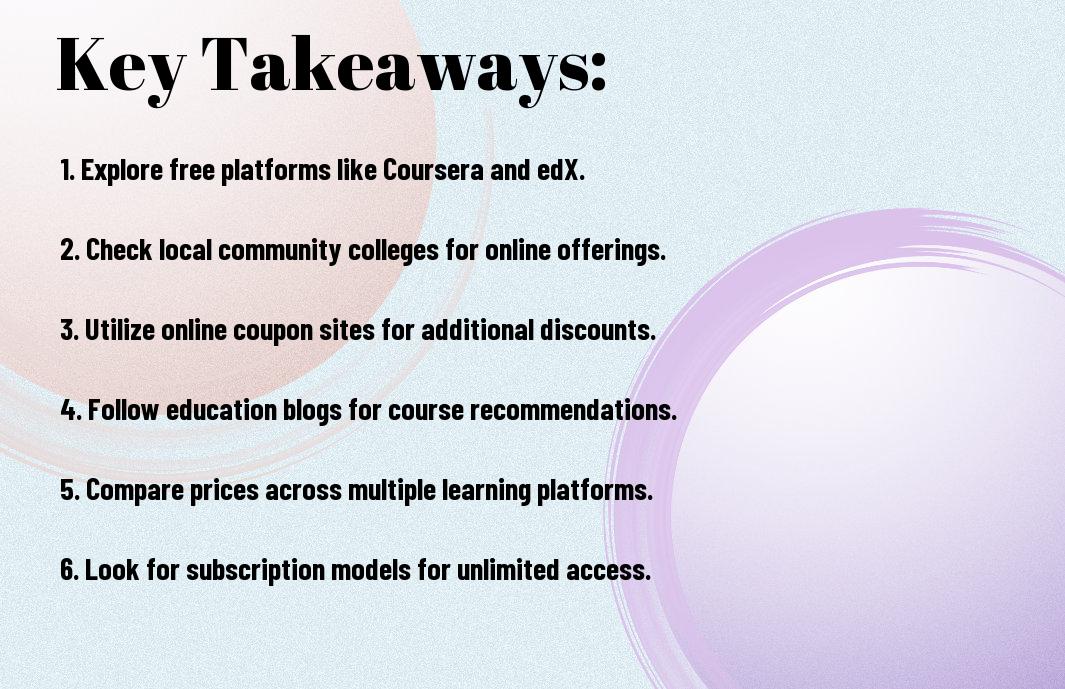
Key Takeaways:

To find affordable online courses, consider the following points:

  • Look for discounts and promotions offered by online course providers, as they can significantly reduce the cost of the course.
  • Utilize online platforms such as Coursera, Udemy, and edX, which offer a wide range of cost-effective courses from top universities and institutions.
  • Consider free or low-cost courses, such as MOOCs (Massive Open Online Courses), which can provide a flexible and accessible learning experience.
  • Check with professional associations and industry organizations in your field, as they often offer affordable online courses and training programs for members.
  • Use search engines and course comparison websites to compare prices and find the best value for your money when selecting an online course.

Getting Started

The first step in finding affordable online courses is to understand your goals and what you want to achieve. You will need to consider your interests, skills, and career aspirations to make an informed decision. This will help you narrow down your options and focus on courses that align with your objectives.

Identifying Course Needs

Before you begin your search, you should assess your current skills and knowledge to identify areas where you need improvement. You can then look for courses that cater to your needs and provide the necessary training and development to enhance your skills.

Setting a Budget

Behind every successful online course search is a well-planned budget. You should determine how much you are willing to spend on your education and look for courses that fit within your budget. This will help you avoid overspending and ensure that you get the best value for your money.

In addition to setting a budget, you should also consider the cost of any additional resources or materials that may be required for the course. You can also look for courses that offer financing options, scholarships, or discounts to help make them more affordable. By doing your research and planning carefully, you can find an online course that meets your needs and fits your budget, helping you achieve your goals and enhance your skills.

Search Strategies

Assuming you’re looking for affordable online courses, you’ll need to develop effective search strategies to find the best options. You can start by using specific keywords, filtering results by price, and exploring various course platforms.

Utilizing Online Platforms

Behind the success of online learning lies the numerous platforms that offer affordable courses. You can search for courses on websites like Coursera, Udemy, and edX, which provide a wide range of courses at discounted prices.

Leveraging Social Media

For instance, you can utilize social media to discover affordable online courses. You can follow your favorite instructors, educational institutions, and course providers to stay updated on their latest offerings and promotions.

Indeed, leveraging social media can be an excellent way to find affordable online courses. You can join online communities, forums, and groups related to your field of interest, where members often share information about discounted courses, scholarships, and other learning opportunities. This way, you can stay informed and make the most of your online learning experience.

Evaluating Courses

Where is the best place (quality) to get free/affordable online education courses to get an idea of what’s available.

Assessing Course Quality

Along with considering the course content, you should also look at the instructor’s qualifications and the course’s accreditation to ensure it meets your standards.

Reading Reviews and Testimonials

Quality is key when it comes to online courses, and reading reviews from other students can give you a sense of what to expect from the course.

At this stage, you’ll want to dig deeper into the reviews and testimonials to get a well-rounded view of the course. You should look for reviews from students with similar goals and backgrounds to yours, and pay attention to any red flags or common complaints. By doing your due diligence, you can make an informed decision about which course is right for you.

Affordable Options

To find affordable online courses, you can explore various platforms that offer budget-friendly options. You can start by searching for courses on websites that specialize in online learning, and filter your search by price to find the most affordable options.

Free and Low-Cost Courses

Besides traditional paid courses, you can also find free and low-cost courses that can help you achieve your learning goals. You can search for Massive Open Online Courses (MOOCs) or open-source courses that are available at little to no cost.

Subscription-Based Models

Freely available subscription-based models offer you access to a wide range of courses for a fixed monthly fee. You can choose from various platforms that offer subscription-based models, allowing you to learn at your own pace.

The subscription-based models provide you with the flexibility to access multiple courses, and you can cancel your subscription at any time. You can explore different platforms to find the one that best fits your needs and budget, and take advantage of the free trials or introductory offers to test the platform before committing to a subscription. As you explore these options, you can consider your learning goals and choose the platform that offers the most relevant courses for your needs.

Additional Resources

Keep in mind that online courses often come with additional resources to support your learning journey, such as online communities, forums, and tutorials, which can enhance your learning experience and provide valuable connections.

Scholarships and Financial Aid

Before you start your online course, you can explore available scholarships and financial aid options, as many institutions offer these to help you fund your education and make it more affordable.

Community Support

With the help of online communities and forums, you can connect with fellow learners, ask questions, and get support from instructors and peers, which can be a great motivator and help you stay on track.

Also, participating in community support groups can give you access to exclusive resources, such as study groups, webinars, and workshops, where you can learn from others, share your own experiences, and get feedback on your progress, ultimately enriching your online learning experience and helping you achieve your goals.

Making a Decision

Many factors come into play when selecting an online course, and it’s necessary to weigh your options carefully. You’ll want to compare features, consider your personal goals, and think about your budget.

Comparing Course Features

Features such as pricing, duration, and curriculum play a significant role in your decision. The following table highlights key aspects to consider:

Course Features Description
Pricing Varying price points
Duration Short-term or long-term options

Considering Personal Goals

Considering your objectives and motivations will help guide your decision. You should think about what you want to achieve with the course and how it aligns with your interests.

Comparing your goals to the course offerings will allow you to make a more informed decision. You can ask yourself if the course will help you develop new skills, advance in your career, or simply explore a new hobby. By doing so, you’ll be able to choose a course that meets your needs and sets you up for success.

Summing up

With this in mind, you can now navigate the world of online courses with confidence. You have the tools to find affordable options that fit your budget and learning style. By considering your goals, searching for discounts, and exploring various platforms, you can access quality education without breaking the bank, and take your skills to the next level, making the most of your online learning experience.

FAQ

Q: What are the best ways to search for affordable online courses?

A: To find affordable online courses, you can start by using online search engines and filtering the results by price. You can also check websites like Coursera, Udemy, and edX, which often offer a wide range of courses at discounted prices. Additionally, many universities and colleges now offer online courses, so it’s worth checking their websites as well. You can also use online course platforms like LinkedIn Learning (formerly Lynda.com) and Skillshare, which offer a subscription-based model that can be more affordable than paying for individual courses.

Q: How can I evaluate the quality of an affordable online course?

A: When evaluating the quality of an affordable online course, consider factors such as the instructor’s qualifications and experience, the course content and curriculum, and the level of support provided. Check for reviews and ratings from other students to get an idea of the course’s effectiveness and whether it meets its learning objectives. You should also look for courses that offer a clear and comprehensive syllabus, and that provide opportunities for interaction and engagement with the instructor and other students. Furthermore, check if the course is accredited by a reputable institution or organization, and if it offers any certification or credits upon completion.

Q: Are there any additional resources or discounts available for affordable online courses?

A: Yes, there are several additional resources and discounts available for affordable online courses. Many online course platforms offer discounts for students, seniors, and military personnel, so it’s worth checking for these when you’re searching for courses. You can also look for bundle deals or packages that include multiple courses at a discounted price. Some websites, like Class Central, offer a comprehensive list of online courses and provide information on discounts and promotions. Moreover, you can follow your favorite course providers on social media to stay informed about upcoming sales, discounts, and new course releases. By taking advantage of these resources and discounts, you can make online learning even more affordable and accessible.

How to Use Online Courses to Boost Your Resume

As you navigate your career, you’re likely looking for ways to enhance your skills and make your resume more attractive to potential employers. You can leverage online courses to achieve this goal, by acquiring new knowledge and certifications that demonstrate your expertise. By taking online courses, you can fill gaps in your skills, gain a competitive edge, and increase your chances of standing out in a crowded job market, ultimately boosting your resume and opening up new career opportunities for you.

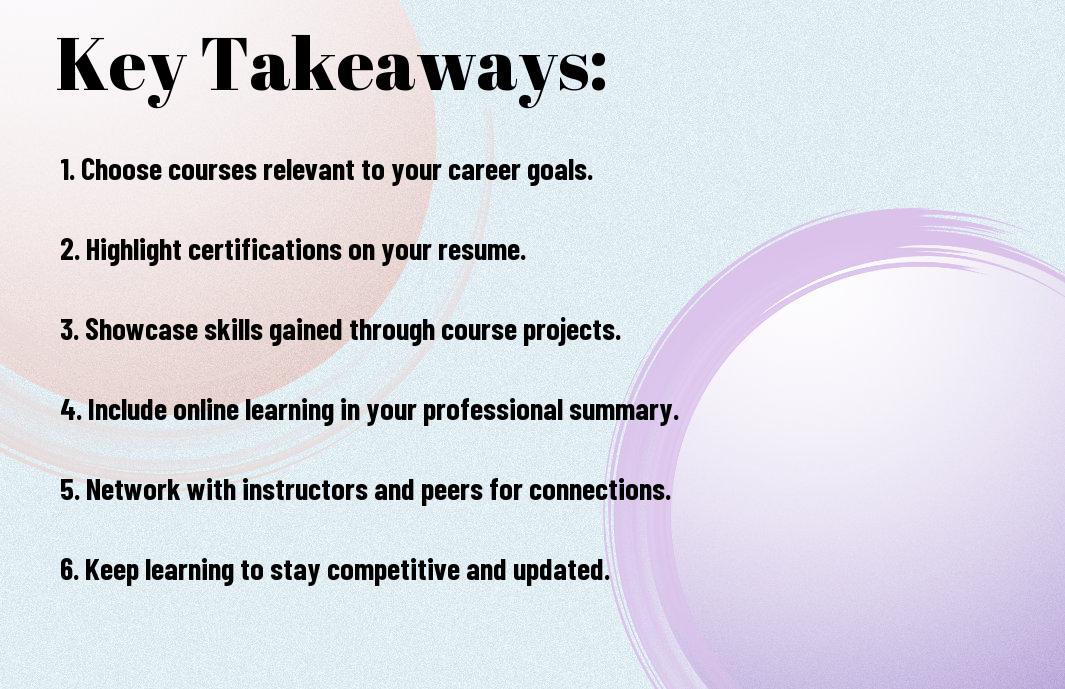
Key Takeaways:

To enhance your resume and gain a competitive edge in the job market, consider the following points about utilizing online courses:

  • Enroll in online courses that focus on developing skills in areas relevant to your desired career, as this will make your resume more attractive to potential employers.
  • Choose online courses that offer certification upon completion, as this provides tangible proof of your expertise and commitment to professional development.
  • Highlight relevant coursework and projects completed during online courses in your resume, especially if they demonstrate practical applications of the skills you’ve learned.
  • Use online courses to fill gaps in your resume by acquiring new skills or upgrading existing ones, making you a more competitive candidate in the job market.
  • Include the names of reputable online course providers in your resume, as this can enhance your credibility and showcase your dedication to continuous learning.

Getting Started

The first step to utilizing online courses for resume enhancement is to understand their value. You can find more information on Three Reasons to Add Online Courses to Your CV and how to incorporate them into your resume.

Finding Online Courses

On your journey to boost your resume, you’ll need to find online courses that align with your career goals. You can search for courses on various platforms, and filter them based on your interests and requirements.

Setting Career Goals

An imperative part of using online courses to enhance your resume is setting clear career objectives. You need to define what you want to achieve and how online courses can help you get there.

For instance, if you’re looking to transition into a new field, you can take online courses to acquire the necessary skills and knowledge, making you a more competitive candidate in the job market. You can then highlight these skills on your resume, demonstrating your commitment to your career goals and increasing your chances of standing out to potential employers.

Course Selection

Even with numerous online courses available, choosing the right one can be challenging. You need to consider your career goals and the skills you want to acquire to enhance your resume.

Identifying Relevant Courses

Across various platforms, you will find courses that cater to different industries and professions. You can search for courses that align with your current job or the job you aspire to, and select the ones that will boost your skills and knowledge.

Evaluating Course Quality

Beside the course content, you should also evaluate the instructor’s expertise, course reviews, and the platform’s reputation to ensure you get the best learning experience.

Course quality is vital to the learning process, and you should look for courses that offer hands-on experience, interactive learning, and real-world applications. You can also check the course curriculum, duration, and assessment methods to determine if it meets your needs and expectations, and if it will help you achieve your career goals and enhance your resume.

Effective Learning

Unlike traditional learning methods, online courses offer flexible pacing, allowing you to learn at your own speed. You can review material as many times as needed, ensuring you grasp key concepts before moving forward.

Creating a Study Schedule

By planning out your study time, you can stay organized and focused, ensuring you complete courses efficiently. You can set realistic goals and deadlines, helping you stay motivated and on track.

Engaging with Course Materials

By actively participating in online discussions and interacting with course materials, you can deepen your understanding of the subject matter. You can ask questions, share your thoughts, and learn from others, enriching your learning experience.

Effective engagement with course materials is key to getting the most out of your online courses. You can take notes, summarize key points, and reflect on what you’ve learned, helping to solidify new skills and knowledge, and making it easier to apply them in real-world situations, ultimately boosting your resume.

Building Skills

To enhance your resume, you can use online courses to acquire new skills, as seen in 4 Online Courses You Can Do To Help Make Your CV Stand Out, which can make your profile more attractive to potential employers.

Developing New Skills

Along with expanding your knowledge, online courses help you develop new skills that can be applied to various industries, making you a more versatile candidate for your desired job.

Enhancing Existing Skills

For instance, you can use online courses to sharpen your existing skills, making you more efficient and effective in your work, which can be highlighted in your resume to show your expertise.

Developing a strong foundation in your existing skills allows you to take on more complex tasks and projects, demonstrating your capabilities to potential employers and increasing your chances of career advancement.

Showcase Your Skills

All online courses you complete demonstrate your commitment to learning and self-improvement, making you a more attractive candidate to potential employers. You can leverage these courses to boost your resume and increase your chances of landing your dream job.

Creating a Portfolio

Above all, showcasing your skills through a portfolio is an effective way to demonstrate your expertise. You can create a portfolio that highlights your projects, certifications, and relevant coursework, giving you a competitive edge in the job market.

Highlighting Achievements

Beside your technical skills, highlighting your achievements in online courses can help you stand out. You can mention specific projects or assignments you completed, and the skills you applied to achieve them.

To take it a step further, you can quantify your achievements by including metrics or statistics that demonstrate the impact of your work. For example, you can mention the number of projects you completed, the grade you received, or the skills you mastered, providing concrete evidence of your capabilities and reinforcing your position as a strong candidate.

Staying Ahead

Many professionals use online courses to enhance their skills and stay competitive. You can learn when and how to list online courses on a resume by visiting When and How To List Online Courses on a Resume for expert advice.

Staying Updated with Industry Trends

Befitting your career goals, you should stay updated with the latest industry trends by taking relevant online courses, which will help you stay ahead in the job market.

Continuous Learning

At the pace of technological advancements, you need to continuously update your skills to remain relevant, and online courses can help you achieve this goal.

Due to the ever-changing job market, continuous learning is imperative for your career growth, and you can achieve this by taking online courses that align with your career goals, helping you develop new skills and enhance your existing ones, making you a more competitive candidate in the job market.

Summing up

On the whole, you can significantly enhance your resume by leveraging online courses. You can acquire new skills, gain knowledge, and demonstrate your commitment to learning. By choosing relevant courses and highlighting your accomplishments, you can showcase your expertise and boost your chances of standing out in a competitive job market, making your resume more attractive to potential employers and helping you achieve your career goals, as you take control of your professional development and shape your future.

FAQ

Q: What are the benefits of taking online courses to boost my resume?

A: Taking online courses can significantly enhance your resume by demonstrating your commitment to continuous learning and professional development. It shows potential employers that you are proactive, motivated, and eager to acquire new skills and knowledge. Online courses can help you fill gaps in your skills, gain new certifications, and stay up-to-date with industry trends, making you a more competitive candidate in the job market.

Q: How do I choose the right online courses to boost my resume?

A: To choose the right online courses, start by identifying the skills and knowledge required for your desired job or industry. Research online course platforms, such as Coursera, Udemy, or LinkedIn Learning, and browse their course offerings. Look for courses that align with your career goals and are taught by reputable instructors. Read course reviews, check the course curriculum, and ensure that the course provides a certificate or badge upon completion, which can be showcased on your resume.

Q: How can I effectively showcase online courses on my resume to attract the attention of potential employers?

A: To effectively showcase online courses on your resume, create a separate section titled “Professional Development” or “Online Courses.” List the course title, platform, and date completed, and include a brief description of the skills or knowledge acquired. Be specific about how the course has enhanced your skills and qualifications, and tailor the course description to the job you are applying for. You can also include relevant certifications, badges, or links to your course certificates to demonstrate your expertise and commitment to learning.

Skip to content