As you navigate the digital landscape of learning, you’ll discover that online education presents a unique opportunity for you to develop your critical thinking skills. Your ability to analyze information, evaluate sources, and form informed opinions is honed through interactive online platforms and self-paced learning modules. By leveraging these tools, you can enhance your critical thinking abilities, setting yourself up for success in academics and beyond. Your online education experience will challenge you to think creatively and make informed decisions.
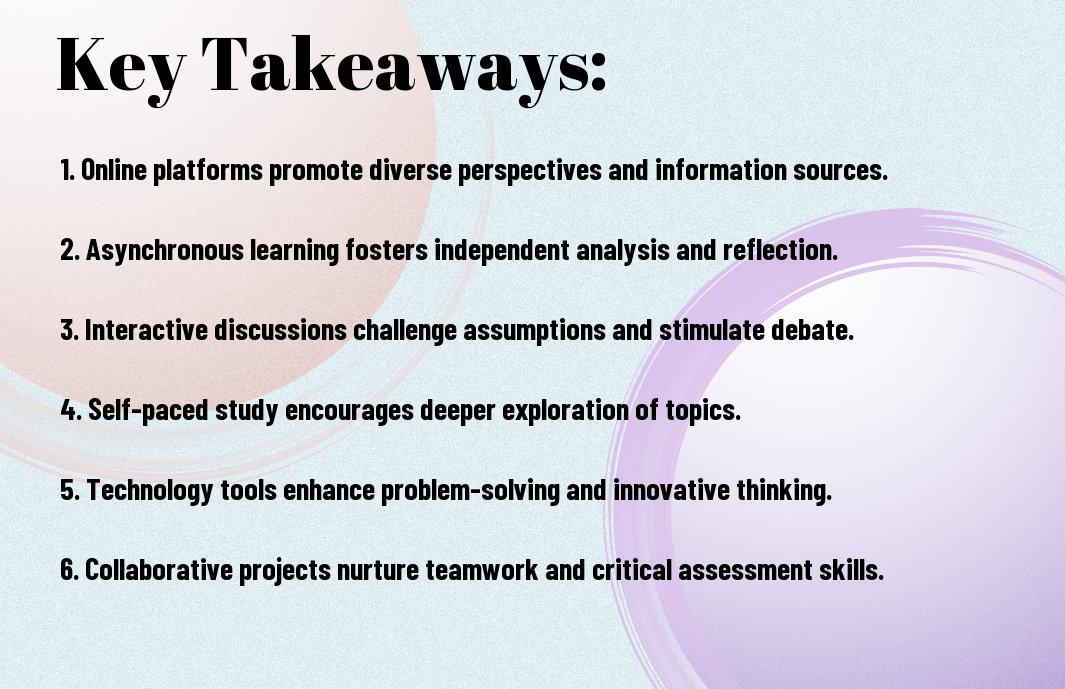
Key Takeaways:
- Online education promotes independent learning, allowing students to take ownership of their educational journey and develop problem-solving skills through self-directed learning pathways.
- The online environment fosters collaboration and discussion among students, encouraging the exchange of ideas and perspectives that help students develop critical thinking skills.
- Personalized learning experiences in online education enable students to learn at their own pace, focusing on areas where they need improvement and developing a deeper understanding of complex concepts.
- Online education provides access to a wide range of resources and materials, including multimedia content, interactive simulations, and real-world examples, which help students develop analytical skills and think critically.
- The online learning environment encourages students to engage in reflective practice, evaluating their own learning and identifying areas for improvement, which is vital for developing critical thinking and metacognitive skills.
The Role of Online Education
Before submerging into the benefits of online education, it’s vital to understand its role in promoting critical thinking. You’ll find that online education provides a unique platform for you to develop your critical thinking skills, allowing you to analyze information, evaluate evidence, and form your own opinions.
Promoting Independent Learning
Among the key advantages of online education is its ability to promote independent learning. You can learn at your own pace, taking ownership of your education and developing self-directed learning skills that will benefit you throughout your life.
Fostering Curiosity and Inquiry
Along with promoting independent learning, online education also fosters curiosity and inquiry. You are encouraged to explore topics in-depth, asking questions and seeking answers through interactive resources and discussions.
Promoting a deeper understanding of subject matter, online education encourages you to think critically about the information you encounter, analyzing and evaluating it to form your own conclusions. As you engage with online educational resources, you’ll develop a more nuanced understanding of complex topics, and your ability to think critically will continue to grow.

Critical Thinking in the Digital Age
Clearly, the digital age has brought about a plethora of information at your fingertips, and as a result, you are tasked with navigating through this vast amount of data to discern what is relevant and accurate.
Analyzing Online Information
At this point, you need to develop skills to analyze online information effectively, considering the author’s intent, purpose, and potential biases, which will help you make informed decisions and think critically.
Evaluating Sources and Evidence
To evaluate sources and evidence, you will need to assess the credibility of the author, publication, and methodology used, allowing you to form a well-rounded opinion and make sound judgments based on the information presented.
Sources that you encounter online can be vast and varied, and as you evaluate them, you will begin to notice patterns and inconsistencies, which will help you develop your critical thinking skills, enabling you to distinguish between fact and fiction, and make informed decisions based on the evidence presented, ultimately enhancing your ability to think critically in the digital age.
Effective Online Learning Strategies
To maximize the benefits of online education, you need to develop strategies that promote engagement and interaction. You can achieve this by setting clear goals, creating a schedule, and using tools that facilitate communication with your instructor and peers.
Encouraging Active Participation
Participating in online discussions and activities helps you stay engaged and motivated. You can encourage your own participation by contributing to forums, asking questions, and seeking feedback from your instructor and peers.
Using Technology to Facilitate Discussion
Above all, technology provides numerous tools to facilitate discussion and collaboration. You can use video conferencing, chat rooms, and discussion boards to interact with your peers and instructor, promoting a sense of community and fostering critical thinking.
Another key aspect of using technology to facilitate discussion is the ability to access a wide range of resources and materials. You can use online libraries, educational videos, and podcasts to supplement your learning, and engage in discussions with your peers about the topics you are studying, allowing you to deepen your understanding and develop your critical thinking skills.
Overcoming Challenges and Biases
Not all students are naturally inclined to think critically, but online education provides opportunities to develop this skill. You will encounter various perspectives and ideas, helping you to analyze information more effectively.
Recognizing Cognitive Biases
Realizing your own biases is the first step in critical thinking. You will learn to identify and acknowledge biases, allowing you to evaluate information more objectively and make informed decisions.
Developing Critical Thinking Skills
Before you can think critically, you need to understand the underlying principles of critical thinking. You will learn to question assumptions, evaluate evidence, and develop well-supported arguments.
With the development of critical thinking skills, you will become a more effective learner, able to analyze complex information, identify patterns, and solve problems. You will apply these skills to your online coursework, assignments, and discussions, enhancing your overall learning experience and preparing you for success in your academic and professional pursuits.
The Impact of Online Education on Critical Thinking
Once again, you can develop your critical thinking skills through online education, and to learn more, you can visit How Online Learning Can Boost Your Critical Thinking Skills to get a deeper understanding of the topic.
Improving Problem-Solving Skills
Almost naturally, you will start to notice an improvement in your problem-solving skills as you engage in online education, which presents you with various challenges and encourages you to think creatively.
Enhancing Collaboration and Communication
By participating in online discussions and group projects, you will enhance your collaboration and communication skills, which are crucial for developing critical thinking.
For instance, when you work on a group project online, you will need to communicate effectively with your team members, share ideas, and collaborate to achieve a common goal, all of which will help you develop your critical thinking skills and prepare you for real-world challenges.
Best Practices for Online Educators
Your approach to online education can significantly impact your students’ ability to think critically, as seen in studies like Critical Thinking in Online Vs. Face-to-Face Higher Education, which explores the differences in critical thinking development between online and traditional educational settings.
Creating Engaging Online Content
Around the clock, you can create engaging online content that encourages critical thinking by incorporating interactive elements and real-world examples that challenge your students to think deeply about the subject matter.
Providing Feedback and Guidance
One key aspect of online education is providing timely and constructive feedback that guides your students towards developing their critical thinking skills, helping them to reflect on their thought process and identify areas for improvement.
Providing feedback that is specific, detailed, and action-oriented allows your students to learn from their mistakes and develop a growth mindset, which is crucial for critical thinking and problem-solving, enabling you to tailor your guidance to meet the unique needs of your students and foster a supportive online learning environment that encourages critical thinking and academic success.
Conclusion
Considering all points, you can see how online education fosters critical thinking skills in your learning journey. As you engage with digital resources, you develop your ability to analyze and evaluate information. For more insight, visit The Role of Critical Thinking in the Online Learning Environment to understand its significance. This helps you make informed decisions and think independently, enhancing your overall learning experience and intellectual growth.
FAQ
Q: What role does online education play in promoting critical thinking skills in students?
A: Online education encourages critical thinking by providing students with a flexible and self-paced learning environment. This setting allows students to analyze information, evaluate sources, and form opinions at their own speed, fostering a deeper understanding of the subject matter. Through online discussions, forums, and interactive activities, students are prompted to think critically about the information presented, make connections between concepts, and develop well-supported arguments. As a result, online education helps students develop the critical thinking skills necessary to succeed in an increasingly complex and interconnected world.
Q: How do online educational resources and tools facilitate critical thinking in students?
A: Online educational resources and tools, such as multimedia content, simulations, and virtual labs, facilitate critical thinking by providing students with a rich and immersive learning experience. These resources allow students to engage with complex concepts and phenomena in a interactive and dynamic way, promoting a deeper understanding of the subject matter. Additionally, online tools such as collaborative software, mind mapping apps, and debate platforms enable students to work together, share ideas, and engage in constructive debates, further developing their critical thinking skills. By leveraging these resources and tools, online education provides students with a wide range of opportunities to develop their critical thinking abilities.
Q: Can online education help students develop the critical thinking skills needed to evaluate online information effectively?
A: Yes, online education can play a significant role in helping students develop the critical thinking skills needed to evaluate online information effectively. Through online courses and activities, students can learn how to identify credible sources, evaluate evidence, and recognize biases and misinformation. Online education can also provide students with the skills and knowledge needed to effectively navigate the online information landscape, including how to use search engines, evaluate online sources, and avoid online pitfalls such as plagiarism and copyright infringement. By teaching students how to think critically about online information, online education can help students become more discerning and informed consumers of online content.