education

How to Make Online Education Work for You

You’re considering online education, and you want to know how to make it work for you. Your goal is to gain knowledge and skills that will enhance your career, and you’re looking for ways to succeed in an online learning environment. To achieve this, you can start by exploring resources such as 10 Tips to Make Online Learning Work for You, which will provide you with valuable insights to help you navigate your online education journey and ensure your success.

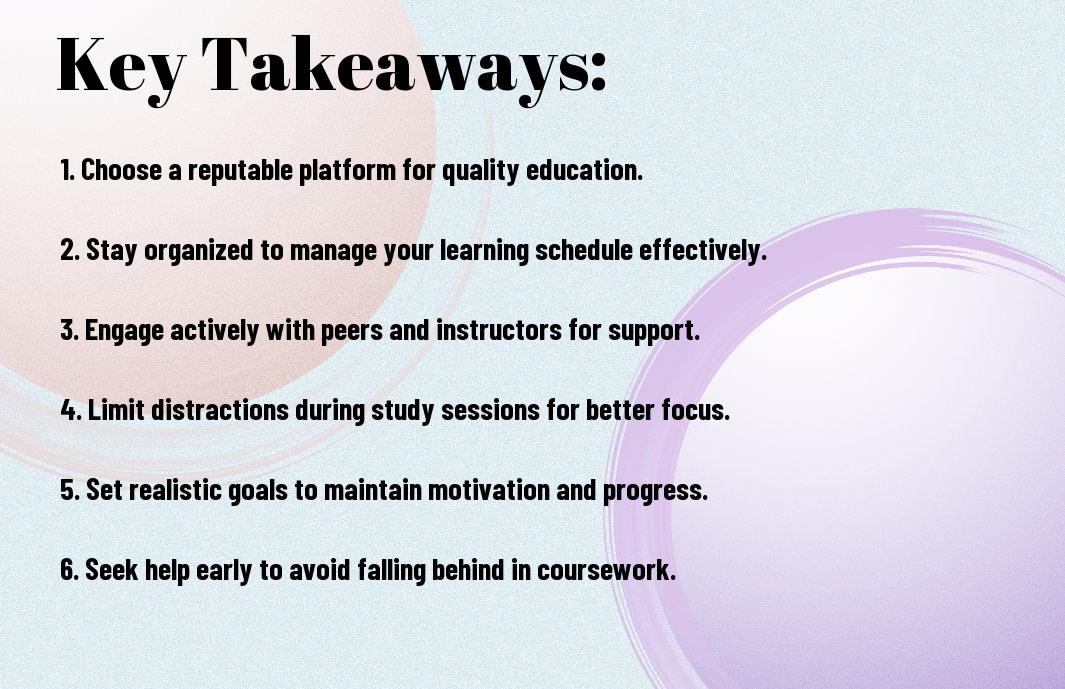
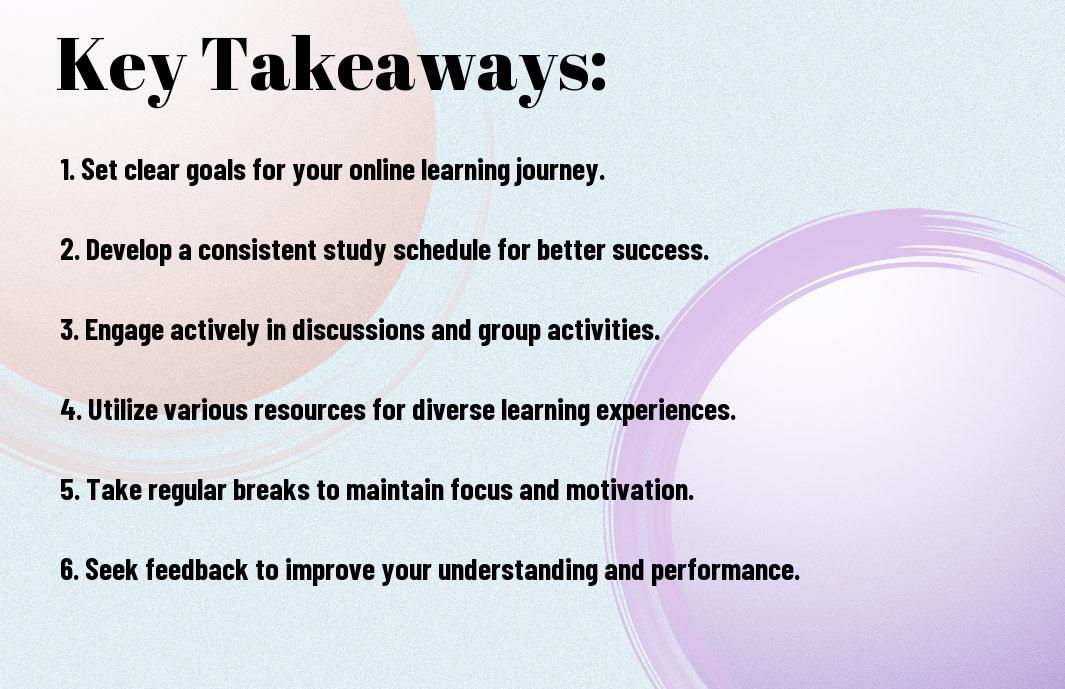
Key Takeaways:

To succeed in online education, consider the following points:

  • Set clear goals and establish a dedicated study space to help you stay focused and motivated throughout your online course.
  • Utilize technology tools such as video conferencing software, online forums, and mobile apps to enhance your learning experience and stay connected with instructors and peers.
  • Develop a self-disciplined routine and create a schedule that allows you to balance online coursework with other responsibilities and activities.
  • -svgTake advantage of flexibility in online education to learn at your own pace and access course materials at any time, from any location with an internet connection.
  • Seek support from instructors, peers, and online resources to overcome challenges and stay engaged throughout your online learning journey.

Getting Started

To begin your online education journey, you’ll need to take the first steps towards creating a productive learning environment. You’ll want to consider your goals, available time, and the resources you’ll need to succeed. By doing so, you’ll set yourself up for success and be able to make the most of your online education experience.

Setting Up Your Online Learning Space

On the path to online learning, you’ll need a dedicated space that is quiet, comfortable, and free from distractions. On this space, you will be able to focus and engage with your course materials without interruptions, helping you to stay on track and achieve your goals.

Choosing the Right Online Courses

Beneath the surface of online education lies a wealth of course options, and you’ll need to choose the ones that align with your interests and goals. By doing so, you’ll be able to make the most of your time and energy, and set yourself up for success in your chosen field.

In fact, choosing the right online courses can make all the difference in your educational journey. You’ll want to consider factors such as the course content, instructor expertise, and level of support, as well as your own learning style and preferences. By taking the time to carefully select your courses, you’ll be able to create a personalized learning plan that meets your unique needs and helps you achieve your goals.
Creating a Study Routine

While establishing a study routine is imperative for online education, you need to consider your schedule and learning style. You should allocate specific times for studying, breaks, and leisure activities to maintain a balance in your life.

Time Management Strategies

Between scheduling and prioritizing tasks, you can effectively manage your time. You will be able to complete assignments and engage in discussions on time, which is vital for your online education.

Staying Motivated and Focused

Managing your distractions and minimizing procrastination will help you stay on track. You can achieve this by creating a conducive study environment and setting achievable goals for your online education.

Motivated by your goals, you will be able to push through challenges and stay focused on your objectives. You can celebrate your progress and accomplishments, which will help you maintain a positive attitude towards your online education, and you will be more likely to reach your full potential.

Effective Learning Techniques

All online learners need to develop strategies to stay engaged and motivated. You can achieve this by setting goals, creating a schedule, and tracking your progress. This will help you stay focused and make the most of your online education experience.

Active Learning Strategies

Leveraging interactive methods, you can reinforce your understanding of the material and retain information better. You can participate in discussions, ask questions, and engage with your peers to deepen your knowledge and stay interested in the subject matter.

Using Technology to Enhance Learning

For maximum benefit, you can utilize various digital tools to support your learning. You can access a wide range of resources, from video lectures to online quizzes, to enhance your understanding and stay on top of your coursework.

Actively incorporating technology into your learning routine, you can streamline your study process and make it more efficient. You can use apps to organize your notes, set reminders, and collaborate with your peers, all of which can help you achieve your academic goals and make the most of your online education experience.

Overcoming Challenges

After encountering obstacles in online education, you can find helpful resources to overcome them. For instance, you can visit 15 Tips to Succeed in an Online Class to gain insights on managing your online learning experience.

Managing Distractions and Procrastination

Besides staying focused, you need to minimize distractions and avoid procrastination by creating a conducive learning environment that promotes your productivity and motivation.

Seeking Help and Support

After identifying the challenges you face, you can seek help from your instructors, peers, or online support groups to address your concerns and stay on track with your online education.

But as you navigate the support systems available to you, consider how your unique learning style and needs can be met through personalized support, allowing you to optimize your online learning experience and achieve your academic goals.

Staying Organized

Keep your online education on track by prioritizing organization. You’ll need to manage your time effectively and stay on top of your coursework to succeed.

Keeping Track of Assignments and Deadlines

Beneath the surface of online learning, you’ll find that keeping track of assignments and deadlines is vital. You can use a planner or calendar to stay up-to-date on your coursework and submission deadlines.

Using Digital Tools to Stay Organized

Beyond traditional methods, you can utilize digital tools to stay organized. You can use apps and software to keep track of your assignments, deadlines, and progress, making it easier to manage your online education.

But as you explore the various digital tools available, you’ll find that some are more effective than others. You can use project management tools to break down large assignments into smaller tasks, set reminders, and track your progress, helping you stay organized and focused on your goals. By leveraging these tools, you can streamline your online learning experience and achieve greater success.

Evaluating Progress

Unlike traditional classroom settings, online education requires you to take a more proactive approach to tracking your progress. You need to regularly assess your understanding of the material and adjust your strategy accordingly to achieve your goals.

Assessing Your Learning Outcomes

Along the lines of your learning objectives, you should set clear benchmarks to measure your progress, allowing you to identify areas where you need improvement and adjust your approach to maximize your learning outcomes.

Adjusting Your Approach as Needed

For your online education to be successful, you need to be flexible and willing to make changes to your study routine, learning style, or even course selection if something is not working for you.

For instance, if you find that you are struggling with a particular subject, you may need to supplement your online coursework with additional resources, such as tutoring or study groups, to help you better understand the material and stay on track to meet your goals.

Final Words

To wrap up, you now have the tools to succeed in online education. You can make the most of your online learning experience by staying organized and motivated. For more tips on optimizing your online learning, visit How to Make Online Learning Work for You. By following these strategies, you will be able to achieve your academic goals and make the most of your online education, enhancing your skills and knowledge in the process, tailoring your education to fit your needs.

FAQ

Q: What are the basic requirements for online education and how can I prepare myself for it?

A: To make online education work for you, you need a stable internet connection, a computer or mobile device, and a quiet, dedicated learning space. Additionally, it’s vital to develop self-discipline and time management skills to stay motivated and keep up with the coursework. You should also familiarize yourself with the online learning platform and its tools, and don’t hesitate to reach out to instructors or support staff if you need help.

Q: How can I effectively engage with online course materials and interact with instructors and peers in a virtual environment?

A: Engaging with online course materials requires active participation, such as watching videos, reading texts, and completing assignments on time. To interact with instructors and peers, you can use discussion forums, live chats, and video conferencing tools. It’s also a good idea to join online study groups or find a study buddy to stay connected and motivated. Furthermore, don’t be afraid to ask questions or seek feedback from instructors, and be open to learning from your peers and their experiences.

Q: What strategies can I use to stay motivated and overcome common challenges in online learning, such as procrastination and lack of face-to-face interaction?

A: To stay motivated in online learning, set clear goals and deadlines, and break down larger tasks into smaller, manageable chunks. You can also use productivity tools, such as calendars and to-do lists, to stay organized and on track. Additionally, try to establish a routine and stick to it, and don’t be too hard on yourself if you encounter setbacks. To overcome the lack of face-to-face interaction, try to connect with your peers and instructors through social media or online communities, and participate in virtual events and webinars to expand your network and stay engaged.

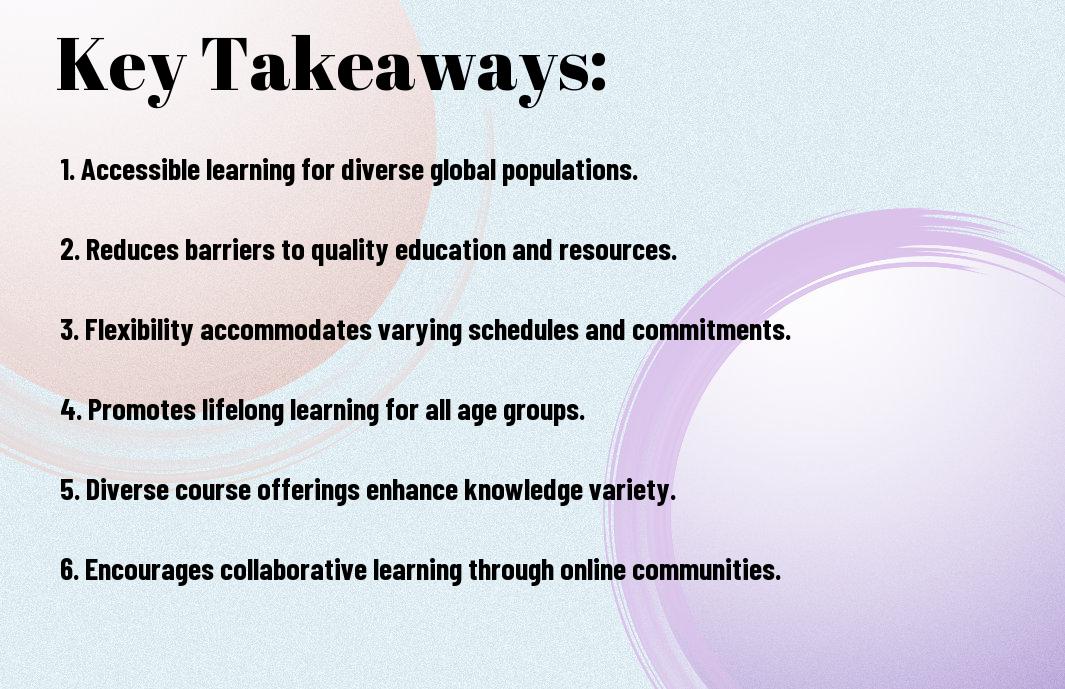
How Online Education is Democratizing Knowledge

Key Takeaways:

  • The availability of online education has made it possible for people from all over the world to access quality educational resources, regardless of their geographical location or financial situation.
  • Flexible learning options, such as online courses and degree programs, have enabled students to balance their academic pursuits with work and other responsibilities, making it easier for them to pursue higher education.
  • Online education has bridged the gap between different socio-economic groups, providing equal access to knowledge and skills that were previously only available to a select few.
  • The digital platforms used in online education have also enabled personalized learning experiences, allowing students to learn at their own pace and focus on areas where they need improvement.
  • Overall, online education has democratized knowledge by making it more accessible and affordable, and has the potential to transform the way we learn and acquire new skills in the future.

    The Digital Revolution in Learning

    For your educational journey, the digital revolution has opened up new avenues, enabling you to access a vast array of courses and resources from anywhere in the world.

    Accessibility and Reach

    Around the globe, online education is transforming the way you learn, making it possible for you to acquire new skills and knowledge at your own pace.

    Breaking Geographical Barriers

    Bridging the gap between traditional classroom settings and online learning, you can now access educational resources from institutions worldwide, regardless of your location.

    It is interesting to note that as you explore online education, you will find that geographical barriers no longer limit your access to top-notch educational institutions, allowing you to choose from a wide range of programs tailored to your interests and career goals.

    Democratization of Knowledge

    You can access knowledge from anywhere, thanks to online education, as seen in Democratizing digital learning: theorizing the fully online learning environment, which discusses the benefits of online learning.

    Equal Opportunities for All

    Betwixt the various benefits of online education, you’ll find that it provides equal opportunities for all, regardless of your geographical location or financial background, to access quality educational resources.

    Challenges in Equity and Access

    Opportunity gaps still exist, and you may face challenges in accessing online education due to factors like internet connectivity and device availability, which can hinder your ability to fully participate.

    Even with the benefits of online education, you may still encounter challenges in equity and access, such as digital literacy and language barriers, which can affect your ability to navigate online platforms and access educational resources, highlighting the need for inclusive and supportive online learning environments that address these issues.

    The Role of Technology

    Not only has technology bridged the gap between knowledge and accessibility, but it has also enabled you to access information from anywhere in the world. You can learn more about how technology is changing the education landscape by visiting How Edtech is democratizing education – Times of India, which provides valuable insights into the impact of edtech on education.

    Platforms and Tools

    Against the backdrop of traditional learning methods, you will find that online platforms and tools are revolutionizing the way you learn, making it more engaging and interactive, and allowing you to access a wide range of courses and resources.

    Innovations in Online Teaching

    To stay ahead of the curve, you need to be aware of the latest innovations in online teaching, such as virtual reality, artificial intelligence, and gamification, which are transforming the online learning experience and making it more immersive and effective.

    Consequently, as you explore these innovations, you will discover that they are not only enhancing your learning experience but also providing you with personalized learning paths, real-time feedback, and access to a global community of learners, enabling you to learn at your own pace and achieve your academic goals more efficiently.

    Personalized Learning Experiences

    Many online education platforms offer tailored learning experiences, allowing you to learn at your own pace and focus on areas that interest you the most. This approach enables you to take ownership of your learning journey, making it more effective and enjoyable.

    Adaptive Technologies

    Contrary to traditional teaching methods, adaptive technologies in online education adjust to your learning style, providing real-time feedback and assessment. This helps you identify areas where you need improvement, enabling you to adjust your learning strategy accordingly.

    Student-Centered Approaches

    Alongside the benefits of personalized learning, you’ll find that student-centered approaches prioritize your needs and goals, making learning more engaging and relevant to your life. This approach fosters a deeper understanding of the subject matter, as you’re able to relate it to your own experiences and interests.

    Considering the student-centered approaches in online education, you can explore various subjects and topics in a way that resonates with you. You’ll have the autonomy to choose from a wide range of courses, instructors, and learning materials, allowing you to create a learning pathway that suits your preferences and career aspirations. As you progress, you’ll be able to reflect on your learning, identifying what works best for you and making adjustments to optimize your educational experience.

    Societal Impact and Future Prospects

    After witnessing the rise of online education, you can see its impact on society. You can learn more about the Democratisation of knowledge through open-access resources and online education and its effects on your community.

    Economic Implications

    Betwixt the benefits of online education, you will find that it can also have economic implications, affecting your wallet and your access to knowledge, as you invest in your future.

    Global Connectivity and Collaboration

    The opportunity to connect with others worldwide is now at your fingertips, allowing you to collaborate and learn from people with different backgrounds and perspectives, broadening your understanding of the world.

    As you explore global connectivity and collaboration, you will discover that it enables you to access a vast array of resources, expertise, and experiences, helping you to develop a more nuanced and informed worldview, and preparing you to succeed in an increasingly interconnected world, where your ability to collaborate and adapt will be crucial to your success.

    Challenges and Considerations

    Despite the numerous benefits of online education, you will encounter several challenges that need to be addressed. As you navigate the online learning landscape, you must consider the potential drawbacks and limitations of this approach.

    Quality Assurance

    Accordingly, you should prioritize quality assurance when selecting online courses or programs, ensuring that they meet your standards and needs. You can do this by researching the institution, reading reviews, and checking accreditation.

    Digital Divide and Inclusion

    By exploring the issue of digital divide and inclusion, you will realize that not everyone has equal access to online education. You may notice that some individuals or groups lack the necessary technology, internet connectivity, or digital literacy to participate in online learning.

    Understanding the digital divide and its impact on inclusion is necessary for you to appreciate the complexities of online education. As you explore deeper into this issue, you will discover that it affects not only individuals but also communities and societies as a whole, perpetuating existing inequalities and hindering social mobility, and you should consider how online education can be made more accessible and inclusive for all.

    To wrap up

    Drawing together the various threads, you can see how online education is bridging gaps in access to knowledge, allowing you to learn from anywhere and at your own pace. As you explore the vast array of online courses and resources, you’ll find that your learning experience is enhanced, and your understanding of the world is broadened, enabling you to make informed decisions and stay ahead in your field, ultimately empowering you to take control of your educational journey.

    FAQ

    Q: What is the impact of online education on accessibility of knowledge?

    A: Online education has revolutionized the way people access knowledge by making it more accessible and affordable. With the rise of online courses, degree programs, and educational resources, individuals from all over the world can now access high-quality educational content from top institutions and experts, regardless of their geographical location or financial background. This has leveled the playing field, enabling people from diverse backgrounds to acquire knowledge and skills that were previously out of reach.

    Q: How is online education bridging the gap between different socio-economic groups?

    A: Online education is bridging the gap between different socio-economic groups by providing equal opportunities for learning and skill development. Online courses and degree programs are often priced lower than traditional offline programs, making them more affordable for people from low-income backgrounds. Additionally, online education platforms often offer scholarships, financial aid, and flexible payment options, further increasing accessibility. This has enabled people from disadvantaged backgrounds to acquire knowledge and skills that can help them improve their socio-economic status and compete with their peers from more affluent backgrounds.

    Q: What role is technology playing in democratizing knowledge through online education?

    A: Technology is playing a vital role in democratizing knowledge through online education by providing the infrastructure and tools necessary for online learning. Advances in digital technology have enabled the creation of interactive and engaging online courses, virtual classrooms, and online communities, making online learning a more immersive and effective experience. Moreover, technology has also enabled the development of adaptive learning systems, artificial intelligence-powered tutoring, and data analytics, which help personalize the learning experience and improve student outcomes. Overall, technology has been instrumental in making online education a viable and effective means of knowledge acquisition, thereby democratizing access to knowledge and education.

How Online Education Supports Lifelong Learning Goals

You can achieve your learning objectives with online education, which provides flexibility and accessibility. As you pursue your goals, you’ll find that online education supports your development. For more information on the intersection of online learning and lifelong learning, you can explore the relationship between Lifelong And Distance Learning, and discover how it can enrich your educational journey.

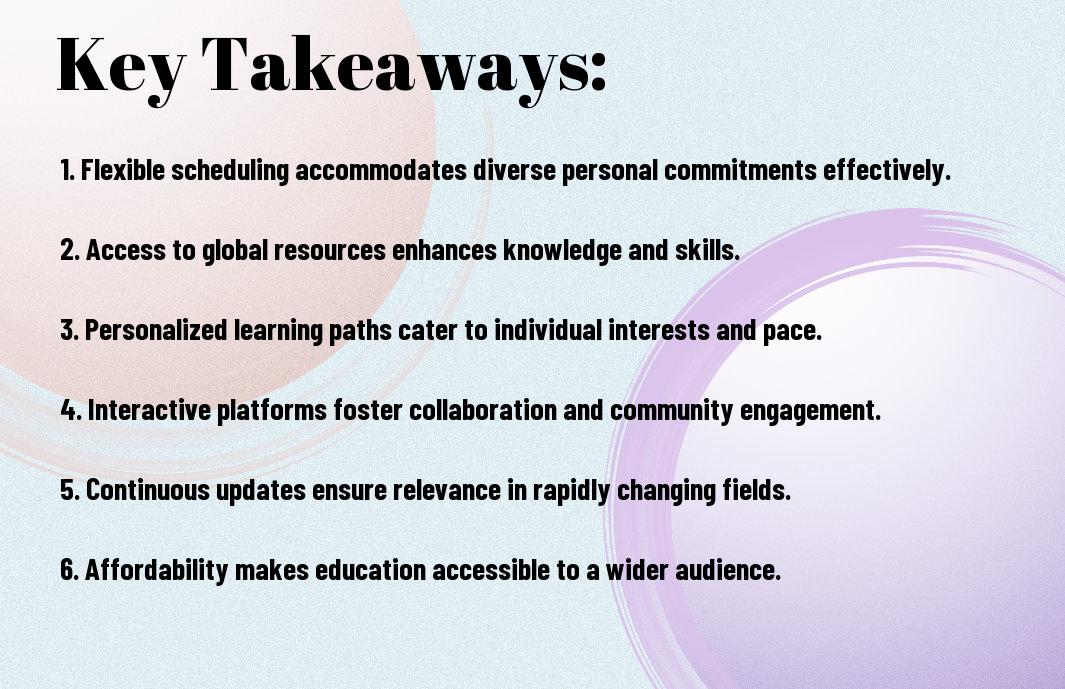
Key Takeaways:

To achieve lifelong learning goals, online education offers a flexible and accessible platform. Here are the key points to consider:

  • Online education supports flexible scheduling, allowing individuals to balance their personal and professional lives while pursuing their learning objectives.
  • With online education, learners can access a wide range of specialized courses and degree programs that may not be available in their local area, facilitating skill development and career advancement.
  • The self-paced nature of online learning enables individuals to set their own goals and work at their own speed, which can be particularly beneficial for those with diverse learning styles.
  • Online education provides opportunities for global connections and networking, allowing learners to engage with peers and instructors from diverse cultural backgrounds and industries.
  • Through online education, individuals can continuously update their skills and knowledge to stay competitive in the ever-changing job market, supporting their long-term career goals.

Benefits of Online Education

Before delving into the specifics, you should know that online education offers numerous advantages that cater to your needs and goals. You can access a wide range of courses and programs that help you develop new skills and expand your knowledge.

Flexibility and Accessibility

Above all, online education provides you with the flexibility to learn at your own pace, allowing you to balance your studies with other aspects of your life. You can access course materials and participate in discussions from anywhere, making it an ideal option for those with busy schedules.

Personalized Learning Experience

Any online course you take is designed to provide you with a personalized learning experience, tailored to your learning style and preferences. You can choose from various formats, such as videos, podcasts, and interactive modules, to engage with the material in a way that suits you best.

But what really sets online education apart is the ability to revisit and review course materials as many times as you need, allowing you to reinforce your understanding of complex concepts and solidify your knowledge. You can also interact with instructors and peers through discussion forums and live chats, getting feedback and support whenever you need it, which helps you stay motivated and focused on your learning goals.

Learning Opportunities

Some online education platforms provide you with numerous options to achieve your lifelong learning goals, allowing you to explore various subjects and interests at your own pace.

Diverse Course Offerings

Anytime you want to learn something new, online education offers a wide range of courses, from academic to vocational, helping you to select the ones that suit your needs and expand your knowledge.

Skill Development and Enhancement

Across various online platforms, you can develop and enhance your skills, gaining expertise in areas that interest you, and staying up-to-date with the latest trends and technologies in your field.

Learning new skills and enhancing existing ones helps you to stay competitive in the job market, and online education provides you with the flexibility to do so at your convenience, allowing you to balance your learning with your personal and professional life, and ultimately achieving your lifelong learning goals, as you progress in your career, you will find that your skills and knowledge are highly valued by employers, and you will have more opportunities to advance in your field.

Technological Advancements

For online education, technological advancements have been a driving force, enabling you to access a wide range of courses and resources from anywhere in the world. This has opened up new opportunities for you to pursue your lifelong learning goals.

Innovative Learning Platforms

One of the key benefits of online education is the innovative learning platforms that have been developed, providing you with a personalized and engaging learning experience. These platforms use artificial intelligence and data analytics to tailor the learning content to your needs and abilities.

Virtual Collaborations and Interactions

Behind the success of online education is the ability to facilitate virtual collaborations and interactions, allowing you to connect with peers and instructors from diverse backgrounds. This helps you to gain new perspectives and insights, enhancing your learning experience.

But as you probe deeper into virtual collaborations and interactions, you will discover that they offer more than just social benefits. You will be able to participate in discussions, share your work, and receive feedback, all of which will help you to develop your critical thinking and problem-solving skills, ultimately supporting your lifelong learning goals.

Overcoming Barriers

Keep in mind that online education offers numerous solutions to help you achieve your lifelong learning goals, and you can learn more about 5 Ways Higher Education Can Enhance E-Learning to get started.

Time and Location Constraints

Affording you the flexibility to learn at your own pace, online education allows you to fit learning into your busy schedule, regardless of your location, making it easier for you to access courses and resources.

Financial and Resource Limitations

Across various platforms, online education provides you with affordable options, enabling you to access quality educational content without excessive costs, and helping you to overcome financial and resource limitations that may have hindered your learning in the past.

To further address financial and resource limitations, you can explore scholarships, financial aid, and free online courses, which can help you minimize costs and make online education more accessible, allowing you to focus on achieving your lifelong learning goals without added financial stress.

Effective Implementation

Many online education platforms offer tools and features that support your lifelong learning goals, allowing you to set a personalized learning path and track your progress.

Strategic Planning and Goal Setting

Across various online learning platforms, you can define your objectives and create a roadmap to achieve them, enabling you to stay focused on your goals.

Support Systems and Resources

Before venturing into online learning, you can explore the support systems and resources available, such as virtual mentorship programs, online communities, and technical support teams.

With access to these support systems and resources, you can overcome obstacles, gain new insights, and develop a deeper understanding of the subject matter, ultimately enhancing your overall learning experience and helping you achieve your lifelong learning goals.

Evaluation and Assessment

After completing online courses, you can track your progress and identify areas for improvement, allowing you to adjust your learning plan and stay on track to achieve your lifelong learning goals.

Measuring Progress and Success

At this stage, you assess your knowledge and skills, using various evaluation tools to measure your progress and success, helping you to refine your approach and make informed decisions about your future learning.

Continuous Improvement and Feedback

For effective learning, you need to engage with the assessment process, using feedback to refine your understanding and adjust your strategy, ensuring that you get the most out of your online education experience.

To achieve continuous improvement, you will need to reflect on the feedback you receive, identifying areas where you need to focus your efforts and develop a plan to address any gaps in your knowledge or skills, enabling you to take ownership of your learning and make steady progress towards your goals.

Summing up

Following this, you can see how online education supports your lifelong learning goals, enabling you to pursue your interests and career advancement at your own pace. You can enhance your skills and knowledge by exploring Lifelong Learning: Enhance Your Skills With Champlain, which provides valuable resources to help you achieve your objectives and stay competitive in today’s fast-paced world, ultimately supporting your continued growth and development.

FAQ

Q: What are the benefits of online education in supporting lifelong learning goals?

A: Online education offers numerous benefits that support lifelong learning goals, including flexibility, accessibility, and personalized learning experiences. With online education, individuals can learn at their own pace, anytime and anywhere, making it an ideal option for those with busy schedules or living in remote areas. Additionally, online education provides access to a wide range of courses and programs, allowing individuals to explore various fields and interests, and gain new skills and knowledge that can enhance their personal and professional development.

Q: How does online education facilitate continuous skill development and upskilling?

A: Online education facilitates continuous skill development and upskilling by providing individuals with the opportunity to acquire new skills and knowledge in a timely and efficient manner. Online courses and programs are often designed to be concise and focused, allowing individuals to quickly gain the skills and knowledge they need to enhance their career prospects or pursue new opportunities. Furthermore, online education platforms often offer certification and badge programs, which can help individuals demonstrate their expertise and commitment to continuous learning, making them more competitive in the job market.

Q: Can online education help individuals achieve their long-term career goals and stay relevant in a rapidly changing job market?

A: Yes, online education can play a significant role in helping individuals achieve their long-term career goals and stay relevant in a rapidly changing job market. By providing access to the latest knowledge, skills, and industry trends, online education enables individuals to stay up-to-date with the changing demands of their field and adapt to new technologies and innovations. Moreover, online education can help individuals develop a growth mindset, allowing them to be more agile and responsive to changing circumstances, and to continuously update their skills and knowledge to remain competitive and achieve their long-term career aspirations.

Top 10 Mistakes to Avoid in Online Education

As you begin on your online learning journey, you’ll want to set yourself up for success. Your approach to online education can significantly impact your outcomes. You need to be aware of common pitfalls that can hinder your progress. By understanding what mistakes to avoid, you can optimize your learning experience and achieve your goals more efficiently. This post will guide you through the most common errors, helping you to make the most of your online education and ensure a successful learning experience.

Key Takeaways:

To succeed in online education, it’s necessary to be aware of common pitfalls. Here are the main points to consider:

  • Avoid poorly designed courses that lack clear objectives and structure, which can hinder the learning experience.
  • Inadequate technical support can lead to frustration and hinder progress, so it’s vital to have reliable resources available.
  • Insufficient interaction with instructors and peers can make online learning feel isolating, so seek out opportunities for engagement and feedback.
  • Ineffective time management can lead to falling behind, so establish a schedule and stick to it to stay on track.
  • of self-motivation can be a significant obstacle, so set goals and track progress to maintain momentum and achieve success.

Preparation Mistakes

While preparing for online education, you need to be aware of common pitfalls that can hinder your success. Your preparation is key to achieving your goals, and neglecting certain aspects can lead to poor performance.

Insufficient Technology

Across the online learning landscape, you will encounter various platforms and tools that require specific technological specifications. You should ensure that your device meets these requirements to avoid technical issues that can disrupt your learning experience.

Poor Time Management

Timing is everything when it comes to online education, and you should create a schedule that allows you to balance your coursework with other responsibilities. You need to prioritize your tasks and allocate sufficient time for each activity to stay on track.

Considering your busy schedule, you should also be flexible and adapt to changes that may occur during your online course. You can use calendars, reminders, and other tools to stay organized and focused, helping you to manage your time effectively and make the most out of your online learning experience.

Course Selection Errors

Clearly, selecting the right course is vital to your success in online education, and making mistakes can lead to frustration and disappointment, you should be aware of common errors to avoid them.

Choosing the Wrong Course

The most common mistake you can make is choosing a course that doesn’t align with your goals or interests, which can lead to boredom and lack of motivation.

Not Checking Prerequisites

Above all, you need to ensure you have the necessary prerequisites to succeed in your chosen course, or you may struggle to keep up with the coursework.

Course prerequisites are designed to ensure you have the necessary foundation to succeed, and not checking them can lead to difficulties in completing assignments and understanding course materials, so you should always review the prerequisites before enrolling in a course to determine if you are adequately prepared.

Communication Breakdowns

Despite the importance of communication in online education, breakdowns can occur. You can learn more about common mistakes in online course creation by visiting 10 mistakes to avoid when creating online courses to improve your online learning experience.

Not Reading Instructor Messages

Messages from your instructors are necessary to your success in online education. You should regularly check your inbox for updates, announcements, and feedback to stay on track and avoid missing important deadlines.

Failing to Ask for Help

Around the time you encounter difficulties, do not hesitate to ask for help. You can reach out to your instructors, peers, or support staff to clarify doubts and get assistance when needed.

The failure to ask for help can lead to falling behind in your coursework, which can negatively impact your overall performance. You should not be afraid to ask questions or seek guidance, as it is a normal part of the learning process, and it will help you to better understand the course material and achieve your academic goals.

Study Habit Mistakes

To succeed in online education, you should be aware of common pitfalls, as outlined in Avoiding Common Online Learning Mistakes guides. This will help you avoid mistakes and stay focused on your goals.

Procrastination

One of the most common mistakes you can make is putting off your studies until the last minute, which can lead to poor grades and increased stress.

Lack of Note-Taking

Mistakes in note-taking can hinder your understanding of the material, making it harder to retain information and apply it to future lessons.

At the start of each course, you should develop a note-taking system that works for you, allowing you to efficiently organize and review your notes, which will help you stay on top of your coursework and achieve your academic goals.

Technical Issues

Now that you’re engaged in online education, you’ll encounter various technical issues that can hinder your learning experience. These issues can be frustrating, but being aware of them can help you prepare and find solutions.

Poor Internet Connection

Connecting to a stable internet connection is crucial for online learning, as a weak signal can cause delays and disruptions, affecting your ability to participate in classes or submit assignments on time, you should ensure your internet connection is reliable.

Incompatible Software

Beneath the surface of online learning platforms lies a complex system of software and tools, and using incompatible software can lead to compatibility issues, causing you frustration and wasting your time, you should check the system requirements before enrolling in an online course.

This incompatible software issue can be avoided by checking the system requirements before enrolling in an online course, and you can also contact your instructor or the technical support team to ensure that your device meets the necessary specifications, this will help you to have a smooth learning experience, and you will be able to focus on your studies without any technical difficulties.

Evaluation Errors

Keep in mind that evaluation errors can make or break your online educational experience. You need to be aware of the common mistakes to avoid them and achieve your goals.

Not Meeting Deadlines

Delays in submitting assignments can negatively impact your performance, so you must prioritize your tasks and manage your time effectively to meet the deadlines set by your instructor.

Ignoring Feedback

Once you receive feedback on your assignments, you should take it seriously and use it to improve your work, as it provides valuable insights into your strengths and weaknesses.

Further, ignoring feedback can hinder your progress, and you may miss out on opportunities to learn and grow, so take the time to carefully evaluate the comments and suggestions provided by your instructor and incorporate them into your future work.

To wrap up

With this in mind, you can now make informed decisions about your online education. You have learned about the top 10 mistakes to avoid, and you are better equipped to navigate the online learning landscape. By being aware of these pitfalls, you can create a successful and effective learning experience, achieving your goals and maximizing your potential in your online educational pursuits, and ultimately, enhancing your overall learning journey.

FAQ

Q: What are some common mistakes students make when choosing online courses, and how can they be avoided?

A: When opting for online courses, students often make mistakes such as not researching the course provider, not checking the course curriculum, and not evaluating the level of support offered. To avoid these mistakes, students should thoroughly research the course provider, ensuring they are accredited and have positive reviews. They should also carefully review the course curriculum to ensure it aligns with their goals and needs. Additionally, students should evaluate the level of support offered, including access to instructors, mentors, and technical support, to ensure they will have the help they need to succeed.

Q: How can students effectively manage their time and stay motivated in online education, and what pitfalls should they avoid?

A: To effectively manage their time and stay motivated in online education, students should create a schedule and stick to it, setting aside dedicated time for studying and completing assignments. They should also establish a dedicated study space, free from distractions, and minimize procrastination by breaking tasks into smaller, manageable chunks. Pitfalls to avoid include overcommitting and taking on too many courses at once, failing to take breaks and practice self-care, and not seeking help when needed. By avoiding these pitfalls and staying organized, students can maintain their motivation and achieve their academic goals.

Q: What are some technical issues that can hinder the online learning experience, and how can students troubleshoot them to ensure continuity in their studies?

A: Technical issues such as poor internet connectivity, incompatible software, and hardware problems can significantly hinder the online learning experience. To troubleshoot these issues, students should first ensure their internet connection is stable and meets the course requirements. They should also check that their computer or device meets the minimum technical requirements for the course, including having the necessary software and browser versions. If issues persist, students should contact their course provider’s technical support team for assistance. Additionally, students should have a backup plan in place, such as a secondary computer or internet connection, to minimize downtime and ensure continuity in their studies.

The Role of Gamification in Online Education

As you navigate the evolving landscape of online education, you’re likely to encounter a phenomenon that’s transforming the way you learn: gamification. You may wonder how incorporating game design elements into educational platforms can enhance your engagement and motivation. Your curiosity is warranted, as the implications of gamification in online education are far-reaching, influencing not only your learning outcomes but also your overall educational experience, forcing you to consider the potential benefits and drawbacks of this innovative approach.

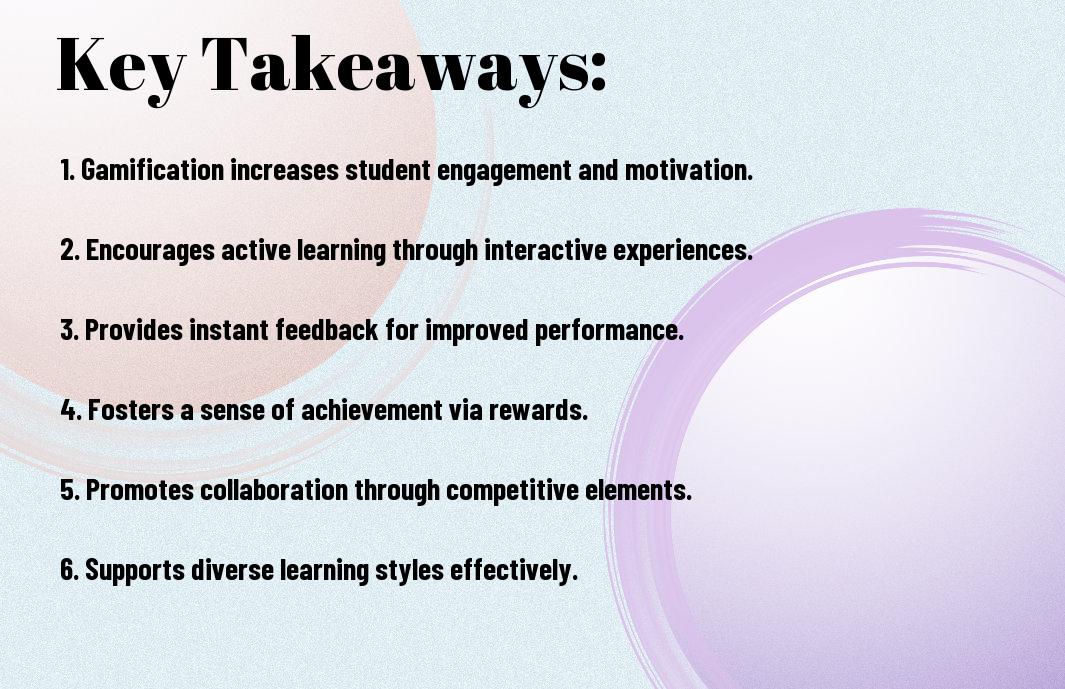
Key Takeaways:

  • The engagement of students in online education can be significantly improved through the use of gamification elements, such as points, badges, and leaderboards, which provide a sense of competition and achievement.
  • Personalization is a key aspect of gamification in online education, as it allows students to progress at their own pace and focus on areas where they need improvement, leading to a more effective learning experience.
  • Interactivity is another important aspect of gamification, as it enables students to participate in simulations, quizzes, and other interactive activities that make learning more enjoyable and interactive.
  • The use of data analytics in gamification allows educators to track student progress and identify areas where students may need extra support, enabling them to provide more targeted and effective instruction.
  • Overall, the integration of gamification into online education can lead to improved student outcomes, including increased motivation, retention, and academic achievement.

The Concept of Gamification

Before plunging into the role of gamification in online education, it’s necessary to understand what gamification entails. You will find that gamification is a concept that has been increasingly popular in recent years, and its application in various fields, including education, has been a subject of interest for many researchers and educators.

Definition and Principles

With the rise of digital technologies, you are likely to encounter gamification in various forms, from mobile apps to online courses. You will notice that gamification typically involves the use of game design elements, such as points, badges, and leaderboards, to engage and motivate users.

Application in Online Learning

Practically, you can apply gamification in online learning by incorporating interactive elements, such as quizzes, discussions, and challenges, into your courses. You will see that this approach can help increase student engagement and motivation, leading to a more effective learning experience.

Further, as you explore the application of gamification in online learning, you will discover that it can be used to support various learning objectives, from developing problem-solving skills to promoting collaboration and critical thinking. You can design gamified learning experiences that cater to different learning styles and preferences, allowing you to tailor your instruction to meet the diverse needs of your students.

Benefits of Gamification

You can leverage gamification to enhance your online learning experience, and to learn more about its applications, visit What is Gamification in E-Learning? to discover its potential.

Enhanced Engagement and Motivation

Benefits such as increased participation and enthusiasm are evident when you incorporate gamification elements into your online courses, making the learning process more enjoyable and interactive for you.

Improved Learning Outcomes and Retention

Between the various advantages of gamification, one significant aspect is its ability to help you retain information better, as engaging and fun learning experiences tend to stick with you longer.

Motivation plays a significant role in the success of gamification in online education, as it encourages you to take an active part in the learning process, leading to improved learning outcomes and a more rewarding experience, allowing you to reflect on your progress and set goals for yourself, ultimately enhancing your overall educational journey.

Designing Effective Gamification

To create an engaging online learning experience, you need to consider how gamification can be used to motivate and support your students. Effective gamification can enhance learner engagement, promote friendly competition, and foster a sense of community.

Setting Clear Goals and Objectives

Any attempt to design a gamified learning environment should begin with a clear understanding of what you want to achieve. You must define your objectives and ensure that your gamification strategy aligns with your educational goals, providing a meaningful and relevant experience for your students.

Choosing Relevant Game Elements and Mechanics

Behind every successful gamified learning experience lies a thoughtful selection of game elements and mechanics. You will need to choose the ones that best fit your learning objectives, considering what will motivate and engage your students, and what will help them achieve their goals.

The selection of game elements and mechanics is a critical step in designing effective gamification, as it can significantly impact the learner’s experience. You should consider elements such as points, badges, leaderboards, and quizzes, and think about how they can be used to support your learning objectives, promoting engagement, interaction, and knowledge retention, and helping your students develop a deeper understanding of the subject matter. As you design your gamified learning environment, you will need to strike a balance between fun and learning, ensuring that the game elements and mechanics serve to enhance, rather than distract from, the educational experience.

Challenges and Limitations

For educators, implementing gamification in online education presents several challenges that you must consider to ensure its effective integration. You will need to navigate the complexities of balancing engagement with academic rigor, a delicate balance that can make or break the learning experience.

Overemphasis on Entertainment

One potential pitfall you may encounter is the overemphasis on entertainment, which can undermine the educational value of your online courses, causing you to question whether the gamification elements are truly enhancing the learning experience or merely serving as a distraction.

Ensuring Equity and Inclusivity

About the issue of equity and inclusivity, you should be aware that gamification can sometimes exacerbate existing inequalities, particularly if certain groups of students lack access to the necessary technology or have different learning styles that are not accounted for in the gamification design, forcing you to think critically about how to make your online education more inclusive.

A closer examination of the issue of ensuring equity and inclusivity in gamified online education reveals that you must consider the diverse needs and abilities of your students, taking into account factors such as socioeconomic status, prior knowledge, and learning disabilities, in order to create a truly inclusive and effective learning environment that benefits all students, regardless of their background or abilities, and allows you to harness the full potential of gamification to enhance their educational experience.

Implementation and Integration

Unlike traditional teaching methods, gamification requires a thoughtful approach to integration, as you need to consider how to seamlessly merge engaging elements with your existing curriculum, ensuring a cohesive learning experience for your students.

Technical Considerations and Support

Alongside the implementation, an array of technical factors must be evaluated, as you will need to assess your institution’s infrastructure and technical capabilities to support gamification, considering factors such as software compatibility and hardware requirements.

Teacher Training and Professional Development

One of the key aspects to consider is how you, as an educator, will develop the necessary skills to effectively incorporate gamification into your teaching practices, which may involve seeking out additional training or resources to enhance your professional development.

Considerations such as the time and effort required to design and implement gamification elements, as well as the potential need for ongoing support and evaluation, are crucial as you commence on this journey, and you must be prepared to adapt and evolve your approach as you gather feedback from your students and reflect on the effectiveness of your methods, ensuring that your use of gamification ultimately enhances the learning experience for your students.

Future Directions

Despite the current limitations of gamification in online education, you will likely see significant advancements in the coming years, as you explore new ways to integrate game design and mechanics into your learning experiences.

Emerging Trends and Technologies

With the rise of technologies like virtual and augmented reality, you will have the opportunity to create even more immersive and engaging learning environments that simulate real-world experiences and challenges.

Potential for Personalized and Adaptive Learning

By leveraging gamification and learning analytics, you can tailor your educational experiences to individual students’ needs, abilities, and learning styles, allowing for a more effective and efficient learning process.

Hence, as you consider the potential of gamification to support personalized and adaptive learning, you should think about how you can use data and analytics to create a more responsive and dynamic learning environment, one that adjusts to your students’ progress and performance in real-time, providing them with the right level of challenge and support to optimize their learning outcomes.

Summing up

Drawing together the threads of this discussion, you begin to see how gamification can shape your online learning experience, influencing your perception of knowledge and engagement with educational content. As you reflect on the role of gamification, you may consider how it can enhance your motivation and participation in online courses, ultimately affecting your overall educational journey, and your understanding of the complex interplay between technology, education, and your own learning process.

FAQ

Q: What is the role of gamification in online education and how does it enhance the learning experience?

A: The role of gamification in online education is to increase student engagement, motivation, and participation by incorporating game design elements into the learning process. This approach enhances the learning experience by making it more interactive, fun, and challenging, which leads to improved knowledge retention and better academic outcomes. Gamification can include elements such as points, badges, leaderboards, and rewards, which help to create a sense of competition and achievement among students, fostering a more enjoyable and effective learning environment.

Q: How does gamification in online education impact student motivation and participation?

A: Gamification in online education has a significant impact on student motivation and participation. By introducing game-like elements, students are more likely to be motivated to learn and engage with the course materials, as they are encouraged to earn rewards, climb leaderboards, or achieve specific goals. This motivation translates into increased participation, as students become more active in discussions, complete assignments more thoroughly, and are more inclined to explore additional learning resources. Furthermore, gamification can help to build confidence and a sense of accomplishment among students, which can lead to a more positive attitude towards learning and improved overall performance.

Q: Can gamification be effective in all types of online education courses, and what are the key considerations for its successful implementation?

A: While gamification can be applied to various types of online education courses, its effectiveness depends on several factors, including the course content, target audience, and learning objectives. For gamification to be successful, it must be aligned with the course goals and designed in a way that is meaningful and relevant to the students. Key considerations for its implementation include understanding the students’ preferences and behaviors, setting clear rules and expectations, providing timely feedback and rewards, and continuously evaluating and adjusting the gamification elements to ensure they remain engaging and effective. Additionally, instructors should be aware of potential pitfalls, such as overemphasizing competition or using gamification as a mere add-on, rather than an integral part of the learning experience.

Skip to content