
Have you ever wondered if you can learn a new language for free online? In this article, we will explore the world of free online language learning courses and whether they are effective in helping you achieve fluency. With the rise of technology and e-learning platforms, there are now numerous resources available to help you master a new language without breaking the bank. Let’s explore into the effectiveness of these courses and how they can benefit you on your language-learning journey.
Key Takeaways:
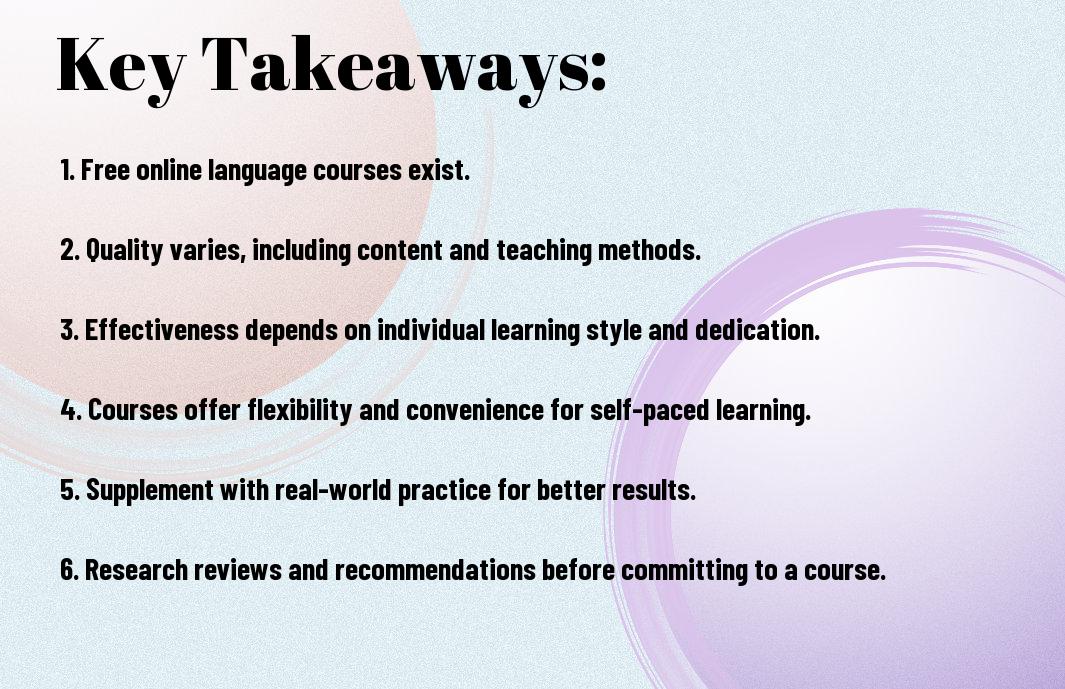
- Free online language learning courses are available, offering a wide range of languages and levels to choose from.
- They can be effective if used consistently and supplemented with practice through language immersion, conversation partners, or other resources.
- Check the credibility of the course provider and ensure that the content is up-to-date and aligns with your language learning goals.
The Rise of Online Language Learning
The growing demand for language skills
For many people, the ability to speak multiple languages is becoming increasingly important in today’s globalized world. Whether you’re a student looking to enhance your resume, a professional seeking new opportunities, or a traveler wanting to connect with locals, the demand for language skills is on the rise. Learning a new language not only opens up doors to new experiences but also improves your cognitive abilities and can even boost your career prospects.
The shift to online learning platforms
With the advancement of technology, the traditional methods of language learning have evolved. Online learning platforms have gained popularity due to their convenience, affordability, and flexibility. You can now access language courses from the comfort of your home, at your own pace, and often for free. These platforms offer a wide range of resources, including interactive lessons, language practice with native speakers, and gamified exercises to keep you motivated and engaged.
Skills that were once only attainable through traditional classroom settings can now be developed through online platforms, making language learning more accessible and enjoyable for everyone. Whether you’re a beginner or looking to enhance your proficiency, there is a plethora of online resources available to help you achieve your language learning goals.
Free Online Language Learning Courses
Any language enthusiast knows that mastering a new language can open up a world of opportunities. Fortunately, there are several free online language learning courses available that can help you achieve your language learning goals.
Duolingo: A pioneer in free language learning
Courses on Duolingo are designed to be fun and interactive, making language learning feel more like a game than a daunting task. With a wide range of languages to choose from and daily practice reminders, Duolingo is perfect for those looking to learn a new language on the go.
Coursera: University-level courses for free
The courses offered on Coursera come from top universities around the world, giving you access to university-level language learning materials for free. You can choose from a variety of language courses taught by experts in the field, allowing you to research deep into the language and its nuances.
The flexibility of Coursera’s platform means you can learn at your own pace, making it easier to fit language learning into your busy schedule.
Free edX: A non-profit online learning platform
Free edX offers a wide range of language courses from beginner to advanced levels, all taught by professors from prestigious institutions. The platform also provides certificates upon course completion, which can be a great addition to your resume.
Coursera
edX’s interactive learning approach ensures that you not only learn the language but also understand its cultural context and practical applications.
Effectiveness of Free Online Language Learning Courses
Now, let’s research into the effectiveness of free online language learning courses. These platforms use various techniques and technologies to help you learn a new language.
The science behind language learning apps
With advancements in technology, language learning apps make use of proven methods like spaced repetition, gamification, and interactive exercises to enhance your learning experience. By engaging with the material consistently and receiving instant feedback, these apps can help reinforce your memory retention and improve your language skills efficiently.
Success stories from users
Apps like Duolingo and Babbel have gained popularity for their user-friendly interfaces and structured lessons, leading to many success stories from users who have significantly improved their language proficiency. These platforms often incorporate listening, speaking, reading, and writing exercises to provide a well-rounded learning experience.
While these success stories are encouraging, it’s crucial to remember that individual experiences may vary. Some users may find greater success with certain language learning apps based on their learning style and dedication to consistent practice.
Limitations and potential biases
Any language learning tool, whether online or in-person, may have limitations and potential biases. Free online language courses may not offer the same level of personalized feedback and guidance that a private tutor or formal classes can provide. Additionally, these courses may not always cover specific dialects or cultural nuances of a language, which could impact your overall language proficiency.
It’s important to supplement your online learning with real-life practice, such as conversations with native speakers or immersion experiences, to overcome these limitations and deepen your understanding of the language.
Key Features to Look for in a Free Online Language Course
Once again, when considering a free online language course, it’s important to pay attention to certain key features that can significantly impact your learning experience. Here are some important factors to look for when choosing a language learning platform:
- Interactive exercises and quizzes
- Personalized learning pathways
- Access to native speaker communities
Interactive exercises and quizzes
Look for a course that offers interactive exercises and quizzes to help reinforce your learning. These activities can test your comprehension, grammar, and vocabulary skills in a dynamic and engaging way. By actively participating in exercises and quizzes, you can retain information better and track your progress more effectively.
Personalized learning pathways
Pathways that cater to your individual learning style and pace can make a significant difference in your language learning journey. Some online courses offer personalized learning pathways that adapt to your strengths and weaknesses, providing targeted lessons and exercises to help you improve in areas where you need it most.
Course platforms that offer personalized learning pathways can enhance your overall learning experience by ensuring that you stay motivated and engaged with the material. These tailored approaches can help you reach your language learning goals more effectively.
Access to native speaker communities
Course platforms that provide access to native speaker communities can offer invaluable opportunities to practice your language skills with fluent speakers. Interacting with native speakers can help improve your pronunciation, fluency, and cultural understanding in ways that traditional coursework may not be able to replicate.
This exposure to real-world language usage can enhance your comprehension and communication skills, giving you a more well-rounded language learning experience.
Comparing Free Online Language Learning Platforms
Keep exploring different platforms to find the one that best fits your learning style and language goals. In this section, we will compare various aspects of free online language learning platforms to help you make an informed decision.
Language offerings and specializations
| Languages Offered | Specializations |
| Platforms may offer popular languages such as Spanish, French, and German, while others cater to less common languages like Korean, Arabic, or Hindi. | Some platforms focus on general language learning, while others provide specialized courses for business, travel, or exam preparation. |
User interface and user experience
| User Interface | User Experience |
| The interface should be intuitive and easy to navigate, with clear instructions and organized lesson structures. | Your learning experience should be engaging and interactive, with features like quizzes, games, and progress tracking to keep you motivated. |
To ensure a positive learning experience, choose a platform with a user-friendly interface that enhances your language learning journey. Look for features that cater to your preferences and make the learning process enjoyable and effective.
Mobile app availability and functionality
Analyze the availability and functionality of mobile apps for on-the-go learning convenience. Some platforms offer comprehensive mobile apps with offline access, while others may have limited features or lack mobile support altogether.
When opting for a platform, consider your preference for learning on mobile devices. A well-designed mobile app can provide flexibility and seamless learning integration into your daily routine.
Overcoming Challenges in Free Online Language Learning
Staying motivated and accountable
Learning a new language can be exciting at first, but staying motivated throughout the process can be challenging. Without the structure of a traditional classroom setting, it’s easy to procrastinate or lose interest. To combat this, set specific, achievable goals for yourself and track your progress regularly. Joining online language learning communities or finding a language learning buddy can also help you stay motivated and hold yourself accountable.
Dealing with limited feedback and support
Online language learning courses may not always provide the same level of feedback and support as in-person classes. This can make it difficult to know if you’re making progress or using the language correctly. To overcome this challenge, consider seeking out language exchange partners or hiring a tutor for additional practice and feedback. Additionally, utilizing online forums and resources can help clarify any questions or confusion you may have.
For instance, some language learning platforms offer the option to submit written or spoken exercises for review by native speakers or instructors. Taking advantage of these features can provide valuable feedback to help improve your language skills.
Managing language learning around a busy schedule
Any language learning endeavor requires consistency and practice to see significant results. However, balancing language learning with a busy schedule can be tough. To manage this, try integrating language practice into your daily routine, such as listening to podcasts or practicing vocabulary during your commute. Setting aside dedicated time for language study each day, even if it’s just 15-30 minutes, can also help you make steady progress without feeling overwhelmed.
Understanding that progress in language learning is a gradual process can also alleviate some of the pressure to learn quickly and help you stay committed in the long run.
Final Words
Drawing together the information presented here, you now have insight into the availability of free online language learning courses and their effectiveness. While there are numerous free resources available, such as those listed in the article “32 Free Language Learning Websites to Try in 2024”, it’s imperative to approach them with a strategic and disciplined study plan to maximize their benefits. Consistency, dedication, and a well-rounded approach that includes speaking, listening, reading, and writing practice are key to making the most of these free resources.
Do not forget, the effectiveness of these free online language learning courses ultimately depends on your commitment and how you utilize the tools available to you. By integrating these resources into your language learning routine and staying motivated throughout the process, you can make significant progress in mastering a new language without breaking the bank. With dedication and a proactive approach, you can leverage these free language learning courses to achieve your language learning goals and commence on a rewarding linguistic journey.
FAQ
Q: Are there free online language learning courses available?
A: Yes, there are many free online language learning courses available on various platforms. Websites like Duolingo, Memrise, and Coursera offer free courses in a wide range of languages.
Q: Are free online language learning courses effective?
A: The effectiveness of free online language learning courses can vary depending on the individual’s learning style and dedication. These courses can be a great starting point for beginners and help learners practice vocabulary, grammar, and pronunciation. However, in order to become fluent, additional practice and immersion in the language are usually necessary.
Q: How can I make the most of free online language learning courses?
A: To make the most of free online language learning courses, it’s important to set specific goals, be consistent in your practice, and supplement your learning with additional resources such as language exchange partners, immersive experiences, and authentic materials like books and movies in the target language. Consistent practice and exposure to the language are key to improving your language skills effectively.