Efficiency

How Online Learning Saves Time and Money

You’re looking to learn something new, but your schedule is tight. Your budget is constrained too. Online learning is your answer. You can access courses from anywhere, at any time, and often at a lower cost than traditional education. Your time and money are valuable, and online learning helps you save both, making it an attractive option for you to acquire new skills and knowledge.

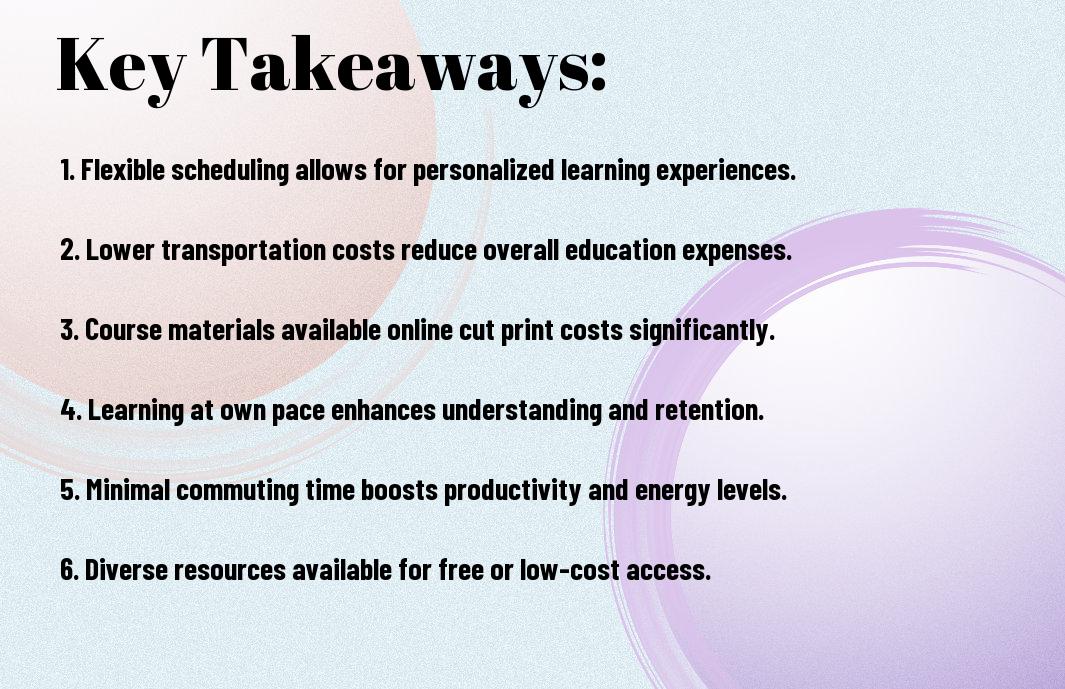
Key Takeaways:

To understand the benefits of online learning, consider the following points:

  • Online learning helps in Reducing Commuting Time, allowing students to allocate more time to their studies and other activities, thus increasing their Productivity.
  • Cost-Effective online courses and degree programs save money on tuition fees, textbooks, and other educational resources compared to traditional classroom settings.
  • The Flexibility of online learning enables students to create their own schedules, making it easier to balance work, family, and social responsibilities while pursuing their education.
  • With Accessibility to a wide range of courses and programs, online learning provides opportunities for students to acquire new Skills and knowledge from anywhere in the world.
  • Online learning platforms often offer Personalized Learning experiences, allowing students to learn at their own pace and revisit difficult topics as many times as needed, which can lead to better Retention of information.

Benefits of Online Learning

To take advantage of online learning, you’ll find that it offers numerous benefits, including flexibility, accessibility, and reduced costs. You can learn at your own pace, from anywhere, and at any time.

Flexibility and Accessibility

Prior to enrolling in traditional courses, you had to consider your schedule and location. Now, you can access courses from your home, or even on-the-go.

Reduced Costs

Beneath the surface of traditional learning, you’ll find that online learning saves you money. You avoid commuting costs and other expenses associated with on-campus learning.

At the end of the day, you’ll find that reduced costs add up, allowing you to allocate your resources to other areas of your life. You can invest in your future, without breaking the bank, and achieve your goals with greater ease.
Time Management

Clearly, online learning helps you manage your time more efficiently. You can create your own schedule and learn at your own pace, allowing you to allocate time for other activities.

Self-Paced Learning

By taking online courses, you set your own learning speed, giving you the flexibility to learn whenever and wherever you want, making it easier to fit learning into your busy life.

Balancing Work and Study

At the end of the day, you can switch from work mode to study mode seamlessly, as online learning materials are always accessible, enabling you to balance your work and study responsibilities effectively.

Further, as you progress in your online course, you’ll find that you’re able to prioritize tasks and manage your time better, allowing you to maintain a healthy work-study balance and make the most out of your time, which is necessary for achieving your goals.

Financial Savings

All your financial worries can fade away with online learning, as it offers numerous ways to cut costs and make your educational journey more affordable.

Reduced Tuition Fees

Among the most significant advantages of online learning is the reduced tuition fees, allowing you to save a substantial amount of money on your education.

Minimal Travel Expenses

Beside the comfort of learning from your own space, online learning also saves you from the hassle and expense of daily commuting, freeing up your time and money.

But what’s more, you’ll also save on other travel-related expenses like accommodation and food, which can quickly add up when attending traditional on-campus courses, giving you more flexibility and control over your budget, allowing you to allocate your resources more efficiently and make the most out of your online learning experience.

Improved Productivity

After embracing online learning, you’ll find that your schedule becomes more manageable. You can learn more about the benefits by visiting Online Learning Statistics: The Ultimate List in 2024, which highlights the advantages of e-learning.

Personalized Learning Experience

Against the backdrop of traditional classroom settings, online learning offers a tailored experience that caters to your needs, allowing you to learn at your own pace and focus on areas that interest you.

Enhanced Retention Rates

By taking online courses, you’ll likely experience better retention of information, as you can revisit and review material whenever you want, reinforcing your understanding of key concepts.

The key to enhanced retention rates lies in the flexibility and accessibility of online learning, enabling you to engage with course materials in a way that suits your learning style, leading to a more effective and efficient learning process that yields better outcomes for you.

Access to Global Resources

For you, online learning opens doors to a world of information, allowing you to tap into resources from anywhere. You can explore Five Ways Online Distance Learning Saves You Money and discover new opportunities.

Diverse Course Offerings

Among the benefits of online learning, you’ll find a wide range of courses and programs to choose from, helping you tailor your education to your needs and interests.

International Networking Opportunities

Against the limitations of traditional education, online learning connects you with people from all over the world, fostering global connections and collaborations.

And as you engage with your international peers, you’ll develop a deeper understanding of different cultures and perspectives, enhancing your ability to work in a global environment and making you a more attractive candidate to potential employers, which can have a significant impact on your future career.

Overcoming Traditional Limitations

Your access to education is no longer limited by your location or financial situation, thanks to online learning. You can now pursue courses and degrees from institutions around the world, at a fraction of the cost.

Breaking Geographical Barriers

Besides the convenience, online learning allows you to connect with instructors and students from diverse backgrounds, broadening your perspective and understanding of different cultures. You can participate in discussions, ask questions, and learn from others, regardless of your geographical location.

Expanding Educational Opportunities

Typically, traditional educational institutions have limited capacity, but online learning opens up more opportunities for you to pursue your interests and career goals. You can choose from a wide range of courses, programs, and specializations, and learn at your own pace.

Another advantage of online learning is that it provides you with the flexibility to balance your educational pursuits with work, family, or other responsibilities. You can access course materials, watch video lectures, and submit assignments at any time, from anywhere, as long as you have a reliable internet connection, making it easier for you to achieve your educational objectives.

Final Words

As a reminder, you can achieve your goals with online learning. You save time and money by avoiding commute and campus costs. Check how online classes can save you time and make informed decisions about your education. Your schedule becomes more manageable, and you can focus on what matters most to you.

FAQ

Q: How does online learning help save time for students and professionals?

A: Online learning provides the flexibility to access course materials and learn at any time, allowing students and professionals to manage their schedules more efficiently. With online learning, one can avoid commuting to a physical classroom, which saves time that would be spent traveling to and from the learning institution. Additionally, online courses often offer self-paced learning, enabling learners to speed up or slow down their learning process as needed, thereby optimizing their time usage.

Q: What are the monetary benefits of online learning compared to traditional classroom-based education?

A: Online learning offers several cost-saving advantages. For instance, it eliminates the need for commuting, which means saving money on transportation costs such as fuel, parking, and public transportation fees. Moreover, online courses often charge lower tuition fees compared to traditional on-campus programs. Learners also save on relocation costs, as they can pursue educational programs from institutions worldwide without having to move. Furthermore, many online resources and study materials are available for free or at a lower cost than traditional textbooks, contributing to overall cost savings.

Q: How does online learning enable cost-effective and time-efficient professional development and skill enhancement?

A: Online learning platforms provide a wide range of courses and professional development opportunities that can be accessed at a lower cost and in less time than traditional training methods. Professionals can update their skills or acquire new ones without taking significant time off from work, as online courses can be completed in shorter intervals, such as during lunch breaks, evenings, or weekends. This flexibility allows for continuous learning and professional development without the substantial time commitment and financial investment required for traditional training programs. Moreover, many online courses are designed to be highly focused on specific skills, ensuring that learners can quickly gain the knowledge they need to enhance their professional capabilities.
Can you learn piano effectively using a MIDI keyboard connected to a computer

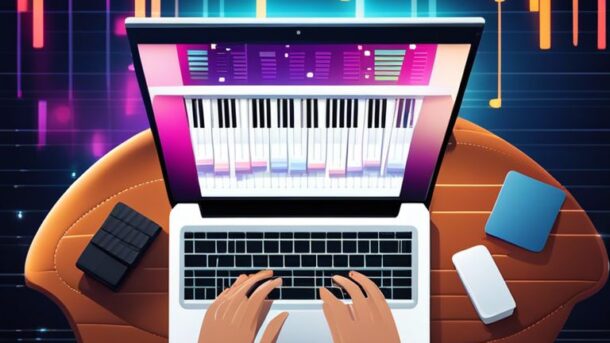
It’s time to explore whether you can master the piano using a MIDI keyboard paired with your computer. Unlock the secrets of this innovative learning method, as we probe into the effectiveness, benefits, and potential drawbacks of this modern approach. Let’s discover how you can enhance your musical journey with technology at your fingertips.

Key Takeaways:

  • Convenience: MIDI keyboard connected to a computer offers a convenient way to learn piano at home.
  • Interactive Learning: MIDI keyboards can provide instant feedback and track your progress, enhancing the learning experience.
  • Versatility: You can access various online resources, such as tutorials and software, to enhance your piano learning experience with a MIDI keyboard and computer setup.

The Basics of MIDI Keyboards

What is a MIDI Keyboard?

Basics: Your MIDI keyboard is a versatile musical instrument that uses the Musical Instrument Digital Interface (MIDI) technology to communicate with other devices such as computers. Unlike traditional pianos, MIDI keyboards do not produce sounds on their own. Instead, they send signals about which keys are pressed and how hard they are pressed to a connected device, such as a computer or synthesizer, which then generates the sounds.

How Does it Connect to a Computer?

Does: To connect your MIDI keyboard to a computer, you will need a USB cable that plugs into both the keyboard and the computer. Most modern MIDI keyboards come equipped with USB connectivity, making it easy to set up and start playing. Once connected, your computer will recognize the MIDI keyboard as a MIDI input device, allowing you to use it with music production software or other virtual instruments.

This seamless integration between your MIDI keyboard and computer opens up a world of possibilities for learning and creating music. You can access a wide range of sounds, record your performances, and even receive feedback on your playing technique, all through the connection between your MIDI keyboard and computer.

Advantages of Learning Piano with a MIDI Keyboard

Little do you know that learning piano with a MIDI keyboard connected to a computer can offer you a plethora of advantages. Not only does it provide a convenient way to practice and improve your skills, but it also opens up a world of possibilities for your musical journey. If you’re looking to examine into piano playing using modern technology, there are several benefits that come with this setup.

Cost-Effective

On Easy to Implement Tips on How to Learn and Play Piano …, you’ll find that using a MIDI keyboard with your computer for piano learning is incredibly cost-effective. Instead of investing in a traditional acoustic piano or even a digital piano, which can be quite expensive, all you need is a MIDI keyboard and a computer. This setup allows you to access a wide range of piano sounds and lessons without breaking the bank.

Space-Saving

One of the major advantages of learning piano with a MIDI keyboard is the space-saving aspect. Unlike traditional pianos that take up a significant amount of room in your home, a MIDI keyboard is compact and can easily fit on a desk or table. This makes it ideal for those living in smaller spaces or apartments where a full-sized piano may not be practical.

For instance, if you’re a student living in a dorm room or someone with limited space, a MIDI keyboard offers the flexibility to practice and play without the need for a large instrument taking up valuable real estate in your living area.

Versatility in Sound Options

The versatility in sound options is another compelling advantage of using a MIDI keyboard for your piano learning journey. The ability to connect your MIDI keyboard to your computer opens up a world of virtual instruments and different piano sounds at your fingertips. Whether you prefer a grand piano sound, an electric piano tone, or even experimental sounds, you can easily explore and play around with various options to suit your preferences.

It allows you to experiment with different sounds and styles, helping you develop a unique playing style and expanding your musical horizons. This versatility in sound options adds a layer of creativity and excitement to your piano practice sessions, keeping you engaged and motivated to learn and improve.

Effective Learning Techniques

Practicing with Interactive Software

Not all practice sessions are created equal. To make the most of your time spent playing the piano with a MIDI keyboard and computer setup, it’s crucial to engage with interactive software that provides feedback on your performance. Effective learning means using tools that can identify areas for improvement and offer guidance on how to enhance your skills.

Recording and Analyzing Your Progress

Not only does recording your practice sessions allow you to track your progress over time, but it also serves as a valuable tool for self-assessment. By listening back to your recordings, you can pinpoint where you excel and where you need to concentrate your efforts. Effective learning involves a cycle of recording, listening, analyzing, and applying changes to refine your piano skills.

Another benefit of recording and analyzing your progress is the ability to set specific goals based on your observations. Whether it’s improving your timing, dynamics, or overall performance, having concrete data from your recordings can help you create a targeted practice plan to achieve your musical objectives.

Access to Online Resources and Tutorials

The wealth of online resources and tutorials available for piano learning can provide you with a well-rounded education. From video lessons to interactive exercises, these resources offer additional support to enhance your learning experience. The convenience of accessing a variety of materials online allows you to supplement your MIDI keyboard practice and gain insights from different instructors.

Interactive tutorials can also help reinforce concepts learned during your practice sessions. By engaging with online materials that offer real-time feedback and demonstrations, you can solidify your understanding of key techniques and theory. The accessibility of online resources ensures that you have a diverse range of learning tools at your disposal to enhance your piano skills effectively.

Overcoming Common Challenges

Adjusting to a Non-Acoustic Feel

After making the switch from playing on an acoustic piano to a MIDI keyboard connected to your computer, you may find that adjusting to the non-acoustic feel can be challenging. The lack of weighted keys and the different tactile feedback can initially throw off your playing. However, with practice and patience, you can adapt to the new feel and even appreciate the benefits it offers.

Limited Dynamic Range

To tackle the limited dynamic range of a MIDI keyboard compared to an acoustic piano, you may face challenges in expressing musical nuances in your playing. While MIDI keyboards offer a more consistent sound across all velocity levels, they may lack the depth and richness of sound that acoustic pianos provide. This can make it challenging to convey emotions effectively through your music.

Challenges in mastering the limited dynamic range of a MIDI keyboard can be overcome with careful attention to your playing technique. By practicing varying touch and pressure on the keys, you can learn to create nuances in dynamics that emulate the expressiveness of an acoustic piano. Utilizing the MIDI keyboard’s features, such as adjusting velocity curves and using expression pedals, can also help you expand your dynamic range and musical expression.

Building Hand-Eye Coordination

Overcoming the challenge of building hand-eye coordination when using a MIDI keyboard connected to a computer is crucial for improving your playing skills. The absence of physical keys and the reliance on visual cues on a screen can disrupt your natural hand-eye coordination developed from playing on an acoustic piano. However, with focused practice and exercises, you can enhance your hand-eye coordination and adapt to the digital interface.

Building hand-eye coordination with a MIDI keyboard involves practicing hand placement, finger positioning, and visual tracking of notes displayed on the screen. Techniques such as sight-reading exercises and memorizing key placements can strengthen your coordination skills and improve your ability to play accurately and fluently on a digital platform. By incorporating consistent practice routines and challenging yourself with different pieces, you can effectively enhance your hand-eye coordination and navigate the virtual piano space with confidence.

Choosing the Right MIDI Keyboard for Learning Piano

Key Count and Size

To make the most out of your piano learning experience with a MIDI keyboard, consider the size and key count that best suits your needs. The standard piano has 88 keys, but if you’re a beginner or have limited space, a keyboard with 61 keys can suffice. However, keep in mind that a full-sized keyboard allows you to practice and play a wider range of songs.

Weighted vs. Unweighted Keys

When dicking out a MIDI keyboard for piano learning, it’s important to decide between weighted and unweighted keys. Weighted keys simulate the feel of an acoustic piano, providing the necessary resistance to build finger strength and technique. On the other hand, unweighted keys are more lightweight and suitable for beginners or those focusing on synthesizer sounds.

Weighted keys give you a realistic playing experience and are recommended for those who want to develop proper finger technique and dynamics while unweighted keys are easier to play and may be preferable if you’re just starting out or interested in a more versatile MIDI keyboard.

Additional Features for Learning

Look for MIDI keyboards with additional features that can enhance your piano learning journey. Features like touch sensitivity, which allows the keyboard to respond to the force of your playing, or built-in lessons and tutorials can be beneficial for your progress. Some MIDI keyboards also come with connectivity options for music software, providing access to a wealth of learning resources and virtual instruments.

Plus, consider a MIDI keyboard with programmable drum pads or sliders and knobs that can be assigned to various functions in your music software. These additional features can help you explore different sounds, effects, and techniques while learning to play the piano with your MIDI keyboard.

Tips for Maximizing Your Practice Sessions

Once again, to make the most of your practice sessions, here are some tips and tricks for you to consider:

Setting Realistic Goals and Schedules

Your piano journey will be more effective if you set realistic goals and create a practice schedule that fits your lifestyle. Break down your long-term goals into smaller, achievable milestones to track your progress. Additionally, establish a consistent practice routine that aligns with your daily schedule, ensuring regular and focused practice sessions.

This approach will help you stay on track and motivated as you witness your improvement with each practice session. By setting achievable goals and maintaining a consistent practice schedule, you can enhance your learning experience and make significant progress in your piano skills.

Creating a Conducive Practice Environment

The environment in which you practice plays a crucial role in your learning process. Ensure that your practice space is free from distractions and is comfortable to enhance your focus and concentration. Organize your music sheets, set up your MIDI keyboard in a well-lit area, and eliminate any potential interruptions.

This will create a conducive atmosphere for learning and practicing the piano. By optimizing your practice environment, you can create a space that nurtures your musical development and allows you to immerse yourself fully in your practice sessions.

Staying Motivated and Engaged

Conducive to staying motivated and engaged throughout your piano learning journey is cultivating a positive mindset and finding joy in the process. Celebrate your achievements, no matter how small, and maintain a sense of curiosity and exploration in your practice. Engage with a variety of musical genres and pieces to keep your practice sessions dynamic and exciting.

Engaged with your progress and seek inspiration from fellow musicians or performances to fuel your passion for learning the piano. By staying motivated and engaged, you can sustain your enthusiasm for practicing and continue to develop your skills effectively.

Conclusion

With this in mind, using a MIDI keyboard connected to a computer can be a highly effective way for you to learn how to play the piano. The accessibility of online resources, the versatility of MIDI keyboards, and the feedback provided by digital programs all contribute to a rich and engaging learning experience. By incorporating technology into your music education, you can tailor your practice sessions to your needs and goals, making your learning journey more efficient and enjoyable.

So, whether you’re a beginner just starting out or an experienced player looking to improve your skills, utilizing a MIDI keyboard connected to a computer can be a valuable tool in your musical journey. With dedication, practice, and the right resources, you can unlock your full potential as a pianist and enjoy the process of learning and creating music in a whole new way.

Q: Can you learn piano effectively using a MIDI keyboard connected to a computer?

A: Yes, you can learn piano effectively using a MIDI keyboard connected to a computer. MIDI keyboards are designed to replicate the feel and sound of a traditional piano, making it a great tool for learning and practicing piano skills.

Q: What are the benefits of using a MIDI keyboard for learning piano?

A: Using a MIDI keyboard connected to a computer offers several benefits for learning piano, including access to virtual instruments and software that can enhance your learning experience. It also allows for easy recording and playback of your playing, helping you track your progress over time.

Q: Are there any disadvantages to learning piano with a MIDI keyboard?

A: While learning piano with a MIDI keyboard connected to a computer can be effective, there are some limitations. MIDI keyboards may not replicate the exact feel and sound of a traditional piano, which can impact your technique development. Additionally, relying solely on virtual instruments may limit your exposure to different piano tones and dynamics.

Skip to content