Engagement

What role do native speakers play in online language learning courses

#Feedback Have you ever wondered about the significance of native speakers in online language learning courses? In this informative blog post, we will explore the valuable role that native speakers play in helping you improve your language skills. From providing authentic pronunciation to cultural insights, native speakers bring a unique perspective that enhances your learning experience. Let’s research into how interacting with native speakers can take your language learning journey to the next level.

Key Takeaways:

  • Authentic Pronunciation and Usage: Native speakers provide learners with examples of how the language is naturally spoken, helping to improve pronunciation, intonation, and overall language fluency.
  • Cultural Insights: Native speakers can offer valuable insights into the culture associated with the language being learned, providing context and a deeper understanding of language nuances.
  • Interactive Learning Experience: Interacting with native speakers in online courses can enhance the learning experience by allowing students to engage in real-life conversations, receive immediate feedback, and practice communication skills in a natural setting.

The Rise of Online Language Learning

The shift to digital platforms

Language learning has seen a significant shift towards digital platforms in recent years. With the advent of online resources and tools, individuals like you now have access to a wealth of learning materials at your fingertips. Whether you are looking to learn a new language for personal growth, travel, or career advancement, online language courses offer a flexible and convenient way to achieve your goals.

Increased accessibility and convenience

Online language learning has revolutionized the way people approach mastering a foreign language. No longer are you limited to traditional classroom settings or expensive private tutors. With online courses, you have the freedom to learn at your own pace, anytime and anywhere. This flexibility allows you to integrate language learning into your busy schedule seamlessly.

Plus, online language courses often utilize interactive multimedia tools, such as videos, quizzes, and games, to make the learning experience engaging and dynamic. This not only enhances your comprehension and retention of the language but also makes the process more enjoyable and motivating.

The Importance of Native Speakers

Authentic language representation

Some online language learning courses often provide exercises and lessons created by non-native speakers. While these resources are valuable, they may lack the authenticity that native speakers bring to the table. Native speakers can offer real-world examples of language usage, colloquialisms, and slang that you might not find in traditional textbooks. This authentic representation of language helps you develop a more natural and fluent speaking style.

Cultural insight and nuance

Some online language learning platforms also lack the cultural insight and nuance that native speakers can provide. Native speakers can offer a deeper understanding of the cultural contexts in which the language is used, helping you navigate social interactions and conversations with more confidence. By learning from native speakers, you not only improve your language skills but also gain a richer appreciation for the culture behind the language.

Native speakers can provide firsthand knowledge of cultural customs, traditions, and societal nuances that are vital for mastering a language beyond just its grammar and vocabulary. Understanding these cultural subtleties can make your language learning experience more immersive and rewarding.

Importance: Having access to native speakers in online language learning courses is crucial for gaining a holistic understanding of a language. Their authentic language representation and cultural insights add depth and richness to your learning experience, helping you become a more confident and competent speaker. Embrace the opportunity to learn from native speakers to truly master a language and connect with its cultural roots.

Native Speakers as Instructors

Once again, Engaging with peers, mentors and native speakers as… in online language learning courses is crucial. Native speakers bring a unique perspective and expertise to the role of instructors, providing valuable insights into both language and culture.

Teaching language and culture simultaneously

With native speakers as instructors, you get the advantage of learning both language and culture simultaneously. They can offer real-life examples, colloquial expressions, and cultural nuances that textbooks often overlook. This immersive experience helps you not only understand the language better but also appreciate the cultural context in which it is used.

Personalized feedback and correction

Instructors who are native speakers can provide personalized feedback and correction tailored to your specific needs. This individualized attention is invaluable in improving your language skills. They can help you identify patterns of errors, work on pronunciation, and suggest ways to sound more natural in your speech. Their immediate feedback enhances your learning process and accelerates your language acquisition.

Teaching language to someone is not just about grammar rules and vocabulary; it’s about fostering a deeper understanding and appreciation for the language. Native speakers as instructors go beyond teaching the basics; they strive to create a supportive environment where you can confidently practice and enhance your language skills.

Native Speakers as Conversation Partners

Not sure if you should learn a language from a native speaker? Check out Should you learn a language from a native speaker? for more insights. Native speakers play a crucial role in online language learning courses, particularly as conversation partners. Engaging with native speakers allows you to practice speaking and listening skills in a real-world context, helping you to improve your language proficiency.

Practicing speaking and listening skills

Speakers who are fluent in the language you are learning can provide invaluable opportunities for you to practice speaking and listening. By conversing with native speakers, you can improve your pronunciation, understand different accents, and learn colloquial expressions that may not be covered in traditional language courses. This direct interaction helps you become more confident in your ability to communicate effectively in the target language.

Building confidence in language use

Conversation with native speakers also helps you build confidence in using the language. Through regular interactions, you become more comfortable expressing yourself and engaging in discussions. This increased confidence can motivate you to continue learning and using the language in various settings, further enhancing your language skills.

Listening to native speakers allows you to become more familiar with the natural flow and rhythm of the language. This exposure helps you understand nuances in pronunciation, intonation, and informal speech patterns, which are imperative for effective communication. By actively listening to native speakers, you can improve your listening comprehension skills and become more adept at understanding different speakers in real-life conversations.

Benefits of Native Speaker Involvement

Enhanced language acquisition

Allowing native speakers to be involved in online language learning courses can significantly enhance your language acquisition. An authentic accent, idiomatic expressions, and colloquialisms that only a native speaker can provide will help you grasp nuances of the language that textbooks might miss. By interacting with native speakers, you’ll immerse yourself in the language in a natural way, which can greatly improve your fluency and comprehension.

Improved cultural competence

Native speakers bring a deep understanding of their culture to the language learning experience. By interacting with them, you not only learn the language but also gain insights into the customs, traditions, and social norms of the speaker’s country. This firsthand knowledge can help you navigate cultural nuances and avoid misunderstandings when communicating with native speakers.

Enhanced cultural competence can also lead to more effective communication in real-world situations like traveling, business interactions, or engaging with diverse communities.

Increased learner motivation

Having native speakers involved in your language learning journey can significantly boost your motivation. One-on-one interactions with them can make the learning process more engaging and enjoyable. Their encouragement and feedback can inspire you to keep pushing through challenging aspects of the language and stay committed to your learning goals.

For instance, hearing a native speaker commend your progress or correct your mistakes in real time can be incredibly motivating and build your confidence in using the language.

Challenges and Limitations

Finding qualified native speakers

Challenges may arise in online language learning courses when it comes to finding qualified native speakers to assist in teaching. While native speakers are valuable resources for learning a language authentically, ensuring that they possess the necessary teaching qualifications and skills can be a hurdle. It’s crucial to find native speakers who not only excel in the language but also have the ability to effectively communicate and teach it to others.

Ensuring consistency and quality

With online language learning courses, maintaining consistency and quality in the materials and teachings provided by native speakers can be a challenge. Each native speaker may have a different teaching style or approach, which could lead to inconsistencies in the learning experience for students. To address this issue, course providers must establish clear guidelines and standards for native speakers to follow in their teachings.

It is vital to ensure that the content delivered by native speakers aligns with the course objectives and curriculum. Quality control measures, such as peer reviews and feedback mechanisms, can help maintain a high standard of teaching across all language learning modules.

Addressing potential biases and stereotypes

Qualified native speakers in online language courses must be mindful of potential biases and stereotypes that could inadvertently influence their teachings. It’s crucial to create a learning environment that is inclusive and free from any form of discrimination. Language instructors should be trained to recognize and address biases in their teaching methods to provide a welcoming space for all learners.

To address potential biases and stereotypes in online language learning courses, consider the following: After thoroughly reviewing the course materials, reflect on your teaching methods to ensure they are free from any biases or stereotypes that could impact your students.
  • Acknowledge and challenge your own assumptions and beliefs to create a more inclusive learning environment.
  • Seek feedback from students to gain insights into their perspectives and experiences within the course.
After addressing these potential biases, you can create a more equitable and enriching learning experience for all students.

Final Words

Upon reflecting on the role of native speakers in online language learning courses, it is clear that they play a crucial role in providing authentic language usage and cultural insights. By interacting with native speakers, you can gain invaluable exposure to real-life conversations, colloquial expressions, and regional nuances that textbooks often fail to capture. Moreover, native speakers can offer feedback on pronunciation, grammar, and vocabulary usage, helping you to improve your language skills in a practical and meaningful way.

Ultimately, incorporating native speakers into your online language learning journey can enhance your overall learning experience and accelerate your progress. Their unique perspective and expertise can enrich your learning experience and help you achieve fluency in a more natural and intuitive manner. So, don’t hesitate to seek out opportunities to engage with native speakers in your language courses – the benefits are boundless.

Q: What role do native speakers play in online language learning courses?

A: Native speakers play a crucial role in online language learning courses by providing learners with authentic language input, including correct pronunciation, natural expressions, and cultural insights.

Q: How do native speakers contribute to improving language proficiency in online courses?

A: Native speakers facilitate language learning by offering personalized feedback, engaging learners in conversations, and creating opportunities for real-time practice and correction.

Q: Are native speakers imperative for online language learning courses?

A: While not imperative, native speakers enhance the learning experience by immersing learners in the target language, promoting fluency, and fostering a deeper understanding of the language and its nuances.


How important is it to have live sessions with instructors in online language learning courses

You may be wondering about the significance of having live sessions with instructors in your online language learning journey. In this informative article, we will research into the advantages and benefits of real-time interactions with your language teachers compared to pre-recorded online teaching. To further explore this topic, you can also check out this article on Pre-recorded online teaching vs. Live Online Teaching for more insights.

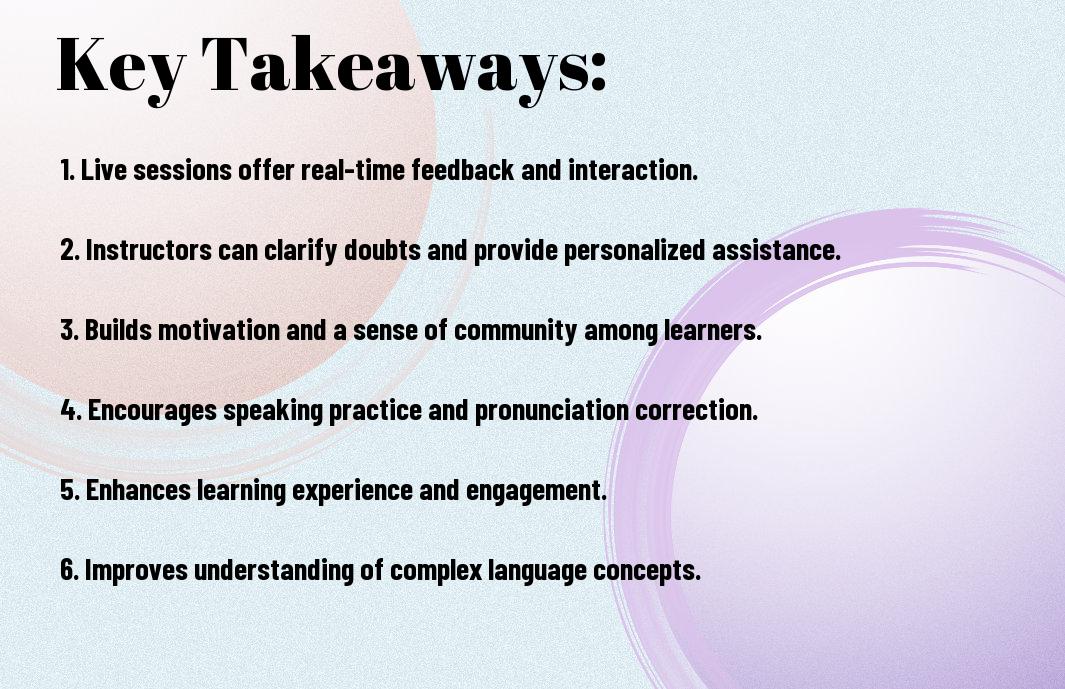
Key Takeaways:

  • Increased Engagement: Live sessions with instructors in online language learning courses help increase student engagement by promoting active participation and real-time feedback.
  • Enhanced Learning Experience: Interacting with instructors during live sessions allows students to clarify doubts, practice speaking skills, and receive personalized guidance, thereby enhancing the overall learning experience.
  • Motivation and Accountability: Regular live sessions serve as a source of motivation for students to stay on track with their language learning goals and foster a sense of accountability towards their progress.

The Rise of Online Language Learning

The Shift to Digital Platforms

Platforms for online language learning have revolutionized the way people acquire new language skills. From apps to dedicated websites, these platforms offer convenience and flexibility that traditional classroom settings often lack. You can access lessons and resources anytime, anywhere, making it easier to fit language learning into your busy schedule. The interactive features, such as quizzes, games, and audiovisual aids, also make learning more engaging and effective.

The Need for Human Interaction

While digital platforms provide numerous benefits, the lack of human interaction in online language courses can be a drawback. Language learning is not just about memorizing vocabulary and grammar rules; it’s also about communication and cultural exchange. The absence of face-to-face interactions with instructors and fellow learners can limit your ability to practice speaking and listening skills, which are crucial in language acquisition.

It is in human interaction that nuances of language, such as tone, gestures, and cultural context, are best grasped. While online platforms offer simulations and exercises to practice conversational skills, nothing quite replicates the spontaneity and unpredictability of real conversations. This is where live sessions with instructors can play a pivotal role in enhancing your language learning experience.

The Importance of Live Sessions

Any Online language courses: busting myths, exposing facts will tell you that having live sessions with instructors in online language learning courses is crucial for your progress. These sessions provide you with personalized feedback and correction, which are key components in improving your language skills.

Personalized Feedback and Correction

One significant advantage of live sessions is the ability to receive personalized feedback and corrections from your instructor. While self-study and pre-recorded lessons have their merits, nothing beats the immediate input from a real person. Your instructor can pinpoint your specific strengths and weaknesses, tailor exercises to address your needs, and provide real-time guidance to help you improve your language proficiency.

Improved Pronunciation and Fluency

Fluency in a language is not just about knowing the vocabulary and grammar rules; it also involves mastering the pronunciation and intonation. Through live sessions, you have the opportunity to practice speaking with a native speaker or a proficient language instructor. This interaction allows you to fine-tune your pronunciation, work on your accent, and enhance your overall fluency in the language.

Improved pronunciation and fluency can make a significant difference in your language skills. When you can communicate clearly and confidently, you will feel more comfortable engaging in conversations, expressing your thoughts effectively, and ultimately, becoming more proficient in the language.

Enhanced Cultural Immersion

For a truly enriching language learning experience, cultural immersion is important. Live sessions with instructors can provide you with insights into the culture of the language you are learning. Your instructor can share anecdotes, recommend authentic resources like films or books, and engage you in discussions that touch on cultural aspects. This exposure goes beyond language skills; it helps you understand the context in which the language is spoken, making your learning journey more holistic and rewarding.

Sessions with instructors allow you to ask questions, discuss cultural nuances, and receive guidance on how to navigate real-life situations using the language. This personalized interaction not only enhances your language skills but also broadens your cultural understanding, making you a more well-rounded language learner.

The Role of Instructors in Online Courses

Guiding Students Through the Learning Process

Your online language learning course instructor plays a crucial role in guiding you through the learning process. An experienced instructor can provide you with structured lessons, valuable feedback on your progress, and personalized guidance to help you achieve your language learning goals. With their expertise, instructors can help you navigate through challenging concepts, clarify any doubts you may have, and ensure you stay on track with your studies.

Providing Emotional Support and Motivation

For many students, learning a new language can be a daunting task that requires not only cognitive effort but also emotional resilience. Your instructor in an online language course can offer valuable emotional support and motivation to help you stay engaged and committed to your learning journey. They can encourage you during times of frustration, celebrate your achievements, and provide the necessary encouragement to keep you motivated even when facing setbacks.

The emotional support and motivation provided by instructors in online language courses can significantly impact your learning experience. Their words of encouragement and belief in your abilities can boost your confidence and help you overcome any challenges you may encounter along the way.

Creating a Sense of Community

The online learning environment can sometimes feel isolated, but your instructor can help create a sense of community among students. By facilitating discussions, group activities, and collaborative projects, instructors can foster a supportive and interactive learning atmosphere where you can engage with your peers, share experiences, and learn from one another. This sense of community can enhance your learning experience and create a more enriching and dynamic educational journey.

One of the key advantages of online language courses is the ability to connect with a diverse community of learners from around the world. Your instructor can leverage this diversity to create a vibrant learning community where you can gain valuable insights into different cultures, languages, and perspectives. This exposure can not only enrich your language learning experience but also broaden your understanding of the world.

Overcoming Challenges in Online Language Learning

Addressing Technical Issues and Connectivity Problems

All online learning environments have their share of technical issues and connectivity problems. It can be frustrating when your audio cuts out during a live session or when your video lags, disrupting the flow of the class. To address these issues, make sure you have a stable internet connection and test your audio and video settings before each session. You can also reach out to your course instructor or technical support for assistance in resolving any connectivity issues.

Managing Time Zones and Scheduling Conflicts

Managing time zones and scheduling conflicts can be a major challenge in online language learning. If you are taking a course with participants from different parts of the world, finding a suitable time for live sessions that accommodates everyone can be tricky. To overcome this challenge, try to be flexible with your schedule and communicate effectively with your instructor and classmates. You can also explore the option of recorded sessions if live participation is not possible due to time zone differences.

Conflicts

Conflicts may arise when trying to juggle different commitments and fitting in your language learning course. It’s crucial to prioritize your language learning goals and create a study schedule that works for you. Discuss any conflicts with your instructor to see if there are alternative arrangements that can be made to ensure you get the most out of your online language learning experience.

Encouraging Student Participation and Engagement

Connectivity plays a key role in student participation and engagement in online language learning. When your internet connection is unstable, it can be challenging to actively participate in group discussions or interactive activities. To stay engaged, make sure you have a reliable internet connection, participate in class discussions, and complete assignments on time to enhance your learning experience.

It

It is crucial to stay motivated and actively participate in online language learning courses to reap the full benefits of the learning experience. Engage with your peers, ask questions, and practice regularly to improve your language skills effectively.

The Benefits of Live Sessions for Instructors

Once again, as an instructor in online language learning courses, live sessions provide you with various benefits that enhance your teaching experience and professional growth.

Real-time Feedback and Assessment

To begin with, live sessions offer you the opportunity to provide real-time feedback and assessment to your students. This immediate interaction allows you to pinpoint areas where students may be struggling and address them promptly. By offering instant feedback, you can guide your students more effectively and tailor your teaching strategies to meet their individual needs, fostering a more engaging and productive learning environment.

Opportunities for Professional Development

Live sessions also present opportunities for your professional development as a language instructor. Engaging with students in real time allows you to hone your communication and teaching skills, adapt to diverse learning styles, and improve your overall pedagogical approach. Additionally, participating in live sessions enables you to stay updated on the latest trends and technologies in language education, further enhancing your expertise in the field.

Furthermore, these sessions offer a platform for you to collaborate with other instructors, share best practices, and gather valuable insights that can contribute to your continuous growth and development as an educator.

Building Relationships with Students

Benefits of live sessions extend to the opportunity they provide for you to build strong relationships with your students. Interacting in real time creates a sense of presence and connection that is crucial in fostering a supportive and encouraging learning environment. By engaging directly with your students during live sessions, you can establish rapport, gain their trust, and better understand their individual learning goals and challenges.

These relationships not only enhance the overall learning experience for your students but also contribute to your job satisfaction as an instructor, knowing that you are making a meaningful impact on their language learning journey.

Best Practices for Implementing Live Sessions

Scheduling and Time Management

Implementing live sessions in online language learning courses requires careful attention to scheduling and time management. Make sure to set regular and consistent session times to establish a routine for your learning process. This consistency will help you allocate dedicated time to practice and receive feedback from instructors.

Effective Communication and Instructional Strategies

Practices involving effective communication and instructional strategies are key to maximizing the benefits of live sessions. Clear communication with instructors regarding your learning goals and any challenges you face is important for them to tailor their teaching to your needs. Additionally, instructors should actively engage you during the live sessions to ensure a fruitful learning experience.

To enhance effective communication, instructors should encourage questions and discussions during live sessions, fostering an interactive learning environment. This allows you to clarify doubts instantly and engage with the course material actively.

Creating Engaging and Interactive Lesson Plans

To create engaging and interactive lesson plans for live sessions, instructors should incorporate a variety of activities that cater to different learning styles. Utilize multimedia resources, interactive exercises, and group discussions to keep sessions dynamic and interesting. By mixing up the content and delivery methods, you can maintain your interest and motivation throughout the sessions.

Practices associated with creating engaging and interactive lesson plans help you stay actively involved in the learning process, making it more enjoyable and effective. Engaging activities not only break the monotony but also enhance your comprehension and retention of the language being taught.

Conclusion

Now that you have learned about the importance of live sessions with instructors in online language learning courses, you can see how valuable these interactions are for your learning journey. The ability to ask questions, receive instant feedback, and engage in real-time conversations can greatly enhance your understanding and retention of the language.

By participating in live sessions with instructors, you have the opportunity to practice speaking, improve your pronunciation, and receive personalized guidance to address your specific learning needs. These interactions not only help you stay motivated and accountable but also create a supportive learning environment where you can actively engage with the material and make significant progress in your language skills. So, next time you enroll in an online language course, be sure to take advantage of the live sessions with instructors to maximize your learning potential.

Q: Why is it important to have live sessions with instructors in online language learning courses?

A: Having live sessions with instructors allows for real-time interaction, feedback, and personalized guidance which can enhance understanding and retention of the language being taught.

Q: How do live sessions with instructors benefit online language learners?

A: Live sessions provide opportunities for learners to practice speaking and listening skills, ask questions, clarify doubts, and receive immediate correction and support from experienced instructors.

Q: Can online language learners succeed without live sessions with instructors?

A: While it is possible to learn a language through self-study, having live sessions with instructors can significantly enhance the learning experience, motivation, and progress of learners by providing a structured and interactive platform for learning.

What are some common challenges faced by students in online language learning courses

You may encounter several challenges while taking online language learning courses. From lack of face-to-face interaction with instructors to difficulty staying motivated and engaged, these obstacles can hinder your progress. Additionally, technology issues, time management struggles, and limited opportunities for speaking practice can make the learning process more challenging. It’s important to be aware of these common challenges and develop strategies to overcome them in order to succeed in your online language learning journey.

Key Takeaways:

  • Self-discipline: Students need to be self-motivated and disciplined to stay on track with their online language learning courses.
  • Lack of interaction: Online courses may lack the face-to-face interaction found in traditional classrooms, making it challenging for students to practice speaking and listening skills.
  • Technology issues: Technical problems such as internet connectivity issues or platform glitches can disrupt the learning process for students in online language courses.

Technical Challenges

Poor Internet Connectivity

To ensure a smooth online language learning experience, a stable internet connection is crucial. When your internet connectivity is poor, it can lead to lagging audio or video feeds, making it challenging to follow along with the lessons. This can not only disrupt your learning but also cause frustration and hinder your progress. It is crucial to have a reliable internet connection to make the most out of your online language learning course.

Incompatibility with Devices or Browsers

For an effective online language learning experience, it is important to ensure that your devices and browsers are compatible with the course platform. Incompatibility issues can lead to difficulties in accessing course materials, completing assignments, or communicating with instructors and peers. It is advisable to check the system requirements of the course and make sure your devices meet those specifications to avoid any technical hitches during your learning journey.

Incompatibility with Devices or Browsers can also result in a lack of access to certain features or interactive components of the course, limiting your overall learning experience. It is crucial to address compatibility issues promptly to fully engage with the course content and maximize your language learning outcomes.

Language Barriers

Clearly, language barriers can be a major challenge for students in online language learning courses. These barriers can arise from various factors, including limited vocabulary, grammar and syntax difficulties, as well as pronunciation issues.

Limited Vocabulary

Any language learner can relate to the frustration of not being able to express themselves fully due to a limited vocabulary. In online language courses, you may encounter words that are unfamiliar or difficult to remember, making it challenging to communicate effectively in the target language.

Grammar and Syntax Difficulties

To overcome grammar and syntax difficulties, it is crucial to practice regularly and seek feedback from teachers or language partners. By understanding the rules and patterns of the target language, you can improve your writing and speaking skills.

Syntax refers to the arrangement of words in a sentence to convey meaning. In online language learning, mastering syntax is crucial for forming coherent and grammatically correct sentences. Paying attention to word order and sentence structure can significantly enhance your language proficiency.

Pronunciation Issues

Issues with pronunciation can hinder your ability to communicate effectively in a new language. It is important to practice speaking aloud, listen to native speakers, and use pronunciation tools available in online language courses to improve your speaking skills.

For instance, practicing phonetic sounds and intonation patterns can help you sound more natural when speaking the target language. By paying attention to pronunciation details, you can enhance your overall language learning experience.

Self-Motivation and Discipline

Staying Focused and Engaged

The key to success in online language learning courses is maintaining your focus and staying engaged with the material. Not having a physical classroom can make it easy to become distracted by other responsibilities or lose interest in the coursework. To combat this, make sure you set aside dedicated time each day to focus on your language studies. Eliminate distractions, such as your phone or social media, and create a quiet, organized study space where you can fully concentrate.

Managing Time Effectively

To make the most of your online language learning course, you need to be able to manage your time effectively. This means setting realistic goals and creating a study schedule that works for you. To ensure that you stay on track, divide your coursework into smaller tasks and set deadlines for each. By breaking down your learning objectives into manageable chunks, you can prevent feeling overwhelmed and stay motivated to progress in your language studies.

Managing your time effectively also includes knowing when to take breaks. It’s crucial to give yourself time to rest and recharge so that you can maintain your focus and avoid burnout. Remember to schedule short breaks during your study sessions to keep your mind fresh and alert.

Overcoming Procrastination

One common challenge in online language learning courses is procrastination. It’s easy to put off assignments or practice sessions when you don’t have a strict schedule or accountability from a teacher. To overcome procrastination, break tasks into smaller, more manageable chunks. Set specific deadlines for each task, and hold yourself accountable for completing them on time. By taking proactive steps to tackle procrastination, you can stay on track and make steady progress in your language studies.

Plus, consider finding a study buddy or joining an online language learning community to help keep you motivated and accountable. Sharing your goals and progress with others can provide the support and encouragement you need to stay on track and overcome procrastination.

Lack of Feedback and Support

After reading the article “Teaching Languages Online: Innovations and Challenges” Teaching Languages Online: Innovations and Challenges, you may have learned about the challenges faced by students in online language learning courses, particularly the lack of feedback and support. This can be a major obstacle for your language learning journey, as timely and constructive feedback from instructors is crucial for your improvement.

Limited Interaction with Instructors

The limited interaction with instructors in online language learning courses can hinder your progress. Without face-to-face communication, it can be challenging to ask questions, seek clarification, or receive immediate feedback on your language skills. This lack of real-time interaction may leave you feeling isolated and unsupported in your learning process.

Inadequate Peer Review and Feedback

Lack of peer review and feedback in online language learning courses can also be a significant challenge. While peer interaction is valuable for practicing language skills and receiving diverse perspectives, inadequate peer review can result in shallow or unhelpful feedback. This can impede your learning experience and make it difficult for you to gauge your progress accurately.

Inadequate peer review and feedback can limit the opportunities for collaborative learning and individual growth in online language courses. When you do not receive detailed and constructive feedback from peers, it can be challenging to identify your strengths and weaknesses in language proficiency. This lack of insight can hinder your overall language learning progress and prevent you from reaching your full potential.

Insufficient Resources and Materials

An important aspect of online language learning is access to high-quality resources and materials. Insufficient resources can hinder your ability to practice effectively and engage with the course content fully. When you are lacking the necessary materials, such as interactive exercises, authentic texts, or multimedia resources, your learning experience may become less engaging and less effective.

With inadequate resources and materials, you may struggle to stay motivated and interested in your language studies. Without a variety of resources to keep you engaged, your learning process may become monotonous and less effective. It is important to have access to a wide range of materials that cater to different learning styles and levels to maximize your language learning experience.

Cultural and Social Factors

Despite the convenience and flexibility of online language learning courses, you may encounter various challenges related to cultural and social factors. These challenges can significantly impact your learning experience and progress in mastering a new language. Understanding and addressing these factors is crucial for overcoming obstacles and achieving success in your language learning journey.

Different Learning Styles and Expectations

Cultural differences can influence the way you prefer to learn a language and your expectations from the course. Your learning style, which is shaped by your cultural background, may not always align with the teaching methods used in online courses. This mismatch can lead to frustration and hinder your progress. Additionally, cultural expectations regarding education, such as the role of the teacher or the importance of memorization, may differ from what is commonly practiced in the online course you are enrolled in. This can create confusion and make it challenging to adapt to the learning environment.

This is why it is important to recognize and respect the diversity of learning styles and expectations among your peers in the online language learning course. By being open-minded and willing to adjust your approach, you can better navigate these differences and enhance your learning experience.

Cultural Nuances and Sensitivities

With the global nature of online language learning courses, you will interact with people from various cultural backgrounds. While this diversity enriches the learning experience, it can also present challenges related to cultural nuances and sensitivities. Different cultures have unique communication styles, gestures, and taboos that may impact your interactions with others in the course. Misunderstandings or unintentional offenses can arise due to a lack of awareness or sensitivity to these cultural differences.

Understanding and respecting cultural nuances and sensitivities is vital for fostering a positive and inclusive learning environment. By being mindful of cultural differences and actively seeking to learn about other cultures, you can promote mutual respect and collaboration within the online language learning community.

Social Isolation and Loneliness

On your language learning journey, you may experience feelings of social isolation and loneliness, particularly in online courses where face-to-face interaction is limited. The absence of physical presence and real-time communication can make it challenging to establish meaningful connections with instructors and fellow learners. This lack of social engagement can lead to feelings of isolation and hinder your motivation to actively participate in the course.

Sensitivities to cultural differences and social dynamics within the online language learning community can greatly impact your overall learning experience. By recognizing the importance of cultural awareness, respecting diverse perspectives, and actively engaging with others, you can navigate these challenges effectively and make the most of your online language learning course.

Pedagogical Challenges

Ineffective Course Design

To effectively learn a language online, the course design must be engaging, interactive, and tailored to your needs. Ineffective course design can hinder your progress and make it difficult for you to stay motivated. It’s crucial that the course content is relevant, up-to-date, and presented in a clear and organized manner. If the course is poorly designed, you may find yourself feeling lost, overwhelmed, or simply uninterested in learning.

Poorly Structured Lessons and Activities

Structured lessons and activities are crucial for your language learning journey. When lessons are poorly structured, it can be challenging for you to make meaningful progress. You may struggle to understand the flow of information, feel unsure about what you are expected to learn, or find yourself unable to apply the new language skills in real-life situations.

Challenges in this area can include lessons that jump erratically from one topic to another, activities that are too easy or too difficult, or a lack of opportunities for practice and reinforcement of the material.

Inadequate Assessment and Evaluation

Pedagogical challenges also arise when it comes to assessing your progress and evaluating your language proficiency. Inadequate assessment methods can make it difficult for you to gauge how well you are doing and what areas you need to focus on. Without proper evaluation, you may not receive valuable feedback on your strengths and weaknesses, making it harder to improve your language skills effectively.

It is crucial for online language learning courses to incorporate regular and meaningful assessments that provide you with clear feedback on your performance, help track your progress, and guide you in setting achievable learning goals.

Summing up

From above, you can see that there are several common challenges faced by students in online language learning courses. These may include feeling isolated from peers and instructors, struggling with time management, dealing with technical difficulties, or finding it difficult to stay motivated and engaged. It’s necessary to address these challenges early on and develop strategies to overcome them in order to make the most out of your online language learning experience.

Q: What are some common challenges faced by students in online language learning courses?

A: Some common challenges faced by students in online language learning courses include lack of motivation, difficulty in self-discipline, and limited opportunities for practice and feedback.

Q: How can students overcome the lack of motivation in online language learning?

A: Students can overcome the lack of motivation in online language learning by setting specific language learning goals, creating a study schedule, joining online language learning communities, and incorporating fun and interactive learning activities.

Q: What are some tips for improving self-discipline in online language learning?

A: Tips for improving self-discipline in online language learning include eliminating distractions, setting daily study goals, holding oneself accountable, rewarding progress, and staying consistent with language learning activities.

Skip to content