As you reflect on your own learning journey, you’ve likely noticed a significant shift in the way education is delivered. Over the past decade, online education has undergone a remarkable transformation, changing the way you access and engage with knowledge. Your curiosity about this phenomenon has led you to explore the history of online learning, perhaps starting with the early days of Distance Education and the Evolution of Online Learning in Higher Education, and now you’re ready to investigate into the latest developments that have revolutionized your educational experience.

Key Takeaways:
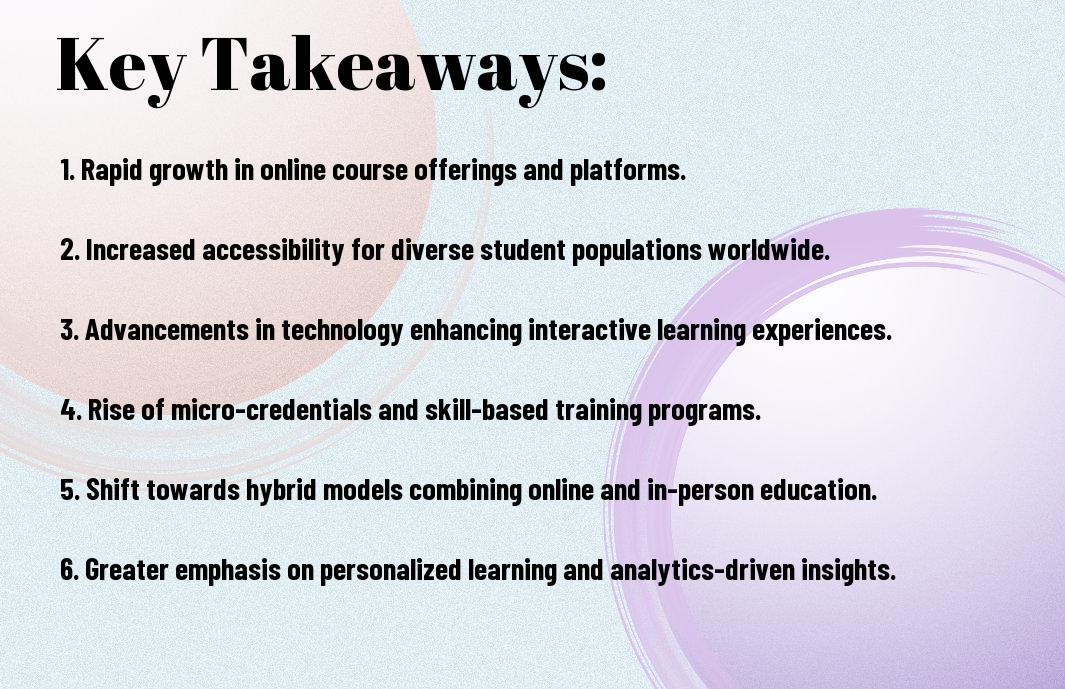
- The last decade has seen a significant shift towards online learning, with an increasing number of institutions and organizations offering digital courses and degree programs.
- The rise of massive open online courses (MOOCs) has made high-quality educational content more accessible to a wider audience, with many top universities and companies offering free online courses and certification programs.
- The development of learning management systems (LMS) and other educational technologies has improved the online learning experience, enabling more interactive and engaging learning environments.
- The growth of artificial intelligence (AI) and machine learning (ML) has enhanced personalized learning, allowing students to learn at their own pace and receive tailored feedback and support.
- The increasing demand for flexible learning options has led to the development of microlearning and competency-based education, which focus on specific skills and knowledge areas, providing learners with more autonomy and control over their learning pathway.
Early Beginnings
While exploring the history of online education, you’ll notice that its roots date back to the early 2000s, when universities first began to offer web-based courses, paving the way for a seismic shift in the way you learn.
Rise of Online Courses
By the mid-2000s, you started to see a surge in online courses, as institutions and organizations began to develop and offer a wide range of web-based educational programs, making it possible for you to access learning materials from anywhere.
Initial Challenges and Criticisms
About a decade ago, as online education started to gain traction, you may have encountered skepticism about its effectiveness, with many questioning the quality of online courses and the ability of students to stay engaged in a virtual learning environment.
Challenges such as lack of face-to-face interaction, limited feedback, and concerns about academic integrity plagued the early days of online education, making you wonder if this new approach to learning would ever be able to replace traditional classroom instruction, but as you’ll see, these obstacles only spurred innovation.
Development and Growth
Now, as you reflect on the last decade, you’ll notice that online education has undergone significant transformations, paving the way for a new era of learning. You’ve seen the rise of innovative platforms, cutting-edge tools, and shifting perspectives on what it means to learn and teach.
Advancements in Technology
Alongside the rapid evolution of technology, you’ve witnessed the development of more sophisticated learning management systems, allowing for seamless interactions and personalized learning experiences. You can now access a wide range of courses and degree programs from anywhere in the world.
Increased Accessibility and Affordability
Availability of online education has led to increased accessibility, allowing you to access quality educational resources from the comfort of your own home. You can now pursue your interests and career goals without being restricted by geographical boundaries or financial constraints.
Hence, as you explore the world of online education, you’ll find that increased accessibility and affordability have opened doors to new opportunities, enabling you to take control of your learning journey. You can choose from a diverse range of courses, interact with instructors and peers from around the globe, and acquire new skills at your own pace, thereby transforming your educational experience and empowering your personal and professional growth.
Shift in Pedagogy
Many educators have witnessed a significant transformation in the way online education is delivered, with a focus on more effective teaching methods. You’ve likely noticed that traditional lecture-based approaches are being replaced by more interactive and flexible models.
From Traditional to Personalized Learning
Across the online education landscape, you’re seeing a move towards tailored learning experiences that cater to your individual needs and preferences. This shift enables you to learn at your own pace and explore topics that interest you the most.
Emphasis on Student Engagement and Interaction
Beside the benefits of personalized learning, online education now emphasizes student engagement and interaction, allowing you to collaborate with peers and instructors in real-time. You can participate in discussions, share ideas, and receive feedback, making the learning process more enjoyable and effective.
In addition, as you probe deeper into online courses, you’ll notice that emphasis on student engagement and interaction is not just about technology, but also about creating a sense of community and belonging. You’ll have opportunities to connect with like-minded individuals, join study groups, and participate in virtual events, which can enhance your motivation and overall learning experience.
Impact on Traditional Education
Once again, you find yourself wondering how online education has changed the way you learn, and the answer lies in its impact on traditional education, which has undergone significant transformations in the last decade, affecting the way you interact with educational institutions and resources.
Changes in Classroom Dynamics
AFTER considering the rise of online learning, you notice that classroom dynamics have shifted, with more emphasis on discussions and hands-on activities, as you are no longer limited to traditional lectures and textbooks, allowing you to engage more deeply with the material.
New Opportunities for Collaboration and Resource Sharing
BEFORE the widespread adoption of online education, you had limited access to resources and collaboration tools, but now you can connect with peers and instructors from around the world, sharing knowledge and expertise in ways that were previously unimaginable, opening up new avenues for learning and growth.
In addition, as you explore the new opportunities for collaboration and resource sharing, you will discover that online education platforms provide you with a wealth of tools and features that enable you to work with others on projects, share resources and knowledge, and learn from one another’s experiences, which can be a powerful way to enhance your learning and achieve your goals.
The Role of Artificial Intelligence
All technological advancements in online education have been influenced by artificial intelligence in some way, as you explore the last decade of developments in this field, you’ll notice AI’s impact on personalizing your learning experience.
Intelligent Tutoring Systems and Adaptive Learning
Aiding your educational journey, intelligent tutoring systems have emerged, using adaptive learning to tailor the curriculum to your individual needs, thus enhancing your overall learning experience.
Enhanced Assessment and Feedback Mechanisms
Among the benefits of AI in education, you’ll find that enhanced assessment and feedback mechanisms allow for a more precise evaluation of your performance, providing you with valuable insights into your strengths and weaknesses.
Mechanisms like automated grading and natural language processing enable immediate feedback, giving you the opportunity to adjust your approach and improve your understanding of the subject matter, as you navigate the evolving landscape of online education, you’ll likely encounter more sophisticated tools designed to support your academic growth.
Challenges and Controversies
To understand the evolution of online education, you must consider the obstacles it has faced. You will encounter issues that have hindered its growth and sparked debate among educators and students alike.
Digital Divide and Accessibility Issues
Above all, the digital divide has been a significant barrier, as you may have experienced firsthand. You see, not everyone has equal access to technology and internet connectivity, which can limit your ability to participate in online education.
Concerns about Quality and Accreditation
To address the concerns surrounding online education, you should consider the issues of quality and accreditation. You will find that these concerns stem from the variability in standards and the lack of regulation in the online education sector.
Controversies surrounding the quality of online courses have led you to question the value of an online degree. You may wonder whether the flexibility and convenience of online education come at the cost of academic rigor and accountability, and you are not alone in your concerns, as many educators and policymakers are working to ensure that online education meets the highest standards.
Final Words
Taking this into account, you’ve witnessed the rapid growth of online education over the last decade. Your understanding of its evolution has likely shifted, and you now see the vast possibilities it offers. As you reflect on the advancements, you’ll notice how online education has become an integral part of your learning journey, providing unparalleled flexibility and accessibility. You can now leverage this knowledge to navigate the ever-changing educational landscape with confidence.
FAQ
Q: What significant changes have occurred in the online education landscape over the last decade?
A: Over the last decade, online education has undergone a transformative shift, driven by advancements in technology, changing learner behaviors, and the need for increased accessibility. The proliferation of mobile devices and high-speed internet has enabled learners to access educational content anytime, anywhere. Furthermore, the adoption of learning management systems, online platforms, and digital tools has streamlined the learning process, making it more engaging and personalized. The rise of massive open online courses (MOOCs) and microlearning has also democratized access to education, allowing learners to acquire specific skills and knowledge at their own pace.
Q: How have advancements in technology influenced the development of online education platforms and tools?
A: Technological advancements have played a pivotal role in shaping the online education sector. The integration of artificial intelligence, machine learning, and data analytics has enabled the creation of adaptive learning systems that tailor the learning experience to individual learners’ needs. Moreover, the development of virtual and augmented reality tools has enhanced the immersive and interactive nature of online learning, allowing learners to engage with complex concepts in a more meaningful way. Additionally, the proliferation of social media and online communities has facilitated collaboration and social learning, enabling learners to connect with peers and instructors from around the world.
Q: What are the key benefits and challenges associated with the evolution of online education, and how are institutions addressing these issues?
A: The evolution of online education has brought numerous benefits, including increased flexibility, accessibility, and affordability. Online learning has also enabled institutions to reach a broader audience, expand their brand presence, and provide learners with a range of programs and courses that cater to diverse needs and interests. However, institutions also face challenges related to ensuring academic integrity, providing adequate support services, and addressing issues of equity and digital divides. To address these challenges, institutions are investing in robust monitoring systems, developing comprehensive support services, and implementing inclusive strategies to ensure that all learners have access to the resources and tools they need to succeed in online environments.