Online Education

The Importance of Goal Setting in Online Education

As you commence on your online educational journey, you will find that setting goals is crucial to your success. You will be able to stay focused and motivated by establishing clear objectives, which will help you navigate your courses and assignments. Your ability to achieve your academic goals will be directly impacted by your capacity to set and work towards specific targets, making goal setting a vital skill to master in online education.

Key Takeaways:

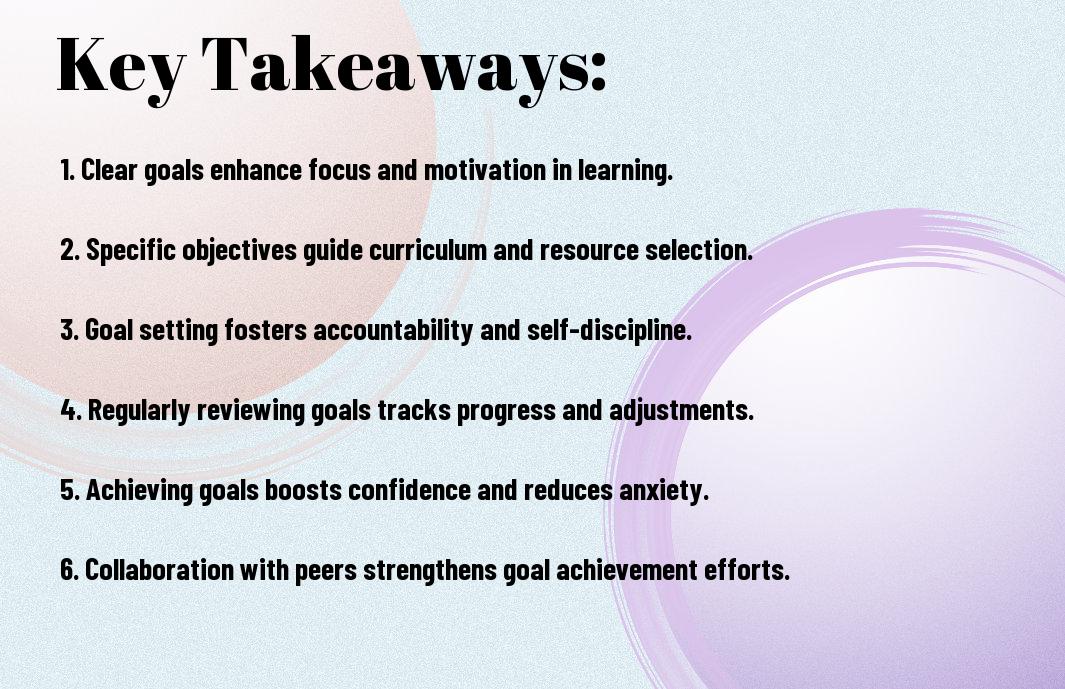
  • The effectiveness of online education is highly dependent on clearly defined goals, which help learners stay focused and motivated throughout their course.
  • Setting goals in online education enables learners to track progress, identify areas for improvement, and make informed decisions about their learning path.
  • Well-defined goals in online education help to increase engagement, boost confidence, and enhance overall learning outcomes by providing a sense of direction and purpose.
  • The process of goal setting in online education encourages learners to develop a growth mindset, take ownership of their learning, and develop self-regulation skills crucial for academic success.
  • Aligning goals with learning objectives in online education ensures that learners are working towards meaningful outcomes, which can lead to better retention rates and improved job prospects upon completion of their course.

Benefits of Goal Setting

For online learners, setting goals can have a significant impact on your success. As you navigate your courses, you can benefit from The effect of goal-setting prompts in a blended learning environment, which can enhance your overall learning experience.

Improved Motivation

The very act of setting goals can boost your motivation to learn, as you become more invested in achieving your objectives, and you start to see progress towards your desired outcomes.

Increased Focus

Along with motivation, goal setting helps you to concentrate on what you want to achieve, allowing you to prioritize your time and energy more effectively, which in turn, enhances your learning experience.

Setting clear goals enables you to concentrate on the most important aspects of your course, helping you to stay focused on what you need to accomplish, and you will be able to make steady progress towards your objectives, as you work towards achieving your goals.

Effective Goal Setting Strategies

Now that you’re aware of the importance of goal setting, you can explore strategies to achieve your objectives. You can learn more about The Role of Motivation in Online Professional Learning to understand what drives your success.

Setting SMART Goals

Generally, your goals should be specific, measurable, achievable, relevant, and time-bound to ensure you stay on track and motivated throughout your online education journey.

Creating an Action Plan

Once you have set your goals, you can start creating a roadmap to achieve them, outlining the steps you need to take to succeed in your online courses.

Plan your schedule, identify potential obstacles, and develop strategies to overcome them, allowing you to stay focused and motivated as you work towards your goals, and you will be able to track your progress and make adjustments as needed to ensure your success in online education.

Overcoming Obstacles

All online learners face obstacles, but setting goals helps you stay focused and motivated. You can overcome these challenges by developing strategies to navigate through difficulties and stay committed to your objectives.

Identifying Challenges

Beneath the surface of online education, you will find various obstacles that can hinder your progress. You need to identify these challenges, such as lack of motivation or technical issues, to develop effective solutions and stay on track with your goals.

Developing Resilience

Against the odds, you can develop resilience by learning from your mistakes and using them as opportunities for growth. You will be able to bounce back from setbacks and maintain your momentum towards achieving your goals.

Challenges are an inevitable part of online education, but by developing resilience, you can turn them into stepping stones for success. You will be able to analyze your failures, learn from them, and use that knowledge to improve your approach, ultimately helping you to stay motivated and focused on your goals.

The Role of Technology

Your online education experience is greatly enhanced by the role of technology, which provides you with access to a wide range of resources and tools that can help you achieve your goals.

Utilizing Online Resources

By accessing online libraries, educational websites, and online courses, you can gather information, learn new skills, and stay up-to-date with the latest developments in your field of study.

Leveraging Digital Tools

One of the key benefits of online education is the ability to leverage digital tools, such as learning management systems, online collaboration platforms, and multimedia resources, to enhance your learning experience.

At the heart of leveraging digital tools is the ability to personalize your learning experience, allowing you to learn at your own pace, access course materials anywhere, and engage with instructors and peers in a more flexible and convenient way, which can help you stay motivated and engaged throughout your online education journey, and ultimately, achieve your academic goals.

Measuring Progress

Despite the challenges you may face in online education, setting goals helps you stay focused and motivated. By tracking your progress, you can identify areas for improvement and make adjustments to achieve your objectives.

Tracking Success

Successfully monitoring your progress enables you to evaluate your performance and make data-driven decisions. You can use various tools and metrics to assess your success and adjust your strategy accordingly.

Evaluating Outcomes

Around the midpoint of your course, you should assess your outcomes to determine if you are on track to meet your goals. You can evaluate your understanding of the material and identify areas where you need extra support.

And as you continue to evaluate your outcomes, you will be able to refine your approach and make adjustments to optimize your learning experience. You will be able to identify what works best for you and make informed decisions about your education, ultimately leading to greater success in your online education journey.

Staying on Track

Unlike traditional learning, online education requires discipline to stay on track, and setting goals helps you achieve this by providing a clear direction and focus, enabling you to prioritize your tasks and manage your time effectively.

Maintaining Momentum

Between balancing coursework and other responsibilities, you need to maintain a steady pace to achieve your goals, and breaking down larger tasks into smaller ones helps you stay motivated and engaged in your online learning journey.

Avoiding Distractions

Any form of distraction can hinder your progress, and as you work towards your goals, you need to identify and eliminate potential distractions, such as turning off notifications or finding a quiet workspace, to help you stay focused on your objectives.

Momentum is key to avoiding distractions, and once you’ve established a routine, you’ll find it easier to stay on track, but it’s also important to be aware of your weaknesses and take steps to mitigate them, such as using website blockers or scheduling breaks, to help you maintain your focus and achieve your goals in online education.

Summing up

Hence, as you navigate your online education journey, you will find that setting goals is vital to your success. You will be able to focus on your objectives, prioritize your tasks, and track your progress. By doing so, you will be able to achieve your desired outcomes and make the most out of your online learning experience, which will ultimately enhance your overall performance and satisfaction with your education.

FAQ

Q: What is the significance of setting goals in online education, and how does it impact student motivation?

A: Setting goals in online education is vital as it provides students with direction, focus, and a sense of purpose. By establishing clear objectives, students can prioritize their efforts, allocate their time more efficiently, and stay motivated throughout their course. Effective goal setting helps students to maintain a high level of engagement, which is vital for achieving academic success in online education. It also enables them to track their progress, identify areas that require improvement, and make necessary adjustments to optimize their learning outcomes.

Q: How can online educators help students develop effective goal-setting strategies, and what tools or resources can be utilized to support this process?

A: Online educators can assist students in developing effective goal-setting strategies by providing them with personalized support, guidance, and feedback. They can encourage students to set Specific, Measurable, Achievable, Relevant, and Time-bound (SMART) goals, which are tailored to their individual needs and learning objectives. Utilizing digital tools, such as learning management systems, online planners, and goal-setting apps, can also facilitate the goal-setting process. Additionally, educators can offer workshops, webinars, or online resources that focus on time management, self-regulation, and self-motivation to help students develop the skills necessary for successful goal attainment.

Q: What are the long-term benefits of goal setting in online education, and how can students apply these skills in their future academic and professional pursuits?

A: The long-term benefits of goal setting in online education are numerous and far-reaching. By developing effective goal-setting skills, students can enhance their self-directed learning abilities, improve their academic performance, and increase their overall confidence. These skills are highly transferable and can be applied in various contexts, including future academic and professional pursuits. Students who master goal setting can better navigate complex projects, manage their time more efficiently, and make informed decisions about their career paths. Moreover, the ability to set and achieve goals is highly valued by employers, making online education students who possess this skill more competitive in the job market and better equipped to achieve their long-term career aspirations.

The Role of Big Data in Online Education

As you navigate the ever-evolving landscape of online education, you’re likely to encounter the concept of big data. Your ability to leverage this data can significantly enhance your learning experience. Big data analytics can help you personalize your educational journey, providing insights into your learning patterns and preferences. By utilizing big data, you can optimize your online education, making it more efficient and effective, leading to better outcomes and increased satisfaction with your educational pursuits.

Key Takeaways:

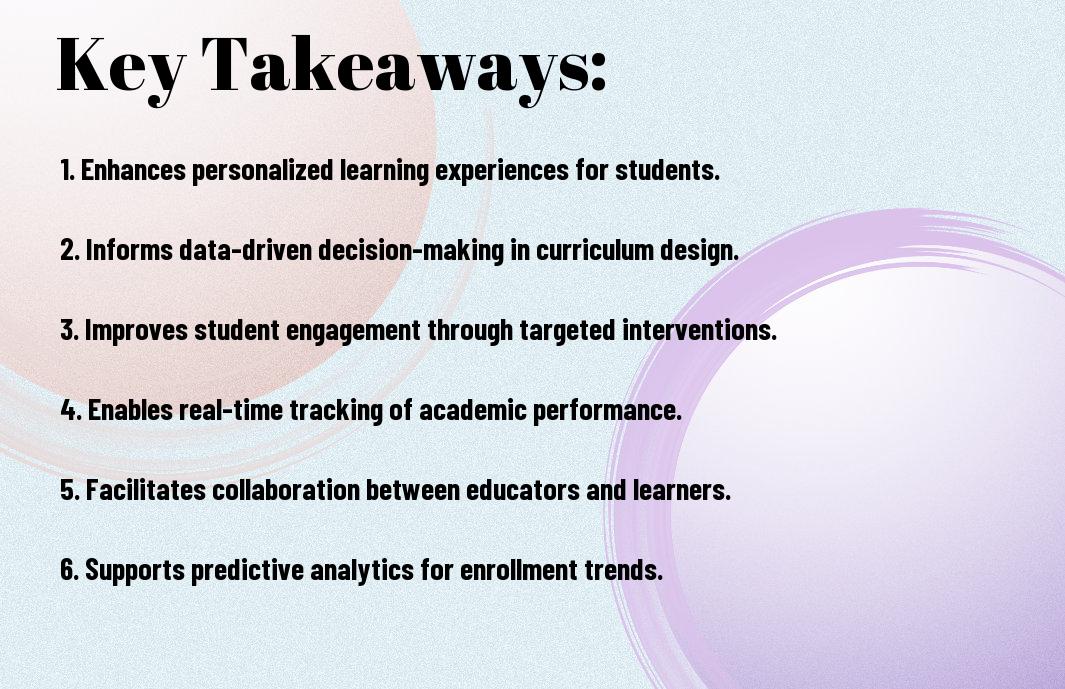
  • The adoption of Big Data in online education has led to a more personalized learning experience for students, allowing for tailored feedback and instruction.
  • Analytics tools are being used to track student engagement and progress, enabling educators to identify areas where students may need extra support.
  • The use of machine learning algorithms can help predict student outcomes, such as dropout rates and academic achievement, allowing for early intervention and support.
  • Data-driven insights are informing instructional design, enabling educators to create more effective and efficient online courses that meet the needs of diverse learners.
  • The integration of Big Data in online education has also raised important questions about privacy and security, highlighting the need for robust safeguards to protect student data and ensure its responsible use.

Benefits of Big Data in Online Education

The incorporation of big data in online education has numerous advantages, as you can learn more about Big Data in Online Education: Transforming the Learning Experience, which can enhance your understanding of the subject.

Personalized Learning Experiences

Encounters with tailored learning materials will become more common, as you will be able to access content that is specifically designed to meet your needs and abilities.

Improved Student Outcomes

About the outcomes of using big data, you will find that it leads to better academic performance, as your progress is closely monitored and adjustments are made to your learning plan accordingly.

Data analysis plays a significant role in improving student outcomes, as it helps you identify areas where you need improvement, allowing you to focus on those topics and ultimately achieve your academic goals.

Data Collection and Analysis

It is crucial to understand the role of big data in online education, as it helps you make informed decisions and improve your learning experience. You can collect data from various sources, analyze it, and gain valuable insights.

Sources of Big Data in Online Education

With the rise of online learning, you have access to a vast amount of data from various sources, including learning management systems, online courses, and student interactions, which can be used to improve your educational experience.

Tools and Techniques for Data Analysis

Collecting data is just the first step, as you need to analyze it to gain meaningful insights, and you can use tools like data mining, predictive analytics, and machine learning to uncover patterns and trends in your data.

To further analyze your data, you can use techniques such as clustering, decision trees, and regression analysis, which allow you to identify relationships between variables and make predictions about your future learning outcomes, enabling you to tailor your learning experience to your needs and goals.

Enhancing the Learning Environment

Despite the challenges in online education, big data can enhance your learning environment by providing personalized learning experiences and improving student outcomes. You can leverage data analytics to create a more engaging and effective learning space.

Adaptive Learning Platforms

Apart from traditional methods, adaptive learning platforms use big data to tailor the learning experience to your needs, allowing you to learn at your own pace and focus on areas where you need improvement.

Real-time Feedback and Assessment

Anyway, big data enables you to receive immediate feedback and assessment, helping you track your progress and identify knowledge gaps, thereby enabling you to make adjustments to your learning strategy.

Considering the benefits of real-time feedback and assessment, you can use data analytics to evaluate your performance and adjust your learning approach accordingly, allowing you to optimize your learning outcomes and achieve your academic goals more effectively.

Challenges and Limitations

Not surprisingly, you will face several challenges when implementing big data in online education, and you can learn more about Big Data in Education Industry: Benefits and Examples to better understand the potential issues.

Data Privacy and Security Concerns

Behind the benefits of big data, you’ll find concerns about data privacy and security, which you must address to ensure your students’ information is protected.

Technical and Infrastructure Challenges

Along with data concerns, you’ll encounter technical and infrastructure challenges, such as outdated systems and limited bandwidth, which can hinder the effective use of big data in your online education platform.

Another significant challenge you’ll face is the lack of standardization in data formats and the need for specialized skills to manage and analyze large datasets, which can be time-consuming and costly to overcome, affecting your ability to make data-driven decisions in your online education endeavors.

Opportunities for Innovation

Many institutions are leveraging big data to enhance your online learning experience. You can explore 5 Ways to Use Big Data to Enhance Higher Education to discover new approaches.

Artificial Intelligence and Machine Learning

Following the latest advancements, you’ll find that AI and machine learning can help personalize your learning experience, making it more effective and engaging.

Virtual and Augmented Reality Integration

To take your online education to the next level, you can utilize virtual and augmented reality tools, which can simulate real-world environments and make learning more immersive.

Also, as you investigate deeper into virtual and augmented reality integration, you’ll notice that it can increase your participation and retention rates, making your learning experience more enjoyable and interactive, allowing you to explore complex concepts in a more engaging way.

Implementation and Integration

For effective incorporation of big data in online education, you need to consider several factors, including infrastructure, resources, and stakeholder buy-in, to ensure a seamless integration process, ultimately enhancing your online learning experience.

Strategic Planning and Development

Between planning and execution, you will need to assess your institution’s capabilities, identify areas for improvement, and develop a tailored strategy to leverage big data, allowing you to make informed decisions about your online education platform.

Faculty Training and Support

One key aspect of successful big data integration is providing your faculty with the necessary training and support to effectively utilize data analytics tools, enabling them to track student progress, identify knowledge gaps, and create personalized learning plans.

Another important consideration for faculty training and support is the need for ongoing professional development opportunities, as you will need to stay up-to-date with the latest advancements in big data and analytics to maximize the potential of your online education platform, and to continually improve your teaching methods and student outcomes.

To wrap up

Now, as you consider the impact of big data on online education, you see how it enhances your learning experience. You can access personalized courses, track your progress, and receive real-time feedback. Your educational journey becomes more efficient and effective, with data-driven insights guiding your way. You can make informed decisions about your education, leveraging the power of big data to achieve your goals.

FAQ

Q: What is the role of big data in online education, and how does it enhance the learning experience?

A: Big data plays a significant role in online education by providing insights into student behavior, learning patterns, and educational outcomes. By analyzing large datasets, educators can identify areas where students may be struggling and develop targeted interventions to improve student success. Additionally, big data can help personalize the learning experience by tailoring course content and recommendations to individual students’ needs and abilities. This can lead to improved student engagement, increased motivation, and better academic performance.

Q: How does big data analytics support the development of adaptive learning systems in online education?

A: Big data analytics is necessary for the development of adaptive learning systems, which adjust to individual students’ learning styles, pace, and abilities in real-time. By analyzing vast amounts of data on student interactions, learning outcomes, and assessment results, adaptive learning systems can identify knowledge gaps and provide personalized recommendations for additional practice, review, or advanced learning materials. This enables students to learn at their own pace, filling knowledge gaps and accelerating their progress, while also helping educators to optimize their teaching strategies and improve student outcomes.

Q: What are some potential challenges and limitations associated with the use of big data in online education, and how can they be addressed?

A: Some potential challenges and limitations associated with the use of big data in online education include data privacy concerns, issues of data quality and validity, and the need for specialized skills and infrastructure to collect, analyze, and interpret large datasets. To address these challenges, educational institutions can implement robust data governance policies, invest in data management and analytics capabilities, and provide training and support for educators and staff. Additionally, institutions can prioritize transparency and accountability in their use of big data, ensuring that students and stakeholders understand how data is being used and protected, and that benefits are shared equitably among all stakeholders.

Skip to content