practice

The Best Ways to Practice Skills Online

You’re looking to sharpen your skills, and the internet is your playground. You can access a wealth of resources with just a click. Your goal is to find the most effective ways to practice online. You’ll need to cut through the noise and focus on what works. This guide will show you how to get started, helping you make the most of your time and effort to improve your skills online.

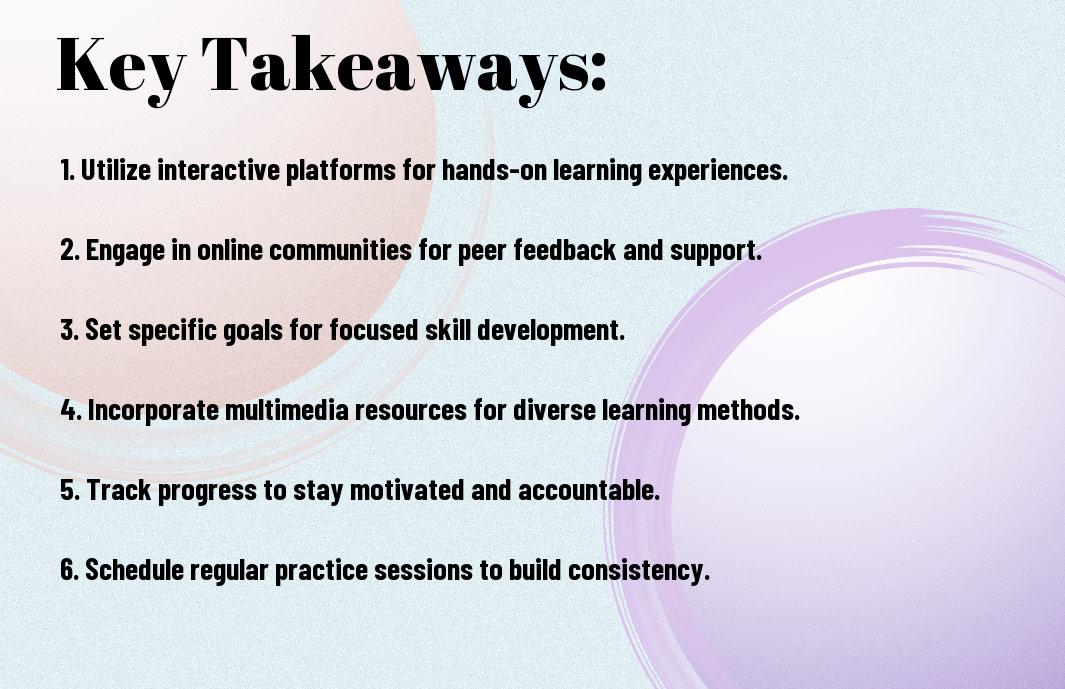
Key Takeaways:

  • Utilize Online Courses and tutorials to practice skills in a structured and guided environment, with access to a wide range of topics and instructors.
  • Leverage Interactive Platforms such as simulations, games, and virtual labs to practice skills in a hands-on and immersive way, promoting engagement and retention.
  • Join Online Communities and forums to connect with others who share similar interests and skill sets, providing opportunities for collaboration, feedback, and learning from others.
  • Take advantage of Virtual Mentoring programs, which offer one-on-one guidance and support from experienced professionals, helping to accelerate skill development and provide personalized feedback.
  • Use Practice Exercises and quizzes to reinforce learning and track progress, identifying areas of strength and weakness, and adjusting practice routines accordingly.

Finding Online Resources

For your skill-building journey, you need to find the right online resources. You can start by exploring websites that offer free courses and tutorials, such as These 9 Websites Will Help You Learn a New Skill for Free, to get an idea of what’s available.

Websites and Platforms

For instance, you can search for websites that cater to your interests and skills, providing you with a variety of courses and tutorials to choose from.

Mobile Applications

Behind the success of online learning lies the convenience of mobile applications, which allow you to learn on-the-go.

Further, mobile applications provide you with the flexibility to access courses and tutorials anywhere, at any time, making it easier for you to fit learning into your busy schedule, and with notifications, you can stay on track with your learning goals, helping you to make progress and achieve your objectives.
Setting Goals and Schedules

The foundation of effective online skill practice is setting clear goals and schedules. You need to define what you want to achieve and allocate specific times for practice. This helps you stay focused and motivated, ensuring consistent progress in your skills development.

Creating a Study Plan

Backing your goals with a solid plan is necessary. You outline your objectives, break them down into manageable tasks, and assign deadlines for each. This structured approach helps you navigate your learning journey efficiently, making the most out of your time and effort.

Tracking Progress

Around the midpoint of your practice, assessing your progress becomes necessary. You evaluate how far you’ve come, identifying areas of improvement and adjusting your strategy as needed. This reflective process is key to refining your approach and achieving your goals.

Hence, as you monitor your progress, you’ll find that tracking your development over time provides valuable insights. You can see what works best for you, make informed decisions about your practice schedule, and celebrate your achievements along the way. This not only boosts your confidence but also keeps you engaged and committed to your skill development journey.

Interactive Learning Tools

All online platforms offer a range of interactive tools to help you practice your skills. You can access these tools from anywhere, making it easy to fit learning into your schedule. They provide immediate feedback, helping you identify areas for improvement.

Online Courses and Tutorials

Around the clock, you can access online courses and tutorials tailored to your needs. You can learn at your own pace, repeating sections as needed, and your progress is tracked, helping you stay motivated.

Games and Simulations

Gaming platforms provide an engaging way to practice skills. You can participate in simulations, applying your knowledge in a virtual environment, and your performance is assessed, giving you valuable insights.

Tools like simulations and games make learning fun, allowing you to practice in a low-stakes setting. You can experiment with different approaches, analyzing the outcomes, and adjust your strategy accordingly, which helps you develop problem-solving skills and builds your confidence.

Collaborative Learning

Keep your skills sharp by practicing with others online. You can join online communities, forums, and study groups to learn from others and get feedback on your work.

Online Communities and Forums

To get the most out of online learning, you’ll want to find communities that align with your interests and goals. You can search for online forums and discussions related to your field and participate in conversations to learn from others.

Virtual Study Groups

Online, you’ll find many opportunities to join virtual study groups and collaborate with others. You can work on projects, share resources, and get support from your peers.

But as you join virtual study groups, you’ll find that your learning experience becomes more engaging and effective. You’ll be able to discuss topics in real-time, get instant feedback, and learn from others’ experiences, which will help you improve your skills faster and more efficiently, making the most out of your online learning experience.

Staying Motivated and Focused

To stay on track, you’ll need to find ways to maintain your drive. You can explore online forums like Best Online Courses to learn new skills? : r/Hobbies to discover new resources and inspiration.

Reward Systems and Incentives

Motivated by your progress, you set small rewards for yourself, celebrating each milestone achieved, which helps to keep your momentum going.

Avoiding Distractions and Procrastination

Focused on your goals, you eliminate distractions, creating a conducive environment that fosters productivity and efficiency in your learning process.

Due to the abundance of online distractions, you need to establish a routine and stick to it, minimizing procrastination by breaking down your learning into manageable chunks, allowing you to stay on track and make consistent progress towards your objectives.

Overcoming Challenges and Obstacles

Once again, you’ll face setbacks as you practice skills online. You’ll need to adapt and push through to achieve your goals.

Technical Issues and Support

Across various platforms, you’ll encounter technical issues. You can seek help from online support teams or forums to resolve these problems and get back to practicing.

Staying Disciplined and Consistent

Staying on track is key to making progress. You must set a schedule and stick to it, ensuring you practice regularly and make consistent progress.

In addition, you’ll need to hold yourself accountable and track your progress. By doing so, you’ll be able to identify areas where you need improvement and make adjustments to your practice routine, helping you stay motivated and focused on your goals.

To wrap up

To wrap up, you’ve now got the tools to sharpen your skills online. You can explore tutorials, join forums, and take online courses to boost your knowledge. Your path to mastery is clear: choose your platform, set your goals, and get to work. With dedication, you’ll see progress and achieve your objectives.

FAQ

Q: What are the benefits of practicing skills online?

A: Practicing skills online offers numerous benefits, including flexibility, accessibility, and affordability. You can learn at your own pace, anytime and anywhere, as long as you have a stable internet connection. Online resources, such as video tutorials, webinars, and online courses, provide a wide range of learning materials that cater to different learning styles and preferences. Moreover, online practice helps you develop self-motivation, discipline, and time management skills, which are vital for achieving your learning goals.

Q: How can I effectively practice skills online and track my progress?

A: To effectively practice skills online and track your progress, set specific, measurable, achievable, relevant, and time-bound (SMART) goals. Utilize online tools, such as learning management systems, mobile apps, and browser extensions, to access a variety of practice materials, including interactive quizzes, games, and simulations. Regularly review your progress, identify areas of improvement, and adjust your learning strategy accordingly. Join online communities, forums, or social media groups to connect with peers, ask questions, and share knowledge, which can help you stay motivated and inspired throughout your learning journey.

Q: What are some popular online platforms for practicing skills, and how do I choose the best one for my needs?

A: Popular online platforms for practicing skills include online course providers, such as Coursera, Udemy, and LinkedIn Learning, as well as specialized platforms, like GitHub for coding, Duolingo for language learning, and Skillshare for creative skills. To choose the best platform for your needs, consider factors such as the platform’s reputation, course content, instructor expertise, pricing, and user reviews. Evaluate your learning style, goals, and preferences, and look for platforms that offer personalized learning paths, interactive exercises, and opportunities for feedback and assessment. Take advantage of free trials or introductory courses to explore different platforms and find the one that best fits your learning objectives and budget.

Can you learn piano effectively using a MIDI keyboard connected to a computer

It’s time to explore whether you can master the piano using a MIDI keyboard paired with your computer. Unlock the secrets of this innovative learning method, as we probe into the effectiveness, benefits, and potential drawbacks of this modern approach. Let’s discover how you can enhance your musical journey with technology at your fingertips.

Key Takeaways:

  • Convenience: MIDI keyboard connected to a computer offers a convenient way to learn piano at home.
  • Interactive Learning: MIDI keyboards can provide instant feedback and track your progress, enhancing the learning experience.
  • Versatility: You can access various online resources, such as tutorials and software, to enhance your piano learning experience with a MIDI keyboard and computer setup.

The Basics of MIDI Keyboards

What is a MIDI Keyboard?

Basics: Your MIDI keyboard is a versatile musical instrument that uses the Musical Instrument Digital Interface (MIDI) technology to communicate with other devices such as computers. Unlike traditional pianos, MIDI keyboards do not produce sounds on their own. Instead, they send signals about which keys are pressed and how hard they are pressed to a connected device, such as a computer or synthesizer, which then generates the sounds.

How Does it Connect to a Computer?

Does: To connect your MIDI keyboard to a computer, you will need a USB cable that plugs into both the keyboard and the computer. Most modern MIDI keyboards come equipped with USB connectivity, making it easy to set up and start playing. Once connected, your computer will recognize the MIDI keyboard as a MIDI input device, allowing you to use it with music production software or other virtual instruments.

This seamless integration between your MIDI keyboard and computer opens up a world of possibilities for learning and creating music. You can access a wide range of sounds, record your performances, and even receive feedback on your playing technique, all through the connection between your MIDI keyboard and computer.

Advantages of Learning Piano with a MIDI Keyboard

Little do you know that learning piano with a MIDI keyboard connected to a computer can offer you a plethora of advantages. Not only does it provide a convenient way to practice and improve your skills, but it also opens up a world of possibilities for your musical journey. If you’re looking to examine into piano playing using modern technology, there are several benefits that come with this setup.

Cost-Effective

On Easy to Implement Tips on How to Learn and Play Piano …, you’ll find that using a MIDI keyboard with your computer for piano learning is incredibly cost-effective. Instead of investing in a traditional acoustic piano or even a digital piano, which can be quite expensive, all you need is a MIDI keyboard and a computer. This setup allows you to access a wide range of piano sounds and lessons without breaking the bank.

Space-Saving

One of the major advantages of learning piano with a MIDI keyboard is the space-saving aspect. Unlike traditional pianos that take up a significant amount of room in your home, a MIDI keyboard is compact and can easily fit on a desk or table. This makes it ideal for those living in smaller spaces or apartments where a full-sized piano may not be practical.

For instance, if you’re a student living in a dorm room or someone with limited space, a MIDI keyboard offers the flexibility to practice and play without the need for a large instrument taking up valuable real estate in your living area.

Versatility in Sound Options

The versatility in sound options is another compelling advantage of using a MIDI keyboard for your piano learning journey. The ability to connect your MIDI keyboard to your computer opens up a world of virtual instruments and different piano sounds at your fingertips. Whether you prefer a grand piano sound, an electric piano tone, or even experimental sounds, you can easily explore and play around with various options to suit your preferences.

It allows you to experiment with different sounds and styles, helping you develop a unique playing style and expanding your musical horizons. This versatility in sound options adds a layer of creativity and excitement to your piano practice sessions, keeping you engaged and motivated to learn and improve.

Effective Learning Techniques

Practicing with Interactive Software

Not all practice sessions are created equal. To make the most of your time spent playing the piano with a MIDI keyboard and computer setup, it’s crucial to engage with interactive software that provides feedback on your performance. Effective learning means using tools that can identify areas for improvement and offer guidance on how to enhance your skills.

Recording and Analyzing Your Progress

Not only does recording your practice sessions allow you to track your progress over time, but it also serves as a valuable tool for self-assessment. By listening back to your recordings, you can pinpoint where you excel and where you need to concentrate your efforts. Effective learning involves a cycle of recording, listening, analyzing, and applying changes to refine your piano skills.

Another benefit of recording and analyzing your progress is the ability to set specific goals based on your observations. Whether it’s improving your timing, dynamics, or overall performance, having concrete data from your recordings can help you create a targeted practice plan to achieve your musical objectives.

Access to Online Resources and Tutorials

The wealth of online resources and tutorials available for piano learning can provide you with a well-rounded education. From video lessons to interactive exercises, these resources offer additional support to enhance your learning experience. The convenience of accessing a variety of materials online allows you to supplement your MIDI keyboard practice and gain insights from different instructors.

Interactive tutorials can also help reinforce concepts learned during your practice sessions. By engaging with online materials that offer real-time feedback and demonstrations, you can solidify your understanding of key techniques and theory. The accessibility of online resources ensures that you have a diverse range of learning tools at your disposal to enhance your piano skills effectively.

Overcoming Common Challenges

Adjusting to a Non-Acoustic Feel

After making the switch from playing on an acoustic piano to a MIDI keyboard connected to your computer, you may find that adjusting to the non-acoustic feel can be challenging. The lack of weighted keys and the different tactile feedback can initially throw off your playing. However, with practice and patience, you can adapt to the new feel and even appreciate the benefits it offers.

Limited Dynamic Range

To tackle the limited dynamic range of a MIDI keyboard compared to an acoustic piano, you may face challenges in expressing musical nuances in your playing. While MIDI keyboards offer a more consistent sound across all velocity levels, they may lack the depth and richness of sound that acoustic pianos provide. This can make it challenging to convey emotions effectively through your music.

Challenges in mastering the limited dynamic range of a MIDI keyboard can be overcome with careful attention to your playing technique. By practicing varying touch and pressure on the keys, you can learn to create nuances in dynamics that emulate the expressiveness of an acoustic piano. Utilizing the MIDI keyboard’s features, such as adjusting velocity curves and using expression pedals, can also help you expand your dynamic range and musical expression.

Building Hand-Eye Coordination

Overcoming the challenge of building hand-eye coordination when using a MIDI keyboard connected to a computer is crucial for improving your playing skills. The absence of physical keys and the reliance on visual cues on a screen can disrupt your natural hand-eye coordination developed from playing on an acoustic piano. However, with focused practice and exercises, you can enhance your hand-eye coordination and adapt to the digital interface.

Building hand-eye coordination with a MIDI keyboard involves practicing hand placement, finger positioning, and visual tracking of notes displayed on the screen. Techniques such as sight-reading exercises and memorizing key placements can strengthen your coordination skills and improve your ability to play accurately and fluently on a digital platform. By incorporating consistent practice routines and challenging yourself with different pieces, you can effectively enhance your hand-eye coordination and navigate the virtual piano space with confidence.

Choosing the Right MIDI Keyboard for Learning Piano

Key Count and Size

To make the most out of your piano learning experience with a MIDI keyboard, consider the size and key count that best suits your needs. The standard piano has 88 keys, but if you’re a beginner or have limited space, a keyboard with 61 keys can suffice. However, keep in mind that a full-sized keyboard allows you to practice and play a wider range of songs.

Weighted vs. Unweighted Keys

When dicking out a MIDI keyboard for piano learning, it’s important to decide between weighted and unweighted keys. Weighted keys simulate the feel of an acoustic piano, providing the necessary resistance to build finger strength and technique. On the other hand, unweighted keys are more lightweight and suitable for beginners or those focusing on synthesizer sounds.

Weighted keys give you a realistic playing experience and are recommended for those who want to develop proper finger technique and dynamics while unweighted keys are easier to play and may be preferable if you’re just starting out or interested in a more versatile MIDI keyboard.

Additional Features for Learning

Look for MIDI keyboards with additional features that can enhance your piano learning journey. Features like touch sensitivity, which allows the keyboard to respond to the force of your playing, or built-in lessons and tutorials can be beneficial for your progress. Some MIDI keyboards also come with connectivity options for music software, providing access to a wealth of learning resources and virtual instruments.

Plus, consider a MIDI keyboard with programmable drum pads or sliders and knobs that can be assigned to various functions in your music software. These additional features can help you explore different sounds, effects, and techniques while learning to play the piano with your MIDI keyboard.

Tips for Maximizing Your Practice Sessions

Once again, to make the most of your practice sessions, here are some tips and tricks for you to consider:

Setting Realistic Goals and Schedules

Your piano journey will be more effective if you set realistic goals and create a practice schedule that fits your lifestyle. Break down your long-term goals into smaller, achievable milestones to track your progress. Additionally, establish a consistent practice routine that aligns with your daily schedule, ensuring regular and focused practice sessions.

This approach will help you stay on track and motivated as you witness your improvement with each practice session. By setting achievable goals and maintaining a consistent practice schedule, you can enhance your learning experience and make significant progress in your piano skills.

Creating a Conducive Practice Environment

The environment in which you practice plays a crucial role in your learning process. Ensure that your practice space is free from distractions and is comfortable to enhance your focus and concentration. Organize your music sheets, set up your MIDI keyboard in a well-lit area, and eliminate any potential interruptions.

This will create a conducive atmosphere for learning and practicing the piano. By optimizing your practice environment, you can create a space that nurtures your musical development and allows you to immerse yourself fully in your practice sessions.

Staying Motivated and Engaged

Conducive to staying motivated and engaged throughout your piano learning journey is cultivating a positive mindset and finding joy in the process. Celebrate your achievements, no matter how small, and maintain a sense of curiosity and exploration in your practice. Engage with a variety of musical genres and pieces to keep your practice sessions dynamic and exciting.

Engaged with your progress and seek inspiration from fellow musicians or performances to fuel your passion for learning the piano. By staying motivated and engaged, you can sustain your enthusiasm for practicing and continue to develop your skills effectively.

Conclusion

With this in mind, using a MIDI keyboard connected to a computer can be a highly effective way for you to learn how to play the piano. The accessibility of online resources, the versatility of MIDI keyboards, and the feedback provided by digital programs all contribute to a rich and engaging learning experience. By incorporating technology into your music education, you can tailor your practice sessions to your needs and goals, making your learning journey more efficient and enjoyable.

So, whether you’re a beginner just starting out or an experienced player looking to improve your skills, utilizing a MIDI keyboard connected to a computer can be a valuable tool in your musical journey. With dedication, practice, and the right resources, you can unlock your full potential as a pianist and enjoy the process of learning and creating music in a whole new way.

Q: Can you learn piano effectively using a MIDI keyboard connected to a computer?

A: Yes, you can learn piano effectively using a MIDI keyboard connected to a computer. MIDI keyboards are designed to replicate the feel and sound of a traditional piano, making it a great tool for learning and practicing piano skills.

Q: What are the benefits of using a MIDI keyboard for learning piano?

A: Using a MIDI keyboard connected to a computer offers several benefits for learning piano, including access to virtual instruments and software that can enhance your learning experience. It also allows for easy recording and playback of your playing, helping you track your progress over time.

Q: Are there any disadvantages to learning piano with a MIDI keyboard?

A: While learning piano with a MIDI keyboard connected to a computer can be effective, there are some limitations. MIDI keyboards may not replicate the exact feel and sound of a traditional piano, which can impact your technique development. Additionally, relying solely on virtual instruments may limit your exposure to different piano tones and dynamics.

What are the most common mistakes beginners make when learning piano

Just starting out on the piano journey? Let’s talk about the common blunders beginners tend to make when venturing into the world of piano playing. From improper hand positioning to skipping basic techniques, there are pivotal errors that can hinder your progress. By identifying and rectifying these missteps early on, you can set yourself up for a smoother and more successful learning experience. So, let’s probe into some key pitfalls to avoid on your musical endeavor!

Key Takeaways:

  • Lack of Proper Posture: Beginners often overlook the importance of maintaining correct posture while playing the piano, which can lead to discomfort and inefficient playing.
  • Skipping Fundamentals: Many beginners try to rush through the basics and jump into advanced pieces, missing out on building a strong foundation in music theory, technique, and fundamental skills.
  • Not Practicing Consistently: Consistency is key when learning the piano, and beginners often make the mistake of not practicing regularly, hindering their progress and skill development.

Lack of Proper Hand Positioning

Before delving into the intricacies of playing the piano, it’s crucial to understand the importance of proper hand positioning. One of the most common mistakes beginners make is not paying attention to how they position their hands on the keys. This can hinder your progress and lead to inefficiencies in your playing technique.

Failing to Keep Wrists Straight

Proper hand positioning includes keeping your wrists straight and level with the piano keys. Many beginners tend to let their wrists droop or lift them too high, resulting in unnecessary strain on your hands and fingers. By keeping your wrists straight, you can have better control over your finger movements and produce a more consistent tone.

Ignoring Finger Independence

Keep in mind that each finger on your hand should be able to move independently, but many beginners struggle with this concept. Ignoring finger independence can lead to clumsy and uneven playing, ultimately hindering your progress. Practice exercises that focus on strengthening each finger individually to improve your overall dexterity and control on the keys.

For instance, you can try exercises that involve playing scales or arpeggios with each finger, ensuring that the other fingers remain relaxed and ready to play when needed. By improving your finger independence, you will be able to tackle more complex pieces with greater ease and precision.

Insufficient Practice Routine

There’s a crucial aspect of learning the piano that often gets overlooked – your practice routine. One of the most common mistakes beginners make is not dedicating enough time to practice regularly. Playing the piano is a skill that requires consistent practice to improve and progress. If you only practice sporadically or for short periods, you may find yourself frustrated with slow progress and lack of development in your playing.

Not Setting Realistic Goals

An necessary part of developing an effective practice routine is setting realistic goals. Many beginners make the mistake of setting overly ambitious or vague goals, such as wanting to play a complex piece within a short timeframe. When you set unrealistic goals, you’re setting yourself up for disappointment and frustration. It’s crucial to set achievable short-term and long-term goals that align with your current skill level and gradually push you to improve.

Practicing Without a Clear Plan

One common mistake beginners make is practicing without a clear plan. You may sit down at the piano and play through pieces or exercises aimlessly, without a structured approach. This lack of direction can lead to inefficient practice sessions and hinder your progress. To make the most out of your practice time, it’s necessary to have a clear plan outlining what specific skills or pieces you will work on during each session.

With a well-thought-out practice plan, you can focus on targeted areas for improvement, track your progress more effectively, and stay motivated as you see yourself making consistent strides in your piano playing journey.

Inadequate Finger Strength and Dexterity

Neglecting Finger Exercises

Exercises designed to improve finger strength and dexterity are crucial for your development as a piano player. Neglecting these exercises can lead to difficulties in playing more advanced pieces and hinder your progress. By incorporating finger exercises into your practice routine, you can build up the necessary strength and coordination to tackle challenging pieces with ease.

Failing to Develop Finger Independence

Dexterity is necessary for playing the piano effectively. Failing to develop finger independence can limit your ability to play complex passages smoothly and accurately. Work on exercises that focus on each finger individually to enhance their independence and coordination. This will help you play with more precision and control, ultimately improving your overall performance.

Improving your finger dexterity will not only make playing the piano more enjoyable but also expand the range of pieces you can confidently perform. Take the time to focus on developing your finger independence, and you will see significant improvements in your playing abilities.

Misconceptions About Reading Sheet Music

Once again, as you explore into piano playing, it’s crucial to address some common misconceptions that beginners often encounter. Reading sheet music can be daunting at first, but with practice and understanding, you can master this skill. If you’re looking for more insights on avoiding mistakes when learning piano, you can check out this helpful Quora thread.

Confusing Note Values

For beginners, one of the key stumbling blocks in reading sheet music lies in understanding note values. Different notes indicate varying durations of sound, and it’s imperative to grasp this concept early on. When you see a whole note, for example, it lasts for four beats, while a half note lasts for two. Make sure not to rush through this fundamental aspect as it forms the basis of your rhythm and timing in playing the piano.

Ignoring Key Signatures

Misconceptions about key signatures can hinder your piano progress. Ignoring key signatures can lead to playing in the wrong key, resulting in a discordant sound. Each key has its own set of sharps or flats, and mastering these nuances is crucial for playing pieces accurately. Another common mistake is assuming that accidentals only apply to the note they immediately precede, but they actually affect all subsequent notes of the same pitch within the measure. Understanding key signatures will greatly improve your overall musicality and performance.

Poor Posture and Body Alignment

Many beginners make the mistake of not paying attention to their posture and body alignment when learning the piano. Proper posture is crucial for playing the piano correctly and avoiding any unnecessary strain on your body.

Slouching or Leaning Forward

Alignment is key when it comes to playing the piano effectively. One common mistake is slouching or leaning forward while playing. This not only affects your posture but can also hinder your performance. When you slouch or lean forward, it puts pressure on your back and neck, leading to discomfort and even potential injuries. Remember to sit up straight with your back aligned against the back of the chair to maintain proper posture and body alignment.

Failing to Keep Feet Flat on the Floor

Floor. Another critical aspect of proper body alignment when playing the piano is ensuring that your feet are flat on the floor. Many beginners make the mistake of letting their feet dangle or rest on their toes, which can cause imbalance and affect your overall stability. Keeping your feet flat on the floor helps ground you and provides a stable foundation for playing. Make sure to adjust the piano bench height if needed to ensure your feet are comfortably flat on the floor while playing.

Ineffective Use of Pedals

Not sure if you are properly utilizing the pedals on your piano? Understanding how to use them effectively can greatly impact the quality of your playing. If you want to probe deeper into the topic, you can check out 8 Key Mistakes You Want to Avoid When Learning the Piano for more insights.

Overusing the Sustain Pedal

With the sustain pedal, beginners often fall into the trap of overusing it. While it can create a beautiful and harmonious sound by blending notes together, excessive use can result in a muddy and blurred sound. Make sure to release the pedal periodically to prevent sounds from blending when they shouldn’t.

Ignoring the Una Corda Pedal

On the other hand, novice pianists sometimes ignore the Una Corda pedal entirely. This pedal, also known as the soft pedal, creates a softer and more muted tone by shifting the hammers’ position. By neglecting to use this pedal, you are missing out on the opportunity to add depth and variety to your playing.

Sustain, Una Corda, and Sostenuto pedals are necessary tools at your disposal as a pianist. Understanding how and when to use them will significantly enhance your musical expressions and bring your playing to a whole new level. Take the time to practice with different pedal techniques and experiment to find the perfect balance for each piece you play.

To wrap up

Considering all points, remember that many beginners make similar mistakes in their piano learning journeys. It’s necessary to practice consistently and build a strong foundation by focusing on technique rather than just playing through songs. Don’t rush the learning process; take your time to perfect each skill before moving on to the next. Avoid comparing yourself to others and instead focus on your progress and growth. Lastly, seek guidance from a qualified instructor who can provide valuable feedback and help you improve your playing.

Q: What are the most common mistakes beginners make when learning piano?

A: The most common mistakes beginners make when learning piano are:

  • Skipping proper finger positioning and hand posture
  • Not practicing consistently
  • Ignoring music theory and just focusing on playing songs

Q: How important is proper finger positioning and hand posture when learning piano?

A: Proper finger positioning and hand posture are crucial when learning piano as they allow for better control and fluidity in playing. Ignoring these fundamental aspects can lead to bad habits that are difficult to correct later on.

Q: Why is consistency in practicing important for beginners learning piano?

A: Consistency in practicing is key for beginners learning piano as it helps build muscle memory, improve finger agility, and strengthen overall playing skills. Regular practice sessions also help in retaining and applying new techniques effectively.

How can you stay motivated when learning piano or keyboards on your own

With discipline and determination, you can maintain your motivation while learning piano or keyboards on your own. It’s easy to get discouraged when progress is slow, but remember that consistency is key. Surround yourself with inspiration, whether it’s listening to great pianists or seeking advice from fellow learners. For more tips on staying motivated, check out How to keep motivated : r/piano. Stay focused on your goal and trust in your ability to succeed!

Key Takeaways:

  • Set Clear Goals: Define your short-term and long-term goals in your piano learning journey to stay focused and motivated.
  • Have a Consistent Practice Schedule: Establish a practice routine that fits your schedule and commit to regular practice sessions to see progress and maintain motivation.
  • Reward Yourself: Celebrate milestones and accomplishments by treating yourself to something special, whether it’s a small reward or a break from practice.

Setting Goals and Expectations

Defining Your Motivation

Goals are necessary when it comes to staying motivated in your piano or keyboard learning journey. Before entering into your practice sessions, take some time to define why you want to learn and what you hope to achieve. Are you learning for personal enjoyment, to play in a band, or to perform at a special event? Understanding your motivation will help you set realistic goals that keep you inspired along the way.

Setting Realistic Practice Schedules

Your practice schedule is the backbone of your progress. Setting realistic practice schedules is crucial for maintaining your motivation levels. Be honest with yourself about the time you can commit each day or week to practice. Overwhelming yourself with unattainable goals can lead to frustration and demotivation. Instead, break down your learning process into smaller, achievable milestones to keep you on track while still challenging yourself.

Defining a specific practice routine tailored to your goals and lifestyle will make it easier to stay consistent in your learning. Be mindful of, progress takes time, and consistency is key. By setting realistic practice schedules, you’ll be able to track your improvement and stay motivated as you see yourself getting closer to your musical aspirations.

Creating a Conducive Learning Environment

Choosing the Right Instrument

Clearly, one of the most crucial decisions you will make when starting your piano or keyboard learning journey is choosing the right instrument. Whether you opt for a traditional piano or a digital keyboard, selecting an instrument that resonates with you is necessary. Consider factors like the touch of the keys, the sound quality, and the available features that will support your learning style.

Setting Up a Comfortable Practice Space

Environment plays a vital role in your learning experience. One way to stay motivated is by creating a comfortable and inviting practice space. Ensure that your keyboard or piano is placed in an area with good lighting and ventilation. Personalize your practice space with inspirational quotes, music posters, or any other elements that motivate you. Additionally, invest in a comfortable chair that supports good posture to prevent any discomfort during long practice sessions.

Understanding the significance of creating a conducive learning environment will not only enhance your motivation but also contribute to your overall progress in learning the piano or keyboards. Make the choice consciously, and set up your practice space thoughtfully to optimize your learning experience.

Staying Engaged and Focused

Once again, staying engaged and focused while learning piano or keyboards on your own is crucial for progress. To help you maintain your motivation, consider breaking down complex skills into manageable chunks.

Breaking Down Complex Skills into Manageable Chunks

Chunks of information are easier for your brain to process and retain, making learning more efficient. When faced with a challenging piece or technique, break it down into smaller segments. Focus on mastering one chunk at a time before moving on to the next. This approach not only helps you stay focused but also gives you a sense of accomplishment as you conquer each section.

Using Technology to Enhance Learning

Enhance your learning experience by leveraging technology. There are numerous apps, online tutorials, and software programs designed to support your piano or keyboard learning journey. These resources can provide interactive lessons, instant feedback on your playing, and even virtual practice sessions. By incorporating technology into your practice routine, you can make learning more engaging and effective.

Finding a Practice Buddy or Accountability Partner

Learning alongside a practice buddy or accountability partner can significantly boost your motivation and progress. Having someone to share your goals and challenges with creates a sense of camaraderie and accountability. You can motivate each other, exchange tips, and celebrate milestones together, making the learning process more enjoyable and rewarding.

Plus, practicing with a partner introduces an element of friendly competition, spurring both of you to improve and stay on track with your learning goals. Whether it’s a friend, family member, or fellow musician, having a practice buddy can make your learning journey more dynamic and fulfilling.

Overcoming Frustration and Plateaus

Not every day will feel like a breakthrough in your piano or keyboard learning journey. There will be times when you may feel frustrated or hit a plateau in your progress. It’s important to remember that this is a normal part of the learning process, and it’s crucial not to let these challenges derail your motivation.

Identifying and Addressing Common Challenges

Addressing common challenges such as struggling with difficult pieces, feeling overwhelmed by complex music theory, or experiencing slow progress can help you navigate through these frustrations. Break down your practice sessions into smaller, manageable tasks, focus on one aspect at a time, and seek help from online tutorials or resources to tackle specific challenges head-on.

Celebrating Small Victories and Progress

Addressing the small victories and progress you make along the way is key to staying motivated. Celebrate milestones like mastering a tricky passage, playing a piece fluently, or understanding a new concept. Acknowledging and rewarding yourself for these achievements, no matter how small they may seem, will keep you motivated and inspired to continue your musical journey.

For instance, you can treat yourself to a favorite snack, take a short break to relax, or even share your progress with friends or on social media to celebrate your accomplishments.

Seeking Inspiration from Others

An important aspect of staying motivated in your piano or keyboard learning is seeking inspiration from others. Connect with fellow musicians, join online forums or local music groups, attend concerts, or watch performances to get inspired by the progress and talent of others. Surrounding yourself with a supportive community can provide you with the encouragement and drive to keep pushing forward in your musical endeavors.

A great source of inspiration can also come from listening to your favorite pianists or keyboardists, watching their performances, and learning about their musical journey. Hearing about their challenges and successes can instill a sense of determination and passion in you to overcome obstacles and strive for excellence in your own practice.

Building Confidence and Momentum

To stay motivated when learning piano or keyboards on your own, you must focus on building confidence and maintaining momentum. This involves setting specific goals, tracking your progress, and sharing your achievements with others.

Practicing with Purpose and Intention

To make the most of your practice sessions, it’s important to have a clear purpose and intention. Set specific goals for each practice session, whether it’s mastering a new technique, learning a challenging piece, or improving your timing and rhythm. By practicing with purpose, you can stay focused and motivated, knowing that you are working towards specific objectives.

Recording Yourself and Tracking Progress

Purposefully record yourself playing the piano or keyboards regularly to track your progress. Listen to your recordings objectively to identify areas for improvement. By keeping track of your progress, you can see how far you’ve come and what you still need to work on, which can be incredibly motivating.

For instance, you may notice that your timing has improved or that you can play a piece more smoothly than before. These small victories can build your confidence and inspire you to keep pushing forward in your musical journey.

Performing for Others and Sharing Your Music

On your journey to mastering the piano or keyboards, consider performing for others and sharing your music. Whether it’s playing for friends and family, participating in an open mic night, or posting videos of your performances online, sharing your music can be a powerful motivator. Not only does it give you a sense of accomplishment, but it also allows you to receive feedback and encouragement from others.

Another important aspect of performing for others is the opportunity to connect with fellow musicians and music enthusiasts. By sharing your music, you can inspire others and be inspired by their musical journeys, creating a supportive community that can help you stay motivated and committed to your learning process.

Staying Motivated Through Repetition and Habit

Many successful piano or keyboard players will tell you that consistency is key when it comes to learning an instrument. Creating a consistent practice routine is crucial in developing your skills and staying motivated along the way. Set aside specific times throughout your week dedicated solely to practicing. Whether it’s early in the morning before work or right before bed, find a time that works best for you and stick to it.

Creating a Consistent Practice Routine

Staying committed to a regular practice schedule will not only help you improve your piano or keyboard skills but also build discipline and focus. Make it a habit to practice at the same time each day, even if it’s just for a short period. Over time, you’ll find that this routine becomes ingrained in your daily life, making it easier to stay motivated and make progress consistently.

Rewarding Yourself for Milestones Achieved

Achieved a significant milestone in your piano or keyboard learning journey? Reward yourself! Treat yourself to something you enjoy, whether it’s a small indulgence like a favorite dessert or a relaxing evening doing something you love. Celebrating your achievements, no matter how big or small, can help boost your morale and keep you motivated to continue pushing forward.

By rewarding yourself for the effort you’ve put into learning the piano or keyboards, you reinforce the positive habits and progress you’ve made. This positive reinforcement can help you stay motivated and inspired to tackle the next challenge that comes your way.

Finding Joy in the Process, Not Just the Outcome

Achieved a new technique or mastered a difficult piece? Instead of solely focusing on the end goal, take a moment to appreciate the progress you’ve made along the way. Finding joy in the process of learning and improving your piano or keyboard skills can be incredibly fulfilling. Embrace the journey, every high and low, and revel in the beauty of your musical growth.

By shifting your focus to enjoy the learning process itself, you’ll find that staying motivated becomes more natural. Appreciating the small victories and moments of growth will not only keep you inspired but also remind you of the passion that drives your musical journey.

Creating a Sense of Routine and Progress

Consistency and persistence are key elements in mastering the piano or keyboards. By creating a sense of routine and progress in your practice sessions, you establish a strong foundation for growth and development. Track your progress, whether it’s through recordings, written notes, or a practice journal. Seeing how far you’ve come can be a powerful motivator to keep moving forward and reaching new heights in your musical journey.

To wrap up

Hence, remember that staying motivated while learning piano or keyboards on your own is imperative for your progress and success. By setting clear goals, creating a consistent practice schedule, finding inspiration from your favorite musicians, exploring different genres, and celebrating small achievements, you can keep your motivation levels high. It’s important to stay patient with yourself, be kind, and enjoy the process of learning and improving your skills.

Q: How can I stay motivated when learning piano or keyboards on my own?

A: To stay motivated when learning piano or keyboards on your own, set specific and achievable goals for yourself. Break down your learning into smaller milestones and celebrate your accomplishments. Remind yourself why you started learning in the first place and stay focused on your passion for music. Additionally, vary your practice routine to keep things interesting and consider finding a mentor or joining a community of fellow musicians for support and accountability.

Q: What are some tips for staying consistent in practicing piano or keyboards on your own?

A: Consistency is key to making progress in your piano or keyboard playing. Create a practice schedule that works for you and stick to it, even if it’s just for a short amount of time each day. Make practicing a part of your daily routine and eliminate any distractions that may prevent you from sitting down at the piano. Remember that every practice session, no matter how short, contributes to your overall improvement.

Q: How can I keep things interesting and avoid getting bored while learning piano or keyboards on my own?

A: To keep things interesting and avoid boredom while learning piano or keyboards on your own, mix up your practice routine. Explore different genres of music, learn new songs, or challenge yourself with more advanced techniques. Consider incorporating fun exercises or games into your practice sessions to keep things engaging. Additionally, take breaks when needed and listen to music that inspires you to reignite your passion for playing.

Skip to content