technology

The Impact of Mobile Technology on Online Education

Key Takeaways:

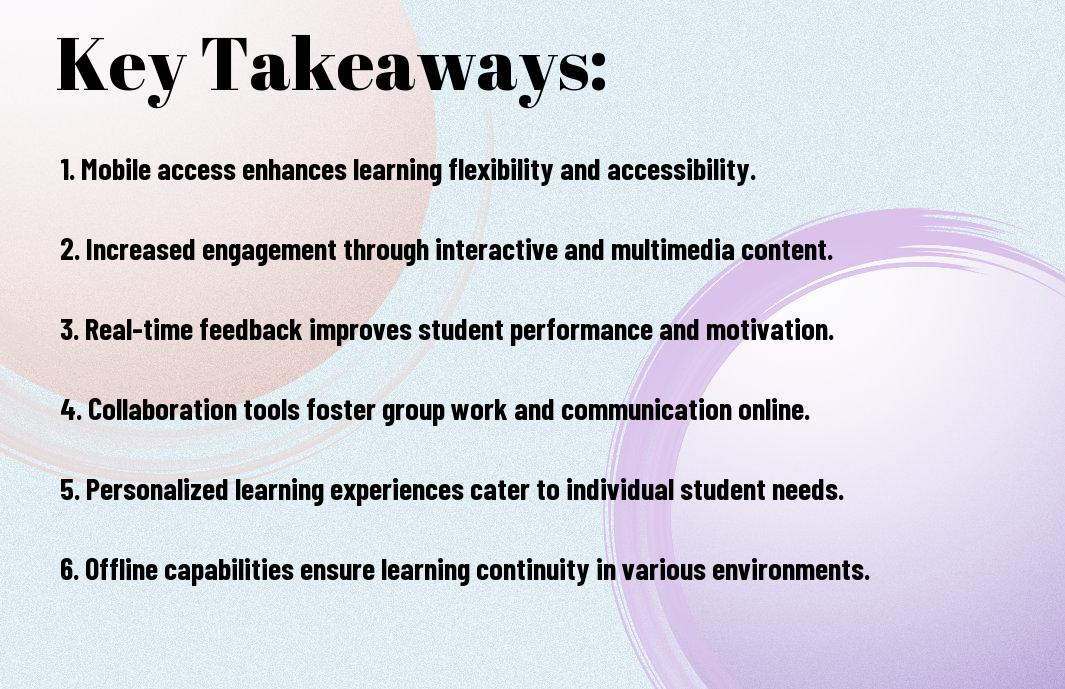
  • The accessibility of online educational resources has increased significantly with the advent of mobile technology, allowing students to access course materials and participate in learning activities from anywhere, at any time.
  • Personalized learning experiences can be created using mobile devices, enabling students to learn at their own pace and receive tailored feedback and assessments.
  • The use of mobile apps and learning management systems can enhance student engagement and motivation, as well as provide instructors with valuable insights into student performance and progress.
  • Mobile technology has also enabled the development of virtual classrooms and online communities, facilitating collaboration and interaction among students and instructors across geographical locations.
  • The affordability and convenience of mobile devices have made online education more inclusive, allowing students from diverse backgrounds and locations to access high-quality educational resources and opportunities.

Mobile Technology in Education

A significant shift is occurring in the way you learn, as mobile technology becomes increasingly integrated into educational settings, offering you new opportunities for flexible and accessible learning.

Advantages of Mobile Learning

Albeit with some limitations, mobile learning provides you with the ability to access a wide range of educational resources, facilitating a more personalized and engaging learning experience, as you can learn at your own pace, anytime and anywhere.

Challenges of Mobile Integration

Toward the successful implementation of mobile technology in education, you will encounter several obstacles, including issues related to equity, connectivity, and distraction, which can hinder the effectiveness of mobile learning, as you navigate the complexities of this new educational landscape.

Consequently, as you explore deeper into the challenges of mobile integration, you will find that addressing these issues requires a thoughtful and multi-faceted approach, taking into account your individual needs, the infrastructure of your educational institution, and the pedagogical goals of your courses, in order to unlock the full potential of mobile technology and enhance your overall learning experience.
Online Education Platforms

You are likely familiar with the numerous online education platforms that have emerged in recent years, offering a wide range of courses and degree programs. These platforms have made it possible for you to access educational content from anywhere, at any time.

Evolution of Online Learning

For instance, the development of online learning platforms has undergone significant changes, shifting from traditional classroom-based learning to more flexible and accessible formats. This evolution has enabled you to take control of your learning experience.

Role of Mobile Devices in Online Education

Beneath the surface of online education lies the significant impact of mobile devices, which have enabled you to access educational content on-the-go. Your mobile device has become an imperative tool for learning, allowing you to participate in online discussions and access course materials.

Online learning has become more personalized and interactive, thanks to the role of mobile devices in online education. As you navigate through online courses, you can access multimedia content, participate in discussions, and engage with instructors and peers, all from the convenience of your mobile device, thereby enhancing your overall learning experience.

Student Engagement and Motivation

Not surprisingly, mobile technology has transformed the way you approach online education, and as you can explore The Growth of Mobile Technologies in Educational Settings, you’ll find that it has a significant impact on your learning experience.

Impact of Mobile Technology on Student Participation

Mobility has become a key factor in enhancing your participation in online courses, as you can access course materials and engage with your peers from anywhere, at any time.

Mobile Devices as Motivational Tools

Mobility enables you to use your mobile devices as motivational tools, providing you with a sense of freedom and flexibility that can boost your enthusiasm for learning.

Participation in online discussions and activities becomes more engaging when you use mobile devices, as you can share your thoughts and ideas instantly, and you’ll find that your motivation to learn increases as you feel more connected to your course materials and peers.

Accessibility and Equity

All aspects of online education are influenced by mobile technology, and you will find that it has a significant impact on accessibility and equity, enabling you to access educational resources from anywhere, at any time, as long as you have a mobile device and internet connection.

Mobile Technology and Accessibility in Education

Beneath the surface of this conveniece lies a complex issue, as you consider how mobile technology affects the way you learn, and you will notice that it opens up new opportunities for students with disabilities, allowing you to participate more easily in online courses.

Addressing the Digital Divide

Prior to the widespread adoption of mobile technology, you may have faced significant barriers to accessing online education, but now you can use mobile devices to access educational resources, helping to bridge the gap between those who have access to technology and those who do not.

Consequently, as you research deeper into the world of online education, you will see that mobile technology has the potential to increase equity in education, but you must also consider the challenges that still exist, such as the cost of mobile devices and internet access, and how these challenges affect your ability to participate in online learning.

Pedagogical Implications

To effectively integrate mobile technology into online education, you should consider its impact on your teaching methods. As you explore the possibilities of mobile learning, you can learn more about The Role of Mobile Technology in Improving Accessibility and Quality of Learning to enhance your understanding.

Teaching Methods in the Mobile Era

Toward a more mobile-centric approach, you will need to adapt your teaching strategies to accommodate the unique characteristics of mobile devices, allowing you to create more engaging and interactive learning experiences for your students.

Redefining Teacher Roles

Methods of instruction are evolving, and as you navigate this shift, you will find that your role as an educator is transforming to accommodate the needs of mobile learners, requiring you to be more flexible and responsive to the changing needs of your students.

With the integration of mobile technology, you will have the opportunity to reimagine your role as a teacher, focusing on facilitating collaborative learning, providing personalized support, and developing interactive content that caters to the diverse needs of your students, ultimately enhancing the overall learning experience and helping you to create a more dynamic and effective online learning environment.

Future Directions

Many developments in mobile technology will continue to shape the online education landscape, offering you new opportunities for learning and growth, as you navigate the ever-changing world of digital education.

Emerging Trends in Mobile Education

Alongside the rise of mobile devices, you will see a shift towards more personalized and interactive learning experiences, allowing you to take greater control of your educational journey, with mobile education trends evolving to meet your unique needs.

Harnessing Mobile Technology for Educational Innovation

Aware of the potential benefits, you can leverage mobile technology to enhance your learning experience, as educators and institutions work to harness its power, creating innovative solutions to meet the demands of modern learners like you.

Mobile technology will undoubtedly play a significant role in shaping your educational experience, as you consider how to effectively integrate it into your learning routine, you will need to think critically about the ways in which it can support your academic goals, and how you can use it to access a wide range of educational resources, from online courses to interactive simulations, and collaborative learning tools, thereby expanding your opportunities for growth and development.

Conclusion

Drawing together the various threads of discussion, you can see that mobile technology has transformed your online education experience. As you explore the possibilities, consider consulting resources like (PDF) The effects of the use of mobile devices on the E-learning process to deepen your understanding of this impact, and shape your approach to your own learning in a rapidly changing world.

FAQ

Q: What are the benefits of mobile technology in online education?

A: The integration of mobile technology in online education has numerous benefits, including increased accessibility, flexibility, and convenience. With mobile devices, students can access course materials, participate in discussions, and submit assignments from anywhere, at any time. This flexibility is particularly beneficial for students with busy schedules or those who live in remote areas with limited access to traditional educational institutions. Moreover, mobile technology enables educators to create interactive and engaging learning experiences, such as gamification, simulations, and virtual labs, which can enhance student engagement and motivation.

Q: How does mobile technology enhance the learning experience in online education?

A: Mobile technology enhances the learning experience in online education by providing a personalized and interactive learning environment. Mobile devices allow students to access a wide range of educational resources, including videos, podcasts, and educational apps, which can be tailored to their individual learning needs and preferences. Additionally, mobile technology enables real-time feedback and assessment, which can help students track their progress and identify areas where they need improvement. Furthermore, mobile devices facilitate collaboration and communication among students and instructors, which can foster a sense of community and support in online learning environments.

Q: What are the potential challenges and limitations of using mobile technology in online education?

A: Despite the benefits of mobile technology in online education, there are several potential challenges and limitations that need to be considered. One of the main challenges is the issue of equity and access, as not all students may have access to mobile devices or reliable internet connectivity. Another challenge is the potential for distractions and multitasking, which can negatively impact student engagement and learning outcomes. Furthermore, mobile technology can also create new opportunities for academic dishonesty and cheating, which can compromise the integrity of online education. Finally, instructors may need to invest time and effort into developing mobile-friendly course materials and learning activities, which can be a significant challenge, particularly for those with limited technical expertise.

The Role of Big Data in Online Education

As you navigate the ever-evolving landscape of online education, you’re likely to encounter the concept of big data. Your ability to leverage this data can significantly enhance your learning experience. Big data analytics can help you personalize your educational journey, providing insights into your learning patterns and preferences. By utilizing big data, you can optimize your online education, making it more efficient and effective, leading to better outcomes and increased satisfaction with your educational pursuits.

Key Takeaways:

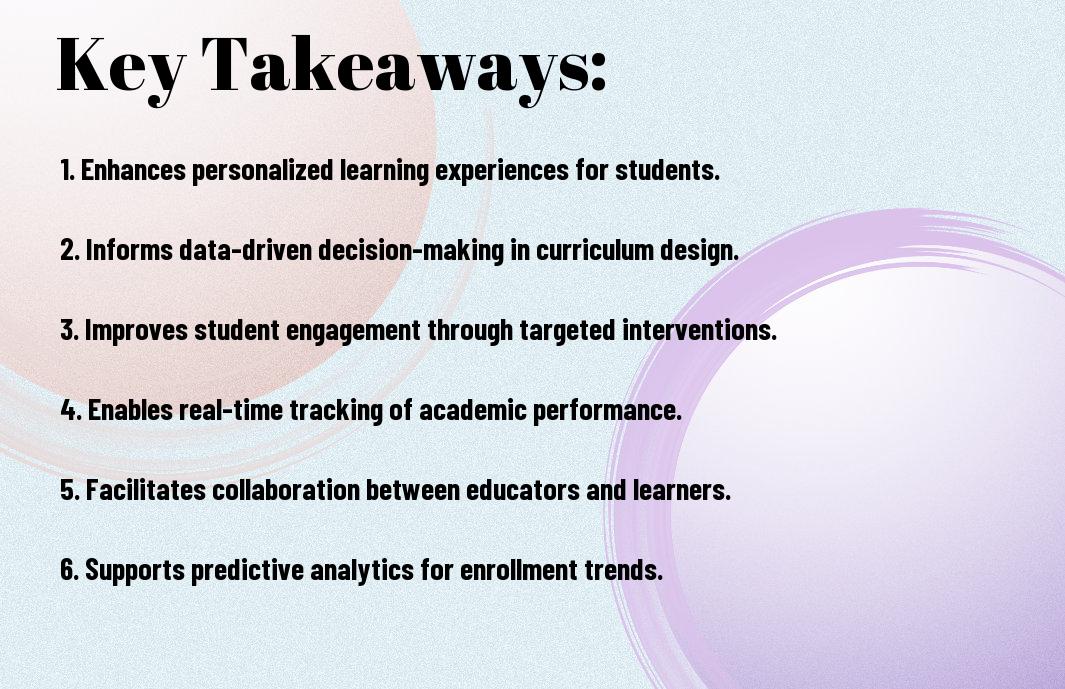
  • The adoption of Big Data in online education has led to a more personalized learning experience for students, allowing for tailored feedback and instruction.
  • Analytics tools are being used to track student engagement and progress, enabling educators to identify areas where students may need extra support.
  • The use of machine learning algorithms can help predict student outcomes, such as dropout rates and academic achievement, allowing for early intervention and support.
  • Data-driven insights are informing instructional design, enabling educators to create more effective and efficient online courses that meet the needs of diverse learners.
  • The integration of Big Data in online education has also raised important questions about privacy and security, highlighting the need for robust safeguards to protect student data and ensure its responsible use.

Benefits of Big Data in Online Education

The incorporation of big data in online education has numerous advantages, as you can learn more about Big Data in Online Education: Transforming the Learning Experience, which can enhance your understanding of the subject.

Personalized Learning Experiences

Encounters with tailored learning materials will become more common, as you will be able to access content that is specifically designed to meet your needs and abilities.

Improved Student Outcomes

About the outcomes of using big data, you will find that it leads to better academic performance, as your progress is closely monitored and adjustments are made to your learning plan accordingly.

Data analysis plays a significant role in improving student outcomes, as it helps you identify areas where you need improvement, allowing you to focus on those topics and ultimately achieve your academic goals.

Data Collection and Analysis

It is crucial to understand the role of big data in online education, as it helps you make informed decisions and improve your learning experience. You can collect data from various sources, analyze it, and gain valuable insights.

Sources of Big Data in Online Education

With the rise of online learning, you have access to a vast amount of data from various sources, including learning management systems, online courses, and student interactions, which can be used to improve your educational experience.

Tools and Techniques for Data Analysis

Collecting data is just the first step, as you need to analyze it to gain meaningful insights, and you can use tools like data mining, predictive analytics, and machine learning to uncover patterns and trends in your data.

To further analyze your data, you can use techniques such as clustering, decision trees, and regression analysis, which allow you to identify relationships between variables and make predictions about your future learning outcomes, enabling you to tailor your learning experience to your needs and goals.

Enhancing the Learning Environment

Despite the challenges in online education, big data can enhance your learning environment by providing personalized learning experiences and improving student outcomes. You can leverage data analytics to create a more engaging and effective learning space.

Adaptive Learning Platforms

Apart from traditional methods, adaptive learning platforms use big data to tailor the learning experience to your needs, allowing you to learn at your own pace and focus on areas where you need improvement.

Real-time Feedback and Assessment

Anyway, big data enables you to receive immediate feedback and assessment, helping you track your progress and identify knowledge gaps, thereby enabling you to make adjustments to your learning strategy.

Considering the benefits of real-time feedback and assessment, you can use data analytics to evaluate your performance and adjust your learning approach accordingly, allowing you to optimize your learning outcomes and achieve your academic goals more effectively.

Challenges and Limitations

Not surprisingly, you will face several challenges when implementing big data in online education, and you can learn more about Big Data in Education Industry: Benefits and Examples to better understand the potential issues.

Data Privacy and Security Concerns

Behind the benefits of big data, you’ll find concerns about data privacy and security, which you must address to ensure your students’ information is protected.

Technical and Infrastructure Challenges

Along with data concerns, you’ll encounter technical and infrastructure challenges, such as outdated systems and limited bandwidth, which can hinder the effective use of big data in your online education platform.

Another significant challenge you’ll face is the lack of standardization in data formats and the need for specialized skills to manage and analyze large datasets, which can be time-consuming and costly to overcome, affecting your ability to make data-driven decisions in your online education endeavors.

Opportunities for Innovation

Many institutions are leveraging big data to enhance your online learning experience. You can explore 5 Ways to Use Big Data to Enhance Higher Education to discover new approaches.

Artificial Intelligence and Machine Learning

Following the latest advancements, you’ll find that AI and machine learning can help personalize your learning experience, making it more effective and engaging.

Virtual and Augmented Reality Integration

To take your online education to the next level, you can utilize virtual and augmented reality tools, which can simulate real-world environments and make learning more immersive.

Also, as you investigate deeper into virtual and augmented reality integration, you’ll notice that it can increase your participation and retention rates, making your learning experience more enjoyable and interactive, allowing you to explore complex concepts in a more engaging way.

Implementation and Integration

For effective incorporation of big data in online education, you need to consider several factors, including infrastructure, resources, and stakeholder buy-in, to ensure a seamless integration process, ultimately enhancing your online learning experience.

Strategic Planning and Development

Between planning and execution, you will need to assess your institution’s capabilities, identify areas for improvement, and develop a tailored strategy to leverage big data, allowing you to make informed decisions about your online education platform.

Faculty Training and Support

One key aspect of successful big data integration is providing your faculty with the necessary training and support to effectively utilize data analytics tools, enabling them to track student progress, identify knowledge gaps, and create personalized learning plans.

Another important consideration for faculty training and support is the need for ongoing professional development opportunities, as you will need to stay up-to-date with the latest advancements in big data and analytics to maximize the potential of your online education platform, and to continually improve your teaching methods and student outcomes.

To wrap up

Now, as you consider the impact of big data on online education, you see how it enhances your learning experience. You can access personalized courses, track your progress, and receive real-time feedback. Your educational journey becomes more efficient and effective, with data-driven insights guiding your way. You can make informed decisions about your education, leveraging the power of big data to achieve your goals.

FAQ

Q: What is the role of big data in online education, and how does it enhance the learning experience?

A: Big data plays a significant role in online education by providing insights into student behavior, learning patterns, and educational outcomes. By analyzing large datasets, educators can identify areas where students may be struggling and develop targeted interventions to improve student success. Additionally, big data can help personalize the learning experience by tailoring course content and recommendations to individual students’ needs and abilities. This can lead to improved student engagement, increased motivation, and better academic performance.

Q: How does big data analytics support the development of adaptive learning systems in online education?

A: Big data analytics is necessary for the development of adaptive learning systems, which adjust to individual students’ learning styles, pace, and abilities in real-time. By analyzing vast amounts of data on student interactions, learning outcomes, and assessment results, adaptive learning systems can identify knowledge gaps and provide personalized recommendations for additional practice, review, or advanced learning materials. This enables students to learn at their own pace, filling knowledge gaps and accelerating their progress, while also helping educators to optimize their teaching strategies and improve student outcomes.

Q: What are some potential challenges and limitations associated with the use of big data in online education, and how can they be addressed?

A: Some potential challenges and limitations associated with the use of big data in online education include data privacy concerns, issues of data quality and validity, and the need for specialized skills and infrastructure to collect, analyze, and interpret large datasets. To address these challenges, educational institutions can implement robust data governance policies, invest in data management and analytics capabilities, and provide training and support for educators and staff. Additionally, institutions can prioritize transparency and accountability in their use of big data, ensuring that students and stakeholders understand how data is being used and protected, and that benefits are shared equitably among all stakeholders.

How to Overcome Technological Challenges in Online Education

As you navigate the world of online education, you will inevitably encounter technological challenges that can hinder your learning experience. You may struggle with outdated software, poor internet connectivity, or difficulty navigating digital platforms. Your ability to adapt to these challenges is imperative to succeeding in an online learning environment. You will learn how to address these issues and optimize your technology to ensure a seamless and productive online learning experience.

Key Takeaways:

To tackle the obstacles in online education, consider the following strategies:

  • Develop a comprehensive plan to address potential technological issues, such as internet connectivity problems or software compatibility, to minimize disruptions to the learning experience.
  • Invest in user-friendly and intuitive learning management systems that are easy to navigate, reducing the likelihood of student frustration and increasing engagement.
  • Provide technical support and training for educators and students to ensure they are comfortable using the technology and can troubleshoot common problems.
  • Foster a flexible and adaptable approach to online education, allowing for adjustments to be made as needed to accommodate the needs of students and stay up-to-date with the latest technological advancements.
  • Encourage collaboration and communication among students, educators, and technical support teams to identify and resolve technological challenges quickly and effectively.

Understanding Technological Challenges

Your journey to overcoming technological challenges in online education begins with understanding the issues at hand, and you can start by exploring how to address them, as discussed in How can we solve education’s technology challenges and improve online learning.

Identifying common obstacles in online education

Education technology can be complex, and you need to identify the common obstacles that hinder online learning, such as poor internet connectivity and outdated software.

Factors affecting online learning platforms

Little things like server speeds and data storage can affect your online learning experience, including:

  • Slow loading times
  • Poor video quality

. This understanding will help you navigate the challenges of online education.

With the rise of online learning, you need to consider the factors that affect online learning platforms, including:

  • Accessibility
  • Usability

. This will enable you to make informed decisions about your online education journey.

Preparing for Online Education

Any online education program requires careful preparation to ensure success. You need to develop a comprehensive plan, including setting up your online classroom and preparing your course materials.

Tips for instructors to prepare course materials

Materials are key to a successful online course, you will need to create engaging content, including text, images, and videos, consider the following:

  • Develop a clear syllabus
  • Create interactive lessons

Recognizing your students’ needs, you can tailor your materials to meet their expectations.

How-to guide for setting up online classrooms

There’s a lot to consider when setting up your online classroom, you will need to choose a learning management system, configure your settings, and test your equipment.

Another important aspect of setting up your online classroom is ensuring that you have a reliable internet connection and a quiet, dedicated space to teaching, you can also customize your classroom to fit your teaching style, and make sure you have all the necessary tools and resources to deliver high-quality lessons.

Effective Communication Strategies

Once again, you will find that establishing clear channels of communication is vital to the success of your online education endeavors, enabling you to convey your message effectively and address the needs of your students.

How to facilitate student-instructor interaction

The key to facilitating student-instructor interaction lies in creating a supportive and inclusive online environment where you can engage with your students and provide them with the necessary guidance and feedback.

Tips for encouraging student participation

Strategies such as regular check-ins, virtual office hours, and discussion forums can help you foster a sense of community and encourage your students to participate actively in the learning process. You can try:

  • Using video conferencing tools to conduct live sessions
  • Creating interactive content, such as quizzes and polls
  • Encouraging students to share their thoughts and ideas

Any efforts you make to engage your students will pay off in the long run.

Studentinstructor interaction is the backbone of a successful online learning experience, and you can enhance it by being approachable, responsive, and open to feedback. You can try:

  • Setting clear expectations and goals for your students
  • Providing regular feedback and assessment
  • Using analytics to track student engagement and progress

Any additional support you offer will help your students stay motivated and focused throughout the course.

Overcoming Technical Issues

For online education to be effective, you need to address technical issues promptly. Consider the factors that can hinder your learning experience, such as poor internet connectivity and outdated software.

Factors to consider when choosing learning management systems

Considering your specific needs, you should evaluate the following:

  • user interface
  • technical support

The learning management system you choose will greatly impact your online learning experience.

How-to troubleshoot common technical problems

Managing technical issues requires a proactive approach. You should be able to identify and fix common problems, such as login errors and browser compatibility issues.

For instance, when you encounter a technical problem, you can start by checking your internet connection and browser settings. You can also try restarting your device or seeking help from your instructor or technical support team. By being proactive and taking these steps, you can quickly resolve technical issues and stay focused on your learning goals.

Ensuring Accessibility and Equity

Many online education platforms struggle to provide equal access to all students.

Tips for creating inclusive online learning environments

Limited accessibility can hinder your students’ progress, you should consider the following:

  • Provide alternative formats for course materials
  • Use clear and simple language

Knowing how to create an inclusive environment will help you support your students.

How-to ensure equal access to technological resources

Similarly, environments that support diverse needs are imperative for online education, you can start by assessing your students’ technological abilities.

Understanding the challenges your students face when accessing technological resources is key to providing equal access, you can achieve this by conducting surveys or interviews to identify areas where your students need support, and then develop strategies to address these issues, such as providing resources or training to help your students access the necessary technology.

Staying Up-to-Date with Technological Advances

Now that online education is on the rise, you need to stay updated with the latest technological advancements to provide a seamless learning experience for your students.

How-to stay current with emerging trends in online education

There’s a need to constantly update your knowledge about the latest tools and platforms being used in online education, allowing you to make informed decisions about your teaching methods and strategies.

Factors to consider when implementing new technologies

With the abundance of new technologies emerging daily, you should consider several factors before implementing them, including:

  • Cost and budget
  • Technical support and infrastructure
  • Student engagement and feedback

Assume that your students will have varying levels of technical expertise, so you should choose technologies that are user-friendly and accessible.

When implementing new technologies, you should weigh the benefits and drawbacks, and consider the potential impact on your students’ learning experience, including:

  • Improved accessibility and flexibility
  • Enhanced student engagement and interaction
  • Increased efficiency and productivity

Assume that your role as an educator is to leverage technology to create a personalized and effective learning environment for your students.

To wrap up

Following this guide, you will be well-equipped to overcome technological challenges in online education. You can ensure a smooth learning experience by being proactive and having a plan in place. By staying informed and adapting to new technologies, you will enhance your online learning experience and achieve your educational goals. Your ability to navigate these challenges will ultimately lead to your success in the online learning environment.

FAQ

Q: What are the common technological challenges faced by students in online education and how can they be addressed?

A: The common technological challenges faced by students in online education include poor internet connectivity, outdated devices, and lack of technical skills. To address these challenges, students can invest in a reliable internet connection, use devices that meet the minimum system requirements for online courses, and seek technical support from their institution’s IT department. Additionally, students can take online tutorials or workshops to improve their technical skills and stay up-to-date with the latest digital tools and platforms.

Q: How can educators ensure that their online courses are accessible and user-friendly for students with different learning needs and abilities?

A: Educators can ensure that their online courses are accessible and user-friendly for students with different learning needs and abilities by incorporating universal design principles, providing alternative formats for course materials, and using accessible digital tools and platforms. They can also provide clear instructions and technical support, offer flexible assessment options, and encourage student feedback to identify and address any accessibility issues. Furthermore, educators can use analytics and feedback to continuously evaluate and improve the accessibility and usability of their online courses.

Q: What strategies can institutions use to support faculty in overcoming technological challenges and developing their online teaching skills?

A: Institutions can support faculty in overcoming technological challenges and developing their online teaching skills by providing professional development opportunities, such as workshops, webinars, and mentoring programs. They can also offer technical support and resources, including instructional design assistance, technology training, and equipment loans. Additionally, institutions can encourage collaboration and knowledge-sharing among faculty, provide incentives for innovative teaching practices, and recognize and reward faculty who demonstrate excellence in online teaching. By investing in faculty development, institutions can help ensure that their online education programs are of high quality and effective in supporting student learning.

Skip to content