As you consider the future of higher education, you may wonder how online learning is affecting traditional universities. You are likely aware that online courses and degree programs are becoming increasingly popular, but you may not know the full extent of their impact. Your understanding of this shift is important, as it will help you navigate the changing educational landscape and make informed decisions about your own educational path. You will explore the effects of online learning on traditional universities in this post.
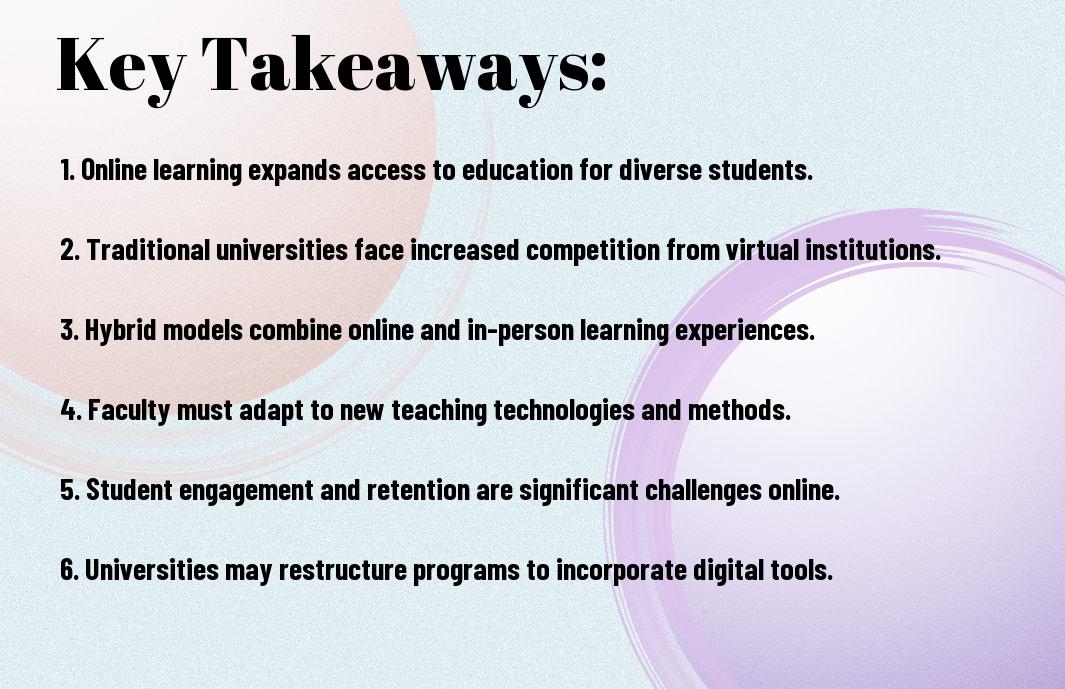
Key Takeaways:
- The rise of online learning has disrupted the traditional university model, offering students more flexibility and accessibility to education.
- Traditional universities are being forced to adapt to the changing landscape, with many institutions now offering online courses and degree programs to stay competitive.
- The cost-effectiveness of online learning is also a major factor, as students can often save money on tuition fees and other living expenses associated with attending a traditional university.
- The quality of education is no longer seen as being exclusive to traditional universities, with many online institutions offering high-quality educational experiences that rival their traditional counterparts.
- The future of education is likely to be a blended model, combining the best of both online and traditional learning to provide students with a more personalized and effective learning experience.
Traditional Universities in the Digital Age
While traditional universities have long been the cornerstone of higher education, you are now seeing a significant shift in the way students access knowledge. Your expectations and preferences are evolving, and universities must adapt to remain relevant.
The Rise of Online Learning Platforms
With the proliferation of online learning platforms, you have more options than ever before to access high-quality educational content. Your ability to learn from anywhere, at any time, is revolutionizing the way you approach education.
Shifting Student Preferences and Expectations
On the one hand, you are looking for more flexibility and autonomy in your learning experience. Your needs and goals are driving the demand for innovative and personalized education pathways.
Further, as you navigate the changing landscape of higher education, you are likely to encounter a range of new opportunities and challenges. You will need to consider how to balance the benefits of online learning with the value of traditional university experiences, and how to make informed decisions about your educational investments. Your choices will shape the future of higher education, and it is crucial to approach these decisions with a clear understanding of your options and their implications.
Impact on Academic Programs
The rise of online learning is transforming the way you approach academic programs, and traditional universities are feeling the effects. You may notice changes in the way courses are structured and delivered, and the role of faculty members is evolving to accommodate these shifts.
Changes in Curriculum Design and Delivery
Approximately, you will find that online learning platforms are forcing universities to rethink their curriculum design and delivery methods, and you can expect to see more flexible and personalized learning pathways emerging as a result, allowing you to have more control over your learning experience.
Faculty Roles and Responsibilities in Online Settings
Alongside this, you will notice that an adjustment in faculty roles and responsibilities is underway, and you can expect to see more emphasis on creating engaging online content and facilitating virtual discussions, which will help you to stay connected with your instructors and peers.
But as you research deeper into online learning, you will realize that faculty members are not just lecturers, but also mentors and coaches, guiding you through the online learning process, providing feedback and support, and helping you to achieve your academic goals, and you will appreciate the value they bring to your online learning experience.
Technological Advancements and Infrastructure
Not surprisingly, advancements in technology have enabled online learning to become a viable alternative to traditional universities. You can explore the impact of online education on higher education through resources such as (PDF) Exploring the Impact of Online Education on Higher Education, which provides valuable insights into this topic.
Learning Management Systems and Tools
Alongside the growth of online learning, you’ll find that an array of learning management systems and tools have been developed to support your educational journey, making it easier for you to access course materials and interact with instructors and peers.
Cybersecurity and Data Privacy Concerns
For your online learning experience to be secure, it’s important to consider the cybersecurity and data privacy concerns that come with it, as you’ll be sharing personal and sensitive information online, and you should be aware of the measures in place to protect your data.
Even as you engage with online learning platforms, you should be mindful of the potential risks and take steps to safeguard your personal information, such as using strong passwords and being cautious when clicking on links or downloading attachments, to ensure a safe and secure learning environment.

Student Engagement and Outcomes
Now, as you explore the impact of online learning on traditional universities, you’ll find that student engagement and outcomes are significantly affected. You’ll notice changes in how students interact with course materials and their overall performance.
Online Learning Environment and Student Motivation
Across various studies, you’ll see that online learning environments can greatly influence student motivation. You can observe how interactive tools and virtual discussions foster a sense of community, promoting your engagement and participation in the learning process.
Assessing Student Performance and Success
An vital aspect of online learning is evaluating student performance and success. You will be able to track your progress through digital assessments and feedback, allowing you to adjust your learning strategy and stay on track.
Online platforms provide you with a range of tools to assess your performance, from quizzes and exams to project-based evaluations. As you navigate these assessments, you’ll gain a deeper understanding of your strengths and weaknesses, enabling you to make informed decisions about your academic path and career goals. You’ll be able to identify areas where you need improvement and develop strategies to address them, ultimately enhancing your overall learning experience.
Financial Implications and Sustainability
Despite the rise of online learning, you can still explore its financial implications on traditional universities by visiting Impact of Online Schools on Traditional Education to learn more. As you consider the financial aspects, you’ll find that online learning affects your university’s budget.
Cost Savings and Resource Allocation
On one hand, you will notice that online learning can help your university save on infrastructure and resource costs, allowing for better allocation of your budget.
Revenue Models and Funding Strategies
Rather, you should focus on developing new revenue models and funding strategies to sustain your university in the face of online learning.
It is vital to understand that revenue models and funding strategies will play a significant role in your university’s sustainability, and you must explore innovative ways to generate revenue, such as offering online courses and degrees, to stay competitive in the education market.
Future Directions and Challenges
Once again, you will be faced with the challenge of adapting to the changing landscape of online learning, and you must consider how traditional universities will fit into this new paradigm.
Integration of Emerging Technologies
Beneath the surface of online learning lies the potential for emerging technologies to enhance your educational experience, and you can expect to see innovations like AI and virtual reality integrated into online courses.
Ensuring Accessibility and Equity in Online Education
Effectively, education is key to ensuring that online learning is accessible to all, and you should consider the ways in which your institution can promote equity and inclusion in online education.
Equity is a fundamental principle in online education, and you will need to consider how to address the disparities in access to technology and internet connectivity that may affect your students’ ability to participate in online learning, as you strive to create a more inclusive and equitable online learning environment that allows all students to succeed, regardless of their background or circumstances.
Summing up
To wrap up, you now have a better understanding of how online learning is changing the landscape of traditional universities. As you consider the future of education, you can explore the Impact of Online Education on Traditional Campus-based Universities to gain more insights. Your perspective on the role of online learning in shaping the future of education will help you make informed decisions about your own educational path.
FAQ
Q: What is the impact of online learning on the traditional university business model?
A: The rise of online learning has significantly disrupted the traditional university business model. With the increasing availability of online courses and degree programs, students are no longer limited to attending physical universities, leading to a potential decline in enrollment numbers and tuition revenue for traditional institutions. However, many universities are adapting to this change by offering their own online programs, forming partnerships with online education providers, and investing in digital infrastructure to enhance the learning experience and stay competitive in the market.
Q: How does online learning affect the quality of education provided by traditional universities?
A: Online learning has the potential to both positively and negatively impact the quality of education provided by traditional universities. On the positive side, online learning can enhance the educational experience by providing students with greater flexibility, access to a wider range of courses and resources, and the ability to learn at their own pace. However, there are also concerns that online learning may lack the interpersonal interaction and hands-on experiences that are often valuable components of traditional university education. To mitigate this, many universities are developing blended learning models that combine the benefits of online and traditional learning approaches.
Q: What strategies can traditional universities employ to stay competitive in a landscape dominated by online learning?
A: To stay competitive, traditional universities can focus on developing high-quality online programs that leverage their unique strengths and brand reputation. This can include investing in state-of-the-art digital learning platforms, forming strategic partnerships with other institutions or industry partners, and emphasizing the value of the traditional university experience, such as face-to-face interaction with faculty and peers, access to campus resources and facilities, and the potential for deeper, more immersive learning experiences. Additionally, universities can highlight their ability to provide students with a well-rounded education that prepares them for success in both their careers and personal lives, and emphasize the importance of the social and networking aspects of university life.