As you navigate the evolving landscape of online education, you’re likely wondering what trends will shape your learning experience. Your search for the latest developments is over, as you’re about to discover the most significant shifts in online education. You will learn about the innovative technologies and teaching methods that are transforming the way you learn, making education more accessible and effective than ever before. Stay ahead of the curve and explore the top online education trends that will impact your educational journey.

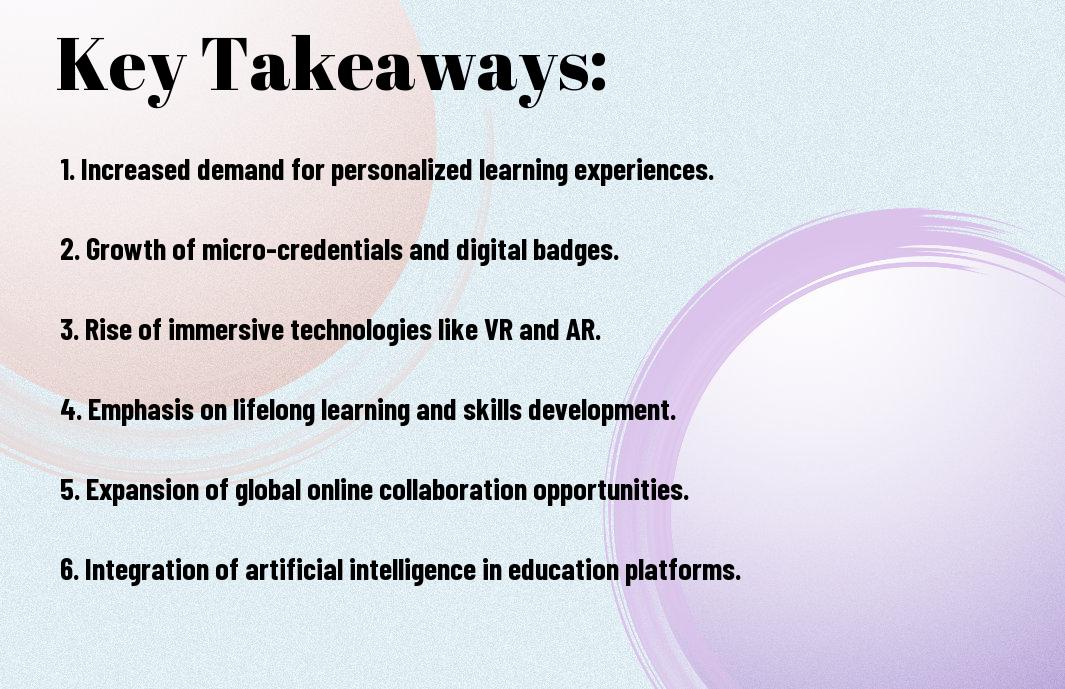
Key Takeaways:
To stay ahead in the rapidly evolving world of online education, it’s necessary to be aware of the latest trends. Here are the key points to consider:
- The rise of Personalized Learning is becoming increasingly popular, allowing students to learn at their own pace and focus on areas where they need improvement.
- Artificial Intelligence is being integrated into online education platforms to enhance the learning experience, provide real-time feedback, and offer tailored recommendations.
- Virtual Reality and Augmented Reality are being used to create immersive and interactive learning environments, making complex concepts more engaging and accessible.
- The growth of Microlearning is on the rise, with students preferring shorter, bite-sized lessons that fit into their busy schedules and allow for flexible learning.
- The emphasis on Soft Skills development is increasing, with online education platforms recognizing the importance of teaching skills like communication, teamwork, and time management alongside academic subjects.
Emerging Technologies
Before exploring into the latest online education trends, you should consider the role of emerging technologies in shaping the future of learning. You will notice that innovative tools and platforms are being developed to enhance your online learning experience.
Artificial Intelligence in Online Learning
Beyond the current state of online education, you will find that artificial intelligence is being integrated into various learning platforms to provide personalized learning experiences tailored to your needs and preferences.
Virtual and Augmented Reality in Education
Alongside other emerging technologies, you will discover that virtual and augmented reality are being used to create immersive learning environments that simulate real-world scenarios, allowing you to engage with complex concepts in a more interactive way.
Understanding how virtual and augmented reality work in education will help you appreciate the potential of these technologies to transform your learning experience. You can expect to see more interactive simulations, 3D models, and virtual labs that will make complex subjects more accessible and engaging, allowing you to explore and learn in a highly immersive and interactive environment.
Personalized Learning
You can expect personalized learning to play a significant role in online education, as it allows you to tailor your learning experience to your individual needs and goals.
Adaptive Learning Platforms
Following the trend of personalized learning, adaptive learning platforms will continue to emerge, enabling you to learn at your own pace and receive customized recommendations for improvement.
Learning Analytics and Feedback
Alongside personalized learning, learning analytics and feedback will become increasingly important, allowing you to track your progress and identify areas where you need to focus your efforts.
Feedback is vital to your learning process, and with learning analytics, you will be able to analyze your strengths and weaknesses, helping you to adjust your approach and achieve your educational goals more effectively, as you will have access to detailed insights into your learning journey.
Online Course Design
After exploring the latest developments in online education, you can find more information on Education Trends to Watch in 2024 to enhance your knowledge. As you design your online course, consider the evolving trends that will impact your teaching methods.
Microlearning and Bite-Sized Content
One of the key trends is the use of microlearning, where you break down complex topics into smaller, manageable chunks, making it easier for your students to learn and retain information.
Gamification and Interactive Elements
Bite-sized learning is often paired with gamification, where you incorporate interactive elements, such as quizzes and games, to make learning more engaging and fun for your students.
In addition, as you examine deeper into gamification, you will find that it offers a wide range of benefits, including increased student motivation and participation, allowing you to create a more immersive and effective learning experience tailored to your students’ needs.
Accessibility and Inclusion
Once again, as you consider the future of online education, you’ll want to stay up-to-date on the latest trends, such as those outlined in the 2024 Online Education Trends Report, to ensure your learning environment is inclusive for all.
Online Education for Students with Disabilities
Students with disabilities will benefit from advancements in online education, as institutions prioritize accessibility and provide accommodations to support their success, enabling you to create a more inclusive learning environment.
Language Learning and Cultural Exchange
Accessibility to language learning tools and cultural exchange programs will continue to grow, allowing you to connect with learners from diverse backgrounds and expand your understanding of global cultures.
Exchange programs will become increasingly popular, enabling you to engage with international students, fostering global perspectives and language skills, and helping you navigate the complexities of a multicultural world, as you explore the benefits of language learning and cultural exchange in online education.
Teacher Training and Support
Many online educators need training and support to effectively teach in a virtual environment, and you will see an increasing focus on providing them with the necessary tools and resources to succeed.
Professional Development for Online Educators
Alongside this, you will find that professional development opportunities are being designed to help you enhance your skills and knowledge in online teaching, enabling you to create engaging and effective learning experiences for your students.
Mentorship and Community Building
Supporting your growth as an online educator, mentorship and community building initiatives are being implemented to connect you with peers and experienced instructors, fostering a sense of collaboration and shared learning.
Due to the isolating nature of online teaching, you will find that mentorship and community building are crucial for your success, providing you with a network of colleagues who can offer guidance, feedback, and encouragement as you navigate the challenges of online education, helping you to stay motivated and committed to your students’ learning outcomes.
Future of Online Education
Your online education is evolving rapidly, with new technologies and innovations emerging every day, changing the way you learn and interact with educational content.
Trends and Predictions
Across the globe, you are witnessing a shift towards more personalized and interactive online learning experiences, with artificial intelligence and virtual reality playing a significant role in shaping the future of education.
Challenges and Opportunities
For you, the rise of online education presents both obstacles and advantages, including the need for reliable internet access and digital literacy, as well as the opportunity to access high-quality educational resources from anywhere in the world.
Understanding the challenges and opportunities that come with online education is key to navigating this new landscape, and you will need to be aware of the potential pitfalls, such as unequal access to technology and the risk of burnout, in order to make the most of the benefits that online learning has to offer, including increased flexibility and accessibility.
Final Words
Now that you have explored the top online education trends, you can enhance your learning experience. You will find more insights on 7 education trends to watch in 2024 to inform your decisions. Your awareness of these trends will help you make informed choices about your online education, preparing you for a rapidly changing world. You are now equipped to navigate the evolving online education landscape with confidence.
FAQ
Q: What are the current top online education trends that are transforming the learning landscape?
A: The top online education trends to watch include the integration of Artificial Intelligence (AI) and Machine Learning (ML) in online courses, the rise of microlearning and bite-sized learning modules, and the increasing adoption of Virtual and Augmented Reality (VR/AR) technologies to create immersive learning experiences. These trends are revolutionizing the way students learn and interact with educational content, making online learning more engaging, personalized, and effective.
Q: How are online education platforms using data analytics to enhance the learning experience?
A: Online education platforms are leveraging data analytics to track student performance, identify knowledge gaps, and provide personalized recommendations for improvement. By analyzing learning patterns, platforms can offer tailored learning pathways, real-time feedback, and adaptive assessments, enabling students to learn at their own pace and achieve better outcomes. Additionally, data analytics helps educators to refine their teaching methods, creating a more effective and student-centered learning environment.
Q: What role will mobile learning play in the future of online education, and how will it impact student engagement?
A: Mobile learning is expected to play a significant role in the future of online education, as it offers greater flexibility and accessibility for students to learn on-the-go. With the increasing use of smartphones and mobile devices, online education platforms are optimizing their content to be mobile-friendly, enabling students to access courses, interact with peers, and engage with educational materials anytime, anywhere. This shift towards mobile learning is likely to increase student engagement, as learners can fit learning into their busy schedules, and stay connected with their educational community through mobile-based discussions and collaboration tools.