As you explore ways to enhance your online learning experience, you’ll find that social media can be a valuable tool. You can leverage platforms to access educational content, connect with instructors, and engage with peers. If you’re interested in promoting your own educational content, you can learn How to use social media to promote my online courses and educational content effectively. By utilizing social media strategically, you can optimize your online learning and make the most of your educational pursuits.
Key Takeaways:
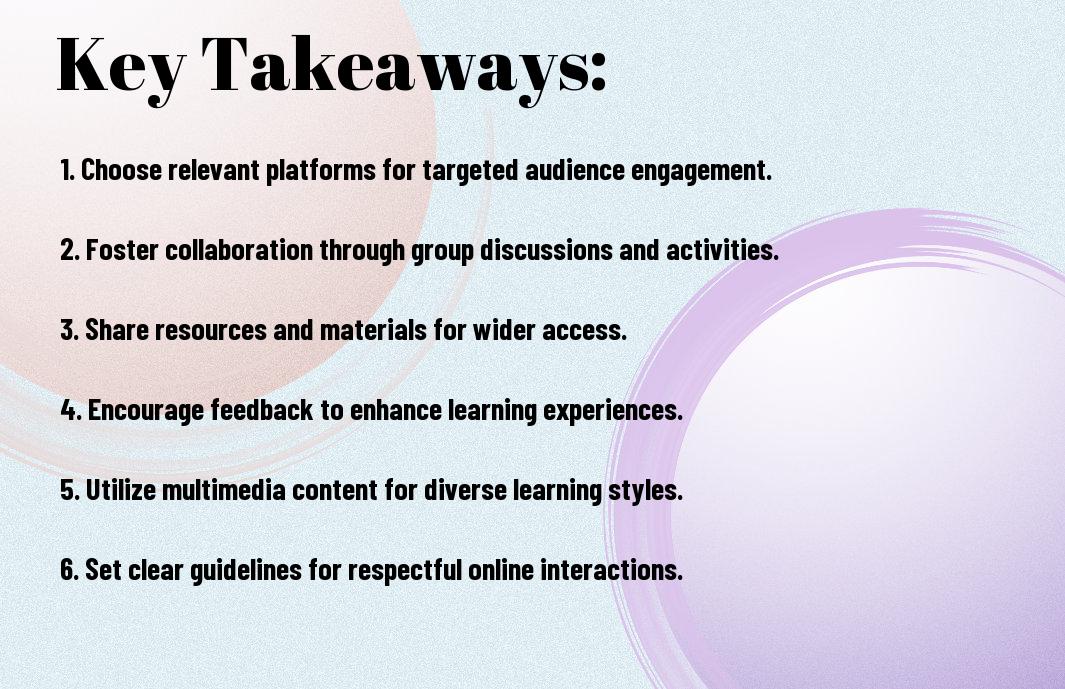
To effectively utilize social media for online learning, consider the following points:
- Establish a strong online presence by creating profiles on relevant platforms such as Twitter, LinkedIn, or Facebook to connect with educators, peers, and industry experts.
- Leverage interactive tools like videos, podcasts, and live streams to enhance engagement and facilitate real-time discussions, making online learning more immersive and dynamic.
- Utilize social media groups and forums to foster collaboration and knowledge sharing among learners, promoting a sense of community and belonging in online learning environments.
- Tap into educational resources and curated content shared by experts and influencers in your field, using hashtags to discover and organize relevant information and stay updated on the latest trends and developments.
- Develop a personalized learning approach by using social media analytics to track your progress, identify areas of improvement, and adjust your learning strategy to achieve your academic goals and maximize the effectiveness of your online learning experience.
Setting Up Social Media for Online Learning
Before you start using social media for online learning, you need to set up your accounts and create a plan. This will help you stay organized and ensure that you’re using social media effectively.
Creating a Professional Online Presence
Presenting yourself professionally online is important for online learning. You will want to create a profile that showcases your skills and interests, and helps you connect with others in your field.
Choosing the Right Social Media Platforms
Social media platforms vary in their features and user bases, so you’ll want to choose the ones that best fit your needs. You should consider which platforms your peers and instructors are using, and which ones have the most relevant content and discussions.
Further investigation into the different social media platforms will help you determine which ones are most suitable for your online learning goals. You can explore the features and tools of each platform, and consider how you can use them to engage with course materials, connect with others, and share your own knowledge and experiences.
Finding and Sharing Educational Resources
While navigating social media for online learning, you can discover a wealth of educational resources to enhance your knowledge. You can find and share valuable content, such as articles, videos, and podcasts, to support your learning journey.
Locating Online Courses and Tutorials
Online learning platforms and social media groups can help you locate online courses and tutorials tailored to your interests and needs. You can search for specific topics and find relevant courses, tutorials, and educational resources to expand your knowledge.
Sharing Knowledge and Experiences
For instance, you can share your own learning experiences, ask questions, and engage with others to create a collaborative learning environment. You can also share relevant content, such as articles, videos, or blog posts, to contribute to the discussion and help others learn.
Even as you share your knowledge and experiences, you can learn from others and gain new insights. You can participate in online discussions, join social media groups, and follow educators or experts in your field to stay updated on the latest developments and best practices, which can help you achieve your learning goals and expand your professional network.
Engaging with Online Communities
To maximize your online learning experience, you need to engage with online communities related to your field of study. This will help you stay updated with the latest developments and trends, and provide opportunities to network with like-minded individuals.
Participating in Forums and Discussions
Interacting with others in online forums and discussions can be a great way to deepen your understanding of a subject. You can ask questions, share your thoughts, and learn from others who have experience in the field.
Collaborating with Peers and Experts
About the benefits of collaborating with others, you will find that it enhances your learning experience. You can work on projects, share resources, and get feedback from your peers and experts, which can help you improve your skills and knowledge.
For instance, you can join online groups or forums where you can collaborate with others on projects, share your work, and get constructive feedback. This will help you develop your critical thinking and problem-solving skills, and prepare you for real-world challenges. You can also learn from experts in the field, who can provide valuable insights and guidance to help you achieve your learning goals.
Creating and Curating Content
Once again, you’ll find that social media platforms offer a wealth of opportunities for creating and curating content to support your online learning. You can share your own educational materials, such as videos, podcasts, and blog posts, to engage with your audience and facilitate learning.
Developing Educational Content
Content creation is key to providing valuable learning experiences for your audience. You can develop educational content, such as tutorials, webinars, and online courses, to share your expertise and knowledge with others, making it easily accessible and convenient for them to learn from you.
Curating Relevant and Useful Information
Before stepping into the world of content curation, you need to identify relevant and useful information that aligns with your learning goals. You can use social media to discover and share relevant articles, research papers, and other educational resources that support your online learning journey.
Another aspect of curating relevant and useful information involves organizing and presenting the content in a way that makes it easy for others to access and learn from. You can use social media tools, such as hashtags and playlists, to categorize and share your curated content, allowing you to create a valuable learning resource for yourself and others.
Managing Online Presence and Time
Your online presence is a reflection of your personal brand, and it’s imperative to maintain a professional image while using social media for online learning.
Maintaining a Professional Online Image
With a consistent tone and style, you can establish a strong online presence that showcases your expertise and interests, helping you connect with like-minded individuals and educators.
Effectively Managing Time Spent on Social Media
Beneath the surface of social media lies a plethora of resources, and you must allocate your time wisely to maximize your online learning experience, avoiding distractions and staying focused on your goals.
For instance, you can set aside specific times of the day to check your social media accounts, using tools like website blockers or apps that track your time spent on social media to help you stay on track, and prioritize your online activities to ensure you’re making the most of your time, achieving a balance between learning and socializing.

Measuring Success and Overcoming Challenges
Despite the many benefits of social media for online learning, you will need to track your progress and tackle any obstacles that arise. This involves assessing your goals, identifying areas for improvement, and adjusting your strategy as needed.
Evaluating the Effectiveness of Online Learning
Around the time you start using social media for online learning, you will want to establish metrics to evaluate its effectiveness, such as engagement rates, completion rates, and learner feedback, to help you refine your approach.
Addressing Common Challenges and Obstacles
Across various social media platforms, you may encounter challenges such as technical issues, distractions, or difficulty in measuring impact, which can hinder your online learning experience, and it’s important to be prepared to address them.
Understanding the common challenges that can arise when using social media for online learning, such as privacy concerns, information overload, or inadequate support, will help you develop strategies to overcome them, ensuring you get the most out of your online learning experience, and achieve your goals, with your chosen social media platforms and tools.
Final Words
Conclusively, you have learned how to effectively utilize social media for online learning, enhancing your educational experience. You can now leverage platforms to access resources, connect with peers, and engage with instructors. By applying these strategies, you will optimize your online learning, making it more productive and enjoyable, thus achieving your academic goals with your newfound skills.
FAQ
Q: What are the benefits of using social media for online learning?
A: Using social media for online learning offers numerous benefits, including increased accessibility, flexibility, and connectivity. Social media platforms provide a wide range of educational resources, such as video tutorials, podcasts, and online courses, which can be accessed from anywhere with an internet connection. Additionally, social media enables learners to connect with instructors, peers, and experts in their field, facilitating collaborative learning, feedback, and networking opportunities. By leveraging social media, learners can also stay updated on the latest developments and trends in their field, enhancing their overall learning experience.
Q: How can I effectively use social media to find and share educational content?
A: To effectively use social media for finding and sharing educational content, start by identifying relevant social media platforms and hashtags related to your field of study. Follow educators, experts, and organizations that share valuable content, and engage with their posts by liking, commenting, and sharing. Utilize social media search functions to discover new content, and use platforms like Pinterest or Flipboard to curate and organize relevant resources. When sharing content, use clear and concise descriptions, include relevant hashtags, and tag relevant users to increase visibility and engagement. Furthermore, consider creating and sharing your own educational content, such as blog posts, videos, or infographics, to contribute to the online learning community.
Q: How can I maintain a safe and respectful online presence while using social media for online learning?
A: To maintain a safe and respectful online presence while using social media for online learning, it is imperative to establish clear boundaries and guidelines for your online interactions. Be cautious when sharing personal information, and avoid engaging with suspicious or unverified accounts. Use strong, unique passwords, and enable two-factor authentication to protect your accounts from unauthorized access. When interacting with others online, be respectful and professional, avoiding inflammatory or offensive language. Additionally, be mindful of copyright and intellectual property laws when sharing content, and always cite sources and give credit where credit is due. By being aware of these best practices, you can maintain a safe and respectful online presence, and focus on achieving your online learning goals.