Education

What are the most common mistakes beginners make when learning piano

Just starting out on the piano journey? Let’s talk about the common blunders beginners tend to make when venturing into the world of piano playing. From improper hand positioning to skipping basic techniques, there are pivotal errors that can hinder your progress. By identifying and rectifying these missteps early on, you can set yourself up for a smoother and more successful learning experience. So, let’s probe into some key pitfalls to avoid on your musical endeavor!

Key Takeaways:

  • Lack of Proper Posture: Beginners often overlook the importance of maintaining correct posture while playing the piano, which can lead to discomfort and inefficient playing.
  • Skipping Fundamentals: Many beginners try to rush through the basics and jump into advanced pieces, missing out on building a strong foundation in music theory, technique, and fundamental skills.
  • Not Practicing Consistently: Consistency is key when learning the piano, and beginners often make the mistake of not practicing regularly, hindering their progress and skill development.

Lack of Proper Hand Positioning

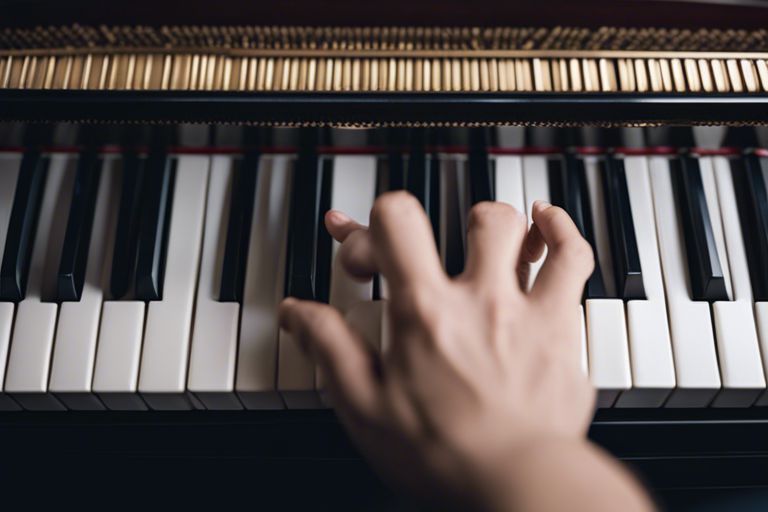
Before delving into the intricacies of playing the piano, it’s crucial to understand the importance of proper hand positioning. One of the most common mistakes beginners make is not paying attention to how they position their hands on the keys. This can hinder your progress and lead to inefficiencies in your playing technique.

Failing to Keep Wrists Straight

Proper hand positioning includes keeping your wrists straight and level with the piano keys. Many beginners tend to let their wrists droop or lift them too high, resulting in unnecessary strain on your hands and fingers. By keeping your wrists straight, you can have better control over your finger movements and produce a more consistent tone.

Ignoring Finger Independence

Keep in mind that each finger on your hand should be able to move independently, but many beginners struggle with this concept. Ignoring finger independence can lead to clumsy and uneven playing, ultimately hindering your progress. Practice exercises that focus on strengthening each finger individually to improve your overall dexterity and control on the keys.

For instance, you can try exercises that involve playing scales or arpeggios with each finger, ensuring that the other fingers remain relaxed and ready to play when needed. By improving your finger independence, you will be able to tackle more complex pieces with greater ease and precision.

Insufficient Practice Routine

There’s a crucial aspect of learning the piano that often gets overlooked – your practice routine. One of the most common mistakes beginners make is not dedicating enough time to practice regularly. Playing the piano is a skill that requires consistent practice to improve and progress. If you only practice sporadically or for short periods, you may find yourself frustrated with slow progress and lack of development in your playing.

Not Setting Realistic Goals

An necessary part of developing an effective practice routine is setting realistic goals. Many beginners make the mistake of setting overly ambitious or vague goals, such as wanting to play a complex piece within a short timeframe. When you set unrealistic goals, you’re setting yourself up for disappointment and frustration. It’s crucial to set achievable short-term and long-term goals that align with your current skill level and gradually push you to improve.

Practicing Without a Clear Plan

One common mistake beginners make is practicing without a clear plan. You may sit down at the piano and play through pieces or exercises aimlessly, without a structured approach. This lack of direction can lead to inefficient practice sessions and hinder your progress. To make the most out of your practice time, it’s necessary to have a clear plan outlining what specific skills or pieces you will work on during each session.

With a well-thought-out practice plan, you can focus on targeted areas for improvement, track your progress more effectively, and stay motivated as you see yourself making consistent strides in your piano playing journey.

Inadequate Finger Strength and Dexterity

Neglecting Finger Exercises

Exercises designed to improve finger strength and dexterity are crucial for your development as a piano player. Neglecting these exercises can lead to difficulties in playing more advanced pieces and hinder your progress. By incorporating finger exercises into your practice routine, you can build up the necessary strength and coordination to tackle challenging pieces with ease.

Failing to Develop Finger Independence

Dexterity is necessary for playing the piano effectively. Failing to develop finger independence can limit your ability to play complex passages smoothly and accurately. Work on exercises that focus on each finger individually to enhance their independence and coordination. This will help you play with more precision and control, ultimately improving your overall performance.

Improving your finger dexterity will not only make playing the piano more enjoyable but also expand the range of pieces you can confidently perform. Take the time to focus on developing your finger independence, and you will see significant improvements in your playing abilities.

Misconceptions About Reading Sheet Music

Once again, as you explore into piano playing, it’s crucial to address some common misconceptions that beginners often encounter. Reading sheet music can be daunting at first, but with practice and understanding, you can master this skill. If you’re looking for more insights on avoiding mistakes when learning piano, you can check out this helpful Quora thread.

Confusing Note Values

For beginners, one of the key stumbling blocks in reading sheet music lies in understanding note values. Different notes indicate varying durations of sound, and it’s imperative to grasp this concept early on. When you see a whole note, for example, it lasts for four beats, while a half note lasts for two. Make sure not to rush through this fundamental aspect as it forms the basis of your rhythm and timing in playing the piano.

Ignoring Key Signatures

Misconceptions about key signatures can hinder your piano progress. Ignoring key signatures can lead to playing in the wrong key, resulting in a discordant sound. Each key has its own set of sharps or flats, and mastering these nuances is crucial for playing pieces accurately. Another common mistake is assuming that accidentals only apply to the note they immediately precede, but they actually affect all subsequent notes of the same pitch within the measure. Understanding key signatures will greatly improve your overall musicality and performance.

Poor Posture and Body Alignment

Many beginners make the mistake of not paying attention to their posture and body alignment when learning the piano. Proper posture is crucial for playing the piano correctly and avoiding any unnecessary strain on your body.

Slouching or Leaning Forward

Alignment is key when it comes to playing the piano effectively. One common mistake is slouching or leaning forward while playing. This not only affects your posture but can also hinder your performance. When you slouch or lean forward, it puts pressure on your back and neck, leading to discomfort and even potential injuries. Remember to sit up straight with your back aligned against the back of the chair to maintain proper posture and body alignment.

Failing to Keep Feet Flat on the Floor

Floor. Another critical aspect of proper body alignment when playing the piano is ensuring that your feet are flat on the floor. Many beginners make the mistake of letting their feet dangle or rest on their toes, which can cause imbalance and affect your overall stability. Keeping your feet flat on the floor helps ground you and provides a stable foundation for playing. Make sure to adjust the piano bench height if needed to ensure your feet are comfortably flat on the floor while playing.

Ineffective Use of Pedals

Not sure if you are properly utilizing the pedals on your piano? Understanding how to use them effectively can greatly impact the quality of your playing. If you want to probe deeper into the topic, you can check out 8 Key Mistakes You Want to Avoid When Learning the Piano for more insights.

Overusing the Sustain Pedal

With the sustain pedal, beginners often fall into the trap of overusing it. While it can create a beautiful and harmonious sound by blending notes together, excessive use can result in a muddy and blurred sound. Make sure to release the pedal periodically to prevent sounds from blending when they shouldn’t.

Ignoring the Una Corda Pedal

On the other hand, novice pianists sometimes ignore the Una Corda pedal entirely. This pedal, also known as the soft pedal, creates a softer and more muted tone by shifting the hammers’ position. By neglecting to use this pedal, you are missing out on the opportunity to add depth and variety to your playing.

Sustain, Una Corda, and Sostenuto pedals are necessary tools at your disposal as a pianist. Understanding how and when to use them will significantly enhance your musical expressions and bring your playing to a whole new level. Take the time to practice with different pedal techniques and experiment to find the perfect balance for each piece you play.

To wrap up

Considering all points, remember that many beginners make similar mistakes in their piano learning journeys. It’s necessary to practice consistently and build a strong foundation by focusing on technique rather than just playing through songs. Don’t rush the learning process; take your time to perfect each skill before moving on to the next. Avoid comparing yourself to others and instead focus on your progress and growth. Lastly, seek guidance from a qualified instructor who can provide valuable feedback and help you improve your playing.

Q: What are the most common mistakes beginners make when learning piano?

A: The most common mistakes beginners make when learning piano are:

  • Skipping proper finger positioning and hand posture
  • Not practicing consistently
  • Ignoring music theory and just focusing on playing songs

Q: How important is proper finger positioning and hand posture when learning piano?

A: Proper finger positioning and hand posture are crucial when learning piano as they allow for better control and fluidity in playing. Ignoring these fundamental aspects can lead to bad habits that are difficult to correct later on.

Q: Why is consistency in practicing important for beginners learning piano?

A: Consistency in practicing is key for beginners learning piano as it helps build muscle memory, improve finger agility, and strengthen overall playing skills. Regular practice sessions also help in retaining and applying new techniques effectively.
How do piano learning apps track and measure progress

Playing the piano is a journey of constant improvement, and with the help of technology, you can now easily track your progress. Piano learning apps use innovative methods to monitor your development, analyzing factors like speed, accuracy, and consistency. By regularly measuring your achievements, these apps provide valuable insights into your strengths and areas for growth. Want to dive deeper into tracking your piano progress? Check out How to Track your Progress on the Piano with Tonebase’s new practice plan for expert guidance.

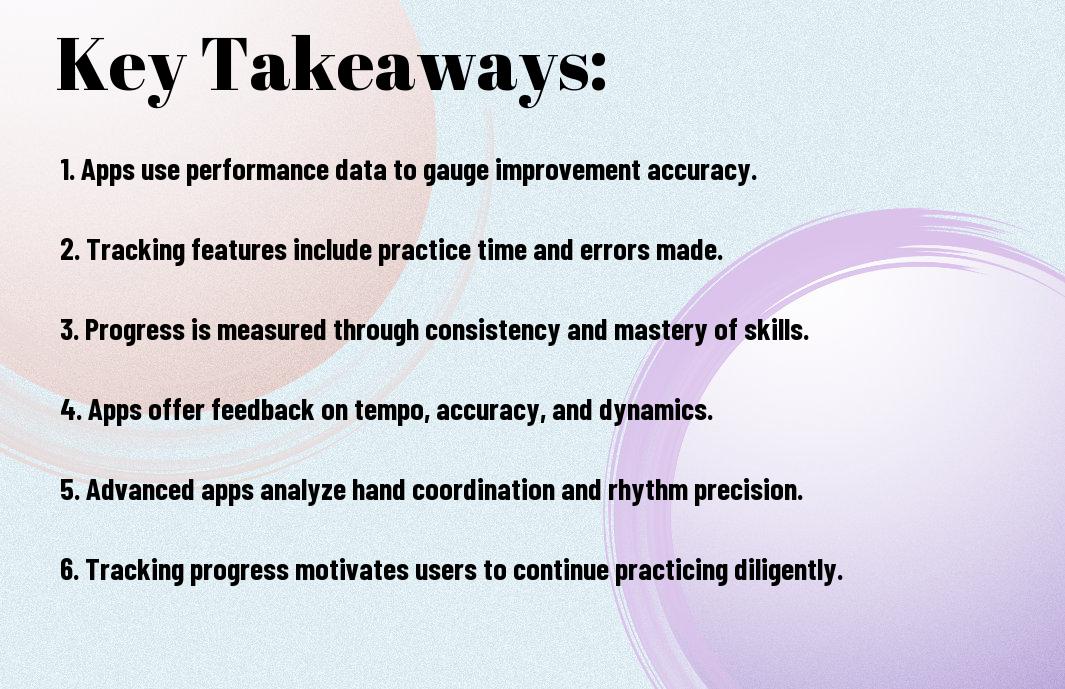
Key Takeaways:

  • Usage Data: Piano learning apps track progress through analyzing users’ usage data, such as practice time, frequency of sessions, and completion of lessons.
  • Performance Metrics: These apps measure progress by evaluating users’ performance on various exercises, quizzes, and songs, providing insights into areas of strength and areas needing improvement.
  • Feedback and Recommendations: Piano learning apps provide feedback and personalized recommendations based on progress data, helping users optimize their learning and practice techniques.

The Importance of Progress Tracking

While learning to play the piano, tracking your progress is crucial for several reasons. It allows you to see how far you have come since you started, providing motivation to keep going. Additionally, progress tracking helps you set achievable goals and gives you a clear sense of direction in your piano learning journey.

Setting Goals and Motivation

Any successful piano student knows the importance of setting goals to keep motivation levels high. Progress tracking in piano learning apps enables you to set specific, measurable goals for your practice sessions. By monitoring your improvement over time, you can see firsthand how your hard work and dedication translate into tangible results, keeping you motivated to continue practicing and improving your skills.

Identifying Areas for Improvement

Importance of tracking your progress extends to identifying specific areas where you can improve. Piano learning apps often provide detailed feedback on your performance, highlighting areas that may need more practice. By focusing on these specific areas, you can tailor your practice sessions to address weaknesses and enhance your overall piano playing abilities.

With progress tracking, you can turn your piano practice sessions into purposeful and efficient learning experiences, guiding you towards becoming a more proficient pianist. By utilizing the tools available in piano learning apps, you can track your progress, set achievable goals, and identify areas for improvement, ultimately accelerating your growth as a musician.

Methods of Progress Tracking

Algorithm-Based Assessments

Even though it may seem like magic, piano learning apps use sophisticated algorithms to assess your progress. These algorithms analyze various factors such as your timing, accuracy, and technique to provide feedback on your performance.

User-Generated Feedback

The feedback you provide while using the app also plays a significant role in tracking your progress. By sharing how challenging or enjoyable you find certain lessons or songs, the app can tailor recommendations and adjust difficulty levels to suit your needs.

The more feedback you actively provide, the more personalized your learning experience becomes. It’s a symbiotic relationship where your input helps the app fine-tune its recommendations to keep you engaged and motivated.

Performance Analytics

Tracking your progress through performance analytics involves capturing detailed data on your playing sessions. This can include the number of correct notes played, timing accuracy, and even the pressure you apply to the keys. By analyzing this data, the app can identify areas where you excel and pinpoint areas for improvement.

Progress with Performance Analytics

It’s fascinating to see how performance analytics can break down your playing into measurable data points. This analytical approach gives you concrete insights into your progress and empowers you to set specific goals for improvement.

Types of Data Collected

Now let’s examine into the types of data gathered by piano learning apps to track and measure your progress. Understanding what aspects of your playing are being monitored can help you focus on specific areas for improvement. This information is crucial for personalized feedback and tailored practice recommendations.

  • Practice Time and Frequency
  • Accuracy and Error Rates
  • Technique and Finger Independence
  • Speed and Progression
  • Engagement and Retention

Practice Time and Frequency

Frequency of practice sessions is an necessary metric that piano learning apps track. They monitor how often you engage with the app to practice your piano skills. This data helps in understanding your dedication and commitment to learning the instrument. Additionally, the apps record the duration of each practice session, providing insights into how much time you spend practicing daily or weekly.

This data on practice time and frequency can help you establish a consistent practice routine. By reviewing your practice habits, you can identify if you are dedicating enough time to practice and whether you need to adjust your schedule to meet your learning goals effectively. This information enables the app to provide personalized recommendations on how you can optimize your practice time for better progress.

Accuracy and Error Rates

One crucial aspect that piano learning apps focus on is monitoring your accuracy and error rates while playing. These apps analyze the notes you play and identify any mistakes or inaccuracies in your performance. By tracking your accuracy and error rates, the apps can pinpoint specific areas where you may be struggling and offer targeted exercises to help you improve.

Error detection is a critical feature of piano learning apps as it helps you identify and correct mistakes in your playing. By understanding where you tend to make errors, you can concentrate on those areas during practice to enhance your overall performance. This detailed feedback on accuracy and error rates plays a vital role in refining your skills and honing your technique on the piano.

Technique and Finger Independence

Plus, piano learning apps collect data on your technique and finger independence while playing various pieces. They analyze factors like hand positioning, finger strength, and coordination to evaluate the quality of your playing. By monitoring your technique and finger independence, the apps can offer exercises and tips to enhance your playing skills and improve your overall performance on the piano.

Error detection in technique and finger independence allows you to focus on specific aspects of your playing that may need improvement. Whether it’s strengthening individual fingers or improving coordination between hands, the detailed feedback provided by the app can help you address these areas effectively during practice sessions. This data-driven approach to technique evaluation can lead to significant advancements in your piano playing abilities.

How Apps Use Data to Provide Feedback

Despite the vast amount of data collected by piano learning apps, they use this information in a variety of ways to provide feedback and improve your progress. One key way apps utilize data is by creating personalized lesson plans tailored to your specific needs and skill level.

Personalized Lesson Plans

For personalized lesson plans, apps analyze your performance data, such as accuracy, speed, and consistency, to understand your strengths and weaknesses. Based on this information, the app can generate customized lesson plans that focus on areas where you need the most improvement. This tailored approach helps you make the most of your practice time and ensures that you are constantly challenged at the right level.

Real-time Error Correction

On the other hand, real-time error correction is another valuable feature offered by piano learning apps. These apps use advanced algorithms to identify mistakes as you play and provide immediate feedback on how to correct them. This real-time analysis allows you to address errors as they occur, helping you improve your playing accuracy and technique efficiently.

Plans

Progress Visualization

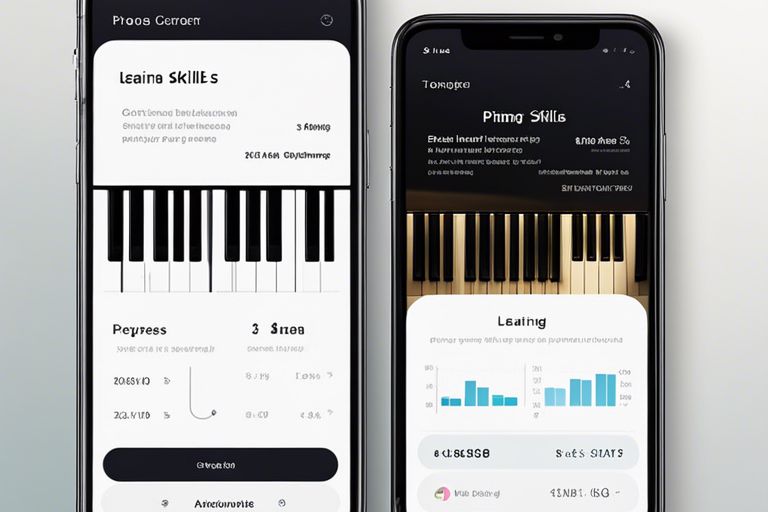
Provide vivid visual representations of your progress is a key component of piano learning apps. Progress visualization tools such as graphs, charts, and virtual progress bars help you track your improvement over time. By seeing your achievements visually, you can stay motivated and set new goals for yourself. Moreover, progress visualization allows you to identify patterns in your performance and adjust your practice routines accordingly.

Correction

The Role of AI in Progress Measurement

Machine Learning Algorithms

Many piano learning apps utilize machine learning algorithms to track and measure your progress. With these algorithms, the app can analyze your performance data, such as timing accuracy, note recognition, and rhythm consistency, to provide personalized feedback and insights into your strengths and areas for improvement.

Adaptive Difficulty Adjustment

To enhance your learning experience, piano learning apps often incorporate adaptive difficulty adjustment features powered by AI. This technology allows the app to dynamically adjust the difficulty of exercises and songs based on your performance. By challenging you at the right level, the app ensures that you are continuously improving without feeling overwhelmed or bored.

For instance, if you consistently excel at certain types of exercises, the app may increase the difficulty to keep you engaged and motivated. Conversely, if you struggle with specific techniques, the app may offer additional practice opportunities and resources to help you master those skills.

Human-AI Collaboration

For a more personalized learning experience, some piano learning apps foster human-AI collaboration. By combining the expertise of music educators with the analytical capabilities of AI, these apps can offer tailored lesson plans, practice recommendations, and performance evaluations that cater to your unique needs and goals. This collaboration ensures that you receive comprehensive support and guidance throughout your musical journey.

Adjustment of difficulty levels based on your progress and feedback is a key feature of human-AI collaboration in piano learning apps. By continuously assessing your performance and adapting the learning materials accordingly, these apps optimize your learning curve and help you achieve your musical aspirations more effectively.

Limitations and Challenges

Data Quality and Accuracy

Quality data is important in tracking progress accurately. However, piano learning apps may face challenges in ensuring the precision and reliability of the data collected. Factors like background noise, microphone quality, or even user error can impact the accurate measurement of your progress. It’s important to be aware of these limitations when interpreting your performance metrics.

Individual Variability and Learning Styles

With individual variability and diverse learning styles, piano learning apps may struggle to provide a one-size-fits-all approach. Your progress may not always align perfectly with the app’s metrics due to personal musical preferences, cognitive abilities, or previous experience with the piano. Understanding your unique learning style and adapting the app’s feedback to suit your needs can help you overcome these challenges.

Concerning individual variability and learning styles, it’s crucial to remember that progress in piano learning is not solely determined by numbers and metrics. Your personal growth, enjoyment of playing, and satisfaction with your improvement are equally important factors to consider. Embrace your unique journey and use the app as a tool to enhance your learning experience, rather than as a strict measurement of progress.

Ethical Considerations

Accuracy and privacy are two key ethical considerations when using piano learning apps to track your progress. Ensuring that the data collected by the app is used responsibly and that your privacy is protected is crucial. It’s important to review the app’s privacy policy and understand how your data is being utilized to avoid any potential ethical issues.

Learning should be an empowering and enriching experience, and ethical considerations play a significant role in maintaining the integrity of the learning process. By being mindful of how your data is being used and taking steps to protect your privacy, you can ensure a positive and ethically sound learning journey with piano learning apps.

Final Words

Conclusively, piano learning apps have revolutionized the way we track and measure progress in our musical journeys. By utilizing innovative technologies such as AI and machine learning algorithms, these apps can provide personalized feedback, track your practice sessions, and assess your performance in real-time. As you continue to use these apps, you will be able to see tangible improvements in your skills and musicality, making your piano learning experience more efficient and rewarding.

Q: How do piano learning apps track and measure progress?

A: Piano learning apps track and measure progress through various methods such as monitoring the time spent practicing, tracking the completion of lessons or songs, assessing accuracy and speed in playing, and recording the scores achieved in quizzes and assessments.

Q: What data points are commonly used by piano learning apps to measure progress?

A: Piano learning apps commonly use data points such as practice time logs, lesson completion rates, accuracy and speed metrics in playing exercises, scores achieved in quizzes and assessments, progress charts showing improvement over time, and user feedback on difficulty levels and satisfaction with the learning experience.

Q: How do piano learning apps use progress tracking to personalize the learning experience?

A: Piano learning apps use progress tracking to personalize the learning experience by adjusting the difficulty level of exercises based on performance, recommending specific lessons or practice areas to focus on, providing targeted feedback on areas of improvement, setting goals and milestones for the user to work towards, and offering customization options to cater to individual learning preferences and goals.

Can you recommend any good books for learning piano techniques

Over your piano journey, mastering techniques is crucial for your growth as a pianist. In this article, we will explore some of the best books available that can help you hone your piano skills and elevate your playing to the next level. Whether you are a beginner or an experienced player looking to refine your technique, these recommended books are sure to be valuable resources in your musical development.

Key Takeaways:

  • Variety of Piano Techniques: Look for books that cover a variety of piano techniques such as finger exercises, scales, arpeggios, and hand positioning.
  • Clear and Detailed Instructions: Choose books that provide clear and detailed instructions on how to practice and master different piano techniques.
  • Progressive Learning: Opt for books that offer a progressive learning approach, starting from beginner techniques and gradually advancing to more complex ones.

Building Foundations

Before you examine complex piano pieces, it’s important to build a strong foundation in piano techniques. This involves mastering the basics such as hand positioning, finger independence, posture, and sitting technique. By focusing on these fundamental skills, you can improve your overall playing and set yourself up for success in your piano journey.

Hand Positioning and Finger Independence

Hand positioning and finger independence are crucial components of piano technique. Your hands should be relaxed and curved, with your fingers resting gently on the keys. Work on exercises that help you develop control and independence in each finger, allowing you to play smoothly and accurately. Practice scales and arpeggios to strengthen your fingers and improve coordination between the left and right hand.

Developing Proper Posture and Sitting Technique

Building proper posture and sitting technique is necessary for playing the piano comfortably and preventing strain or injury. Sit up straight with your feet flat on the floor and your back supported. Your arms should be relaxed, with your elbows at a slight angle and wrists held up to maintain a natural hand position. It’s important to find a position that allows you to reach all the keys easily while maintaining a relaxed and comfortable posture.

Scales and Arpeggios

Mastering Major and Minor Scales

Assuming you want to improve your piano playing skills, mastering major and minor scales is fundamental. Major scales are the foundation of Western music and learning them will enhance your understanding of keys and intervals. Minor scales, with their different patterns, add depth and emotion to your playing.

Exploring Arpeggio Patterns and Variations

Any good book on piano techniques will research into arpeggios, which are broken chords played in a flowing manner. Mastering arpeggio patterns such as broken, rolled, or extended arpeggios can add richness and complexity to your playing. Understanding variations like dominant seventh or diminished arpeggios will give you versatility in different musical styles.

Scales and arpeggios are the building blocks of piano technique. Practicing them regularly will not only improve your finger dexterity but also enhance your ability to play more complex pieces with ease. It’s important to start with the basics and gradually work your way up to more challenging scales and arpeggios to strengthen your overall piano skills.

Chord Progressions and Harmony

Many piano technique books cover the imperative topic of chord progressions and harmony, which are fundamental aspects of playing the piano. To develop a strong foundation in piano playing, you must first master basic chords and inversions. These chords are the building blocks of harmony and will be crucial as you progress in your piano journey.

Learning Basic Chords and Inversions

Chords are combinations of three or more notes played together to create harmony. Inversions refer to different ways of playing the same chord where the notes are rearranged. Understanding and practicing basic chords and their inversions will not only improve your finger dexterity but also enhance your ability to recognize and play different harmonic structures on the piano.

Understanding Chord Progressions and Harmonic Function

Progressions are sequences of chords that form the foundation of a musical piece. Each chord in a progression has a specific harmonic function within the key it is played. By learning how different chords interact with each other and how they create tension and release, you will be able to interpret and play music with more depth and emotion.

The relationship between chord progressions and harmonic function is crucial in shaping the mood and structure of a piece of music. By studying how chords move from one to another, you will gain insight into the underlying patterns that composers use to evoke specific emotions and create beautiful melodies.

Technique-Specific Books

Hanon Exercises for Finger Strength and Dexterity

For finger strength and dexterity, one classic resource is the book “Hanon Exercises for the Piano.” These exercises are designed to improve your finger independence, agility, and overall technique. By practicing these exercises regularly, you can develop the muscle strength and control needed to tackle more challenging pieces with ease.

Alfred’s Essential Piano Library for Building Technique

Building a strong foundation in technique is crucial for any pianist, and Alfred’s Essential Piano Library offers a comprehensive series of books to help you do just that. These books cover a wide range of technical exercises, scales, arpeggios, and studies that will enhance your playing abilities and expand your piano repertoire.

Books like those in Alfred’s Essential Piano Library are vital for honing your skills and mastering the art of piano playing. They provide a structured approach to building technique, ensuring that you progress steadily and consistently in your musical journey.

Style-Specific Books

Jazz Piano Techniques with Mark Levine

All great jazz pianists have a deep understanding of harmony, rhythm, and improvisation techniques. Mark Levine’s “The Jazz Piano Book” is a must-have for any pianist looking to examine into the world of jazz. This comprehensive guide covers a wide range of topics, including chord voicings, scales, modes, and rhythmic patterns. By studying this book, you can develop your jazz vocabulary and improve your improvisational skills, allowing you to express your musical ideas with confidence and flair.

Classical Piano Methods with Alfred’s Masterwork Edition

with its rich tradition and diverse repertoire, classical piano music offers a wealth of techniques to explore. Alfred’s Masterwork Editions are renowned for their carefully edited versions of classical piano pieces, complete with historical context and performance suggestions. By studying these editions, you can enhance your technical proficiency and musical interpretation skills, allowing you to bring out the nuances and emotions in each piece you play.

If you are looking to deepen your classical piano skills and expand your repertoire, studying with Alfred’s Masterwork Editions can provide you with a solid foundation and a greater appreciation for the timeless beauty of classical music.

Practice Strategies and Tips

Not sure where to start with your piano practice? Here are some strategies and tips to help you improve your skills efficiently:

  • Warm-up with scales and exercises to build finger strength and flexibility.
  • Focus on one specific technique or piece at a time to master it before moving on.
  • Break down challenging passages into smaller sections and practice them slowly before gradually increasing the tempo.
  • Record yourself playing to identify areas for improvement and track your progress over time.

Thou shalt also remember to take breaks during practice sessions to rest your hands and avoid fatigue.

Creating a Practice Schedule and Setting Goals

Schedule regular practice sessions throughout the week to establish a routine and make consistent progress. Set specific goals for each practice session, whether it’s mastering a particular technique or learning a new piece.

By creating a practice schedule and setting goals, you can stay motivated and focused on your musical development. Start with smaller, achievable goals and gradually increase the difficulty as you improve.

Using Technology and Apps to Enhance Practice

Goals who are looking to enhance their practice routines can benefit from using technology and apps designed for musicians. These tools can provide interactive feedback, track your practice time, and offer resources such as metronomes and backing tracks to support your learning.

This integration of technology into your practice can supplement traditional methods and make your practice sessions more engaging and effective. Embrace the resources available to you to enhance your piano playing experience.

Summing up

The quest to master piano techniques is a rewarding journey that requires dedication and practice. Along the way, finding the right resources and books can significantly enhance your learning experience. If you’re looking for recommendations to improve your piano skills, consider exploring the collection of piano books for adult beginners available at Piano Books for Adult Beginners. These resources can provide valuable insights and guidance to help you refine your techniques and deepen your understanding of music theory.

FAQ

Q: Can you recommend any good books for learning piano techniques?

A: Yes, here are three highly recommended books for learning piano techniques:

  1. “Fundamentals of Piano Practice” by Chuan C. Chang: This book provides comprehensive guidance on various piano techniques and practice methods.
  2. “The Art of Piano Playing” by Heinrich Neuhaus: Neuhaus, a renowned piano teacher, offers valuable insights into the art of piano playing and refining techniques.
  3. “Piano Technique” by Walter Gieseking and Karl Leimer: This book focuses on developing finger dexterity, touch, and expression in piano playing.

How do you balance learning theory and practical skills in piano lessons

Skills in playing the piano require a delicate balance of learning theory and gaining practical experience. To become a proficient pianist, it is imperative to not only understand the musical concepts and technical aspects but also to apply them in your playing. This blog post will guide you on how to effectively balance learning music theory with developing your practical skills during piano lessons, allowing you to progress and excel in your musical journey.

Key Takeaways:

  • Understanding the balance: It is important to recognize the importance of both learning theory and practical skills in piano lessons. Theory provides the foundation for understanding how music works, while practical skills help students apply this knowledge to playing the piano.
  • Integrating theory and practice: Find ways to integrate theory and practice during piano lessons to enhance the learning experience. For example, incorporate music theory concepts into practical exercises and pieces, and discuss the theory behind different techniques and musical elements while teaching practical skills.
  • Customizing the approach: Recognize that every student is different and may require a different balance of theory and practical skills in their piano lessons. Tailor your teaching approach to meet the individual needs and learning style of each student to help them achieve a well-rounded understanding of music and piano playing.

Setting Goals and Expectations

The ability to balance learning theory and practical skills in piano lessons relies heavily on setting clear goals and expectations. By establishing these parameters, you can effectively tailor your teaching approach to meet the needs of each individual student.

Identifying the Student’s Learning Style

One important aspect of setting goals and expectations is identifying your student’s learning style. Some students may excel in understanding music theory first before entering into practical skills, while others may prefer a hands-on approach from the start. By recognizing how your student learns best, you can structure your lessons to cater to their unique style, ensuring a more effective and engaging learning experience.

Establishing Realistic Practice Schedules

Schedules play a crucial role in achieving a balance between theory and practical skills. When setting practice schedules, it’s important to be realistic and considerate of the student’s time and commitments. Encourage your student to practice regularly but also allow flexibility to prevent burnout. It’s better to have shorter, focused practice sessions than long, tedious ones. By incorporating theory and practical exercises into these schedules, you create a well-rounded approach to learning the piano.

Expectations should be clearly outlined from the start to help the student understand the level of commitment required and the progress they can expect to achieve. As a teacher, it’s important to communicate these expectations clearly and provide support to help your student reach their goals. By setting realistic expectations, you can create a positive learning environment that motivates the student to grow and improve their piano skills.

Finding the Right Balance

Little by little, you will find the perfect equilibrium between learning theory and practical skills in your piano lessons. While theory provides the foundation for understanding music, practical skills allow you to bring that knowledge to life through your fingertips on the keys. It’s important to strike a balance between the two to ensure steady progress and a well-rounded musical education. If you ever feel overwhelmed or unsure of how to strike this balance, don’t hesitate to seek guidance or advice from resources like Best way to learn piano for basic skills? [closed].

Allocating Time for Theory and Practical Skills

Allocating time for theory and practical skills in your piano practice is crucial. Consider dividing your practice session into segments dedicated to each aspect. For example, you could spend the first 15 minutes on theory, studying concepts like scales, chords, and music theory principles. Then, transition into the practical application by practicing pieces that incorporate the theory you just learned. By alternating between theory and practice, you reinforce your understanding while honing your playing skills.

Integrating Theory into Practical Exercises

Integrating theory into your practical exercises is a powerful way to deepen your musical understanding. As you practice pieces, pay attention to the theoretical concepts at play. For instance, analyze the harmonic progressions, identify key signatures, and understand the rhythmic patterns within the music. By connecting theory to practice, you not only enhance your performance but also develop a deeper appreciation for the music you are playing.

Skills: By integrating theory into your practical exercises, you transform your piano playing from a mechanical task into a thoughtful and expressive art form. Understanding the theory behind the music enriches your interpretation, allowing you to infuse each note with intention and emotion. Embrace this holistic approach to learning, and watch as your musicality blossoms with each practice session.

Effective Teaching Strategies

Using Analogies to Explain Complex Concepts

Keep your piano lessons engaging and easily understandable by using analogies to explain complex music theory concepts. Analogies help you relate unfamiliar ideas to something more familiar, making it easier for your students to grasp abstract concepts. For example, you could compare scales to the colors of a rainbow, with each note representing a different hue. This visual and relatable comparison can aid in your students’ understanding and retention of music theory.

Breaking Down Complex Skills into Manageable Parts

Explain intricate piano techniques by breaking them down into manageable parts. When tackling a challenging piece, encourage your students to focus on one hand at a time or even practice specific measures before putting it all together. Breaking down complex skills into smaller components not only makes the learning process less overwhelming but also allows your students to master each part before moving on to the next. This systematic approach fosters a deeper understanding and proficiency in playing the piano.

Breaking down complex skills into manageable parts is akin to solving a puzzle. By dividing a complex piece into smaller sections, you can analyze and work on each part with precision and attention to detail. Just like assembling a puzzle by starting with the border pieces, mastering individual components of a piano piece will eventually lead to a seamless and polished performance when all parts come together.

Making Theory Relevant

Relating Music Theory to the Student’s Favorite Songs

To make music theory more engaging and practical for you, it’s important to relate it to something you are already passionate about. Start by analyzing the music theory concepts present in your favorite songs. By breaking down the chords, scales, and progressions used in these songs, you can see how theory directly applies to music you love. This hands-on approach not only reinforces your understanding of theory but also helps you connect it to real-life examples that resonate with you.

Exploring the Historical Context of Musical Pieces

When delving into the historical context of musical pieces, you gain a deeper appreciation for the music you are learning. Understanding the time period, cultural influences, and composer’s background can provide valuable insights into the nuances of the piece. By exploring the historical context, you can uncover hidden meanings, stylistic choices, and performance practices that enhance your interpretation and connection to the music.

Plus, learning about the historical context can inspire you to approach the piece with a newfound perspective, allowing you to embody the emotions and intentions behind the music more authentically. This holistic approach to learning not only enriches your musical knowledge but also brings a sense of depth and meaning to your performance.

Practical Applications

Many times, learning music theory can seem abstract and disconnected from actually playing the piano. However, understanding how music works can greatly enhance your practical skills, especially when it comes to improvisation and composition.

Applying Music Theory to Improvisation and Composition

Theory forms the foundation for improvisation and composition on the piano. By knowing the scales, chords, and harmonic progressions, you can confidently explore different melodies and create your compositions. Understanding music theory allows you to make informed decisions about which notes and chords to play, leading to more cohesive and engaging improvisations and compositions.

Using Technology to Enhance Practical Skills

Practicality is key when it comes to incorporating technology into your piano lessons. Utilizing apps, software, and online resources can help you improve your practical skills by providing instant feedback on your playing, offering interactive lessons, and allowing you to access a vast library of sheet music and exercises. Embracing technology in your piano practice can make learning more engaging and effective, ultimately enhancing your playing abilities.

Plus, using technology can also make practicing more convenient and flexible, allowing you to work on your skills anytime and anywhere. Whether you’re using apps to track your progress or software to simulate playing with a virtual orchestra, integrating technology into your piano lessons can further bridge the gap between theory and practical application, helping you become a well-rounded pianist.

Overcoming Common Challenges

Addressing Frustration and Motivation Issues

Challenges in learning the piano can sometimes lead to frustration and demotivation. When you encounter difficulties in mastering a new concept or piece, it’s important to remember that progress takes time and effort. To address these feelings, try breaking down tasks into smaller, more manageable components. Celebrate small victories along the way to keep your motivation high. Be mindful of, learning an instrument is a journey full of ups and downs, and it’s okay to feel frustrated at times.

Dealing with Learning Plateaus and Setbacks

Setbacks and learning plateaus are common in any learning process, including piano lessons. When you feel like you’re not progressing as quickly as you’d like, it’s vital to stay patient and persistent. Remember that improvement is not always linear, and everyone experiences setbacks from time to time. Use these moments as opportunities to revisit fundamentals, seek feedback from your teacher, or explore different practice techniques to overcome the plateau.

Understanding that setbacks are a natural part of the learning process can help you approach challenges with a growth mindset. Embrace the setbacks as opportunities for growth and learning rather than viewing them as failures. Be mindful of, every great pianist has faced setbacks along the way; it’s how you respond to them that will ultimately determine your success.

To wrap up

Now that you have explored the importance of balancing learning theory and practical skills in piano lessons, you are better equipped to approach your practice sessions with a well-rounded perspective. Remember that understanding the theory behind the music you are learning can greatly enhance your playing abilities and overall musicality. By incorporating both theory and practical skills into your lessons, you will develop a deeper understanding of the music and be able to express yourself more effectively through your playing.

Q: How do you balance learning theory and practical skills in piano lessons?

A: The key to balancing learning theory and practical skills in piano lessons is to integrate both aspects seamlessly. Start by dedicating a portion of each lesson to theory, focusing on music fundamentals such as note reading, rhythm, and basic music theory concepts. Then, apply these theories immediately to practical exercises and pieces. This hands-on approach helps students understand the relevance of theory to their playing and keeps them engaged and motivated.

Q: Why is it important to incorporate both theory and practical skills in piano lessons?

A: Learning theory and practical skills simultaneously in piano lessons is important for developing well-rounded musicianship. Theory provides the foundation for understanding how music works, while practical skills enable students to apply that knowledge in their playing. By combining theory and practical skills, students gain a comprehensive understanding of music, enhancing their ability to interpret, perform, and create music effectively.

Q: How can piano teachers effectively balance theory and practical skills in lessons?

A: Piano teachers can effectively balance theory and practical skills by creating a structured lesson plan that incorporates both aspects in a cohesive manner. Design lessons that integrate theory concepts with practical exercises, ensuring that students understand the relevance of theory to their playing. Encourage students to apply theoretical knowledge to their practice sessions and performances, reinforcing the connection between theory and practical skills. Additionally, provide opportunities for students to explore and experiment with different musical styles and genres to further develop their skills and knowledge.

What role do finger exercises play in learning piano

Fingers are the unsung heroes of piano playing, diligently working their way across the keys to bring beautiful music to life. But have you ever wondered how important it is to train and exercise your fingers specifically for piano playing? In this blog post, we examine into the world of finger exercises and their crucial role in mastering the piano. If you’re curious to explore more about this topic, you can check out this insightful discussion on Finger “independence” nonsense? : r/piano.

Key Takeaways:

  • Improves finger dexterity: Finger exercises help develop strength, agility, and coordination in individual fingers, improving overall dexterity.
  • Enhances muscle memory: Repetitive finger exercises help train muscle memory, allowing fingers to intuitively find correct keys and patterns while playing piano.
  • Prevents injuries: Regular practice of finger exercises can help prevent strain and injuries in fingers by promoting proper technique and flexibility.

The Importance of Finger Independence

Developing Dexterity and Coordination

To truly master the piano, your fingers need to operate independently to tackle the complex finger patterns required by different pieces of music. Finger exercises play a crucial role in developing the dexterity and coordination needed for this level of performance. By practicing exercises that isolate and strengthen each finger, you can improve your ability to play intricate passages with precision and speed.

Enhancing Musical Expression

To convey emotion and musicality through your playing, it’s crucial to have control over each individual finger. Finger exercises can help you achieve this control by enhancing your finger independence. When each finger is strong and agile, you can better express nuances in dynamics, articulation, and phrasing. This level of control allows you to craft a more expressive and engaging musical performance.

With improved finger independence, you can bring out the subtle variations in touch and tone that give your playing depth and character. This heightened level of musical expression can captivate your audience and elevate your performances to a professional standard.

Finger Exercises for Piano Beginners

Now, let’s look into the world of finger exercises for piano beginners. Strengthening your fingers is crucial for playing the piano with ease and precision. One of the fundamental aspects of finger exercises for beginners is finger stretching and strengthening. By practicing exercises that focus on stretching and strengthening your fingers, you can improve dexterity and flexibility, making it easier to navigate the piano keys.

Finger Stretching and Strengthening

Strengthening exercises like finger presses and finger lifts can help develop the muscles in your fingers, making it easier to play complex pieces. Stretching exercises such as finger stretches and hand stretches can improve flexibility and prevent cramping while playing. By incorporating these exercises into your practice routine, you can gradually build strength and agility in your fingers, setting a solid foundation for your piano journey.

Basic Finger Independence Exercises

Beginners, focusing on basic finger independence exercises is necessary to train each finger to move independently, improving coordination and control. Simple exercises like finger taps and finger crosses can help you develop the ability to move each finger separately, which is crucial for playing different melodies with precision. Practicing these exercises regularly will enhance your finger dexterity and ultimately improve your piano playing skills.

Exercises such as finger taps on a flat surface or playing simple scales can help you develop finger independence and control. Start slow and gradually increase the speed as you build confidence and coordination. Recall, consistency is key when it comes to mastering basic finger independence exercises.

Building Finger Strength and Endurance

Unlike traditional exercises such as running or weightlifting, piano playing requires a specific type of physical conditioning, focusing on the intricate movements of the fingers. To enhance your finger strength and endurance for piano playing, it is crucial to incorporate targeted exercises into your practice routine. When you are not playing the piano, Finger Exercises for Piano when not playing can help maintain and improve your finger dexterity.

Finger Isolation Exercises

Building finger strength through isolation exercises is necessary for developing control and agility in individual fingers. By focusing on each finger separately, you can correct any imbalances in strength and coordination that may hinder your performance. Incorporating exercises such as finger lifts, finger taps, and finger stretches into your daily practice can significantly enhance your finger independence and overall dexterity.

Chromatic Scales and Arpeggios

Finger strength and endurance can also be developed through practicing chromatic scales and arpeggios. These exercises not only help in increasing the flexibility and coordination of your fingers but also improve your ability to transition smoothly between different notes and chords. By incorporating chromatic scales and arpeggios into your warm-up routine, you can gradually build up the stamina needed for more complex pieces.

Amp up the challenge by gradually increasing the speed of your chromatic scales and arpeggios as you become more comfortable with the patterns. This will not only push your fingers to move faster but also enhance your overall playing speed and accuracy on the keys.

Hanon Exercises and Variations

Finger dexterity can be greatly improved through the practice of Hanon exercises and their variations. These exercises are designed to specifically target different aspects of finger strength, speed, and agility. By incorporating Hanon exercises into your daily practice, you can systematically train each finger to work independently and in coordination with the others, ultimately enhancing your overall piano technique.

Exercises such as trills, repeated notes, and octave jumps can add variety and challenge to your practice routine, keeping your fingers engaged and adaptable to different playing styles. Moreover, incorporating variations of the traditional Hanon exercises can help prevent monotony in your practice sessions while still reaping the benefits of structured finger training.

Improving Finger Dexterity and Agility

Despite your initial struggles with finger exercises, dedicating time to improve your finger dexterity and agility will enhance your piano playing abilities significantly. By incorporating specific exercises into your practice routine, you can strengthen your fingers and increase your overall proficiency on the piano.

Finger Alternation and Rotation Exercises

Alternation exercises involve rapidly switching between fingers to develop coordination and speed. Rotational exercises focus on the rotation of your wrist and forearm to facilitate smooth transitions between notes. Practicing these exercises will help you play challenging passages with greater ease and fluidity.

Broken Chord and Scale Exercises

The broken chord and scale exercises are fundamental for building finger strength and control. These exercises require you to play individual notes of a chord or scale separately, promoting precision and accuracy in your finger movements. Incorporating broken chord and scale exercises into your daily practice will not only improve your technique but also enhance your overall musicality.

Advanced Finger Independence Techniques

Agility is key to mastering complex piano pieces, and advanced finger independence techniques are designed to enhance your ability to play intricate passages with ease. By practicing these exercises regularly, you can train each finger to move independently, allowing you to tackle even the most demanding pieces with confidence and precision.

  1. Hand Coordination
    Focus on each hand separately Improves coordination and independence
    Combine hands gradually Enhances overall control and fluidity
  2. Syncopation Exercises
    Practice offbeat rhythms Develops rhythmic precision
    Improves hand synchronization Enhances overall musicality

Independence in your fingers is crucial for conquering challenging pieces and expressing yourself fully through music. By incorporating these advanced techniques into your practice routine and staying committed to your piano journey, you can elevate your playing to new heights.

The Role of Finger Exercises in Piano Technique

Developing Proper Hand Position and Alignment

Hand exercises are imperative for developing proper hand position and alignment when playing the piano. They help you strengthen the muscles in your fingers and hands, allowing you to maintain a relaxed and natural hand shape while playing. By practicing exercises that focus on finger dexterity and flexibility, you can improve your overall hand coordination and control on the keys.

Mastering Articulation and Dynamics

Piano exercises designed to work on articulation and dynamics are crucial for mastering the expressive qualities of your playing. These exercises help you refine your touch on the keys, allowing you to produce a wide range of dynamics and articulations with precision and clarity. By practicing exercises that focus on staccato, legato, accents, and varying degrees of intensity, you can develop a nuanced and controlled playing style.

This level of control over articulation and dynamics will enable you to convey the emotional depth and musicality of a piece effectively, enhancing your overall performance.

Enhancing Overall Technical Proficiency

Developing a consistent practice routine that includes a variety of finger exercises can significantly enhance your overall technical proficiency on the piano. These exercises help you build strength, agility, and coordination in your fingers, enabling you to tackle more challenging pieces with greater ease and confidence. By incorporating exercises that target specific technical aspects, such as scales, arpeggios, and trills, you can address any weaknesses in your playing and improve your overall performance quality.

The increased technical proficiency gained from regular finger exercises will not only boost your confidence in playing complex pieces but also allow you to explore a wider repertoire of music with ease and proficiency.

Common Mistakes to Avoid in Finger Exercises

Many people make common mistakes when practicing finger exercises that can hinder their progress. It’s necessary to be aware of these pitfalls to ensure you are maximizing the benefits of your practice sessions.

Overpracticing and Fatigue

On your journey to mastering finger exercises, it’s crucial to strike a balance between practice and rest. Overpracticing can lead to fatigue and potential injury, which can set you back in your progress. Remember that quality practice is more effective than sheer quantity. Make sure to listen to your body and give your fingers adequate rest to prevent strain and fatigue.

Poor Hand Position and Finger Alignment

An often overlooked aspect of finger exercises is hand position and finger alignment. If your hands are not positioned correctly on the keys or your fingers are not aligned properly, you may not be effectively targeting the muscles you intend to work on. Improper hand position can also lead to tension and strain, affecting your overall performance.

Ensure that your hands are relaxed and positioned correctly on the keys, with your fingers curved and aligned over the appropriate keys. Pay attention to your wrist position as well, as any tension in this area can affect your finger movements. Practicing with the correct hand position and finger alignment will not only improve your technique but also prevent injuries in the long run.

Lack of Focus on Musicality and Expression

Finger exercises are not just about building strength and dexterity; they are also about developing musicality and expression in your playing. It’s necessary to approach each exercise with attention to dynamics, phrasing, and musical nuances to truly elevate your playing.

Hand in hand with technical proficiency, focusing on musicality and expression in your finger exercises will help you engage with the music on a deeper level. Pay attention to details such as articulation, tempo variations, and overall musical expression to bring life to your playing.

Overpracticing

Overpracticing can be detrimental to your progress, leading to burnout and frustration. Make sure to practice consistently but also give yourself breaks to rest and recharge. Recall, it’s not about how many hours you put in, but how effectively you use the time you dedicate to practicing.

To wrap up

Conclusively, finger exercises are a crucial component in learning to play the piano. By focusing on dexterity, strength, and independence of each finger, these exercises help you develop the skills needed to tackle more challenging pieces. They also improve hand coordination, flexibility, and muscle memory, all of which are important for mastering the piano.

Do not forget, like any skill, learning the piano takes time and dedication. Incorporating finger exercises into your practice routine will not only improve your playing ability but also enhance your overall musical experience. So keep practicing those scales, arpeggios, and finger strengthening exercises – your journey to becoming a proficient pianist is well on its way!

Q: What are finger exercises in piano playing?

A: Finger exercises in piano playing are focused movements and patterns specifically designed to strengthen and increase flexibility in the fingers. These exercises aim to improve dexterity, coordination, and control over individual fingers, which are necessary skills for playing the piano efficiently.

Q: Why are finger exercises important in learning piano?

A: Finger exercises are crucial in learning piano as they help develop muscle memory, finger strength, and agility. Practicing these exercises regularly can enhance finger independence, allowing pianists to play more complex pieces with ease. Additionally, finger exercises help prevent injuries and improve overall technique.

Q: How often should one practice finger exercises for piano playing?

A: It is recommended to incorporate finger exercises into your daily practice routine. Spending 10-15 minutes a day on finger exercises can make a significant difference in your piano playing abilities over time. Consistent practice is key to seeing improvement in finger strength, control, and agility.

Skip to content