Playing the piano is a journey of constant improvement, and with the help of technology, you can now easily track your progress. Piano learning apps use innovative methods to monitor your development, analyzing factors like speed, accuracy, and consistency. By regularly measuring your achievements, these apps provide valuable insights into your strengths and areas for growth. Want to dive deeper into tracking your piano progress? Check out How to Track your Progress on the Piano with Tonebase’s new practice plan for expert guidance.
Key Takeaways:
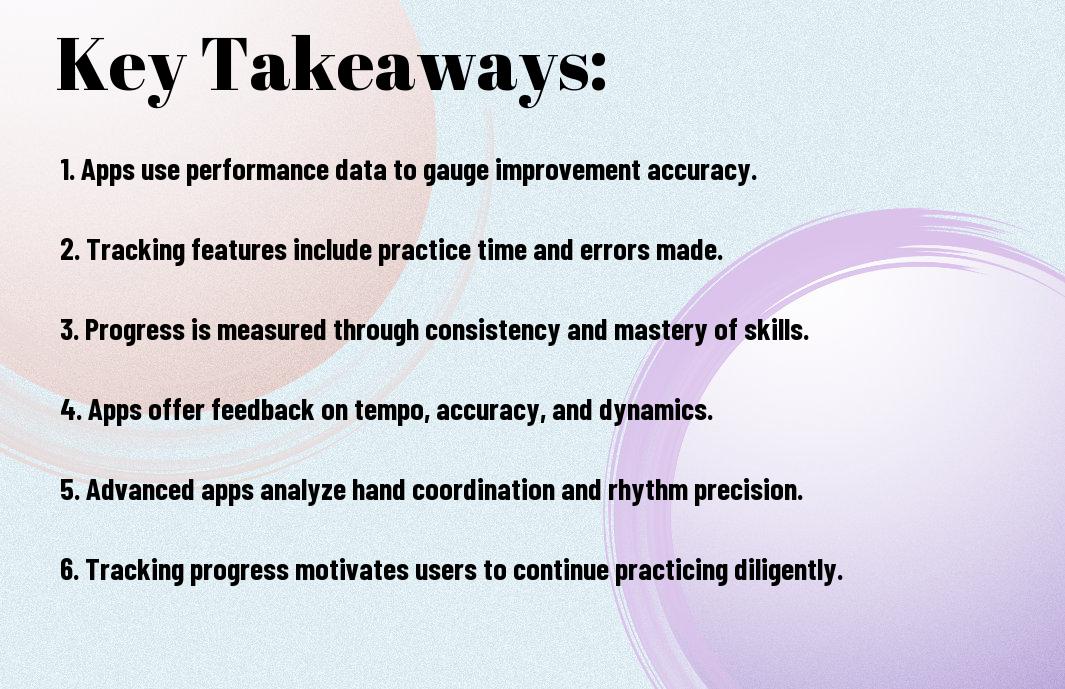
- Usage Data: Piano learning apps track progress through analyzing users’ usage data, such as practice time, frequency of sessions, and completion of lessons.
- Performance Metrics: These apps measure progress by evaluating users’ performance on various exercises, quizzes, and songs, providing insights into areas of strength and areas needing improvement.
- Feedback and Recommendations: Piano learning apps provide feedback and personalized recommendations based on progress data, helping users optimize their learning and practice techniques.
The Importance of Progress Tracking
While learning to play the piano, tracking your progress is crucial for several reasons. It allows you to see how far you have come since you started, providing motivation to keep going. Additionally, progress tracking helps you set achievable goals and gives you a clear sense of direction in your piano learning journey.
Setting Goals and Motivation
Any successful piano student knows the importance of setting goals to keep motivation levels high. Progress tracking in piano learning apps enables you to set specific, measurable goals for your practice sessions. By monitoring your improvement over time, you can see firsthand how your hard work and dedication translate into tangible results, keeping you motivated to continue practicing and improving your skills.
Identifying Areas for Improvement
Importance of tracking your progress extends to identifying specific areas where you can improve. Piano learning apps often provide detailed feedback on your performance, highlighting areas that may need more practice. By focusing on these specific areas, you can tailor your practice sessions to address weaknesses and enhance your overall piano playing abilities.
With progress tracking, you can turn your piano practice sessions into purposeful and efficient learning experiences, guiding you towards becoming a more proficient pianist. By utilizing the tools available in piano learning apps, you can track your progress, set achievable goals, and identify areas for improvement, ultimately accelerating your growth as a musician.
Methods of Progress Tracking
Algorithm-Based Assessments
Even though it may seem like magic, piano learning apps use sophisticated algorithms to assess your progress. These algorithms analyze various factors such as your timing, accuracy, and technique to provide feedback on your performance.
User-Generated Feedback
The feedback you provide while using the app also plays a significant role in tracking your progress. By sharing how challenging or enjoyable you find certain lessons or songs, the app can tailor recommendations and adjust difficulty levels to suit your needs.
The more feedback you actively provide, the more personalized your learning experience becomes. It’s a symbiotic relationship where your input helps the app fine-tune its recommendations to keep you engaged and motivated.
Performance Analytics
Tracking your progress through performance analytics involves capturing detailed data on your playing sessions. This can include the number of correct notes played, timing accuracy, and even the pressure you apply to the keys. By analyzing this data, the app can identify areas where you excel and pinpoint areas for improvement.
Progress with Performance Analytics
It’s fascinating to see how performance analytics can break down your playing into measurable data points. This analytical approach gives you concrete insights into your progress and empowers you to set specific goals for improvement.
Types of Data Collected
Now let’s examine into the types of data gathered by piano learning apps to track and measure your progress. Understanding what aspects of your playing are being monitored can help you focus on specific areas for improvement. This information is crucial for personalized feedback and tailored practice recommendations.
- Practice Time and Frequency
- Accuracy and Error Rates
- Technique and Finger Independence
- Speed and Progression
- Engagement and Retention
Practice Time and Frequency
Frequency of practice sessions is an necessary metric that piano learning apps track. They monitor how often you engage with the app to practice your piano skills. This data helps in understanding your dedication and commitment to learning the instrument. Additionally, the apps record the duration of each practice session, providing insights into how much time you spend practicing daily or weekly.
This data on practice time and frequency can help you establish a consistent practice routine. By reviewing your practice habits, you can identify if you are dedicating enough time to practice and whether you need to adjust your schedule to meet your learning goals effectively. This information enables the app to provide personalized recommendations on how you can optimize your practice time for better progress.
Accuracy and Error Rates
One crucial aspect that piano learning apps focus on is monitoring your accuracy and error rates while playing. These apps analyze the notes you play and identify any mistakes or inaccuracies in your performance. By tracking your accuracy and error rates, the apps can pinpoint specific areas where you may be struggling and offer targeted exercises to help you improve.
Error detection is a critical feature of piano learning apps as it helps you identify and correct mistakes in your playing. By understanding where you tend to make errors, you can concentrate on those areas during practice to enhance your overall performance. This detailed feedback on accuracy and error rates plays a vital role in refining your skills and honing your technique on the piano.
Technique and Finger Independence
Plus, piano learning apps collect data on your technique and finger independence while playing various pieces. They analyze factors like hand positioning, finger strength, and coordination to evaluate the quality of your playing. By monitoring your technique and finger independence, the apps can offer exercises and tips to enhance your playing skills and improve your overall performance on the piano.
Error detection in technique and finger independence allows you to focus on specific aspects of your playing that may need improvement. Whether it’s strengthening individual fingers or improving coordination between hands, the detailed feedback provided by the app can help you address these areas effectively during practice sessions. This data-driven approach to technique evaluation can lead to significant advancements in your piano playing abilities.
How Apps Use Data to Provide Feedback
Despite the vast amount of data collected by piano learning apps, they use this information in a variety of ways to provide feedback and improve your progress. One key way apps utilize data is by creating personalized lesson plans tailored to your specific needs and skill level.
Personalized Lesson Plans
For personalized lesson plans, apps analyze your performance data, such as accuracy, speed, and consistency, to understand your strengths and weaknesses. Based on this information, the app can generate customized lesson plans that focus on areas where you need the most improvement. This tailored approach helps you make the most of your practice time and ensures that you are constantly challenged at the right level.
Real-time Error Correction
On the other hand, real-time error correction is another valuable feature offered by piano learning apps. These apps use advanced algorithms to identify mistakes as you play and provide immediate feedback on how to correct them. This real-time analysis allows you to address errors as they occur, helping you improve your playing accuracy and technique efficiently.
Plans
Progress Visualization
Provide vivid visual representations of your progress is a key component of piano learning apps. Progress visualization tools such as graphs, charts, and virtual progress bars help you track your improvement over time. By seeing your achievements visually, you can stay motivated and set new goals for yourself. Moreover, progress visualization allows you to identify patterns in your performance and adjust your practice routines accordingly.
Correction
The Role of AI in Progress Measurement
Machine Learning Algorithms
Many piano learning apps utilize machine learning algorithms to track and measure your progress. With these algorithms, the app can analyze your performance data, such as timing accuracy, note recognition, and rhythm consistency, to provide personalized feedback and insights into your strengths and areas for improvement.
Adaptive Difficulty Adjustment
To enhance your learning experience, piano learning apps often incorporate adaptive difficulty adjustment features powered by AI. This technology allows the app to dynamically adjust the difficulty of exercises and songs based on your performance. By challenging you at the right level, the app ensures that you are continuously improving without feeling overwhelmed or bored.
For instance, if you consistently excel at certain types of exercises, the app may increase the difficulty to keep you engaged and motivated. Conversely, if you struggle with specific techniques, the app may offer additional practice opportunities and resources to help you master those skills.
Human-AI Collaboration
For a more personalized learning experience, some piano learning apps foster human-AI collaboration. By combining the expertise of music educators with the analytical capabilities of AI, these apps can offer tailored lesson plans, practice recommendations, and performance evaluations that cater to your unique needs and goals. This collaboration ensures that you receive comprehensive support and guidance throughout your musical journey.
Adjustment of difficulty levels based on your progress and feedback is a key feature of human-AI collaboration in piano learning apps. By continuously assessing your performance and adapting the learning materials accordingly, these apps optimize your learning curve and help you achieve your musical aspirations more effectively.
Limitations and Challenges
Data Quality and Accuracy
Quality data is important in tracking progress accurately. However, piano learning apps may face challenges in ensuring the precision and reliability of the data collected. Factors like background noise, microphone quality, or even user error can impact the accurate measurement of your progress. It’s important to be aware of these limitations when interpreting your performance metrics.
Individual Variability and Learning Styles
With individual variability and diverse learning styles, piano learning apps may struggle to provide a one-size-fits-all approach. Your progress may not always align perfectly with the app’s metrics due to personal musical preferences, cognitive abilities, or previous experience with the piano. Understanding your unique learning style and adapting the app’s feedback to suit your needs can help you overcome these challenges.
Concerning individual variability and learning styles, it’s crucial to remember that progress in piano learning is not solely determined by numbers and metrics. Your personal growth, enjoyment of playing, and satisfaction with your improvement are equally important factors to consider. Embrace your unique journey and use the app as a tool to enhance your learning experience, rather than as a strict measurement of progress.
Ethical Considerations
Accuracy and privacy are two key ethical considerations when using piano learning apps to track your progress. Ensuring that the data collected by the app is used responsibly and that your privacy is protected is crucial. It’s important to review the app’s privacy policy and understand how your data is being utilized to avoid any potential ethical issues.
Learning should be an empowering and enriching experience, and ethical considerations play a significant role in maintaining the integrity of the learning process. By being mindful of how your data is being used and taking steps to protect your privacy, you can ensure a positive and ethically sound learning journey with piano learning apps.
Final Words
Conclusively, piano learning apps have revolutionized the way we track and measure progress in our musical journeys. By utilizing innovative technologies such as AI and machine learning algorithms, these apps can provide personalized feedback, track your practice sessions, and assess your performance in real-time. As you continue to use these apps, you will be able to see tangible improvements in your skills and musicality, making your piano learning experience more efficient and rewarding.
Q: How do piano learning apps track and measure progress?
A: Piano learning apps track and measure progress through various methods such as monitoring the time spent practicing, tracking the completion of lessons or songs, assessing accuracy and speed in playing, and recording the scores achieved in quizzes and assessments.
Q: What data points are commonly used by piano learning apps to measure progress?
A: Piano learning apps commonly use data points such as practice time logs, lesson completion rates, accuracy and speed metrics in playing exercises, scores achieved in quizzes and assessments, progress charts showing improvement over time, and user feedback on difficulty levels and satisfaction with the learning experience.
Q: How do piano learning apps use progress tracking to personalize the learning experience?
A: Piano learning apps use progress tracking to personalize the learning experience by adjusting the difficulty level of exercises based on performance, recommending specific lessons or practice areas to focus on, providing targeted feedback on areas of improvement, setting goals and milestones for the user to work towards, and offering customization options to cater to individual learning preferences and goals.