As you explore the changing landscape of education, you’ll notice that online learning is transforming the way you approach traditional schools. Your familiar classroom setting is evolving, with digital tools and virtual platforms redefining the learning experience. You can now access a wide range of courses and resources from anywhere, at any time, giving you more control over your education. This shift is revolutionizing the way you learn, and it’s crucial to understand the impact it has on your educational journey.
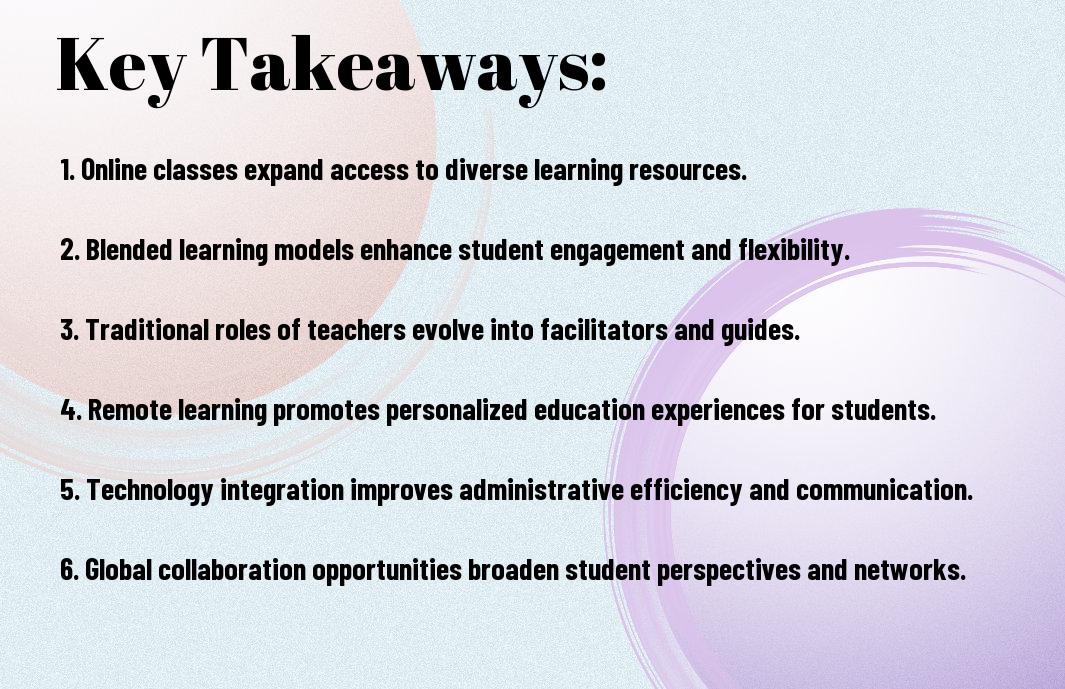
Key Takeaways:
To understand the impact of online education on traditional schools, consider the following points:
- Flexibility is a key aspect of online education, allowing students to learn at their own pace and on their own schedule, which can be particularly beneficial for those with other commitments or obligations.
- Online education is expanding access to quality educational resources, enabling students from diverse backgrounds and locations to access courses and programs that may not have been available to them otherwise.
- The use of technology in online education is enhancing the learning experience, with tools such as virtual classrooms, interactive simulations, and personalized learning platforms providing a more engaging and effective way to learn.
- Online education is also changing the role of teachers, with a shift from traditional lecturing to more of a facilitator or mentor role, where they guide and support students in their learning journey.
- The assessment and evaluation of student learning is also being reimagined in online education, with a focus on more authentic and competency-based assessments that measure students’ skills and knowledge in a more meaningful way.
The Rise of Online Learning
A significant shift is underway in the education sector, and you are likely to notice the impact of online learning on traditional schools. As technology advances, online education is becoming increasingly popular, offering you a range of benefits, including flexibility and accessibility.
Growing Demand for Flexible Education
Fortunately, you now have the option to choose from a variety of online courses, catering to your individual needs and schedules. Your demand for flexible education is driving the growth of online learning platforms, providing you with the opportunity to learn at your own pace.
Technological Advancements in Virtual Classrooms
Fortunately, advancements in technology are transforming virtual classrooms, enabling you to engage in interactive and immersive learning experiences. Your online learning experience is enhanced by innovative tools and features, making it more engaging and effective.
With the integration of artificial intelligence, virtual reality, and mobile devices, you can expect a more personalized and interactive learning experience. You will have access to a wide range of educational resources, including video lectures, online discussions, and virtual labs, allowing you to learn more effectively and efficiently.
Impact on Traditional Schools
If you are a part of the traditional school system, you may have noticed the significant changes brought about by online education. Your institution is likely to be affected in various ways, from curriculum development to student engagement.
Changing Role of Teachers and Administrators
On the other hand, you will notice that your teachers and administrators are taking on new roles, such as course designers and online facilitators, to adapt to the digital landscape of education.
Shift in Pedagogical Approaches
AFTER considering the benefits of online education, you will find that your learning experience is becoming more personalized and interactive, with a focus on collaborative learning and real-world applications.
Indeed, as you research deeper into the shift in pedagogical approaches, you will discover that online education is enabling more flexible and effective learning pathways, allowing you to take ownership of your educational journey and pursue your interests at your own pace.
Benefits of Online Education
All the advantages of online education make it an attractive option for you, as it offers flexibility, convenience, and effectiveness, allowing you to learn at your own pace and according to your schedule.
Increased Accessibility and Affordability
Education, in its traditional sense, is no longer the only way to gain knowledge, as online education provides you with the opportunity to access courses and programs from anywhere, at a lower cost, making it more affordable for you.
Personalized Learning Experiences
Around the clock, you can access online educational resources, which enable you to take control of your learning, allowing you to learn in a way that suits your needs and preferences, giving you a more personalized experience.
Considering your learning style, online education provides you with the flexibility to learn through various formats, such as videos, podcasts, and interactive modules, which can be tailored to your needs, enabling you to grasp concepts more effectively, and helping you to achieve your academic goals, as you progress at your own pace.
Challenges and Limitations
Your transition to online education may come with challenges, including limited access to technology and internet connectivity, affecting your ability to participate fully in digital classrooms.
Digital Divide and Equity Concerns
Apparently, unequal access to digital tools and internet can exacerbate existing educational disparities, making it difficult for you to keep up with your peers who have better resources.
Ensuring Academic Integrity and Quality
Following the shift to online learning, you will need to verify the authenticity of coursework and assessments to maintain academic standards, ensuring that your degree holds value.
Quality control measures are necessary as you navigate online education, and you must ensure that your institution implements rigorous standards to evaluate coursework, preventing plagiarism and ensuring that your degree is earned through genuine academic effort, allowing you to trust the value of your education.
Innovative Solutions and Partnerships
Unlike traditional models, online education offers flexible and accessible learning opportunities, enabling you to explore innovative solutions and partnerships that enhance your educational experience.
Collaborations between Online and Traditional Institutions
Between institutions, you can find unique models of collaboration, where online and traditional schools work together to provide you with a comprehensive education, leveraging the strengths of both platforms to create a richer learning environment.
Development of New Educational Tools and Platforms
Alongside the growth of online education, you have access to an array of new educational tools and platforms, designed to facilitate engagement, interaction, and knowledge retention, making your learning journey more effective and enjoyable.
Another significant aspect of the development of new educational tools and platforms is the ability to personalize your learning experience, as you can choose from a variety of resources and platforms that cater to your individual needs, learning style, and pace, allowing you to take ownership of your education and make the most out of it.

The Future of Education
Keep in mind that online education is revolutionizing the way you learn, and its impact will be felt for generations to come. As you consider the future of education, you’ll notice a significant shift towards personalized learning and adaptive technologies.
Evolving Business Models and Revenue Streams
Prior to the rise of online education, traditional schools relied on rigid business models. You will see that emerging technologies are creating new opportunities for revenue streams and innovative business models that prioritize accessibility and affordability.
Preparing Students for a Rapidly Changing Job Market
Transforming the way you approach education, you will focus on developing skills that are relevant to the modern job market. You will acquire skills such as critical thinking, problem-solving, and collaboration, which are imperative for success in a rapidly changing world.
Business leaders and educators alike acknowledge that preparing students for a rapidly changing job market requires a multifaceted approach. As you navigate this new landscape, you will need to prioritize skills such as adaptability, creativity, and emotional intelligence. By doing so, you will be better equipped to address the challenges and opportunities presented by emerging technologies and shifting workforce demands, ultimately setting yourself up for success in your future endeavors.
Final Words
On the whole, you have witnessed how online education is revolutionizing traditional schools, offering your child a more flexible and personalized learning experience. You can now access a wide range of courses and resources, making your educational journey more engaging and effective. As you embrace this shift, your understanding of the education system will evolve, and you will discover new ways to leverage technology for your benefit, ultimately transforming your learning experience.
FAQ
Q: What are the main benefits of online education in relation to traditional schools?
A: Online education is reshaping traditional schools by providing students with more flexibility and accessibility to educational resources. With online education, students can attend classes and complete coursework from anywhere, at any time, as long as they have a stable internet connection. This allows students to balance their education with other responsibilities, such as work or family obligations. Additionally, online education provides students with access to a wider range of courses and programs, which may not be available in their local area. This can be especially beneficial for students living in rural or underserved communities, where access to quality educational resources may be limited.
Q: How is online education changing the way teachers interact with students in traditional schools?
A: Online education is changing the way teachers interact with students in traditional schools by providing new tools and platforms for communication and collaboration. For example, online learning management systems allow teachers to post assignments, provide feedback, and engage with students in a virtual environment. This can help to increase student engagement and participation, as well as provide teachers with more detailed analytics and insights into student performance. Additionally, online education is enabling teachers to create more personalized learning experiences for their students, tailored to individual needs and abilities. This can help to improve student outcomes and close achievement gaps.
Q: What are the potential challenges and limitations of online education in traditional schools, and how can they be addressed?
A: While online education offers many benefits, there are also potential challenges and limitations that need to be addressed. One of the main challenges is ensuring that all students have equal access to technology and internet connectivity, as well as the digital literacy skills needed to succeed in an online learning environment. Another challenge is maintaining student engagement and motivation in an online setting, where students may lack the structure and social interaction of a traditional classroom. To address these challenges, schools can provide students with access to technology and internet connectivity, as well as training and support to develop digital literacy skills. Teachers can also use a variety of strategies to promote student engagement and motivation, such as gamification, discussion forums, and virtual office hours.