As you navigate the ever-evolving landscape of virtual learning, you begin to appreciate the value of collaboration in achieving your academic and professional goals. You realize that your success is intertwined with the success of your peers, and that together, you can accomplish far more than you could alone. By embracing collaboration, you open yourself up to a wealth of knowledge, skills, and perspectives that can enrich your learning experience and help you grow as an individual.
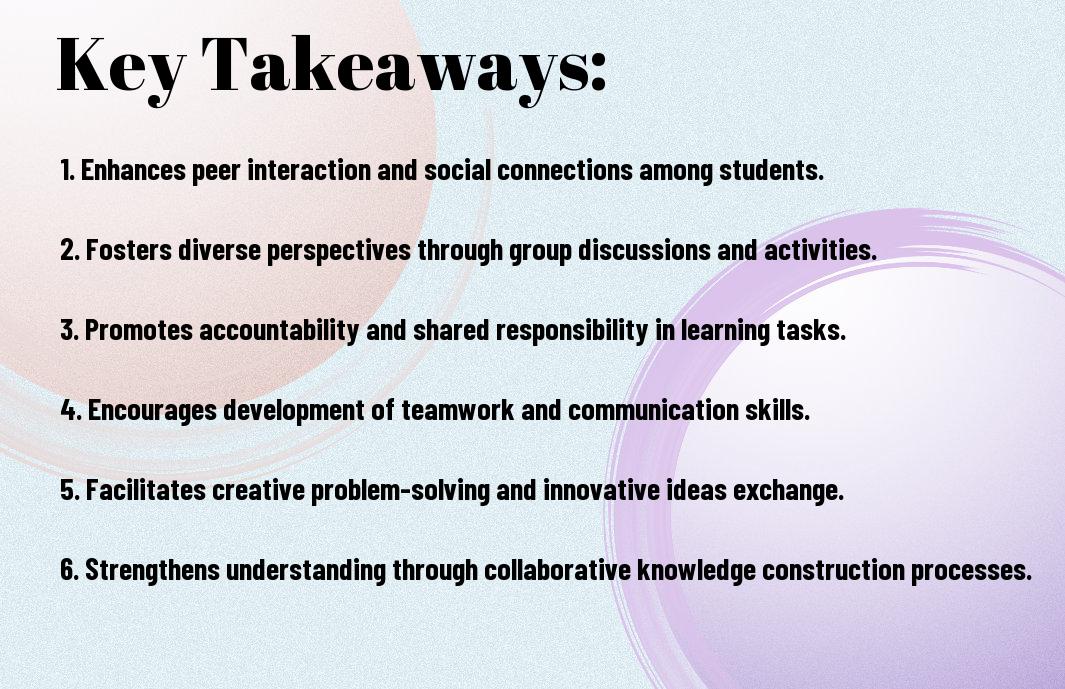
Key Takeaways:
- The effectiveness of virtual learning depends on the ability of learners to engage in collaborative activities, sharing knowledge and ideas to achieve common goals.
- Communication is key to successful collaboration in virtual learning environments, where learners must be able to clearly express themselves and respond to others in a timely manner.
- Technology plays a significant role in facilitating collaboration in virtual learning, providing tools and platforms that enable learners to interact and work together seamlessly.
- Flexibility is imperative in virtual learning collaborations, as learners may be located in different time zones or have varying schedules, requiring adaptability and accommodation.
- By fostering a sense of community, virtual learning collaborations can promote learner engagement, motivation, and overall success, leading to a more productive and effective learning experience.
Benefits of Collaboration
A key aspect of virtual learning is the opportunity to collaborate with others, which leads to a more engaging and effective learning experience. As you work with others, you will discover that collaboration fosters a sense of community and promotes mutual support.
Enhanced Learning Outcomes
Alongside the benefits of collaboration, an added advantage is the potential for enhanced learning outcomes. As you engage with your peers, you will find that your understanding of the subject matter deepens, and your ability to apply concepts improves.
Improved Communication Skills
About the skills you will develop through collaboration, one of the most significant is the ability to communicate effectively with others. As you interact with your peers, you will learn to articulate your thoughts, listen actively, and clarify your understanding of the subject matter.
In addition, as you continue to develop your communication skills through collaboration, you will become more confident in expressing your ideas and more adept at navigating diverse perspectives. You will learn to appreciate the value of feedback and constructive criticism, and your ability to work with others towards a common goal will become one of your greatest strengths, enabling you to achieve greater success in your virtual learning journey.
Effective Virtual Collaboration Tools
If you are to succeed in virtual learning, you need to have the right tools at your disposal. You will find that effective virtual collaboration tools can make all the difference in your learning experience.
Video Conferencing Software
To facilitate face-to-face interactions, you can use video conferencing software, which enables you to connect with your peers and instructors in real-time, fostering a sense of community and promoting meaningful discussions.
Online Discussion Forums
Among the various collaboration tools available, online discussion forums stand out as a powerful means of facilitating asynchronous discussions, allowing you to share your thoughts and ideas with your peers at your convenience.
Effective online discussion forums enable you to engage in thoughtful and reflective conversations, sharing your insights and learning from others, which can lead to a deeper understanding of the subject matter and help you develop your critical thinking skills, as you navigate the virtual learning environment and explore new ideas and perspectives, you will find that online discussion forums become an indispensable part of your learning journey, empowering you to take ownership of your learning and make the most of your virtual learning experience.
Strategies for Successful Virtual Teams
Keep in mind that effective virtual teams require intentional effort and dedication from all members. You must be proactive in establishing a strong foundation for collaboration and communication to achieve your goals.
Clear Goal Setting
Clarity is necessary when defining objectives and expectations for your virtual team. You should establish a shared understanding of what you want to accomplish and how you will work together to achieve it.
Regular Feedback Mechanisms
Only through open and honest communication can you ensure that your virtual team is functioning effectively. You should prioritize regular check-ins and constructive feedback to facilitate growth and improvement.
At the heart of successful virtual teams is a commitment to ongoing evaluation and adjustment. As you implement regular feedback mechanisms, you will be able to identify areas for improvement and make data-driven decisions to optimize your team’s performance, ultimately leading to greater success and achievement of your goals.
Overcoming Challenges in Virtual Collaboration
All virtual learning environments require effective collaboration to succeed. You can learn more about How to Foster Collaboration in Online Learning Environments to enhance your skills. By doing so, you will be better equipped to tackle the challenges that arise in virtual collaboration.
Cultural and Language Barriers
The differences in cultural backgrounds and languages can pose significant challenges in virtual collaboration. You need to be sensitive to these differences and adapt your approach to ensure that all participants feel included and valued.
Technical Issues and Solutions
With the advancement of technology, virtual collaboration has become more accessible, but technical issues can still arise. You should be prepared to troubleshoot common problems and have a plan in place to minimize disruptions.
Considering the potential technical issues that may arise, you will want to invest in reliable software and hardware to support your virtual collaboration. By doing so, you will be able to focus on the learning objectives and build strong relationships with your peers, ultimately leading to a more productive and successful virtual learning experience. You will be able to navigate these challenges with ease and confidence, and your ability to collaborate effectively will be enhanced as a result.
Building Trust and Rapport in Virtual Teams
Unlike traditional classroom settings, virtual learning requires intentional effort to establish trust and rapport among team members. As you explore ways to optimize collaborative learning, consider consulting resources such as Optimizing collaborative learning in online courses – PMC to inform your approach.
Active Listening and Empathy
Empathizing with your teammates is crucial in virtual teams, as it allows you to understand their perspectives and build strong relationships. As you engage with your team, you will find that active listening and empathy help to foster a sense of community and cooperation.
Open and Honest Communication
Between you and your teammates, open and honest communication is vital for building trust and resolving conflicts. You will find that transparent communication helps to prevent misunderstandings and promotes a positive team culture.
It is worth noting that open and honest communication in virtual teams requires effort and dedication from all members. As you prioritize transparent communication, you will find that your team becomes more cohesive and effective, leading to greater success in your virtual learning endeavors. By embracing open communication, you can create a positive and productive team environment that supports your learning goals.
Best Practices for Virtual Collaboration
Your approach to virtual collaboration can make or break the success of your online learning experience. You can learn more about the benefits of collaborative learning by visiting Reasons Why Collaborative Online Learning Activities Are Effective to discover new strategies for your virtual classroom.
Establishing Clear Expectations
Before you begin your virtual collaboration, it’s vital to clearly outline the goals, objectives, and expectations for your team, ensuring everyone is on the same page and working towards a common outcome.
Encouraging Active Participation
For your virtual collaboration to be successful, you need to foster an environment where all participants feel valued and encouraged to contribute, sharing their ideas and perspectives to enrich the learning experience.
Further, to encourage active participation, you can use various tools and techniques, such as breakout rooms, discussion forums, and gamification, to keep your team engaged and motivated, allowing them to take ownership of their learning and develop a sense of community and camaraderie with their fellow collaborators, which is vital for achieving your collective goals.
Summing up
The effectiveness of virtual learning relies on your ability to collaborate with others. As you navigate online platforms, you will find that your success is deeply rooted in your capacity to work together with peers and instructors. By embracing collaboration, you will enhance your learning experience, foster meaningful relationships, and develop important skills that will benefit your personal and professional life. You will become a more effective and motivated learner, achieving your goals and unlocking your full potential in the virtual learning environment.
FAQ
Q: What are the benefits of collaboration in virtual learning environments?
A: Collaboration in virtual learning environments offers numerous benefits, including enhanced student engagement, improved knowledge sharing, and increased motivation. When students work together on projects and activities, they develop necessary skills such as communication, problem-solving, and teamwork. Moreover, collaboration in virtual learning environments provides opportunities for students to learn from one another, share diverse perspectives, and develop a sense of community, which can lead to a more comprehensive and enriching learning experience.
Q: How can educators facilitate effective collaboration in virtual learning environments?
A: To facilitate effective collaboration in virtual learning environments, educators can utilize various strategies and tools. For instance, they can create online discussion forums, virtual group projects, and collaborative assignments that encourage students to work together and share ideas. Additionally, educators can leverage video conferencing tools, instant messaging apps, and collaborative document editing software to enable students to communicate and work together in real-time. By providing clear guidelines, expectations, and feedback, educators can also promote a supportive and productive collaborative learning environment.
Q: What role does technology play in enhancing collaboration in virtual learning environments?
A: Technology plays a significant role in enhancing collaboration in virtual learning environments by providing a wide range of tools and platforms that facilitate communication, interaction, and teamwork. For example, learning management systems, online whiteboards, and collaboration software enable students to access shared resources, participate in discussions, and work on projects together. Furthermore, technologies such as virtual reality, augmented reality, and social media can be utilized to create immersive and interactive learning experiences that promote collaboration, creativity, and engagement. By leveraging these technologies, educators can create virtual learning environments that are engaging, interactive, and conducive to collaborative learning.