The Best Time Management Tips for Online Learners

As you launch on your online learning journey, you will need to develop effective time management skills to achieve your goals. Your success depends on your ability to balance study time with other responsibilities. You will have to prioritize tasks, set realistic goals, and avoid distractions to stay on track. By implementing a few simple strategies, you can maximize your productivity and make the most of your online learning experience, helping you to stay focused and motivated throughout your course.

Key Takeaways:

To effectively manage time as an online learner, consider the following points:

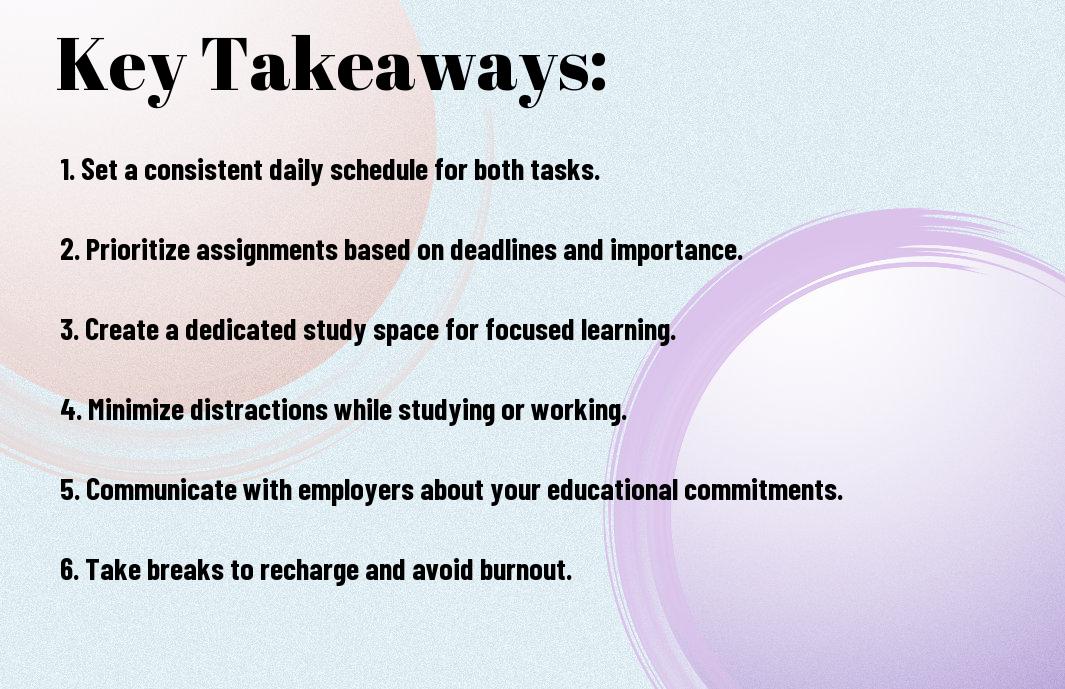
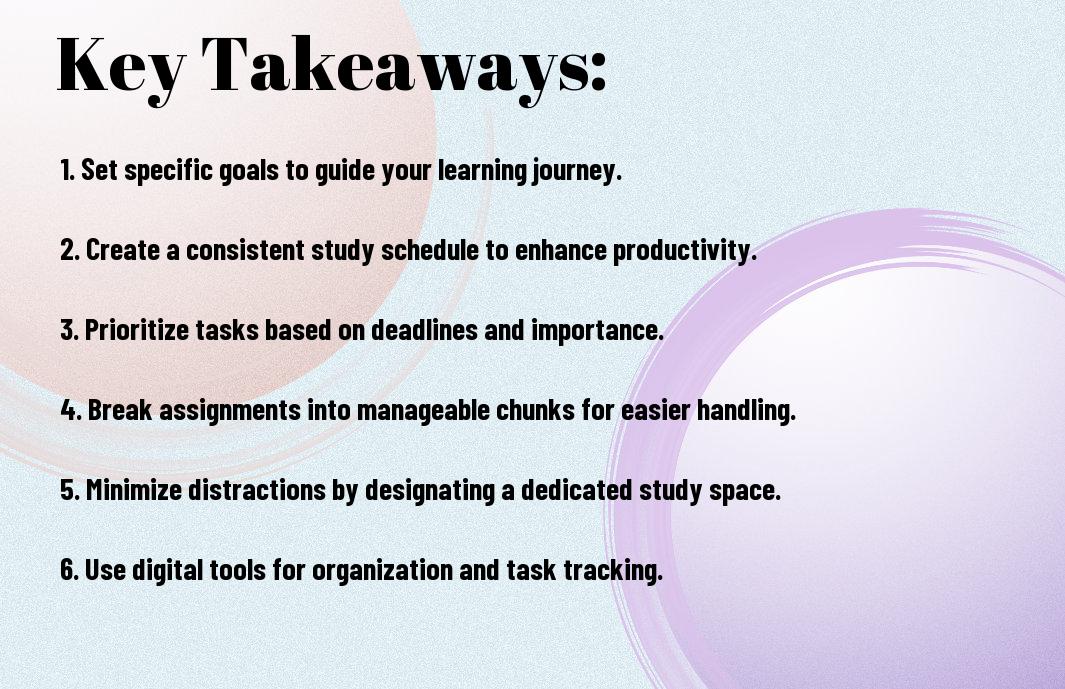
  • Set clear goals and priorities to help you stay focused on what needs to be accomplished, allowing you to allocate your time more efficiently.
  • Establish a schedule that balances learning with other aspects of your life, ensuring consistency and reducing the likelihood of burnout.
  • Utilize time management tools such as calendars, planners, or apps to organize your tasks and deadlines, making it easier to stay on track.
  • Practice effective study habits like breaking down large tasks into smaller, manageable chunks, and taking regular breaks to maintain productivity and retain information better.
  • Eliminate distractions by creating a dedicated learning environment that is quiet, comfortable, and free from interruptions, helping you to stay concentrated on your learning objectives.

Effective Scheduling

Your learning journey as an online learner requires a structured approach to manage your time efficiently. By allocating specific times for studying, you can stay on track and achieve your goals.

Prioritizing tasks

Synchronizing your tasks with your schedule is necessary. You can prioritize your tasks based on their importance and deadlines, allowing you to focus on the most critical ones first.

Creating a study routine

Across different platforms and resources, you can establish a consistent study routine. You can set specific times for studying, reviewing, and practicing, helping you stay organized and motivated.

Routine becomes your backbone as you continue with your online learning journey. You will find that having a study routine helps you balance your academic responsibilities with other aspects of your life, ensuring that you make the most of your time and achieve your academic goals, and you can adjust your routine as needed to accommodate changes in your schedule or learning style.
Goal Setting

The foundation of effective time management for online learners is setting clear goals. You need to define what you want to achieve and prioritize your tasks accordingly. By doing so, you will be able to focus on what is important and make the most out of your time.

Short-term objectives

Along with setting overall goals, you should also break them down into smaller, manageable short-term objectives. You will be able to track your progress and stay motivated as you achieve these objectives, which will ultimately lead to reaching your long-term goals.

Long-term vision

With a clear long-term vision, you will be able to make informed decisions about how to allocate your time and resources. You should consider what you want to achieve in the next few months or years and set specific, measurable goals that align with your vision.

Objectives that align with your long-term vision will help you stay focused and motivated, even when faced with challenges or setbacks. You will be able to evaluate your progress and make adjustments as needed to ensure you are on track to achieving your long-term goals, and celebrate your successes along the way, which will help you to stay committed to your goals and motivated to continue learning.

Minimizing Distractions

Once again, you find yourself struggling to stay on track with your online learning. To overcome this, managing distractions is key to achieving your goals.

Identifying common obstacles

Between social media, email, and phone notifications, there are numerous distractions that can hinder your learning progress. You need to identify these obstacles to tackle them effectively.

Strategies for staying focused

With a solid plan in place, you can minimize distractions and stay on track. You will be able to create a conducive learning environment that fosters productivity.

For instance, you can start by turning off notifications, finding a quiet space, or using tools that help you stay focused, such as website blockers or productivity apps. By implementing these strategies, you can overcome common obstacles and achieve your online learning goals, maximizing your productivity and efficiency in the process.

Time Management Tools

To manage your time effectively, you can utilize various tools, such as those mentioned in 10 Time Management Skills to Make Earning Your Online Degree Easier, to help you stay organized and focused.

Digital calendars and reminders

Calendars play a significant role in keeping you on track, allowing you to schedule your study sessions and set reminders for upcoming assignments and deadlines, helping you to prioritize your tasks and make the most of your time.

Task management software

One of the most effective tools for managing your tasks is software specifically designed for this purpose, enabling you to break down large tasks into smaller, manageable chunks, and track your progress, helping you to stay organized and motivated.

Another benefit of task management software is that it allows you to collaborate with others, share your tasks, and set deadlines, making it an excellent tool for group projects and assignments, which are often a part of online learning, and helping you to develop the skills you need to succeed in your online degree program.

Self-Care and Productivity

Now, as an online learner, you can optimize your time management by visiting Time Management for Online Students resources. This will help you develop strategies to balance your studies and personal life, leading to increased productivity.

Importance of breaks and relaxation

Along with studying, you need to take breaks to recharge and avoid burnout, allowing you to stay focused and retain information better.

Nutrition and exercise for mental clarity

Productivity relies on your physical and mental well-being, so you should prioritize healthy habits, such as regular exercise and a balanced diet, to support your learning journey.

Importance of nutrition and exercise extends to improved concentration and a stronger immune system, enabling you to tackle challenging tasks with confidence and maintain a healthy work-life balance as you pursue your online education, helping you make the most of your time and achieve your academic goals.

Staying Motivated

After establishing a routine, you’ll need to focus on maintaining your motivation to learn online. This involves setting achievable goals and tracking your progress, which helps you stay engaged and interested in the course material.

Setting rewards and milestones

Beyond the initial excitement, you’ll need to identify what drives you to continue learning, and setting rewards for yourself can be an effective way to do this, helping you stay motivated and focused on your goals.

Finding a study community

Collectively, being part of a community of fellow learners can provide you with the support and encouragement you need to stay motivated and engaged in your online learning journey, offering a sense of belonging and connection.

Milestones achieved through consistent effort will give you a sense of accomplishment, and being part of a study community can enhance this feeling, as you’ll be able to share your successes and learn from others, gaining new insights and perspectives that will help you stay motivated and committed to your online learning goals, and you’ll be able to apply this newfound knowledge to achieve your objectives.

To wrap up

On the whole, you now have the tools to enhance your time management skills as an online learner. You can prioritize your tasks, set realistic goals, and minimize distractions to make the most of your learning experience. By implementing these strategies, you will be able to stay organized, manage your time effectively, and achieve your academic goals, making your online learning journey more productive and successful, and helping you to get the most out of your online courses.

FAQ

Q: What are the most effective time management strategies for online learners to balance their studies and other responsibilities?

A: Online learners can benefit from creating a schedule that outlines dedicated blocks of time for studying, breaks, and other activities. It’s also helpful to prioritize tasks, set achievable goals, and use tools like calendars or planners to stay organized. Additionally, minimizing distractions, staying focused, and taking regular breaks can help online learners stay on track and make the most of their study time.

Q: How can online learners avoid procrastination and stay motivated throughout their course?

A: To avoid procrastination, online learners can break down large tasks into smaller, manageable chunks, and set realistic deadlines for completion. It’s also important to create a conducive study environment, free from distractions, and to use technology, such as website blockers or productivity apps, to help stay focused. Staying motivated can be achieved by celebrating small victories, seeking support from peers or mentors, and reminding oneself of the reasons for pursuing online learning.

Q: What tools or resources can online learners utilize to optimize their time management and enhance their learning experience?

A: Online learners can utilize a variety of tools and resources to optimize their time management and enhance their learning experience. These include digital calendars, to-do lists, and project management tools, such as Trello or Asana, to stay organized and on track. Additionally, learners can use time management apps, like RescueTime or Focus@Will, to help minimize distractions and stay focused. Online resources, such as study guides, video tutorials, and online communities, can also provide support and guidance throughout the learning process.

How Online Education is Transforming Corporate Training

As you navigate the ever-changing landscape of corporate training, you’re likely noticing a significant shift towards online education. Your organization is probably among those embracing this transformation, driven by the need for more efficient and effective skill development. You’re seeing firsthand how online learning platforms are redefining the way employees acquire new skills and knowledge, and you may be wondering what this means for the future of corporate training and your own role within it.

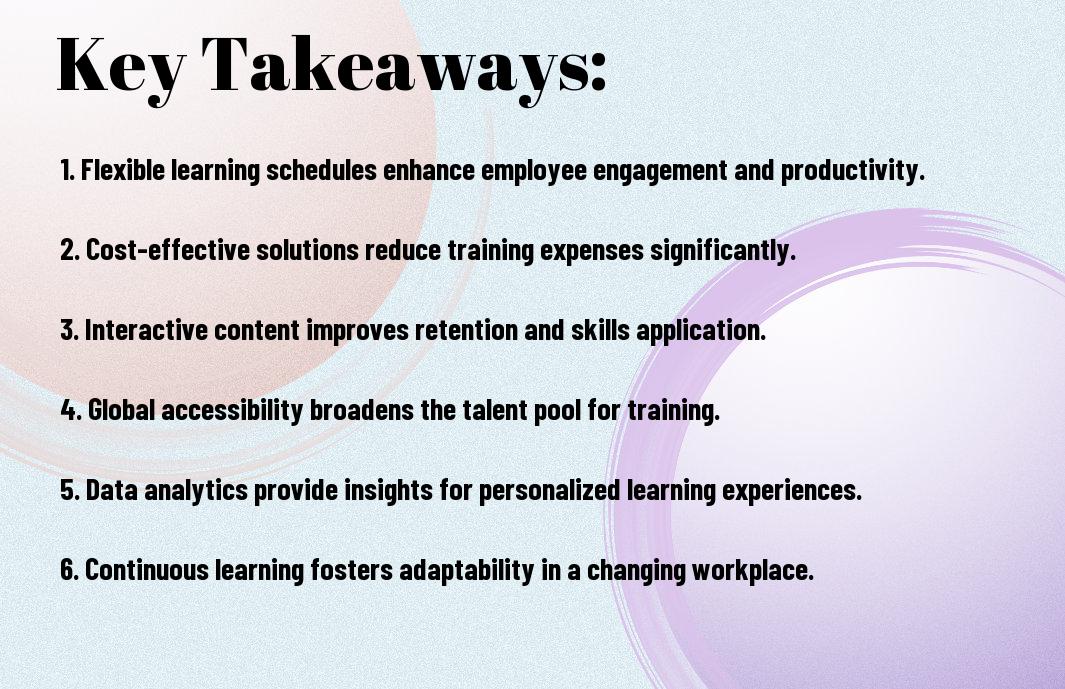
Key Takeaways:

  • Online education is revolutionizing the way companies approach corporate training, making it more accessible and cost-effective than traditional methods.
  • The use of digital platforms and e-learning tools allows employees to learn at their own pace and on their own schedule, increasing flexibility and productivity.
  • Personalized learning experiences can be created through artificial intelligence and data analytics, helping to identify knowledge gaps and provide targeted training for employees.
  • Online education also enables companies to track progress and measure outcomes more effectively, allowing for data-driven decisions and continuous improvement of training programs.
  • The shift to online education is also driving innovation in corporate training, with the use of virtual reality, gamification, and social learning platforms to create more engaging and interactive learning experiences.

Evolution

A significant transformation is underway in corporate training, and you are likely to notice the effects on your organization. As you navigate this shift, you’ll observe that online education is becoming increasingly prevalent, offering your employees more flexible and accessible learning opportunities.

Shifting Landscape of Corporate Training

Locating the most effective training methods can be challenging, but you’ll find that online education is redefining the corporate training landscape, allowing you to tailor programs to your employees’ needs and schedules.

Impact of Technology on Employee Development

Besides the obvious benefits of convenience and cost-effectiveness, you’ll discover that technology is revolutionizing employee development, enabling your organization to track progress and provide personalized feedback to your employees.

Considering the pace at which technology is advancing, you’ll need to stay informed about the latest developments in online education to ensure your employees receive the best possible training, and your organization remains competitive in the market, which will ultimately benefit your business and drive growth, as you invest in your employees’ skills and knowledge.

Benefits

One of the most significant advantages of online education in corporate training is the numerous benefits it offers to you and your organization, including increased accessibility, flexibility, and personalized learning experiences.

Increased Accessibility and Flexibility

With the rise of online education, you can now access training programs from anywhere, at any time, allowing you to learn at your own pace and convenience, which can significantly enhance your overall learning experience.

Personalized Learning Experiences

Among the many benefits of online education, personalized learning experiences are particularly noteworthy, as they enable you to tailor your learning to your individual needs and interests, making the learning process more engaging and effective for you.

Flexibility in online education allows you to pause, rewind, and revisit course materials as many times as you need, enabling you to absorb complex concepts and ideas at your own pace, which can lead to better retention and application of the learned skills in your professional life, ultimately benefiting your career and your organization’s performance.

Effective Strategies

To maximize the impact of online education in corporate training, you need to adopt strategies that cater to the diverse needs of your learners. This involves leveraging technology to create engaging, accessible, and personalized learning experiences.

Microlearning and Bite-Sized Content

Chunked into smaller modules, bite-sized learning allows you to absorb information easily, making it an effective approach for corporate training. You can break down complex topics into manageable chunks, enabling your employees to learn at their own pace.

Gamification and Interactive Tools

For a more immersive experience, you can incorporate gamification elements, such as quizzes, challenges, and rewards, to make learning fun and engaging. You can use interactive tools to simulate real-world scenarios, allowing your employees to practice new skills in a safe environment.

Hence, as you explore the possibilities of gamification and interactive tools, you’ll discover that they can be tailored to address specific training needs, from compliance training to soft skills development. You can track employee progress, identify knowledge gaps, and provide personalized feedback, ultimately enhancing the overall effectiveness of your corporate training programs.

Challenges

After implementing online corporate training, you may encounter several hurdles, including technological limitations and employee engagement. As you explore the digital landscape, you can learn more about How Technology Is Transforming Workplace Training In 2021 and find ways to address these challenges.

Overcoming Technical Issues and Limitations

Along with the benefits of online education, you will also face technical issues that can hinder the learning process, and it’s up to you to find solutions to these problems to ensure a smooth experience.

Ensuring Engagement and Motivation

Among the most significant challenges you will face is keeping your employees engaged and motivated throughout the online training process, which can be a daunting task, especially when you are not physically present.

Consequently, as you design your online corporate training program, you should prioritize interactive elements, such as discussions, quizzes, and gamification, to keep your employees invested in the learning process, and by doing so, you will be able to increase their participation and knowledge retention, ultimately leading to a more effective training experience.

Best Practices

Unlike traditional training methods, online education offers a flexible and personalized approach to corporate training, allowing you to tailor your program to meet specific business needs and goals.

Aligning Online Training with Business Objectives

Around the time you establish your online training program, you should consider aligning it with your overall business objectives, ensuring that your training strategy supports your company’s mission and vision.

Evaluating and Improving Program Effectiveness

Beside the initial setup, you will need to continually evaluate and improve your online training program to ensure it remains effective and meets your business needs.

With a well-designed evaluation system in place, you can assess the impact of your online training program on your employees’ performance and your business as a whole, making data-driven decisions to refine and enhance your training strategy over time, allowing you to maximize the benefits of online education for your organization.

Future Directions

Keep in mind that online education is constantly evolving, and its impact on corporate training will only continue to grow as technology advances and new innovations emerge, allowing you to access a wide range of training opportunities.

Emerging Trends and Innovations

For instance, you will see a rise in the use of artificial intelligence, virtual reality, and mobile learning, which will revolutionize the way you learn and interact with corporate training programs, making them more engaging and effective.

Potential Applications and Opportunities

Behind the scenes, you will find that online education is opening up new avenues for corporate training, enabling you to develop specialized skills and knowledge that can be applied directly to your work, enhancing your productivity and career prospects.

Future advancements in online education will enable you to personalize your learning experience, allowing you to focus on areas that are most relevant to your career goals and interests, and providing you with a competitive edge in the job market, as you will be able to demonstrate your expertise and capabilities to employers and clients alike.

Summing up

Presently, you are witnessing a significant shift in corporate training, as online education is redefining the landscape. You can explore how this transformation is unfolding by checking out 3 Ways Virtual Training is Changing Corporate Learning and Development, which highlights the benefits of virtual training for your organization. As you navigate this new terrain, your understanding of corporate training will likely be revolutionized, and your approach to learning and development will be forever changed.

FAQ

Q: What are the benefits of online education in corporate training, and how is it transforming the way companies train their employees?

A: Online education is transforming corporate training by providing a flexible, cost-effective, and personalized learning experience for employees. With online education, employees can access training materials and courses at their own pace, from anywhere, and at any time. This approach allows companies to reach a larger audience, increase knowledge retention, and improve overall employee performance. Additionally, online education enables companies to track employee progress, identify skill gaps, and make data-driven decisions to improve their training programs.

Q: How does online education enhance the accessibility and convenience of corporate training, and what are the advantages for employees and employers?

A: Online education enhances the accessibility and convenience of corporate training by allowing employees to learn from anywhere, at any time, and on any device. This flexibility is particularly beneficial for employees with busy schedules, those living in remote areas, or those with caregiving responsibilities. For employers, online education provides a scalable and efficient way to deliver training to a large number of employees, reducing the need for costly travel and venue rentals. Moreover, online education platforms often include features such as discussion forums, video conferencing, and live chats, which facilitate collaboration and social learning among employees.

Q: What role does technology play in online corporate training, and how are innovative tools and platforms changing the landscape of employee development?

A: Technology plays a vital role in online corporate training, enabling the creation of immersive, interactive, and engaging learning experiences. Innovative tools and platforms, such as learning management systems (LMS), artificial intelligence (AI), and virtual reality (VR), are changing the landscape of employee development by providing personalized learning pathways, real-time feedback, and simulated training environments. These technologies also enable companies to analyze employee performance data, identify areas for improvement, and develop targeted training programs to address specific skill gaps. As a result, employees can develop the skills and knowledge they need to succeed in their roles, and companies can improve overall productivity, employee satisfaction, and competitiveness in the market.

Top Tips for Balancing Work and Online Education

You’re juggling a job and online courses, and your schedule is tight. Your days blend together in a haze of deadlines and assignments. You need to find a balance between your work and education to succeed. Your productivity and stress levels depend on it. You’ll learn how to manage your time effectively and prioritize your tasks in this article, helping you to navigate your busy life with ease and achieve your goals.

Key Takeaways:

To achieve a successful balance between work and online education, consider the following points:

  • Set a schedule and stick to it, allocating specific times for work, study, and leisure activities to maintain a healthy work-life balance.
  • Establish a dedicated learning space that is quiet, comfortable, and free from distractions to help you stay focused on your online courses.
  • Develop time management skills to prioritize tasks, meet deadlines, and avoid procrastination, ensuring you complete both work and study tasks efficiently.
  • Leverage technology to your advantage, using tools and apps that help you stay organized, access course materials, and collaborate with peers and instructors in your online community.
  • Communicate openly with your employer and instructors about your commitments and deadlines, ensuring they are aware of your situation and can provide necessary support when needed.

Setting Priorities

A good starting point is to assess your priorities. You can find helpful advice on balancing work and online education at 5 Pro Tips to Optimize Your Work, School and Life Balance, which will guide you in making informed decisions.

Identifying Goals

Alongside setting priorities, analyzing your objectives is key. You need to determine what you want to achieve in your work and education to allocate your time effectively.

Creating a Schedule

Beneath the surface of a balanced life lies a well-organized schedule. You will need to plan out your day, week, and month to ensure you have enough time for work, study, and other activities.

Schedule your tasks in a way that allows you to focus on one thing at a time. You should allocate specific times for work, study, and breaks, and stick to your plan as much as possible. This will help you stay organized and make the most of your time, allowing you to achieve your goals in both your work and online education.

Time Management

Clearly, managing your time effectively is key to balancing work and online education. You can find firsthand advice for taking online classes while working full time at advice for taking online classes while working full time, which will help you create a schedule that works for you.

Avoiding Procrastination

Besides having a solid plan, you need to stay focused and avoid distractions to make the most of your time, ensuring you complete your tasks efficiently.

Staying Organized

To stay on top of your work and studies, you need a system that keeps all your tasks and deadlines in order, allowing you to prioritize your responsibilities.

Avoiding disorganization will save you time and energy, so set up a planner, calendar, or app that works for you and stick to it, keeping your goals and deadlines always in sight, and you will find it easier to manage your time effectively.

Effective Learning

To succeed in online education, you need to develop a learning strategy that works for you. This involves setting realistic goals, creating a schedule, and sticking to it. Your online course materials should be organized in a way that makes sense to you, allowing you to quickly access the information you need.

Active Engagement

The key to getting the most out of your online course is to stay engaged. You should participate in discussions, ask questions, and seek feedback from your instructors. This will help you stay motivated and invested in your learning.

Seeking Help

Engaging with your course materials and instructors is not enough; you also need to know when to ask for help. You should not hesitate to reach out to your instructors or peers when you are struggling with a concept or assignment. Your success in the course depends on your ability to ask for help when you need it.

Plus, seeking help is a sign of strength, not weakness. You are taking control of your learning by acknowledging what you do not know and taking steps to address those gaps. By seeking help, you will be able to better understand the material, complete assignments successfully, and achieve your academic goals. You will also develop a sense of self-awareness and self-advocacy that will serve you well in all areas of your life.

Work-Life Balance

All your efforts to balance work and online education will be in vain if you don’t maintain a healthy work-life balance. You need to prioritize your tasks, set realistic goals, and manage your time effectively to achieve this balance.

Boundaries and Routine

Across different aspects of your life, you must establish clear boundaries and a routine that works for you. You set your schedule and stick to it, ensuring that your work, study, and personal life do not overlap.

Self-Care

Among the many things you need to consider, taking care of your physical and mental health is vital. You make time for activities that help you relax and recharge, such as exercise, meditation, or hobbies.

At the end of the day, your self-care is what will help you stay focused and motivated. You prioritize your well-being by getting enough sleep, eating healthy foods, and avoiding activities that drain your energy, allowing you to tackle your work and studies with renewed enthusiasm and productivity.

Staying Motivated

Keep your goals in mind and find motivation in resources like 10 Tips for Balancing Work and School to help you stay focused. You’ll be able to tackle challenges with a clear mind and determination.

Rewarding Progress

Beneath the surface of your hard work, you’ll find a sense of accomplishment. Give yourself credit for your progress, no matter how small, to boost your motivation and enthusiasm for your online education.

Overcoming Obstacles

Around every corner, you’ll face new challenges. When you encounter obstacles, take a step back and assess the situation to find a solution that works for you, allowing you to move forward with your education and career goals.

Above all, acknowledging that obstacles are a part of the process is key. You will encounter setbacks, but with perseverance and the right mindset, you can overcome them and continue to make progress in your online education and career, ultimately achieving your goals.

Technology and Resources

Unlike traditional education, online learning offers flexibility. You can access course materials and submit assignments at your own pace, using your computer or mobile device.

Utilizing Online Tools

Besides your laptop, you’ll need reliable internet and a few key software tools to stay organized and focused. You’ll find that online calendars and task lists help you manage your time effectively.

Accessing Support

On top of technical requirements, your online institution likely offers support services. You can reach out to instructors, tutors, or classmates for help when you need it.

Accessing support is simple: you can usually find contact information on your course website or through a student portal. You can ask questions, discuss assignments, or get guidance on your coursework, all from the comfort of your own space.

Conclusion

From above, you now know the top tips for balancing work and online education. You have learned how to manage your time, prioritize tasks, and stay focused. You can apply these tips to your daily routine, making your journey smoother. Your goal is within reach, and with discipline, you will achieve it.

FAQ

Q: What are the most effective ways to manage my time while balancing work and online education?

A: To successfully balance work and online education, it is imperative to create a schedule that outlines dedicated blocks of time for work, study, and personal activities. Utilize a planner, calendar, or app to stay organized and set reminders for upcoming deadlines and assignments. Prioritize tasks based on their importance and deadlines, and avoid procrastination by breaking down larger tasks into smaller, manageable chunks. Additionally, establish a dedicated study space that is quiet, comfortable, and free from distractions to help you stay focused and productive.

Q: How can I maintain productivity and avoid burnout while working and studying simultaneously?

A: Maintaining productivity and avoiding burnout requires a combination of self-care, boundaries, and time management strategies. Set realistic goals and expectations for yourself, and take regular breaks to recharge and reduce stress. Engage in physical activity, such as walking or yoga, to improve your overall well-being and increase energy levels. It is also vital to establish clear boundaries between your work, study, and personal life to prevent the blurring of lines and potential conflicts. Communicate your needs and schedule to your employer, family, and friends to ensure their support and understanding.

Q: What strategies can I use to stay motivated and engaged in my online education while working full-time?

A: Staying motivated and engaged in online education requires a deep understanding of your goals and why you are pursuing further education. Celebrate your achievements and progress along the way, no matter how small, to help build momentum and reinforce your commitment. Connect with your peers and instructors through online forums, discussion groups, or social media to build a sense of community and support. Utilize a variety of learning resources, such as videos, podcasts, and interactive simulations, to keep your study sessions engaging and interactive. Finally, reward yourself for reaching milestones and completing challenging assignments to maintain a positive and motivated mindset.

How to Build Community in Virtual Learning

Key Takeaways:

To build a strong sense of community in virtual learning environments, consider the following points:

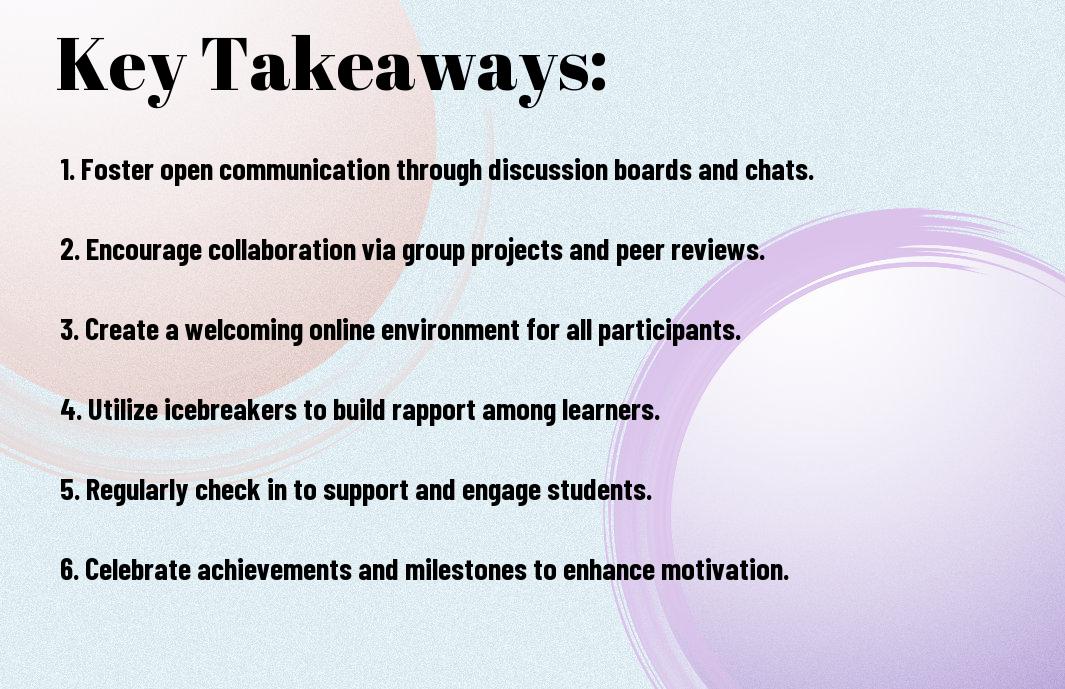
  • Establish a Sense of Belonging by creating opportunities for students to interact with each other and with instructors through Virtual Meetings and Discussion Forums.
  • Foster Open Communication by setting clear expectations and encouraging students to share their thoughts and ideas through Regular Feedback and Live Sessions.
  • Use Collaborative Tools such as Group Projects and Peer Review to promote teamwork and Social Learning among students.
  • Encourage Student Engagement by incorporating Gamification and Interactive Activities that promote Participation and Motivation.
  • Provide Technical Support and Training to ensure that students have the necessary skills to navigate the virtual learning environment and Access to all the necessary resources.

Setting the Foundation

A strong foundation is vital for building community in virtual learning. As you commence on this journey, you’ll need to establish a sense of belonging and connection among your learners. This involves creating a shared space where everyone feels welcome and valued.

Building Trust in a Virtual Environment

By taking the time to get to know your learners, you can foster a sense of trust and camaraderie. You’ll need to be approachable, responsive, and transparent in your interactions, setting the tone for a positive and supportive community.

Encouraging Open Communication

Across the virtual landscape, you’ll want to create opportunities for your learners to share their thoughts, ideas, and concerns. You can do this by using discussion forums, live chats, and video conferencing to facilitate open and honest communication.

Communication is the lifeblood of any community, and in a virtual learning environment, it’s especially vital. As you encourage your learners to share their perspectives and engage with one another, you’ll begin to see a rich tapestry of connections and relationships emerge. You’ll notice that your learners are more likely to participate, to take risks, and to support one another, and this, in turn, will help to build a strong and resilient community that will thrive in the virtual space.

Creating Engaging Content

If you want to capture your students’ attention, you’ll need to craft content that sparks their curiosity and ignites their passion for learning. As you design your virtual lessons, consider what will resonate with your audience and leave a lasting impression.

Interactive Lessons and Activities

Betwixt the screens and software, you’ll find a world of possibilities for interactive learning. You can create immersive experiences that draw your students in and encourage them to participate, share, and collaborate with one another.

Utilizing Multimedia Resources

Only by incorporating a variety of multimedia resources can you create a rich and dynamic learning environment. You can use videos, podcasts, and images to convey complex ideas in an engaging and accessible way, making your content more enjoyable and effective for your students.

Lessons that incorporate multimedia resources can be particularly effective in a virtual setting, as they allow you to cater to different learning styles and abilities. As you explore the possibilities of multimedia, you’ll discover new ways to make your content more engaging, interactive, and memorable, helping your students to stay motivated and invested in their learning journey.

Fostering Connections

Once again, you find yourself wondering how to bring your virtual students together. You can learn How to Forge a Strong Community in an Online Classroom by exploring successful strategies from educators who have paved the way.

Virtual Icebreakers and Team-Building Exercises

By introducing engaging activities, you can help your students feel more connected. Virtual icebreakers and team-building exercises are an excellent way to initiate meaningful interactions among your students, making your online classroom feel more like a community.

Encouraging Student Participation and Feedback

Similarly, icebreakers can lead to increased participation, as students become more comfortable sharing their thoughts and ideas with their peers. You can design activities that encourage feedback, allowing students to reflect on their learning and provide insights on how to improve the virtual learning experience.

Participation is the key to a thriving online community, and as you encourage your students to take an active role, you’ll notice a significant shift in their engagement. You’ll see them supporting one another, sharing their perspectives, and collaborating on projects, all of which will help to foster a sense of belonging and connection in your virtual classroom, making the learning experience more enjoyable and effective for everyone involved.

Establishing a Sense of Community

Not every virtual learning environment feels welcoming, but you can change that by creating a sense of belonging. You can learn from experts at Making Virtual Vibes Real: How to Build a Strong Classroom Community Online, and discover new ways to engage your students.

Creating a Shared Online Space

Shared online spaces can foster a sense of togetherness, and you can use platforms to create a virtual hub for your students to connect and collaborate, making your virtual learning environment feel more intimate.

Hosting Virtual Events and Workshops

Behind the scenes, you’re working hard to create an engaging experience, and hosting virtual events can help you achieve that, allowing you to bring your students together in a way that feels dynamic and interactive.

For instance, you can host webinars, virtual office hours, or online discussions, and use tools like video conferencing software to make these events feel more personal, allowing you to see your students’ faces and gauge their reactions, making the experience feel more immersive and engaging for everyone involved, and helping you build a stronger sense of community in your virtual learning environment.

Overcoming Challenges

After establishing your virtual learning community, you’ll likely encounter obstacles that test your resolve and creativity. Your ability to adapt and innovate will be important in overcoming these hurdles and fostering a thriving online environment.

Addressing Technical Issues and Accessibility Concerns

Issues such as connectivity problems and inadequate digital resources can hinder your progress, but you can mitigate these by providing clear guidelines and support for your students, ensuring that everyone has an equal opportunity to participate and learn.

Managing Conflict and Maintaining a Positive Online Environment

With a diverse group of students, conflicts can arise, but you can address them by establishing clear expectations and encouraging open communication, creating a safe and respectful space for all participants to engage and grow.

Addressing conflicts in a timely and constructive manner is vital to maintaining a positive online environment, and you can achieve this by actively listening to your students’ concerns, remaining empathetic and impartial, and seeking solutions that benefit the entire community, allowing your virtual learning space to flourish and become a vibrant hub of collaboration and discovery.

Evaluating Success

Now that you’ve built your virtual learning community, it’s time to evaluate its success. You’ll want to assess what’s working and what areas need improvement. This will help you refine your approach and create a more effective learning environment for your students.

Assessing Student Engagement and Participation

Among the key indicators of a thriving virtual learning community is student engagement. You’ll want to look at metrics such as login frequency, discussion board participation, and assignment completion rates to gauge student involvement.

Gathering Feedback and Making Improvements

Along with assessing student engagement, you’ll also want to gather feedback from your students. You can use surveys, polls, or one-on-one check-ins to collect feedback and identify areas for improvement.

The feedback you gather will be invaluable in helping you refine your virtual learning community. You’ll be able to identify what’s working and what’s not, and make adjustments to better meet the needs of your students. As you make improvements, you’ll find that your community becomes more vibrant and effective, and your students will thrive in this supportive and engaging environment. You’ll be able to tailor your approach to their needs, and watch as they grow and succeed.

Summing up

The path to building community in virtual learning is yours to forge, and as you begin on this journey, you’ll discover that your connections with others are the very fabric that weaves a rich and immersive experience. You’ll find that your interactions, your shared moments, and your collective discoveries all blend together to create a sense of belonging that transcends the virtual realm, and as you look back, you’ll see that your community has become a vibrant, thriving entity that illuminates your learning path.

FAQ

Q: What are the key elements to consider when building a community in virtual learning environments?

A: When building a community in virtual learning environments, it’s necessary to consider several key elements. First, establish clear expectations and goals for the community, ensuring all participants understand their roles and responsibilities. Second, foster open communication by utilizing various tools such as discussion forums, video conferencing, and instant messaging. Third, encourage active participation by incorporating interactive activities, group projects, and peer-to-peer feedback. Lastly, ensure accessibility and inclusivity by providing accommodations and support for diverse learners. By considering these elements, you can create a vibrant and engaging community that supports the academic and social growth of all participants.

Q: How can instructors effectively facilitate meaningful interactions among students in a virtual learning setting?

A: Instructors can facilitate meaningful interactions among students in a virtual learning setting by implementing strategies that promote collaboration and socialization. One approach is to design group projects that require students to work together to achieve a common goal, promoting teamwork and problem-solving skills. Another strategy is to use breakout rooms or small group discussions, allowing students to engage in more intimate conversations and build relationships. Additionally, instructors can create social spaces, such as virtual cafes or lounges, where students can informally interact and connect with one another. By providing these opportunities, instructors can help students develop a sense of belonging and connection in the virtual learning environment.

Q: What role do technology and digital tools play in building and maintaining a virtual learning community?

A: Technology and digital tools play a significant role in building and maintaining a virtual learning community. They provide the infrastructure for communication, collaboration, and socialization among participants. Learning management systems, online discussion forums, and video conferencing tools enable instructors to share resources, facilitate discussions, and engage with students in real-time. Social media platforms and online communities can also be leveraged to extend the virtual learning environment, allowing students to connect with one another and with the broader academic community. Furthermore, digital tools such as polls, quizzes, and gamification elements can be used to increase student engagement and motivation, helping to foster a sense of community and shared purpose among participants.

How to Develop Self-Discipline in Online Education

Key Takeaways:

To succeed in online education, developing self-discipline is crucial. Here are the key points to consider:

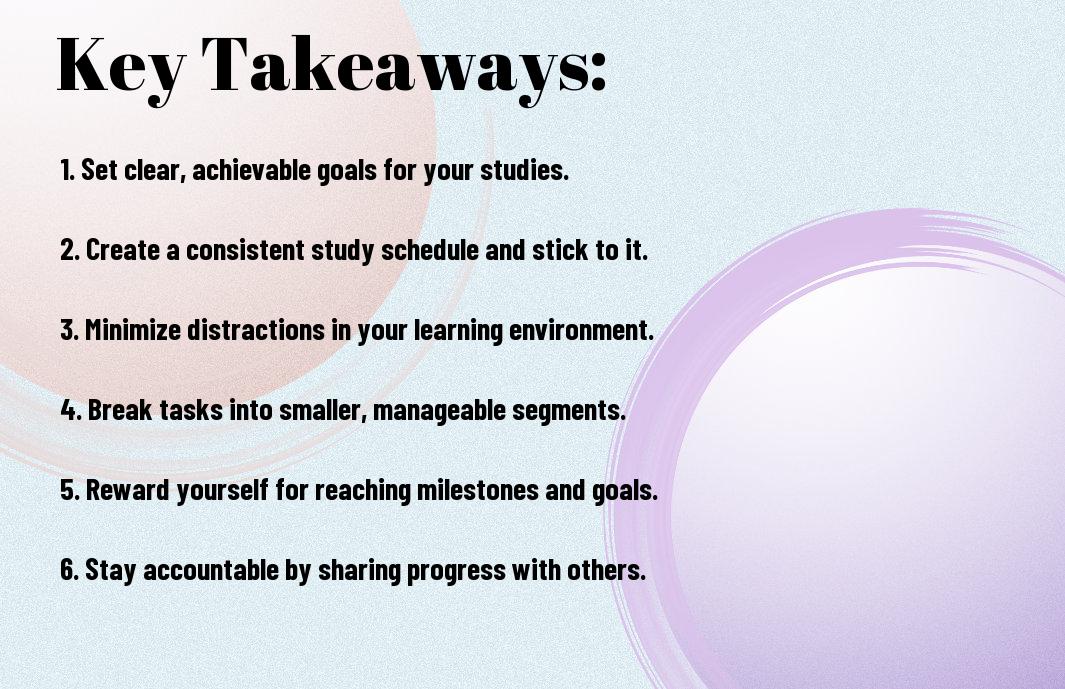
  • Establish a routine: Create a schedule and stick to it, setting aside dedicated time for studying and coursework to maintain consistency and productivity.
  • Set clear goals: Define your objectives and priorities, breaking down larger tasks into smaller, manageable chunks to help you stay focused and motivated.
  • Minimize distractions: Identify potential distractions, such as social media or email notifications, and eliminate them while you study to maintain concentration and avoid procrastination.
  • Use technology to your advantage: Utilize tools and apps that help you stay organized, on track, and engaged, such as digital calendars, reminders, and learning management systems.
  • Practice self-reflection: Regularly evaluate your progress, identifying areas for improvement and adjusting your approach as needed to ensure you’re meeting your academic goals.

Setting Goals

The foundation of self-discipline in online education begins with setting clear goals. You can develop your skills by visiting Essential Skills for Online Learning resources to understand what it takes to succeed.

Identifying Your Objectives

The key to achieving your goals is to identify what you want to accomplish. You will need to determine your short-term and long-term objectives to create a roadmap for success.

Creating a Schedule

Before you start your online course, you should create a schedule to help you stay on track. You will need to prioritize your tasks and allocate specific times for studying and completing assignments.

In addition, you should set realistic deadlines and milestones to help you stay motivated and focused. You can use a planner or calendar to stay organized and ensure that you are making progress towards your goals. By following your schedule, you will be able to develop the self-discipline you need to succeed in online education.

Building Motivation

Even as you start your online education journey, developing self-discipline is key to achieving your goals. You need to establish a routine and stay motivated to succeed. Your motivation will help you overcome obstacles and stay focused on your objectives.

Finding Your Why

For instance, understanding your reasons for pursuing online education is important. You will be more motivated when you know what drives you, and your goals will be clearer.

Tracking Progress

About the methods you use to track your progress, it’s important to find what works best for you. You can use journals, apps, or spreadsheets to monitor your progress and make adjustments as needed.

Finding the right tools to track your progress is vital to your success in online education. You will be able to identify areas where you need improvement and make data-driven decisions to adjust your study habits, helping you stay on track and achieve your goals more efficiently.

Managing Distractions

After establishing your online learning routine, you’ll need to tackle distractions that can hinder your progress. As you can see from the article Remote students are lacking self-discipline in online education, staying focused is key to success.

Minimizing Digital Distractions

At this point, you should identify potential digital distractions, such as social media or email notifications, and take steps to minimize them while you study.

Creating a Conducive Learning Environment

After setting up your dedicated study space, you’ll want to optimize it for learning, free from clutter and interruptions, to help you stay focused on your goals.

Managing your learning environment effectively means you can control the factors that influence your ability to concentrate, allowing you to make the most of your online education experience, and you will be able to achieve your goals more efficiently by staying committed to your schedule and maintaining a distraction-free study space.

Developing a Routine

Many online students struggle with staying on track, but developing a routine can help. You can create a schedule that outlines your daily and weekly tasks, setting specific times for studying and breaks. This will help you stay organized and focused on your goals.

Establishing a Study Routine

One effective way to establish a routine is to start small, setting achievable goals and gradually increasing your study time. You can begin by dedicating a specific time each day to studying, and then adjust your schedule as needed to fit your needs.

Prioritizing Tasks

Above all, prioritizing tasks is necessary to making the most of your study time. You should identify the most important tasks and tackle them first, breaking them down into manageable chunks to help you stay focused.

Also, as you prioritize your tasks, you will be able to manage your time more effectively, avoiding procrastination and minimizing distractions. You will be able to allocate your time wisely, ensuring that you complete all your tasks and make progress towards your goals, which will help you develop self-discipline in online education.

Overcoming Procrastination

Despite the many benefits of online education, procrastination can be a significant obstacle to your success. You will need to develop strategies to overcome procrastination and stay motivated to achieve your goals.

Breaking Down Large Tasks

Above all, breaking down large tasks into smaller, manageable chunks will help you make steady progress and avoid feeling overwhelmed. You can then focus on one task at a time, allowing you to make consistent progress towards your goals.

Using the Pomodoro Technique

Between completing tasks and taking breaks, you will find that your productivity increases. You can use the Pomodoro Technique, which involves working in focused 25-minute increments, followed by a 5-minute break.

Breaking down your study sessions into shorter intervals with regular breaks can help you stay focused and retain information better. You will find that using the Pomodoro Technique helps you avoid burnout and maintain a sustainable work pace, allowing you to make the most of your online education experience. As you use this technique, you will become more aware of your productivity patterns and can adjust your approach to suit your needs.

Seeking Support

Unlike traditional education, online education requires you to be more self-motivated, you can learn more about The Role Of Self-Discipline In An Online Education to understand its importance.

Joining Online Communities

The online communities you join can provide you with the support and motivation you need to stay on track with your online education.

Finding a Study Buddy

Communities of like-minded individuals can help you find a study buddy who can support and motivate you throughout your online education journey.

Support from a study buddy can be beneficial in helping you stay disciplined and motivated, as you can work together to achieve your goals, share knowledge, and learn from each other’s strengths and weaknesses, which can help you develop your self-discipline and succeed in your online education.

Conclusion

To wrap up, developing self-discipline in online education requires you to set clear goals and schedules. You must prioritize your tasks, avoid distractions, and create a conducive learning environment. By doing so, you will be able to stay motivated and focused, ultimately achieving your academic objectives. Your commitment to self-discipline will yield positive results, enabling you to succeed in your online educational pursuits.

FAQ

Q: What are the initial steps to develop self-discipline for success in online education?

A: To develop self-discipline in online education, start by setting clear, achievable goals for your academic journey. This includes creating a schedule and sticking to it, ensuring you allocate specific times for studying, attending virtual classes, and completing assignments. Establishing a dedicated study space that is free from distractions is also key. Additionally, prioritize tasks based on their importance and deadlines to maintain a manageable workload. By taking these initial steps, you lay the groundwork for a disciplined approach to your online learning experience.

Q: How can I maintain motivation and avoid procrastination while studying online?

A: Maintaining motivation in an online learning environment can be challenging, but there are several strategies that can help. Firstly, break down large tasks into smaller, manageable chunks, and reward yourself upon completion of each task. Staying connected with your peers and instructors through online forums or social media groups can also provide a sense of community and support, helping to keep you engaged. Furthermore, utilize productivity tools and apps designed to help you stay focused and on track. Regularly tracking your progress and reflecting on your goals can also boost motivation and encourage consistent effort.

Q: What role does time management play in developing self-discipline for online learning, and how can I improve my time management skills?

A: Effective time management is fundamental to developing self-discipline in online education. It involves planning out your day, week, and month to ensure all tasks and study sessions are completed on time. To improve time management skills, consider using a planner, calendar, or time management app to schedule your tasks. The Pomodoro Technique, which involves studying in focused 25-minute increments, followed by a 5-minute break, can also be highly effective. Additionally, learning to say no to non-vital commitments and minimizing digital distractions during study times can significantly enhance your ability to manage time wisely and maintain self-discipline in your online learning endeavors.

Skip to content