You’re juggling a job and online courses, and your schedule is tight. Your days blend together in a haze of deadlines and assignments. You need to find a balance between your work and education to succeed. Your productivity and stress levels depend on it. You’ll learn how to manage your time effectively and prioritize your tasks in this article, helping you to navigate your busy life with ease and achieve your goals.
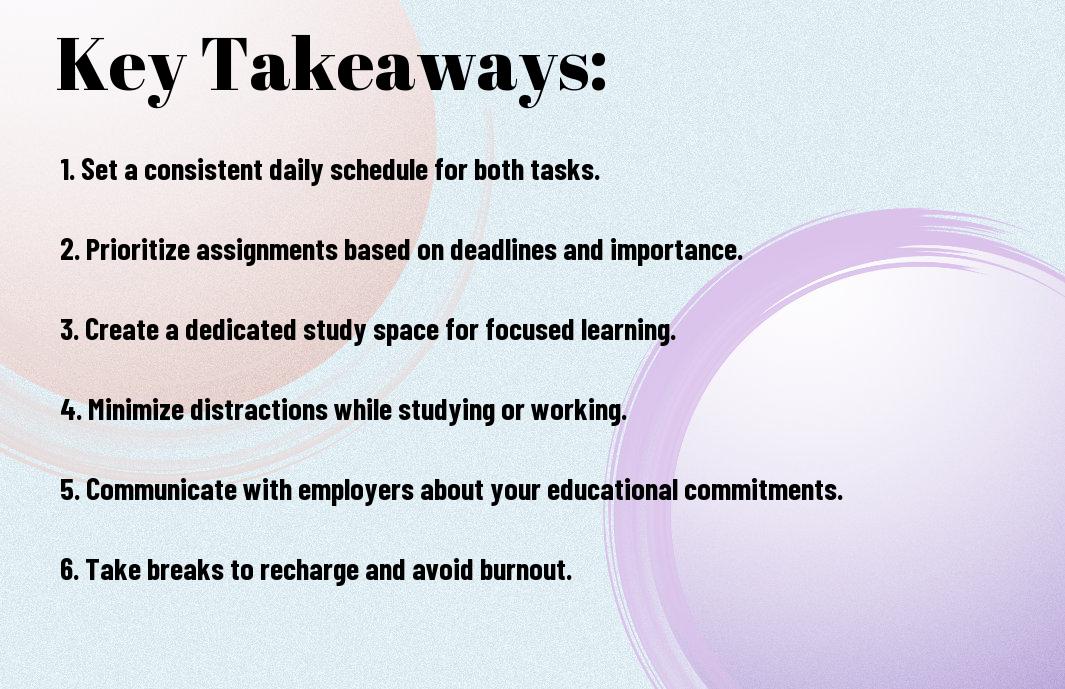
Key Takeaways:
To achieve a successful balance between work and online education, consider the following points:
- Set a schedule and stick to it, allocating specific times for work, study, and leisure activities to maintain a healthy work-life balance.
- Establish a dedicated learning space that is quiet, comfortable, and free from distractions to help you stay focused on your online courses.
- Develop time management skills to prioritize tasks, meet deadlines, and avoid procrastination, ensuring you complete both work and study tasks efficiently.
- Leverage technology to your advantage, using tools and apps that help you stay organized, access course materials, and collaborate with peers and instructors in your online community.
- Communicate openly with your employer and instructors about your commitments and deadlines, ensuring they are aware of your situation and can provide necessary support when needed.

Setting Priorities
A good starting point is to assess your priorities. You can find helpful advice on balancing work and online education at 5 Pro Tips to Optimize Your Work, School and Life Balance, which will guide you in making informed decisions.
Identifying Goals
Alongside setting priorities, analyzing your objectives is key. You need to determine what you want to achieve in your work and education to allocate your time effectively.
Creating a Schedule
Beneath the surface of a balanced life lies a well-organized schedule. You will need to plan out your day, week, and month to ensure you have enough time for work, study, and other activities.
Schedule your tasks in a way that allows you to focus on one thing at a time. You should allocate specific times for work, study, and breaks, and stick to your plan as much as possible. This will help you stay organized and make the most of your time, allowing you to achieve your goals in both your work and online education.
Time Management
Clearly, managing your time effectively is key to balancing work and online education. You can find firsthand advice for taking online classes while working full time at advice for taking online classes while working full time, which will help you create a schedule that works for you.
Avoiding Procrastination
Besides having a solid plan, you need to stay focused and avoid distractions to make the most of your time, ensuring you complete your tasks efficiently.
Staying Organized
To stay on top of your work and studies, you need a system that keeps all your tasks and deadlines in order, allowing you to prioritize your responsibilities.
Avoiding disorganization will save you time and energy, so set up a planner, calendar, or app that works for you and stick to it, keeping your goals and deadlines always in sight, and you will find it easier to manage your time effectively.
Effective Learning
To succeed in online education, you need to develop a learning strategy that works for you. This involves setting realistic goals, creating a schedule, and sticking to it. Your online course materials should be organized in a way that makes sense to you, allowing you to quickly access the information you need.
Active Engagement
The key to getting the most out of your online course is to stay engaged. You should participate in discussions, ask questions, and seek feedback from your instructors. This will help you stay motivated and invested in your learning.
Seeking Help
Engaging with your course materials and instructors is not enough; you also need to know when to ask for help. You should not hesitate to reach out to your instructors or peers when you are struggling with a concept or assignment. Your success in the course depends on your ability to ask for help when you need it.
Plus, seeking help is a sign of strength, not weakness. You are taking control of your learning by acknowledging what you do not know and taking steps to address those gaps. By seeking help, you will be able to better understand the material, complete assignments successfully, and achieve your academic goals. You will also develop a sense of self-awareness and self-advocacy that will serve you well in all areas of your life.
Work-Life Balance
All your efforts to balance work and online education will be in vain if you don’t maintain a healthy work-life balance. You need to prioritize your tasks, set realistic goals, and manage your time effectively to achieve this balance.
Boundaries and Routine
Across different aspects of your life, you must establish clear boundaries and a routine that works for you. You set your schedule and stick to it, ensuring that your work, study, and personal life do not overlap.
Self-Care
Among the many things you need to consider, taking care of your physical and mental health is vital. You make time for activities that help you relax and recharge, such as exercise, meditation, or hobbies.
At the end of the day, your self-care is what will help you stay focused and motivated. You prioritize your well-being by getting enough sleep, eating healthy foods, and avoiding activities that drain your energy, allowing you to tackle your work and studies with renewed enthusiasm and productivity.
Staying Motivated
Keep your goals in mind and find motivation in resources like 10 Tips for Balancing Work and School to help you stay focused. You’ll be able to tackle challenges with a clear mind and determination.
Rewarding Progress
Beneath the surface of your hard work, you’ll find a sense of accomplishment. Give yourself credit for your progress, no matter how small, to boost your motivation and enthusiasm for your online education.
Overcoming Obstacles
Around every corner, you’ll face new challenges. When you encounter obstacles, take a step back and assess the situation to find a solution that works for you, allowing you to move forward with your education and career goals.
Above all, acknowledging that obstacles are a part of the process is key. You will encounter setbacks, but with perseverance and the right mindset, you can overcome them and continue to make progress in your online education and career, ultimately achieving your goals.
Technology and Resources
Unlike traditional education, online learning offers flexibility. You can access course materials and submit assignments at your own pace, using your computer or mobile device.
Utilizing Online Tools
Besides your laptop, you’ll need reliable internet and a few key software tools to stay organized and focused. You’ll find that online calendars and task lists help you manage your time effectively.
Accessing Support
On top of technical requirements, your online institution likely offers support services. You can reach out to instructors, tutors, or classmates for help when you need it.
Accessing support is simple: you can usually find contact information on your course website or through a student portal. You can ask questions, discuss assignments, or get guidance on your coursework, all from the comfort of your own space.
Conclusion
From above, you now know the top tips for balancing work and online education. You have learned how to manage your time, prioritize tasks, and stay focused. You can apply these tips to your daily routine, making your journey smoother. Your goal is within reach, and with discipline, you will achieve it.
FAQ
Q: What are the most effective ways to manage my time while balancing work and online education?
A: To successfully balance work and online education, it is imperative to create a schedule that outlines dedicated blocks of time for work, study, and personal activities. Utilize a planner, calendar, or app to stay organized and set reminders for upcoming deadlines and assignments. Prioritize tasks based on their importance and deadlines, and avoid procrastination by breaking down larger tasks into smaller, manageable chunks. Additionally, establish a dedicated study space that is quiet, comfortable, and free from distractions to help you stay focused and productive.
Q: How can I maintain productivity and avoid burnout while working and studying simultaneously?
A: Maintaining productivity and avoiding burnout requires a combination of self-care, boundaries, and time management strategies. Set realistic goals and expectations for yourself, and take regular breaks to recharge and reduce stress. Engage in physical activity, such as walking or yoga, to improve your overall well-being and increase energy levels. It is also vital to establish clear boundaries between your work, study, and personal life to prevent the blurring of lines and potential conflicts. Communicate your needs and schedule to your employer, family, and friends to ensure their support and understanding.
Q: What strategies can I use to stay motivated and engaged in my online education while working full-time?
A: Staying motivated and engaged in online education requires a deep understanding of your goals and why you are pursuing further education. Celebrate your achievements and progress along the way, no matter how small, to help build momentum and reinforce your commitment. Connect with your peers and instructors through online forums, discussion groups, or social media to build a sense of community and support. Utilize a variety of learning resources, such as videos, podcasts, and interactive simulations, to keep your study sessions engaging and interactive. Finally, reward yourself for reaching milestones and completing challenging assignments to maintain a positive and motivated mindset.