How to Overcome Isolation in Online Learning

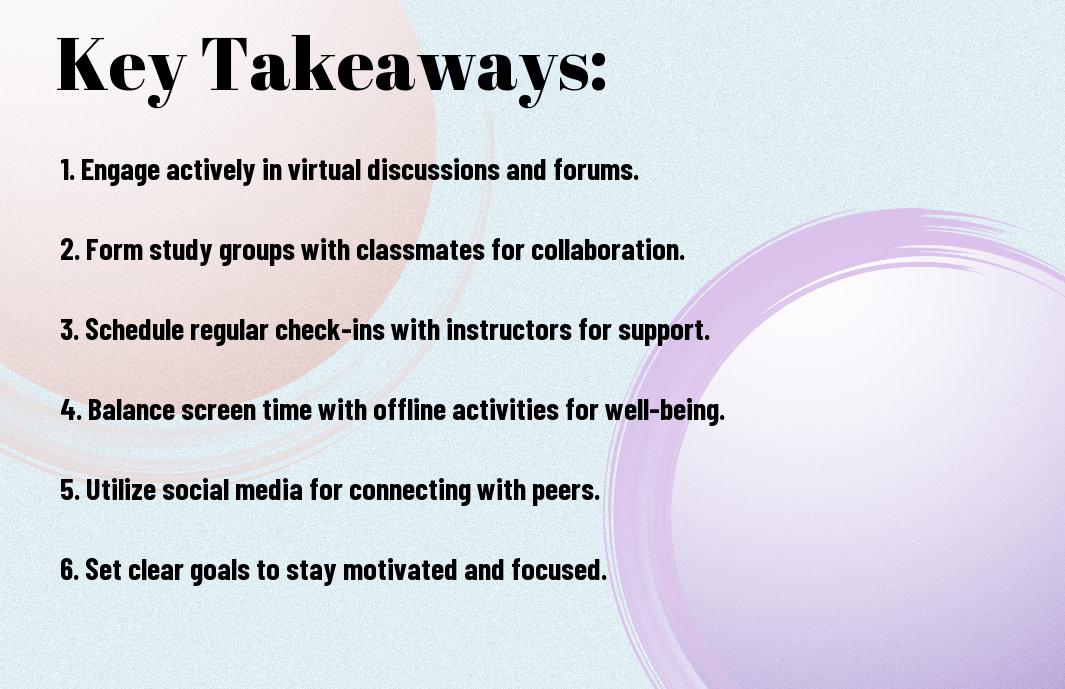
Key Takeaways:

To tackle the challenges of online learning, consider the following points:

  • Establish a routine to provide structure and help you stay on track with your studies.
  • Utilize technology to connect with peers and instructors through video conferencing tools, discussion forums, and social media groups.
  • Seek out support from family, friends, or a mentor to help you stay motivated and address any concerns you may have.
  • Take breaks and prioritize self-care to avoid burnout and maintain a healthy work-life balance.
  • Set goals and track progress to help you stay focused and achieve academic success in an online learning environment.

Setting Up a Supportive Environment

For a successful online learning experience, you need to set up a supportive environment that fosters productivity and motivation. This involves creating a dedicated space for learning, free from distractions and interruptions.

Creating a dedicated learning space

Before you begin, designate a specific area for learning, and make it your own by adding personal touches that inspire you, such as favorite books or quotes.

Minimizing distractions and staying focused

Distractions are inevitable, but you can minimize them by turning off notifications, logging out of social media, and using website blockers to stay on track.

A key part of staying focused is establishing a routine and setting clear goals for each study session, allowing you to stay motivated and engaged, and helping you to make the most of your online learning experience, as you navigate the vast expanse of digital knowledge, crafting your own path to success.

Staying Connected with Peers and Instructors

The online learning environment can often feel isolating, but it doesn’t have to be. You can combat this by reading about Combatting online learning’s loneliness epidemic and taking steps to stay connected with your peers and instructors.

Joining online communities and forums

Besides the structured learning environment, you can also engage with others through online communities and forums, where you can discuss topics related to your course and get support from your peers.

Participating in virtual discussions and meetings

For a more interactive experience, you can participate in virtual discussions and meetings, which allow you to engage with your instructors and peers in real-time, facilitating a sense of connection and community.

Joining these virtual discussions and meetings can help you feel more connected to your learning community, and you can take an active role by sharing your thoughts, asking questions, and engaging with others, allowing you to build relationships and collaborate with your peers, making your online learning experience more enjoyable and enriching.

Building a Routine and Staying Motivated

Many online learners struggle to stay motivated, but establishing a routine can help. You can start by setting achievable goals and tracking your progress, which will help you stay focused and motivated throughout your learning journey.

Creating a schedule and sticking to it

Establishing a schedule is key to staying on track. You can begin by allocating specific times for learning, breaks, and leisure activities, and then stick to your plan as much as possible, allowing for some flexibility when needed.

Rewarding yourself for milestones achieved

By acknowledging and celebrating your accomplishments, you can reinforce positive behaviors and stay motivated. You can treat yourself to something special when you reach a milestone, such as completing a difficult course or finishing a project.

Hence, rewarding yourself for milestones achieved is an effective way to boost your motivation and engagement in online learning. You can choose rewards that are meaningful to you, such as taking a break to read a book, watching a movie, or going for a walk, and make sure to celebrate your progress along the way, no matter how small it may seem, to keep yourself motivated and inspired to continue learning.

Overcoming Technical Challenges

Now that you’ve commenceed on your online learning journey, you’ll inevitably encounter technical hurdles that can leave you feeling frustrated and disconnected. But fear not, for these challenges can be overcome with the right mindset and strategies.

Troubleshooting common technical issues

Around the time you encounter a technical glitch, take a deep breath and try to identify the source of the problem, whether it’s a faulty internet connection or a software compatibility issue, and attempt to resolve it using your intuition and troubleshooting skills.

Seeking help from technical support teams

Unlike other challenges you may face, technical issues can often be resolved with the help of a dedicated support team, so don’t hesitate to reach out to them when you need assistance, and they will guide you through the process of resolving the issue.

The technical support team is there to help you navigate the complexities of online learning, and by seeking their help, you can get back on track with your studies, and they will provide you with the necessary tools and guidance to overcome any technical obstacles that may arise, allowing you to focus on what matters most – your learning and growth.

Prioritizing Self-Care and Wellbeing

All online learners face unique challenges, and taking care of your physical and mental health is crucial to success. You must make time for activities that bring you joy and help you relax.

Taking breaks and practicing self-care

Thereby, establishing a routine that includes self-care activities will help you stay focused and motivated. You can try meditation, reading, or spending time with loved ones to reduce stress and increase productivity.

Staying physically and mentally active

Physically, you need to get moving to stay healthy and energized. You can try simple exercises like stretching or yoga to get started, and find activities that you enjoy to make it a habit.

Taking care of your physical health will have a significant impact on your mental wellbeing. You will feel more confident, focused, and prepared to tackle challenges as you engage in regular physical activity, and your mind will be sharper and more receptive to new ideas and knowledge, helping you to stay engaged and motivated in your online learning journey.

Seeking Help and Resources

Despite the flexibility of online learning, you may still feel isolated, but there are ways to overcome this. You can seek help and resources to stay connected and engaged, such as online forums, tutorials, and support groups, to help you navigate your course and connect with others.

Accessing online resources and tutorials

Seeking out online resources and tutorials can be a great way to supplement your learning and connect with others who share your interests. You can find a wealth of information online, from video lectures to interactive simulations, to help you deepen your understanding of the material.

Reaching out to instructors and peers for support

Accessing support from your instructors and peers can be a powerful way to combat isolation. You can reach out to them via email, discussion forums, or video conferencing, to ask questions, share your thoughts, and get feedback on your work, helping you feel more connected and supported.

In addition, when you reach out to your instructors and peers, you open yourself up to a wealth of knowledge, experience, and perspectives, which can help you stay motivated and inspired. You can participate in online discussions, join study groups, or collaborate on projects, allowing you to build relationships and a sense of community, even in a virtual environment, and helping you to overcome the feeling of isolation and stay engaged in your learning journey.

To wrap up

Presently, you’ve gathered the tools to break free from the shackles of isolation in online learning. You’ve learned to weave a web of connections, to nurture your curiosity, and to transform your learning space into a realm of wonder. As you initiate on this journey, your path will be illuminated by the thrill of discovery, and the boundaries of isolation will fade away, allowing you to tap into the limitless potential of online learning, and unlock the secrets that await your curious mind.

FAQ

Q: What are the main challenges of online learning that can lead to isolation, and how can I identify if I’m experiencing them?

A: Online learning can sometimes lead to feelings of isolation due to the lack of face-to-face interaction with peers and instructors. The main challenges include difficulty in staying motivated, lack of immediate feedback, and technical issues. To identify if you’re experiencing these challenges, pay attention to your engagement level in your courses, your ability to manage your time effectively, and your overall satisfaction with your learning experience. If you find yourself struggling to stay motivated, feeling disconnected from your learning community, or facing recurring technical difficulties, it may be a sign that you’re experiencing isolation in your online learning environment.

Q: How can I maintain social connections and a sense of community while learning online to overcome feelings of isolation?

A: Maintaining social connections is key to overcoming isolation in online learning. You can achieve this by actively participating in online forums and discussion groups, attending virtual events and webinars, and using social media platforms to connect with your peers and instructors. Additionally, consider joining online clubs or study groups related to your course of study. These interactions can help you build relationships, share experiences, and feel more connected to your learning community. Regular communication with your instructors can also provide support and help you stay engaged with your coursework.

Q: What strategies can I implement to stay motivated and engaged in my online courses, thereby reducing the likelihood of feeling isolated?

A: To stay motivated and engaged in your online courses, set clear goals and deadlines for yourself, and create a dedicated and distraction-free study space. Establishing a routine and sticking to it can help you stay on track. It’s also beneficial to use a variety of learning materials, such as videos, podcasts, and interactive quizzes, to keep your learning experience interesting and engaging. Furthermore, celebrating your achievements and seeking help when needed can boost your motivation. Connecting with family and friends about your learning progress and involving them in your goals can provide an additional layer of support and accountability, helping to mitigate feelings of isolation.

The Best Online Tools for Collaborative Learning

As you explore ways to enhance your learning experience, you’ll find that collaborative learning is an effective approach. You can leverage technology to facilitate teamwork and knowledge sharing. Your search for the right tools ends here, as you’re about to discover the top online platforms designed to foster collaboration and productivity. You’ll learn how to utilize these tools to achieve your learning goals and stay connected with your peers.

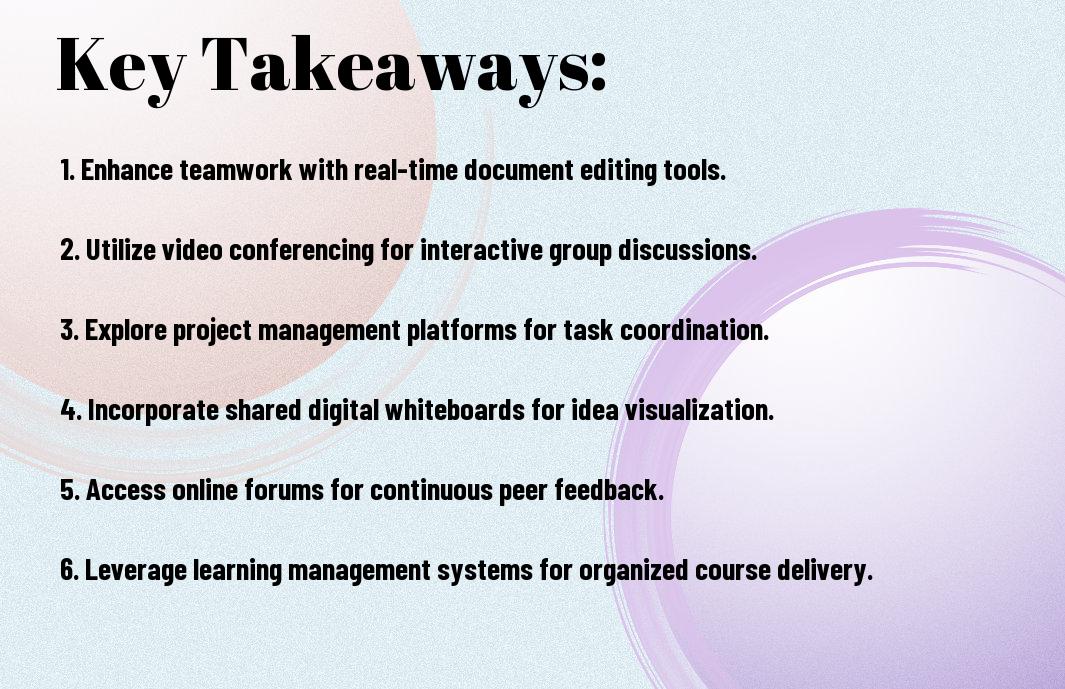
Key Takeaways:

To enhance collaborative learning experiences, utilizing the right online tools is vital. Here are some key points to consider:

  • Virtual Whiteboards like Mural and Google Jamboard enable real-time collaboration and idea sharing among team members, fostering a creative and interactive learning environment.
  • Communication Platforms such as Slack and Microsoft Teams facilitate seamless communication and file sharing, allowing teams to stay organized and work efficiently on group projects.
  • Video Conferencing tools like Zoom and Google Meet provide face-to-face interaction, screen sharing, and recorded sessions, making it easier to engage with remote teams and track progress.
  • Project Management tools such as Trello and Asana help assign tasks, set deadlines, and monitor progress, ensuring that team members are on the same page and working towards common goals.
  • Feedback and assessment tools like Kahoot and Quizlet enable instant feedback, peer review, and self-assessment, promoting a growth mindset and continuous learning among students and team members.

Benefits of Collaborative Learning

While collaborative learning offers numerous advantages, you can expect to see improved academic performance and increased student engagement. By working together, you’ll develop skills that are important in the workplace, such as problem-solving and conflict resolution.

Enhanced Creativity

Above all, collaborative learning fosteres an environment where you can share ideas and build upon each other’s strengths, leading to innovative solutions and approaches.

Improved Communication

Any collaborative effort requires effective communication, and as you work with others, you’ll develop your ability to articulate your thoughts and listen to others, ensuring that your message is conveyed clearly.

And as you continue to engage in collaborative learning, you’ll find that your communication skills extend beyond the classroom, enabling you to express your ideas and opinions with confidence, and work seamlessly with others to achieve your goals, making you a more effective team player in your future endeavors.

Top Online Tools for Collaboration

You have numerous options when it comes to online tools for collaborative learning, each with its unique features and benefits, allowing you to choose the one that best suits your needs and enhances your learning experience.

Google Workspace

On the platform, you can access a suite of productivity tools, including Google Docs, Sheets, and Slides, which enable seamless collaboration and real-time feedback, making it an excellent choice for your collaborative learning endeavors.

Trello

Above all, Trello stands out as a versatile and user-friendly platform, utilizing boards, lists, and cards to organize tasks and projects, allowing you to visualize your workflow and collaborate with others efficiently.

Google may offer a range of collaborative tools, but Trello’s visually appealing interface and adaptability make it an excellent addition to your toolkit, enabling you to manage complex projects and assign tasks to your team members, track progress, and achieve your learning objectives more effectively.

Virtual Classrooms and Meetings

Keep your online learning sessions engaging with virtual classrooms and meetings, which enable you to interact with your students in real-time, regardless of their location.

Zoom

At this point, you’re likely familiar with Zoom, a popular platform for hosting virtual meetings and classes, allowing you to share screens and collaborate with your students effortlessly.

Skype

Any learning environment can benefit from Skype, which offers free video conferencing, enabling you to connect with your students and facilitate discussions, presentations, and group work.

Among the features that make Skype an excellent choice for your online classes are its user-friendly interface, high-quality video, and screen sharing capabilities, allowing you to create an immersive and interactive learning experience for your students, and you can use it to hold office hours, provide individual feedback, and promote collaboration among your students.

Project Management and Organization

To enhance collaborative learning, you can utilize various online tools, such as those listed in 22 Collaborative Learning Tools to Boost Your L&D Strategy, which provide a comprehensive overview of available options.

Asana

By choosing Asana, you can streamline your project management, allowing your team to focus on their tasks and collaborate more efficiently, thereby improving your overall learning experience.

Basecamp

Any project can benefit from a centralized platform, and Basecamp offers you a unified space to organize your work, Set deadlines, and track progress, making it easier for your team to collaborate and learn together.

It provides a range of features, including message boards, file sharing, and schedule sharing, which enable you to work together seamlessly and stay informed about your project’s status, allowing you to make adjustments as needed to achieve your learning goals.

Interactive Whiteboards and Screen Sharing

Many educational institutions are leveraging interactive whiteboards and screen sharing tools to enhance collaborative learning. You can use these tools to share content, annotate documents, and engage with your students in real-time.

SMART Boards

One of the most popular interactive whiteboard solutions is SMART Boards, which offers a range of features to support collaborative learning, allowing you to create interactive lessons and share them with your students.

ScreenFlow

After exploring various screen sharing options, you may consider ScreenFlow, a powerful tool that enables you to record and share your screen, making it easier to create tutorials and presentations for your students.

This tool allows you to record your screen, add annotations, and share your videos with your students, making it an excellent option for flipped classrooms and online courses, enabling you to create engaging content and track your students’ progress.

Feedback and Assessment Tools

Once again, you’ll find a plethora of online tools at your disposal to facilitate collaborative learning, particularly when it comes to feedback and assessment. You can leverage these tools to track your students’ progress, identify areas of improvement, and provide constructive feedback.

Kahoot

Around the globe, educators are utilizing Kahoot to create interactive quizzes and games that make assessment a fun experience for your students. You can create your own quizzes or choose from a vast library of existing ones, making it easy to assess your students’ knowledge.

Quizlet

Quizlet offers you a comprehensive platform to create and share study materials, including flashcards, tests, and study games. You can use Quizlet to assess your students’ understanding of various subjects and topics, and track their progress over time.

At the heart of Quizlet’s success is its ability to provide you with real-time feedback and assessment results, allowing you to identify areas where your students need extra support. You can use this information to adjust your teaching strategies and provide targeted support to your students, helping them to achieve their full potential.

Summing up

Presently, you have a wide range of options for collaborative learning. You can explore various online tools to find the best fit for your needs. For a comprehensive review, you can visit 16 Best Online Collaboration Tools (Pros, Cons, And Costs) to make an informed decision. Your choice of tool will depend on your specific requirements, and with the right selection, you can enhance your collaborative learning experience.

FAQ

Q: What are the best online tools for collaborative learning, and how can they enhance student engagement?

A: The best online tools for collaborative learning include platforms like Google Workspace, Trello, and Slack, which offer features such as real-time document editing, project management, and team communication. These tools can enhance student engagement by providing a flexible and interactive environment for students to work together, share ideas, and learn from one another. For instance, Google Workspace allows students to collaborate on documents, presentations, and spreadsheets simultaneously, while Trello and Slack facilitate organization and communication among team members. By leveraging these tools, educators can create a more collaborative and inclusive learning experience that fosters teamwork, creativity, and problem-solving skills.

Q: How can online collaborative learning tools support different learning styles and abilities, and what features should educators look for?

A: Online collaborative learning tools can support different learning styles and abilities by offering a range of features such as text-to-speech functions, closed captions, and adjustable font sizes. Educators should look for tools that provide accessibility options, multimedia resources, and adaptable interfaces to cater to diverse learning needs. For example, tools like Padlet and VoiceThread allow students to contribute to discussions through text, audio, or video, making it easier for students with different learning styles to participate. Additionally, features like translation services and language support can help cater to students with language barriers, ensuring that all students can engage with the learning material and collaborate with their peers effectively.

Q: How can educators ensure the effective implementation and management of online collaborative learning tools in their teaching practices?

A: To ensure the effective implementation and management of online collaborative learning tools, educators should start by setting clear learning objectives and outcomes, and then selecting tools that align with these goals. They should also provide students with technical support and training on how to use the tools, as well as establish guidelines and expectations for online collaboration and communication. Regular monitoring and feedback are also crucial to ensure that students are using the tools effectively and staying on track. Furthermore, educators can use analytics and reporting features offered by many online collaborative learning tools to track student engagement and progress, making data-driven decisions to adjust their teaching strategies and optimize the learning experience.

How to Prepare for Online Assessments

As you prepare to take online assessments, you need to ensure your technology is reliable and your study space is conducive to focus. You will want to familiarize yourself with the assessment format and practice navigating the online platform. Your preparation will also involve reviewing the course material and making a plan to manage your time effectively during the assessment. By taking these steps, you can feel confident and ready to perform your best.

Key Takeaways:

To help you succeed in online assessments, consider the following points:

  • Understand the format and content of the assessment to know what to expect and prepare accordingly.
  • Develop a study plan and revision strategy to cover all the material and make the most of your time.
  • Familiarize yourself with the technology and platform used for the assessment to avoid technical issues during the test.
  • Practice with sample questions and mock tests to get a feel for the timing, question types, and your own performance under timed conditions.
  • Ensure a stable internet connection and a quiet workspace to minimize distractions and stay focused during the assessment.

Pre-Assessment Preparation

Ahead of your online assessment, you can visit 8 Useful Tips to Ace Your Pre-Employment Assessment Tests to get valuable insights. This will help you prepare and boost your confidence.

Familiarizing Yourself with the Assessment Format

Any attempt to familiarize yourself with the assessment format will pay off, as you’ll know what to expect and can plan your time accordingly.

Reviewing Relevant Course Materials

Among the most effective ways to prepare is by reviewing the relevant course materials, making sure you understand the key concepts and topics that will be assessed.

Indeed, when you take the time to thoroughly go through your course materials, you’ll be able to identify areas where you need to focus your studying, allowing you to make the most of your preparation time and feel more confident when taking the assessment.

Technical Requirements

Assuming you have registered for the online assessment, the next step is to ensure your technical setup is in order. This includes checking your internet connection, device, and software compatibility to avoid any last-minute glitches.

Ensuring Stable Internet Connection

Tech-savvy individuals know that a stable internet connection is vital for a smooth online assessment experience. You should check your internet speed and reliability to ensure it meets the requirements specified by the assessment provider.

Compatible Devices and Software

Below are the minimum device and software requirements you need to participate in the online assessment. You should check that your device and software meet these requirements to avoid any technical issues during the assessment.

Software compatibility is important to ensure you can access and complete the online assessment without any technical difficulties. You should check that your device has the required operating system, browser, and plugins to support the assessment software, and that all software is up to date to ensure a seamless experience.

Time Management

After registering for an online assessment, you should focus on managing your time effectively to prepare for the exam. You need to prioritize your study schedule and allocate time for each topic to ensure you cover all the material.

Creating a Study Schedule

For instance, you can start by breaking down your study material into manageable chunks and assigning specific times for each topic. You will be able to track your progress and stay on track with your study plan.

Practicing Time-Allocation Strategies

Before the actual assessment, you should practice allocating your time wisely, simulating the actual test environment to get a feel of how you will manage your time during the exam. You will be able to identify areas where you need to improve your time management skills.

Management of your time during the assessment is vital, as you will have a limited amount of time to answer all the questions. You should practice managing your time effectively, so you can complete the assessment within the given timeframe, ensuring you have enough time to answer all the questions to the best of your ability, and double-check your work before submitting your assessment.

Test-Taking Strategies

Keep in mind that developing effective test-taking strategies is imperative to perform well in online assessments. You need to understand the format, question types, and time management to achieve your goals.

Effective Question-Reading Techniques

Obviously, one of the most significant skills you can develop is to read questions carefully and understand what is being asked, allowing you to provide accurate answers and manage your time effectively.

Managing Stress and Anxiety

Undoubtedly, one of the biggest challenges you will face during online assessments is managing your stress and anxiety levels, which can impact your performance and overall experience.

Techniques such as deep breathing, positive self-talk, and taking regular breaks can help you stay focused and calm during the assessment, enabling you to showcase your knowledge and skills to the best of your ability, and you should practice these techniques before the actual assessment to feel more confident and prepared.

Practice and Review

Unlike other study strategies, practicing and reviewing for online assessments can be done at your own pace, allowing you to focus on areas where you need improvement. You can access online resources, practice tests, and quizzes to help you prepare.

Utilizing Practice Tests and Quizzes

With access to a wide range of online resources, you can utilize practice tests and quizzes to assess your knowledge and identify areas for improvement, helping you to refine your skills and build confidence.

Reviewing Feedback and Results

The feedback and results from practice tests and quizzes provide valuable insights into your performance, enabling you to adjust your study plan and focus on areas where you need to improve, allowing you to track your progress and stay motivated.

Also, as you continue to practice and review, you will begin to notice areas where you consistently struggle, and you can adjust your study plan accordingly, helping you to make the most of your study time and ensuring that you are well-prepared for your online assessment.

Staying Organized

Many online assessments require careful planning and time management to ensure you stay on track and perform well. You need to prioritize your tasks, set realistic goals, and create a study schedule to achieve success.

Keeping Track of Assessment Dates

Deadlines are looming, and you must keep a record of all upcoming assessment dates to avoid last-minute stress. You can use a planner, calendar, or app to stay informed and plan your study sessions accordingly.

Organizing Study Materials and Notes

Beneath the surface of your online course, there are numerous resources and notes that you need to organize to aid your studies. You should categorize your notes, create digital folders, and bookmark important web pages to access them easily.

Assessment preparation involves gathering and organizing your study materials, including lecture notes, readings, and practice questions. You can create a system that works for you, such as color-coding, tagging, or creating a master document to keep all your resources in one place, making it easier to access and review them when needed.

Final Words

From above, you now have a comprehensive understanding of how to prepare for online assessments. You can refine your skills by visiting tips for online test preparations to ensure your success. By following these guidelines, you will be well-equipped to tackle your online exams with confidence, and your preparation will yield positive results, making your online assessment experience smooth and successful. You are now ready to take on your online assessments.

FAQ

Q: What are the technical requirements for taking an online assessment?

A: To ensure a smooth online assessment experience, it is crucial to have a stable internet connection with a minimum speed of 2 Mbps. Additionally, you will need a compatible device such as a laptop or desktop with a recent operating system, a webcam, and a microphone. It is also recommended to use a headset or earbuds to minimize distractions and ensure clear audio. Prior to the assessment, make sure to check your device’s specifications and test your internet connection to avoid any technical issues during the test.

Q: How can I prepare for an online assessment in terms of content and format?

A: Preparing for an online assessment involves familiarizing yourself with the test format, questioning style, and content. Start by reviewing the syllabus and studying materials provided by your instructor or institution. Practice with sample questions and mock tests to get accustomed to the timing and question types. Understanding the assessment format, whether it’s multiple-choice, open-ended, or a combination, will help you manage your time effectively during the actual test. Make a study plan, and allocate sufficient time for each topic to ensure you are well-prepared for all sections of the assessment.

Q: What strategies can I use to manage my time and stay focused during an online assessment?

A: Effective time management and maintaining focus are key to performing well in an online assessment. Start by creating a conducive environment that is quiet, comfortable, and free from distractions. Plan your time wisely, allocating specific durations for each question based on its complexity and the marks it carries. Use the Pomodoro Technique, which involves studying in focused 25-minute increments, followed by a 5-minute break, to maintain your concentration. Additionally, take advantage of any practice quizzes or timed mocks to simulate the actual test experience and fine-tune your time management skills. Staying hydrated, taking breaks when necessary, and minimizing digital distractions will also help you stay focused and perform at your best.

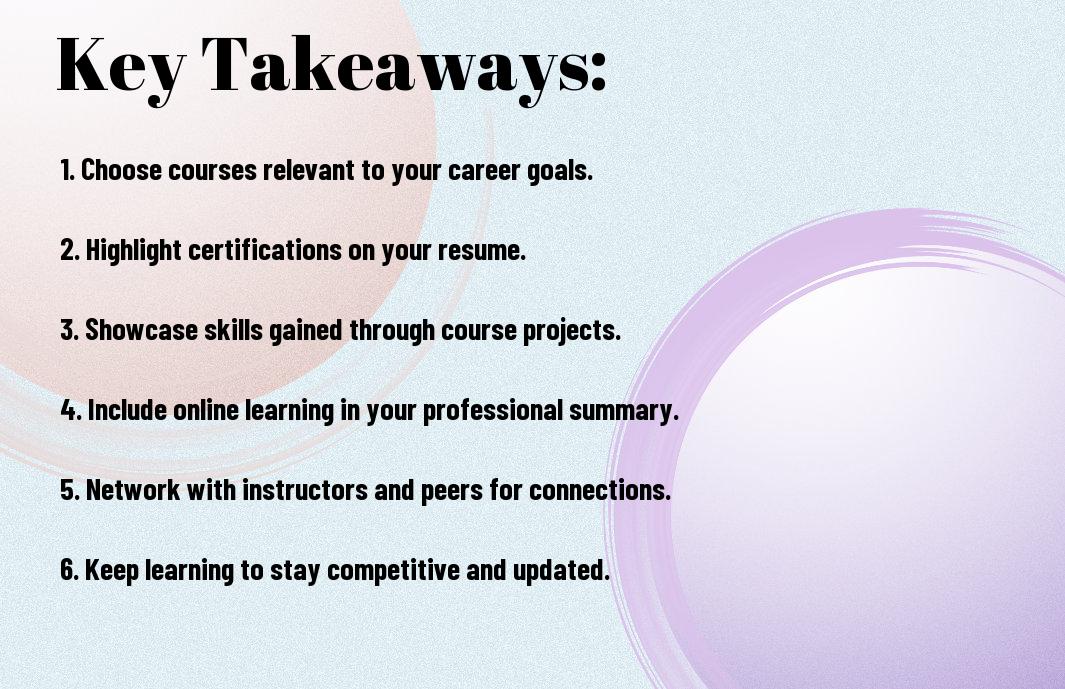
How to Use Online Courses to Boost Your Resume

As you navigate your career, you’re likely looking for ways to enhance your skills and make your resume more attractive to potential employers. You can leverage online courses to achieve this goal, by acquiring new knowledge and certifications that demonstrate your expertise. By taking online courses, you can fill gaps in your skills, gain a competitive edge, and increase your chances of standing out in a crowded job market, ultimately boosting your resume and opening up new career opportunities for you.

Key Takeaways:

To enhance your resume and gain a competitive edge in the job market, consider the following points about utilizing online courses:

  • Enroll in online courses that focus on developing skills in areas relevant to your desired career, as this will make your resume more attractive to potential employers.
  • Choose online courses that offer certification upon completion, as this provides tangible proof of your expertise and commitment to professional development.
  • Highlight relevant coursework and projects completed during online courses in your resume, especially if they demonstrate practical applications of the skills you’ve learned.
  • Use online courses to fill gaps in your resume by acquiring new skills or upgrading existing ones, making you a more competitive candidate in the job market.
  • Include the names of reputable online course providers in your resume, as this can enhance your credibility and showcase your dedication to continuous learning.

Getting Started

The first step to utilizing online courses for resume enhancement is to understand their value. You can find more information on Three Reasons to Add Online Courses to Your CV and how to incorporate them into your resume.

Finding Online Courses

On your journey to boost your resume, you’ll need to find online courses that align with your career goals. You can search for courses on various platforms, and filter them based on your interests and requirements.

Setting Career Goals

An imperative part of using online courses to enhance your resume is setting clear career objectives. You need to define what you want to achieve and how online courses can help you get there.

For instance, if you’re looking to transition into a new field, you can take online courses to acquire the necessary skills and knowledge, making you a more competitive candidate in the job market. You can then highlight these skills on your resume, demonstrating your commitment to your career goals and increasing your chances of standing out to potential employers.

Course Selection

Even with numerous online courses available, choosing the right one can be challenging. You need to consider your career goals and the skills you want to acquire to enhance your resume.

Identifying Relevant Courses

Across various platforms, you will find courses that cater to different industries and professions. You can search for courses that align with your current job or the job you aspire to, and select the ones that will boost your skills and knowledge.

Evaluating Course Quality

Beside the course content, you should also evaluate the instructor’s expertise, course reviews, and the platform’s reputation to ensure you get the best learning experience.

Course quality is vital to the learning process, and you should look for courses that offer hands-on experience, interactive learning, and real-world applications. You can also check the course curriculum, duration, and assessment methods to determine if it meets your needs and expectations, and if it will help you achieve your career goals and enhance your resume.

Effective Learning

Unlike traditional learning methods, online courses offer flexible pacing, allowing you to learn at your own speed. You can review material as many times as needed, ensuring you grasp key concepts before moving forward.

Creating a Study Schedule

By planning out your study time, you can stay organized and focused, ensuring you complete courses efficiently. You can set realistic goals and deadlines, helping you stay motivated and on track.

Engaging with Course Materials

By actively participating in online discussions and interacting with course materials, you can deepen your understanding of the subject matter. You can ask questions, share your thoughts, and learn from others, enriching your learning experience.

Effective engagement with course materials is key to getting the most out of your online courses. You can take notes, summarize key points, and reflect on what you’ve learned, helping to solidify new skills and knowledge, and making it easier to apply them in real-world situations, ultimately boosting your resume.

Building Skills

To enhance your resume, you can use online courses to acquire new skills, as seen in 4 Online Courses You Can Do To Help Make Your CV Stand Out, which can make your profile more attractive to potential employers.

Developing New Skills

Along with expanding your knowledge, online courses help you develop new skills that can be applied to various industries, making you a more versatile candidate for your desired job.

Enhancing Existing Skills

For instance, you can use online courses to sharpen your existing skills, making you more efficient and effective in your work, which can be highlighted in your resume to show your expertise.

Developing a strong foundation in your existing skills allows you to take on more complex tasks and projects, demonstrating your capabilities to potential employers and increasing your chances of career advancement.

Showcase Your Skills

All online courses you complete demonstrate your commitment to learning and self-improvement, making you a more attractive candidate to potential employers. You can leverage these courses to boost your resume and increase your chances of landing your dream job.

Creating a Portfolio

Above all, showcasing your skills through a portfolio is an effective way to demonstrate your expertise. You can create a portfolio that highlights your projects, certifications, and relevant coursework, giving you a competitive edge in the job market.

Highlighting Achievements

Beside your technical skills, highlighting your achievements in online courses can help you stand out. You can mention specific projects or assignments you completed, and the skills you applied to achieve them.

To take it a step further, you can quantify your achievements by including metrics or statistics that demonstrate the impact of your work. For example, you can mention the number of projects you completed, the grade you received, or the skills you mastered, providing concrete evidence of your capabilities and reinforcing your position as a strong candidate.

Staying Ahead

Many professionals use online courses to enhance their skills and stay competitive. You can learn when and how to list online courses on a resume by visiting When and How To List Online Courses on a Resume for expert advice.

Staying Updated with Industry Trends

Befitting your career goals, you should stay updated with the latest industry trends by taking relevant online courses, which will help you stay ahead in the job market.

Continuous Learning

At the pace of technological advancements, you need to continuously update your skills to remain relevant, and online courses can help you achieve this goal.

Due to the ever-changing job market, continuous learning is imperative for your career growth, and you can achieve this by taking online courses that align with your career goals, helping you develop new skills and enhance your existing ones, making you a more competitive candidate in the job market.

Summing up

On the whole, you can significantly enhance your resume by leveraging online courses. You can acquire new skills, gain knowledge, and demonstrate your commitment to learning. By choosing relevant courses and highlighting your accomplishments, you can showcase your expertise and boost your chances of standing out in a competitive job market, making your resume more attractive to potential employers and helping you achieve your career goals, as you take control of your professional development and shape your future.

FAQ

Q: What are the benefits of taking online courses to boost my resume?

A: Taking online courses can significantly enhance your resume by demonstrating your commitment to continuous learning and professional development. It shows potential employers that you are proactive, motivated, and eager to acquire new skills and knowledge. Online courses can help you fill gaps in your skills, gain new certifications, and stay up-to-date with industry trends, making you a more competitive candidate in the job market.

Q: How do I choose the right online courses to boost my resume?

A: To choose the right online courses, start by identifying the skills and knowledge required for your desired job or industry. Research online course platforms, such as Coursera, Udemy, or LinkedIn Learning, and browse their course offerings. Look for courses that align with your career goals and are taught by reputable instructors. Read course reviews, check the course curriculum, and ensure that the course provides a certificate or badge upon completion, which can be showcased on your resume.

Q: How can I effectively showcase online courses on my resume to attract the attention of potential employers?

A: To effectively showcase online courses on your resume, create a separate section titled “Professional Development” or “Online Courses.” List the course title, platform, and date completed, and include a brief description of the skills or knowledge acquired. Be specific about how the course has enhanced your skills and qualifications, and tailor the course description to the job you are applying for. You can also include relevant certifications, badges, or links to your course certificates to demonstrate your expertise and commitment to learning.

The Role of Podcasts in Online Education

As you navigate the ever-evolving landscape of online education, you’re likely to encounter a variety of innovative learning tools. Your search for effective educational resources may lead you to consider the potential of podcasts. You can leverage podcasts to enhance your learning experience, providing an engaging and accessible way to absorb information on various subjects. By exploring the world of educational podcasts, you can discover new avenues for knowledge acquisition and skill development, tailored to your unique needs and preferences.

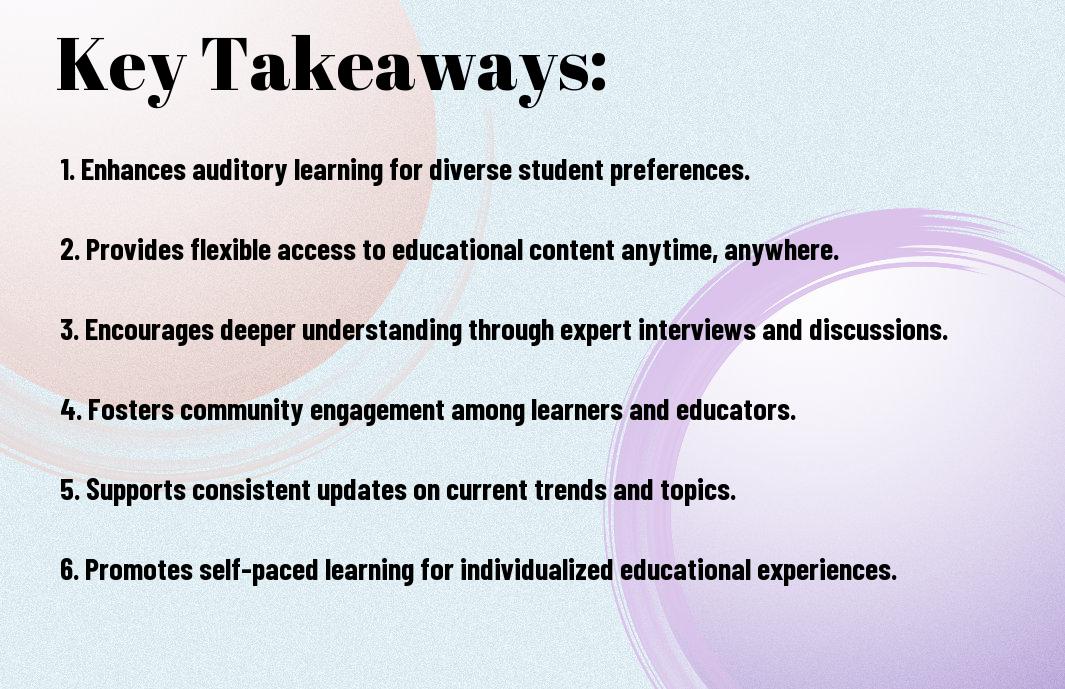
Key Takeaways:

  • The flexibility of podcasts allows students to learn at their own pace, making online education more accessible and convenient.
  • Engagement is increased through podcasts, as they provide an interactive and immersive learning experience, often featuring interviews and discussions with experts in the field.
  • Podcasts can supplement traditional online coursework, offering students an additional learning resource to enhance their understanding of complex topics.
  • The portability of podcasts enables students to learn on-the-go, making it an ideal option for those with busy schedules or limited access to traditional educational resources.
  • Podcasts can help to promote critical thinking and analytical skills, as students are encouraged to evaluate and reflect on the information presented in the podcast.

Evolution

Your understanding of podcasts in online education begins with their history, which has led to their current popularity and effectiveness as a learning tool.

Early Adoption

To initiate the process of understanding podcast evolution, you look back at the early days of podcasting, when it was first introduced as a means of audio blogging, and gradually made its way into the educational sector.

Current Trends

At this point, you are likely to notice the significant impact of podcasts on online education, with many institutions and educators incorporating them into their curriculum and teaching methods.

Early indications of podcast effectiveness have given way to concrete evidence of their ability to enhance student engagement, improve knowledge retention, and provide an accessible means of learning, allowing you to access educational content anywhere, at any time, and making online education more flexible and convenient for you.

Benefits

While exploring the role of podcasts in online education, you will discover numerous advantages that enhance your learning experience. Podcasts offer a unique blend of flexibility, convenience, and engagement, making them an excellent addition to your educational toolkit.

Increased Accessibility

Availability of podcasts enables you to access educational content from anywhere, at any time, allowing you to learn at your own pace and convenience, which is particularly beneficial for those with busy schedules or limited access to traditional educational resources.

Improved Engagement

Among the most significant benefits of podcasts is their ability to increase your engagement with the subject matter, as they often feature interactive discussions, interviews, and storytelling, making complex topics more enjoyable and easier to understand.

And as you investigate deeper into the world of educational podcasts, you will find that they offer a wide range of formats and styles, from lectures and panels to interviews and documentaries, allowing you to choose the type of content that best suits your learning style and preferences, thereby enhancing your overall educational experience.

Challenges

Not all podcasts are created equal, and you will face several challenges when using them in online education, including issues with quality and technical difficulties.

Quality Control

Beneath the surface of a well-produced podcast, you may find inconsistencies in content and presentation, and you need to evaluate each one carefully to ensure it meets your educational standards.

Technical Issues

For your online education experience to be successful, you need to consider the technical aspects of podcasting, such as compatibility and accessibility, to ensure that your students can easily access and play the podcasts.

In addition, as you explore deeper into using podcasts in your online education, you will encounter more technical issues, such as varying audio quality, dependence on internet connectivity, and potential issues with copyright and licensing, which you must address to provide a seamless learning experience for your students.

Effective Implementation

Now that you’ve decided to incorporate podcasts into your online education, consider how to implement them effectively. You’ll need to think about your goals, target audience, and the type of content that will engage your learners.

Pedagogical Considerations

Considering the learning objectives and outcomes, you should align your podcast content with your course curriculum, ensuring that it supplements and enhances your students’ learning experience.

Technical Requirements

Pedagogically, you will need to select a suitable platform and equipment for recording and hosting your podcasts, taking into account factors such as sound quality and accessibility.

Understanding the technical aspects of podcasting is imperative to ensure that your content is accessible to your audience. You should investigate the various platforms and tools available, such as hosting services, microphones, and editing software, to determine which ones best suit your needs and skills, allowing you to focus on creating high-quality educational content for your students.

Student Engagement

Unlike traditional learning methods, podcasts offer a unique opportunity for you to engage with educational content in a more immersive and interactive way, allowing you to learn at your own pace and revisit complex topics as needed.

Interactivity

At the heart of effective podcast-based learning is the ability to engage with the material in a dynamic way, and you can do this by participating in discussions, asking questions, and exploring topics in more depth, which helps to keep you motivated and invested in your learning journey.

Feedback Mechanisms

Between the lines of a well-crafted podcast, you are likely to find opportunities for feedback and assessment, which enable you to gauge your understanding of the subject matter and identify areas where you need to focus your efforts, helping you to adjust your learning strategy and stay on track.

The feedback mechanisms embedded in educational podcasts also allow you to reflect on your own learning, set goals, and track your progress over time, giving you a sense of accomplishment and helping you to stay motivated and engaged throughout your learning journey, as you begin to see the tangible results of your efforts and the value that podcasts bring to your educational experience.

Future Directions

Many educators are exploring the potential of podcasts in online education, as seen in the report THE POWER OF PODCASTING: PERSPECTIVES ON ITS USE IN EDUCATION. You can leverage this trend to enhance your online courses.

Emerging Technologies

For instance, you will notice advancements in audio production tools, enabling you to create high-quality podcasts with ease, making your online education more engaging.

New Opportunities

For your benefit, new opportunities are emerging, such as podcast-based discussions, allowing you to interact with your students in a more personalized way.

Technologies like AI-powered transcription and translation will make your podcasts more accessible, enabling you to reach a broader audience and make your online education more inclusive, allowing you to cater to diverse learning needs and preferences, and ultimately enhancing your students’ learning experience.

Final Words

As a reminder, you now understand the significance of podcasts in online education, and how they can enhance your learning experience. You have the ability to access a wealth of knowledge and expand your educational horizons through podcasts. By incorporating podcasts into your online education, you can create a more engaging and effective learning environment that caters to your needs and preferences, ultimately enriching your educational journey.

FAQ

Q: What is the role of podcasts in online education and how do they support student learning?

A: Podcasts play a significant role in online education as they offer an alternative medium for students to access course materials, supplementing traditional text-based content. They provide an engaging way to deliver educational content, allowing students to learn at their own pace, anytime and anywhere. Through podcasts, educators can share lectures, interviews with experts, and discussions on various topics, enhancing student understanding and retention of complex subjects.

Q: How can podcasts be used to enhance the online learning experience and increase student engagement?

A: Podcasts can be utilized in various ways to enhance the online learning experience. For instance, they can be used to deliver bite-sized chunks of information, making it easier for students to absorb and process new information. Additionally, podcasts can feature interviews with industry experts, providing students with real-world insights and applications of theoretical concepts. Moreover, podcasts can be used to facilitate discussions and debates, encouraging students to think critically and develop their analytical skills. By incorporating podcasts into online courses, educators can create a more interactive and immersive learning environment, increasing student engagement and motivation.

Q: What are the benefits of using podcasts in online education, and how can they be integrated into existing curricula?

A: The benefits of using podcasts in online education are numerous. They offer flexibility, allowing students to access educational content on-demand, and cater to different learning styles, particularly benefiting auditory learners. Podcasts also provide an opportunity for educators to share their expertise and showcase their personality, creating a more personal connection with students. To integrate podcasts into existing curricula, educators can start by identifying areas where podcasts can complement traditional teaching methods. They can then create podcasts that align with course objectives, and incorporate them into online courses as supplementary materials or assignments. Moreover, educators can encourage students to create their own podcasts, promoting student-generated content and fostering a sense of community and collaboration within the online learning environment.

Skip to content