How Online Education Encourages Critical Thinking

As you navigate the digital landscape of learning, you’ll discover that online education presents a unique opportunity for you to develop your critical thinking skills. Your ability to analyze information, evaluate sources, and form informed opinions is honed through interactive online platforms and self-paced learning modules. By leveraging these tools, you can enhance your critical thinking abilities, setting yourself up for success in academics and beyond. Your online education experience will challenge you to think creatively and make informed decisions.

Key Takeaways:

  • Online education promotes independent learning, allowing students to take ownership of their educational journey and develop problem-solving skills through self-directed learning pathways.
  • The online environment fosters collaboration and discussion among students, encouraging the exchange of ideas and perspectives that help students develop critical thinking skills.
  • Personalized learning experiences in online education enable students to learn at their own pace, focusing on areas where they need improvement and developing a deeper understanding of complex concepts.
  • Online education provides access to a wide range of resources and materials, including multimedia content, interactive simulations, and real-world examples, which help students develop analytical skills and think critically.
  • The online learning environment encourages students to engage in reflective practice, evaluating their own learning and identifying areas for improvement, which is vital for developing critical thinking and metacognitive skills.

The Role of Online Education

Before submerging into the benefits of online education, it’s vital to understand its role in promoting critical thinking. You’ll find that online education provides a unique platform for you to develop your critical thinking skills, allowing you to analyze information, evaluate evidence, and form your own opinions.

Promoting Independent Learning

Among the key advantages of online education is its ability to promote independent learning. You can learn at your own pace, taking ownership of your education and developing self-directed learning skills that will benefit you throughout your life.

Fostering Curiosity and Inquiry

Along with promoting independent learning, online education also fosters curiosity and inquiry. You are encouraged to explore topics in-depth, asking questions and seeking answers through interactive resources and discussions.

Promoting a deeper understanding of subject matter, online education encourages you to think critically about the information you encounter, analyzing and evaluating it to form your own conclusions. As you engage with online educational resources, you’ll develop a more nuanced understanding of complex topics, and your ability to think critically will continue to grow.

Critical Thinking in the Digital Age

Clearly, the digital age has brought about a plethora of information at your fingertips, and as a result, you are tasked with navigating through this vast amount of data to discern what is relevant and accurate.

Analyzing Online Information

At this point, you need to develop skills to analyze online information effectively, considering the author’s intent, purpose, and potential biases, which will help you make informed decisions and think critically.

Evaluating Sources and Evidence

To evaluate sources and evidence, you will need to assess the credibility of the author, publication, and methodology used, allowing you to form a well-rounded opinion and make sound judgments based on the information presented.

Sources that you encounter online can be vast and varied, and as you evaluate them, you will begin to notice patterns and inconsistencies, which will help you develop your critical thinking skills, enabling you to distinguish between fact and fiction, and make informed decisions based on the evidence presented, ultimately enhancing your ability to think critically in the digital age.

Effective Online Learning Strategies

To maximize the benefits of online education, you need to develop strategies that promote engagement and interaction. You can achieve this by setting clear goals, creating a schedule, and using tools that facilitate communication with your instructor and peers.

Encouraging Active Participation

Participating in online discussions and activities helps you stay engaged and motivated. You can encourage your own participation by contributing to forums, asking questions, and seeking feedback from your instructor and peers.

Using Technology to Facilitate Discussion

Above all, technology provides numerous tools to facilitate discussion and collaboration. You can use video conferencing, chat rooms, and discussion boards to interact with your peers and instructor, promoting a sense of community and fostering critical thinking.

Another key aspect of using technology to facilitate discussion is the ability to access a wide range of resources and materials. You can use online libraries, educational videos, and podcasts to supplement your learning, and engage in discussions with your peers about the topics you are studying, allowing you to deepen your understanding and develop your critical thinking skills.

Overcoming Challenges and Biases

Not all students are naturally inclined to think critically, but online education provides opportunities to develop this skill. You will encounter various perspectives and ideas, helping you to analyze information more effectively.

Recognizing Cognitive Biases

Realizing your own biases is the first step in critical thinking. You will learn to identify and acknowledge biases, allowing you to evaluate information more objectively and make informed decisions.

Developing Critical Thinking Skills

Before you can think critically, you need to understand the underlying principles of critical thinking. You will learn to question assumptions, evaluate evidence, and develop well-supported arguments.

With the development of critical thinking skills, you will become a more effective learner, able to analyze complex information, identify patterns, and solve problems. You will apply these skills to your online coursework, assignments, and discussions, enhancing your overall learning experience and preparing you for success in your academic and professional pursuits.

The Impact of Online Education on Critical Thinking

Once again, you can develop your critical thinking skills through online education, and to learn more, you can visit How Online Learning Can Boost Your Critical Thinking Skills to get a deeper understanding of the topic.

Improving Problem-Solving Skills

Almost naturally, you will start to notice an improvement in your problem-solving skills as you engage in online education, which presents you with various challenges and encourages you to think creatively.

Enhancing Collaboration and Communication

By participating in online discussions and group projects, you will enhance your collaboration and communication skills, which are crucial for developing critical thinking.

For instance, when you work on a group project online, you will need to communicate effectively with your team members, share ideas, and collaborate to achieve a common goal, all of which will help you develop your critical thinking skills and prepare you for real-world challenges.

Best Practices for Online Educators

Your approach to online education can significantly impact your students’ ability to think critically, as seen in studies like Critical Thinking in Online Vs. Face-to-Face Higher Education, which explores the differences in critical thinking development between online and traditional educational settings.

Creating Engaging Online Content

Around the clock, you can create engaging online content that encourages critical thinking by incorporating interactive elements and real-world examples that challenge your students to think deeply about the subject matter.

Providing Feedback and Guidance

One key aspect of online education is providing timely and constructive feedback that guides your students towards developing their critical thinking skills, helping them to reflect on their thought process and identify areas for improvement.

Providing feedback that is specific, detailed, and action-oriented allows your students to learn from their mistakes and develop a growth mindset, which is crucial for critical thinking and problem-solving, enabling you to tailor your guidance to meet the unique needs of your students and foster a supportive online learning environment that encourages critical thinking and academic success.

Conclusion

Considering all points, you can see how online education fosters critical thinking skills in your learning journey. As you engage with digital resources, you develop your ability to analyze and evaluate information. For more insight, visit The Role of Critical Thinking in the Online Learning Environment to understand its significance. This helps you make informed decisions and think independently, enhancing your overall learning experience and intellectual growth.

FAQ

Q: What role does online education play in promoting critical thinking skills in students?

A: Online education encourages critical thinking by providing students with a flexible and self-paced learning environment. This setting allows students to analyze information, evaluate sources, and form opinions at their own speed, fostering a deeper understanding of the subject matter. Through online discussions, forums, and interactive activities, students are prompted to think critically about the information presented, make connections between concepts, and develop well-supported arguments. As a result, online education helps students develop the critical thinking skills necessary to succeed in an increasingly complex and interconnected world.

Q: How do online educational resources and tools facilitate critical thinking in students?

A: Online educational resources and tools, such as multimedia content, simulations, and virtual labs, facilitate critical thinking by providing students with a rich and immersive learning experience. These resources allow students to engage with complex concepts and phenomena in a interactive and dynamic way, promoting a deeper understanding of the subject matter. Additionally, online tools such as collaborative software, mind mapping apps, and debate platforms enable students to work together, share ideas, and engage in constructive debates, further developing their critical thinking skills. By leveraging these resources and tools, online education provides students with a wide range of opportunities to develop their critical thinking abilities.

Q: Can online education help students develop the critical thinking skills needed to evaluate online information effectively?

A: Yes, online education can play a significant role in helping students develop the critical thinking skills needed to evaluate online information effectively. Through online courses and activities, students can learn how to identify credible sources, evaluate evidence, and recognize biases and misinformation. Online education can also provide students with the skills and knowledge needed to effectively navigate the online information landscape, including how to use search engines, evaluate online sources, and avoid online pitfalls such as plagiarism and copyright infringement. By teaching students how to think critically about online information, online education can help students become more discerning and informed consumers of online content.

The Impact of Online Learning on Traditional Universities

As you consider the future of higher education, you may wonder how online learning is affecting traditional universities. You are likely aware that online courses and degree programs are becoming increasingly popular, but you may not know the full extent of their impact. Your understanding of this shift is important, as it will help you navigate the changing educational landscape and make informed decisions about your own educational path. You will explore the effects of online learning on traditional universities in this post.

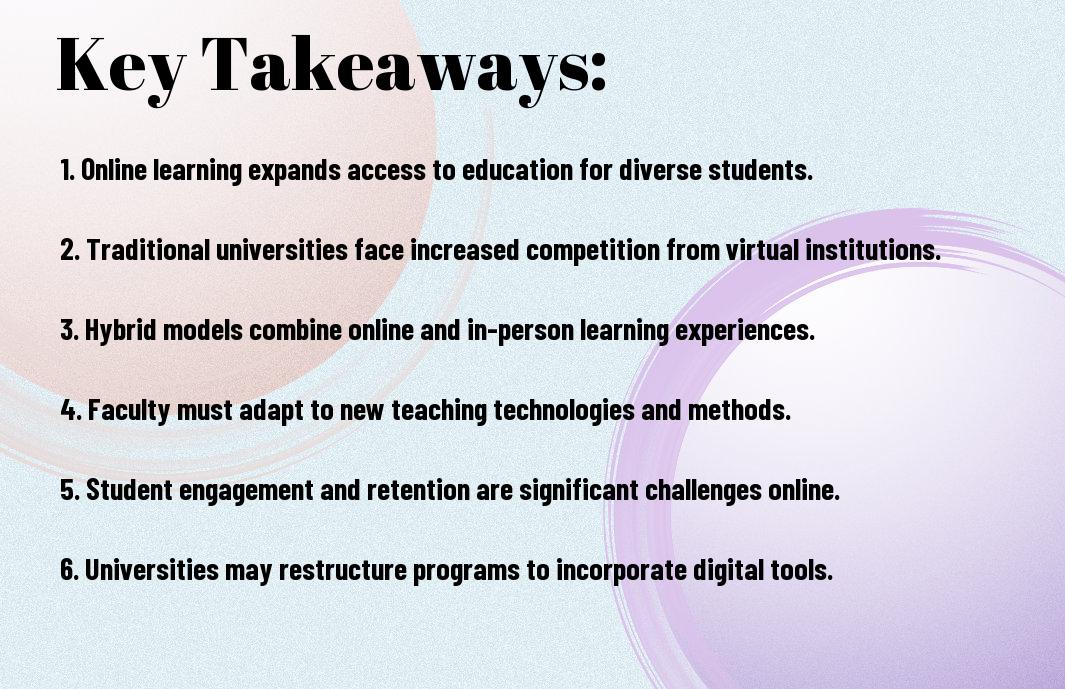
Key Takeaways:

  • The rise of online learning has disrupted the traditional university model, offering students more flexibility and accessibility to education.
  • Traditional universities are being forced to adapt to the changing landscape, with many institutions now offering online courses and degree programs to stay competitive.
  • The cost-effectiveness of online learning is also a major factor, as students can often save money on tuition fees and other living expenses associated with attending a traditional university.
  • The quality of education is no longer seen as being exclusive to traditional universities, with many online institutions offering high-quality educational experiences that rival their traditional counterparts.
  • The future of education is likely to be a blended model, combining the best of both online and traditional learning to provide students with a more personalized and effective learning experience.

Traditional Universities in the Digital Age

While traditional universities have long been the cornerstone of higher education, you are now seeing a significant shift in the way students access knowledge. Your expectations and preferences are evolving, and universities must adapt to remain relevant.

The Rise of Online Learning Platforms

With the proliferation of online learning platforms, you have more options than ever before to access high-quality educational content. Your ability to learn from anywhere, at any time, is revolutionizing the way you approach education.

Shifting Student Preferences and Expectations

On the one hand, you are looking for more flexibility and autonomy in your learning experience. Your needs and goals are driving the demand for innovative and personalized education pathways.

Further, as you navigate the changing landscape of higher education, you are likely to encounter a range of new opportunities and challenges. You will need to consider how to balance the benefits of online learning with the value of traditional university experiences, and how to make informed decisions about your educational investments. Your choices will shape the future of higher education, and it is crucial to approach these decisions with a clear understanding of your options and their implications.

Impact on Academic Programs

The rise of online learning is transforming the way you approach academic programs, and traditional universities are feeling the effects. You may notice changes in the way courses are structured and delivered, and the role of faculty members is evolving to accommodate these shifts.

Changes in Curriculum Design and Delivery

Approximately, you will find that online learning platforms are forcing universities to rethink their curriculum design and delivery methods, and you can expect to see more flexible and personalized learning pathways emerging as a result, allowing you to have more control over your learning experience.

Faculty Roles and Responsibilities in Online Settings

Alongside this, you will notice that an adjustment in faculty roles and responsibilities is underway, and you can expect to see more emphasis on creating engaging online content and facilitating virtual discussions, which will help you to stay connected with your instructors and peers.

But as you research deeper into online learning, you will realize that faculty members are not just lecturers, but also mentors and coaches, guiding you through the online learning process, providing feedback and support, and helping you to achieve your academic goals, and you will appreciate the value they bring to your online learning experience.

Technological Advancements and Infrastructure

Not surprisingly, advancements in technology have enabled online learning to become a viable alternative to traditional universities. You can explore the impact of online education on higher education through resources such as (PDF) Exploring the Impact of Online Education on Higher Education, which provides valuable insights into this topic.

Learning Management Systems and Tools

Alongside the growth of online learning, you’ll find that an array of learning management systems and tools have been developed to support your educational journey, making it easier for you to access course materials and interact with instructors and peers.

Cybersecurity and Data Privacy Concerns

For your online learning experience to be secure, it’s important to consider the cybersecurity and data privacy concerns that come with it, as you’ll be sharing personal and sensitive information online, and you should be aware of the measures in place to protect your data.

Even as you engage with online learning platforms, you should be mindful of the potential risks and take steps to safeguard your personal information, such as using strong passwords and being cautious when clicking on links or downloading attachments, to ensure a safe and secure learning environment.

Student Engagement and Outcomes

Now, as you explore the impact of online learning on traditional universities, you’ll find that student engagement and outcomes are significantly affected. You’ll notice changes in how students interact with course materials and their overall performance.

Online Learning Environment and Student Motivation

Across various studies, you’ll see that online learning environments can greatly influence student motivation. You can observe how interactive tools and virtual discussions foster a sense of community, promoting your engagement and participation in the learning process.

Assessing Student Performance and Success

An vital aspect of online learning is evaluating student performance and success. You will be able to track your progress through digital assessments and feedback, allowing you to adjust your learning strategy and stay on track.

Online platforms provide you with a range of tools to assess your performance, from quizzes and exams to project-based evaluations. As you navigate these assessments, you’ll gain a deeper understanding of your strengths and weaknesses, enabling you to make informed decisions about your academic path and career goals. You’ll be able to identify areas where you need improvement and develop strategies to address them, ultimately enhancing your overall learning experience.

Financial Implications and Sustainability

Despite the rise of online learning, you can still explore its financial implications on traditional universities by visiting Impact of Online Schools on Traditional Education to learn more. As you consider the financial aspects, you’ll find that online learning affects your university’s budget.

Cost Savings and Resource Allocation

On one hand, you will notice that online learning can help your university save on infrastructure and resource costs, allowing for better allocation of your budget.

Revenue Models and Funding Strategies

Rather, you should focus on developing new revenue models and funding strategies to sustain your university in the face of online learning.

It is vital to understand that revenue models and funding strategies will play a significant role in your university’s sustainability, and you must explore innovative ways to generate revenue, such as offering online courses and degrees, to stay competitive in the education market.

Future Directions and Challenges

Once again, you will be faced with the challenge of adapting to the changing landscape of online learning, and you must consider how traditional universities will fit into this new paradigm.

Integration of Emerging Technologies

Beneath the surface of online learning lies the potential for emerging technologies to enhance your educational experience, and you can expect to see innovations like AI and virtual reality integrated into online courses.

Ensuring Accessibility and Equity in Online Education

Effectively, education is key to ensuring that online learning is accessible to all, and you should consider the ways in which your institution can promote equity and inclusion in online education.

Equity is a fundamental principle in online education, and you will need to consider how to address the disparities in access to technology and internet connectivity that may affect your students’ ability to participate in online learning, as you strive to create a more inclusive and equitable online learning environment that allows all students to succeed, regardless of their background or circumstances.

Summing up

To wrap up, you now have a better understanding of how online learning is changing the landscape of traditional universities. As you consider the future of education, you can explore the Impact of Online Education on Traditional Campus-based Universities to gain more insights. Your perspective on the role of online learning in shaping the future of education will help you make informed decisions about your own educational path.

FAQ

Q: What is the impact of online learning on the traditional university business model?

A: The rise of online learning has significantly disrupted the traditional university business model. With the increasing availability of online courses and degree programs, students are no longer limited to attending physical universities, leading to a potential decline in enrollment numbers and tuition revenue for traditional institutions. However, many universities are adapting to this change by offering their own online programs, forming partnerships with online education providers, and investing in digital infrastructure to enhance the learning experience and stay competitive in the market.

Q: How does online learning affect the quality of education provided by traditional universities?

A: Online learning has the potential to both positively and negatively impact the quality of education provided by traditional universities. On the positive side, online learning can enhance the educational experience by providing students with greater flexibility, access to a wider range of courses and resources, and the ability to learn at their own pace. However, there are also concerns that online learning may lack the interpersonal interaction and hands-on experiences that are often valuable components of traditional university education. To mitigate this, many universities are developing blended learning models that combine the benefits of online and traditional learning approaches.

Q: What strategies can traditional universities employ to stay competitive in a landscape dominated by online learning?

A: To stay competitive, traditional universities can focus on developing high-quality online programs that leverage their unique strengths and brand reputation. This can include investing in state-of-the-art digital learning platforms, forming strategic partnerships with other institutions or industry partners, and emphasizing the value of the traditional university experience, such as face-to-face interaction with faculty and peers, access to campus resources and facilities, and the potential for deeper, more immersive learning experiences. Additionally, universities can highlight their ability to provide students with a well-rounded education that prepares them for success in both their careers and personal lives, and emphasize the importance of the social and networking aspects of university life.

How to Make Friends in Online Classes

You’re initiateing on an online learning journey, and you want to connect with like-minded individuals who share your passions. As you navigate your virtual classroom, you may wonder how to build meaningful relationships with your peers. You can start by checking out resources on making friends in online classes, which offer valuable tips and advice to help you get started. Your online education experience can be more enjoyable and engaging when you have friends by your side.

Key Takeaways:

To make friends in online classes, consider the following points:

  • Be Proactive in introducing yourself and engaging with others in online discussions to establish connections with your classmates.
  • Participate in Group Chats and Forums to stay updated on course material and build relationships with peers who share similar interests.
  • Use Video Conferencing tools to attend virtual meetings and interact with instructors and classmates in real-time, facilitating more personal interactions.
  • Join Online Communities related to your course or interests to expand your network and meet like-minded individuals beyond your immediate classmates.
  • Be Consistent in your online presence and engagement to build trust and foster meaningful friendships over time.

Preparing for Online Classes

For a successful online learning experience, you need to be prepared. This includes having a reliable computer, internet connection, and a dedicated space for studying. You’ll also want to familiarize yourself with the online platform and tools used in your classes.

Creating a Conducive Learning Environment

Anyway, a quiet and comfortable space is important for focused learning. You can achieve this by designating a specific area for studying, free from distractions and interruptions, where you can easily access all the necessary materials and resources.

Setting Goals for Online Interactions

Optimally, you’ll want to set clear goals for your online interactions, including how you plan to engage with your peers and instructors. You can start by thinking about what you hope to achieve in your online classes and how you can build meaningful relationships with others.

And as you set these goals, you’ll begin to feel more confident and motivated to participate in online discussions, share your thoughts and ideas, and collaborate with others on projects. You’ll start to see your online classes as an opportunity to connect with like-minded individuals and build a community that supports your learning and growth. By doing so, you’ll be well on your way to making lasting friendships and achieving your academic goals.

Breaking the Ice

It is the first step in making friends in online classes, and it can be as simple as saying hello to your classmates or introducing yourself to the group.

Introducing Yourself to the Class

Above all, be authentic and genuine when introducing yourself, share a little bit about your background, interests, and what you hope to achieve in the class, and you’ll be surprised at how much you have in common with your fellow students.

Participating in Online Discussions

Toward the goal of building connections, participating in online discussions is a great way to engage with your classmates, share your thoughts and ideas, and get to know them better, you can start by responding to a post or comment from someone else.

Plus, as you participate in online discussions, you’ll start to feel more comfortable sharing your thoughts and opinions, and you’ll begin to build relationships with your classmates, which can lead to meaningful friendships and a more enjoyable learning experience, and you’ll find that your online class becomes a supportive and interactive community where you can learn and grow together.

Building Relationships

Now that you’re taking online classes, you’ll have the opportunity to connect with people from diverse backgrounds, creating a unique chance to form meaningful bonds and friendships that can last a lifetime.

Finding Common Interests with Classmates

Beneath the surface of your online classroom, you’ll discover that you and your classmates have more in common than you think, whether it’s a passion for a particular subject or a hobby that brings you joy, allowing you to build a strong foundation for your relationships.

Engaging in Meaningful Conversations

Relating to others is key to forming lasting connections, and engaging in meaningful conversations with your classmates is a great way to start, by sharing your thoughts, ideas, and experiences, you’ll be able to build trust and rapport with your peers.

And as you continue to engage in meaningful conversations, you’ll find that your relationships with your classmates will deepen, allowing you to support and encourage one another, both in and out of the online classroom, and you’ll be amazed at how these connections can positively impact your life and help you grow as a person, giving you a sense of community and belonging.

Effective Communication

Your ability to communicate effectively is vital in making friends in online classes, as it helps you connect with your classmates and build strong relationships.

Active Listening in Online Classes

Although it may seem challenging, attending to what others say in online discussions is achievable by minimizing distractions and focusing on the conversation.

Clear and Respectful Expression

With openness and honesty, you can express your thoughts and feelings in a way that is considerate of others, helping to avoid misunderstandings and build trust.

In fact, when you take the time to think before you speak or type, you can choose your words more carefully, ensuring that your message is conveyed in a respectful and considerate manner, which is vital for establishing meaningful connections with your online classmates.

Overcoming Challenges

Once again, you’ll find that making friends in online classes requires effort and perseverance. You’ll encounter obstacles, but with the right mindset, you can overcome them and build meaningful relationships with your classmates.

Managing Technical Issues

Besides the usual challenges, you’ll also face technical difficulties that can hinder your progress. You can troubleshoot common issues like poor internet connectivity or faulty audio by restarting your device or seeking help from your instructor.

Dealing with Online Conflict

On the occasion that you encounter conflict with a classmate, you can address the issue by communicating openly and honestly. You can resolve misunderstandings and find common ground, which will help you to build a stronger and more supportive online community.

The key to resolving online conflicts is to approach the situation with empathy and understanding. You can take a step back, assess the situation, and respond thoughtfully, rather than reacting impulsively. By doing so, you’ll create a safe and respectful environment where you and your classmates can thrive and support one another.

Maintaining Connections

Many online classes offer opportunities to connect with classmates, and it’s up to you to nurture these relationships. By doing so, you can build a network of supportive peers who share similar interests and goals.

Staying Connected with Classmates

Around the same time you’re taking your online class, you can engage with your classmates through discussion forums, social media groups, or video conferencing. You can ask questions, share your thoughts, and learn from one another, which helps to foster a sense of community and connection.

Continuing Relationships After the Class

Connected to your classmates through online platforms, you can continue to interact and support one another even after the class has ended. You can share updates, ask for advice, or collaborate on future projects, which helps to strengthen your relationships and expand your professional network.

To take your relationships to the next level, you can schedule regular check-ins with your former classmates, whether it’s a monthly video call or a quarterly meetup. You can also invite them to join you in other online communities or forums related to your field of interest, which can help you stay connected and motivated as you continue to learn and grow.

Summing up

Following this guide, you’ll be well on your way to making friends in online classes. As you start connecting with others, you’ll find that your online learning experience becomes more enjoyable and rewarding. If you’re struggling to get started, consider seeking advice from others who have been in your shoes, such as those who have asked I do online school and I have no friends, What should I do? You’ll find that making friends online is within your reach, and your efforts will be worth it.

FAQ

Q: How can I introduce myself to my online classmates and start building relationships?

A: To introduce yourself to your online classmates, start by creating a strong profile on the online learning platform, including a profile picture and a brief bio that shares your interests and goals. Participate in introductory discussions or icebreaker activities, and engage with your classmates’ posts and comments. You can also join online groups or clubs related to your course to meet like-minded individuals. Be genuine, friendly, and respectful in your interactions, and don’t be afraid to ask questions or share your thoughts and ideas.

Q: What are some effective ways to engage with my online classmates and build meaningful connections?

A: To engage with your online classmates, participate in online discussions by posting thoughtful comments and questions, and respond to others’ posts in a timely and respectful manner. Use video conferencing tools to attend virtual meetings or study groups, and take advantage of breakout rooms to work on group projects and collaborate with your peers. You can also use social media or messaging apps to connect with your classmates outside of the online classroom, but be sure to follow any guidelines or rules set by your instructor. Additionally, consider hosting or attending virtual social events, such as online game nights or movie nights, to help build camaraderie and a sense of community.

Q: How can I overcome feelings of isolation or disconnection in online classes and stay motivated to make friends?

A: To overcome feelings of isolation or disconnection in online classes, establish a dedicated study space that is quiet, comfortable, and free from distractions, and create a routine that includes regular check-ins with your online classmates. Stay organized and on top of your coursework by using a planner or calendar, and set realistic goals and deadlines for yourself. Celebrate your achievements and accomplishments, no matter how small they may seem, and don’t be afraid to ask for help or support when you need it. You can also join online communities or forums related to your course or interests, and participate in online events or webinars to expand your network and meet new people. By staying engaged, motivated, and connected, you can build meaningful relationships with your online classmates and succeed in your online courses.

How to Use Social Media for Online Learning

As you explore ways to enhance your online learning experience, you’ll find that social media can be a valuable tool. You can leverage platforms to access educational content, connect with instructors, and engage with peers. If you’re interested in promoting your own educational content, you can learn How to use social media to promote my online courses and educational content effectively. By utilizing social media strategically, you can optimize your online learning and make the most of your educational pursuits.

Key Takeaways:

To effectively utilize social media for online learning, consider the following points:

  • Establish a strong online presence by creating profiles on relevant platforms such as Twitter, LinkedIn, or Facebook to connect with educators, peers, and industry experts.
  • Leverage interactive tools like videos, podcasts, and live streams to enhance engagement and facilitate real-time discussions, making online learning more immersive and dynamic.
  • Utilize social media groups and forums to foster collaboration and knowledge sharing among learners, promoting a sense of community and belonging in online learning environments.
  • Tap into educational resources and curated content shared by experts and influencers in your field, using hashtags to discover and organize relevant information and stay updated on the latest trends and developments.
  • Develop a personalized learning approach by using social media analytics to track your progress, identify areas of improvement, and adjust your learning strategy to achieve your academic goals and maximize the effectiveness of your online learning experience.

Setting Up Social Media for Online Learning

Before you start using social media for online learning, you need to set up your accounts and create a plan. This will help you stay organized and ensure that you’re using social media effectively.

Creating a Professional Online Presence

Presenting yourself professionally online is important for online learning. You will want to create a profile that showcases your skills and interests, and helps you connect with others in your field.

Choosing the Right Social Media Platforms

Social media platforms vary in their features and user bases, so you’ll want to choose the ones that best fit your needs. You should consider which platforms your peers and instructors are using, and which ones have the most relevant content and discussions.

Further investigation into the different social media platforms will help you determine which ones are most suitable for your online learning goals. You can explore the features and tools of each platform, and consider how you can use them to engage with course materials, connect with others, and share your own knowledge and experiences.

Finding and Sharing Educational Resources

While navigating social media for online learning, you can discover a wealth of educational resources to enhance your knowledge. You can find and share valuable content, such as articles, videos, and podcasts, to support your learning journey.

Locating Online Courses and Tutorials

Online learning platforms and social media groups can help you locate online courses and tutorials tailored to your interests and needs. You can search for specific topics and find relevant courses, tutorials, and educational resources to expand your knowledge.

Sharing Knowledge and Experiences

For instance, you can share your own learning experiences, ask questions, and engage with others to create a collaborative learning environment. You can also share relevant content, such as articles, videos, or blog posts, to contribute to the discussion and help others learn.

Even as you share your knowledge and experiences, you can learn from others and gain new insights. You can participate in online discussions, join social media groups, and follow educators or experts in your field to stay updated on the latest developments and best practices, which can help you achieve your learning goals and expand your professional network.

Engaging with Online Communities

To maximize your online learning experience, you need to engage with online communities related to your field of study. This will help you stay updated with the latest developments and trends, and provide opportunities to network with like-minded individuals.

Participating in Forums and Discussions

Interacting with others in online forums and discussions can be a great way to deepen your understanding of a subject. You can ask questions, share your thoughts, and learn from others who have experience in the field.

Collaborating with Peers and Experts

About the benefits of collaborating with others, you will find that it enhances your learning experience. You can work on projects, share resources, and get feedback from your peers and experts, which can help you improve your skills and knowledge.

For instance, you can join online groups or forums where you can collaborate with others on projects, share your work, and get constructive feedback. This will help you develop your critical thinking and problem-solving skills, and prepare you for real-world challenges. You can also learn from experts in the field, who can provide valuable insights and guidance to help you achieve your learning goals.

Creating and Curating Content

Once again, you’ll find that social media platforms offer a wealth of opportunities for creating and curating content to support your online learning. You can share your own educational materials, such as videos, podcasts, and blog posts, to engage with your audience and facilitate learning.

Developing Educational Content

Content creation is key to providing valuable learning experiences for your audience. You can develop educational content, such as tutorials, webinars, and online courses, to share your expertise and knowledge with others, making it easily accessible and convenient for them to learn from you.

Curating Relevant and Useful Information

Before stepping into the world of content curation, you need to identify relevant and useful information that aligns with your learning goals. You can use social media to discover and share relevant articles, research papers, and other educational resources that support your online learning journey.

Another aspect of curating relevant and useful information involves organizing and presenting the content in a way that makes it easy for others to access and learn from. You can use social media tools, such as hashtags and playlists, to categorize and share your curated content, allowing you to create a valuable learning resource for yourself and others.

Managing Online Presence and Time

Your online presence is a reflection of your personal brand, and it’s imperative to maintain a professional image while using social media for online learning.

Maintaining a Professional Online Image

With a consistent tone and style, you can establish a strong online presence that showcases your expertise and interests, helping you connect with like-minded individuals and educators.

Effectively Managing Time Spent on Social Media

Beneath the surface of social media lies a plethora of resources, and you must allocate your time wisely to maximize your online learning experience, avoiding distractions and staying focused on your goals.

For instance, you can set aside specific times of the day to check your social media accounts, using tools like website blockers or apps that track your time spent on social media to help you stay on track, and prioritize your online activities to ensure you’re making the most of your time, achieving a balance between learning and socializing.

Measuring Success and Overcoming Challenges

Despite the many benefits of social media for online learning, you will need to track your progress and tackle any obstacles that arise. This involves assessing your goals, identifying areas for improvement, and adjusting your strategy as needed.

Evaluating the Effectiveness of Online Learning

Around the time you start using social media for online learning, you will want to establish metrics to evaluate its effectiveness, such as engagement rates, completion rates, and learner feedback, to help you refine your approach.

Addressing Common Challenges and Obstacles

Across various social media platforms, you may encounter challenges such as technical issues, distractions, or difficulty in measuring impact, which can hinder your online learning experience, and it’s important to be prepared to address them.

Understanding the common challenges that can arise when using social media for online learning, such as privacy concerns, information overload, or inadequate support, will help you develop strategies to overcome them, ensuring you get the most out of your online learning experience, and achieve your goals, with your chosen social media platforms and tools.

Final Words

Conclusively, you have learned how to effectively utilize social media for online learning, enhancing your educational experience. You can now leverage platforms to access resources, connect with peers, and engage with instructors. By applying these strategies, you will optimize your online learning, making it more productive and enjoyable, thus achieving your academic goals with your newfound skills.

FAQ

Q: What are the benefits of using social media for online learning?

A: Using social media for online learning offers numerous benefits, including increased accessibility, flexibility, and connectivity. Social media platforms provide a wide range of educational resources, such as video tutorials, podcasts, and online courses, which can be accessed from anywhere with an internet connection. Additionally, social media enables learners to connect with instructors, peers, and experts in their field, facilitating collaborative learning, feedback, and networking opportunities. By leveraging social media, learners can also stay updated on the latest developments and trends in their field, enhancing their overall learning experience.

Q: How can I effectively use social media to find and share educational content?

A: To effectively use social media for finding and sharing educational content, start by identifying relevant social media platforms and hashtags related to your field of study. Follow educators, experts, and organizations that share valuable content, and engage with their posts by liking, commenting, and sharing. Utilize social media search functions to discover new content, and use platforms like Pinterest or Flipboard to curate and organize relevant resources. When sharing content, use clear and concise descriptions, include relevant hashtags, and tag relevant users to increase visibility and engagement. Furthermore, consider creating and sharing your own educational content, such as blog posts, videos, or infographics, to contribute to the online learning community.

Q: How can I maintain a safe and respectful online presence while using social media for online learning?

A: To maintain a safe and respectful online presence while using social media for online learning, it is imperative to establish clear boundaries and guidelines for your online interactions. Be cautious when sharing personal information, and avoid engaging with suspicious or unverified accounts. Use strong, unique passwords, and enable two-factor authentication to protect your accounts from unauthorized access. When interacting with others online, be respectful and professional, avoiding inflammatory or offensive language. Additionally, be mindful of copyright and intellectual property laws when sharing content, and always cite sources and give credit where credit is due. By being aware of these best practices, you can maintain a safe and respectful online presence, and focus on achieving your online learning goals.

The Role of Personalized Learning in Online Education

As you navigate the ever-evolving landscape of online education, you’re likely to encounter a variety of learning approaches. Your educational journey is unique, and personalized learning acknowledges this by tailoring the learning experience to your individual needs and preferences. You can expect a more effective and engaging experience, as personalized learning adapts to your learning style, pace, and goals, allowing you to achieve your full potential in a digital learning environment.

Key Takeaways:

  • The implementation of Personalized Learning in online education enables students to learn at their own Pace, allowing for a more effective and efficient learning experience.
  • Artificial Intelligence and Machine Learning play a significant role in personalized learning, as they help to create tailored learning pathways and adaptive assessments for individual students.
  • Student Engagement is increased through personalized learning, as students are more likely to be motivated and invested in their learning when it is relevant and meaningful to their individual needs and interests.
  • The use of Learning Analytics and Data-Driven Insights helps educators to track student progress, identify areas of improvement, and make data-informed decisions to optimize personalized learning experiences.
  • Flexibility and Accessibility are key benefits of personalized learning in online education, as students can access learning materials and resources from anywhere, at any time, and on their own schedule.

Benefits of Personalized Learning

To maximize your online learning experience, personalized learning plays a significant role. It allows you to learn at your own pace, focusing on areas where you need improvement.

Increased Student Engagement

Benefits such as interactive learning materials and real-time feedback keep you engaged and motivated throughout your course.

Improved Learning Outcomes

With personalized learning, you can track your progress and identify areas that need improvement, leading to better retention of information.

And as you progress through your course, you’ll find that personalized learning helps you develop a deeper understanding of the subject matter, allowing you to apply your knowledge in practical situations, which enhances your overall learning experience and prepares you for real-world applications.

Technology in Personalized Learning

There’s no denying the significant impact technology has on personalized learning in online education, as it enables you to tailor your learning experience to your individual needs and preferences, making it more engaging and effective.

Adaptive Learning Systems

Besides traditional learning methods, adaptive learning systems use algorithms to adjust the difficulty level of course materials based on your performance, allowing you to learn at your own pace and focus on areas where you need improvement.

Learning Analytics

Around the clock, learning analytics tools collect data on your learning activities, providing insights into your strengths, weaknesses, and learning behavior, which can be used to refine your learning strategy and optimize your educational outcomes.

And as you investigate deeper into the world of learning analytics, you’ll discover that it offers a wealth of information about your learning patterns, helping you to identify areas where you need extra support and enabling you to make informed decisions about your educational path, ultimately enhancing your overall learning experience.

Effective Implementation

Keep in mind that effective implementation of personalized learning in online education requires careful planning and execution. You will need to consider various factors, including your students’ learning styles, preferences, and abilities, to create a tailored approach that meets their unique needs.

Teacher Training and Support

Following the development of your personalized learning strategy, you will need to provide your teachers with the necessary training and support to ensure they can effectively deliver this type of education. You will need to equip them with the skills and knowledge required to create and implement personalized learning plans.

Student Assessment and Feedback

Once your personalized learning approach is in place, you can begin to assess your students’ progress and provide them with regular feedback. You will need to use a variety of assessment methods to gauge their understanding and adjust your teaching approach accordingly.

Understanding the importance of ongoing assessment and feedback is key to the success of personalized learning. You will need to continuously monitor your students’ progress, identifying areas where they may need additional support or challenges, and adjust your teaching approach to meet their evolving needs, allowing you to make data-driven decisions to optimize your personalized learning strategy, and ultimately, improve your students’ learning outcomes.

Overcoming Challenges

Now that you have implemented personalized learning in your online education, you will face challenges. To address them, you can learn from Personalized Learning: What It Really Is and Why It Really Matters, which provides valuable insights.

Addressing Equity and Access Issues

Accessibility to resources is crucial for personalized learning. You need to ensure that your students have equal access to devices and internet connectivity to participate in online learning.

Managing Teacher Workload

By managing your workload effectively, you can focus on providing high-quality personalized learning experiences. You will need to prioritize tasks, delegate responsibilities, and use technology to streamline your workflow.

This approach will help you reduce your workload and create a more sustainable and scalable personalized learning environment, allowing you to focus on what matters most – your students’ learning outcomes and your own professional development as an educator, enabling you to refine your teaching strategies and better support your students.

Real-World Applications

Unlike traditional teaching methods, personalized learning is being implemented in various settings, and you can learn more about it through Personalized Learning and Technology: 4 Things to Keep in Mind. This approach is becoming increasingly popular in online education.

Online Courses and MOOCs

The emergence of online courses and MOOCs has made it possible for you to access personalized learning materials from anywhere, allowing you to learn at your own pace and explore topics that interest you the most.

Blended Learning Environments

Around the globe, educators are combining traditional teaching methods with online learning tools to create blended learning environments that cater to your individual needs and learning style, making the learning experience more effective and engaging.

Online learning platforms are being used to supplement traditional classroom teaching, and you can use these platforms to access additional resources, participate in discussions, and submit assignments, making it easier for you to manage your time and learn more efficiently in a blended learning environment.

Future Directions

All indications suggest that personalized learning will continue to play a significant role in shaping the future of online education, and you can expect to see significant advancements in this area.

Emerging Technologies and Trends

Along with the rise of AI and machine learning, you will see new technologies emerging that will further enhance personalized learning experiences, allowing you to tailor your education to your individual needs.

Expanding Access to Personalized Learning

With the increasing demand for online education, you will have more opportunities to access personalized learning platforms, enabling you to take ownership of your educational journey and make informed decisions about your learning path.

Another significant aspect of expanding access to personalized learning is the potential to reach underserved populations, and you will be able to see how this can help bridge the educational gap, providing you with a more equitable and inclusive learning environment that caters to your unique needs and abilities.

Summing up

Considering all points, you can see that personalized learning is revolutionizing online education, allowing you to tailor your learning experience to your needs. As you explore this concept further, you can learn more about The Future of Personalization in Learning, enabling you to make informed decisions about your educational path and maximize your learning potential.

FAQ

Q: What is personalized learning and how does it impact online education?

A: Personalized learning refers to an educational approach that takes into account the individual learning needs, abilities, and learning styles of each student. In the context of online education, personalized learning involves using technology and data to tailor the learning experience to each student’s unique requirements. This can include adaptive assessments, customized learning pathways, and real-time feedback. By providing a personalized learning experience, online education can become more effective, increasing student engagement, motivation, and ultimately, academic success.

Q: How does personalized learning in online education support students with different learning styles and abilities?

A: Personalized learning in online education supports students with different learning styles and abilities by providing a range of learning materials and activities that cater to their individual needs. For example, students who are visual learners can access video tutorials and interactive simulations, while students who are auditory learners can access audio recordings and podcasts. Additionally, students with disabilities can access customized learning materials and assistive technologies that help them to participate fully in the learning process. By providing a range of learning options, personalized learning in online education helps to level the playing field, ensuring that all students have an equal opportunity to succeed.

Q: What are the benefits of implementing personalized learning in online education, and how can educators and institutions effectively implement it?

A: The benefits of implementing personalized learning in online education include improved student outcomes, increased student engagement, and enhanced teacher efficiency. To effectively implement personalized learning, educators and institutions can use a range of strategies, including learning analytics, adaptive technology, and competency-based progression. Educators can also use data and feedback to continually assess and refine their teaching practices, ensuring that each student receives a high-quality, personalized learning experience. Additionally, institutions can provide professional development opportunities for educators to learn about personalized learning and how to effectively integrate it into their teaching practices, ensuring that all students have access to a personalized and effective online education.

Skip to content