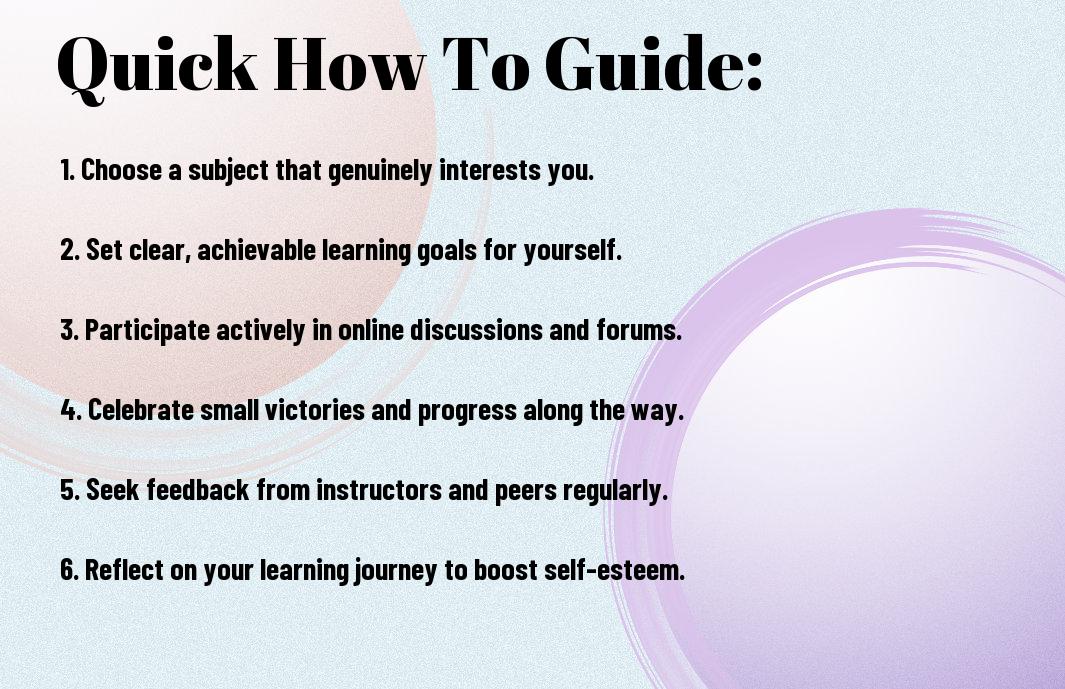
How to Excel in Online Degree Programs

As you begin on your online degree program, you’re likely eager to succeed and make the most of your educational experience. You’ll need to develop effective study habits, manage your time wisely, and stay motivated to achieve your goals. Your success in an online program depends on your ability to balance flexibility and discipline, and with the right strategies, you can thrive in this learning environment and set yourself up for long-term success.

Key Takeaways:

To succeed in online degree programs, consider the following points:

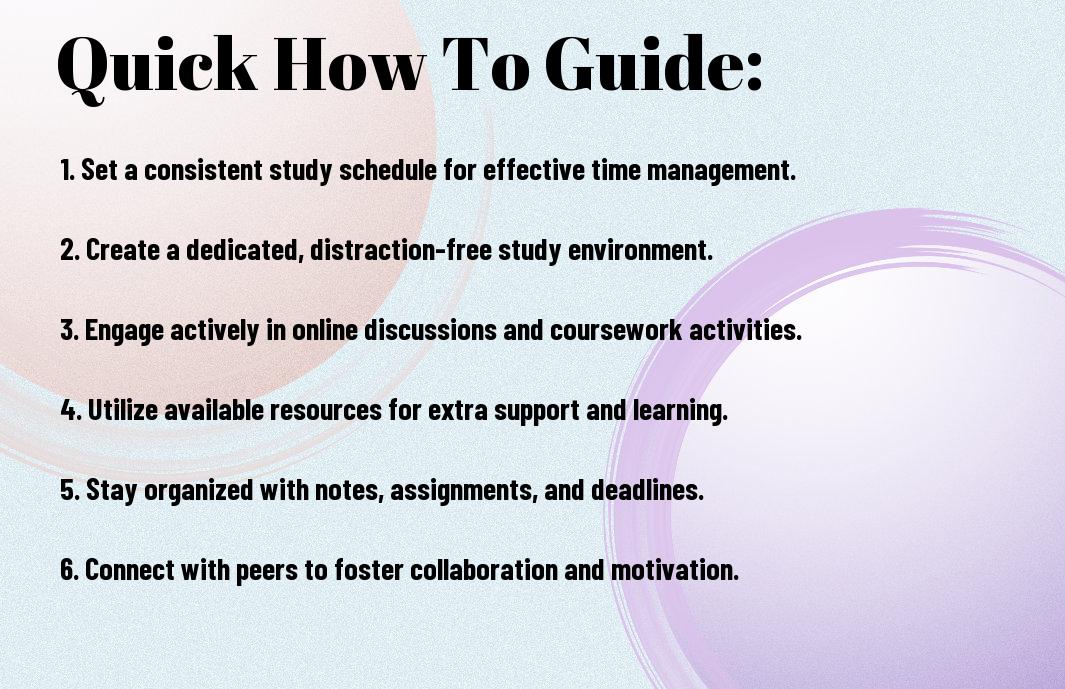
  • Establish a dedicated learning space to minimize distractions and stay focused on your studies.
  • Develop a schedule and stick to it, ensuring you allocate sufficient time for assignments and study sessions.
  • Actively participate in online discussions and engage with your instructors and peers to foster a sense of community and collaboration.
  • Leverage technology to your advantage, utilizing tools and resources that facilitate organization, time management, and academic success.
  • Set realistic goals and track progress, celebrating your achievements and seeking support when needed to maintain motivation and momentum.

Choosing the Right Program

For your online degree program to be successful, you need to select a program that aligns with your academic and career goals. You should consider factors such as program length, cost, and curriculum to ensure it meets your needs.

Researching Online Degree Options

With so many online degree programs available, you can start by exploring different institutions and their offerings. You will find that many universities provide detailed information about their programs on their websites, allowing you to compare and contrast different options.

Evaluating Program Accreditation and Reputation

Assuming you have narrowed down your options, you should investigate the accreditation and reputation of each program. You can check for accreditation from recognized accrediting agencies and look for reviews from current and former students to get a sense of the program’s quality.

It is necessary to evaluate the program’s accreditation and reputation, as this will impact the value of your degree and your future career prospects. You should verify that the program is accredited by a recognized accrediting agency and investigate the institution’s reputation by reading reviews, talking to alumni, and checking rankings to ensure you make an informed decision about your online degree program.

Effective Time Management

There’s no doubt that managing your time wisely is key to succeeding in online degree programs. You need to balance your study schedule with other responsibilities and activities, ensuring you allocate sufficient time for learning and assignments.

Creating a Study Schedule

You will find it helpful to plan out your day, week, or month in advance, setting specific times for studying, attending virtual classes, and completing assignments, allowing you to stay organized and on track with your coursework.

Minimizing Distractions and Staying Focused

Typically, finding a quiet and comfortable study space free from distractions is important for effective learning, enabling you to concentrate on your studies and make the most of your time.

Creating an environment that promotes focus is vital to your success in online degree programs. You can achieve this by turning off notifications on your phone, using website blockers to avoid social media, and communicating your study schedule to family and friends to ensure they understand your needs and can support you in staying focused on your goals.

Developing Essential Skills

All online students need to develop skills to succeed in their programs. You can find helpful advice on how to excel in online courses by visiting 7 Tips for College Students to Excel in Online Courses to improve your learning experience.

Improving Online Communication Techniques

Adept communication is key to your success in online degree programs, as you will be interacting with instructors and peers through digital platforms, so you must be able to articulate your thoughts clearly.

Enhancing Technical Skills for Online Learning

Online learning requires basic computer skills, including navigating learning management systems and using digital tools to complete assignments, you will need to be comfortable with technology to succeed.

Techniques such as troubleshooting common technical issues, using online resources, and staying up-to-date with the latest learning management systems will help you to enhance your technical skills, enabling you to focus on your studies and achieve your academic goals, as you progress through your online degree program, you will become more proficient in using technology to support your learning.

Staying Motivated and Engaged

Unlike traditional classroom settings, online degree programs require you to be self-driven. You can find valuable advice on How to Excel in Online Learning: Tips and Real-World Examples to help you stay on track.

Setting Achievable Goals and Rewards

Now that you have started your online degree program, you need to set achievable goals and rewards for yourself to stay motivated and track your progress.

Building a Support Network of Peers and Mentors

Some of the most successful online students are those who build a strong support network of peers and mentors, which helps them stay engaged and motivated throughout their program.

Support from like-minded individuals can make a significant difference in your online learning journey. You will be able to discuss challenges, share knowledge, and learn from each other’s experiences, helping you to stay focused and driven towards achieving your academic goals. As you progress, your support network can provide valuable guidance and encouragement, celebrating your successes and helping you overcome obstacles, ensuring you get the most out of your online degree program.

Navigating Online Course Materials

Many online degree programs offer a wide range of course materials, including videos, readings, and interactive modules. You will need to navigate these materials effectively to succeed in your program. Your ability to access and utilize these resources will impact your learning experience.

Understanding Online Course Formats and Requirements

Now that you are enrolled in an online degree program, you need to understand the different formats and requirements of your courses. You will encounter various types of assignments, quizzes, and exams, and it is crucial to familiarize yourself with the expectations of each course.

Utilizing Digital Resources and Tools

Tools such as online libraries, discussion forums, and video conferencing platforms are available to support your learning. You can use these tools to interact with your instructors and peers, access course materials, and submit assignments.

Utilizing digital resources and tools effectively is key to your success in online degree programs. You can use online libraries to access academic journals and books, and video conferencing platforms to participate in virtual classes and discussions. By leveraging these tools, you can stay organized, engaged, and connected with your academic community, ultimately enhancing your online learning experience.

Overcoming Common Challenges

After enrolling in an online degree program, you will encounter various challenges that may hinder your progress, but with the right strategies, you can overcome them and achieve your academic goals.

Managing Stress and Burnout

For instance, finding a balance between academic and personal life is imperative to managing stress and preventing burnout, as you will need to prioritize your tasks and set realistic goals to maintain your well-being.

Seeking Help When Needed

Stress and difficulties are inevitable, but you can mitigate their impact by seeking help when needed, and your institution’s support services are available to assist you in overcoming any challenges you may face.

Help is available to you throughout your online degree program, and you can access various resources, such as academic advisors, online tutors, and mental health professionals, who can provide you with the support and guidance you need to succeed in your studies.
Conclusion

Upon reflecting on your journey through online degree programs, you will find that your success is rooted in your ability to stay motivated, manage your time effectively, and leverage available resources. You have learned to harness the flexibility of online learning to fit your unique needs, and by doing so, you have set yourself up for achieving your academic goals. As you move forward, you will continue to grow and excel in your pursuits.

FAQ

Q: What are the key characteristics of students who excel in online degree programs?

A: Students who excel in online degree programs typically possess strong self-motivation, discipline, and time management skills. They are able to create a dedicated study space, free from distractions, and establish a routine that allows them to stay on top of their coursework. Additionally, they are proactive in seeking help when needed, effectively utilizing resources such as online forums, virtual office hours, and support services. By being organized, flexible, and committed to their goals, these students are well-equipped to navigate the unique challenges of online learning and achieve academic success.

Q: How can I stay engaged and motivated throughout my online degree program?

A: To stay engaged and motivated, it is vital to set clear goals and deadlines, and to regularly track progress. Breaking down larger assignments into smaller, manageable tasks can help make the workload feel less overwhelming, allowing you to focus on one task at a time. Moreover, participating in online discussions, joining study groups, and interacting with instructors and peers can help foster a sense of community and connection, combating feelings of isolation that can sometimes accompany online learning. Celebrating small victories along the way can also help maintain enthusiasm and motivation, as can exploring real-world applications of the course material to make learning more meaningful and relevant.

Q: What strategies can I use to effectively manage my time and balance academic responsibilities with other aspects of my life?

A: Effective time management is vital to success in online degree programs. Creating a master calendar that outlines all academic deadlines, work commitments, and personal obligations can help you visualize your schedule and make informed decisions about how to allocate your time. Prioritizing tasks based on their urgency and importance, and dedicating specific times of the day or week to studying and coursework, can help ensure that academic responsibilities are met without neglecting other areas of life. Establishing boundaries with family and friends, learning to say no to non-vital commitments, and taking regular breaks to avoid burnout are also important for maintaining a healthy balance between academic and personal life.

How Online Learning Encourages Self-Paced Education

As you explore the world of online learning, you’ll discover that it offers a unique advantage: the ability to learn at your own pace. You can pause, rewind, and replay content as many times as you need, allowing you to grasp complex concepts with ease. With online learning, you have the freedom to create your own schedule, setting your own deadlines and milestones, which enables you to take ownership of your educational journey, making it more effective and enjoyable. This flexibility is revolutionizing the way you learn.

Key Takeaways:

To understand the benefits of online learning, it’s crucial to consider how it promotes flexibility and autonomy in education. The following points highlight the advantages of self-paced education:

  • Online learning allows students to set their own pace, enabling them to learn at a speed that suits their individual needs and learning style.
  • With self-directed learning, students can take ownership of their education, making decisions about what and when they learn, and tracking their progress.
  • Online courses and resources provide students with access to a wide range of materials and tools, enabling them to explore topics in-depth and at their own leisure.
  • The personalized nature of online learning helps students to focus on areas where they need improvement, rather than following a one-size-fits-all approach to education.
  • By providing students with the freedom to learn at their own speed and in their own environment, online education can help to reduce stress and increase motivation, leading to better outcomes.

Benefits of Self-Paced Education

Your educational journey becomes more effective with self-paced learning, allowing you to absorb and process information at your own speed, enhancing your overall learning experience.

Flexibility in Learning

About the time you need to learn, self-paced education offers the flexibility to create your own schedule, enabling you to learn at any time and from any location, making it easier for you to balance your education with other responsibilities.

Personalized Learning Experience

On the path to personalized learning, you can tailor your educational experience to fit your individual needs, interests, and learning style, allowing you to engage more deeply with the material and retain information better.

For instance, with self-paced learning, you can review difficult concepts as many times as you need, or quickly move through material you already understand, enabling you to make the most of your time and effort, and achieve your educational goals more efficiently.

Online Learning Platforms

Any online learning platform you choose offers a range of tools and resources to support your self-paced education, allowing you to learn at your own speed and convenience.

Variety of Courses Available

Various online courses are available, enabling you to explore different subjects and interests, and select the ones that align with your goals and preferences, allowing you to create a personalized learning path.

Accessibility and Convenience

Multiple factors contribute to the accessibility and convenience of online learning, including flexible scheduling and the ability to learn from anywhere, giving you the freedom to balance your education with other aspects of your life.

But as you research deeper into the world of online learning, you’ll discover that accessibility and convenience are not just about saving time, they’re also about having control over your learning environment, allowing you to create a space that fosters your productivity and focus, and helps you stay motivated and engaged in your educational journey.

Effective Learning Strategies

For a successful online learning experience, you can explore various strategies, such as visiting How Online Learning Fosters Self-Directed Learning And Curiosity to discover new approaches. This will help you develop skills that promote independent learning.

Goal Setting and Planning

Leveraging your ability to set objectives, you can create a personalized plan that suits your learning style, allowing you to stay focused on your targets and maintain motivation throughout your online course.

Time Management and Discipline

By organizing your daily schedule, you can allocate specific times for learning, ensuring you make the most of your online education and stay on track with your goals.

Setting priorities and avoiding distractions is key to effective time management. You can achieve this by creating a dedicated learning space, free from interruptions, and establishing a routine that works for you, enabling you to make steady progress in your online studies.

Overcoming Challenges

Now that you’ve launched on your online learning journey, you’ll face challenges that test your resolve and adaptability. As you navigate through courses and assignments, you’ll discover that self-paced education demands discipline and perseverance.

Staying Motivated and Engaged

Besides the flexibility that online learning offers, you’ll need to find ways to stay motivated and engaged. You can achieve this by setting realistic goals, creating a conducive learning environment, and rewarding yourself for milestones achieved.

Seeking Support and Resources

Alongside your online courses, you’ll have access to various resources and support systems. You can reach out to instructors, join online communities, and utilize digital tools to facilitate your learning experience.

This support network will help you address challenges and doubts, providing you with the guidance you need to succeed in your self-paced education. You’ll be able to tap into a vast array of resources, from video tutorials to interactive forums, to help you better understand complex concepts and stay on track with your learning objectives.

Technology and Innovation

After embracing online learning, you’ll discover a world of possibilities that enhance your educational experience. You’ll have access to a vast array of digital resources, enabling you to learn at your own pace and explore topics in-depth.

Interactive Tools and Multimedia

One of the key benefits of online learning is the incorporation of interactive tools and multimedia elements, which make complex concepts more engaging and easier to understand, allowing you to grasp new ideas more effectively.

Artificial Intelligence and Adaptive Learning

Any online learning platform worth considering will utilize artificial intelligence to create a personalized learning experience, adjusting the difficulty level and content to suit your needs and abilities, ensuring that you stay motivated and engaged.

With artificial intelligence and adaptive learning, you can expect a more efficient and effective learning process, as the system responds to your strengths and weaknesses, providing real-time feedback and guidance, enabling you to fill knowledge gaps and achieve your academic goals more quickly.

Real-World Applications

Not only does online learning provide flexibility, but it also prepares you for real-world scenarios, allowing you to apply your knowledge and skills in practical situations.

Career Development and Advancement

After completing online courses, you can enhance your career prospects, as many employers value the self-motivation and discipline required to succeed in online learning environments, making you a more attractive candidate.

Life-Long Learning and Skill-Building

Realistically, online learning enables you to pursue your interests and passions, acquiring new skills and expanding your knowledge base, which is crucial in today’s fast-paced, ever-changing world, and you can access courses and resources at your convenience.

SkillBuilding is an ongoing process, and online learning facilitates this by providing you with the opportunity to continually update your skills and knowledge, ensuring you stay relevant in your chosen field, and you can take ownership of your learning, selecting courses that align with your goals and interests, allowing you to grow both personally and professionally.

Conclusion

Considering all points, you can see how online learning encourages self-paced education, allowing you to take control of your learning process. As you explore What Is Self-Paced Learning?: Benefits and Ways to Implement It, you will discover the flexibility and autonomy it offers, enabling you to learn at your own pace and make the most out of your educational experience, thereby enhancing your overall learning outcomes. This approach helps you tailor your education to fit your unique needs and goals.

FAQ

Q: What is self-paced education and how does online learning support it?

A: Self-paced education refers to a learning approach where students can progress through courses at their own speed, reviewing and mastering material as they see fit. Online learning encourages self-paced education by providing students with the flexibility to access course materials, complete assignments, and engage with instructors and peers on their own schedule. This allows learners to accelerate their learning when they grasp concepts quickly and slow down when they need more time, making the educational experience more effective and personalized.

Q: How does online learning facilitate personalized learning paths for self-paced education?

A: Online learning platforms often include features such as adaptive learning technology, which adjusts the difficulty of course materials based on a student’s performance. This, combined with the ability to revisit lessons and retake quizzes or assessments, enables learners to reinforce their understanding of key concepts before moving forward. Additionally, online resources like video lectures, interactive simulations, and discussion forums cater to different learning styles, allowing students to engage with material in ways that are most effective for them, thereby supporting a self-paced approach to education.

Q: Can online learning platforms effectively monitor student progress in a self-paced educational setting?

A: Yes, most online learning platforms are equipped with robust analytics and tracking tools that allow instructors to monitor student progress in real-time. These tools can identify areas where students may be struggling, enabling targeted support and interventions. Students also have access to their own progress dashboards, where they can track their completion of assignments, scores on assessments, and overall advancement through the course. This transparency and immediate feedback loop help students stay motivated and on track in their self-paced learning journey, ensuring they meet their educational goals.

How to Overcome Technological Challenges in Online Education

As you navigate the world of online education, you will inevitably encounter technological challenges that can hinder your learning experience. You may struggle with outdated software, poor internet connectivity, or difficulty navigating digital platforms. Your ability to adapt to these challenges is imperative to succeeding in an online learning environment. You will learn how to address these issues and optimize your technology to ensure a seamless and productive online learning experience.

Key Takeaways:

To tackle the obstacles in online education, consider the following strategies:

  • Develop a comprehensive plan to address potential technological issues, such as internet connectivity problems or software compatibility, to minimize disruptions to the learning experience.
  • Invest in user-friendly and intuitive learning management systems that are easy to navigate, reducing the likelihood of student frustration and increasing engagement.
  • Provide technical support and training for educators and students to ensure they are comfortable using the technology and can troubleshoot common problems.
  • Foster a flexible and adaptable approach to online education, allowing for adjustments to be made as needed to accommodate the needs of students and stay up-to-date with the latest technological advancements.
  • Encourage collaboration and communication among students, educators, and technical support teams to identify and resolve technological challenges quickly and effectively.

Understanding Technological Challenges

Your journey to overcoming technological challenges in online education begins with understanding the issues at hand, and you can start by exploring how to address them, as discussed in How can we solve education’s technology challenges and improve online learning.

Identifying common obstacles in online education

Education technology can be complex, and you need to identify the common obstacles that hinder online learning, such as poor internet connectivity and outdated software.

Factors affecting online learning platforms

Little things like server speeds and data storage can affect your online learning experience, including:

  • Slow loading times
  • Poor video quality

. This understanding will help you navigate the challenges of online education.

With the rise of online learning, you need to consider the factors that affect online learning platforms, including:

  • Accessibility
  • Usability

. This will enable you to make informed decisions about your online education journey.

Preparing for Online Education

Any online education program requires careful preparation to ensure success. You need to develop a comprehensive plan, including setting up your online classroom and preparing your course materials.

Tips for instructors to prepare course materials

Materials are key to a successful online course, you will need to create engaging content, including text, images, and videos, consider the following:

  • Develop a clear syllabus
  • Create interactive lessons

Recognizing your students’ needs, you can tailor your materials to meet their expectations.

How-to guide for setting up online classrooms

There’s a lot to consider when setting up your online classroom, you will need to choose a learning management system, configure your settings, and test your equipment.

Another important aspect of setting up your online classroom is ensuring that you have a reliable internet connection and a quiet, dedicated space to teaching, you can also customize your classroom to fit your teaching style, and make sure you have all the necessary tools and resources to deliver high-quality lessons.

Effective Communication Strategies

Once again, you will find that establishing clear channels of communication is vital to the success of your online education endeavors, enabling you to convey your message effectively and address the needs of your students.

How to facilitate student-instructor interaction

The key to facilitating student-instructor interaction lies in creating a supportive and inclusive online environment where you can engage with your students and provide them with the necessary guidance and feedback.

Tips for encouraging student participation

Strategies such as regular check-ins, virtual office hours, and discussion forums can help you foster a sense of community and encourage your students to participate actively in the learning process. You can try:

  • Using video conferencing tools to conduct live sessions
  • Creating interactive content, such as quizzes and polls
  • Encouraging students to share their thoughts and ideas

Any efforts you make to engage your students will pay off in the long run.

Studentinstructor interaction is the backbone of a successful online learning experience, and you can enhance it by being approachable, responsive, and open to feedback. You can try:

  • Setting clear expectations and goals for your students
  • Providing regular feedback and assessment
  • Using analytics to track student engagement and progress

Any additional support you offer will help your students stay motivated and focused throughout the course.

Overcoming Technical Issues

For online education to be effective, you need to address technical issues promptly. Consider the factors that can hinder your learning experience, such as poor internet connectivity and outdated software.

Factors to consider when choosing learning management systems

Considering your specific needs, you should evaluate the following:

  • user interface
  • technical support

The learning management system you choose will greatly impact your online learning experience.

How-to troubleshoot common technical problems

Managing technical issues requires a proactive approach. You should be able to identify and fix common problems, such as login errors and browser compatibility issues.

For instance, when you encounter a technical problem, you can start by checking your internet connection and browser settings. You can also try restarting your device or seeking help from your instructor or technical support team. By being proactive and taking these steps, you can quickly resolve technical issues and stay focused on your learning goals.

Ensuring Accessibility and Equity

Many online education platforms struggle to provide equal access to all students.

Tips for creating inclusive online learning environments

Limited accessibility can hinder your students’ progress, you should consider the following:

  • Provide alternative formats for course materials
  • Use clear and simple language

Knowing how to create an inclusive environment will help you support your students.

How-to ensure equal access to technological resources

Similarly, environments that support diverse needs are imperative for online education, you can start by assessing your students’ technological abilities.

Understanding the challenges your students face when accessing technological resources is key to providing equal access, you can achieve this by conducting surveys or interviews to identify areas where your students need support, and then develop strategies to address these issues, such as providing resources or training to help your students access the necessary technology.

Staying Up-to-Date with Technological Advances

Now that online education is on the rise, you need to stay updated with the latest technological advancements to provide a seamless learning experience for your students.

How-to stay current with emerging trends in online education

There’s a need to constantly update your knowledge about the latest tools and platforms being used in online education, allowing you to make informed decisions about your teaching methods and strategies.

Factors to consider when implementing new technologies

With the abundance of new technologies emerging daily, you should consider several factors before implementing them, including:

  • Cost and budget
  • Technical support and infrastructure
  • Student engagement and feedback

Assume that your students will have varying levels of technical expertise, so you should choose technologies that are user-friendly and accessible.

When implementing new technologies, you should weigh the benefits and drawbacks, and consider the potential impact on your students’ learning experience, including:

  • Improved accessibility and flexibility
  • Enhanced student engagement and interaction
  • Increased efficiency and productivity

Assume that your role as an educator is to leverage technology to create a personalized and effective learning environment for your students.

To wrap up

Following this guide, you will be well-equipped to overcome technological challenges in online education. You can ensure a smooth learning experience by being proactive and having a plan in place. By staying informed and adapting to new technologies, you will enhance your online learning experience and achieve your educational goals. Your ability to navigate these challenges will ultimately lead to your success in the online learning environment.

FAQ

Q: What are the common technological challenges faced by students in online education and how can they be addressed?

A: The common technological challenges faced by students in online education include poor internet connectivity, outdated devices, and lack of technical skills. To address these challenges, students can invest in a reliable internet connection, use devices that meet the minimum system requirements for online courses, and seek technical support from their institution’s IT department. Additionally, students can take online tutorials or workshops to improve their technical skills and stay up-to-date with the latest digital tools and platforms.

Q: How can educators ensure that their online courses are accessible and user-friendly for students with different learning needs and abilities?

A: Educators can ensure that their online courses are accessible and user-friendly for students with different learning needs and abilities by incorporating universal design principles, providing alternative formats for course materials, and using accessible digital tools and platforms. They can also provide clear instructions and technical support, offer flexible assessment options, and encourage student feedback to identify and address any accessibility issues. Furthermore, educators can use analytics and feedback to continuously evaluate and improve the accessibility and usability of their online courses.

Q: What strategies can institutions use to support faculty in overcoming technological challenges and developing their online teaching skills?

A: Institutions can support faculty in overcoming technological challenges and developing their online teaching skills by providing professional development opportunities, such as workshops, webinars, and mentoring programs. They can also offer technical support and resources, including instructional design assistance, technology training, and equipment loans. Additionally, institutions can encourage collaboration and knowledge-sharing among faculty, provide incentives for innovative teaching practices, and recognize and reward faculty who demonstrate excellence in online teaching. By investing in faculty development, institutions can help ensure that their online education programs are of high quality and effective in supporting student learning.

The Best Online Platforms for Professional Development

You’re looking to boost your career, and your professional growth depends on it. You want to stay ahead of the curve, and online learning is the way to go. Your search for the perfect platform ends here. You’ll discover the top online platforms that will take your skills to the next level, helping you achieve your goals and increase your earning potential. Get ready to unlock your full potential with these cutting-edge platforms.

Key Takeaways:

To enhance your career, consider the following online platforms for professional development:

  • The LinkedIn Learning platform offers a wide range of courses and tutorials to help you develop new skills and stay updated with the latest industry trends.
  • Online courses on platforms like Coursera and edX provide access to high-quality educational content from top universities and institutions worldwide.
  • Webinars and workshops on platforms like Udemy and Skillshare enable you to learn from industry experts and network with professionals in your field.
  • Professional networks like GitHub and Stack Overflow are ideal for developers and programmers to showcase their projects and connect with other professionals.
  • E-learning platforms like Pluralsight and DataCamp offer specialized courses and training programs to help you develop in-demand skills and advance your career.

Identifying Needs

The first step in professional development is identifying your needs. You must determine what skills you lack and what areas you need to improve. This self-assessment will help you find the right online platforms for your growth.

Assessing Skills

Then, take stock of your current skills and abilities. You will discover what you excel at and what requires more attention, guiding your search for the perfect online platform.

Setting Goals

Setting clear objectives is crucial for your professional development. You need to define what you want to achieve, making it easier to choose the right online platform.

Consequently, as you set your goals, you will be able to narrow down your options and find the online platforms that best align with your objectives, allowing you to focus on what you want to accomplish and make the most out of your professional development journey.

Popular Platforms

Assuming you’re looking to enhance your professional skills, you’ll find numerous online platforms to choose from, offering a wide range of development opportunities tailored to your needs.

Online Courses

For instance, websites like Coursera and Udemy provide you with access to a vast array of courses, allowing you to learn at your own pace and expand your knowledge in various fields.

Webinars

An alternative to traditional courses, webinars offer you the chance to engage with experts in real-time, exploring topics that are relevant to your career goals.

At this point, you may be wondering how webinars can benefit your professional development – by attending these online seminars, you gain valuable insights,network with peers, and stayed updated on the latest industry trends, all from the comfort of your own space.

Specialized Platforms

For professionals looking to enhance their skills, specialized platforms offer a wealth of opportunities. You can explore platforms focused on specific areas, such as data science or digital marketing, to gain in-depth knowledge and stay up-to-date with industry trends.

Industry-Specific

Similar platforms cater to particular industries, providing you with tailored content and training programs. You can choose from a range of options, including healthcare, finance, or technology, to develop skills relevant to your field.

Networking Opportunities

To expand your professional network, you can leverage online platforms that facilitate connections with peers and experts. You’ll find numerous opportunities to engage with like-minded individuals, share knowledge, and learn from their experiences.

Networking is a key aspect of professional development, and online platforms make it easier for you to connect with others in your industry. You can participate in discussions, join groups, and attend virtual events to build relationships and stay informed about industry developments, ultimately helping you to advance your career.

Effective Learning

After selecting the right platform, you’ll want to focus on how to get the most out of it. You’ll need to find a system that works for you, with features that support your learning style and goals.

Time Management

Efficiently, you will be able to prioritize your tasks and allocate your time wisely, making the most of your online learning experience. You can set a schedule and stick to it, ensuring you stay on track with your professional development.

Staying Motivated

About the midpoint of your course, you may start to feel a decline in motivation. You might find yourself struggling to stay engaged, but don’t worry, this is normal. You can overcome this by setting small goals and rewarding yourself when you achieve them.

But as you progress, you’ll find that staying motivated becomes easier. You’ll start to see the benefits of your hard work, and your confidence will grow. You’ll be able to apply what you’ve learned to real-world situations, and this will help you stay motivated to continue learning and developing your skills.

Overcoming Challenges

Your professional development journey on online platforms will inevitably encounter obstacles, but with persistence and the right mindset, you can overcome them and achieve your goals.

Technical Issues

Above all, technical problems can be frustrating, but you can troubleshoot or contact support to resolve them quickly, getting you back on track in no time.

Staying Focused

After investing time and effort, you’ll need to maintain your motivation and concentration to get the most out of your online learning experience, avoiding distractions and staying committed to your objectives.

Overcoming the challenges of staying focused requires you to create a dedicated learning environment, set realistic targets, and track your progress, allowing you to celebrate your successes and adjust your approach as needed, ensuring you stay on course and attain your professional development aspirations.

Evaluating Progress

To assess your growth, you need to evaluate your progress regularly. This involves setting goals, monitoring your performance, and making adjustments as needed. By doing so, you can identify areas of improvement and optimize your professional development strategy.

Tracking Performance

By utilizing analytics tools, you can monitor your progress and identify trends in your performance. This allows you to make data-driven decisions and refine your approach to achieve your goals more effectively.

Adjusting Strategies

Between each evaluation, you will likely need to adjust your strategies to stay on track. This may involve seeking additional training or shifting your focus to different areas of development.

Tracking the effectiveness of your adjusted strategies is key to continued growth. As you navigate your professional development journey, you will find that your needs and goals evolve, and your strategy must adapt accordingly. You will need to continually assess what is working and what areas require more attention, making adjustments as you go to ensure you stay on the path to achieving your objectives.

Final Words

Drawing together the threads of your professional development journey, you now have a clearer picture of the best online platforms to enhance your skills. You’ve discovered the tools to elevate your career, and it’s up to you to take the next step. With these platforms, your growth is limitless, and your future is brighter than ever. You’re ready to unlock your full potential and achieve your goals, so go ahead and start exploring your options today.

FAQ

Q: What are the most popular online platforms for professional development, and how can I choose the right one for my needs?

A: The most popular online platforms for professional development include Coursera, LinkedIn Learning, and Udemy. To choose the right one for your needs, consider the specific skills you want to develop, the level of interactivity you prefer, and the amount of time you have to dedicate to learning. For example, if you’re looking to develop skills in data science, Coursera may be a good choice, while LinkedIn Learning may be better suited for those looking to develop business or creative skills. Additionally, consider the cost, reputation, and user reviews of each platform to make an informed decision.

Q: How can I balance the cost of online courses with the potential benefits of professional development, and are there any free or low-cost options available?

A: Balancing the cost of online courses with the potential benefits of professional development requires careful consideration of your budget and career goals. Some platforms, such as edX and MIT OpenCourseWare, offer free or low-cost courses, while others, like Coursera and Udemy, offer financial aid or scholarships. You can also explore employer-sponsored training programs or professional associations that offer discounted or free courses for members. Additionally, consider the potential return on investment of each course, including the potential for career advancement, salary increases, or new job opportunities.

Q: How can I ensure that the online courses I take are of high quality and will be recognized by employers, and what are some red flags to watch out for when selecting a platform or course?

A: To ensure that the online courses you take are of high quality and will be recognized by employers, look for platforms that are accredited by recognized accrediting agencies, such as the Distance Education Accrediting Commission (DEAC) or the Council for Higher Education Accreditation (CHEA). Also, check the qualifications and experience of the instructors, as well as the course curriculum and learning objectives. Be wary of red flags such as unusually low prices, lack of transparency about the platform or course, or poor user reviews. Additionally, consider the reputation of the platform and the potential for career advancement or salary increases after completing the course, and check if the course provides a certificate or badge that can be verified by employers.

How to Build Confidence Through Online Learning

You can enhance your self-assurance and gain new skills from the comfort of your own space. Online learning offers a flexible and accessible way to improve your knowledge and abilities, allowing you to tackle challenges and achieve your goals. As you engage in online courses and training, you will develop a stronger sense of self-belief, enabling you to approach your personal and professional life with renewed confidence and motivation, driving your personal growth and success. Your online learning journey starts here.

Key Takeaways:

To build confidence through online learning, consider the following points:

  • Engage in Self-Paced learning to allow yourself to learn at your own speed, which can help you feel more in control and confident in your abilities.
  • Focus on Setting Goals and achieving them, as this can help you develop a sense of accomplishment and boost your self-esteem.
  • Develop a Growth Mindset by embracing challenges and viewing failures as opportunities for growth, which can help you build confidence in your ability to learn and adapt.
  • Practice Active Learning techniques, such as taking notes and participating in discussions, to help you stay engaged and motivated in your online learning journey.
  • Cultivate Positive Self-Talk by encouraging yourself and celebrating your successes, which can help you develop a more confident and positive self-image.

Setting Goals and Motivation

A key aspect of building confidence through online learning is setting clear goals and motivation. You will need to define what you want to achieve and what drives you to succeed. This will help you stay focused and motivated throughout your online learning journey.

Identifying Personal Objectives

If you are to make progress, you need to identify your personal objectives and set specific, measurable, and achievable goals. You can start by reflecting on your strengths, weaknesses, and interests to determine what you want to accomplish through online learning.

Creating a Supportive Environment

Identifying the right resources and tools is necessary to creating a supportive environment that fosters your online learning. You should explore different platforms, tools, and communities that can help you stay motivated and engaged.

The environment you create will have a significant impact on your online learning experience. You can customize your space to suit your needs, minimize distractions, and optimize your technology to ensure a smooth and enjoyable learning experience. This will help you stay focused, motivated, and confident as you work towards achieving your goals.

Choosing the Right Online Courses

Some online courses can help you build confidence in your skills and knowledge. When deciding on courses, consider factors such as your interests, career goals, and learning style.

Factors to Consider When Selecting Courses

With numerous options available, you should evaluate courses based on:

  • course content
  • instructor expertise
  • reviews from previous students

. Any course you choose should align with your goals and provide opportunities for interaction and feedback.

Tips for Evaluating Course Effectiveness

Consider the following when evaluating a course:

  • clear learning objectives
  • engaging instructional methods
  • opportunities for practice and application

. Recognizing the effectiveness of a course will help you achieve your learning goals.

The key to successful online learning is finding courses that meet your needs and keep you motivated. You can evaluate course effectiveness by considering factors such as:

  • interactive elements
  • real-world applications
  • support from instructors and peers

. Recognizing the importance of these factors will help you make informed decisions about your online learning journey.

Building Foundation Knowledge

Despite the vast amount of information available online, you can build a strong foundation by focusing on core concepts and principles. You will be able to develop a deeper understanding of the subject matter, enabling you to tackle more complex topics with confidence.

How-to Approach Complex Subjects

While navigating online courses, you will encounter complex subjects that require a step-by-step approach. You can break down difficult topics into manageable chunks, allowing you to grasp each component before moving on to the next, and thus building your confidence in the process.

Essential Skills for Online Learning

Learning to navigate online platforms and tools is vital for your success. You will need to develop skills such as time management, self-motivation, and effective communication to get the most out of your online learning experience.

Another key aspect of online learning is being able to evaluate and analyze information effectively. You will need to develop your critical thinking skills to distinguish between reliable and unreliable sources, and to apply what you have learned to real-world situations, which will help you build confidence in your abilities and decision-making.

Overcoming Obstacles and Self-Doubt

For many learners, online learning can be a daunting experience, filled with self-doubt and uncertainty. You may face challenges that test your resolve, but with persistence and the right mindset, you can overcome them and build confidence in your abilities.

Common Challenges in Online Learning

Comparable to traditional learning, online learning presents its own set of challenges, such as lack of face-to-face interaction and technical issues, which can hinder your progress and affect your motivation.

Strategies for Staying Motivated

Strategic planning and time management are imperative for staying motivated in online learning, as you set goals and priorities, creating a schedule that works for you and helps you stay on track.

Obstacles such as procrastination and distractions can derail your online learning journey, but by implementing strategies like breaking tasks into smaller chunks, creating a conducive learning environment, and seeking support from instructors or peers, you can stay motivated and focused, ultimately building your confidence and achieving your goals.

Practicing Consistency and Persistence

Unlike other methods, online learning requires discipline and dedication. You can build confidence by following a consistent routine, as seen in 3 Ways College Students can Build Self-Confidence, and staying committed to your goals.

Creating a Study Schedule

Only by planning your study sessions can you make steady progress. You set achievable milestones and allocate time for each task, ensuring you stay on track and make the most of your online learning experience.

Tracking Progress and Adjusting Habits

Assuming you have a clear picture of your strengths and weaknesses, you can identify areas for improvement and adjust your strategy accordingly, helping you stay motivated and focused on your goals.

Creating a system to track your progress allows you to evaluate your performance and make informed decisions about your learning approach, enabling you to make adjustments and refine your habits to achieve optimal results, and you will be able to see how your consistent efforts are paying off, boosting your confidence in the process.

Enhancing Learning Experience

Not only can online learning provide you with flexibility, but it also offers a wide range of resources to enhance your learning experience. You can visit 6 Tips to Help Students New to Online Learning Succeed to get started.

How-to Leverage Technology for Learning

With the right tools and mindset, you can leverage technology to improve your learning outcomes. You will find that online platforms and resources can help you stay organized and focused.

Tips for Engaging with Online Communities

If you want to get the most out of your online learning experience, consider the following tips:

  • Participate in discussions
  • Ask questions
  • Share your experiences

. Recognizing your own strengths and weaknesses will help you engage more effectively with online communities.

Tips for engaging with online communities are vital for your success. You can:

  • Set clear goals
  • Be respectful
  • Stay active

. Recognizing the value of your contributions will help you stay motivated and engaged in online discussions.

Final Words

Considering all points, you now have the tools to build confidence through online learning. You can apply these strategies to enhance your skills and knowledge, boosting your self-assurance. As you progress, your confidence will grow, and you will become more self-assured in your abilities, enabling you to tackle new challenges and achieve your goals, making the most of your online learning experience.

FAQ

Q: What are the benefits of building confidence through online learning?

A: Building confidence through online learning can have numerous benefits, including increased self-esteem, improved academic performance, and enhanced career opportunities. Online learning provides a flexible and accessible way to acquire new skills and knowledge, allowing individuals to learn at their own pace and on their own schedule. As a result, online learners can develop a sense of accomplishment and confidence in their abilities, which can translate to other areas of their lives.

Q: How can I stay motivated and engaged while learning online to build my confidence?

A: To stay motivated and engaged while learning online, it’s imperative to set clear goals and deadlines, create a dedicated learning space, and establish a routine. Additionally, online learners can participate in online communities and discussion forums to connect with others, share ideas, and get support. Celebrating small wins and rewards can also help to boost motivation and confidence. Furthermore, online learners can use various tools and resources, such as interactive videos, quizzes, and games, to make learning more enjoyable and interactive.

Q: What strategies can I use to overcome self-doubt and imposter syndrome while learning online to build my confidence?

A: To overcome self-doubt and imposter syndrome while learning online, individuals can practice self-compassion and acknowledge that it’s normal to feel uncertain or overwhelmed. Online learners can also focus on their strengths and accomplishments, rather than dwelling on weaknesses or perceived limitations. Moreover, setting realistic expectations, breaking tasks into smaller steps, and seeking support from instructors, mentors, or peers can help to build confidence and alleviate self-doubt. By developing a growth mindset and embracing challenges as opportunities for growth, online learners can cultivate confidence and develop a more positive and resilient mindset.

Skip to content