Progress

How to Track Progress in Online Classes

You’re taking online classes, and your goal is to stay on top of your work. You need to monitor your progress to achieve your objectives. Your success depends on tracking your assignments, grades, and deadlines. You’ll learn how to do this effectively, making the most of your online learning experience, in this guide.

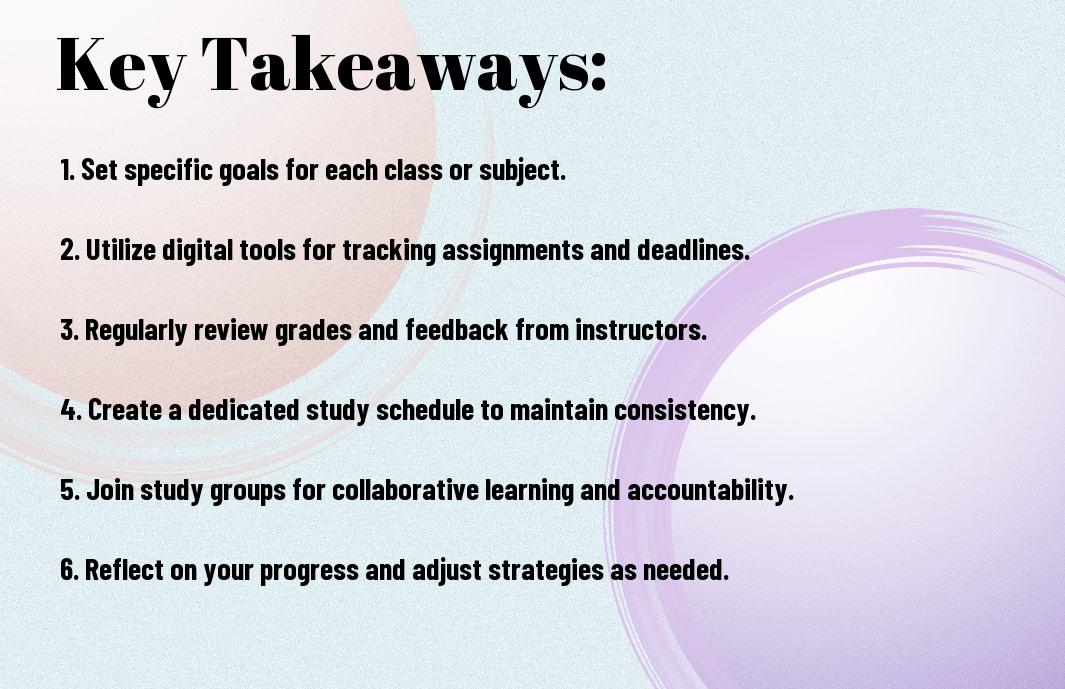
Key Takeaways:

To effectively monitor your advancement in online courses, consider the following points:

  • Set Clear Goals to help you stay focused and motivated throughout the duration of the class, ensuring you understand what needs to be achieved.
  • Utilize Tracking Tools such as calendars, planners, or apps designed to help students organize assignments and deadlines, keeping you on schedule.
  • Establish a Regular Routine for studying and participating in online activities, maintaining consistency is key to staying on top of your coursework.
  • Engage in Self-Assessment regularly, evaluating your understanding of the material and identifying areas where you may need extra support or review.
  • Leverage Feedback Mechanisms provided by the course, such as discussion forums or direct communication with instructors, to gauge your performance and adjust your approach as necessary.

Setting Up Tracking Systems

Before you start tracking your progress, consider how you will set up your systems. You can learn more about How to Let Your Students Track Their Own Course Progress to get started.

Identifying Key Performance Indicators

For your tracking to be effective, you need to identify the key metrics that matter most to your learning goals, allowing you to focus on what’s working and what’s not.

Using Online Tools for Progress Monitoring

Below are some tools to help you monitor your progress, from built-in LMS features to third-party apps and plugins that simplify tracking and analysis.

Monitoring your progress regularly helps you stay on top of your coursework and make adjustments as needed, and by leveraging online tools, you can streamline this process and make the most of your time, allowing you to adjust your approach and achieve your goals more efficiently.
Establishing Goals and Objectives

While setting up your online class, you need to define what you want to achieve. Check out Tracking Online Learners’ Progress: Effective Strategies to get insights on how to monitor your progress. This will help you stay focused and motivated throughout your course.

Creating a Personalized Learning Plan

Any successful online learner knows that having a tailored plan is key. You should assess your strengths, weaknesses, and learning style to create a plan that suits your needs, allowing you to make the most of your online class.

Breaking Down Larger Goals into Smaller Tasks

To tackle your objectives, break them down into manageable tasks. This approach will make your goals less overwhelming, helping you to track your progress and make adjustments as needed.

Breaking down larger goals into smaller tasks is a simple yet effective way to stay on top of your work. You can create a schedule with specific deadlines for each task, allowing you to monitor your progress and make adjustments as needed, ensuring you’re always moving closer to achieving your objectives in your online class.

Monitoring Progress

Now that you’ve started your online class, tracking your progress is key. You’ll want to stay on top of your assignments, quizzes, and participation to ensure you’re meeting your goals.

Regularly Reviewing Assignments and Quizzes

Across the duration of your course, you’ll need to keep tabs on your assignments and quizzes, making sure you’re completing them on time and to the best of your ability.

Tracking Participation and Engagement

One way to gauge your progress is by tracking your participation and engagement in online discussions and activities, allowing you to identify areas where you need to improve.

And as you track your participation, you’ll start to see patterns emerge, helping you understand what’s working and what’s not, enabling you to make adjustments to stay on track and achieve your goals in the online class.

Adjusting the Learning Plan

Many online learners find that their initial plan needs tweaking as they progress through their course. You will likely encounter areas where you need more practice or review, and your plan should reflect these changes.

Identifying Areas for Improvement

Among the key steps in adjusting your learning plan is pinpointing where you need extra help. You can do this by tracking your assignments and test scores to see where you’re struggling.

Making Adjustments to Stay on Track

Identifying your weaknesses is the first step, and then you can make adjustments to your study schedule to focus on those areas. You will be able to allocate more time to the topics that are giving you trouble.

Hence, by making these adjustments, you can ensure that you’re using your study time effectively and making progress towards your goals. You can take additional online resources, such as video tutorials or practice quizzes, to supplement your learning in areas where you’re struggling, and this will help you to stay on track and achieve your objectives.

Staying Motivated

Your online classes demand a steady effort, and staying motivated is key to success. You need to focus on your goals and push through challenges to reach them.

Celebrating Small Victories

Against the tide of tough coursework, acknowledging small wins will help you stay afloat. You complete a difficult assignment, and that’s a victory – acknowledge it.

Finding Support from Peers and Instructors

Minimal as it may seem, connecting with your peers and instructors can help you stay on track. You can join online forums or discussion groups to get support.

Also, your instructors are there to guide you, so don’t hesitate to reach out when you need help. You can ask for feedback on your progress, and they can provide valuable insights to keep you motivated and focused on your goals.

Overcoming Obstacles

Once again, you’ll face challenges in online classes. Your progress may slow, but don’t get discouraged. Identify the obstacles and find ways to overcome them.

Managing Time Effectively

Above all, after setting your schedule, stick to it. You’ll stay on track and make steady progress in your online classes.

Seeking Help When Needed

When you’re struggling, don’t hesitate to ask for help. You can reach out to your instructor or peers for support, and get back on track with your online classes.

With the right mindset, you’ll be able to seek help when you need it. You’ll find that your instructor and peers are willing to lend a hand, and you’ll be able to overcome any obstacles that come your way. You’ll stay focused, and your progress will reflect your hard work and determination.

Summing up

On the whole, you’ve got the tools to track your progress in online classes. You can set goals, use calendars, and analyze your grades. Your progress is in your hands. You can adjust your approach as you go, staying on top of your work and achieving your goals. You’ll stay focused and motivated, pushing through challenges to succeed in your online courses.

FAQ

Q: What are the best ways to track progress in online classes?

A: To track progress in online classes, utilize the learning management system’s built-in tracking features, such as progress bars, quizzes, and assignment submission trackers. Additionally, create a schedule and set reminders for upcoming deadlines, and maintain a log or journal to record notes and reflections on your learning journey. Regularly reviewing course materials and asking instructors for feedback can also help you stay on top of your progress.

Q: How can I stay organized and keep track of assignments and deadlines in online classes?

Q: What role does self-assessment play in tracking progress in online classes, and how can I effectively self-assess my learning?

A: Self-assessment plays a significant role in tracking progress in online classes, as it enables you to evaluate your own learning and identify areas for improvement. To effectively self-assess, set clear learning goals and objectives, and regularly evaluate your progress towards achieving them. Use self-assessment rubrics and quizzes to gauge your understanding of course materials, and solicit feedback from instructors and peers to gain new insights into your learning. Reflecting on your learning experiences, identifying what works and what doesn’t, and adjusting your approach as needed can also help you stay on track and achieve your learning objectives.

How do online language learning courses measure and track progress

With the rise in popularity of online language learning courses, it’s vital to understand how your progress is being measured and tracked. By utilizing various tools and techniques, these courses provide you with valuable insights into your language proficiency and help tailor your learning experience to maximize your results. Let’s examine into the methods behind how online language learning platforms monitor your advancement and guide you towards fluency.

Key Takeaways:

  • Regular Assessments: Online language learning courses use regular assessments to measure progress, usually in the form of quizzes, tests, or assignments.
  • Tracking Tools: These courses use tracking tools to monitor performance, such as progress bars, completion percentages, and performance analytics.
  • Feedback Mechanisms: Many online language learning courses provide feedback mechanisms for learners, including automated feedback on exercises and assignments, as well as opportunities for discussions with instructors or peer feedback.

Setting the Stage

The Rise of Online Language Learning

For many years, traditional language learning methods dominated the landscape. You may have found yourself sitting in a classroom, studying vocabulary from a textbook, or listening to tapes to improve your accent. However, with the advent of technology, online language learning has surged in popularity. An abundance of courses and resources is now available at your fingertips, allowing you to learn a new language from the comfort of your own home.

The Importance of Measuring Progress

With online language learning, tracking your progress is crucial. As you commence on this journey, you will want to know how far you’ve come and what areas you still need to work on. For many learners, seeing tangible progress serves as motivation to keep going and reach their language goals. Having a clear understanding of your proficiency level can also help you tailor your learning experience to focus on specific skills that need improvement.

Measuring your progress can also provide valuable feedback on the effectiveness of your learning methods. By knowing what works and what doesn’t, you can adjust your study habits accordingly to maximize your language learning potential. Online language courses often offer tools and assessments to help you gauge your progress, making it easier for you to stay on track and meet your learning objectives.

Types of Progress Tracking

Even though online language learning courses vary in their approach to measuring and tracking progress, there are some common methods used across platforms to help you monitor your advancement. This can include self-assessment quizzes, automated speech recognition, and human evaluation and feedback.

Self-Assessment Quizzes Automated Speech Recognition
Automated Speech Recognition Human Evaluation and Feedback
Human Evaluation and Feedback

Self-Assessment Quizzes

To gauge your progress, many online language courses offer self-assessment quizzes. These quizzes typically cover material you’ve learned recently, helping you identify areas where you may need more practice. By regularly taking these quizzes, you can track how well you are retaining information and which areas you need to focus on.

Furthermore, self-assessment quizzes can provide instant feedback on your performance, allowing you to see where you stand in terms of the course objectives. This immediate feedback can be motivating and also help you adjust your study strategies accordingly.

Automated Speech Recognition

To enhance your language proficiency, some online courses incorporate automated speech recognition technology. This feature allows you to practice speaking and pronunciation in the target language. By comparing your pronunciation to native speakers, you can track your progress in developing accurate speech patterns.

Human Evaluation and Feedback

For a more personalized approach, some language learning platforms offer human evaluation and feedback. This can involve submitting written assignments, recordings of your speech, or engaging in live conversations with a tutor. Through this method, you can receive tailored feedback on your language skills and areas for improvement.

For instance, interacting with a language tutor can give you valuable insights into your progress and provide guidance on how to continue advancing. The individualized feedback from a human evaluator can offer nuanced suggestions that address your specific language learning needs.

Language Proficiency Metrics

CEFR Levels (A1-C2)

After begining on your online language learning journey, you might encounter Common European Framework of Reference for Languages (CEFR) levels such as A1 (Beginner) to C2 (Proficient). These levels provide a structured way to gauge your language skills and progress. A1 denotes a basic understanding of the language, while C2 signifies mastery similar to a native speaker. Online courses often use these benchmarks to help you track your advancements and determine areas for improvement.

Language Proficiency Scores (e.g., Duolingo, Babbel)

To assess your language proficiency, platforms like Duolingo and Babbel utilize scoring systems that evaluate your performance across various skills like vocabulary, grammar, and comprehension. These scores give you immediate feedback on your strengths and weaknesses, allowing you to tailor your learning experience accordingly. They also enable you to set achievable goals and monitor your progress over time.

Online language learning platforms frequently incorporate interactive quizzes, speaking exercises, and writing tasks to generate these proficiency scores. By regularly engaging with these activities, you not only enhance your language skills but also receive detailed insights into your development.

Can-Do Statements and Learning Objectives

This aspect focuses on the practical application of your language skills through Can-Do statements and defined learning objectives. Can-Do statements outline tasks you should be able to accomplish at each proficiency level, reinforcing your understanding of how to actively use the language. Furthermore, setting clear learning objectives helps you stay motivated and track your advancement in specific language competencies.

CanDo When you align your learning objectives with Can-Do statements, you gain a deeper understanding of how your language skills translate to real-life scenarios. This approach not only enhances your proficiency but also provides a concrete roadmap for achieving your language learning goals.

Course Design and Progress Tracking

Linear vs. Adaptive Learning Paths

To effectively measure and track progress in an online language learning course, the design of the course curriculum plays a crucial role. With linear learning paths, you follow a predetermined sequence of lessons, moving from one to the next in a structured manner. This approach ensures that you cover all the necessary topics systematically, helping you build a solid foundation in the language.

Gamification and Point Systems

Gamification elements, such as badges, leaderboards, and point systems, can enhance your motivation and engagement in the learning process. By earning points for completing lessons, quizzes, or challenges, you receive immediate feedback on your progress and achievements. This gamified approach helps make learning feel more like a game, keeping you motivated to continue your language learning journey.

Progress tracking through gamification and point systems allows you to see your improvement over time visually. As you accumulate points and unlock achievements, you can track how far you’ve come since starting the course. This visual representation of your progress can be highly motivating and rewarding, encouraging you to stay committed to your language learning goals.

Personalized Learning Plans

Linear learning paths may work well for some learners, but others may benefit more from adaptive learning paths that adjust the course material based on your individual progress and performance. This personalized approach tailors the learning experience to your specific needs, focusing on areas where you may need more practice and moving you forward more quickly in areas where you excel.

Learning with a personalized learning plan ensures that you are not wasting time reviewing concepts you already understand well, allowing you to maximize the efficiency of your language learning journey. By receiving targeted feedback and recommendations based on your performance, you can make the most of your study time and progress more effectively towards fluency.

Data Analysis and Insights

Now, to truly understand your progress in language learning, data analysis plays a pivotal role. By analyzing the data collected from your online language courses, you can gain valuable insights into how you are progressing and where you may need to focus more. Check out How to Measure and Track Your Language Learning Progress for more guidance on this topic.

Learner Analytics and Dashboards

The availability of learner analytics and dashboards provides you with a comprehensive view of your performance. These tools offer visual representations, progress charts, and performance metrics that allow you to track your achievements over time. By closely monitoring your progress through these analytics, you can identify patterns, strengths, and areas for improvement.

Identifying Knowledge Gaps and Areas for Improvement

To enhance your language learning journey, it’s crucial to identify knowledge gaps and areas that need improvement. By analyzing the data from your language courses, you can pinpoint specific topics or skills where you may be struggling. This targeted approach enables you to focus your efforts on improving those weaker areas, ultimately leading to more significant advances in your language proficiency.

Knowledge gaps can hinder your overall language learning progress. By utilizing data analysis tools, you can efficiently identify these gaps and tailor your learning strategies to address them effectively. This proactive approach not only accelerates your learning but also ensures a more well-rounded language proficiency.

Predictive Modeling and Learning Outcomes

Data analysis can also be leveraged for predictive modeling to forecast your learning outcomes. By analyzing your past performance and learning patterns, online language learning platforms can predict your future progress and proficiency levels. These predictive models provide you with insights into your trajectory, helping you set realistic goals and expectations for your language learning journey.

Gaps in your language learning progress can be effectively addressed through predictive modeling techniques. These models can help you foresee potential challenges or roadblocks in your learning journey, allowing you to proactively adjust your study plan and strategies. By leveraging predictive modeling, you can stay ahead of the curve and optimize your language learning experience.

Limitations and Challenges

Subjectivity in Human Evaluation

All online language learning courses use both automated systems and human evaluations to assess your progress. However, one of the limitations of human evaluation is subjectivity. Since different instructors may have varying standards of assessment, your progress may be judged differently by different evaluators. This can lead to inconsistencies in tracking your development accurately.

Technical Issues and Platform Limitations

One common challenge faced by online language learning platforms is technical issues and platform limitations. These may include bugs in the software, server downtime, or compatibility problems with certain devices. Such issues can disrupt the tracking and measurement of your progress, impacting the accuracy of the data collected.

Evaluation: It is crucial for online language learning platforms to constantly monitor and address any technical issues that may arise to ensure that the data tracking and progress measurement remain reliable and consistent.

Ensuring Data Privacy and Security

This aspect is crucial in online language learning courses. As you progress through your lessons, various personal data is collected and stored by the platforms. Ensuring the privacy and security of this data is paramount. Any breaches in data security can have serious consequences, leading to potential leaks of your personal information.

Challenges: Online language learning platforms need to invest in robust data encryption and security measures to safeguard your information. It is also important for them to regularly update their security protocols to stay ahead of potential cyber threats and protect your data effectively.

Summing up

Drawing together all the information about how online language learning courses measure and track progress, you can see that these platforms use various methods such as quizzes, tests, and interactive exercises to evaluate your understanding and proficiency in the language. Additionally, they often provide visual representations of your progress through charts and graphs to help you track your improvement over time.

By consistently engaging with the course content and completing exercises, quizzes, and tests, you can see how your language skills are developing and improving. Remember that progress in language learning takes time and dedication, so stay motivated and keep practicing regularly to see the results you desire. Online language learning courses are designed to provide you with the tools and resources you need to succeed on your language learning journey!

Q: How do online language learning courses measure progress?

A: Online language learning courses measure progress through a variety of ways, including completing quizzes, tests, and assignments. Additionally, some platforms track progress by monitoring the time spent on lessons, the number of lessons completed, and the accuracy of responses during interactive exercises.

Q: How do online language learning courses track progress?

A: Online language learning courses track progress by utilizing software that records and analyzes user activity. This data is then used to generate progress reports, graphs, and statistics that show areas of improvement, weaknesses, and overall proficiency in the language being learned.

Q: What are some common methods used to measure progress in online language learning courses?

A: Common methods used to measure progress in online language learning courses include proficiency tests, placement exams, speaking assessments, writing assignments, and listening exercises. Some platforms also offer personalized feedback from instructors or AI tutors to help learners understand their progress and areas for improvement.

How important is it to practice daily when learning piano or keyboards

Just imagine unlocking the magical world of music through the piano or keyboard – but how crucial is daily practice on your journey to mastering this instrument? Let’s explore into the significance of consistent practice in honing your skills, building muscle memory, and truly making the keys come alive with your touch. Discover the transformative power of daily practice and how it can elevate your musical journey to new heights.

Key Takeaways:

  • Consistency is key: Practicing daily helps build muscle memory and improves hand-eye coordination, leading to faster progress in learning piano or keyboards.
  • Enhances retention: Regular practice allows for better retention of music theory, techniques, and repertoire, leading to a more solid foundation for future learning.
  • Improves performance: Daily practice helps develop discipline, focus, and mastery of skills, resulting in better performances and a deeper connection to the music being played.

The Benefits of Daily Practice

Developing Muscle Memory

Practice is imperative for developing muscle memory when learning to play the piano or keyboards. By practicing daily, you train your muscles to remember the movements required to play different chords, scales, and pieces. This muscle memory is crucial for improving your overall playing technique and fluency. Consistent practice helps your fingers become more agile and precise, allowing you to play with greater speed and accuracy.

Improving Hand-Eye Coordination

Developing your hand-eye coordination is another significant benefit of daily practice. When you practice regularly, you enhance the connection between your brain, your eyes, and your hands, allowing you to read music more effectively and translate it into fluid, coordinated movements on the keyboard. This coordination is fundamental for playing complex pieces smoothly and accurately.

Coordination between your hands and eyes is vital for hitting the right keys at the right time, maintaining a consistent tempo, and expressing emotions through your playing. Daily practice not only sharpens this coordination but also helps you internalize the music so that your performance becomes more instinctual and expressive. As you continue to practice consistently, you’ll notice a significant improvement in your ability to play with confidence and finesse.

The Science Behind Daily Practice

Neuroplasticity and Brain Development

Development in playing an instrument like the piano or keyboards involves much more than just muscle memory. Through daily practice, you are actively engaging and strengthening neural pathways in your brain. This process is known as neuroplasticity, where the brain forms new connections and reorganizes itself in response to learning and experiences.

The Role of Repetition in Learning

Practice makes perfect, as the saying goes. Repetition is key when it comes to learning a new skill, such as playing an instrument. By practicing daily, you are reinforcing the connections between neurons in your brain that are involved in playing music. As you repeat a piece of music or a specific technique, your brain becomes more efficient at performing that task, leading to smoother and more accurate playing over time.

With each repetition, you are not only solidifying your muscle memory but also deepening your understanding of the music. This process of repetition helps you internalize the music, allowing you to focus on nuances such as dynamics, expression, and interpretation.

Setting Realistic Goals and Expectations

All successful piano or keyboard learners understand the importance of setting realistic goals and expectations. When you commence on your journey to learn this instrument, it’s crucial to establish clear and achievable objectives. Whether you aim to master a specific song, pass an exam, or simply improve your skills, having well-defined goals will guide your practice sessions and keep you motivated.

Creating a Practice Schedule

Practice consistency is key to progress in your musical journey. Setting aside dedicated time each day for practice can significantly enhance your skills. When creating a practice schedule, consider factors such as your daily routine, energy levels, and commitments. It’s necessary to find a balance between challenging yourself and avoiding burnout. Start with shorter practice sessions and gradually increase the duration as you build stamina and focus.

Breaking Down Complex Skills into Manageable Chunks

Chunks are small, manageable sections of a larger skill or piece that you aim to master. Breaking down complex skills into chunks can make learning more manageable and help you retain information effectively. By focusing on mastering one chunk at a time, you can build confidence and gradually piece together the elements to conquer the entire skill. Note, progress takes time, so be patient with yourself as you work through each chunk.

Skills such as playing advanced musical pieces or mastering intricate techniques can seem daunting at first. However, by breaking them down into smaller, more digestible parts, you can approach your practice sessions with a clear strategy and a sense of achievement with each chunk you master.

Overcoming Common Obstacles

Dealing with Frustration and Discouragement

Many aspiring musicians face moments of frustration and discouragement when learning to play the piano or keyboards. It’s completely normal to encounter challenges along the way. With dedication and persistence, you can overcome these hurdles and continue progressing in your musical journey. Remember that every mistake is a learning opportunity and a stepping stone towards improvement. Don’t be too hard on yourself and allow yourself the patience to grow as a musician.

Staying Motivated and Engaged

The key to staying motivated and engaged in your piano or keyboard practice is to set attainable goals for yourself. Break down your larger musical objectives into smaller, manageable tasks. Celebrate your accomplishments, no matter how small, as they will keep you inspired to push forward. Additionally, vary your practice routine to keep things interesting. Explore different genres of music, try new techniques, or even consider collaborating with other musicians. Keeping your practice sessions fresh and exciting will help you stay enthusiastic about your musical development.

The road to mastering the piano or keyboards can be challenging, but the sense of accomplishment you’ll feel with each milestone reached is incredibly rewarding. Remember to enjoy the process and stay focused on your love for music, as it will be your biggest source of motivation during the tougher times.

Obstacles

The Importance of Consistency

Despite your busy schedule, finding time to practice the piano or keyboards daily can significantly impact your progress and overall skill level. Consistency is key when it comes to learning a new instrument, as regular practice helps reinforce muscle memory, improve finger dexterity, and enhance your understanding of music theory.

Building Habits and Routines

One of the main benefits of practicing daily is that it helps you establish habits and routines. By setting aside a specific time each day for your practice session, you train your brain to prioritize music in your daily schedule. Over time, this consistent approach helps make practicing feel like a natural part of your routine, rather than a daunting task.

The Power of Small, Incremental Improvements

Incremental progress may seem insignificant on a day-to-day basis, but over time, these small improvements add up to significant growth in your musical abilities. By dedicating just a short amount of time each day to practice, you allow yourself to focus on mastering specific techniques or challenging sections of a piece. This focused approach can lead to breakthroughs in your playing and a deeper understanding of the music you’re learning.

Improvements in your piano or keyboard skills don’t happen overnight. By practicing daily, you’re investing in your musical development and paving the way for long-term success. Consistent practice not only helps you improve technically but also boosts your confidence, creativity, and overall enjoyment of playing music. So, make it a priority to practice daily, even if it’s just for a few minutes – your dedication will pay off in the long run.

Effective Practice Techniques

Focused Practice vs. Mindless Repetition

After committing to daily practice, the next crucial step is to ensure that your practice sessions are effective. Any pianist can tell you that practicing for hours on end doesn’t guarantee improvement. It’s not about the quantity, but the quality of your practice. Focused practice involves setting specific goals for each session and working towards achieving them. This means breaking down difficult passages, working on technical skills, and actively listening to your playing.

Using Technology to Enhance Practice

Enhance your practice sessions by incorporating technology into your routine. There are numerous apps and software available that can help you track your progress, provide instant feedback, and offer interactive lessons. Whether you use a metronome app to improve your timing or a virtual keyboard to practice away from your instrument, technology can be a game-changer in your learning journey.

Technology can also aid in making practice more engaging and fun. Virtual reality programs can transport you to concert halls or music studios, giving you a new perspective on your playing. Additionally, online forums and communities can connect you with fellow musicians for support and inspiration. Embracing technology in your practice can open up a world of possibilities and help you make the most of your piano or keyboard lessons.

Final Words

To wrap up, practicing daily when learning piano or keyboards is crucial for your progress and development as a musician. Consistent practice not only helps you build muscle memory and improve your technique but also enhances your musical understanding and expression. As mentioned in a discussion on Reddit, the amount of time you dedicate to practice each day can vary depending on your goals and commitment level. However, the key takeaway is that regular practice is necessary for mastering any instrument, including the piano or keyboards. So, keep practicing, stay disciplined, and enjoy the journey of musical growth!

Q: Why is daily practice important when learning piano or keyboards?

A: Daily practice helps to reinforce muscle memory, improve finger dexterity, and enhance coordination between hands. Consistent practice allows for gradual improvement and mastery of techniques.

Q: How does daily practice contribute to progress in learning the piano or keyboards?

A: Practicing daily allows for steady progress and skill development. It helps in mastering new songs, improving sight-reading abilities, and building a strong foundation in music theory.

Q: What are the benefits of establishing a daily practice routine for piano or keyboard learning?

A: A consistent practice routine fosters discipline, boosts motivation, and increases focus and concentration. It also builds confidence and self-esteem as progress and skills are visibly enhanced over time.

How do piano learning apps track and measure progress

Playing the piano is a journey of constant improvement, and with the help of technology, you can now easily track your progress. Piano learning apps use innovative methods to monitor your development, analyzing factors like speed, accuracy, and consistency. By regularly measuring your achievements, these apps provide valuable insights into your strengths and areas for growth. Want to dive deeper into tracking your piano progress? Check out How to Track your Progress on the Piano with Tonebase’s new practice plan for expert guidance.

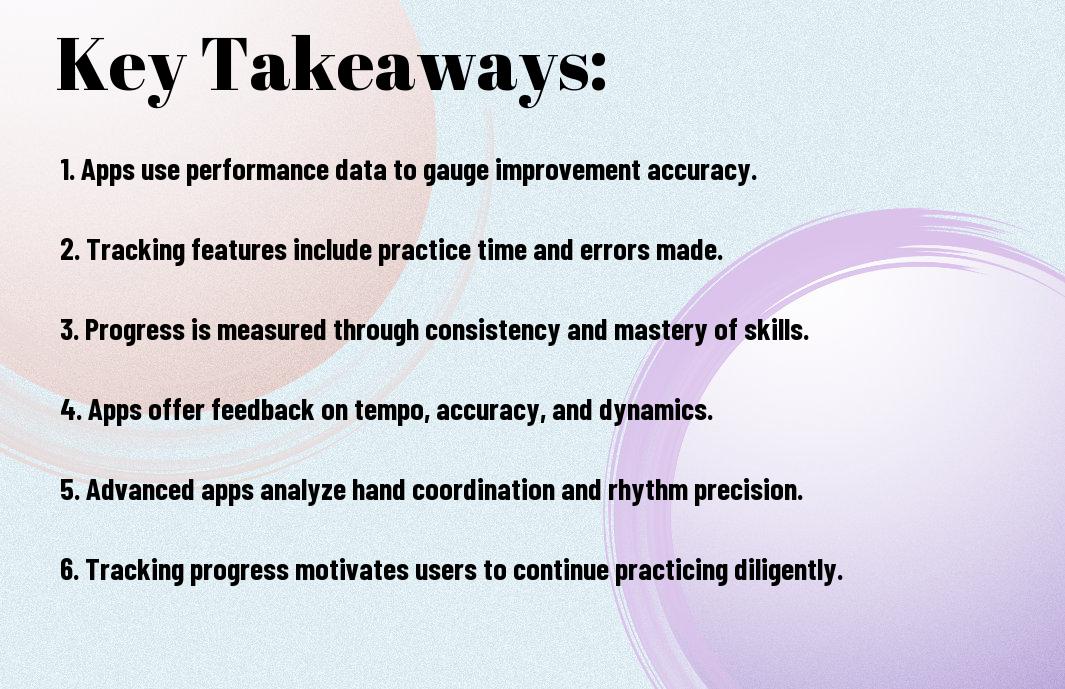
Key Takeaways:

  • Usage Data: Piano learning apps track progress through analyzing users’ usage data, such as practice time, frequency of sessions, and completion of lessons.
  • Performance Metrics: These apps measure progress by evaluating users’ performance on various exercises, quizzes, and songs, providing insights into areas of strength and areas needing improvement.
  • Feedback and Recommendations: Piano learning apps provide feedback and personalized recommendations based on progress data, helping users optimize their learning and practice techniques.

The Importance of Progress Tracking

While learning to play the piano, tracking your progress is crucial for several reasons. It allows you to see how far you have come since you started, providing motivation to keep going. Additionally, progress tracking helps you set achievable goals and gives you a clear sense of direction in your piano learning journey.

Setting Goals and Motivation

Any successful piano student knows the importance of setting goals to keep motivation levels high. Progress tracking in piano learning apps enables you to set specific, measurable goals for your practice sessions. By monitoring your improvement over time, you can see firsthand how your hard work and dedication translate into tangible results, keeping you motivated to continue practicing and improving your skills.

Identifying Areas for Improvement

Importance of tracking your progress extends to identifying specific areas where you can improve. Piano learning apps often provide detailed feedback on your performance, highlighting areas that may need more practice. By focusing on these specific areas, you can tailor your practice sessions to address weaknesses and enhance your overall piano playing abilities.

With progress tracking, you can turn your piano practice sessions into purposeful and efficient learning experiences, guiding you towards becoming a more proficient pianist. By utilizing the tools available in piano learning apps, you can track your progress, set achievable goals, and identify areas for improvement, ultimately accelerating your growth as a musician.

Methods of Progress Tracking

Algorithm-Based Assessments

Even though it may seem like magic, piano learning apps use sophisticated algorithms to assess your progress. These algorithms analyze various factors such as your timing, accuracy, and technique to provide feedback on your performance.

User-Generated Feedback

The feedback you provide while using the app also plays a significant role in tracking your progress. By sharing how challenging or enjoyable you find certain lessons or songs, the app can tailor recommendations and adjust difficulty levels to suit your needs.

The more feedback you actively provide, the more personalized your learning experience becomes. It’s a symbiotic relationship where your input helps the app fine-tune its recommendations to keep you engaged and motivated.

Performance Analytics

Tracking your progress through performance analytics involves capturing detailed data on your playing sessions. This can include the number of correct notes played, timing accuracy, and even the pressure you apply to the keys. By analyzing this data, the app can identify areas where you excel and pinpoint areas for improvement.

Progress with Performance Analytics

It’s fascinating to see how performance analytics can break down your playing into measurable data points. This analytical approach gives you concrete insights into your progress and empowers you to set specific goals for improvement.

Types of Data Collected

Now let’s examine into the types of data gathered by piano learning apps to track and measure your progress. Understanding what aspects of your playing are being monitored can help you focus on specific areas for improvement. This information is crucial for personalized feedback and tailored practice recommendations.

  • Practice Time and Frequency
  • Accuracy and Error Rates
  • Technique and Finger Independence
  • Speed and Progression
  • Engagement and Retention

Practice Time and Frequency

Frequency of practice sessions is an necessary metric that piano learning apps track. They monitor how often you engage with the app to practice your piano skills. This data helps in understanding your dedication and commitment to learning the instrument. Additionally, the apps record the duration of each practice session, providing insights into how much time you spend practicing daily or weekly.

This data on practice time and frequency can help you establish a consistent practice routine. By reviewing your practice habits, you can identify if you are dedicating enough time to practice and whether you need to adjust your schedule to meet your learning goals effectively. This information enables the app to provide personalized recommendations on how you can optimize your practice time for better progress.

Accuracy and Error Rates

One crucial aspect that piano learning apps focus on is monitoring your accuracy and error rates while playing. These apps analyze the notes you play and identify any mistakes or inaccuracies in your performance. By tracking your accuracy and error rates, the apps can pinpoint specific areas where you may be struggling and offer targeted exercises to help you improve.

Error detection is a critical feature of piano learning apps as it helps you identify and correct mistakes in your playing. By understanding where you tend to make errors, you can concentrate on those areas during practice to enhance your overall performance. This detailed feedback on accuracy and error rates plays a vital role in refining your skills and honing your technique on the piano.

Technique and Finger Independence

Plus, piano learning apps collect data on your technique and finger independence while playing various pieces. They analyze factors like hand positioning, finger strength, and coordination to evaluate the quality of your playing. By monitoring your technique and finger independence, the apps can offer exercises and tips to enhance your playing skills and improve your overall performance on the piano.

Error detection in technique and finger independence allows you to focus on specific aspects of your playing that may need improvement. Whether it’s strengthening individual fingers or improving coordination between hands, the detailed feedback provided by the app can help you address these areas effectively during practice sessions. This data-driven approach to technique evaluation can lead to significant advancements in your piano playing abilities.

How Apps Use Data to Provide Feedback

Despite the vast amount of data collected by piano learning apps, they use this information in a variety of ways to provide feedback and improve your progress. One key way apps utilize data is by creating personalized lesson plans tailored to your specific needs and skill level.

Personalized Lesson Plans

For personalized lesson plans, apps analyze your performance data, such as accuracy, speed, and consistency, to understand your strengths and weaknesses. Based on this information, the app can generate customized lesson plans that focus on areas where you need the most improvement. This tailored approach helps you make the most of your practice time and ensures that you are constantly challenged at the right level.

Real-time Error Correction

On the other hand, real-time error correction is another valuable feature offered by piano learning apps. These apps use advanced algorithms to identify mistakes as you play and provide immediate feedback on how to correct them. This real-time analysis allows you to address errors as they occur, helping you improve your playing accuracy and technique efficiently.

Plans

Progress Visualization

Provide vivid visual representations of your progress is a key component of piano learning apps. Progress visualization tools such as graphs, charts, and virtual progress bars help you track your improvement over time. By seeing your achievements visually, you can stay motivated and set new goals for yourself. Moreover, progress visualization allows you to identify patterns in your performance and adjust your practice routines accordingly.

Correction

The Role of AI in Progress Measurement

Machine Learning Algorithms

Many piano learning apps utilize machine learning algorithms to track and measure your progress. With these algorithms, the app can analyze your performance data, such as timing accuracy, note recognition, and rhythm consistency, to provide personalized feedback and insights into your strengths and areas for improvement.

Adaptive Difficulty Adjustment

To enhance your learning experience, piano learning apps often incorporate adaptive difficulty adjustment features powered by AI. This technology allows the app to dynamically adjust the difficulty of exercises and songs based on your performance. By challenging you at the right level, the app ensures that you are continuously improving without feeling overwhelmed or bored.

For instance, if you consistently excel at certain types of exercises, the app may increase the difficulty to keep you engaged and motivated. Conversely, if you struggle with specific techniques, the app may offer additional practice opportunities and resources to help you master those skills.

Human-AI Collaboration

For a more personalized learning experience, some piano learning apps foster human-AI collaboration. By combining the expertise of music educators with the analytical capabilities of AI, these apps can offer tailored lesson plans, practice recommendations, and performance evaluations that cater to your unique needs and goals. This collaboration ensures that you receive comprehensive support and guidance throughout your musical journey.

Adjustment of difficulty levels based on your progress and feedback is a key feature of human-AI collaboration in piano learning apps. By continuously assessing your performance and adapting the learning materials accordingly, these apps optimize your learning curve and help you achieve your musical aspirations more effectively.

Limitations and Challenges

Data Quality and Accuracy

Quality data is important in tracking progress accurately. However, piano learning apps may face challenges in ensuring the precision and reliability of the data collected. Factors like background noise, microphone quality, or even user error can impact the accurate measurement of your progress. It’s important to be aware of these limitations when interpreting your performance metrics.

Individual Variability and Learning Styles

With individual variability and diverse learning styles, piano learning apps may struggle to provide a one-size-fits-all approach. Your progress may not always align perfectly with the app’s metrics due to personal musical preferences, cognitive abilities, or previous experience with the piano. Understanding your unique learning style and adapting the app’s feedback to suit your needs can help you overcome these challenges.

Concerning individual variability and learning styles, it’s crucial to remember that progress in piano learning is not solely determined by numbers and metrics. Your personal growth, enjoyment of playing, and satisfaction with your improvement are equally important factors to consider. Embrace your unique journey and use the app as a tool to enhance your learning experience, rather than as a strict measurement of progress.

Ethical Considerations

Accuracy and privacy are two key ethical considerations when using piano learning apps to track your progress. Ensuring that the data collected by the app is used responsibly and that your privacy is protected is crucial. It’s important to review the app’s privacy policy and understand how your data is being utilized to avoid any potential ethical issues.

Learning should be an empowering and enriching experience, and ethical considerations play a significant role in maintaining the integrity of the learning process. By being mindful of how your data is being used and taking steps to protect your privacy, you can ensure a positive and ethically sound learning journey with piano learning apps.

Final Words

Conclusively, piano learning apps have revolutionized the way we track and measure progress in our musical journeys. By utilizing innovative technologies such as AI and machine learning algorithms, these apps can provide personalized feedback, track your practice sessions, and assess your performance in real-time. As you continue to use these apps, you will be able to see tangible improvements in your skills and musicality, making your piano learning experience more efficient and rewarding.

Q: How do piano learning apps track and measure progress?

A: Piano learning apps track and measure progress through various methods such as monitoring the time spent practicing, tracking the completion of lessons or songs, assessing accuracy and speed in playing, and recording the scores achieved in quizzes and assessments.

Q: What data points are commonly used by piano learning apps to measure progress?

A: Piano learning apps commonly use data points such as practice time logs, lesson completion rates, accuracy and speed metrics in playing exercises, scores achieved in quizzes and assessments, progress charts showing improvement over time, and user feedback on difficulty levels and satisfaction with the learning experience.

Q: How do piano learning apps use progress tracking to personalize the learning experience?

A: Piano learning apps use progress tracking to personalize the learning experience by adjusting the difficulty level of exercises based on performance, recommending specific lessons or practice areas to focus on, providing targeted feedback on areas of improvement, setting goals and milestones for the user to work towards, and offering customization options to cater to individual learning preferences and goals.

Skip to content