Balance

How Online Learning Enhances Work-Life Balance

As you navigate the demands of your career and personal life, you likely face challenges in balancing both. Online learning can be a game-changer, allowing you to enhance your skills and knowledge on your own schedule. By taking courses online, you can create a more flexible routine, prioritizing your well-being and productivity. For more insights, explore 16 Benefits of Online Learning for Flexible Study | USAHS to discover how online education can support your goals and improve your overall quality of life.

Key Takeaways:

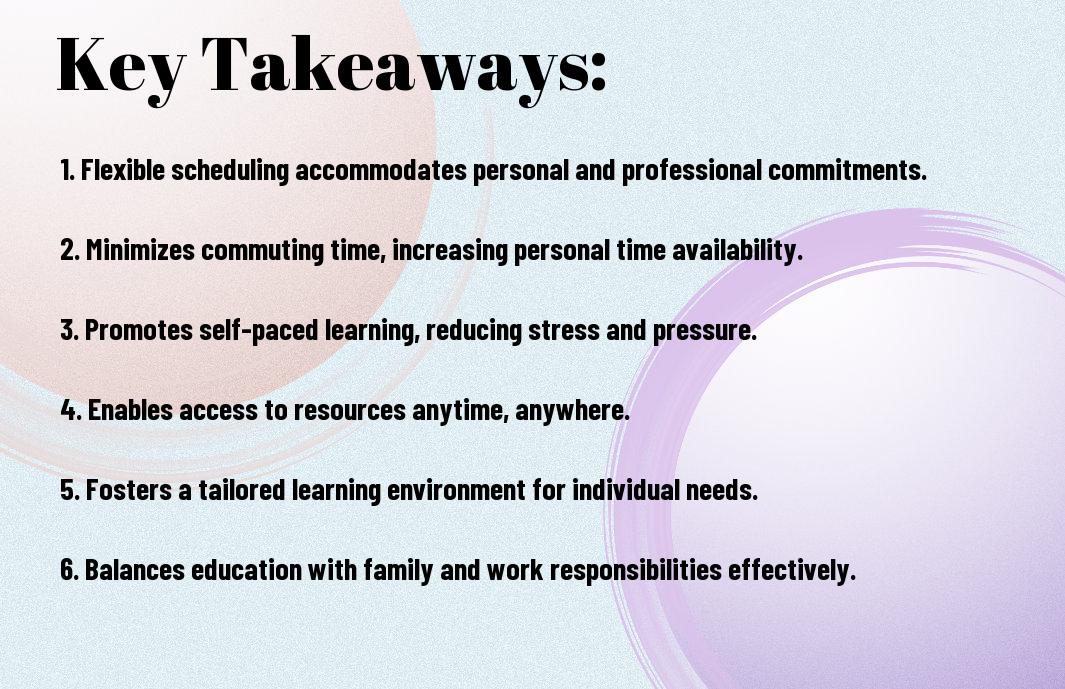
  • Online learning provides flexibility in scheduling, allowing individuals to balance their work and personal life more effectively.
  • With online learning, individuals can learn at their own pace, which helps to reduce stress and increase productivity in their daily lives.
  • Online courses and degree programs offer accessibility from anywhere, making it easier for individuals to pursue education while maintaining their career and other responsibilities.
  • Self-paced learning enables individuals to manage their time more efficiently, allowing for a better balance between work, family, and leisure activities.
  • Online learning helps individuals develop time management skills, which are vital for achieving a healthy work-life balance and improving overall well-being.

Benefits of Online Learning

For you, online learning offers numerous advantages, including the ability to access courses and resources at your convenience. You can learn more about The Impact of Online Learning on Work-Life Balance for Professionals and how it can benefit your career and personal life.

Flexibility in Learning

About the flexibility that online learning provides, you will have the ability to create your own schedule and learn at your own pace, allowing you to balance your work and personal responsibilities more effectively.

Reduced Commuting Time

Beside the flexibility, online learning also saves you time and money by eliminating the need to commute to a physical classroom, giving you more time to focus on your work and personal life.

Another significant benefit of reduced commuting time is that you will have more energy and motivation to engage in other activities that bring you joy and fulfillment, leading to a better overall work-life balance. You will be able to allocate the time you would have spent commuting to more productive and enjoyable pursuits, leading to a more satisfying and balanced life.
Enhanced Productivity

One of the significant benefits of online learning is that it allows you to manage your time more efficiently, leading to enhanced productivity. You can complete your coursework at your own pace, which enables you to balance your work and personal life effectively.

Effective Time Management

Around the clock, you have access to your online courses, allowing you to plan your study schedule according to your needs. You can allocate specific times for learning, work, and personal activities, ensuring that you make the most of your time.

Increased Autonomy

Between your work and personal life, online learning provides you with the flexibility to make choices that suit your lifestyle. You have the freedom to decide when and where you want to study, giving you more control over your learning experience.

A significant advantage of increased autonomy in online learning is that it allows you to take ownership of your education. As you progress through your course, you can reflect on your learning style and make adjustments to optimize your outcomes, helping you to achieve your goals more effectively.

Improved Work-Life Balance

Despite the demands of your job, online learning helps you balance work and personal life. You can learn at your own pace, anytime and anywhere, allowing you to manage your schedule effectively.

Managing Personal and Professional Life

Worklife balance is easier to achieve with online learning, as you can prioritize your tasks and allocate time for personal and professional responsibilities, enabling you to fulfill your obligations.

Reduced Stress Levels

Stressful situations can be avoided with online learning, as you can learn at your own pace, reducing the pressure to meet deadlines and allowing you to focus on your well-being.

Understanding that online learning reduces stress levels, you can appreciate the flexibility it offers, enabling you to take breaks, exercise, and engage in activities that help you relax, ultimately improving your overall quality of life and allowing you to be more productive in your personal and professional life.

Accessibility and Convenience

Your online learning experience is enhanced by the flexibility that comes with it, allowing you to balance work and personal life more effectively.

Access to Global Resources

On top of the convenience, online learning provides access to a vast array of global resources, enabling you to learn from the best institutions and instructors worldwide.

Self-Paced Learning

By taking online courses, you can learn at your own pace, allowing you to allocate time according to your schedule and priorities.

At the heart of self-paced learning is the ability to adjust your learning speed, pause when needed, and revisit complex topics, ensuring you fully understand the material before moving forward, which is particularly beneficial for you as you manage your work and personal responsibilities.

Career Advancement Opportunities

Not only does online learning provide you with the flexibility to balance work and life, but it also opens up new career advancement opportunities. You can acquire new skills and knowledge that are relevant to your profession, making you a more competitive candidate for promotions and new job opportunities.

Skills Enhancement

On top of that, online learning allows you to enhance your skills in a specific area, enabling you to take on more challenging tasks and projects at work. You can choose from a wide range of courses and programs that cater to your interests and career goals.

Professional Development

Across various industries, online learning is becoming an important tool for professional development. You can access a wealth of resources and networking opportunities that help you stay updated with the latest trends and best practices in your field.

A key aspect of professional development is the ability to apply what you learn to real-world situations. As you engage in online learning, you’ll be able to reflect on your experiences and think critically about how to improve your performance and contribute to your organization’s success. You’ll be able to develop a more nuanced understanding of your profession and make informed decisions that align with your career goals.

Overcoming Challenges

Keep in mind that online learning offers flexibility, allowing you to balance work and personal life. You can learn at your own pace, completing coursework when it suits you, making it easier to overcome challenges.

Staying Motivated

Besides the flexibility, online learning provides resources to help you stay motivated, such as discussion forums and live sessions, keeping you engaged and focused on your goals, helping you to stay on track.

Technological Advancements

The rise of technology has improved online learning, providing you with access to a wide range of courses and resources, making it easier for you to learn new skills and advance your career, with minimal disruption to your daily life.

In fact, technological advancements have enabled the development of personalized learning platforms, allowing you to tailor your learning experience to your needs and preferences, providing you with a more effective and efficient way to learn, and helping you to achieve your goals, while maintaining a healthy work-life balance.

Final Words

Following this, you can clearly see how online learning enhances your work-life balance, allowing you to manage your time more effectively. As you explore the benefits of online education, you can visit EJ1258776 – Integrating Work-Life Balance with 24/7 Accessibility to learn more. With online learning, you can prioritize your tasks, balance your personal and professional life, and achieve your goals, ultimately improving your overall quality of life.

FAQ

Q: What are the benefits of online learning in terms of work-life balance?

A: Online learning provides the flexibility to complete coursework at any time and from any location, allowing individuals to balance their work and personal responsibilities more effectively. With online learning, students can create their own schedules, which enables them to attend to work, family, and other obligations without having to compromise on their educational goals. This flexibility is especially beneficial for working professionals, parents, and individuals with other commitments that would otherwise make traditional classroom learning impractical.

Q: How does online learning help individuals manage their time more efficiently?

A: Online learning enhances time management skills by allowing learners to allocate their time according to their needs and preferences. Unlike traditional learning, which requires adhering to a fixed schedule, online courses can be accessed at any time, enabling learners to study during their most productive hours. This flexibility, combined with the absence of commuting time, allows individuals to utilize their time more efficiently, thereby improving their overall productivity and work-life balance. Moreover, online learning platforms often provide tools and resources that help learners organize their study materials and keep track of their progress, further assisting in effective time management.

Q: Can online learning reduce stress related to balancing work and personal life?

A: Yes, online learning can significantly reduce stress related to balancing work and personal life. By providing the flexibility to learn at one’s own pace and on one’s own schedule, online learning alleviates the pressure of having to be in a specific place at a specific time for classes. This flexibility reduces the stress of juggling work, family, and educational commitments. Additionally, the comfort and familiarity of learning from one’s own home or preferred environment can also contribute to a reduction in anxiety and an improvement in overall well-being, making it easier for individuals to maintain a healthy work-life balance.

Top Tips for Balancing Work and Online Education

You’re juggling a job and online courses, and your schedule is tight. Your days blend together in a haze of deadlines and assignments. You need to find a balance between your work and education to succeed. Your productivity and stress levels depend on it. You’ll learn how to manage your time effectively and prioritize your tasks in this article, helping you to navigate your busy life with ease and achieve your goals.

Key Takeaways:

To achieve a successful balance between work and online education, consider the following points:

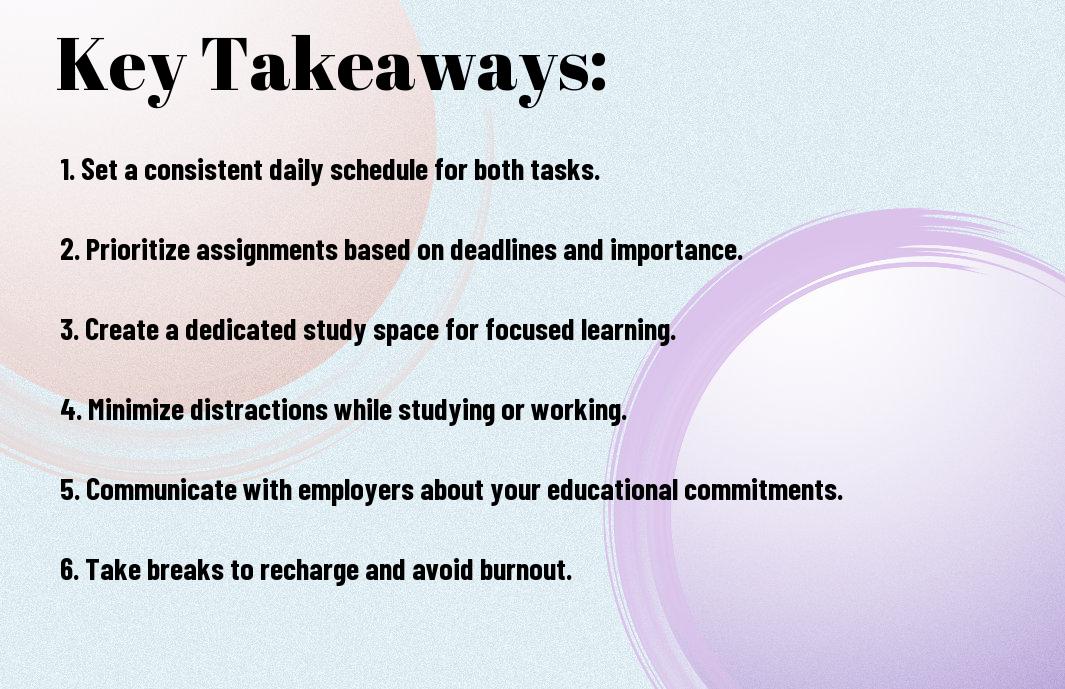
  • Set a schedule and stick to it, allocating specific times for work, study, and leisure activities to maintain a healthy work-life balance.
  • Establish a dedicated learning space that is quiet, comfortable, and free from distractions to help you stay focused on your online courses.
  • Develop time management skills to prioritize tasks, meet deadlines, and avoid procrastination, ensuring you complete both work and study tasks efficiently.
  • Leverage technology to your advantage, using tools and apps that help you stay organized, access course materials, and collaborate with peers and instructors in your online community.
  • Communicate openly with your employer and instructors about your commitments and deadlines, ensuring they are aware of your situation and can provide necessary support when needed.

Setting Priorities

A good starting point is to assess your priorities. You can find helpful advice on balancing work and online education at 5 Pro Tips to Optimize Your Work, School and Life Balance, which will guide you in making informed decisions.

Identifying Goals

Alongside setting priorities, analyzing your objectives is key. You need to determine what you want to achieve in your work and education to allocate your time effectively.

Creating a Schedule

Beneath the surface of a balanced life lies a well-organized schedule. You will need to plan out your day, week, and month to ensure you have enough time for work, study, and other activities.

Schedule your tasks in a way that allows you to focus on one thing at a time. You should allocate specific times for work, study, and breaks, and stick to your plan as much as possible. This will help you stay organized and make the most of your time, allowing you to achieve your goals in both your work and online education.

Time Management

Clearly, managing your time effectively is key to balancing work and online education. You can find firsthand advice for taking online classes while working full time at advice for taking online classes while working full time, which will help you create a schedule that works for you.

Avoiding Procrastination

Besides having a solid plan, you need to stay focused and avoid distractions to make the most of your time, ensuring you complete your tasks efficiently.

Staying Organized

To stay on top of your work and studies, you need a system that keeps all your tasks and deadlines in order, allowing you to prioritize your responsibilities.

Avoiding disorganization will save you time and energy, so set up a planner, calendar, or app that works for you and stick to it, keeping your goals and deadlines always in sight, and you will find it easier to manage your time effectively.

Effective Learning

To succeed in online education, you need to develop a learning strategy that works for you. This involves setting realistic goals, creating a schedule, and sticking to it. Your online course materials should be organized in a way that makes sense to you, allowing you to quickly access the information you need.

Active Engagement

The key to getting the most out of your online course is to stay engaged. You should participate in discussions, ask questions, and seek feedback from your instructors. This will help you stay motivated and invested in your learning.

Seeking Help

Engaging with your course materials and instructors is not enough; you also need to know when to ask for help. You should not hesitate to reach out to your instructors or peers when you are struggling with a concept or assignment. Your success in the course depends on your ability to ask for help when you need it.

Plus, seeking help is a sign of strength, not weakness. You are taking control of your learning by acknowledging what you do not know and taking steps to address those gaps. By seeking help, you will be able to better understand the material, complete assignments successfully, and achieve your academic goals. You will also develop a sense of self-awareness and self-advocacy that will serve you well in all areas of your life.

Work-Life Balance

All your efforts to balance work and online education will be in vain if you don’t maintain a healthy work-life balance. You need to prioritize your tasks, set realistic goals, and manage your time effectively to achieve this balance.

Boundaries and Routine

Across different aspects of your life, you must establish clear boundaries and a routine that works for you. You set your schedule and stick to it, ensuring that your work, study, and personal life do not overlap.

Self-Care

Among the many things you need to consider, taking care of your physical and mental health is vital. You make time for activities that help you relax and recharge, such as exercise, meditation, or hobbies.

At the end of the day, your self-care is what will help you stay focused and motivated. You prioritize your well-being by getting enough sleep, eating healthy foods, and avoiding activities that drain your energy, allowing you to tackle your work and studies with renewed enthusiasm and productivity.

Staying Motivated

Keep your goals in mind and find motivation in resources like 10 Tips for Balancing Work and School to help you stay focused. You’ll be able to tackle challenges with a clear mind and determination.

Rewarding Progress

Beneath the surface of your hard work, you’ll find a sense of accomplishment. Give yourself credit for your progress, no matter how small, to boost your motivation and enthusiasm for your online education.

Overcoming Obstacles

Around every corner, you’ll face new challenges. When you encounter obstacles, take a step back and assess the situation to find a solution that works for you, allowing you to move forward with your education and career goals.

Above all, acknowledging that obstacles are a part of the process is key. You will encounter setbacks, but with perseverance and the right mindset, you can overcome them and continue to make progress in your online education and career, ultimately achieving your goals.

Technology and Resources

Unlike traditional education, online learning offers flexibility. You can access course materials and submit assignments at your own pace, using your computer or mobile device.

Utilizing Online Tools

Besides your laptop, you’ll need reliable internet and a few key software tools to stay organized and focused. You’ll find that online calendars and task lists help you manage your time effectively.

Accessing Support

On top of technical requirements, your online institution likely offers support services. You can reach out to instructors, tutors, or classmates for help when you need it.

Accessing support is simple: you can usually find contact information on your course website or through a student portal. You can ask questions, discuss assignments, or get guidance on your coursework, all from the comfort of your own space.

Conclusion

From above, you now know the top tips for balancing work and online education. You have learned how to manage your time, prioritize tasks, and stay focused. You can apply these tips to your daily routine, making your journey smoother. Your goal is within reach, and with discipline, you will achieve it.

FAQ

Q: What are the most effective ways to manage my time while balancing work and online education?

A: To successfully balance work and online education, it is imperative to create a schedule that outlines dedicated blocks of time for work, study, and personal activities. Utilize a planner, calendar, or app to stay organized and set reminders for upcoming deadlines and assignments. Prioritize tasks based on their importance and deadlines, and avoid procrastination by breaking down larger tasks into smaller, manageable chunks. Additionally, establish a dedicated study space that is quiet, comfortable, and free from distractions to help you stay focused and productive.

Q: How can I maintain productivity and avoid burnout while working and studying simultaneously?

A: Maintaining productivity and avoiding burnout requires a combination of self-care, boundaries, and time management strategies. Set realistic goals and expectations for yourself, and take regular breaks to recharge and reduce stress. Engage in physical activity, such as walking or yoga, to improve your overall well-being and increase energy levels. It is also vital to establish clear boundaries between your work, study, and personal life to prevent the blurring of lines and potential conflicts. Communicate your needs and schedule to your employer, family, and friends to ensure their support and understanding.

Q: What strategies can I use to stay motivated and engaged in my online education while working full-time?

A: Staying motivated and engaged in online education requires a deep understanding of your goals and why you are pursuing further education. Celebrate your achievements and progress along the way, no matter how small, to help build momentum and reinforce your commitment. Connect with your peers and instructors through online forums, discussion groups, or social media to build a sense of community and support. Utilize a variety of learning resources, such as videos, podcasts, and interactive simulations, to keep your study sessions engaging and interactive. Finally, reward yourself for reaching milestones and completing challenging assignments to maintain a positive and motivated mindset.

How to Balance Family Life with Online Education

As you pursue online education, you face the challenge of balancing your family life. You need to manage your time effectively to attend to your family’s needs while keeping up with your studies. Your online education requires dedication, but your family demands attention too. You will learn how to navigate these competing demands and create a balance that works for you and your loved ones, allowing you to succeed in both your education and family life.

Key Takeaways:

To effectively manage online education with family life, consider the following points:

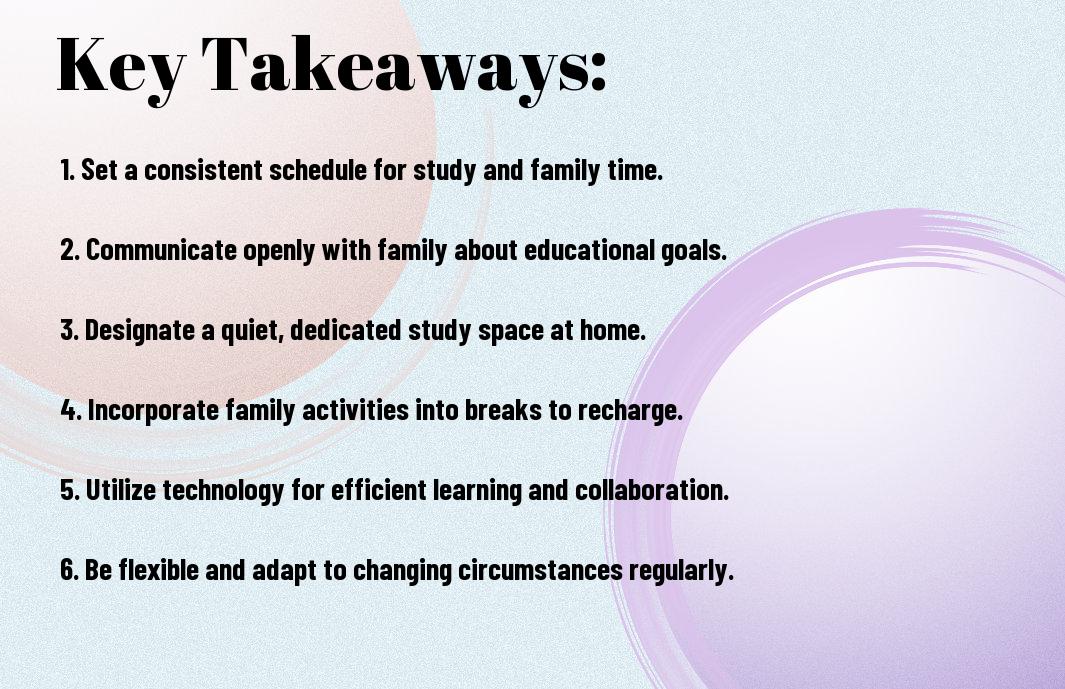
  • Establish a schedule that allocates specific times for study, work, and family activities to maintain a healthy balance.
  • Set up a dedicated workspace at home to minimize distractions and create a conducive learning environment that promotes focus and productivity.
  • Communicate openly with your family members about your online education commitments and needs to ensure everyone is supportive and understanding.
  • Utilize time-management tools and technologies to stay organized, prioritize tasks, and make the most of your study time while also being available for family responsibilities.
  • Prioritize self-care and make time for relaxation and recreation to avoid burnout and maintain a healthy work-life balance that benefits both your online education and family life.

Setting Priorities

While balancing family life with online education, you need to set clear priorities to achieve your goals. You must allocate your time and energy effectively to manage your responsibilities.

Identifying Family Needs

Among your various responsibilities, you must identify your family’s needs and prioritize them accordingly. You should consider your family members’ schedules, needs, and expectations to create a harmonious balance.

Establishing Educational Goals

Between your family commitments and online education, you must establish clear educational goals to stay focused. You should define your objectives, whether it’s completing a degree or acquiring new skills, to guide your efforts.

Hence, as you establish your educational goals, you will be able to create a schedule that accommodates your family life and online education. You can break down your goals into smaller, manageable tasks, and allocate specific times for studying, family time, and self-care, allowing you to maintain a healthy balance and make progress towards your objectives.

Creating a Schedule

You can create a schedule to balance family life with online education by allocating specific times for studying and family activities. For more information, visit 5 Tips on Balancing Life and Work While Going to School Online to learn how to manage your time effectively.

Balancing Family Time and Study Hours

Across your daily routine, you will need to balance family time and study hours to ensure you meet your obligations to both your family and your online course. This can be achieved by setting aside dedicated time for each activity.

Managing Online Coursework and Family Responsibilities

Below your list of priorities, make sure to include time for your online coursework and family responsibilities, such as household chores and spending time with your loved ones.

To manage your online coursework and family responsibilities effectively, you will need to stay organized and focused. You can use a planner or calendar to keep track of your assignments, deadlines, and family activities, ensuring that you complete all tasks on time and make the most of your time. You should also communicate with your family members to ensure they understand your schedule and needs, allowing you to work together to maintain a balance between family life and online education.

Effective Time Management

Once again, you’ll find that managing your time effectively is key to balancing family life with online education. You can find helpful tips on What are some tips for balancing family life and earning an online degree to get you started.

Avoiding Procrastination and Staying Focused

Beneath the surface of a successful online education lies your ability to avoid procrastination and stay focused. You will need to prioritize your tasks and set achievable goals to maintain your momentum.

Utilizing Productivity Tools and Apps

Among the many resources available to help you manage your time, you’ll find a variety of productivity tools and apps that can help you stay on track. You can explore different options to find what works best for your learning style and needs.

Hence, as you explore these tools and apps, you’ll discover that they can help you streamline your schedule, set reminders, and track your progress, allowing you to make the most of your study time and balance your family life with ease. You can use them to create a routine that works for you and your family, ensuring that you meet your academic goals without compromising your personal life.

Staying Organized

Keep track of your schedule and tasks to maintain a balance between family life and online education. You can use tools like calendars, planners, and reminders to stay on top of your responsibilities.

Maintaining a Digital Calendar and Planner

Digitally, you can organize your daily routine by setting reminders and notifications on your phone or computer. This helps you stay updated on upcoming deadlines and appointments, allowing you to plan your day effectively.

Creating a Dedicated Study Space

At home, you need a quiet and comfortable space to focus on your studies. You can designate a specific area for studying, free from distractions, to help you concentrate and retain information better.

Understanding the importance of a dedicated study space, you can take it a step further by customizing it to your needs. You can add a desk, chair, and good lighting to create a conducive environment for learning. This space will help you establish a routine and make it easier for you to transition into study mode, allowing you to make the most of your online education.

Managing Stress and Burnout

To maintain a healthy balance between family life and online education, you need to be aware of the potential risks of stress and burnout. You can take proactive steps to manage your workload and prioritize your well-being.

Recognizing the Signs of Burnout

Burned out from excessive workload, you may experience physical and emotional exhaustion. You should be able to identify the signs of burnout, such as chronic fatigue, irritability, and decreased motivation, to take corrective action.

Practicing Self-Care and Seeking Support

On the path to balancing family life and online education, you will encounter challenges that require self-care and support. You can start by setting aside time for relaxation, exercise, and socializing to maintain your physical and mental health.

It is important to prioritize your own needs and seek help when necessary, whether from family members, friends, or online support groups. You can share your responsibilities with your loved ones, and don’t hesitate to ask for help when you need it, allowing you to recharge and refocus on your goals.

Building a Support System

For a successful online education journey, you need a strong support system in place, comprising family, friends, and peers who can provide encouragement and help when needed.

Communicating with Family Members and Friends

Conversing with your loved ones is vital to ensure they understand your schedule and commitments, allowing them to be more supportive and accommodating of your online education demands.

Connecting with Online Communities and Peers

At the forefront of your online education experience, you will find numerous opportunities to connect with fellow students and professionals, enabling you to build a network of like-minded individuals who share similar interests and goals.

Hence, as you engage with online communities and peers, you will find that your learning experience becomes more engaging and interactive, allowing you to gain new insights and perspectives from others who are on a similar educational journey, which will help you stay motivated and focused on your academic objectives.

Final Words

With these considerations, you can effectively balance your family life with online education. You will be able to manage your time wisely, prioritize your tasks, and create a schedule that suits your needs. By doing so, you will achieve your academic goals while maintaining a healthy and happy family life. Your ability to balance these aspects of your life will lead to a more fulfilling and productive experience, allowing you to make the most of your online education.

FAQ

Q: What are the most effective ways to manage my time while pursuing online education and taking care of my family?

A: To balance family life with online education, it’s vital to create a schedule that accommodates both your study hours and family time. Start by mapping out your day, week, and month. Allocate specific times for studying, family activities, and personal care. Utilize time-management tools like calendars, planners, or apps to stay organized and on track. Additionally, communicate your schedule with your family to ensure they understand your needs and can support you in maintaining this balance.

Q: How can I minimize distractions and stay focused on my online studies while at home with my family?

A: Minimizing distractions is key to successful online learning at home. Dedicate a quiet, private space for studying, free from interruptions. Inform your family about your study hours and ask for their cooperation in keeping noise levels down. Avoid multitasking, such as watching TV or browsing social media, during your designated study times. Use website blockers or apps that help you stay focused on your educational materials. Regular breaks can also help you stay refreshed and focused. Taking short walks or engaging in light exercises during these breaks can be beneficial for both your physical and mental health.

Q: What strategies can I use to involve my family in my online education journey and make it a positive experience for everyone?

A: Involving your family in your online education can make your journey more enjoyable and help them understand the importance of your studies. Share your goals and progress with your family, and explain how your education will benefit everyone in the long run. Encourage your family members to ask questions about your courses and share their thoughts. You can also dedicate time to study together if any of your family members are also pursuing education. Creating a supportive learning environment at home can foster a sense of unity and mutual support. Additionally, celebrating your achievements and milestones with your family can make the experience more rewarding and motivating.

How to Balance Hobbies and Online Education

As you navigate the world of online education, you’ll need to find ways to manage your time effectively to accommodate your hobbies. You can start by prioritizing your tasks and creating a schedule that works for you. For more insights, you can explore The Perfect Ways to Balance Study and Hobbies, which offers valuable tips to help you maintain a healthy balance between your academic pursuits and personal interests, allowing you to make the most of your online learning experience.

Key Takeaways:

To effectively manage your time and prioritize your activities, consider the following points when balancing hobbies and online education:

  • Set clear goals for both your academic and personal pursuits to help you stay focused and motivated, ensuring you allocate sufficient time for each activity.
  • Establish a schedule that allows for a healthy balance between study time and hobby time, enabling you to make the most out of your day without feeling overwhelmed.
  • Prioritize time management skills to avoid procrastination and effectively juggle your online courses with your hobbies, making sure you meet deadlines and enjoy your leisure activities.
  • Choose hobbies that complement your online education, such as reading or writing, which can enhance your learning experience and provide an additional outlet for creativity and relaxation.
  • Practice self-discipline and maintain flexibility in your routine to accommodate unexpected changes or challenges, ensuring that you can adapt and continue to thrive in both your academic and personal pursuits.

Understanding the Importance of Balance

The key to successfully managing your time is finding a balance between your hobbies and online education, as this will enable you to maintain your productivity and overall well-being.

Why Hobbies Matter in Online Education

Similarly, other activities outside of your studies, such as hobbies, play a significant role in refreshing your mind and helping you to approach your online education with renewed energy and focus, which is necessary for you to perform at your best.

The Role of Online Education in Personal Development

Alternatively, acquiring new skills through online education can significantly enhance your personal development, allowing you to grow both professionally and personally, and you will find that your online education has a profound impact on your life.

Balancing your online education with other aspects of your life, you will be able to appreciate the value of the skills and knowledge you acquire, and as you progress in your online education, you will find that it contributes to your personal growth, helping you to develop new perspectives and insights that will benefit you in all areas of your life, enabling you to make the most of your online education and achieve your goals.

Setting Priorities and Goals

While pursuing online education and hobbies, you need to establish a balance between the two. You must set clear priorities and goals to achieve success in both areas.

Identifying Key Objectives in Hobbies and Online Education

Any individual seeking to balance hobbies and online education should analyze their objectives. You will need to determine what you want to achieve in your hobbies and online courses to set realistic goals.

Creating a Schedule for Balanced Time Management

Identifying your availability and time constraints is important. You can then create a schedule that allocates specific times for your hobbies and online education, ensuring a balance between the two.

Understanding how to create an effective schedule is key to balanced time management. You should start by tracking how you spend your time, then prioritize your hobbies and online education, and allocate specific time slots for each activity. By doing so, you can ensure that you have enough time for both, and make adjustments as needed to maintain a healthy balance between your hobbies and online education.

Effective Time Management Tips

Despite the challenges of balancing hobbies and online education, you can achieve success with the right approach. Consider the following strategies:

  • Set a schedule
  • Prioritize tasks

Knowing how to manage your time effectively will help you make the most of your online education and hobby pursuits.

Strategies for Allocating Time for Hobbies and Studies

While navigating your busy schedule, you need to allocate time for both hobbies and studies, ensuring that neither aspect of your life suffers, and you can accomplish this by creating a balanced routine that caters to your needs.

Utilizing Productivity Tools for Better Organization

One way to streamline your schedule is by leveraging productivity tools, such as calendars and reminders, to stay organized and focused on your goals, helping you to manage your time more efficiently.

Tips for utilizing productivity tools include exploring different options to find what works best for you, setting reminders and notifications to stay on track, and regularly reviewing your schedule to make adjustments as needed, allowing you to optimize your time management and make the most of your online education and hobby pursuits, enabling you to achieve a better balance in your life.

Managing Distractions and Staying Focused

Many online students struggle to balance their hobbies and education, but with the right strategies, you can stay on track. You need to identify potential distractions and eliminate them while studying or engaging in your hobbies.

Minimizing Procrastination in Online Education

Centered on your goals, you can develop a schedule that allows you to manage your time effectively, allocating specific hours for studying and hobby activities, helping you to stay focused on your objectives.

Enhancing Concentration During Hobby Time

Postponing other tasks, you can dedicate your full attention to your hobby, immersing yourself in the activity and enjoying the process without worrying about pending assignments or chores.

Time management is imperative when it comes to enhancing concentration during hobby time. You can set a specific time for your hobby and stick to it, allowing you to fully engage in the activity and recharge your energy, which will ultimately benefit your online education as you will be more focused and motivated to tackle your coursework.

Overcoming Challenges and Obstacles

Keep in mind that balancing hobbies and online education can be daunting, but with the right strategies, you can overcome the hurdles and achieve your goals. You will encounter various challenges, but staying focused and motivated is key to success.

Addressing Burnout and Stress

Anyway, managing your time effectively is vital to avoid burnout and stress. You need to prioritize your tasks, set realistic goals, and take breaks to maintain your physical and mental well-being, allowing you to perform at your best.

Seeking Support from Peers and Mentors

Fortunately, you don’t have to go through this alone, as seeking support from peers and mentors can provide valuable guidance and motivation. You can join online communities, forums, or discussion groups to connect with others who share similar interests and goals, and learn from their experiences.

Another aspect of seeking support is being open to feedback and advice from your peers and mentors. You can ask for help when you need it, and be willing to learn from your mistakes, using them as opportunities for growth and improvement, which will help you to stay on track and achieve your goals in both your hobbies and online education.

Implementing Self-Care and Flexibility

All students need to prioritize self-care while balancing hobbies and online education. You can find tips on how do I keep up with my hobbies while having a part-time job and going to school to help you manage your time effectively.

Incorporating Physical Activity and Mindfulness

If you want to maintain your physical and mental well-being, try incorporating physical activity and mindfulness into your daily routine, allowing you to stay focused and energized throughout the day.

Adapting to Changes in Schedule and Commitments

Clearly, being able to adapt to changes in your schedule and commitments is important to achieving a balance between hobbies and online education, and you should be prepared to make adjustments as needed to ensure your success.

Flexibility is key when it comes to adapting to changes in your schedule and commitments, and you will need to be able to adjust your plans accordingly, whether it’s due to changes in your coursework, hobbies, or personal life, allowing you to stay on track and achieve your goals.

Final Words

Considering all points, you will find that balancing hobbies and online education requires your careful time management and self-discipline. You need to prioritize your tasks, set a schedule, and stick to it. By doing so, you can enjoy your hobbies while keeping up with your online education, leading to a more balanced and fulfilling life. You will be able to make the most of your time and achieve your goals, both academically and personally, with your hobbies and online education complementing each other.

FAQ

Q: How can I effectively manage my time to balance my hobbies and online education?

A: To balance your hobbies and online education, it’s important to create a schedule that allocates specific times for studying, hobby activities, and leisure. Set realistic goals and priorities, ensuring that you dedicate sufficient time to your online courses while also leaving space for your hobbies. Utilize time management tools like calendars or planners to stay organized and focused. By doing so, you’ll be able to fulfill your educational commitments and enjoy your hobbies without feeling overwhelmed.

Q: What strategies can help me stay motivated and engaged in both my online education and hobbies?

A: Staying motivated and engaged requires setting clear objectives for both your educational pursuits and hobbies. Breaking down larger goals into smaller, achievable milestones can help you stay focused and motivated. Additionally, seek support from peers, family, or mentors who can encourage and guide you when needed. For online education, interact with your virtual classroom community, and for hobbies, join clubs or groups that share your interests. This support system and sense of community can significantly enhance your motivation and engagement.

Q: How can I avoid burnout while juggling online education and hobbies?

A: Avoiding burnout involves recognizing your limits and taking regular breaks. It’s vital to include relaxation and self-care activities in your schedule. Ensure you get enough sleep, eat a balanced diet, and engage in physical activities. Setting boundaries between study, hobby, and personal time is also important. Sometimes, it might be necessary to adjust your commitments, either by temporarily scaling back on a hobby or adjusting the pace of your online education. Prioritizing your well-being and taking proactive steps to manage stress can help prevent burnout and maintain a healthy balance between your online education and hobbies.

How do you balance learning theory and practical skills in piano lessons

Skills in playing the piano require a delicate balance of learning theory and gaining practical experience. To become a proficient pianist, it is imperative to not only understand the musical concepts and technical aspects but also to apply them in your playing. This blog post will guide you on how to effectively balance learning music theory with developing your practical skills during piano lessons, allowing you to progress and excel in your musical journey.

Key Takeaways:

  • Understanding the balance: It is important to recognize the importance of both learning theory and practical skills in piano lessons. Theory provides the foundation for understanding how music works, while practical skills help students apply this knowledge to playing the piano.
  • Integrating theory and practice: Find ways to integrate theory and practice during piano lessons to enhance the learning experience. For example, incorporate music theory concepts into practical exercises and pieces, and discuss the theory behind different techniques and musical elements while teaching practical skills.
  • Customizing the approach: Recognize that every student is different and may require a different balance of theory and practical skills in their piano lessons. Tailor your teaching approach to meet the individual needs and learning style of each student to help them achieve a well-rounded understanding of music and piano playing.

Setting Goals and Expectations

The ability to balance learning theory and practical skills in piano lessons relies heavily on setting clear goals and expectations. By establishing these parameters, you can effectively tailor your teaching approach to meet the needs of each individual student.

Identifying the Student’s Learning Style

One important aspect of setting goals and expectations is identifying your student’s learning style. Some students may excel in understanding music theory first before entering into practical skills, while others may prefer a hands-on approach from the start. By recognizing how your student learns best, you can structure your lessons to cater to their unique style, ensuring a more effective and engaging learning experience.

Establishing Realistic Practice Schedules

Schedules play a crucial role in achieving a balance between theory and practical skills. When setting practice schedules, it’s important to be realistic and considerate of the student’s time and commitments. Encourage your student to practice regularly but also allow flexibility to prevent burnout. It’s better to have shorter, focused practice sessions than long, tedious ones. By incorporating theory and practical exercises into these schedules, you create a well-rounded approach to learning the piano.

Expectations should be clearly outlined from the start to help the student understand the level of commitment required and the progress they can expect to achieve. As a teacher, it’s important to communicate these expectations clearly and provide support to help your student reach their goals. By setting realistic expectations, you can create a positive learning environment that motivates the student to grow and improve their piano skills.

Finding the Right Balance

Little by little, you will find the perfect equilibrium between learning theory and practical skills in your piano lessons. While theory provides the foundation for understanding music, practical skills allow you to bring that knowledge to life through your fingertips on the keys. It’s important to strike a balance between the two to ensure steady progress and a well-rounded musical education. If you ever feel overwhelmed or unsure of how to strike this balance, don’t hesitate to seek guidance or advice from resources like Best way to learn piano for basic skills? [closed].

Allocating Time for Theory and Practical Skills

Allocating time for theory and practical skills in your piano practice is crucial. Consider dividing your practice session into segments dedicated to each aspect. For example, you could spend the first 15 minutes on theory, studying concepts like scales, chords, and music theory principles. Then, transition into the practical application by practicing pieces that incorporate the theory you just learned. By alternating between theory and practice, you reinforce your understanding while honing your playing skills.

Integrating Theory into Practical Exercises

Integrating theory into your practical exercises is a powerful way to deepen your musical understanding. As you practice pieces, pay attention to the theoretical concepts at play. For instance, analyze the harmonic progressions, identify key signatures, and understand the rhythmic patterns within the music. By connecting theory to practice, you not only enhance your performance but also develop a deeper appreciation for the music you are playing.

Skills: By integrating theory into your practical exercises, you transform your piano playing from a mechanical task into a thoughtful and expressive art form. Understanding the theory behind the music enriches your interpretation, allowing you to infuse each note with intention and emotion. Embrace this holistic approach to learning, and watch as your musicality blossoms with each practice session.

Effective Teaching Strategies

Using Analogies to Explain Complex Concepts

Keep your piano lessons engaging and easily understandable by using analogies to explain complex music theory concepts. Analogies help you relate unfamiliar ideas to something more familiar, making it easier for your students to grasp abstract concepts. For example, you could compare scales to the colors of a rainbow, with each note representing a different hue. This visual and relatable comparison can aid in your students’ understanding and retention of music theory.

Breaking Down Complex Skills into Manageable Parts

Explain intricate piano techniques by breaking them down into manageable parts. When tackling a challenging piece, encourage your students to focus on one hand at a time or even practice specific measures before putting it all together. Breaking down complex skills into smaller components not only makes the learning process less overwhelming but also allows your students to master each part before moving on to the next. This systematic approach fosters a deeper understanding and proficiency in playing the piano.

Breaking down complex skills into manageable parts is akin to solving a puzzle. By dividing a complex piece into smaller sections, you can analyze and work on each part with precision and attention to detail. Just like assembling a puzzle by starting with the border pieces, mastering individual components of a piano piece will eventually lead to a seamless and polished performance when all parts come together.

Making Theory Relevant

Relating Music Theory to the Student’s Favorite Songs

To make music theory more engaging and practical for you, it’s important to relate it to something you are already passionate about. Start by analyzing the music theory concepts present in your favorite songs. By breaking down the chords, scales, and progressions used in these songs, you can see how theory directly applies to music you love. This hands-on approach not only reinforces your understanding of theory but also helps you connect it to real-life examples that resonate with you.

Exploring the Historical Context of Musical Pieces

When delving into the historical context of musical pieces, you gain a deeper appreciation for the music you are learning. Understanding the time period, cultural influences, and composer’s background can provide valuable insights into the nuances of the piece. By exploring the historical context, you can uncover hidden meanings, stylistic choices, and performance practices that enhance your interpretation and connection to the music.

Plus, learning about the historical context can inspire you to approach the piece with a newfound perspective, allowing you to embody the emotions and intentions behind the music more authentically. This holistic approach to learning not only enriches your musical knowledge but also brings a sense of depth and meaning to your performance.

Practical Applications

Many times, learning music theory can seem abstract and disconnected from actually playing the piano. However, understanding how music works can greatly enhance your practical skills, especially when it comes to improvisation and composition.

Applying Music Theory to Improvisation and Composition

Theory forms the foundation for improvisation and composition on the piano. By knowing the scales, chords, and harmonic progressions, you can confidently explore different melodies and create your compositions. Understanding music theory allows you to make informed decisions about which notes and chords to play, leading to more cohesive and engaging improvisations and compositions.

Using Technology to Enhance Practical Skills

Practicality is key when it comes to incorporating technology into your piano lessons. Utilizing apps, software, and online resources can help you improve your practical skills by providing instant feedback on your playing, offering interactive lessons, and allowing you to access a vast library of sheet music and exercises. Embracing technology in your piano practice can make learning more engaging and effective, ultimately enhancing your playing abilities.

Plus, using technology can also make practicing more convenient and flexible, allowing you to work on your skills anytime and anywhere. Whether you’re using apps to track your progress or software to simulate playing with a virtual orchestra, integrating technology into your piano lessons can further bridge the gap between theory and practical application, helping you become a well-rounded pianist.

Overcoming Common Challenges

Addressing Frustration and Motivation Issues

Challenges in learning the piano can sometimes lead to frustration and demotivation. When you encounter difficulties in mastering a new concept or piece, it’s important to remember that progress takes time and effort. To address these feelings, try breaking down tasks into smaller, more manageable components. Celebrate small victories along the way to keep your motivation high. Be mindful of, learning an instrument is a journey full of ups and downs, and it’s okay to feel frustrated at times.

Dealing with Learning Plateaus and Setbacks

Setbacks and learning plateaus are common in any learning process, including piano lessons. When you feel like you’re not progressing as quickly as you’d like, it’s vital to stay patient and persistent. Remember that improvement is not always linear, and everyone experiences setbacks from time to time. Use these moments as opportunities to revisit fundamentals, seek feedback from your teacher, or explore different practice techniques to overcome the plateau.

Understanding that setbacks are a natural part of the learning process can help you approach challenges with a growth mindset. Embrace the setbacks as opportunities for growth and learning rather than viewing them as failures. Be mindful of, every great pianist has faced setbacks along the way; it’s how you respond to them that will ultimately determine your success.

To wrap up

Now that you have explored the importance of balancing learning theory and practical skills in piano lessons, you are better equipped to approach your practice sessions with a well-rounded perspective. Remember that understanding the theory behind the music you are learning can greatly enhance your playing abilities and overall musicality. By incorporating both theory and practical skills into your lessons, you will develop a deeper understanding of the music and be able to express yourself more effectively through your playing.

Q: How do you balance learning theory and practical skills in piano lessons?

A: The key to balancing learning theory and practical skills in piano lessons is to integrate both aspects seamlessly. Start by dedicating a portion of each lesson to theory, focusing on music fundamentals such as note reading, rhythm, and basic music theory concepts. Then, apply these theories immediately to practical exercises and pieces. This hands-on approach helps students understand the relevance of theory to their playing and keeps them engaged and motivated.

Q: Why is it important to incorporate both theory and practical skills in piano lessons?

A: Learning theory and practical skills simultaneously in piano lessons is important for developing well-rounded musicianship. Theory provides the foundation for understanding how music works, while practical skills enable students to apply that knowledge in their playing. By combining theory and practical skills, students gain a comprehensive understanding of music, enhancing their ability to interpret, perform, and create music effectively.

Q: How can piano teachers effectively balance theory and practical skills in lessons?

A: Piano teachers can effectively balance theory and practical skills by creating a structured lesson plan that incorporates both aspects in a cohesive manner. Design lessons that integrate theory concepts with practical exercises, ensuring that students understand the relevance of theory to their playing. Encourage students to apply theoretical knowledge to their practice sessions and performances, reinforcing the connection between theory and practical skills. Additionally, provide opportunities for students to explore and experiment with different musical styles and genres to further develop their skills and knowledge.

Skip to content