development

The Future of Online Education in Developing Countries

As you consider the state of education in developing countries, you are likely to encounter a complex landscape of challenges and opportunities. You will notice that traditional classroom-based learning is often hindered by limited resources and infrastructure. Your attention will be drawn to the potential of online education to bridge this gap, and you may wonder whether this technology can truly provide equal access to quality education for all. You will need to examine the implications of this shift and its potential to shape the future of learning in these regions.

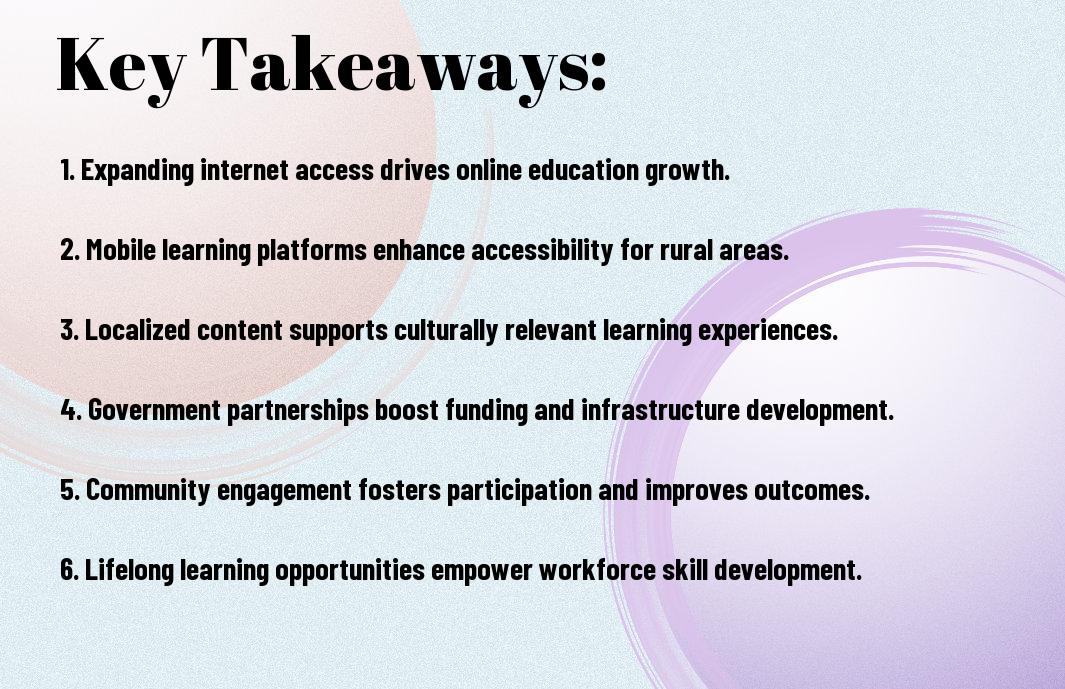
Key Takeaways:

  • The digital divide is a significant challenge in developing countries, where access to technology and internet connectivity are limited, hindering the growth of online education.
  • Mobile learning has the potential to increase access to education in developing countries, as mobile devices are more widely available and affordable than computers.
  • Personalized learning is an effective approach in online education, allowing students to learn at their own pace and receive tailored feedback to improve their learning outcomes.
  • Collaboration between governments, private sector, and non-profit organizations is crucial to develop sustainable models for online education in developing countries.
  • Teacher training and support are vital to ensure that educators in developing countries are equipped to effectively integrate technology into their teaching practices and provide high-quality online instruction.

Current State of Online Education

Before delving into the future of online education, you should consider the current landscape, including the Challenges and Opportunity of Online Learning In Developing Countries, which highlights the complexities of implementing online education in these regions.

Challenges in Developing Countries

Among the primary concerns in developing countries is the lack of access to reliable internet and technology, hindering your ability to participate in online education.

Existing Infrastructure and Resources

Any assessment of online education in developing countries must consider the existing infrastructure and resources, which often fall short of meeting the demands of online learning, limiting your options.

Due to the significant disparities in infrastructure and resource allocation, you will encounter various obstacles when attempting to implement online education in developing countries, including inadequate technological support and insufficient funding, which can impede your progress and hinder the effectiveness of online learning initiatives.
Technological Advancements

Any examination of the future of online education in developing countries must consider the role of technological advancements. You will notice that innovations in digital technology have transformed the way you access and interact with educational content, and this trend is expected to continue.

Emerging Trends in EdTech

Evolving technologies, such as artificial intelligence and virtual reality, are changing the landscape of online education, and you are likely to see more personalized and immersive learning experiences in the future.

Impact on Accessibility and Affordability

Any analysis of the impact of technological advancements on online education must consider the effects on accessibility and affordability, as you will see that these innovations have the potential to increase access to education for marginalized communities and reduce costs associated with traditional educational models.

Consequently, as you explore the potential of online education in developing countries, you will find that the increased accessibility and affordability brought about by technological advancements can have a profound impact on your ability to access quality educational resources, and you must consider how these changes will shape the future of education in these contexts.

Pedagogical Innovations

For educators in developing countries, innovative approaches to teaching and learning are becoming increasingly important. You can explore the significance of e-learning for developing nations to understand its potential impact on your students’ learning outcomes.

Adaptive Learning and Personalization

For instance, you will find that adaptive learning systems can help tailor instruction to individual learners’ needs, thereby enhancing the overall quality of education.

Collaborative and Interactive Learning Environments

Above all, you should consider the role of collaborative learning environments in fostering engagement and motivation among your students, as they offer a more interactive and dynamic approach to education.

Learning in a collaborative and interactive environment allows you to facilitate meaningful discussions, peer-to-peer learning, and project-based activities that promote deeper understanding and retention of complex concepts, enabling you to create a more effective and student-centered learning experience.

Policy and Regulatory Frameworks

To establish a thriving online education system in developing countries, you must consider the policy and regulatory frameworks that govern this sector. You will need to navigate complex laws and regulations that shape the delivery of online education, ensuring that your endeavors comply with national and international standards.

Government Initiatives and Support

For instance, as you explore the online education landscape, you will find that governments in developing countries are launching initiatives to support the growth of this sector, providing funding and resources to institutions that offer online courses and programs, and you will need to understand these initiatives to capitalize on the opportunities they present.

Ensuring Quality and Accreditation

Government agencies play a significant role in ensuring that online education programs meet certain standards, and as you develop your online education endeavors, you will need to consider the accreditation processes that validate the quality of your programs, allowing you to establish credibility with your target audience.

Regulatory bodies will be responsible for monitoring and evaluating the quality of online education programs, and as you probe deeper into this sector, you will discover that these bodies use various metrics to assess the effectiveness of online courses, including learner engagement, completion rates, and employment outcomes, which will help you to refine your strategies and improve the overall quality of your online education offerings, enabling you to make informed decisions about your investments in this sector.

Socio-Economic Implications

Now, as you consider the future of online education in developing countries, you must think about the broader societal effects. You will see that online education has the potential to transform not only individual lives but also entire communities, fostering economic growth and social mobility.

Democratization of Education

With the advent of online education, you are witnessing a shift towards more accessible and inclusive learning opportunities. You can now access high-quality educational resources from anywhere, transcending geographical boundaries and socio-economic barriers, thereby expanding your educational possibilities.

Addressing Digital Divide and Inequality

Around the issue of digital divide, you are confronted with the fact that not everyone has equal access to digital technologies, which can exacerbate existing inequalities. You need to consider how online education can be designed to reach marginalized communities, ensuring that your educational pursuits are not limited by your socio-economic status.

Inequality in access to digital technologies and online education platforms can have far-reaching consequences, affecting your ability to participate in the global knowledge economy. As you navigate the complexities of online education, you must consider the ways in which it can be used to address these inequalities, providing opportunities for social mobility and economic empowerment, and ultimately, shaping your future in meaningful ways.

Future Directions and Recommendations

Despite the challenges, you have the opportunity to shape the future of online education in developing countries by implementing effective strategies and investing in digital infrastructure, which will ultimately benefit your students and communities.

Strategic Partnerships and Investments

Bridging the gap between public and private sectors, you can foster collaborations that drive innovation and increase access to quality online education, enabling your institutions to thrive in the digital age.

Capacity Building and Teacher Training

Prior to implementing online education, you must assess your current capabilities and identify areas for improvement, ensuring that your teachers and staff are equipped to effectively utilize digital tools and provide high-quality instruction.

Strategic planning is important for capacity building and teacher training, as you need to consider your specific needs and develop tailored programs that address the unique challenges and opportunities in your context, allowing you to create a robust and sustainable online education system that supports the success of your students and enhances your institution’s reputation.

Summing up

Presently, as you consider the future of online education in developing countries, you must think about how it will reshape your understanding of learning. You can explore this topic further by reading about Educating the Masses: The Rise of Online Education in Africa and Beyond, which highlights the potential for online education to increase access to learning opportunities, ultimately transforming your perspective on the role of technology in education.

FAQ

Q: What role will technology play in shaping the future of online education in developing countries?

A: Technology will play a significant role in shaping the future of online education in developing countries. With the increasing availability of smartphones, tablets, and computers, online learning platforms will become more accessible to students in these countries. Additionally, technological advancements such as artificial intelligence, virtual reality, and gamification will enhance the learning experience, making it more engaging and effective. Furthermore, technology will enable the development of personalized learning pathways, allowing students to learn at their own pace and focus on areas where they need improvement.

Q: How will online education address the issue of limited access to quality educational resources in developing countries?

A: Online education will help address the issue of limited access to quality educational resources in developing countries by providing students with access to a vast array of digital resources, including e-books, online courses, and educational videos. Moreover, online education platforms will enable students to connect with teachers and experts from around the world, providing them with access to high-quality instruction and mentorship. This will help level the playing field, enabling students in developing countries to have access to the same educational resources and opportunities as students in developed countries.

Q: What are the potential challenges and limitations of implementing online education in developing countries, and how can they be overcome?

A: The potential challenges and limitations of implementing online education in developing countries include limited access to reliable internet connectivity, lack of digital literacy, and inadequate infrastructure. To overcome these challenges, governments, NGOs, and private sector organizations can invest in developing digital infrastructure, providing training and support for teachers and students, and implementing alternative solutions such as offline access to online courses and mobile-based learning platforms. Additionally, partnerships between local and international organizations can help provide access to quality educational content and expertise, ensuring that online education is effective and sustainable in developing countries.

How to Develop Soft Skills Through Online Learning

As you navigate the ever-changing landscape of your career, you’re likely aware that technical skills can only take you so far. Your ability to communicate, collaborate, and adapt will ultimately set you apart. You can develop these soft skills from the comfort of your own space, thanks to the vast offerings of online learning. With a willingness to learn and a reliable internet connection, you can unlock your full potential and cultivate the skills that will serve you well in all aspects of your life, opening doors to new opportunities and experiences.

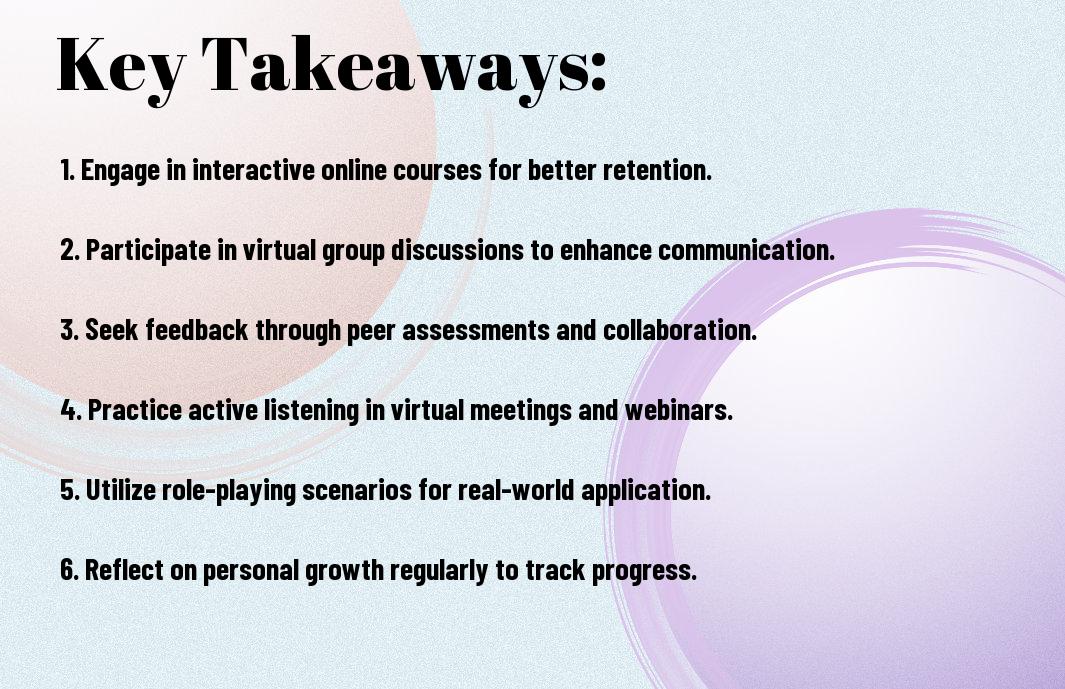
Key Takeaways:

To develop soft skills through online learning, consider the following points:

  • Develop a growth mindset to effectively adapt to new learning environments and approaches, which is vital for successful online learning.
  • Utilize online courses and training programs that focus on communication skills, teamwork, and time management to improve your overall soft skills.
  • Engage in virtual discussions and online communities to practice collaboration and problem-solving skills, which are highly valued in the workplace.
  • Leverage video tutorials and interactive modules to learn adaptability and flexibility skills, which are vital for navigating the ever-changing work environment.
  • Apply self-assessment and feedback mechanisms to evaluate your progress and identify areas for improvement, ensuring continuous skill development and growth.

Benefits of Online Learning

Your journey to developing soft skills through online learning is filled with numerous advantages, and it’s imperative to explore them to make the most of your experience.

Flexibility and Accessibility

One of the significant benefits of online learning is the flexibility it offers, allowing you to access courses and materials from anywhere, at any time, making it easier for you to balance your learning with other aspects of your life.

Personalized Learning Experience

On the path to mastering soft skills, you’ll find that online learning provides a tailored experience, enabling you to learn at your own pace and focus on areas that need improvement, thus enhancing your overall learning experience.

Further, as you explore into the world of online learning, you’ll discover that personalized learning experiences are highly effective in helping you achieve your goals, allowing you to track your progress, set realistic targets, and make adjustments as needed, ensuring that your learning journey is both enjoyable and productive.

Effective Online Platforms

Even as you initiate on your online learning journey, you’ll find numerous platforms to develop your soft skills. Check out Soft Skills Matter – Here’s Eight Ways to Cultivate Them with E-Learning for valuable insights.

MOOCs and Online Courses

About the variety of online courses available, you can explore platforms like Coursera, Udemy, and edX to find the perfect fit for your needs.

Virtual Mentorship Programs

Online mentorship programs offer a unique opportunity for you to connect with experienced professionals and gain valuable guidance.

Plus, as you participate in virtual mentorship programs, you’ll be able to receive personalized feedback, develop your networking skills, and gain confidence in your abilities, all of which will help you grow both personally and professionally, and you’ll be able to apply your new skills in real-world situations, which is a key aspect of effective learning.

Key Soft Skills to Develop

To develop as a well-rounded individual, you’ll want to focus on acquiring a range of soft skills that will serve you well in both personal and professional settings. You can learn these skills through online courses, tutorials, and workshops, and apply them in your daily life.

Communication and Teamwork

After identifying your strengths and weaknesses, you’ll find that effective communication and teamwork are necessary skills to master. You’ll learn how to articulate your thoughts, listen actively, and collaborate with others to achieve common goals, making you a valuable asset to any team.

Time Management and Adaptability

At the heart of success lies the ability to manage your time and adapt to changing situations. You’ll discover how to prioritize tasks, set realistic goals, and adjust to new challenges, allowing you to stay focused and motivated.

Even as you develop your time management and adaptability skills, you’ll find that you’re better equipped to handle unexpected setbacks and capitalize on new opportunities. You’ll learn to prioritize self-care, minimize distractions, and cultivate a growth mindset, enabling you to navigate complex situations with ease and confidence, and make the most of your online learning experience.

Strategies for Successful Online Learning

Unlike traditional learning, online learning requires you to be more self-directed and disciplined. You’ll need to create a schedule and stick to it, setting aside dedicated time for learning and avoiding distractions.

Setting Goals and Staying Motivated

Besides having a clear plan, you’ll also need to define your goals and track your progress, celebrating your successes along the way to stay motivated and focused on your objectives.

Engaging with Online Communities

Between forums, social media groups, and online discussions, you’ll find numerous opportunities to connect with fellow learners, share your thoughts, and learn from others, which can be a valuable supplement to your online learning experience.

And as you engage with online communities, you’ll discover that the interactions can be a powerful way to deepen your understanding of the subject matter, get feedback on your work, and gain new insights from people with different backgrounds and perspectives, ultimately enhancing your overall learning experience and helping you develop your soft skills more effectively.

Overcoming Challenges and Staying Focused

Now that you’ve initiateed on your online learning journey, it’s important to stay focused. You can learn more about effective soft skills training by visiting how to conduct soft skills training for your employees to gain valuable insights.

Managing Distractions and Procrastination

Postponing tasks can hinder your progress. You’ll need to develop strategies to minimize distractions and stay on track, ensuring you make the most of your online learning experience.

Seeking Support and Feedback

Before you begin, consider seeking guidance from mentors or peers who can offer valuable feedback and support, helping you navigate the challenges of online learning.

Overcoming obstacles requires perseverance and the right mindset. As you seek support and feedback, you’ll become more self-aware, allowing you to adjust your approach and make steady progress in developing your soft skills through online learning, and ultimately, achieving your goals.

Measuring Progress and Achievement

After dedicating time to developing your soft skills through online learning, you’ll want to assess your progress. You can find valuable insights on what are soft skills and how to develop them with e-learning to help you evaluate your growth.

Tracking Skills Development

About the methods you use to track your skills development, you’ll find that setting milestones and reflecting on your experiences helps you stay focused on your goals.

Celebrating Successes and Identifying Areas for Improvement

Above all, acknowledging your achievements and pinpointing areas that need more attention will help you refine your approach to learning.

Due to the importance of self-assessment in the learning process, you’ll want to regularly take stock of your progress, celebrating the skills you’ve mastered and identifying areas where you need more practice or guidance, allowing you to adjust your strategy and continue growing.

Conclusion

Now that you’ve launched on this journey to develop your soft skills through online learning, you’ll find that your abilities will blossom in unexpected ways. As you continue to nurture your growth, you’ll discover that your confidence and creativity will flourish, allowing you to tackle new challenges with ease. With persistence and dedication, you’ll unlock your full potential, and your online learning experience will become a transformative adventure that shapes your future.

FAQ

Q: What are the benefits of developing soft skills through online learning?

A: Developing soft skills through online learning provides numerous benefits, including flexibility, accessibility, and self-paced learning. Online courses and tutorials allow individuals to learn and develop skills such as communication, teamwork, and time management at their own convenience, without being constrained by geographical location or rigid schedules. Additionally, online learning platforms often offer a wide range of courses and resources, enabling learners to explore various aspects of soft skills development and choose topics that align with their interests and career goals.

Q: How can I effectively engage with online courses and resources to develop my soft skills?

A: To effectively engage with online courses and resources for soft skills development, it is necessary to set clear goals and objectives, create a dedicated learning schedule, and establish a conducive learning environment. Learners should also actively participate in discussions, complete assignments and quizzes, and seek feedback from instructors or peers. Furthermore, utilizing video conferencing tools, online forums, and social media groups can facilitate interaction with others, helping to build networks and foster a sense of community. By being proactive and committed, individuals can maximize their learning experience and achieve significant improvements in their soft skills.

Q: What strategies can I use to apply and practice my newly acquired soft skills in real-world situations?

A: To apply and practice newly acquired soft skills in real-world situations, individuals can start by identifying opportunities in their personal and professional lives where these skills can be utilized. This may involve taking on new projects, volunteering for leadership roles, or participating in group activities that require collaboration and communication. Learners can also seek feedback from colleagues, friends, or mentors, and reflect on their experiences to identify areas for improvement. Additionally, setting up a journal or log to track progress, and celebrating small victories and accomplishments, can help reinforce new skills and motivate continued growth and development. By applying these strategies, individuals can effectively translate their online learning into practical, real-world applications.

The Best Online Platforms for Professional Development

You’re looking to boost your career, and your professional growth depends on it. You want to stay ahead of the curve, and online learning is the way to go. Your search for the perfect platform ends here. You’ll discover the top online platforms that will take your skills to the next level, helping you achieve your goals and increase your earning potential. Get ready to unlock your full potential with these cutting-edge platforms.

Key Takeaways:

To enhance your career, consider the following online platforms for professional development:

  • The LinkedIn Learning platform offers a wide range of courses and tutorials to help you develop new skills and stay updated with the latest industry trends.
  • Online courses on platforms like Coursera and edX provide access to high-quality educational content from top universities and institutions worldwide.
  • Webinars and workshops on platforms like Udemy and Skillshare enable you to learn from industry experts and network with professionals in your field.
  • Professional networks like GitHub and Stack Overflow are ideal for developers and programmers to showcase their projects and connect with other professionals.
  • E-learning platforms like Pluralsight and DataCamp offer specialized courses and training programs to help you develop in-demand skills and advance your career.

Identifying Needs

The first step in professional development is identifying your needs. You must determine what skills you lack and what areas you need to improve. This self-assessment will help you find the right online platforms for your growth.

Assessing Skills

Then, take stock of your current skills and abilities. You will discover what you excel at and what requires more attention, guiding your search for the perfect online platform.

Setting Goals

Setting clear objectives is crucial for your professional development. You need to define what you want to achieve, making it easier to choose the right online platform.

Consequently, as you set your goals, you will be able to narrow down your options and find the online platforms that best align with your objectives, allowing you to focus on what you want to accomplish and make the most out of your professional development journey.

Popular Platforms

Assuming you’re looking to enhance your professional skills, you’ll find numerous online platforms to choose from, offering a wide range of development opportunities tailored to your needs.

Online Courses

For instance, websites like Coursera and Udemy provide you with access to a vast array of courses, allowing you to learn at your own pace and expand your knowledge in various fields.

Webinars

An alternative to traditional courses, webinars offer you the chance to engage with experts in real-time, exploring topics that are relevant to your career goals.

At this point, you may be wondering how webinars can benefit your professional development – by attending these online seminars, you gain valuable insights,network with peers, and stayed updated on the latest industry trends, all from the comfort of your own space.

Specialized Platforms

For professionals looking to enhance their skills, specialized platforms offer a wealth of opportunities. You can explore platforms focused on specific areas, such as data science or digital marketing, to gain in-depth knowledge and stay up-to-date with industry trends.

Industry-Specific

Similar platforms cater to particular industries, providing you with tailored content and training programs. You can choose from a range of options, including healthcare, finance, or technology, to develop skills relevant to your field.

Networking Opportunities

To expand your professional network, you can leverage online platforms that facilitate connections with peers and experts. You’ll find numerous opportunities to engage with like-minded individuals, share knowledge, and learn from their experiences.

Networking is a key aspect of professional development, and online platforms make it easier for you to connect with others in your industry. You can participate in discussions, join groups, and attend virtual events to build relationships and stay informed about industry developments, ultimately helping you to advance your career.

Effective Learning

After selecting the right platform, you’ll want to focus on how to get the most out of it. You’ll need to find a system that works for you, with features that support your learning style and goals.

Time Management

Efficiently, you will be able to prioritize your tasks and allocate your time wisely, making the most of your online learning experience. You can set a schedule and stick to it, ensuring you stay on track with your professional development.

Staying Motivated

About the midpoint of your course, you may start to feel a decline in motivation. You might find yourself struggling to stay engaged, but don’t worry, this is normal. You can overcome this by setting small goals and rewarding yourself when you achieve them.

But as you progress, you’ll find that staying motivated becomes easier. You’ll start to see the benefits of your hard work, and your confidence will grow. You’ll be able to apply what you’ve learned to real-world situations, and this will help you stay motivated to continue learning and developing your skills.

Overcoming Challenges

Your professional development journey on online platforms will inevitably encounter obstacles, but with persistence and the right mindset, you can overcome them and achieve your goals.

Technical Issues

Above all, technical problems can be frustrating, but you can troubleshoot or contact support to resolve them quickly, getting you back on track in no time.

Staying Focused

After investing time and effort, you’ll need to maintain your motivation and concentration to get the most out of your online learning experience, avoiding distractions and staying committed to your objectives.

Overcoming the challenges of staying focused requires you to create a dedicated learning environment, set realistic targets, and track your progress, allowing you to celebrate your successes and adjust your approach as needed, ensuring you stay on course and attain your professional development aspirations.

Evaluating Progress

To assess your growth, you need to evaluate your progress regularly. This involves setting goals, monitoring your performance, and making adjustments as needed. By doing so, you can identify areas of improvement and optimize your professional development strategy.

Tracking Performance

By utilizing analytics tools, you can monitor your progress and identify trends in your performance. This allows you to make data-driven decisions and refine your approach to achieve your goals more effectively.

Adjusting Strategies

Between each evaluation, you will likely need to adjust your strategies to stay on track. This may involve seeking additional training or shifting your focus to different areas of development.

Tracking the effectiveness of your adjusted strategies is key to continued growth. As you navigate your professional development journey, you will find that your needs and goals evolve, and your strategy must adapt accordingly. You will need to continually assess what is working and what areas require more attention, making adjustments as you go to ensure you stay on the path to achieving your objectives.

Final Words

Drawing together the threads of your professional development journey, you now have a clearer picture of the best online platforms to enhance your skills. You’ve discovered the tools to elevate your career, and it’s up to you to take the next step. With these platforms, your growth is limitless, and your future is brighter than ever. You’re ready to unlock your full potential and achieve your goals, so go ahead and start exploring your options today.

FAQ

Q: What are the most popular online platforms for professional development, and how can I choose the right one for my needs?

A: The most popular online platforms for professional development include Coursera, LinkedIn Learning, and Udemy. To choose the right one for your needs, consider the specific skills you want to develop, the level of interactivity you prefer, and the amount of time you have to dedicate to learning. For example, if you’re looking to develop skills in data science, Coursera may be a good choice, while LinkedIn Learning may be better suited for those looking to develop business or creative skills. Additionally, consider the cost, reputation, and user reviews of each platform to make an informed decision.

Q: How can I balance the cost of online courses with the potential benefits of professional development, and are there any free or low-cost options available?

A: Balancing the cost of online courses with the potential benefits of professional development requires careful consideration of your budget and career goals. Some platforms, such as edX and MIT OpenCourseWare, offer free or low-cost courses, while others, like Coursera and Udemy, offer financial aid or scholarships. You can also explore employer-sponsored training programs or professional associations that offer discounted or free courses for members. Additionally, consider the potential return on investment of each course, including the potential for career advancement, salary increases, or new job opportunities.

Q: How can I ensure that the online courses I take are of high quality and will be recognized by employers, and what are some red flags to watch out for when selecting a platform or course?

A: To ensure that the online courses you take are of high quality and will be recognized by employers, look for platforms that are accredited by recognized accrediting agencies, such as the Distance Education Accrediting Commission (DEAC) or the Council for Higher Education Accreditation (CHEA). Also, check the qualifications and experience of the instructors, as well as the course curriculum and learning objectives. Be wary of red flags such as unusually low prices, lack of transparency about the platform or course, or poor user reviews. Additionally, consider the reputation of the platform and the potential for career advancement or salary increases after completing the course, and check if the course provides a certificate or badge that can be verified by employers.

Skip to content