As you consider the state of education in developing countries, you are likely to encounter a complex landscape of challenges and opportunities. You will notice that traditional classroom-based learning is often hindered by limited resources and infrastructure. Your attention will be drawn to the potential of online education to bridge this gap, and you may wonder whether this technology can truly provide equal access to quality education for all. You will need to examine the implications of this shift and its potential to shape the future of learning in these regions.
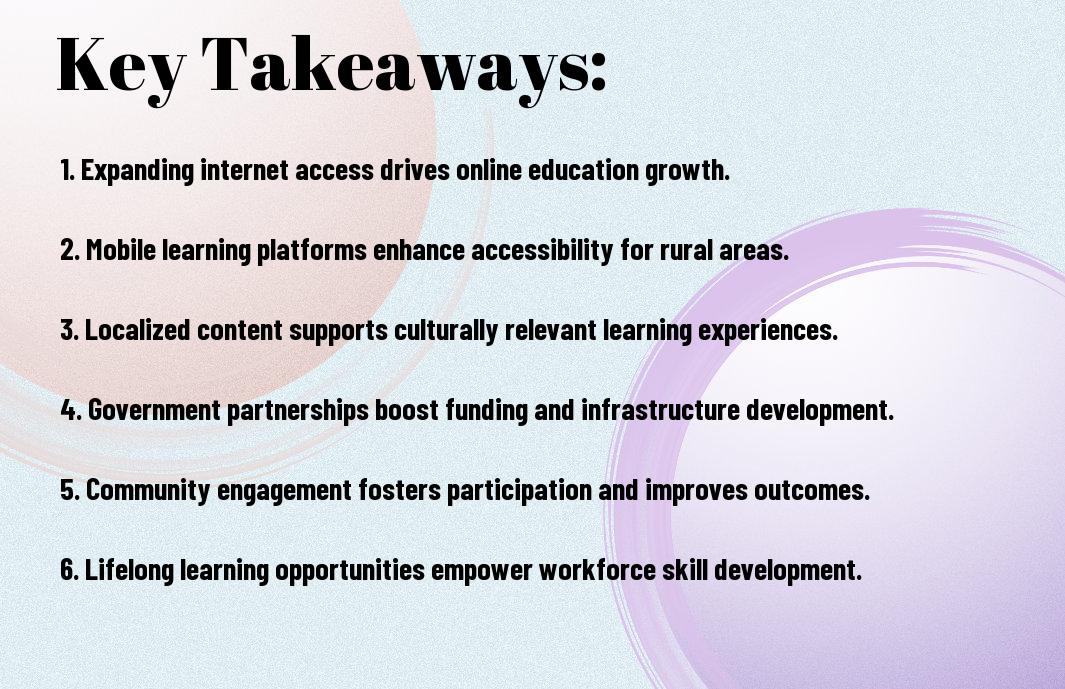
Key Takeaways:
- The digital divide is a significant challenge in developing countries, where access to technology and internet connectivity are limited, hindering the growth of online education.
- Mobile learning has the potential to increase access to education in developing countries, as mobile devices are more widely available and affordable than computers.
- Personalized learning is an effective approach in online education, allowing students to learn at their own pace and receive tailored feedback to improve their learning outcomes.
- Collaboration between governments, private sector, and non-profit organizations is crucial to develop sustainable models for online education in developing countries.
- Teacher training and support are vital to ensure that educators in developing countries are equipped to effectively integrate technology into their teaching practices and provide high-quality online instruction.
Current State of Online Education
Before delving into the future of online education, you should consider the current landscape, including the Challenges and Opportunity of Online Learning In Developing Countries, which highlights the complexities of implementing online education in these regions.
Challenges in Developing Countries
Among the primary concerns in developing countries is the lack of access to reliable internet and technology, hindering your ability to participate in online education.
Existing Infrastructure and Resources
Any assessment of online education in developing countries must consider the existing infrastructure and resources, which often fall short of meeting the demands of online learning, limiting your options.
Due to the significant disparities in infrastructure and resource allocation, you will encounter various obstacles when attempting to implement online education in developing countries, including inadequate technological support and insufficient funding, which can impede your progress and hinder the effectiveness of online learning initiatives.
Technological Advancements
Any examination of the future of online education in developing countries must consider the role of technological advancements. You will notice that innovations in digital technology have transformed the way you access and interact with educational content, and this trend is expected to continue.
Emerging Trends in EdTech
Evolving technologies, such as artificial intelligence and virtual reality, are changing the landscape of online education, and you are likely to see more personalized and immersive learning experiences in the future.
Impact on Accessibility and Affordability
Any analysis of the impact of technological advancements on online education must consider the effects on accessibility and affordability, as you will see that these innovations have the potential to increase access to education for marginalized communities and reduce costs associated with traditional educational models.
Consequently, as you explore the potential of online education in developing countries, you will find that the increased accessibility and affordability brought about by technological advancements can have a profound impact on your ability to access quality educational resources, and you must consider how these changes will shape the future of education in these contexts.
Pedagogical Innovations
For educators in developing countries, innovative approaches to teaching and learning are becoming increasingly important. You can explore the significance of e-learning for developing nations to understand its potential impact on your students’ learning outcomes.
Adaptive Learning and Personalization
For instance, you will find that adaptive learning systems can help tailor instruction to individual learners’ needs, thereby enhancing the overall quality of education.
Collaborative and Interactive Learning Environments
Above all, you should consider the role of collaborative learning environments in fostering engagement and motivation among your students, as they offer a more interactive and dynamic approach to education.
Learning in a collaborative and interactive environment allows you to facilitate meaningful discussions, peer-to-peer learning, and project-based activities that promote deeper understanding and retention of complex concepts, enabling you to create a more effective and student-centered learning experience.

Policy and Regulatory Frameworks
To establish a thriving online education system in developing countries, you must consider the policy and regulatory frameworks that govern this sector. You will need to navigate complex laws and regulations that shape the delivery of online education, ensuring that your endeavors comply with national and international standards.
Government Initiatives and Support
For instance, as you explore the online education landscape, you will find that governments in developing countries are launching initiatives to support the growth of this sector, providing funding and resources to institutions that offer online courses and programs, and you will need to understand these initiatives to capitalize on the opportunities they present.
Ensuring Quality and Accreditation
Government agencies play a significant role in ensuring that online education programs meet certain standards, and as you develop your online education endeavors, you will need to consider the accreditation processes that validate the quality of your programs, allowing you to establish credibility with your target audience.
Regulatory bodies will be responsible for monitoring and evaluating the quality of online education programs, and as you probe deeper into this sector, you will discover that these bodies use various metrics to assess the effectiveness of online courses, including learner engagement, completion rates, and employment outcomes, which will help you to refine your strategies and improve the overall quality of your online education offerings, enabling you to make informed decisions about your investments in this sector.
Socio-Economic Implications
Now, as you consider the future of online education in developing countries, you must think about the broader societal effects. You will see that online education has the potential to transform not only individual lives but also entire communities, fostering economic growth and social mobility.
Democratization of Education
With the advent of online education, you are witnessing a shift towards more accessible and inclusive learning opportunities. You can now access high-quality educational resources from anywhere, transcending geographical boundaries and socio-economic barriers, thereby expanding your educational possibilities.
Addressing Digital Divide and Inequality
Around the issue of digital divide, you are confronted with the fact that not everyone has equal access to digital technologies, which can exacerbate existing inequalities. You need to consider how online education can be designed to reach marginalized communities, ensuring that your educational pursuits are not limited by your socio-economic status.
Inequality in access to digital technologies and online education platforms can have far-reaching consequences, affecting your ability to participate in the global knowledge economy. As you navigate the complexities of online education, you must consider the ways in which it can be used to address these inequalities, providing opportunities for social mobility and economic empowerment, and ultimately, shaping your future in meaningful ways.
Future Directions and Recommendations
Despite the challenges, you have the opportunity to shape the future of online education in developing countries by implementing effective strategies and investing in digital infrastructure, which will ultimately benefit your students and communities.
Strategic Partnerships and Investments
Bridging the gap between public and private sectors, you can foster collaborations that drive innovation and increase access to quality online education, enabling your institutions to thrive in the digital age.
Capacity Building and Teacher Training
Prior to implementing online education, you must assess your current capabilities and identify areas for improvement, ensuring that your teachers and staff are equipped to effectively utilize digital tools and provide high-quality instruction.
Strategic planning is important for capacity building and teacher training, as you need to consider your specific needs and develop tailored programs that address the unique challenges and opportunities in your context, allowing you to create a robust and sustainable online education system that supports the success of your students and enhances your institution’s reputation.
Summing up
Presently, as you consider the future of online education in developing countries, you must think about how it will reshape your understanding of learning. You can explore this topic further by reading about Educating the Masses: The Rise of Online Education in Africa and Beyond, which highlights the potential for online education to increase access to learning opportunities, ultimately transforming your perspective on the role of technology in education.
FAQ
Q: What role will technology play in shaping the future of online education in developing countries?
A: Technology will play a significant role in shaping the future of online education in developing countries. With the increasing availability of smartphones, tablets, and computers, online learning platforms will become more accessible to students in these countries. Additionally, technological advancements such as artificial intelligence, virtual reality, and gamification will enhance the learning experience, making it more engaging and effective. Furthermore, technology will enable the development of personalized learning pathways, allowing students to learn at their own pace and focus on areas where they need improvement.
Q: How will online education address the issue of limited access to quality educational resources in developing countries?
A: Online education will help address the issue of limited access to quality educational resources in developing countries by providing students with access to a vast array of digital resources, including e-books, online courses, and educational videos. Moreover, online education platforms will enable students to connect with teachers and experts from around the world, providing them with access to high-quality instruction and mentorship. This will help level the playing field, enabling students in developing countries to have access to the same educational resources and opportunities as students in developed countries.
Q: What are the potential challenges and limitations of implementing online education in developing countries, and how can they be overcome?
A: The potential challenges and limitations of implementing online education in developing countries include limited access to reliable internet connectivity, lack of digital literacy, and inadequate infrastructure. To overcome these challenges, governments, NGOs, and private sector organizations can invest in developing digital infrastructure, providing training and support for teachers and students, and implementing alternative solutions such as offline access to online courses and mobile-based learning platforms. Additionally, partnerships between local and international organizations can help provide access to quality educational content and expertise, ensuring that online education is effective and sustainable in developing countries.