education

How Online Education Improves Accessibility for Everyone

You live in a world where education is key to unlocking your potential, but barriers can hinder your access to it. As you explore the possibilities of online learning, you’ll find that it breaks down these walls, making education more accessible to everyone. You can learn more about the impact of online schooling by visiting How Online Schooling is Making Education Accessible for All, and discover how it can benefit you and your community.

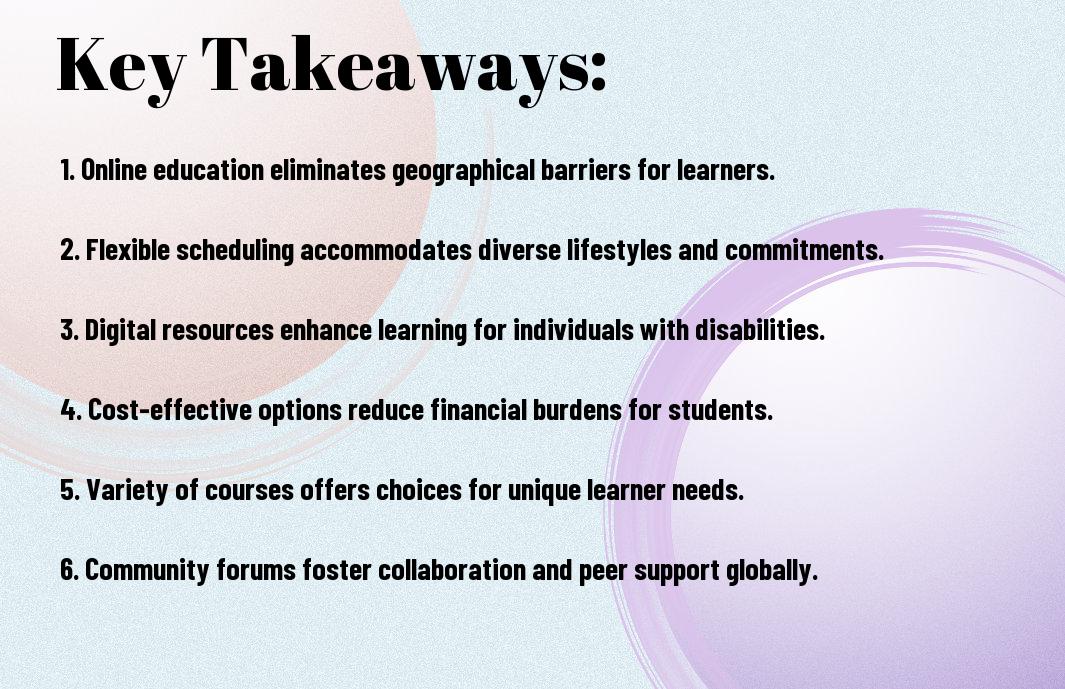
Key Takeaways:

  • Online education provides equal access to learning opportunities for people with disabilities, allowing them to participate fully in the educational process.
  • The flexibility of online education enables students to balance their work and family responsibilities while pursuing their academic goals.
  • Online education breaks down geographical barriers, making it possible for students from rural or remote areas to access quality education from anywhere in the world.
  • The use of digital technology in online education helps to reduce costs associated with traditional education, making it more affordable for students from low-income backgrounds.
  • Online education promotes inclusivity and diversity by allowing students from different cultural and linguistic backgrounds to interact and learn from each other in a virtual environment.

Benefits of Online Education

To experience the full potential of online education, you should consider its numerous advantages. Online education offers a range of benefits, including increased accessibility and flexible learning schedules, making it an attractive option for you.

Increased Accessibility

Behind the scenes of traditional education, obstacles often hinder your ability to access quality learning. Online education breaks down these barriers, allowing you to access courses and resources from anywhere in the world.

Flexible Learning Schedules

With the freedom to create your own schedule, you can balance your learning with other aspects of your life. Online education provides you with the flexibility to learn at your own pace, anytime and anywhere.

This flexibility is particularly beneficial as you can plan your learning around your work, family, or other commitments. You can learn during your lunch break, in the evening, or even on the weekends, allowing you to make the most of your time and maximize your learning potential.

Overcoming Geographical Barriers

There’s no denying that traditional education has long been limited by geographical constraints, but online education has broken down these barriers. You can now access courses and degree programs from institutions worldwide, without having to physically relocate.

Global Reach

Online, you can connect with educational institutions and students from all over the world, expanding your knowledge and network. You’ll have the opportunity to engage with diverse perspectives and ideas, broadening your understanding of the world.

Equal Opportunities

Overcoming obstacles to education, you’ll find that online learning provides equal opportunities for everyone. You can pursue your interests and career goals, regardless of your location or circumstances, and gain the skills and knowledge you need to succeed.

Geographical limitations no longer hinder your access to quality education, as you can now participate in online courses and degree programs that were previously out of reach. You’ll have the freedom to learn at your own pace, from the comfort of your own home, and connect with a global community of learners, all working towards their goals.

Personalized Learning Experiences

Keep in mind that online education provides you with customized learning pathways, allowing you to focus on areas that interest you most. You can explore The Importance of Accessibility in E-Learning to understand how it enhances your learning experience.

Adaptive Technologies

Among the various tools available, adaptive technologies help you learn at your own pace, adjusting the difficulty level according to your performance, making it easier for you to grasp complex concepts.

Self-Paced Learning

By taking online courses, you can learn at your convenience, setting your schedule and pacing yourself according to your needs, which is particularly helpful when balancing work and family commitments.

Adaptive learning platforms offer you a wide range of resources, enabling you to dive deeper into topics that fascinate you, and you can revisit lessons as many times as you need, ensuring that you fully comprehend the material before moving on to the next topic, allowing you to take control of your learning journey.

Breaking Down Socio-Economic Barriers

Now, online education has made significant strides in bridging the gap between socio-economic divides, offering you equal opportunities to access quality education, regardless of your financial background.

Affordable Education

About the cost, online courses are often more affordable than traditional institutions, allowing you to invest in your education without breaking the bank.

Access to Quality Resources

Before the advent of online education, accessing quality resources was a challenge, but now you can tap into a wealth of knowledge and educational materials from anywhere in the world.

Hence, with online education, you can access the same quality resources as anyone else, giving you a level playing field to compete and succeed in your chosen field, and you can utilize these resources to enhance your learning experience and achieve your academic goals.

Enhancing Student Engagement

All students can benefit from online education, which offers a range of tools to enhance your learning experience. You can access course materials, participate in discussions, and engage with your peers in a virtual environment.

Interactive Learning Tools

Following the shift to online learning, you’ll find that interactive tools, such as quizzes and games, make learning more enjoyable and effective. You can test your knowledge, track your progress, and adjust your learning pace accordingly.

Virtual Classrooms

Encouraging your active participation, virtual classrooms provide a platform for you to interact with your instructor and fellow students in real-time. You can ask questions, share your thoughts, and collaborate on projects, all from the comfort of your own space.

The virtual classroom experience is particularly beneficial for you, as it allows you to learn at your own pace and revisit recorded sessions whenever you need to. You can also access additional resources, such as videos and articles, to supplement your learning and deepen your understanding of the subject matter. As you navigate the virtual classroom, you’ll find that your learning experience becomes more flexible, personalized, and effective.

Addressing Disabilities and Special Needs

Once again, online education proves to be a game-changer, as it provides opportunities for people with disabilities to access learning materials and participate in courses that might be inaccessible in traditional settings. You can now learn at your own pace, and your needs are accommodated through various online tools and resources.

Assistive Technologies

Addressing the needs of students with disabilities, online education leverages assistive technologies, such as text-to-speech software and closed captions, to make learning more accessible. You can utilize these tools to facilitate your learning experience, and your engagement with course materials is enhanced.

Inclusive Learning Environments

Aiding your learning process, inclusive learning environments are designed to cater to diverse needs, allowing you to feel comfortable and supported throughout your online education journey. Your participation is encouraged, and your individual requirements are taken into account.

Even as you navigate through online courses, you’ll find that inclusive learning environments provide a sense of community and belonging, which is imperative for your academic success. You’ll be able to interact with peers and instructors, share your thoughts, and learn from others, all while feeling valued and respected.

To wrap up

On the whole, you can see that online education breaks down barriers, making it easier for you to access knowledge from anywhere. As you consider your options, take a look at Accessibility in Online Education to learn more about how it benefits you. Your ability to learn is no longer limited by your location, and that’s a significant step forward, giving you the freedom to pursue your educational goals in a way that suits you best.

FAQ

Q: How does online education increase accessibility for people with disabilities?

A: Online education improves accessibility for people with disabilities by providing a flexible and adaptable learning environment. With online courses, students can access learning materials and participate in classes from anywhere, at any time, as long as they have a stable internet connection. This is particularly beneficial for individuals with mobility or sensory impairments, who may face difficulties in attending traditional brick-and-mortar institutions. Additionally, online courses can be designed to incorporate assistive technologies, such as text-to-speech software, closed captions, and keyboard-navigable interfaces, which can help level the playing field for students with disabilities.

Q: Can online education help individuals with busy schedules or those living in remote areas to access quality educational opportunities?

A: Yes, online education can significantly improve accessibility for individuals with busy schedules or those living in remote areas. With online courses, students can learn at their own pace, anytime and anywhere, allowing them to balance their educational pursuits with work, family, or other responsibilities. This is particularly beneficial for individuals living in rural or underserved areas, where access to quality educational institutions may be limited. Online education can also provide opportunities for students to connect with instructors and peers from diverse backgrounds, fostering a more inclusive and global learning community.

Q: How does online education support lifelong learning and skill development for people of all ages and backgrounds?

A: Online education provides a wide range of opportunities for people of all ages and backgrounds to engage in lifelong learning and skill development. With online courses and degree programs, individuals can acquire new skills, update their knowledge, and enhance their career prospects, regardless of their age, location, or prior educational experience. Online education platforms often offer a broad range of courses and programs, from vocational training to degree programs, which can help individuals transition to new careers, start their own businesses, or pursue their passions. Moreover, online education can help bridge the knowledge gap between different generations, cultures, and socio-economic groups, promoting a more equitable and inclusive society.

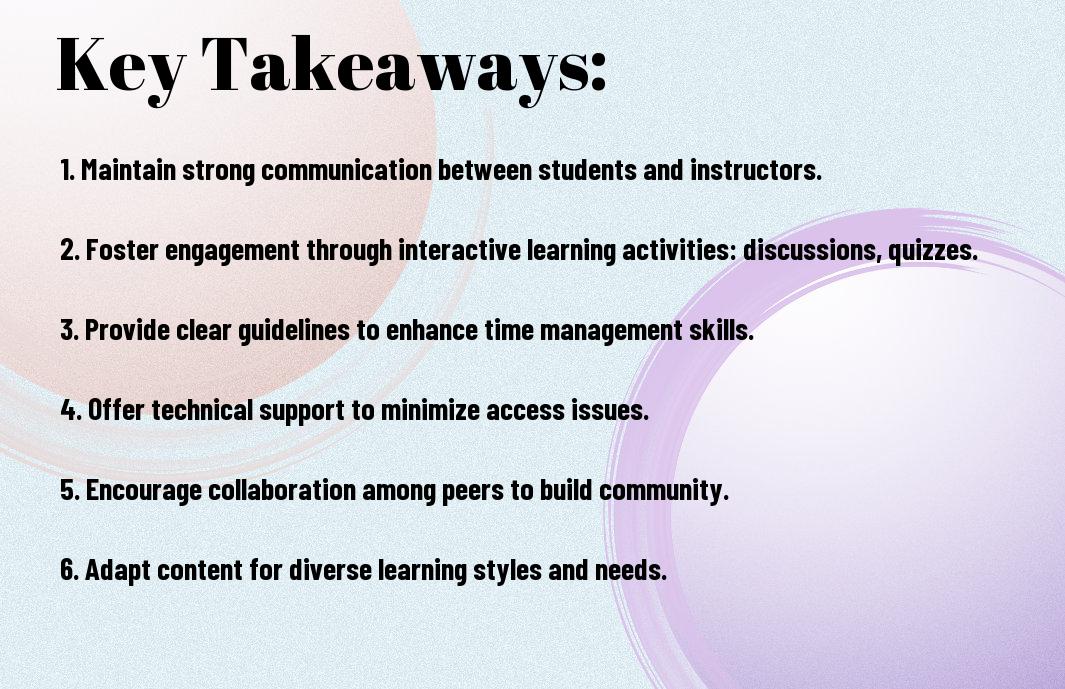
The Top Challenges of Online Education and How to Overcome Them

As you explore online education, you will encounter various obstacles that can hinder your learning experience. Your ability to succeed depends on understanding these challenges and finding effective solutions. You may face difficulties with self-motivation, technical issues, and limited feedback, which can impact your progress. By recognizing these challenges, you can develop strategies to overcome them and achieve your academic goals, making your online education journey more productive and successful. You will learn how to navigate these obstacles and maximize your online learning experience.

Key Takeaways:

To succeed in online education, it’s important to understand the challenges that come with it. Here are the top challenges and how to overcome them:

  • Technical Issues: Online education relies heavily on technology, and internet connectivity problems can hinder the learning experience. To overcome this, invest in a reliable internet connection and have a backup plan in place, such as a mobile hotspot or a secondary device.
  • Lack of Engagement: Online courses can sometimes feel isolating, leading to a lack of student engagement. To combat this, incorporate interactive elements, such as discussion forums, live chats, and video conferencing, to encourage student participation.
  • Self-Motivation: Online education requires self-discipline and motivation to stay on track. To overcome this, set clear goals and deadlines, and create a dedicated study space to help stay focused.
  • Limited Feedback: Online education can make it difficult to receive immediate feedback from instructors. To address this, utilize online assessment tools and regular check-ins with instructors to ensure progress tracking and support.
  • Accessibility: Online education can be inaccessible to students with disabilities if not designed with inclusivity in mind. To overcome this, ensure that online courses are designed with accessibility features, such as closed captions and screen reader compatibility, to provide equal learning opportunities for all students.

    Technical Challenges

    For online education to be effective, you need to overcome technical challenges that can hinder your learning experience. You will face issues with technology, which can be frustrating and affect your progress.

    Platform Issues

    One of the main technical challenges you will encounter is platform issues, such as poor user interface, navigation problems, and compatibility issues with your device. You need to ensure that your device meets the system requirements to access the online platform seamlessly.

    Internet Connectivity Problems

    For your online education to be successful, you need a stable internet connection. You will face internet connectivity problems, such as slow speeds, disconnections, and poor network coverage, which can disrupt your learning.

    For instance, if you are watching a video lecture and your internet connection is slow, you will experience buffering, which can be frustrating and affect your understanding of the subject matter. You can overcome this by using a reliable internet service provider, restarting your router, or using a mobile hotspot as a backup. This will ensure that you have a stable connection and can access your online courses without interruptions.

    Pedagogical Challenges

    While navigating the world of online education, you will encounter various pedagogical challenges that can impact your learning experience. To better understand these challenges, you can visit 7 Top Challenges with Online Learning For Students (and How to Overcome Them) to gain insights into the common obstacles you may face.

    Lack of Face-to-Face Interaction

    Approximately, you will find that online education often lacks the face-to-face interaction that traditional classrooms provide, which can hinder your ability to connect with instructors and peers on a personal level.

    Difficulty in Assessing Student Progress

    For instance, assessing student progress can be a significant challenge in online education, as you may not have direct access to your students’ work and progress in real-time.

    The difficulty in assessing student progress is further complicated by the fact that you may not be able to see your students’ thought process and problem-solving skills, making it harder to provide constructive feedback and adjust your teaching strategies accordingly.

    Student Engagement

    Your online course’s success heavily relies on engaging your students, as it directly impacts their learning outcomes and overall experience.

    Motivating Students

    Among the various strategies to motivate students, using real-life examples and providing feedback are effective ways to keep them interested and invested in the course material.

    Encouraging Participation

    Students who feel comfortable sharing their thoughts and ideas are more likely to participate in online discussions, and you can facilitate this by creating a supportive and inclusive environment.

    Also, by incorporating interactive elements such as quizzes, polls, and group projects, you can encourage participation and make your online course more engaging, allowing you to track your students’ progress and adjust your teaching strategies accordingly to meet their needs.

    Accessibility Challenges

    To ensure equal learning opportunities, you need to address accessibility challenges in online education. You will encounter various obstacles that can hinder your ability to access educational resources.

    Limited Access to Technology

    One significant hurdle you may face is limited access to technology, which can prevent you from participating in online courses or accessing digital materials.

    Language Barriers

    Against the backdrop of a global online learning community, you may encounter language barriers that can impede your understanding of course materials and communication with instructors.

    For instance, if you are not proficient in the language of instruction, you may struggle to comprehend complex concepts, navigate online platforms, or engage in discussions with your peers, which can ultimately affect your overall learning experience and outcomes, and you should consider seeking language support or alternative courses that cater to your linguistic needs.

    Teacher Training

    Now that you are adapting to online education, you need to focus on your training to effectively teach your students. This involves developing new skills and staying up-to-date with the latest technology and teaching methods.

    Developing Online Teaching Skills

    Behind every successful online course is a well-trained teacher, so you should prioritize developing your online teaching skills to engage your students and deliver your content effectively.

    Staying Up-to-Date with Technology

    For you to succeed in online education, you need to stay current with the latest technological advancements and teaching tools, which will enable you to create a more interactive and immersive learning experience for your students.

    Developing a routine to stay updated with the latest technology is important, as it will allow you to explore new tools and methods to enhance your teaching and make your online courses more engaging, helping you to better support your students and improve their learning outcomes, and ultimately, increasing your confidence and competence as an online educator.

    Student Support

    Not all online education platforms provide adequate support to their students, which can lead to frustration and disappointment. You need to ensure that your online course offers sufficient support to help your students succeed.

    Providing Academic Support

    Academically, you can provide support through various means, such as online tutorials, regular feedback, and access to instructors. You can also offer additional resources, such as study guides and practice exams, to help your students prepare for assessments.

    Addressing Technical Issues

    Above all, technical issues can be a significant obstacle to online learning. You should have a plan in place to address these issues promptly, such as a dedicated IT support team or a comprehensive FAQ section.

    And as you work to address technical issues, you will find that it is crucial to be proactive, monitoring your system for potential problems and having a backup plan in place. You can also provide your students with troubleshooting guides and encourage them to contact your support team if they encounter any issues, ensuring that they can quickly get back to learning.

    Conclusion

    Following this discussion, you can now identify the top challenges of online education and how to overcome them. As you navigate your online learning journey, you will face unique obstacles, but with the right strategies, you can succeed. For more insights, visit Top Challenges Online College Students Face and How To Cope to enhance your online learning experience and achieve your academic goals, improving your overall education.

    FAQ

    Q: What are the most significant challenges that students face in online education, and how can they be addressed?

    A: The most significant challenges that students face in online education include lack of face-to-face interaction, technical issues, and difficulty in staying motivated. To address these challenges, students can establish a dedicated study space, invest in reliable technology, and set achievable goals. Additionally, students can engage with their instructors and peers through online discussion forums, video conferencing, and social media to stay connected and motivated. By being proactive and seeking support when needed, students can overcome these challenges and achieve success in online education.

    Q: How can instructors ensure that online courses are engaging and effective, and what strategies can they use to promote student participation and interaction?

    A: Instructors can ensure that online courses are engaging and effective by using a variety of teaching methods, such as video lectures, interactive simulations, and gamification. They can also use discussion forums, live chats, and video conferencing to promote student participation and interaction. Additionally, instructors can provide regular feedback, encourage collaboration among students, and use analytics to track student progress and identify areas where students may need extra support. By using these strategies, instructors can create an online learning environment that is engaging, interactive, and supportive, and that helps students achieve their academic goals.

    Q: What role can technology play in overcoming the challenges of online education, and what are some of the most effective tools and platforms that can be used to support online learning?

    A: Technology can play a significant role in overcoming the challenges of online education by providing students with access to a wide range of educational resources, tools, and platforms. Some of the most effective tools and platforms that can be used to support online learning include learning management systems, online collaboration tools, and multimedia resources such as videos, podcasts, and interactive simulations. Additionally, technologies such as artificial intelligence, virtual reality, and augmented reality can be used to create immersive and interactive learning experiences that simulate real-world environments and scenarios. By leveraging these technologies, educators can create online learning environments that are engaging, effective, and supportive, and that help students achieve their academic goals.

Why Online Education is Perfect for Introverts

As you consider your educational options, you may find that traditional classroom settings are not ideal for your personality type. If you’re an introvert, you likely prefer quieter, more low-key environments, and online education can provide you with the perfect solution. You can learn at your own pace, avoid large group settings, and focus on your studies in a comfortable and familiar space, allowing you to thrive and reach your full potential.

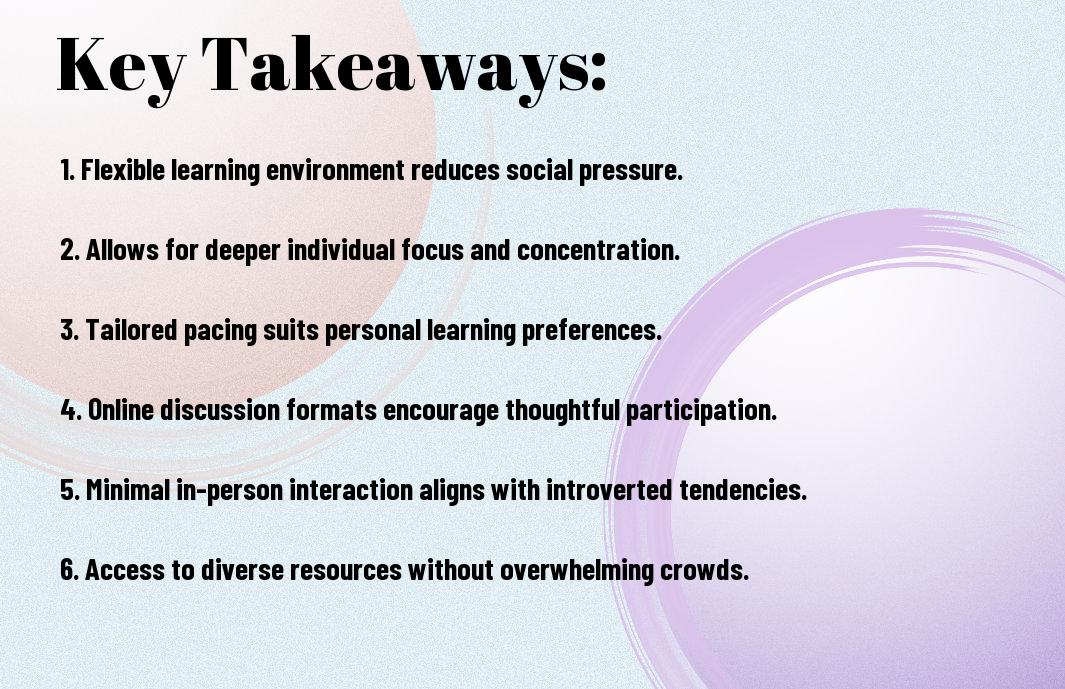
Key Takeaways:

To understand why online education is well-suited for introverts, consider the following points:

  • Online education offers flexibility in terms of scheduling, allowing introverts to learn at their own pace and avoid the stress of a traditional classroom environment.
  • The online format provides a sense of comfort and security for introverts, who may feel overwhelmed by large groups or social interactions.
  • Introverts can engage in self-paced learning, taking the time they need to absorb and process information without feeling rushed or pressured by others.
  • Online education platforms often feature anonymous or pseudonymous discussion forums, which can help introverts feel more comfortable participating in class discussions and sharing their thoughts and ideas.
  • By learning online, introverts can minimize social distractions and focus more intently on their coursework, leading to better retention and understanding of the material.

The Struggle is Real

For introverts, traditional classroom settings can be overwhelming, and online education offers a welcome respite from the stresses of in-person learning, allowing you to focus on your studies without distractions.

Social Anxiety in Traditional Classrooms

Around the same time, you may feel anxious in traditional classrooms, where you’re expected to interact with peers and instructors, which can be daunting for introverted personalities, affecting your ability to learn and engage with the material.

The Pressure to Participate

Similarly, you may feel pressured to participate in class discussions, which can be stressful and take away from your learning experience, as you may feel more comfortable observing and reflecting on the material before contributing to the conversation, which is not always possible in a traditional classroom setting.

Indeed, the pressure to participate in traditional classrooms can be overwhelming, and you may feel like you’re being forced to conform to an extroverted learning style, which can stifle your creativity and hinder your academic growth, whereas online education allows you to learn at your own pace and participate in discussions in a more comfortable and flexible environment, enabling you to take control of your learning experience and thrive as an introvert.

Embracing Solitude

Assuming you are an introvert, you likely appreciate solitude and quiet environments, which online education can provide, allowing you to learn at your own pace and comfort level.

The Comfort of Online Learning

Against the backdrop of traditional classrooms, online learning offers a haven for introverts, where you can engage with course materials without the pressure of social interactions, making it easier for you to absorb and process information.

Reduced Distractions, Increased Focus

Between the lines of traditional learning and online education, you will find that online learning reduces distractions, allowing you to focus on your studies, and as a result, you can devote more time to understanding complex concepts.

Consequently, with reduced distractions, you can create a study schedule that suits your needs, and your focus will improve, enabling you to achieve your academic goals more efficiently, and you will find that online education is a perfect fit for your introverted personality.

Personalized Learning Experience

Once again, online education proves to be a perfect fit for introverts, as it provides a personalized learning experience tailored to your needs and learning style, allowing you to learn at your own pace and focus on topics that interest you the most.

Flexible Schedules and Self-Paced Learning

With the ability to create your own schedule, you can learn whenever and wherever you feel most comfortable, taking breaks whenever you need to recharge, and proceeding with your coursework at a pace that suits your learning style.

Access to Resources and Support

Similarly, you have access to a wide range of resources and support, including online tutorials, discussion forums, and virtual office hours, which enable you to get help whenever you need it, and stay connected with your instructors and peers.

Further, having access to resources and support online allows you to revisit and review course materials as many times as you need, and to engage with your instructors and peers in a way that feels comfortable for you, helping you to stay motivated and engaged throughout your learning journey, and ultimately, to achieve your academic goals.

Overcoming Self-Doubt

Many introverts struggle with self-doubt, but online education provides a comfortable space to build confidence and skills at your own pace, allowing you to overcome these feelings and thrive in a virtual environment.

Building Confidence in a Virtual Environment

Constructing a strong foundation of knowledge and skills, you can confidently participate in online discussions and activities, helping you to establish a sense of belonging and connection with your peers in the virtual classroom.

Embracing the Freedom to Learn

Overstepping your comfort zone, you can explore various subjects and interests without the pressure of a traditional classroom setting, enabling you to take ownership of your learning experience and make the most of your online education.

Further, as you progress in your online education, you’ll find that the freedom to learn at your own pace and in your own space allows you to develop a deeper understanding of the material, and you’ll be able to apply this knowledge in a more effective and meaningful way, leading to greater personal and professional growth.

The Power of Introversion

To understand the benefits of online education for introverts, you can explore the Benefits of Online Learning for Introverts. This will give you insight into how online learning caters to your needs.

Harnessing Introverted Strengths

Between the comfort of your own space and the flexibility of online courses, you can focus on developing your unique strengths as an introvert, leveraging your thoughtful approach to learning.

Unlocking Hidden Potential

Behind the scenes of traditional classrooms, you might find that online education unlocks your full potential, allowing you to engage with course materials at your own pace.

Harnessing your introverted nature, you can research deeper into subjects that interest you, exploring complex ideas without the pressure of a physical classroom, and unlocking a world of knowledge tailored to your learning style, which can lead to a more fulfilling educational experience, allowing you to grow both personally and academically.

Breaking Down Barriers

Unlike traditional classroom settings, online education provides a comfortable and flexible learning environment for introverts, allowing you to learn at your own pace and interact with course materials in a way that suits your personality.

Equal Access to Education

By providing access to a wide range of courses and programs, online education enables you to pursue your academic goals without being restricted by geographical location or social anxiety, giving you equal opportunities to succeed.

A Level Playing Field for Introverts

Across various online platforms, you can engage with course materials and interact with instructors and peers in a way that feels natural to you, without the pressure of in-person interactions, allowing you to thrive in your own way.

Barriers that once limited your participation in traditional classroom settings are removed in online education, as you can now contribute to discussions and share your thoughts and ideas without feeling overwhelmed or intimidated, and you can observe and reflect on the thoughts and ideas of others at your own pace, helping you to grow and learn in a more effective and enjoyable way.

Conclusion

Hence, as you consider your educational options, you may find that online education suits your personality. You can learn at your own pace, avoiding overwhelming social interactions. If you’re still unsure, visit Is Online Learning Suitable for Introverted Students? to discover the benefits of e-learning tailored to your needs, and you’ll see how it can help you thrive in your academic pursuits.

FAQ

Q: What are the advantages of online education for introverted students?

A: Online education provides a comfortable and convenient learning environment for introverted students, allowing them to learn at their own pace and avoid the stress of large classrooms. They can easily interact with instructors and peers through online discussions, emails, and chats, which can help them feel more at ease and build their confidence. Additionally, online education offers flexibility in terms of scheduling, enabling introverted students to balance their academic and personal responsibilities without feeling overwhelmed.

Q: How does online education help introverts avoid social anxiety and distractions?

A: Online education helps introverts avoid social anxiety and distractions by providing a quiet and secluded learning space. Introverted students can focus on their studies without the pressure of interacting with large groups of people, which can be draining for them. They can also learn to manage their time more effectively, set boundaries, and minimize distractions, such as turning off notifications or finding a quiet spot to study. Moreover, online education platforms often provide tools and resources to help students stay organized and motivated, which can be especially helpful for introverts who prefer to work independently.

Q: Can online education provide introverts with equal opportunities for engagement and participation?

A: Yes, online education can provide introverts with equal opportunities for engagement and participation. Many online courses offer virtual discussions, online group projects, and interactive activities that allow introverted students to contribute and engage with the material in a way that feels comfortable for them. Additionally, online educators often use various teaching methods, such as video lectures, podcasts, and online quizzes, to cater to different learning styles and preferences. Introverted students can also use technology to their advantage, such as using video conferencing tools to participate in virtual discussions or using online forums to share their thoughts and ideas, allowing them to engage with their peers and instructors in a way that feels natural and authentic to them.

How Online Education is Transforming Corporate Training

As you navigate the ever-changing landscape of corporate training, you’re likely noticing a significant shift towards online education. Your organization is probably among those embracing this transformation, driven by the need for more efficient and effective skill development. You’re seeing firsthand how online learning platforms are redefining the way employees acquire new skills and knowledge, and you may be wondering what this means for the future of corporate training and your own role within it.

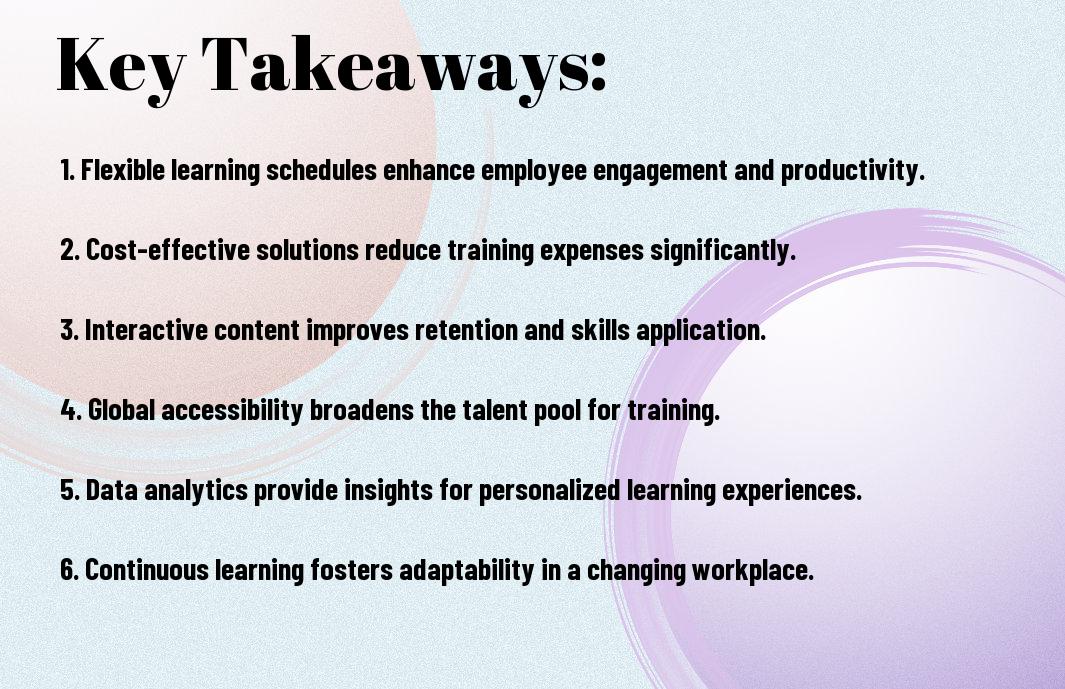
Key Takeaways:

  • Online education is revolutionizing the way companies approach corporate training, making it more accessible and cost-effective than traditional methods.
  • The use of digital platforms and e-learning tools allows employees to learn at their own pace and on their own schedule, increasing flexibility and productivity.
  • Personalized learning experiences can be created through artificial intelligence and data analytics, helping to identify knowledge gaps and provide targeted training for employees.
  • Online education also enables companies to track progress and measure outcomes more effectively, allowing for data-driven decisions and continuous improvement of training programs.
  • The shift to online education is also driving innovation in corporate training, with the use of virtual reality, gamification, and social learning platforms to create more engaging and interactive learning experiences.

Evolution

A significant transformation is underway in corporate training, and you are likely to notice the effects on your organization. As you navigate this shift, you’ll observe that online education is becoming increasingly prevalent, offering your employees more flexible and accessible learning opportunities.

Shifting Landscape of Corporate Training

Locating the most effective training methods can be challenging, but you’ll find that online education is redefining the corporate training landscape, allowing you to tailor programs to your employees’ needs and schedules.

Impact of Technology on Employee Development

Besides the obvious benefits of convenience and cost-effectiveness, you’ll discover that technology is revolutionizing employee development, enabling your organization to track progress and provide personalized feedback to your employees.

Considering the pace at which technology is advancing, you’ll need to stay informed about the latest developments in online education to ensure your employees receive the best possible training, and your organization remains competitive in the market, which will ultimately benefit your business and drive growth, as you invest in your employees’ skills and knowledge.

Benefits

One of the most significant advantages of online education in corporate training is the numerous benefits it offers to you and your organization, including increased accessibility, flexibility, and personalized learning experiences.

Increased Accessibility and Flexibility

With the rise of online education, you can now access training programs from anywhere, at any time, allowing you to learn at your own pace and convenience, which can significantly enhance your overall learning experience.

Personalized Learning Experiences

Among the many benefits of online education, personalized learning experiences are particularly noteworthy, as they enable you to tailor your learning to your individual needs and interests, making the learning process more engaging and effective for you.

Flexibility in online education allows you to pause, rewind, and revisit course materials as many times as you need, enabling you to absorb complex concepts and ideas at your own pace, which can lead to better retention and application of the learned skills in your professional life, ultimately benefiting your career and your organization’s performance.

Effective Strategies

To maximize the impact of online education in corporate training, you need to adopt strategies that cater to the diverse needs of your learners. This involves leveraging technology to create engaging, accessible, and personalized learning experiences.

Microlearning and Bite-Sized Content

Chunked into smaller modules, bite-sized learning allows you to absorb information easily, making it an effective approach for corporate training. You can break down complex topics into manageable chunks, enabling your employees to learn at their own pace.

Gamification and Interactive Tools

For a more immersive experience, you can incorporate gamification elements, such as quizzes, challenges, and rewards, to make learning fun and engaging. You can use interactive tools to simulate real-world scenarios, allowing your employees to practice new skills in a safe environment.

Hence, as you explore the possibilities of gamification and interactive tools, you’ll discover that they can be tailored to address specific training needs, from compliance training to soft skills development. You can track employee progress, identify knowledge gaps, and provide personalized feedback, ultimately enhancing the overall effectiveness of your corporate training programs.

Challenges

After implementing online corporate training, you may encounter several hurdles, including technological limitations and employee engagement. As you explore the digital landscape, you can learn more about How Technology Is Transforming Workplace Training In 2021 and find ways to address these challenges.

Overcoming Technical Issues and Limitations

Along with the benefits of online education, you will also face technical issues that can hinder the learning process, and it’s up to you to find solutions to these problems to ensure a smooth experience.

Ensuring Engagement and Motivation

Among the most significant challenges you will face is keeping your employees engaged and motivated throughout the online training process, which can be a daunting task, especially when you are not physically present.

Consequently, as you design your online corporate training program, you should prioritize interactive elements, such as discussions, quizzes, and gamification, to keep your employees invested in the learning process, and by doing so, you will be able to increase their participation and knowledge retention, ultimately leading to a more effective training experience.

Best Practices

Unlike traditional training methods, online education offers a flexible and personalized approach to corporate training, allowing you to tailor your program to meet specific business needs and goals.

Aligning Online Training with Business Objectives

Around the time you establish your online training program, you should consider aligning it with your overall business objectives, ensuring that your training strategy supports your company’s mission and vision.

Evaluating and Improving Program Effectiveness

Beside the initial setup, you will need to continually evaluate and improve your online training program to ensure it remains effective and meets your business needs.

With a well-designed evaluation system in place, you can assess the impact of your online training program on your employees’ performance and your business as a whole, making data-driven decisions to refine and enhance your training strategy over time, allowing you to maximize the benefits of online education for your organization.

Future Directions

Keep in mind that online education is constantly evolving, and its impact on corporate training will only continue to grow as technology advances and new innovations emerge, allowing you to access a wide range of training opportunities.

Emerging Trends and Innovations

For instance, you will see a rise in the use of artificial intelligence, virtual reality, and mobile learning, which will revolutionize the way you learn and interact with corporate training programs, making them more engaging and effective.

Potential Applications and Opportunities

Behind the scenes, you will find that online education is opening up new avenues for corporate training, enabling you to develop specialized skills and knowledge that can be applied directly to your work, enhancing your productivity and career prospects.

Future advancements in online education will enable you to personalize your learning experience, allowing you to focus on areas that are most relevant to your career goals and interests, and providing you with a competitive edge in the job market, as you will be able to demonstrate your expertise and capabilities to employers and clients alike.

Summing up

Presently, you are witnessing a significant shift in corporate training, as online education is redefining the landscape. You can explore how this transformation is unfolding by checking out 3 Ways Virtual Training is Changing Corporate Learning and Development, which highlights the benefits of virtual training for your organization. As you navigate this new terrain, your understanding of corporate training will likely be revolutionized, and your approach to learning and development will be forever changed.

FAQ

Q: What are the benefits of online education in corporate training, and how is it transforming the way companies train their employees?

A: Online education is transforming corporate training by providing a flexible, cost-effective, and personalized learning experience for employees. With online education, employees can access training materials and courses at their own pace, from anywhere, and at any time. This approach allows companies to reach a larger audience, increase knowledge retention, and improve overall employee performance. Additionally, online education enables companies to track employee progress, identify skill gaps, and make data-driven decisions to improve their training programs.

Q: How does online education enhance the accessibility and convenience of corporate training, and what are the advantages for employees and employers?

A: Online education enhances the accessibility and convenience of corporate training by allowing employees to learn from anywhere, at any time, and on any device. This flexibility is particularly beneficial for employees with busy schedules, those living in remote areas, or those with caregiving responsibilities. For employers, online education provides a scalable and efficient way to deliver training to a large number of employees, reducing the need for costly travel and venue rentals. Moreover, online education platforms often include features such as discussion forums, video conferencing, and live chats, which facilitate collaboration and social learning among employees.

Q: What role does technology play in online corporate training, and how are innovative tools and platforms changing the landscape of employee development?

A: Technology plays a vital role in online corporate training, enabling the creation of immersive, interactive, and engaging learning experiences. Innovative tools and platforms, such as learning management systems (LMS), artificial intelligence (AI), and virtual reality (VR), are changing the landscape of employee development by providing personalized learning pathways, real-time feedback, and simulated training environments. These technologies also enable companies to analyze employee performance data, identify areas for improvement, and develop targeted training programs to address specific skill gaps. As a result, employees can develop the skills and knowledge they need to succeed in their roles, and companies can improve overall productivity, employee satisfaction, and competitiveness in the market.

Top Tips for Balancing Work and Online Education

You’re juggling a job and online courses, and your schedule is tight. Your days blend together in a haze of deadlines and assignments. You need to find a balance between your work and education to succeed. Your productivity and stress levels depend on it. You’ll learn how to manage your time effectively and prioritize your tasks in this article, helping you to navigate your busy life with ease and achieve your goals.

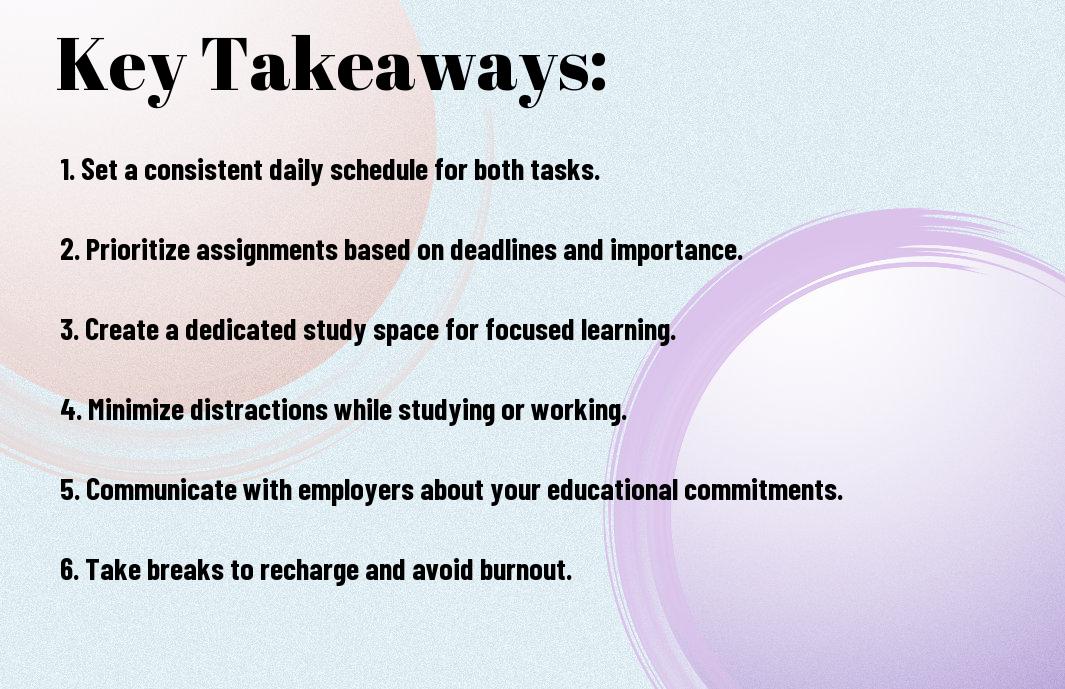
Key Takeaways:

To achieve a successful balance between work and online education, consider the following points:

  • Set a schedule and stick to it, allocating specific times for work, study, and leisure activities to maintain a healthy work-life balance.
  • Establish a dedicated learning space that is quiet, comfortable, and free from distractions to help you stay focused on your online courses.
  • Develop time management skills to prioritize tasks, meet deadlines, and avoid procrastination, ensuring you complete both work and study tasks efficiently.
  • Leverage technology to your advantage, using tools and apps that help you stay organized, access course materials, and collaborate with peers and instructors in your online community.
  • Communicate openly with your employer and instructors about your commitments and deadlines, ensuring they are aware of your situation and can provide necessary support when needed.

Setting Priorities

A good starting point is to assess your priorities. You can find helpful advice on balancing work and online education at 5 Pro Tips to Optimize Your Work, School and Life Balance, which will guide you in making informed decisions.

Identifying Goals

Alongside setting priorities, analyzing your objectives is key. You need to determine what you want to achieve in your work and education to allocate your time effectively.

Creating a Schedule

Beneath the surface of a balanced life lies a well-organized schedule. You will need to plan out your day, week, and month to ensure you have enough time for work, study, and other activities.

Schedule your tasks in a way that allows you to focus on one thing at a time. You should allocate specific times for work, study, and breaks, and stick to your plan as much as possible. This will help you stay organized and make the most of your time, allowing you to achieve your goals in both your work and online education.

Time Management

Clearly, managing your time effectively is key to balancing work and online education. You can find firsthand advice for taking online classes while working full time at advice for taking online classes while working full time, which will help you create a schedule that works for you.

Avoiding Procrastination

Besides having a solid plan, you need to stay focused and avoid distractions to make the most of your time, ensuring you complete your tasks efficiently.

Staying Organized

To stay on top of your work and studies, you need a system that keeps all your tasks and deadlines in order, allowing you to prioritize your responsibilities.

Avoiding disorganization will save you time and energy, so set up a planner, calendar, or app that works for you and stick to it, keeping your goals and deadlines always in sight, and you will find it easier to manage your time effectively.

Effective Learning

To succeed in online education, you need to develop a learning strategy that works for you. This involves setting realistic goals, creating a schedule, and sticking to it. Your online course materials should be organized in a way that makes sense to you, allowing you to quickly access the information you need.

Active Engagement

The key to getting the most out of your online course is to stay engaged. You should participate in discussions, ask questions, and seek feedback from your instructors. This will help you stay motivated and invested in your learning.

Seeking Help

Engaging with your course materials and instructors is not enough; you also need to know when to ask for help. You should not hesitate to reach out to your instructors or peers when you are struggling with a concept or assignment. Your success in the course depends on your ability to ask for help when you need it.

Plus, seeking help is a sign of strength, not weakness. You are taking control of your learning by acknowledging what you do not know and taking steps to address those gaps. By seeking help, you will be able to better understand the material, complete assignments successfully, and achieve your academic goals. You will also develop a sense of self-awareness and self-advocacy that will serve you well in all areas of your life.

Work-Life Balance

All your efforts to balance work and online education will be in vain if you don’t maintain a healthy work-life balance. You need to prioritize your tasks, set realistic goals, and manage your time effectively to achieve this balance.

Boundaries and Routine

Across different aspects of your life, you must establish clear boundaries and a routine that works for you. You set your schedule and stick to it, ensuring that your work, study, and personal life do not overlap.

Self-Care

Among the many things you need to consider, taking care of your physical and mental health is vital. You make time for activities that help you relax and recharge, such as exercise, meditation, or hobbies.

At the end of the day, your self-care is what will help you stay focused and motivated. You prioritize your well-being by getting enough sleep, eating healthy foods, and avoiding activities that drain your energy, allowing you to tackle your work and studies with renewed enthusiasm and productivity.

Staying Motivated

Keep your goals in mind and find motivation in resources like 10 Tips for Balancing Work and School to help you stay focused. You’ll be able to tackle challenges with a clear mind and determination.

Rewarding Progress

Beneath the surface of your hard work, you’ll find a sense of accomplishment. Give yourself credit for your progress, no matter how small, to boost your motivation and enthusiasm for your online education.

Overcoming Obstacles

Around every corner, you’ll face new challenges. When you encounter obstacles, take a step back and assess the situation to find a solution that works for you, allowing you to move forward with your education and career goals.

Above all, acknowledging that obstacles are a part of the process is key. You will encounter setbacks, but with perseverance and the right mindset, you can overcome them and continue to make progress in your online education and career, ultimately achieving your goals.

Technology and Resources

Unlike traditional education, online learning offers flexibility. You can access course materials and submit assignments at your own pace, using your computer or mobile device.

Utilizing Online Tools

Besides your laptop, you’ll need reliable internet and a few key software tools to stay organized and focused. You’ll find that online calendars and task lists help you manage your time effectively.

Accessing Support

On top of technical requirements, your online institution likely offers support services. You can reach out to instructors, tutors, or classmates for help when you need it.

Accessing support is simple: you can usually find contact information on your course website or through a student portal. You can ask questions, discuss assignments, or get guidance on your coursework, all from the comfort of your own space.

Conclusion

From above, you now know the top tips for balancing work and online education. You have learned how to manage your time, prioritize tasks, and stay focused. You can apply these tips to your daily routine, making your journey smoother. Your goal is within reach, and with discipline, you will achieve it.

FAQ

Q: What are the most effective ways to manage my time while balancing work and online education?

A: To successfully balance work and online education, it is imperative to create a schedule that outlines dedicated blocks of time for work, study, and personal activities. Utilize a planner, calendar, or app to stay organized and set reminders for upcoming deadlines and assignments. Prioritize tasks based on their importance and deadlines, and avoid procrastination by breaking down larger tasks into smaller, manageable chunks. Additionally, establish a dedicated study space that is quiet, comfortable, and free from distractions to help you stay focused and productive.

Q: How can I maintain productivity and avoid burnout while working and studying simultaneously?

A: Maintaining productivity and avoiding burnout requires a combination of self-care, boundaries, and time management strategies. Set realistic goals and expectations for yourself, and take regular breaks to recharge and reduce stress. Engage in physical activity, such as walking or yoga, to improve your overall well-being and increase energy levels. It is also vital to establish clear boundaries between your work, study, and personal life to prevent the blurring of lines and potential conflicts. Communicate your needs and schedule to your employer, family, and friends to ensure their support and understanding.

Q: What strategies can I use to stay motivated and engaged in my online education while working full-time?

A: Staying motivated and engaged in online education requires a deep understanding of your goals and why you are pursuing further education. Celebrate your achievements and progress along the way, no matter how small, to help build momentum and reinforce your commitment. Connect with your peers and instructors through online forums, discussion groups, or social media to build a sense of community and support. Utilize a variety of learning resources, such as videos, podcasts, and interactive simulations, to keep your study sessions engaging and interactive. Finally, reward yourself for reaching milestones and completing challenging assignments to maintain a positive and motivated mindset.

Skip to content