Future

The Future of Online Education Post-Pandemic

As you navigate the new landscape of learning, you’re likely wondering what the future holds for online education. You’ve experienced the rapid shift to virtual classrooms and remote learning, and now you’re considering how this will impact your educational journey. Your questions about the long-term effects of the pandemic on online education are valid, and this post will explore the emerging trends and innovations that will shape your learning experience in the years to come.

Key Takeaways:

Here are the main points to consider about the future of online education post-pandemic:

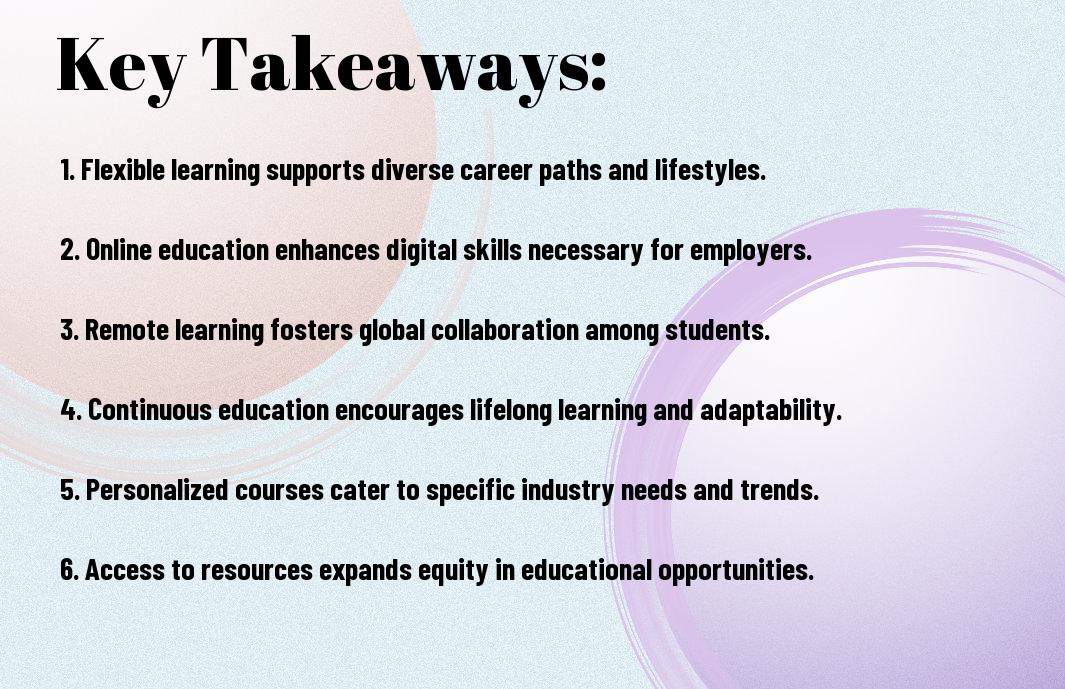
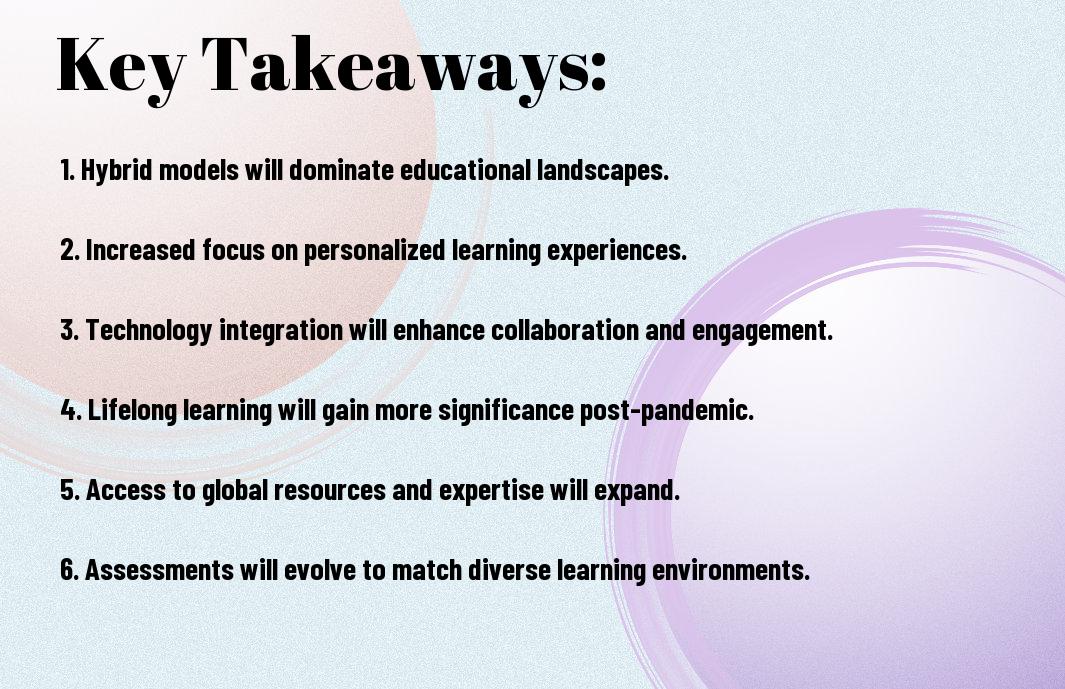
  • The shift to online learning has accelerated the development of new technologies, making online education more accessible and affordable for students worldwide.
  • Personalized learning experiences will become more prevalent, as artificial intelligence and machine learning help tailor education to individual students’ needs and abilities.
  • Virtual and augmented reality technologies will play a larger role in online education, providing immersive and interactive learning experiences that enhance student engagement and understanding.
  • Flexible learning pathways will become more common, allowing students to pursue education at their own pace and on their own schedule, whether through asynchronous or synchronous learning models.
  • Collaboration and community-building will be crucial components of online education, as students, teachers, and institutions work together to create supportive and inclusive online learning environments.

Current State of Online Education

Before exploring into the future, you need to understand the current landscape. You can learn more about How the Pandemic Impacted Online Education for Gen Z and its effects on your educational journey.

Impact of the Pandemic

Similarly, the status of online education has undergone significant changes, and you are likely aware of the pandemic’s influence on your learning experience.

Shift to Remote Learning

About the changes in online education, you have probably noticed a significant shift towards remote learning, which has become the new norm for many students like you.

The shift to remote learning has enabled you to access educational resources from anywhere, at any time, and has provided you with more flexibility in your learning schedule, allowing you to balance your education with other aspects of your life, and you can expect this trend to continue in the future, with institutions investing more in digital infrastructure and online course development to support your learning needs.
Technological Advancements

You will notice significant changes in online education post-pandemic, driven by technological advancements, as you explore Unpacking the Evolution and Future of Online Education, which will shape your learning experience.

Artificial Intelligence in Education

On the horizon, artificial intelligence will play a significant role in personalizing your learning experience, making it more efficient and effective, as you navigate through online courses.

Virtual and Augmented Reality Integration

Before entering into the world of online education, consider how virtual and augmented reality will enhance your engagement and interaction with course materials, making learning more immersive and fun.

In addition, as you explore deeper into virtual and augmented reality integration, you will discover new possibilities for simulating real-world experiences, allowing you to practice and apply your skills in a risk-free environment, which will revolutionize the way you learn and retain information.

Accessibility and Equity

Unlike traditional classrooms, online education offers you the opportunity to access learning materials from anywhere, promoting equity and accessibility in your educational journey.

Bridging the Digital Divide

Alongside the growth of online education, you will notice efforts to bridge the digital divide, ensuring that you have access to the necessary tools and resources to succeed in your online learning environment.

Inclusive Learning Environments

Along with the development of online education, you will see the creation of more inclusive learning environments, allowing you to feel comfortable and supported throughout your educational experience.

Considering the importance of inclusivity, you will find that online educational platforms are being designed to accommodate diverse needs, enabling you to learn in a way that suits you best, and providing you with the necessary accommodations to ensure your success.

Personalized Learning Experiences

Many educators and students have witnessed the benefits of personalized learning, which can be tailored to your individual needs and goals. You can expect to see more adaptive and interactive approaches to learning that address your unique strengths and weaknesses.

Adaptive Learning Platforms

Leveraging advanced technologies, adaptive learning platforms will offer you a more effective and efficient way to learn, providing real-time feedback and adjusting the difficulty level of course materials to suit your pace and learning style.

Competency-Based Progression

Around the globe, education systems are shifting towards competency-based progression, allowing you to progress through courses at your own speed, demonstrating mastery of specific skills and knowledge before moving on to the next level.

Learning through competency-based progression, you will be able to focus on developing a deep understanding of the subject matter, rather than just accumulating credits or completing a set of courses. You will have the flexibility to learn at your own pace, and your progress will be measured by your ability to demonstrate specific competencies, rather than your age or grade level. This approach will enable you to take ownership of your learning, making it more engaging, effective, and relevant to your needs and goals.

Teacher Training and Support

After the pandemic, you will need to prioritize teacher training and support to ensure a smooth transition to online education. You will have to invest in programs that enhance your teachers’ digital literacy and pedagogical skills, enabling them to create engaging online courses and effectively manage virtual classrooms.

Professional Development Opportunities

Above all, you should consider providing your teachers with ongoing professional development opportunities to stay up-to-date with the latest online education trends and technologies. You can offer workshops, webinars, and online courses that focus on topics such as instructional design, online assessment, and student engagement.

Mentoring and Coaching Programs

Behind every successful online educator is a supportive mentor or coach who guides them in developing their online teaching skills. You can establish mentoring and coaching programs that pair experienced educators with new teachers, providing them with personalized support and feedback to enhance their online teaching practices.

Coaching is an necessary aspect of mentoring and coaching programs, as it helps your teachers to reflect on their teaching practices, identify areas for improvement, and develop strategies to enhance student learning outcomes. You can provide your teachers with access to coaching services, such as one-on-one coaching sessions or peer coaching groups, to help them develop the skills and confidence they need to succeed in online education.

Future Trends and Challenges

To navigate the future of online education, you will need to consider the potential trends and challenges that lie ahead, and how they will impact your learning experience.

Emerging Technologies and Innovations

Astonishing advancements in technologies like AI and VR will revolutionize your online learning experience, making it more immersive and interactive.

Addressing Cybersecurity Concerns

Evolving threats to online security will require you to be vigilant about protecting your personal data and ensuring the integrity of your online education platform.

But as you investigate deeper into the world of online education, you will realize that addressing cybersecurity concerns is an ongoing process that requires your attention and cooperation, as you will need to adopt best practices such as using strong passwords, keeping your software up-to-date, and being cautious when clicking on links or downloading attachments from unknown sources, to safeguard your online learning environment.

To wrap up

Upon reflecting on the future of online education post-pandemic, you will realize that your learning experience is about to undergo a significant transformation. You can expect more personalized and interactive online courses, allowing you to learn at your own pace. Your access to quality education will increase, and you will have the opportunity to connect with a global community of learners, making your educational journey more engaging and effective. As you initiate on this new era of online learning, you will discover new ways to achieve your academic goals.

FAQ

Q: What will be the impact of the pandemic on the future of online education?

A: The pandemic has accelerated the shift towards online education, and its impact will be long-lasting. As a result, educational institutions will need to invest in digital infrastructure, including learning management systems, video conferencing tools, and high-speed internet connectivity. This will enable them to offer high-quality online courses and programs that cater to the diverse needs of students. Moreover, the pandemic has shown that online education can be an effective way to increase access to education, particularly for students who may not have had access to traditional brick-and-mortar institutions.

Q: How will online education change the way teachers interact with students in the post-pandemic era?

A: The future of online education will require teachers to develop new skills and strategies to engage with students in a virtual environment. This may include using interactive tools, such as gamification, virtual reality, and artificial intelligence, to create immersive learning experiences. Additionally, teachers will need to be more responsive to student needs, using data analytics and other technologies to provide personalized feedback and support. Online education will also enable teachers to reach a broader audience, including students from different geographical locations and cultural backgrounds, which will enrich the learning experience and promote global understanding.

Q: What are the potential benefits and drawbacks of online education in the post-pandemic world?

A: The potential benefits of online education include increased flexibility, accessibility, and affordability, as well as the ability to offer a wider range of courses and programs. Online education can also provide students with the opportunity to learn at their own pace, using a variety of digital resources and tools. However, there are also potential drawbacks, such as the lack of face-to-face interaction, technical issues, and the need for self-motivation and discipline. Furthermore, online education may exacerbate existing inequalities, particularly for students who do not have access to reliable internet connectivity or digital devices. To mitigate these drawbacks, educational institutions will need to invest in digital literacy programs and provide ongoing support to students, to ensure that they have the skills and resources they need to succeed in an online learning environment.

The Future of Online Education in Developing Countries

As you consider the state of education in developing countries, you are likely to encounter a complex landscape of challenges and opportunities. You will notice that traditional classroom-based learning is often hindered by limited resources and infrastructure. Your attention will be drawn to the potential of online education to bridge this gap, and you may wonder whether this technology can truly provide equal access to quality education for all. You will need to examine the implications of this shift and its potential to shape the future of learning in these regions.

Key Takeaways:

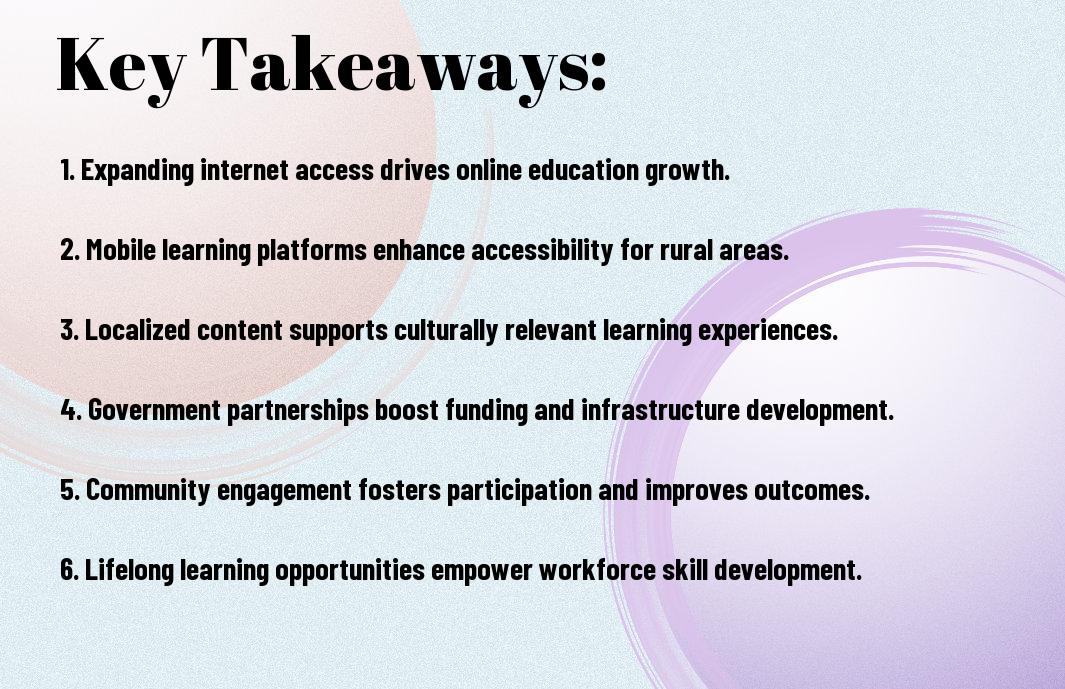
  • The digital divide is a significant challenge in developing countries, where access to technology and internet connectivity are limited, hindering the growth of online education.
  • Mobile learning has the potential to increase access to education in developing countries, as mobile devices are more widely available and affordable than computers.
  • Personalized learning is an effective approach in online education, allowing students to learn at their own pace and receive tailored feedback to improve their learning outcomes.
  • Collaboration between governments, private sector, and non-profit organizations is crucial to develop sustainable models for online education in developing countries.
  • Teacher training and support are vital to ensure that educators in developing countries are equipped to effectively integrate technology into their teaching practices and provide high-quality online instruction.

Current State of Online Education

Before delving into the future of online education, you should consider the current landscape, including the Challenges and Opportunity of Online Learning In Developing Countries, which highlights the complexities of implementing online education in these regions.

Challenges in Developing Countries

Among the primary concerns in developing countries is the lack of access to reliable internet and technology, hindering your ability to participate in online education.

Existing Infrastructure and Resources

Any assessment of online education in developing countries must consider the existing infrastructure and resources, which often fall short of meeting the demands of online learning, limiting your options.

Due to the significant disparities in infrastructure and resource allocation, you will encounter various obstacles when attempting to implement online education in developing countries, including inadequate technological support and insufficient funding, which can impede your progress and hinder the effectiveness of online learning initiatives.

Technological Advancements

Any examination of the future of online education in developing countries must consider the role of technological advancements. You will notice that innovations in digital technology have transformed the way you access and interact with educational content, and this trend is expected to continue.

Emerging Trends in EdTech

Evolving technologies, such as artificial intelligence and virtual reality, are changing the landscape of online education, and you are likely to see more personalized and immersive learning experiences in the future.

Impact on Accessibility and Affordability

Any analysis of the impact of technological advancements on online education must consider the effects on accessibility and affordability, as you will see that these innovations have the potential to increase access to education for marginalized communities and reduce costs associated with traditional educational models.

Consequently, as you explore the potential of online education in developing countries, you will find that the increased accessibility and affordability brought about by technological advancements can have a profound impact on your ability to access quality educational resources, and you must consider how these changes will shape the future of education in these contexts.

Pedagogical Innovations

For educators in developing countries, innovative approaches to teaching and learning are becoming increasingly important. You can explore the significance of e-learning for developing nations to understand its potential impact on your students’ learning outcomes.

Adaptive Learning and Personalization

For instance, you will find that adaptive learning systems can help tailor instruction to individual learners’ needs, thereby enhancing the overall quality of education.

Collaborative and Interactive Learning Environments

Above all, you should consider the role of collaborative learning environments in fostering engagement and motivation among your students, as they offer a more interactive and dynamic approach to education.

Learning in a collaborative and interactive environment allows you to facilitate meaningful discussions, peer-to-peer learning, and project-based activities that promote deeper understanding and retention of complex concepts, enabling you to create a more effective and student-centered learning experience.

Policy and Regulatory Frameworks

To establish a thriving online education system in developing countries, you must consider the policy and regulatory frameworks that govern this sector. You will need to navigate complex laws and regulations that shape the delivery of online education, ensuring that your endeavors comply with national and international standards.

Government Initiatives and Support

For instance, as you explore the online education landscape, you will find that governments in developing countries are launching initiatives to support the growth of this sector, providing funding and resources to institutions that offer online courses and programs, and you will need to understand these initiatives to capitalize on the opportunities they present.

Ensuring Quality and Accreditation

Government agencies play a significant role in ensuring that online education programs meet certain standards, and as you develop your online education endeavors, you will need to consider the accreditation processes that validate the quality of your programs, allowing you to establish credibility with your target audience.

Regulatory bodies will be responsible for monitoring and evaluating the quality of online education programs, and as you probe deeper into this sector, you will discover that these bodies use various metrics to assess the effectiveness of online courses, including learner engagement, completion rates, and employment outcomes, which will help you to refine your strategies and improve the overall quality of your online education offerings, enabling you to make informed decisions about your investments in this sector.

Socio-Economic Implications

Now, as you consider the future of online education in developing countries, you must think about the broader societal effects. You will see that online education has the potential to transform not only individual lives but also entire communities, fostering economic growth and social mobility.

Democratization of Education

With the advent of online education, you are witnessing a shift towards more accessible and inclusive learning opportunities. You can now access high-quality educational resources from anywhere, transcending geographical boundaries and socio-economic barriers, thereby expanding your educational possibilities.

Addressing Digital Divide and Inequality

Around the issue of digital divide, you are confronted with the fact that not everyone has equal access to digital technologies, which can exacerbate existing inequalities. You need to consider how online education can be designed to reach marginalized communities, ensuring that your educational pursuits are not limited by your socio-economic status.

Inequality in access to digital technologies and online education platforms can have far-reaching consequences, affecting your ability to participate in the global knowledge economy. As you navigate the complexities of online education, you must consider the ways in which it can be used to address these inequalities, providing opportunities for social mobility and economic empowerment, and ultimately, shaping your future in meaningful ways.

Future Directions and Recommendations

Despite the challenges, you have the opportunity to shape the future of online education in developing countries by implementing effective strategies and investing in digital infrastructure, which will ultimately benefit your students and communities.

Strategic Partnerships and Investments

Bridging the gap between public and private sectors, you can foster collaborations that drive innovation and increase access to quality online education, enabling your institutions to thrive in the digital age.

Capacity Building and Teacher Training

Prior to implementing online education, you must assess your current capabilities and identify areas for improvement, ensuring that your teachers and staff are equipped to effectively utilize digital tools and provide high-quality instruction.

Strategic planning is important for capacity building and teacher training, as you need to consider your specific needs and develop tailored programs that address the unique challenges and opportunities in your context, allowing you to create a robust and sustainable online education system that supports the success of your students and enhances your institution’s reputation.

Summing up

Presently, as you consider the future of online education in developing countries, you must think about how it will reshape your understanding of learning. You can explore this topic further by reading about Educating the Masses: The Rise of Online Education in Africa and Beyond, which highlights the potential for online education to increase access to learning opportunities, ultimately transforming your perspective on the role of technology in education.

FAQ

Q: What role will technology play in shaping the future of online education in developing countries?

A: Technology will play a significant role in shaping the future of online education in developing countries. With the increasing availability of smartphones, tablets, and computers, online learning platforms will become more accessible to students in these countries. Additionally, technological advancements such as artificial intelligence, virtual reality, and gamification will enhance the learning experience, making it more engaging and effective. Furthermore, technology will enable the development of personalized learning pathways, allowing students to learn at their own pace and focus on areas where they need improvement.

Q: How will online education address the issue of limited access to quality educational resources in developing countries?

A: Online education will help address the issue of limited access to quality educational resources in developing countries by providing students with access to a vast array of digital resources, including e-books, online courses, and educational videos. Moreover, online education platforms will enable students to connect with teachers and experts from around the world, providing them with access to high-quality instruction and mentorship. This will help level the playing field, enabling students in developing countries to have access to the same educational resources and opportunities as students in developed countries.

Q: What are the potential challenges and limitations of implementing online education in developing countries, and how can they be overcome?

A: The potential challenges and limitations of implementing online education in developing countries include limited access to reliable internet connectivity, lack of digital literacy, and inadequate infrastructure. To overcome these challenges, governments, NGOs, and private sector organizations can invest in developing digital infrastructure, providing training and support for teachers and students, and implementing alternative solutions such as offline access to online courses and mobile-based learning platforms. Additionally, partnerships between local and international organizations can help provide access to quality educational content and expertise, ensuring that online education is effective and sustainable in developing countries.

How Online Education Shapes the Future Workforce

As you consider the evolving landscape of learning, you may wonder how online education is redefining your professional prospects. You are likely aware that the way you acquire skills and knowledge today will significantly impact your career tomorrow. Your ability to adapt to this shift will be necessary in navigating the future workforce, where technological advancements and digital literacy are increasingly valued. You will need to understand the implications of online education on your future career.

Key Takeaways:

  • The digitalization of education is transforming the way we learn and acquire skills, preparing the future workforce for an increasingly tech-driven economy.
  • Online learning platforms are making education more accessible and affordable, allowing people to acquire new skills and knowledge from anywhere in the world.
  • The flexibility of online education enables students to balance work and learning, making it an attractive option for those who need to upskill or reskill to remain competitive in the job market.
  • Artificial intelligence and data analytics are being used to create personalized learning experiences, helping students develop the skills and competencies required by the future workforce.
  • The shift to online education is driving a paradigm shift in the way we think about work and learning, with a focus on lifelong learning and continuous skill development to stay relevant in a rapidly changing job market.

The Rise of Online Education

The advent of online education has transformed the way you learn, offering a plethora of opportunities for skill development and knowledge acquisition. As you navigate this digital landscape, you’ll find that online courses and degree programs are becoming increasingly popular, catering to diverse learning styles and preferences.

Changing Learning Environments

Following the shift towards online learning, you’ll notice that traditional classroom settings are giving way to virtual environments, allowing you to learn at your own pace and convenience. As you adapt to these new environments, you’ll discover that they provide a more personalized and interactive learning experience.

Accessibility and Flexibility

With the rise of online education, you’ll find that accessing educational resources has become easier, enabling you to balance your learning with other aspects of your life. You can now learn from anywhere, at any time, as long as you have a stable internet connection.

It is worth noting that this increased accessibility and flexibility have significant implications for your future career prospects, as you’ll be able to acquire new skills and knowledge that are relevant to the modern workforce, making you a more competitive candidate in the job market.

Skills for the Digital Age

There’s a shift in the skills you need to succeed in the digital age, and online education is leading the way. You can learn more about The Role Of Online Learning In The Future Of Work and how it’s changing the workforce.

Critical Thinking and Problem-Solving

Around the concept of critical thinking, you’ll find that online education helps you develop skills to analyze information and make informed decisions, preparing you for the future workforce.

Collaboration and Communication

The ability to work with others and communicate effectively is vital in the digital age, and online education provides you with opportunities to develop these skills through virtual team projects and discussions.

But as you probe deeper into the concept of collaboration and communication, you’ll find that online education offers you a unique chance to work with people from diverse backgrounds and industries, helping you to develop a global perspective and prepares you to navigate the complexities of the modern workforce, allowing you to thrive in a world where technology is constantly evolving, and you must be able to adapt and innovate to stay ahead.

The Impact on Traditional Education

Once again, you find yourself at the forefront of a revolution, as online education transforms the way you learn and interact with educational institutions. Your traditional classroom experience is evolving, and you must adapt to the changing landscape.

Shifts in Teaching Methods

Along with the rise of online education, you notice a significant change in the way teachers approach their craft. Your instructors are now more focused on facilitating online discussions and creating interactive content, making your learning experience more engaging and personalized.

New Roles for Educators

By embracing technology, you begin to see educators taking on new roles, such as content curators and learning coaches, helping you navigate the vast amounts of information available online. Your teachers are now more focused on guiding you towards the most relevant and accurate sources.

Impact of these new roles on your education is profound, as you start to take more ownership of your learning process. You begin to appreciate the value of self-directed learning, and your educators are there to support and mentor you, rather than simply lecturing. As you progress, you will find that your ability to learn and adapt will be more valuable than ever, and your educators will be there to help you develop these skills.

Preparing Students for the Future

Despite the challenges, online education plays a significant role in shaping the future workforce by providing you with the skills and knowledge required to succeed in an ever-changing job market.

Career Readiness and Employability

Alongside traditional subjects, online education offers you courses that focus on developing your soft skills, making you more attractive to potential employers and better prepared for the workforce.

Lifelong Learning and Adaptation

Likewise, online education fosters a mindset of continuous learning, allowing you to stay up-to-date with the latest developments in your field and adapt to new technologies and methodologies.

Even as you graduate and enter the workforce, you will find that online education has prepared you to be flexible and responsive to the evolving needs of your profession, enabling you to pursue ongoing learning and professional development opportunities that will enhance your career prospects and keep your skills relevant in a rapidly changing world, and you will be able to navigate the complexities of your chosen field with confidence and expertise.

Challenges and Limitations

Keep in mind that online education is not without its challenges, and as you consider its impact on the future workforce, you must acknowledge the limitations that come with it.

Equity and Access to Technology

One of the primary concerns is that not all individuals have equal access to the technology needed for online education, and as you think about the implications, you should consider how this affects your own understanding of the issue.

Social Isolation and Motivation

Motivated students may thrive in online environments, but as you ponder the effects of social isolation, you should think about how it might influence your own ability to stay engaged and motivated in a virtual setting.

But as you investigate deeper into the issue of social isolation and motivation, you will find that it is a complex problem, and you must consider how the lack of face-to-face interaction can affect your emotional and psychological well-being, ultimately impacting your overall learning experience and preparation for the future workforce.

Innovative Solutions and Technologies

All the advancements in online education are driven by innovative solutions and technologies, and as you explore this landscape, you can learn more about Shaping the Future of Online Learning to understand the evolving needs of the workforce.

Artificial Intelligence and Personalization

At the forefront of online education, you will find artificial intelligence and personalization, which are being used to create customized learning experiences tailored to your needs and learning style, enabling more effective knowledge acquisition.

Virtual and Augmented Reality

Among the most significant technological advancements in online education, virtual and augmented reality are changing the way you interact with educational content, making it more immersive and engaging, and you can expect to see more of these technologies in the future.

Hence, as you examine deeper into virtual and augmented reality, you will discover new possibilities for experiential learning, where you can practice and apply your skills in simulated environments, preparing you for the complexities of the real world, and enabling you to develop a more nuanced understanding of the subjects you study, which will ultimately shape your future in the workforce.

Summing up

Following this exploration of online education, you begin to see how it reshapes your understanding of the future workforce. As you consider the implications, you realize that your skills and knowledge will be constantly evolving. Your ability to adapt to new technologies and learning platforms will be vital in this new landscape, and you must be prepared to navigate the changing demands of the job market, ultimately transforming your role in the workforce.

FAQ

Q: How is online education changing the skills required for the future workforce?

A: Online education is revolutionizing the skills required for the future workforce by shifting the focus from traditional classroom learning to a more flexible and technology-driven approach. With the rise of online learning, students can now access a wide range of courses and training programs that equip them with the skills needed to succeed in an increasingly digital and interconnected world. These skills include digital literacy, data analysis, problem-solving, and collaboration, which are vital for professionals to stay competitive in the job market.

Q: What role does online education play in preparing students for the gig economy and remote work?

A: Online education plays a significant role in preparing students for the gig economy and remote work by providing them with the skills and knowledge needed to thrive in a flexible and ever-changing work environment. Online courses and training programs can help students develop the skills required for freelance work, such as self-motivation, time management, and communication, as well as the technical skills needed for remote work, such as video conferencing and digital project management. Additionally, online education can help students develop a mindset that is adaptable to change and open to continuous learning, which is vital for success in the gig economy.

Q: How does online education impact the accessibility and diversity of the future workforce?

A: Online education has a profound impact on the accessibility and diversity of the future workforce by breaking down geographical and socio-economic barriers to education and career advancement. With online learning, students from all over the world can access high-quality educational resources and training programs, regardless of their location or financial means. This has led to a more diverse and inclusive workforce, where individuals from underrepresented groups can now participate and contribute their unique perspectives and skills. Furthermore, online education can also help address issues of inequality and social mobility by providing opportunities for people with disabilities, caregivers, and those in remote or underserved communities to access education and job opportunities that may have been inaccessible to them otherwise.

The Future of AI in Online Education

As you explore the evolving landscape of online education, you’ll notice the increasing presence of Artificial Intelligence (AI). You’re likely wondering how AI will impact your learning experience and the way you access educational resources. Your curiosity is justified, as AI is poised to revolutionize the online education sector, offering personalized learning paths, intelligent tutoring systems, and automated assessments. You’ll discover how AI enhances your online learning journey, making it more efficient, effective, and engaging.

Key Takeaways:

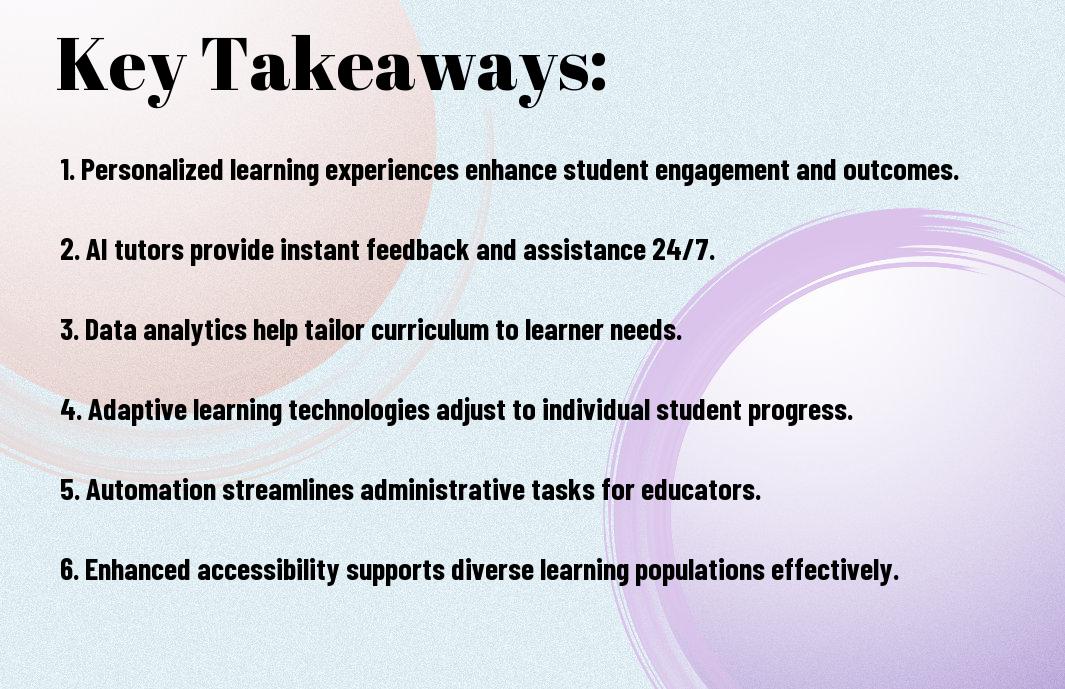
  • The integration of Artificial Intelligence (AI) in online education is expected to enhance the learning experience by providing personalized learning paths for students.
  • AI-powered tools will automate administrative tasks, allowing instructors to focus on teaching and mentoring students, leading to more effective learning outcomes.
  • The use of machine learning algorithms will enable online education platforms to analyze student data, identifying knowledge gaps and providing targeted support to students who need it most.
  • Virtual learning environments will become more immersive and interactive, using AI-driven simulations and gamification to increase student engagement and motivation.
  • The future of online education will rely on the combination of human instructors and AI-powered tools, creating a hybrid learning model that offers the best of both worlds: flexibility and personal attention.

    Introduction to AI in Education

    Your introduction to AI in online education begins with understanding its transformative potential, as you explore the vast possibilities it offers for enhancing learning experiences.

    subsection: Historical Context of AI in Education

    Before entering into the future, you need to consider the historical context of AI in education, where you’ll find that early experiments laid the groundwork for today’s innovative applications.

    subsection: Current State of AI Integration

    By examining the current state of AI integration, you’ll discover how it’s being used to personalize learning, making education more accessible and effective for you and your peers.

    Due to the rapid advancement of AI technologies, you’re now able to engage with adaptive learning systems, intelligent tutoring, and automated assessments, which are redefining the educational landscape and offering you more tailored and efficient learning pathways.

    Introduction to AI in Education

    Even as you explore the potential of AI in online education, you’ll discover its transformative power. AI can enhance your learning experience, making it more engaging and effective. With AI, you can expect personalized learning paths, automated assessments, and intelligent feedback.

    subsection: Personalized Learning Experiences

    After delving into AI’s capabilities, you’ll find that it offers tailored learning experiences. Your learning style, pace, and goals will be considered, allowing you to learn more efficiently.

    subsection: Intelligent Tutoring Systems

    Following your exploration of AI’s potential, you’ll encounter intelligent tutoring systems. Your learning journey will be supported by adaptive technologies that simulate human-like interactions, providing guidance and feedback.

    In fact, as you interact with intelligent tutoring systems, you’ll notice that they can identify knowledge gaps and adjust their teaching strategies accordingly, helping you fill those gaps and achieve your learning objectives more effectively.

    Introduction to AI in Education

    Once again, you can explore the potential of AI in online education, as seen in the report on Artificial Intelligence and the Future of Teaching and Learning, which highlights the benefits of AI in transforming your learning experience.

    subsection: Natural Language Processing in Education

    Around the globe, you will notice the impact of natural language processing on education, enabling more effective communication and personalized learning experiences tailored to your needs.

    subsection: Chatbots and Virtual Assistants

    After implementing chatbots and virtual assistants, you can enjoy enhanced support and guidance throughout your online courses, making your learning journey more engaging and interactive.

    subsection: Chatbots and Virtual Assistants, as you explore deeper, you will discover how these AI-powered tools can assist you in navigating course materials, answering frequently asked questions, and even providing feedback on your assignments, thereby enriching your overall educational experience.

    Introduction to AI in Education

    Keep in mind that AI is transforming the online education landscape, offering you personalized learning experiences and increased efficiency.

    subsection: AI-Driven Assessment and Evaluation

    Betwixt the lines of traditional assessment methods, AI-driven evaluation is emerging, enabling you to assess student performance more accurately and efficiently.

    subsection: Automated Grading and Feedback

    Similar to other educational tools, automated grading systems are being integrated, allowing you to focus on teaching while your grading tasks are taken care of.

    Feedback is important in the learning process, and with automated grading and feedback systems, you can provide your students with instant, targeted feedback, helping them improve their performance and achieve their goals more effectively, as you track their progress and identify areas where they need extra support.

    Introduction to AI in Education

    Despite the rapid advancements in AI technology, you may still be wondering how it will impact your online education experience. As you explore the future of AI in online education, you will discover the potential benefits and challenges that come with it.

    subsection: Accessibility and Equity in AI-Enhanced Education

    Previously, you may have encountered limitations in accessing quality education due to geographical or financial constraints. Now, with AI-enhanced education, you can access a wide range of courses and resources, promoting equity and accessibility in your learning journey.

    subsection: Addressing Bias in AI Systems

    Prior to the development of AI systems, you may have experienced biased decision-making in traditional education settings. Now, as you navigate AI-enhanced education, you must consider the potential biases in AI systems and how they may impact your learning experience.

    Equity is a key consideration when addressing bias in AI systems, as you want to ensure that all students have an equal opportunity to succeed. As you use AI-powered tools, you should be aware of the potential biases and take steps to mitigate them, such as providing diverse training data and regularly auditing the systems for fairness, allowing you to have a more inclusive and effective learning experience.

    Introduction to AI in Education

    All you need to know about the future of AI in online education can be found in recent studies, such as AI in Education in 2024: Mixed Feelings on The Tech’s Future, which highlights the potential of AI in transforming your learning experience.

    subsection: Future Directions for AI Research in Education

    Behind the scenes, you will find that researchers are working tirelessly to advance AI technology, enabling you to have more personalized and effective learning experiences in the future.

    subsection: Potential Challenges and Limitations

    Behind the excitement of AI integration, you should consider the potential challenges that may arise, such as ensuring equity and access to AI-powered educational tools.

    The potential challenges and limitations of AI in education are areas you should explore further, as they can impact your ability to effectively implement AI solutions, and you will need to address concerns around bias, job displacement, and the digital divide to fully harness the potential of AI in your educational pursuits.

    Summing up

    With these considerations, you can see that the future of AI in online education holds much promise for your learning experience. You will have access to personalized learning paths, automated assessments, and virtual mentors. Your education will become more efficient, effective, and engaging. As you navigate this new landscape, you will discover new opportunities for growth and development, and your understanding of AI’s role in education will continue to evolve. You will be at the forefront of a revolution that is transforming the way you learn.

    FAQ

    Q: What role will Artificial Intelligence (AI) play in the future of online education, and how will it enhance the learning experience?

    A: The future of AI in online education is expected to be highly transformative. AI will play a significant role in personalizing learning experiences, making them more adaptive and responsive to individual student needs. Through advanced algorithms and machine learning, AI systems can analyze student performance, identify knowledge gaps, and provide real-time feedback. This not only enhances the efficiency of the learning process but also makes it more engaging and effective. Furthermore, AI-powered chatbots and virtual assistants will offer support to students around the clock, helping them navigate through courses, answering queries, and providing additional resources when needed.

    Q: How will AI impact the job market for educators, and are there concerns about AI replacing human teachers in online education platforms?

    A: The integration of AI in online education does not necessarily mean the replacement of human teachers. Instead, AI is likely to augment the capabilities of educators, automating administrative tasks, grading, and providing basic support, which can free up time for teachers to focus on what matters most – teaching, mentoring, and guiding students. While there may be a shift in the roles that educators play, with more emphasis on high-touch, human skills such as empathy, creativity, and complex problem-solving, the need for skilled and passionate educators will continue. AI will change the nature of work in education, potentially creating new roles and opportunities for educators to work alongside AI systems to design, implement, and continuously improve learning experiences.

    Q: What are the ethical considerations and potential biases that need to be addressed in the development and implementation of AI in online education to ensure fairness and equality for all learners?

    A: As AI becomes more integral to online education, it’s crucial to address ethical considerations, particularly those related to bias, accessibility, and fairness. AI systems can perpetuate existing biases if they are trained on biased data, which can lead to unequal treatment of students based on their demographic backgrounds. To mitigate this, developers must prioritize diverse and representative data sets and regularly audit AI systems for bias. Moreover, ensuring that AI-enhanced educational tools are accessible to all learners, including those with disabilities, is vital. Transparency in how AI-driven decisions are made, along with continuous monitoring and evaluation, will also be key to fostering a fair and inclusive learning environment. By proactively addressing these ethical considerations, the benefits of AI in online education can be equitably distributed among all learners.

Skip to content