Piano

Are there online communities or forums for piano learners to share tips and experiences

Communities like the Music Forum • MusicTeacher.com offer a virtual space where piano enthusiasts like you can connect, share knowledge, and gain insights from fellow learners. Engage in discussions, seek advice, and expand your musical horizons by tapping into the collective wisdom of a supportive online community. Whether you’re a beginner eager to improve your technique or an experienced player looking to exchange ideas, these platforms can be invaluable resources on your musical journey. Dive in, connect, and let the music flourish!

Music Forum • MusicTeacher.com

Key Takeaways:

  • Online forums and communities exist for piano learners to connect and share tips and experiences.
  • Platforms like Reddit, Piano World, and Piano Street provide spaces for learning resources, questions, and collaboration among piano enthusiasts.
  • Participating in these online communities can motivate and inspire learners, while also offering a supportive environment for progressing in musical skill.

The Power of Online Communities

While learning to play the piano can sometimes feel like a solitary journey, the power of online communities and forums cannot be underestimated. Connecting with fellow piano learners online can greatly enhance your learning experience and provide a sense of camaraderie on your musical journey.

The Benefits of Sharing Experiences

Sharing your experiences with others in online piano communities can offer valuable insights and tips that you may not have come across otherwise. By learning from the experiences of others, you can gain new perspectives, discover helpful practice techniques, and even troubleshoot common challenges together.

Overcoming Isolation in Piano Learning

Sharing your progress, setbacks, and breakthroughs with a supportive online community can help you overcome the feelings of isolation that can sometimes accompany learning a complex instrument like the piano. Knowing that others are going through similar experiences can be reassuring and motivating, pushing you to keep moving forward in your musical journey.

It’s easy to feel discouraged when facing challenges in piano learning, but being part of an online community can remind you that you are not alone in your struggles. You can find encouragement, advice, and even make new friends who share your passion for playing the piano.

Popular Online Forums for Piano Learners

Piano World

The online platform Piano World is a treasure trove of resources for piano learners like yourself. The forums on this site cover a wide range of topics, from technique tips to discussions on specific pieces. You can seek advice from more experienced players, share your progress, or simply connect with a community of fellow piano enthusiasts.

Piano Forums

Online Piano Forums is another excellent resource for piano learners. Here, you can find threads on everything from finding the right instrument to mastering complex compositions. The community is welcoming and passionate about all things piano, making it a great place to expand your knowledge and skills.

Piano Forums offer a wealth of information, including sheet music recommendations, practice routines, and even virtual recitals where you can showcase your talents and receive feedback from your peers. It’s a supportive environment where you can grow as a pianist and connect with others who share your passion.

Reddit’s r/piano

Learners like yourself can benefit greatly from joining Reddit’s r/piano community. Here, you can engage with fellow piano enthusiasts, ask for advice on technique or repertoire, and even participate in themed challenges to improve your skills. The subreddit is filled with diverse perspectives and experiences, providing you with a well-rounded learning experience.

A visit to Reddit’s r/piano is a great way to stay motivated on your musical journey. You can celebrate your successes, seek guidance during challenging times, and share your love for the piano with a supportive online community. Whether you’re a beginner or a seasoned player, this forum has something for everyone.

Social Media Groups for Piano Enthusiasts

Despite the solitary nature of practicing the piano, there are plenty of ways for you to connect with other piano enthusiasts online. Social media platforms offer a wealth of opportunities to interact with fellow learners, share tips, and gain inspiration from others on a similar musical journey.

Facebook Groups for Piano Learners

To enhance your piano learning experience, joining Facebook groups dedicated to piano enthusiasts can be incredibly beneficial. These groups provide a space for you to ask questions, seek advice, share your progress, and even discover new practice techniques. By being part of a community of like-minded individuals, you can receive support and encouragement as you navigate your musical endeavors.

Joining Twitter Chats for Piano Discussion

Twitter chats are another great way for you to engage with fellow piano enthusiasts in real-time. By following hashtags related to piano discussions, you can participate in live chats, ask questions, and connect with a diverse range of pianists from around the world. These chats often cover various topics such as practice tips, performance anxiety, and favorite repertoire, offering you a platform to both learn from and contribute to the piano community.

If you’re looking to expand your musical horizons and connect with other piano enthusiasts, joining Twitter chats can be a fantastic way to engage with a wider audience of passionate pianists. By actively participating in these discussions, you not only gain valuable insights and advice but also foster connections with individuals who share your love for the piano.

Online Platforms for Piano Lessons and Feedback

Video Sharing Sites like YouTube

Now, when it comes to learning the piano online, video sharing sites like YouTube can be a treasure trove of valuable resources. You can find tutorials on almost any song you can think of, as well as lessons on various techniques and theory. Watching these videos can help you visually understand how to play different pieces and improve your skills as a pianist. Furthermore, many creators on YouTube also offer tips and tricks to help you navigate your piano learning journey.

Online Lesson Platforms with Community Features

For those looking for a more structured approach to online piano learning, platforms like Piano Marvel and Playground Sessions offer comprehensive lesson plans and practice tools. What sets these platforms apart is their community features, where you can interact with other learners, share your progress, and seek advice from more experienced pianists. Being part of a community of like-minded individuals can provide you with the support and motivation you need to stay committed to your learning goals.

Additionally, on these online lesson platforms, you can often receive feedback on your playing from instructors or other members of the community. This feedback can be invaluable in helping you identify areas for improvement and track your progress over time. By actively seeking and incorporating feedback into your practice routine, you can accelerate your growth as a pianist and become more confident in your skills.

Tips for Getting the Most Out of Online Communities

Be Active and Engaged

Getting involved in online communities for piano learners can greatly enhance your learning experience. By actively participating in discussions, asking questions, and sharing your progress, you can build connections with fellow learners and more experienced players. Remember that these communities are meant to be collaborative spaces where everyone can learn from each other.

This active participation not only helps you learn from others but also gives you a platform to seek advice and feedback on your playing, ultimately accelerating your progress.

Respect and Learn from Others

One of the key principles of online communities is to foster a respectful and supportive environment. Remember that everyone has their own unique learning journey, and each person brings valuable insights and experiences to the table. By showing respect for others’ opinions and being open to different perspectives, you can broaden your understanding of piano playing and benefit from a diverse range of viewpoints.

From sharing practice tips to discussing favorite pieces, there is a wealth of knowledge to gain from engaging with the community in a respectful and considerate manner.

Share Your Own Experiences and Tips

  • Active

Sharing your own experiences and insights can be just as beneficial to others as learning from them. Whether you have discovered a helpful practice routine, overcome a challenging piece, or found a great resource, sharing these moments can inspire and guide fellow learners on their own musical journeys. By contributing to the community in this way, you not only reinforce your own learning but also create a supportive and collaborative atmosphere where everyone can grow together.

  • Assume that

Additionally, by actively participating in discussions and generously sharing your knowledge, you help create a positive and enriching community where members feel valued and motivated to continue their piano pursuits.

Staying Motivated with Online Support

Many online communities and forums for piano learners offer invaluable support and motivation to help you stay on track with your learning journey.

Finding Accountability Partners

With online communities, you can find accountability partners who will help keep you motivated and committed to your practice routine. By sharing your goals and progress with others, you create a sense of responsibility to stay consistent and focused. You can encourage each other, celebrate achievements, and provide support during challenges, making the learning process more enjoyable and engaging.

Celebrating Progress and Milestones

Any progress, no matter how small, deserves to be celebrated. In online communities, you can share your milestones, whether it’s mastering a new piece, overcoming a difficult technique, or simply staying consistent with your practice schedule. Celebrating these achievements not only boosts your confidence but also motivates you to keep pushing forward. It’s rewarding to receive validation and encouragement from fellow learners who understand the journey you’re on.

Understanding the importance of celebrating progress and milestones can help you stay motivated and inspired to continue your piano learning. Embracing the support and camaraderie of online communities can make your learning experience more fulfilling and enjoyable.

To wrap up

Presently, you may find online communities or forums where piano learners gather to share tips, experiences, and support each other in their musical journey. These platforms can be valuable resources for you to connect with fellow learners, seek advice from more experienced pianists, and find motivation to keep practicing and improving.

By actively participating in these online communities, you not only enhance your own learning experience but also contribute to a vibrant and supportive network of piano enthusiasts. So, why not join a few forums or groups today and start sharing your own experiences while learning from others in the process? The virtual piano community awaits your input and is ready to help you progress on your musical path.

Q: Are there online communities or forums for piano learners?

A: Yes, there are several online communities and forums dedicated to piano learners. These platforms serve as a hub for sharing tips, experiences, and resources related to learning and playing the piano.

Q: What can I expect from online piano learner communities?

A: In online piano learner communities, you can expect to find a supportive network of fellow piano enthusiasts who are eager to share their knowledge, offer advice, and provide encouragement. These platforms often feature discussions on various piano-related topics, practice strategies, recommended resources, and more.

How can I benefit from participating in online piano learner communities?

By actively participating in online piano learner communities, you can benefit from valuable insights, feedback, and guidance from experienced players and teachers. Additionally, you can expand your repertoire of piano pieces, discover new practice techniques, and even make connections with like-minded individuals who share your passion for the instrument.
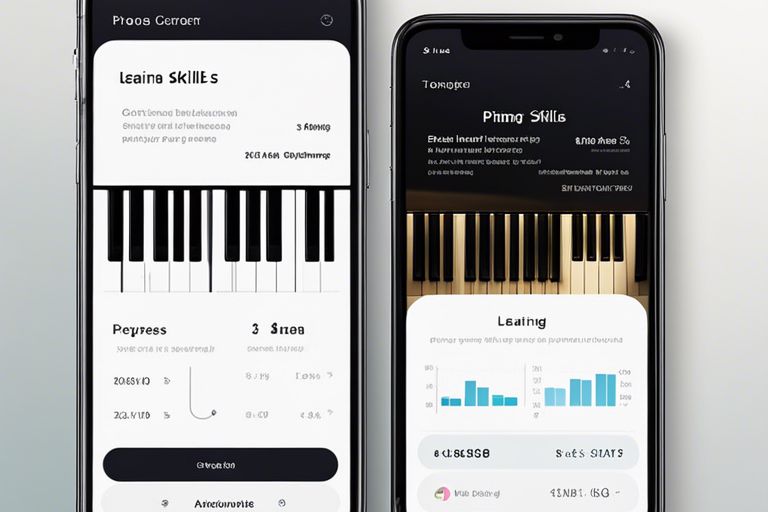
How do piano learning apps track and measure progress

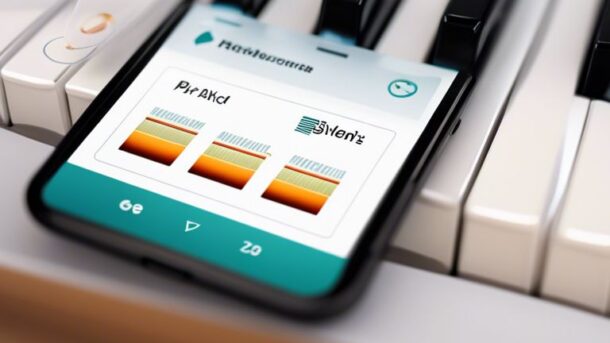
Playing the piano is a journey of constant improvement, and with the help of technology, you can now easily track your progress. Piano learning apps use innovative methods to monitor your development, analyzing factors like speed, accuracy, and consistency. By regularly measuring your achievements, these apps provide valuable insights into your strengths and areas for growth. Want to dive deeper into tracking your piano progress? Check out How to Track your Progress on the Piano with Tonebase’s new practice plan for expert guidance.

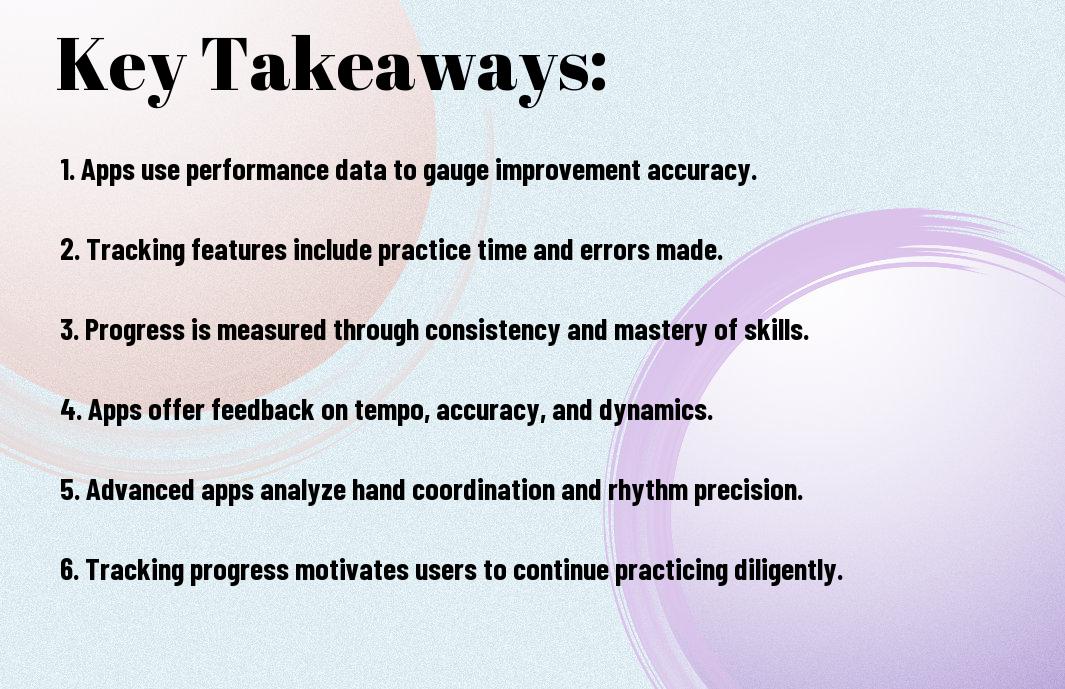
Key Takeaways:

  • Usage Data: Piano learning apps track progress through analyzing users’ usage data, such as practice time, frequency of sessions, and completion of lessons.
  • Performance Metrics: These apps measure progress by evaluating users’ performance on various exercises, quizzes, and songs, providing insights into areas of strength and areas needing improvement.
  • Feedback and Recommendations: Piano learning apps provide feedback and personalized recommendations based on progress data, helping users optimize their learning and practice techniques.

The Importance of Progress Tracking

While learning to play the piano, tracking your progress is crucial for several reasons. It allows you to see how far you have come since you started, providing motivation to keep going. Additionally, progress tracking helps you set achievable goals and gives you a clear sense of direction in your piano learning journey.

Setting Goals and Motivation

Any successful piano student knows the importance of setting goals to keep motivation levels high. Progress tracking in piano learning apps enables you to set specific, measurable goals for your practice sessions. By monitoring your improvement over time, you can see firsthand how your hard work and dedication translate into tangible results, keeping you motivated to continue practicing and improving your skills.

Identifying Areas for Improvement

Importance of tracking your progress extends to identifying specific areas where you can improve. Piano learning apps often provide detailed feedback on your performance, highlighting areas that may need more practice. By focusing on these specific areas, you can tailor your practice sessions to address weaknesses and enhance your overall piano playing abilities.

With progress tracking, you can turn your piano practice sessions into purposeful and efficient learning experiences, guiding you towards becoming a more proficient pianist. By utilizing the tools available in piano learning apps, you can track your progress, set achievable goals, and identify areas for improvement, ultimately accelerating your growth as a musician.

Methods of Progress Tracking

Algorithm-Based Assessments

Even though it may seem like magic, piano learning apps use sophisticated algorithms to assess your progress. These algorithms analyze various factors such as your timing, accuracy, and technique to provide feedback on your performance.

User-Generated Feedback

The feedback you provide while using the app also plays a significant role in tracking your progress. By sharing how challenging or enjoyable you find certain lessons or songs, the app can tailor recommendations and adjust difficulty levels to suit your needs.

The more feedback you actively provide, the more personalized your learning experience becomes. It’s a symbiotic relationship where your input helps the app fine-tune its recommendations to keep you engaged and motivated.

Performance Analytics

Tracking your progress through performance analytics involves capturing detailed data on your playing sessions. This can include the number of correct notes played, timing accuracy, and even the pressure you apply to the keys. By analyzing this data, the app can identify areas where you excel and pinpoint areas for improvement.

Progress with Performance Analytics

It’s fascinating to see how performance analytics can break down your playing into measurable data points. This analytical approach gives you concrete insights into your progress and empowers you to set specific goals for improvement.

Types of Data Collected

Now let’s examine into the types of data gathered by piano learning apps to track and measure your progress. Understanding what aspects of your playing are being monitored can help you focus on specific areas for improvement. This information is crucial for personalized feedback and tailored practice recommendations.

  • Practice Time and Frequency
  • Accuracy and Error Rates
  • Technique and Finger Independence
  • Speed and Progression
  • Engagement and Retention

Practice Time and Frequency

Frequency of practice sessions is an necessary metric that piano learning apps track. They monitor how often you engage with the app to practice your piano skills. This data helps in understanding your dedication and commitment to learning the instrument. Additionally, the apps record the duration of each practice session, providing insights into how much time you spend practicing daily or weekly.

This data on practice time and frequency can help you establish a consistent practice routine. By reviewing your practice habits, you can identify if you are dedicating enough time to practice and whether you need to adjust your schedule to meet your learning goals effectively. This information enables the app to provide personalized recommendations on how you can optimize your practice time for better progress.

Accuracy and Error Rates

One crucial aspect that piano learning apps focus on is monitoring your accuracy and error rates while playing. These apps analyze the notes you play and identify any mistakes or inaccuracies in your performance. By tracking your accuracy and error rates, the apps can pinpoint specific areas where you may be struggling and offer targeted exercises to help you improve.

Error detection is a critical feature of piano learning apps as it helps you identify and correct mistakes in your playing. By understanding where you tend to make errors, you can concentrate on those areas during practice to enhance your overall performance. This detailed feedback on accuracy and error rates plays a vital role in refining your skills and honing your technique on the piano.

Technique and Finger Independence

Plus, piano learning apps collect data on your technique and finger independence while playing various pieces. They analyze factors like hand positioning, finger strength, and coordination to evaluate the quality of your playing. By monitoring your technique and finger independence, the apps can offer exercises and tips to enhance your playing skills and improve your overall performance on the piano.

Error detection in technique and finger independence allows you to focus on specific aspects of your playing that may need improvement. Whether it’s strengthening individual fingers or improving coordination between hands, the detailed feedback provided by the app can help you address these areas effectively during practice sessions. This data-driven approach to technique evaluation can lead to significant advancements in your piano playing abilities.

How Apps Use Data to Provide Feedback

Despite the vast amount of data collected by piano learning apps, they use this information in a variety of ways to provide feedback and improve your progress. One key way apps utilize data is by creating personalized lesson plans tailored to your specific needs and skill level.

Personalized Lesson Plans

For personalized lesson plans, apps analyze your performance data, such as accuracy, speed, and consistency, to understand your strengths and weaknesses. Based on this information, the app can generate customized lesson plans that focus on areas where you need the most improvement. This tailored approach helps you make the most of your practice time and ensures that you are constantly challenged at the right level.

Real-time Error Correction

On the other hand, real-time error correction is another valuable feature offered by piano learning apps. These apps use advanced algorithms to identify mistakes as you play and provide immediate feedback on how to correct them. This real-time analysis allows you to address errors as they occur, helping you improve your playing accuracy and technique efficiently.

Plans

Progress Visualization

Provide vivid visual representations of your progress is a key component of piano learning apps. Progress visualization tools such as graphs, charts, and virtual progress bars help you track your improvement over time. By seeing your achievements visually, you can stay motivated and set new goals for yourself. Moreover, progress visualization allows you to identify patterns in your performance and adjust your practice routines accordingly.

Correction

The Role of AI in Progress Measurement

Machine Learning Algorithms

Many piano learning apps utilize machine learning algorithms to track and measure your progress. With these algorithms, the app can analyze your performance data, such as timing accuracy, note recognition, and rhythm consistency, to provide personalized feedback and insights into your strengths and areas for improvement.

Adaptive Difficulty Adjustment

To enhance your learning experience, piano learning apps often incorporate adaptive difficulty adjustment features powered by AI. This technology allows the app to dynamically adjust the difficulty of exercises and songs based on your performance. By challenging you at the right level, the app ensures that you are continuously improving without feeling overwhelmed or bored.

For instance, if you consistently excel at certain types of exercises, the app may increase the difficulty to keep you engaged and motivated. Conversely, if you struggle with specific techniques, the app may offer additional practice opportunities and resources to help you master those skills.

Human-AI Collaboration

For a more personalized learning experience, some piano learning apps foster human-AI collaboration. By combining the expertise of music educators with the analytical capabilities of AI, these apps can offer tailored lesson plans, practice recommendations, and performance evaluations that cater to your unique needs and goals. This collaboration ensures that you receive comprehensive support and guidance throughout your musical journey.

Adjustment of difficulty levels based on your progress and feedback is a key feature of human-AI collaboration in piano learning apps. By continuously assessing your performance and adapting the learning materials accordingly, these apps optimize your learning curve and help you achieve your musical aspirations more effectively.

Limitations and Challenges

Data Quality and Accuracy

Quality data is important in tracking progress accurately. However, piano learning apps may face challenges in ensuring the precision and reliability of the data collected. Factors like background noise, microphone quality, or even user error can impact the accurate measurement of your progress. It’s important to be aware of these limitations when interpreting your performance metrics.

Individual Variability and Learning Styles

With individual variability and diverse learning styles, piano learning apps may struggle to provide a one-size-fits-all approach. Your progress may not always align perfectly with the app’s metrics due to personal musical preferences, cognitive abilities, or previous experience with the piano. Understanding your unique learning style and adapting the app’s feedback to suit your needs can help you overcome these challenges.

Concerning individual variability and learning styles, it’s crucial to remember that progress in piano learning is not solely determined by numbers and metrics. Your personal growth, enjoyment of playing, and satisfaction with your improvement are equally important factors to consider. Embrace your unique journey and use the app as a tool to enhance your learning experience, rather than as a strict measurement of progress.

Ethical Considerations

Accuracy and privacy are two key ethical considerations when using piano learning apps to track your progress. Ensuring that the data collected by the app is used responsibly and that your privacy is protected is crucial. It’s important to review the app’s privacy policy and understand how your data is being utilized to avoid any potential ethical issues.

Learning should be an empowering and enriching experience, and ethical considerations play a significant role in maintaining the integrity of the learning process. By being mindful of how your data is being used and taking steps to protect your privacy, you can ensure a positive and ethically sound learning journey with piano learning apps.

Final Words

Conclusively, piano learning apps have revolutionized the way we track and measure progress in our musical journeys. By utilizing innovative technologies such as AI and machine learning algorithms, these apps can provide personalized feedback, track your practice sessions, and assess your performance in real-time. As you continue to use these apps, you will be able to see tangible improvements in your skills and musicality, making your piano learning experience more efficient and rewarding.

Q: How do piano learning apps track and measure progress?

A: Piano learning apps track and measure progress through various methods such as monitoring the time spent practicing, tracking the completion of lessons or songs, assessing accuracy and speed in playing, and recording the scores achieved in quizzes and assessments.

Q: What data points are commonly used by piano learning apps to measure progress?

A: Piano learning apps commonly use data points such as practice time logs, lesson completion rates, accuracy and speed metrics in playing exercises, scores achieved in quizzes and assessments, progress charts showing improvement over time, and user feedback on difficulty levels and satisfaction with the learning experience.

Q: How do piano learning apps use progress tracking to personalize the learning experience?

A: Piano learning apps use progress tracking to personalize the learning experience by adjusting the difficulty level of exercises based on performance, recommending specific lessons or practice areas to focus on, providing targeted feedback on areas of improvement, setting goals and milestones for the user to work towards, and offering customization options to cater to individual learning preferences and goals.

Can you recommend any good books for learning piano techniques

Over your piano journey, mastering techniques is crucial for your growth as a pianist. In this article, we will explore some of the best books available that can help you hone your piano skills and elevate your playing to the next level. Whether you are a beginner or an experienced player looking to refine your technique, these recommended books are sure to be valuable resources in your musical development.

Key Takeaways:

  • Variety of Piano Techniques: Look for books that cover a variety of piano techniques such as finger exercises, scales, arpeggios, and hand positioning.
  • Clear and Detailed Instructions: Choose books that provide clear and detailed instructions on how to practice and master different piano techniques.
  • Progressive Learning: Opt for books that offer a progressive learning approach, starting from beginner techniques and gradually advancing to more complex ones.

Building Foundations

Before you examine complex piano pieces, it’s important to build a strong foundation in piano techniques. This involves mastering the basics such as hand positioning, finger independence, posture, and sitting technique. By focusing on these fundamental skills, you can improve your overall playing and set yourself up for success in your piano journey.

Hand Positioning and Finger Independence

Hand positioning and finger independence are crucial components of piano technique. Your hands should be relaxed and curved, with your fingers resting gently on the keys. Work on exercises that help you develop control and independence in each finger, allowing you to play smoothly and accurately. Practice scales and arpeggios to strengthen your fingers and improve coordination between the left and right hand.

Developing Proper Posture and Sitting Technique

Building proper posture and sitting technique is necessary for playing the piano comfortably and preventing strain or injury. Sit up straight with your feet flat on the floor and your back supported. Your arms should be relaxed, with your elbows at a slight angle and wrists held up to maintain a natural hand position. It’s important to find a position that allows you to reach all the keys easily while maintaining a relaxed and comfortable posture.

Scales and Arpeggios

Mastering Major and Minor Scales

Assuming you want to improve your piano playing skills, mastering major and minor scales is fundamental. Major scales are the foundation of Western music and learning them will enhance your understanding of keys and intervals. Minor scales, with their different patterns, add depth and emotion to your playing.

Exploring Arpeggio Patterns and Variations

Any good book on piano techniques will research into arpeggios, which are broken chords played in a flowing manner. Mastering arpeggio patterns such as broken, rolled, or extended arpeggios can add richness and complexity to your playing. Understanding variations like dominant seventh or diminished arpeggios will give you versatility in different musical styles.

Scales and arpeggios are the building blocks of piano technique. Practicing them regularly will not only improve your finger dexterity but also enhance your ability to play more complex pieces with ease. It’s important to start with the basics and gradually work your way up to more challenging scales and arpeggios to strengthen your overall piano skills.

Chord Progressions and Harmony

Many piano technique books cover the imperative topic of chord progressions and harmony, which are fundamental aspects of playing the piano. To develop a strong foundation in piano playing, you must first master basic chords and inversions. These chords are the building blocks of harmony and will be crucial as you progress in your piano journey.

Learning Basic Chords and Inversions

Chords are combinations of three or more notes played together to create harmony. Inversions refer to different ways of playing the same chord where the notes are rearranged. Understanding and practicing basic chords and their inversions will not only improve your finger dexterity but also enhance your ability to recognize and play different harmonic structures on the piano.

Understanding Chord Progressions and Harmonic Function

Progressions are sequences of chords that form the foundation of a musical piece. Each chord in a progression has a specific harmonic function within the key it is played. By learning how different chords interact with each other and how they create tension and release, you will be able to interpret and play music with more depth and emotion.

The relationship between chord progressions and harmonic function is crucial in shaping the mood and structure of a piece of music. By studying how chords move from one to another, you will gain insight into the underlying patterns that composers use to evoke specific emotions and create beautiful melodies.

Technique-Specific Books

Hanon Exercises for Finger Strength and Dexterity

For finger strength and dexterity, one classic resource is the book “Hanon Exercises for the Piano.” These exercises are designed to improve your finger independence, agility, and overall technique. By practicing these exercises regularly, you can develop the muscle strength and control needed to tackle more challenging pieces with ease.

Alfred’s Essential Piano Library for Building Technique

Building a strong foundation in technique is crucial for any pianist, and Alfred’s Essential Piano Library offers a comprehensive series of books to help you do just that. These books cover a wide range of technical exercises, scales, arpeggios, and studies that will enhance your playing abilities and expand your piano repertoire.

Books like those in Alfred’s Essential Piano Library are vital for honing your skills and mastering the art of piano playing. They provide a structured approach to building technique, ensuring that you progress steadily and consistently in your musical journey.

Style-Specific Books

Jazz Piano Techniques with Mark Levine

All great jazz pianists have a deep understanding of harmony, rhythm, and improvisation techniques. Mark Levine’s “The Jazz Piano Book” is a must-have for any pianist looking to examine into the world of jazz. This comprehensive guide covers a wide range of topics, including chord voicings, scales, modes, and rhythmic patterns. By studying this book, you can develop your jazz vocabulary and improve your improvisational skills, allowing you to express your musical ideas with confidence and flair.

Classical Piano Methods with Alfred’s Masterwork Edition

with its rich tradition and diverse repertoire, classical piano music offers a wealth of techniques to explore. Alfred’s Masterwork Editions are renowned for their carefully edited versions of classical piano pieces, complete with historical context and performance suggestions. By studying these editions, you can enhance your technical proficiency and musical interpretation skills, allowing you to bring out the nuances and emotions in each piece you play.

If you are looking to deepen your classical piano skills and expand your repertoire, studying with Alfred’s Masterwork Editions can provide you with a solid foundation and a greater appreciation for the timeless beauty of classical music.

Practice Strategies and Tips

Not sure where to start with your piano practice? Here are some strategies and tips to help you improve your skills efficiently:

  • Warm-up with scales and exercises to build finger strength and flexibility.
  • Focus on one specific technique or piece at a time to master it before moving on.
  • Break down challenging passages into smaller sections and practice them slowly before gradually increasing the tempo.
  • Record yourself playing to identify areas for improvement and track your progress over time.

Thou shalt also remember to take breaks during practice sessions to rest your hands and avoid fatigue.

Creating a Practice Schedule and Setting Goals

Schedule regular practice sessions throughout the week to establish a routine and make consistent progress. Set specific goals for each practice session, whether it’s mastering a particular technique or learning a new piece.

By creating a practice schedule and setting goals, you can stay motivated and focused on your musical development. Start with smaller, achievable goals and gradually increase the difficulty as you improve.

Using Technology and Apps to Enhance Practice

Goals who are looking to enhance their practice routines can benefit from using technology and apps designed for musicians. These tools can provide interactive feedback, track your practice time, and offer resources such as metronomes and backing tracks to support your learning.

This integration of technology into your practice can supplement traditional methods and make your practice sessions more engaging and effective. Embrace the resources available to you to enhance your piano playing experience.

Summing up

The quest to master piano techniques is a rewarding journey that requires dedication and practice. Along the way, finding the right resources and books can significantly enhance your learning experience. If you’re looking for recommendations to improve your piano skills, consider exploring the collection of piano books for adult beginners available at Piano Books for Adult Beginners. These resources can provide valuable insights and guidance to help you refine your techniques and deepen your understanding of music theory.

FAQ

Q: Can you recommend any good books for learning piano techniques?

A: Yes, here are three highly recommended books for learning piano techniques:

  1. “Fundamentals of Piano Practice” by Chuan C. Chang: This book provides comprehensive guidance on various piano techniques and practice methods.
  2. “The Art of Piano Playing” by Heinrich Neuhaus: Neuhaus, a renowned piano teacher, offers valuable insights into the art of piano playing and refining techniques.
  3. “Piano Technique” by Walter Gieseking and Karl Leimer: This book focuses on developing finger dexterity, touch, and expression in piano playing.

What role do finger exercises play in learning piano

Fingers are the unsung heroes of piano playing, diligently working their way across the keys to bring beautiful music to life. But have you ever wondered how important it is to train and exercise your fingers specifically for piano playing? In this blog post, we examine into the world of finger exercises and their crucial role in mastering the piano. If you’re curious to explore more about this topic, you can check out this insightful discussion on Finger “independence” nonsense? : r/piano.

Key Takeaways:

  • Improves finger dexterity: Finger exercises help develop strength, agility, and coordination in individual fingers, improving overall dexterity.
  • Enhances muscle memory: Repetitive finger exercises help train muscle memory, allowing fingers to intuitively find correct keys and patterns while playing piano.
  • Prevents injuries: Regular practice of finger exercises can help prevent strain and injuries in fingers by promoting proper technique and flexibility.

The Importance of Finger Independence

Developing Dexterity and Coordination

To truly master the piano, your fingers need to operate independently to tackle the complex finger patterns required by different pieces of music. Finger exercises play a crucial role in developing the dexterity and coordination needed for this level of performance. By practicing exercises that isolate and strengthen each finger, you can improve your ability to play intricate passages with precision and speed.

Enhancing Musical Expression

To convey emotion and musicality through your playing, it’s crucial to have control over each individual finger. Finger exercises can help you achieve this control by enhancing your finger independence. When each finger is strong and agile, you can better express nuances in dynamics, articulation, and phrasing. This level of control allows you to craft a more expressive and engaging musical performance.

With improved finger independence, you can bring out the subtle variations in touch and tone that give your playing depth and character. This heightened level of musical expression can captivate your audience and elevate your performances to a professional standard.

Finger Exercises for Piano Beginners

Now, let’s look into the world of finger exercises for piano beginners. Strengthening your fingers is crucial for playing the piano with ease and precision. One of the fundamental aspects of finger exercises for beginners is finger stretching and strengthening. By practicing exercises that focus on stretching and strengthening your fingers, you can improve dexterity and flexibility, making it easier to navigate the piano keys.

Finger Stretching and Strengthening

Strengthening exercises like finger presses and finger lifts can help develop the muscles in your fingers, making it easier to play complex pieces. Stretching exercises such as finger stretches and hand stretches can improve flexibility and prevent cramping while playing. By incorporating these exercises into your practice routine, you can gradually build strength and agility in your fingers, setting a solid foundation for your piano journey.

Basic Finger Independence Exercises

Beginners, focusing on basic finger independence exercises is necessary to train each finger to move independently, improving coordination and control. Simple exercises like finger taps and finger crosses can help you develop the ability to move each finger separately, which is crucial for playing different melodies with precision. Practicing these exercises regularly will enhance your finger dexterity and ultimately improve your piano playing skills.

Exercises such as finger taps on a flat surface or playing simple scales can help you develop finger independence and control. Start slow and gradually increase the speed as you build confidence and coordination. Recall, consistency is key when it comes to mastering basic finger independence exercises.

Building Finger Strength and Endurance

Unlike traditional exercises such as running or weightlifting, piano playing requires a specific type of physical conditioning, focusing on the intricate movements of the fingers. To enhance your finger strength and endurance for piano playing, it is crucial to incorporate targeted exercises into your practice routine. When you are not playing the piano, Finger Exercises for Piano when not playing can help maintain and improve your finger dexterity.

Finger Isolation Exercises

Building finger strength through isolation exercises is necessary for developing control and agility in individual fingers. By focusing on each finger separately, you can correct any imbalances in strength and coordination that may hinder your performance. Incorporating exercises such as finger lifts, finger taps, and finger stretches into your daily practice can significantly enhance your finger independence and overall dexterity.

Chromatic Scales and Arpeggios

Finger strength and endurance can also be developed through practicing chromatic scales and arpeggios. These exercises not only help in increasing the flexibility and coordination of your fingers but also improve your ability to transition smoothly between different notes and chords. By incorporating chromatic scales and arpeggios into your warm-up routine, you can gradually build up the stamina needed for more complex pieces.

Amp up the challenge by gradually increasing the speed of your chromatic scales and arpeggios as you become more comfortable with the patterns. This will not only push your fingers to move faster but also enhance your overall playing speed and accuracy on the keys.

Hanon Exercises and Variations

Finger dexterity can be greatly improved through the practice of Hanon exercises and their variations. These exercises are designed to specifically target different aspects of finger strength, speed, and agility. By incorporating Hanon exercises into your daily practice, you can systematically train each finger to work independently and in coordination with the others, ultimately enhancing your overall piano technique.

Exercises such as trills, repeated notes, and octave jumps can add variety and challenge to your practice routine, keeping your fingers engaged and adaptable to different playing styles. Moreover, incorporating variations of the traditional Hanon exercises can help prevent monotony in your practice sessions while still reaping the benefits of structured finger training.

Improving Finger Dexterity and Agility

Despite your initial struggles with finger exercises, dedicating time to improve your finger dexterity and agility will enhance your piano playing abilities significantly. By incorporating specific exercises into your practice routine, you can strengthen your fingers and increase your overall proficiency on the piano.

Finger Alternation and Rotation Exercises

Alternation exercises involve rapidly switching between fingers to develop coordination and speed. Rotational exercises focus on the rotation of your wrist and forearm to facilitate smooth transitions between notes. Practicing these exercises will help you play challenging passages with greater ease and fluidity.

Broken Chord and Scale Exercises

The broken chord and scale exercises are fundamental for building finger strength and control. These exercises require you to play individual notes of a chord or scale separately, promoting precision and accuracy in your finger movements. Incorporating broken chord and scale exercises into your daily practice will not only improve your technique but also enhance your overall musicality.

Advanced Finger Independence Techniques

Agility is key to mastering complex piano pieces, and advanced finger independence techniques are designed to enhance your ability to play intricate passages with ease. By practicing these exercises regularly, you can train each finger to move independently, allowing you to tackle even the most demanding pieces with confidence and precision.

  1. Hand Coordination
    Focus on each hand separately Improves coordination and independence
    Combine hands gradually Enhances overall control and fluidity
  2. Syncopation Exercises
    Practice offbeat rhythms Develops rhythmic precision
    Improves hand synchronization Enhances overall musicality

Independence in your fingers is crucial for conquering challenging pieces and expressing yourself fully through music. By incorporating these advanced techniques into your practice routine and staying committed to your piano journey, you can elevate your playing to new heights.

The Role of Finger Exercises in Piano Technique

Developing Proper Hand Position and Alignment

Hand exercises are imperative for developing proper hand position and alignment when playing the piano. They help you strengthen the muscles in your fingers and hands, allowing you to maintain a relaxed and natural hand shape while playing. By practicing exercises that focus on finger dexterity and flexibility, you can improve your overall hand coordination and control on the keys.

Mastering Articulation and Dynamics

Piano exercises designed to work on articulation and dynamics are crucial for mastering the expressive qualities of your playing. These exercises help you refine your touch on the keys, allowing you to produce a wide range of dynamics and articulations with precision and clarity. By practicing exercises that focus on staccato, legato, accents, and varying degrees of intensity, you can develop a nuanced and controlled playing style.

This level of control over articulation and dynamics will enable you to convey the emotional depth and musicality of a piece effectively, enhancing your overall performance.

Enhancing Overall Technical Proficiency

Developing a consistent practice routine that includes a variety of finger exercises can significantly enhance your overall technical proficiency on the piano. These exercises help you build strength, agility, and coordination in your fingers, enabling you to tackle more challenging pieces with greater ease and confidence. By incorporating exercises that target specific technical aspects, such as scales, arpeggios, and trills, you can address any weaknesses in your playing and improve your overall performance quality.

The increased technical proficiency gained from regular finger exercises will not only boost your confidence in playing complex pieces but also allow you to explore a wider repertoire of music with ease and proficiency.

Common Mistakes to Avoid in Finger Exercises

Many people make common mistakes when practicing finger exercises that can hinder their progress. It’s necessary to be aware of these pitfalls to ensure you are maximizing the benefits of your practice sessions.

Overpracticing and Fatigue

On your journey to mastering finger exercises, it’s crucial to strike a balance between practice and rest. Overpracticing can lead to fatigue and potential injury, which can set you back in your progress. Remember that quality practice is more effective than sheer quantity. Make sure to listen to your body and give your fingers adequate rest to prevent strain and fatigue.

Poor Hand Position and Finger Alignment

An often overlooked aspect of finger exercises is hand position and finger alignment. If your hands are not positioned correctly on the keys or your fingers are not aligned properly, you may not be effectively targeting the muscles you intend to work on. Improper hand position can also lead to tension and strain, affecting your overall performance.

Ensure that your hands are relaxed and positioned correctly on the keys, with your fingers curved and aligned over the appropriate keys. Pay attention to your wrist position as well, as any tension in this area can affect your finger movements. Practicing with the correct hand position and finger alignment will not only improve your technique but also prevent injuries in the long run.

Lack of Focus on Musicality and Expression

Finger exercises are not just about building strength and dexterity; they are also about developing musicality and expression in your playing. It’s necessary to approach each exercise with attention to dynamics, phrasing, and musical nuances to truly elevate your playing.

Hand in hand with technical proficiency, focusing on musicality and expression in your finger exercises will help you engage with the music on a deeper level. Pay attention to details such as articulation, tempo variations, and overall musical expression to bring life to your playing.

Overpracticing

Overpracticing can be detrimental to your progress, leading to burnout and frustration. Make sure to practice consistently but also give yourself breaks to rest and recharge. Recall, it’s not about how many hours you put in, but how effectively you use the time you dedicate to practicing.

To wrap up

Conclusively, finger exercises are a crucial component in learning to play the piano. By focusing on dexterity, strength, and independence of each finger, these exercises help you develop the skills needed to tackle more challenging pieces. They also improve hand coordination, flexibility, and muscle memory, all of which are important for mastering the piano.

Do not forget, like any skill, learning the piano takes time and dedication. Incorporating finger exercises into your practice routine will not only improve your playing ability but also enhance your overall musical experience. So keep practicing those scales, arpeggios, and finger strengthening exercises – your journey to becoming a proficient pianist is well on its way!

Q: What are finger exercises in piano playing?

A: Finger exercises in piano playing are focused movements and patterns specifically designed to strengthen and increase flexibility in the fingers. These exercises aim to improve dexterity, coordination, and control over individual fingers, which are necessary skills for playing the piano efficiently.

Q: Why are finger exercises important in learning piano?

A: Finger exercises are crucial in learning piano as they help develop muscle memory, finger strength, and agility. Practicing these exercises regularly can enhance finger independence, allowing pianists to play more complex pieces with ease. Additionally, finger exercises help prevent injuries and improve overall technique.

Q: How often should one practice finger exercises for piano playing?

A: It is recommended to incorporate finger exercises into your daily practice routine. Spending 10-15 minutes a day on finger exercises can make a significant difference in your piano playing abilities over time. Consistent practice is key to seeing improvement in finger strength, control, and agility.

Skip to content