Education

How do online language learning courses handle the teaching of difficult languages, such as Mandarin or Arabic

Online Learning has revolutionized the way we grasp complex languages like Mandarin or Arabic. When you explore into online language courses designed for challenging languages, you’ll discover innovative methods tailored to your needs. From interactive exercises and cultural immersion to personalized feedback, these platforms prioritize your learning journey. Embrace the virtual classroom, where mastering elusive languages becomes an achievable goal with the right guidance at your fingertips.

Key Takeaways:

  • Use of interactive exercises: Online language learning courses for difficult languages incorporate interactive exercises to engage learners and reinforce understanding.
  • Adaptation of teaching methods: Courses tailor teaching methods to suit the complexities of languages like Mandarin or Arabic, ensuring effective learning outcomes.
  • Cultural context integration: The courses integrate cultural context into language learning, providing a holistic understanding of the language and its nuances.

Challenges of Teaching Difficult Languages

While learning any new language can be a challenging endeavor, tackling difficult languages such as Mandarin or Arabic can present unique obstacles. If you’ve ever pondered which language is more complex between Chinese and Arabic, you can explore the insightful discussions on the Chinese VS Arabic, which is harder – A language learners’ forum for more perspectives.

Phonological and Tonal Complexity

To begin with, languages like Mandarin and Arabic pose challenges due to their intricate phonological and tonal systems. Mandarin Chinese, for instance, is a tonal language with four main tones and a neutral tone, where the meaning of a word can change based on the tone used. This tonal aspect can be particularly tricky for learners whose native languages do not incorporate such distinctions. Similarly, Arabic includes numerous phonemes that may not exist in other languages, making pronunciation a hurdle for many learners. Overcoming these phonological intricacies necessitates dedicated practice and guidance tailored to address these specific challenges.

Logographic Writing Systems

One of the most striking features of difficult languages like Mandarin is their use of logographic writing systems. In Mandarin Chinese, characters represent words or morphemes, each character being a syllable. This differs greatly from alphabetic systems, adding a layer of complexity to the learning process. Recognizing and recalling thousands of characters can be daunting for language learners, requiring patience and consistent practice to achieve fluency. Online language courses designed to teach these languages often employ innovative techniques to help learners grasp these logographic systems effectively.

Difficult languages like Mandarin and Arabic offer a rich linguistic experience, albeit with challenging aspects that demand perseverance and dedication on your language-learning journey. By understanding the specific complexities of these languages, you can better appreciate the strategies employed by online courses to facilitate your learning process.

Online Language Learning Platforms’ Approaches

One way online language learning platforms approach teaching difficult languages like Mandarin or Arabic is through immersion-based learning. This method immerses you in the language through videos, audio recordings, and interactive exercises that simulate real-life conversations. By constantly exposing you to the language in different contexts, immersion-based learning helps you pick up vocabulary, grammar, and pronunciation more naturally.

Immersion-Based Learning

Approaches like Duolingo and Rosetta Stone use immersion-based learning to help you become more familiar and comfortable with the language you’re trying to learn. Through constant exposure and repetition, you start to internalize the language’s patterns and rules without the need for traditional memorization.

Gamification and Interactive Exercises

For a more engaging learning experience, online language platforms incorporate gamification and interactive exercises into their courses. These features allow you to practice vocabulary, grammar, and pronunciation in a fun and interactive way. By turning learning into a game, you’re more likely to stay motivated and committed to your language learning goals.

To keep you engaged and motivated, platforms like Babbel and Memrise offer gamified lessons and activities, such as quizzes, challenges, and rewards systems. These interactive elements make learning feel less like a chore and more like a rewarding challenge, keeping you coming back for more practice and improvement.

Mandarin-Specific Challenges and Solutions

Despite the challenges that come with learning Mandarin, online language learning courses offer tailored approaches to help you master this complex language. If you’re interested in delving into the world of Mandarin, you can find valuable tools and resources online. For further information on learning a new language, you can check out this article on Learning a New Language at Home.

Tonal System and Pronunciation Practice

With Mandarin, one of the biggest hurdles for learners is mastering its tonal system. Online courses often provide dedicated modules for practicing tones and pronunciation. Through interactive exercises, audio samples, and feedback mechanisms, you can refine your pronunciation skills. Regular practice and listening to native speakers are crucial to developing an ear for Mandarin tones.

Character Recognition and Writing Skills

Pronunciation in Mandarin is closely intertwined with character recognition and writing skills. Given the complexity of Chinese characters, learning to read and write Mandarin can seem daunting. Many online language courses break down this challenge by introducing characters gradually, coupled with writing exercises. You will practice stroke order, writing techniques, and gradually build your vocabulary through character recognition quizzes.

This systematic approach allows you to gradually develop proficiency in recognizing and writing Chinese characters. It’s important to dedicate time each day to practice writing characters by hand, as muscle memory plays a significant role in mastering this skill. The combination of visual recognition and kinesthetic learning will enhance your overall Mandarin language acquisition.

Arabic-Specific Challenges and Solutions

Script and Calligraphy Training

Challenges in learning Arabic script and calligraphy can be daunting initially. The intricate curves and dots that distinguish letters might seem overwhelming at first. However, online language learning courses offer step-by-step modules specifically designed to help you master Arabic script. By providing detailed tutorials and interactive exercises, these courses break down the script into manageable components, allowing you to progress gradually and build confidence in your writing skills.

Dialectal Variations and Cultural Immersion

Training in Arabic poses unique challenges due to the various dialectal differences across regions. Some online courses tackle this by incorporating interactive lessons that expose you to different dialects and cultural nuances. By immersing yourself in conversations with native speakers through virtual scenarios and dialogues, you can become more adaptable to different Arabic variations. This exposure not only hones your language skills but also enriches your cultural understanding, preparing you for real-world interactions in Arabic-speaking environments.

With a comprehensive approach that integrates script and calligraphy training with exposure to dialectal variations and cultural immersion, online language learning courses equip you to navigate the complexities of the Arabic language effectively. Through consistent practice and engagement with diverse learning materials, you can overcome the challenges posed by this intricate language and make significant strides in your Arabic proficiency.

The Role of Artificial Intelligence in Language Learning

Your journey in learning difficult languages like Mandarin or Arabic can be made smoother with the help of Artificial Intelligence (AI) incorporated into online language learning courses. AI technology plays a crucial role in providing personalized feedback and correction, as well as in tailoring adaptive learning paths and real-time assessments to suit your individual learning pace and style.

Personalized Feedback and Correction

Language learning platforms powered by AI can analyze your pronunciation, grammar, and vocabulary usage to provide instant feedback and correction. This personalized approach helps you pinpoint areas for improvement and offers targeted exercises to enhance your language skills effectively.

Adaptive Learning Paths and Real-Time Assessment

RealTime When initiateing on the journey of mastering a difficult language, the adaptive learning paths created through AI algorithms can adjust to your progress in real-time. By continuously evaluating your performance and understanding your strengths and weaknesses, the platform can provide tailored lessons and exercises to optimize your learning experience.

Personalized Furthermore, real-time assessments conducted by AI algorithms ensure that you are constantly engaged and challenged at the right level, promoting efficient skill building and retention throughout your language learning journey.

Overcoming Cultural and Linguistic Barriers

For online language learning courses dealing with difficult languages like Mandarin or Arabic, incorporating authentic materials and media is crucial. These languages have rich cultural histories intertwined with their linguistic complexities. By immersing yourself in authentic materials such as films, music, news articles, and social media content, you not only improve your language skills but also gain a deeper understanding of the culture. This immersive approach helps in bridging the gap between language learning and cultural understanding, making the learning experience more holistic and engaging.

Incorporating Authentic Materials and Media

Materials like podcasts, TV shows, and newspapers in the target language help you grasp the nuances of pronunciation, intonation, and vocabulary usage. Additionally, exposure to different accents and dialects through authentic media aids in your overall language comprehension. Including real-world materials not only enhances your language learning but also broadens your cultural knowledge, making the learning process more dynamic and relevant.

Fostering Online Communities and Language Exchange

Communities play a vital role in language learning, especially for difficult languages like Mandarin or Arabic. Online platforms offer opportunities to connect with native speakers and fellow learners, enabling language exchange and practice in a supportive environment. Joining forums, discussion groups, or virtual language exchange programs can provide valuable insights, encouragement, and corrections from others on the same language learning journey as you.

Barriers such as limited exposure to native speakers or lack of cultural context can hinder your progress in mastering difficult languages. However, by actively participating in online communities and language exchange programs, you can break down these barriers and accelerate your learning. Engaging with a diverse range of speakers and learners can also enhance your cultural awareness and empathy, enriching your language learning experience.

Final Words

As a reminder, online language learning courses have adapted their teaching methods to effectively handle the complexities of difficult languages like Mandarin or Arabic. By incorporating interactive exercises, individualized feedback, cultural immersion, and practical applications, these courses strive to make the learning process engaging and relevant. While the journey of mastering a challenging language may seem daunting, with dedication and the right resources, you can make steady progress and achieve fluency over time. So, don’t be discouraged by the initial difficulties – embrace them as opportunities to grow and expand your linguistic abilities.

FAQ

Q: How do online language learning courses handle the teaching of difficult languages, such as Mandarin or Arabic?

A: Online language learning courses employ various strategies to tackle the challenges of teaching difficult languages like Mandarin or Arabic. They often break down complex linguistic concepts into simpler, digestible lessons, use visual aids, offer pronunciation guides, and provide interactive exercises to reinforce learning.

Q: What are some common features found in online language learning courses specifically designed for difficult languages?

A: Online language courses for difficult languages often include features such as spaced repetition techniques, cultural insights, live tutoring sessions, writing practice, speech recognition software, and collaborative online forums for students to interact and practice with each other.

Q: How can students maximize their learning experience in online language courses for difficult languages like Mandarin or Arabic?

A: To make the most of online language learning courses for challenging languages, students should establish a consistent study schedule, practice consistently, engage with the course materials actively, seek feedback from instructors or peers, immerse themselves in the language through media and conversation, and set realistic goals for their language learning journey.

What are the benefits and drawbacks of self-paced online language learning courses

Most people are drawn to the convenience and flexibility of self-paced online language learning courses. You can learn at your own pace, fitting lessons into your busy schedule. However, keep in mind that self-discipline and motivation are vital to stay on track. While the interactive nature of online courses can be engaging, receiving immediate feedback and real-time practice opportunities might be limited. Before diving in, consider these benefits and drawbacks to make the most of your language learning journey.
Key Takeaways:

  • Benefits of self-paced online language learning courses:
    • Flexibility to study at your own pace and schedule
    • Access to a variety of materials and resources
    • Opportunity to tailor the learning experience to your own needs
  • Drawbacks of self-paced online language learning courses:
    • Lack of real-time interaction with teachers and peers
    • Less accountability and motivation compared to traditional classroom settings
    • Difficulty in getting immediate feedback and clarification on concepts

The Rise of Self-Paced Online Language Learning

While traditional classroom-based language learning has been the norm for years, the rise of self-paced online language learning courses is revolutionizing the way people acquire new languages. These courses offer flexibility, enabling you to learn at your own pace, anytime and anywhere. The convenience they provide is one of the main reasons for their increasing popularity.

The Convenience Factor

An important benefit of self-paced online language learning courses is the convenience they offer. With busy schedules and commitments, finding time to attend traditional language classes can be challenging. However, with self-paced online courses, you have the freedom to study whenever it suits you best. Whether you prefer to study early in the morning or late at night, you can tailor your language learning around your lifestyle.

Accessibility and Affordability

Convenience is not the only advantage of self-paced online language learning. These courses also provide accessibility to language learners worldwide. Regardless of where you are located, as long as you have an internet connection, you can access high-quality language courses. Additionally, many online language learning platforms offer affordable options, making language learning more accessible to a broader audience.

Affordability is a significant factor to consider when choosing a language learning course. Traditional classes and private tutors can be expensive, making them inaccessible to many individuals. However, self-paced online language learning courses often offer various pricing options, including free courses, subscription-based models, or one-time payments. This flexibility allows you to choose a course that fits your budget and learning preferences.

Benefits of Self-Paced Online Language Learning

Some of the key benefits of self-paced online language learning courses include flexibility, autonomy, personalized learning experiences, and access to a wide range of resources. Let’s explore into these advantages in more detail.

Flexibility and Autonomy

Learning at your own pace allows you the flexibility to study when it’s most convenient for you. Whether you’re an early bird or a night owl, you can choose the time that suits you best. This autonomy enables you to structure your learning around your existing commitments, making it easier to integrate language study into your daily routine.

Personalized Learning Experience

One of the most significant advantages of self-paced online language courses is the personalized learning experience they offer. By setting your own study goals and progress markers, you can tailor the course to your individual needs and learning style. This adaptability ensures that you can focus on areas where you need the most improvement, maximizing your learning outcomes.

Understanding your unique learning preferences and requirements allows you to choose resources that cater specifically to your needs. This customization can include selecting materials that align with your interests, learning goals, and proficiency level. Having this variety at your fingertips enhances your learning experience and keeps you motivated throughout your language-learning journey.

Access to a Wide Range of Resources

Personalized access to a wide range of resources is a game-changer in self-paced online language learning. From interactive exercises and multimedia content to language apps and virtual tutors, you have a plethora of tools at your disposal. This abundance of resources enables you to explore different learning methods, experiment with diverse materials, and find what works best for you.

Drawbacks of Self-Paced Online Language Learning

Lack of Human Interaction and Feedback

Feedback is crucial in language learning as it helps you understand your strengths and areas that need improvement. Unfortunately, self-paced online courses may lack the human interaction needed for personalized feedback. Without a teacher or peers to provide guidance, you may struggle to correct mistakes and practice speaking skills effectively.

Self-Motivation and Discipline Challenges

SelfMotivation: While the flexibility of self-paced online language learning is appealing, it can also lead to challenges in staying motivated and disciplined. Without external pressure or accountability, you may find it difficult to maintain a consistent study schedule and might procrastinate on completing lessons.

Lack of motivation can hinder your progress and lead to inconsistent learning habits. To overcome this challenge, you need to establish clear goals, create a study routine, and find ways to stay motivated throughout your language learning journey.
Limited Opportunities for Practice and Immersion

Online language courses often provide limited opportunities for real-life practice and immersion in the language. While technology can simulate certain scenarios, nothing can replace the experience of interacting with native speakers and immersing yourself in the language and culture.

Understanding the limitations of online practice, you may need to supplement your self-paced learning with activities such as language exchange programs, conversation meetups, or travel opportunities to fully immerse yourself in the language.

The Role of Technology in Self-Paced Online Language Learning

Interactive Tools and Features

For self-paced online language learning courses, interactive tools and features play a crucial role in engaging you and enhancing your learning experience. These tools can include grammar exercises, vocabulary quizzes, interactive lessons, and multimedia resources. By actively participating in these interactive features, you can practice your language skills in a dynamic and immersive way, reinforcing your understanding of the material.

Artificial Intelligence and Adaptive Learning

Features such as artificial intelligence (AI) and adaptive learning algorithms can personalize your learning journey in self-paced online language courses. AI can analyze your strengths and weaknesses, track your progress, and tailor lessons to focus on areas where you need improvement. This adaptive approach ensures that your learning is efficient and effective, saving you time and keeping you motivated to continue your language learning journey.
Artificial intelligence and adaptive learning tools in online language courses have the capability to provide real-time feedback, customized study plans, and targeted practice exercises based on your individual learning pace and style. This personalized approach can significantly enhance your learning outcomes and help you achieve your language learning goals effectively.

Mobile Optimization and On-the-Go Learning

Role of smartphones plays a significant role in self-paced online language learning, allowing you to access course materials anytime, anywhere. Mobile optimization ensures that you can seamlessly switch between devices and continue your learning on the go. Whether you’re on a bus, waiting in line, or traveling, you can make the most of your time by practicing language skills through mobile-optimized lessons and activities.

With mobile optimization, you have the flexibility to fit language learning into your busy schedule, making it convenient to engage with course content whenever you have a few spare moments. This accessibility empowers you to take control of your learning journey and progress towards fluency at your own pace, regardless of where you are.

Effective Strategies for Self-Paced Online Language Learners

Many language learners opt for self-paced online courses due to the flexibility and convenience they offer. These courses allow you to learn at your own pace, fitting your study sessions around your schedule. However, to make the most of these courses, it’s necessary to employ effective strategies. For more insights on the advantages and disadvantages of online language learning, you can check out The advantages and disadvantages of online language learning article.

Setting Realistic Goals and Deadlines

The key to success in self-paced online language learning is setting realistic goals and deadlines. Determine what you want to achieve and establish a timeline for reaching each milestone. By breaking down your learning objectives into manageable tasks, you can stay motivated and track your progress effectively. Remember to be realistic about your capabilities and allocate sufficient time for practice and revision to reinforce your learning.

Creating a Study Schedule and Routine

Online language learning requires discipline and consistency. Establish a dedicated study schedule that aligns with your daily routine. Find a quiet and comfortable place to study, free from distractions. Incorporate language learning activities into your daily routine, whether it’s practicing vocabulary during your commute or dedicating specific time slots for grammar exercises. Consistency is key to retaining information and improving your language skills.

Schedule regular study sessions to maintain continuity in your learning process. Consistent exposure to the language will help you progress steadily and build a strong foundation in the language. Additionally, vary your study techniques to keep your learning engaging and effective.

Finding Online Language Learning Communities and Support

Learning a language is more enjoyable and effective when you are part of a supportive community. Look for online language learning forums, social media groups, or language exchange platforms where you can interact with fellow learners and native speakers. Engaging with others who share your passion for language learning can provide motivation, insights, and valuable feedback on your progress.

Another benefit of joining online language learning communities is the opportunity to practice your language skills in a real-world context. Interacting with native speakers and receiving guidance from experienced learners can enhance your language proficiency and cultural understanding.

Overcoming Common Challenges in Self-Paced Online Language Learning

Staying Motivated and Engaged

The key to success in self-paced online language learning is to stay motivated and engaged throughout your journey. It can be easy to lose interest or get distracted when there’s no strict schedule to adhere to or classmates to keep you accountable. To combat this, set specific goals for yourself, such as completing a certain number of lessons per week or practicing speaking with a language partner. Additionally, mix up your study routine by watching videos, listening to music, or playing language learning games to keep things interesting and engaging.

Dealing with Technical Issues and Glitches

On your self-paced online language learning path, you may encounter technical issues and glitches that can be frustrating. It’s important to remember that these issues are not unique to you and can be resolved with patience and troubleshooting. If you encounter difficulties with the platform or software, reach out to customer support for assistance. Keeping your software and devices updated can also help prevent technical hiccups along the way.

Challenges in technology are common, so don’t let them discourage you from your language learning journey. Remember that overcoming these obstacles will only make you more resilient and better prepared for real-world language interactions.
Managing Expectations and Frustrations

Online language learning may not always progress as quickly or smoothly as you’d like, and it’s vital to manage your expectations and frustrations along the way. Understand that language acquisition takes time and effort, and that setbacks are a natural part of the learning process. Instead of getting discouraged, focus on celebrating small victories and progress, such as mastering a new grammar concept or holding a conversation in your target language.

Understanding that language learning is a journey, not a race, will help you stay motivated and committed to reaching your goals in the long run. Embrace the ups and downs of the learning process, and remember that every challenge you face is an opportunity to grow and improve your language skills.

Conclusion

Hence, as you weigh the benefits and drawbacks of self-paced online language learning courses, it is crucial to consider your learning style, discipline, and motivation. These courses offer flexibility, convenience, and accessibility, making it easier for you to fit language learning into your busy schedule. However, self-paced courses require a high level of self-discipline and motivation to stay on track and complete the course without the structure and deadlines present in traditional classroom settings.

Moreover, while self-paced online courses provide autonomy and freedom in how you pace your learning, they may lack the interactive and communicative opportunities that traditional classroom settings offer. Therefore, it is imperative for you to balance the benefits of flexibility with the drawbacks of potential isolation and limited practice in speaking and listening skills to make an informed decision about whether self-paced online language courses are the right fit for you.

Q: What are the benefits of self-paced online language learning courses?

A: Self-paced online language learning courses offer flexibility in scheduling, allowing you to learn at your own pace and convenient times. You can access the course material whenever and wherever you want, making it convenient for busy individuals. Additionally, these courses often provide a variety of learning resources such as videos, interactive exercises, and quizzes to cater to different learning styles.

Q: What are the drawbacks of self-paced online language learning courses?

A: One drawback of self-paced online language learning courses is the lack of in-person interaction with teachers or classmates. This can make it challenging to practice speaking and listening skills, which are crucial in language learning. Additionally, self-paced courses require a high level of self-discipline and motivation to stay on track and complete the course successfully. Without a set schedule or deadlines, some learners may find it difficult to stay motivated and consistent in their studies.

Q: How can I make the most of self-paced online language learning courses?

A: To make the most of self-paced online language learning courses, set specific goals and a study schedule to keep yourself accountable. Take advantage of all the resources provided in the course, such as practice exercises, quizzes, and discussion forums. Practice speaking and listening skills by finding language exchange partners or joining online conversation groups. It’s also helpful to track your progress regularly and seek feedback from teachers or language tutors to improve your skills.

What are the best online resources for learning piano and keyboards

Overwhelmed by the abundance of online options for learning the piano and keyboards? Don’t worry, we’ve got you covered! In this guide, we’ll walk you through some of the best online resources available to help you tune up your musical skills. Whether you’re a beginner looking to learn the basics or an intermediate player aiming to refine your technique, these platforms offer a variety of lessons, tutorials, and exercises to suit your learning style and pace. Let’s dive in and explore the virtual world of piano and keyboard education!

Key Takeaways:

  • Online courses: Utilize platforms like Udemy, Coursera, and Skillshare for comprehensive piano and keyboard lessons.
  • YouTube tutorials: Take advantage of countless free tutorials from professional pianists and instructors on YouTube.
  • Interactive apps: Explore apps like Simply Piano, Yousician, and Playground Sessions for personalized learning experiences.

Online Learning Platforms

While there are many online resources available for learning piano and keyboards, online learning platforms offer structured lessons, interactive features, and often access to instructors. These platforms provide a comprehensive approach to learning music theory, techniques, and repertoire.

Websites with Interactive Lessons

Learning through websites with interactive lessons can be a great way to engage with the material actively. Many sites offer step-by-step lessons that allow you to progress at your own pace. Interactive features like virtual keyboards, visual aids, and quizzes can enhance your learning experience and make practicing more enjoyable.

Mobile Apps for Piano Learning

Mobile apps have revolutionized the way we learn, and piano learning is no exception. With mobile apps specifically designed for piano learning, you can have access to lessons, practice tools, and even feedback right at your fingertips. Whether you’re a beginner looking to get started or an experienced player wanting to improve your skills, there’s a mobile app out there for you.

It’s crucial to choose apps that suit your learning style and goals. Some apps focus on teaching basic techniques and music theory, while others offer a variety of songs to play along with. Look for apps that provide a good mix of instruction, practice, and fun to keep you motivated on your piano learning journey.

Video Tutorials and Channels

Even in today’s digital age, video tutorials remain one of the most popular ways to learn the piano and keyboards. The visual and auditory cues provided by these resources make it easier for you to grasp complicated techniques and concepts. Whether you are a complete beginner or looking to improve your skills, there are numerous online platforms offering valuable content to help you on your musical journey.

YouTube Channels for Piano Beginners

YouTube is a goldmine for piano beginners, offering a plethora of channels dedicated to teaching you the basics of playing the piano. Channels like Pianote and Playground Sessions cater specifically to beginners, breaking down complex topics into easy-to-follow lessons. These channels often provide step-by-step tutorials, practice exercises, and tips to help you progress at your own pace.

Online Courses with Video Lessons

Any aspiring pianist can benefit from enrolling in online courses that offer video lessons. Platforms like Udemy and Coursera host a variety of courses taught by professional instructors, covering everything from fundamental techniques to advanced music theory. These courses typically come with structured lesson plans, quizzes, and assignments to track your progress and ensure you are grasping the material effectively.

Courses with video lessons give you the flexibility to learn from the comfort of your own home and at your own pace. Additionally, they often provide a sense of community through discussion forums where you can interact with instructors and fellow students, creating a well-rounded learning experience.

Sheet Music and Scores

Websites with Free Sheet Music

Your journey to learning the piano or keyboard can be greatly enhanced by accessing free sheet music online. Websites like MuseScore, IMSLP (International Music Score Library Project), and 8notes offer a vast collection of sheet music for various skill levels. By exploring these resources, you can expand your repertoire and practice a diverse range of pieces without spending a dime.

Online Stores for Digital Sheet Music

Online stores such as Sheet Music Plus and Musicnotes provide a wide selection of digital sheet music for purchase. These platforms cater to musicians of all levels and offer the convenience of instant download, allowing you to access new pieces quickly and easily. Whether you’re looking for classical masterpieces, contemporary hits, or educational materials, these online stores have a wealth of options to enhance your learning experience.

It’s worth noting that digital sheet music often comes with added features like transposition options, audio playback, and interactive tools that can aid in your practice sessions. Additionally, these online stores frequently offer discounts, sales, and subscriptions that can help you save money while building your music library.

Practice Tools and Software

Virtual Keyboards and MIDI Editors

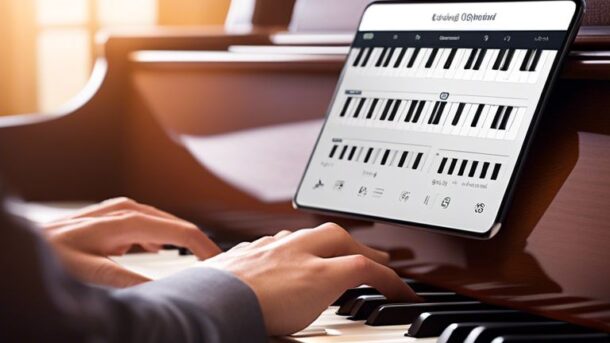
Virtual keyboards and MIDI editors are excellent tools for practicing piano and keyboard skills. They allow you to practice without needing an actual instrument, making them perfect for when you’re on the go or don’t have access to a piano. With virtual keyboards, you can work on finger placement, learn scales and chords, and practice playing along with songs. MIDI editors also enable you to create and edit music, making the learning process more interactive and engaging.

Metronome and Tempo Adjustment Tools

Practice your timing and rhythm with metronome and tempo adjustment tools. These resources help you stay on beat and develop a sense of timing critical for piano playing. By setting the tempo to different speeds, you can gradually increase the difficulty of your practice sessions, improving your dexterity and precision. Consistent use of metronomes and tempo adjustment tools can significantly enhance your playing abilities, helping you become a more well-rounded pianist.

Metronome and tempo adjustment tools are invaluable for any musician looking to improve their playing. They provide a solid foundation for your practice sessions and are necessary for mastering complex pieces that require precision and accuracy. Incorporating these tools into your daily practice routine will yield noticeable improvements in your piano skills over time.

Software

Utilize software programs that offer features such as interactive lessons, music theory instruction, and virtual keyboards to enhance your learning experience. These tools can help you track your progress, identify areas for improvement, and provide guidance on how to advance your skills. Whether you are a beginner or an experienced player, incorporating piano and keyboard software into your practice routine can take your musical journey to the next level.

Community and Forums

Many online resources offer vibrant communities and forums where piano enthusiasts can connect, share tips, and seek advice from fellow learners and experts in the field.

Online Forums for Piano Enthusiasts

With online forums dedicated to piano playing, you can engage with a community of like-minded individuals who are passionate about music. These forums provide a platform to ask questions, discuss practice strategies, and even seek recommendations for learning materials or online courses. By participating in these forums, you can benefit from the collective knowledge and experience of the community, which can be invaluable in your piano learning journey.

Social Media Groups for Piano Learners

Community-driven social media groups focused on piano learning are another excellent resource for connecting with fellow piano enthusiasts. Platforms like Facebook, Reddit, and LinkedIn host groups where you can share your progress, watch performances from other members, and engage in discussions on various piano-related topics. These groups can serve as a source of motivation, inspiration, and camaraderie as you navigate the intricacies of learning to play the piano.

Piano learning is not just about practicing scales and chords; it’s also about connecting with a community that shares your passion for music. Social media groups provide a more casual setting compared to traditional forums, allowing you to interact with other learners in real-time, share videos of your playing, and receive instant feedback from a supportive network of fellow piano enthusiasts.

Paid Resources and Courses

After What is the best online resource to learn the piano?, you might be eager to explore paid resources and courses to enhance your piano and keyboard skills. These paid options often offer more structured learning paths and personalized attention to help you progress efficiently and effectively.

Online Courses with Personalized Feedback

For those looking to receive individualized guidance and feedback on your piano playing, online courses with personalized feedback could be a valuable investment. These courses typically involve submitting recordings or videos of your playing to instructors who then provide detailed assessments and recommendations for improvement. This personalized approach can help you identify and work on specific areas of your playing that need attention, leading to faster progress and a deeper understanding of music theory and technique.

Private Lessons with Experienced Teachers

Courses that offer private lessons with experienced teachers are a popular choice for those seeking a more hands-on and tailored learning experience. With private lessons, you can work one-on-one with a skilled instructor who can personalize the curriculum to suit your goals and learning style. Whether you’re a beginner looking to build a strong foundation or an intermediate player aiming to refine your skills, private lessons offer the opportunity to receive direct feedback, guidance, and support from a knowledgeable mentor.

With private lessons, you can also benefit from the instructor’s expertise in helping you overcome challenges, learn new techniques, and gain insights that can elevate your playing to the next level. The structured nature of private lessons ensures that you stay motivated and accountable in your practice, making steady progress towards your musical goals.

Conclusion

From above, you can now see that there are numerous high-quality online resources available to help you learn piano and keyboards at your own pace and convenience. Whether you are a beginner starting from scratch or an intermediate player looking to improve your skills, these resources offer a wide range of lessons, tutorials, exercises, and even opportunities for interaction with fellow musicians. By taking advantage of platforms like Playground Sessions, Skoove, and YouTube channels like Pianote, you can enhance your musical abilities and achieve your goals in a fun and engaging way.

For further recommendations and insights from the piano community, you can also visit Best online resources for learning the piano? on Reddit. Recall, consistency and practice are key to mastering any skill, so do not hesitate to explore these resources and start your musical journey today!

Q: What are the best online resources for learning piano and keyboards?

A: There are several great online resources for learning piano and keyboards, such as:

Q: Are there any recommended online courses for learning piano and keyboards?

A: Yes, there are many reputable online platforms that offer comprehensive piano and keyboard courses. Some popular ones include:

  • Coursera
  • Udemy
  • Piano Marvel

Q: Which YouTube channels are recommended for learning piano and keyboards?

A: There are several YouTube channels dedicated to teaching piano and keyboard skills, such as:

  • Piano TV
  • Piano Lessons On The Web
  • HDpiano

Q: Are there any useful apps and websites for learning piano and keyboards?

A: Yes, there are many apps and websites that can help you improve your piano and keyboard skills, such as:

  • Simply Piano
  • Flowkey
  • Playground Sessions

How does learning piano online compare to traditional in-person lessons

Many aspiring musicians like yourself often wonder how learning piano online stacks up against the traditional in-person lessons. In this informative comparison, we will investigate into the pros and cons of each method, helping you make an informed decision on which avenue best suits your musical journey. Whether you prefer the convenience of online lessons or the personal touch of face-to-face instruction, we’ll explore the unique benefits and drawbacks of both approaches. So, let’s dive in and discover which option harmonizes best with your learning style and goals.

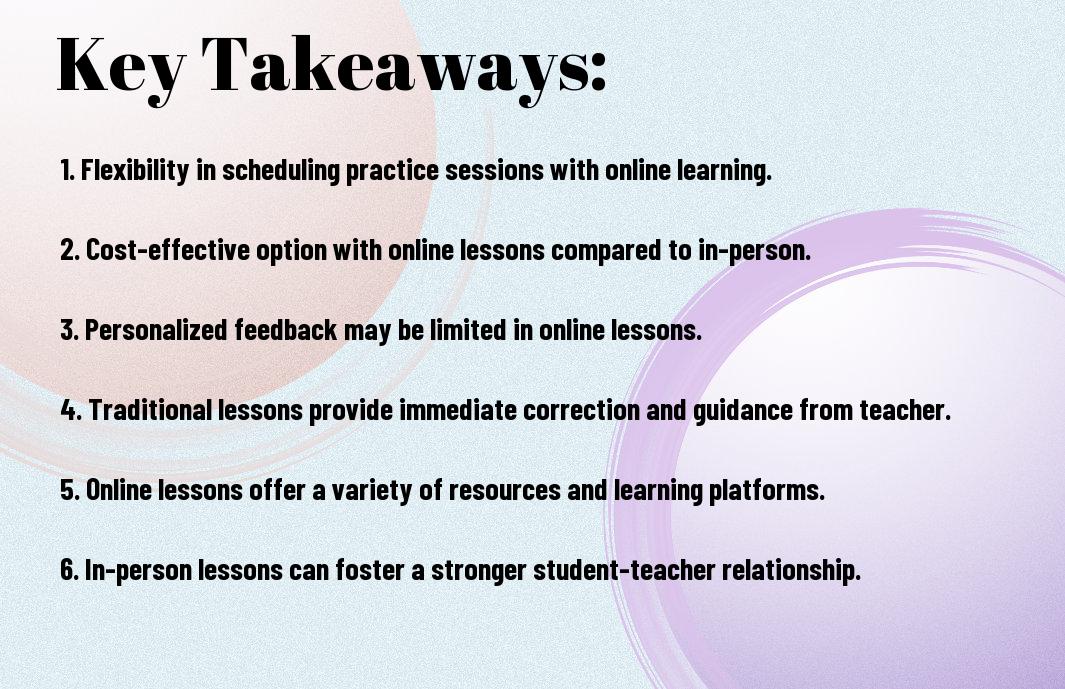
Key Takeaways:

  • Convenience: Online piano lessons offer the flexibility to schedule sessions at your own convenient time, avoiding the need for travel.
  • Personalized Learning: In-person lessons provide immediate feedback and correction from the instructor, while online lessons may require self-motivation and discipline for improvement.
  • Cost-effectiveness: Learning piano online can be more cost-effective compared to traditional lessons, as it eliminates the need for commuting expenses and potentially offers more affordable options.

The Rise of Online Learning

The Digital Age and Music Education

With the exponential growth of technology, the landscape of education has been revolutionized. This shift towards digital platforms has not skipped music education. Online piano lessons have surged in popularity, offering a new way for aspiring musicians like you to learn and improve your skills.

Accessibility and Convenience of Online Lessons

Education is no longer confined to traditional classrooms or studios. Online piano lessons provide you with the flexibility to learn from the comfort of your own home, at your own pace. You no longer need to schedule your day around fixed lesson times; instead, you can choose a time that fits your schedule best.

It’s a game-changer for those with busy lifestyles or limited access to in-person instructors. With online piano lessons, you have the freedom to learn whenever and wherever you want, making it easier to incorporate music into your daily routine.

Traditional In-Person Lessons

The Timeless Appeal of Face-to-Face Instruction

Instruction in a traditional, in-person setting offers a unique learning experience that cannot be replicated entirely by online platforms. The direct guidance from a skilled piano teacher, sitting beside you, observing your hand positioning, posture, and technique, is invaluable. According to Piano Software and Apps vs. In Person Lessons – VoicesInc.org, this personalized approach allows for immediate feedback and correction, ensuring that bad habits are nipped in the bud before they become ingrained in your playing.

The Benefits of Human Interaction and Feedback

One of the primary advantages of in-person piano lessons is the real-time interaction and personalized feedback that you receive from your instructor. You can ask questions, seek clarification, and engage in a musical dialogue that enhances your understanding of the instrument and music theory. The emotional connection and rapport built through face-to-face lessons can motivate you to practice diligently and strive for improvement.

Interaction with a teacher who understands your learning style, challenges, and aspirations can lead to customized lesson plans tailored to your needs. Moreover, having a human presence to guide you through moments of frustration or self-doubt can be incredibly reassuring and inspiring. This personalized touch fosters a supportive environment where your musical journey is nurtured and celebrated.

Comparing the Learning Experience

Any online learning experience differs from traditional in-person lessons in various ways. Let’s break down the comparison into key aspects:

Structured Learning Self-Directed Learning
Online piano lessons often offer structured curriculums and progress tracking tools to guide your learning journey systematically. On the other hand, in-person lessons may allow more room for self-directed exploration and improvisation, depending on your preferences and the teacher’s style.

The Role of Technology in Enhancing Engagement

Enhancing engagement through technology is a major advantage of online piano lessons. Interactive apps, virtual keyboards, and instant feedback mechanisms can make the learning process more dynamic and enjoyable.

Learning becomes more interactive and engaging through the use of various technological tools. For example, virtual keyboards can help you practice and receive feedback in real-time, enhancing your understanding and skill development.

Personalization and Adaptability in Online Lessons

Learning piano online allows for a high level of personalization and adaptability. From choosing your preferred learning pace to accessing a wide range of resources tailored to your skill level, online platforms offer flexibility that traditional lessons may lack.

Technology plays a crucial role in enabling personalized learning experiences for piano students. Features such as AI-based recommendations and progress tracking help align the curriculum with your individual learning needs, ensuring efficient progress and skill development.

The Quality of Instruction

Not all piano instruction is created equal. When comparing online piano lessons to traditional, The Pros and Cons of Online Piano Lessons vs In Person …, the quality of instruction is a crucial factor to consider. Let’s research into the qualifications and expertise of online instructors, as well as the importance of pedagogy in traditional lessons.

Qualifications and Expertise of Online Instructors

Quality instruction begins with the qualifications and expertise of the instructors. Online platforms often provide access to a diverse range of instructors from around the world, allowing you to select a teacher whose style and expertise align with your goals. Many online instructors have extensive experience, certifications, and even performance backgrounds that can enhance your learning experience.

The Importance of Pedagogy in Traditional Lessons

The pedagogy employed in traditional piano lessons is a fundamental aspect of the quality of instruction. In-person lessons often focus on not just teaching you how to play the piano, but also on the theory, technique, and musicality behind the notes. The one-on-one interaction with a teacher allows for immediate feedback and personalized instruction tailored to your learning style.

For instance, a traditional piano instructor can correct your hand position, posture, and fingering in real-time, addressing issues as they arise. This personalized attention is invaluable in building a strong foundation and advancing your skills effectively.

Accountability and Feedback Mechanisms

Instructors, both online and in-person, play a vital role in providing accountability and feedback mechanisms to help you progress in your piano journey. Online platforms often have features that track your practice time, offer progress reports, and allow for communication with instructors via messaging or video calls.

Feedback from instructors is crucial for your development as a pianist. In traditional lessons, immediate feedback on your performance, technique, and interpretation can significantly impact your growth. Regular assessments and constructive criticism from an experienced teacher can push you to improve and strive for excellence.

Cost and Value

The Economics of Online Lessons

Now, when it comes to the cost of online piano lessons compared to traditional in-person instruction, there are a few key differences to consider. Any online platform usually offers different pricing plans, allowing you to choose a package that fits your budget and learning needs. You may find that online lessons are more affordable than traditional lessons, as they eliminate travel costs and may offer discounts on bulk lesson packages.

The Investment in Traditional In-Person Instruction

For those who opt for traditional, in-person piano lessons, the investment can vary based on factors such as the teacher’s expertise, location, and lesson duration. A one-on-one lesson with an experienced instructor may come at a higher price point compared to online lessons. Some traditional instructors also require additional fees for materials or recital participation, which can add to the overall cost.

A traditional in-person lesson offers a personalized experience where the teacher can provide immediate feedback and tailor instruction to your learning style. This individualized attention can be invaluable for your progress and motivation. For those who prefer face-to-face interaction and guidance, the investment in traditional lessons can bring a sense of accountability and structure to your learning.

Weighing the Costs and Benefits

Lessons, when considering the costs and benefits of online versus in-person piano instruction, it’s crucial to weigh your priorities. Online lessons may offer flexibility in scheduling and cost-effectiveness, making them suitable for busy individuals or those on a budget. However, traditional lessons provide a unique learning environment with real-time interaction and personalized guidance from a skilled instructor.

For instance, if you value convenience and affordability, online lessons might be the right choice for you. On the other hand, if you prioritize a hands-on approach and in-depth instruction, investing in traditional in-person lessons could be more beneficial for your musical journey.

Overcoming Challenges

Staying Motivated and Disciplined in Online Learning

All journeys have their ups and downs, and learning piano online is no exception. On your online learning path, staying motivated and disciplined is crucial. Without the structure of traditional, in-person lessons, it can be tempting to procrastinate or let your practice sessions slide. To combat this, set specific goals for yourself and create a daily or weekly practice schedule. Treat your online lessons with the same dedication as you would with in-person instruction. Note, progress comes with consistent effort.

Addressing Technical Issues and Connectivity Problems

Problems with technology can be a roadblock in your online piano learning experience. If you encounter technical issues or connectivity problems during your online lessons, don’t get discouraged. It’s vital to troubleshoot common problems like audio lag, internet connectivity issues, or software glitches. Ensure you have a stable internet connection, close unnecessary background applications, and familiarize yourself with the online platform’s settings. Don’t hesitate to seek help from your online instructor or technical support to address any persistent issues.

Another tip to address technical issues and connectivity problems is to have a backup plan in place. Consider keeping a spare set of headphones, an alternative device, or a different internet connection option available as a contingency. Being prepared for potential technological challenges can help you navigate through any disruptions seamlessly and maintain your focus on learning and improving your piano skills.

Building Confidence and Performance Skills

Confidence is key when it comes to showcasing your piano skills, whether in an online setting or in front of an audience. As you progress in your online piano lessons, it’s vital to build your confidence and performance skills. Practice performing pieces regularly, record your performances, and reflect on your progress. Visualize yourself performing with poise and conviction, and embrace opportunities to share your music with others, such as in virtual recitals or online forums.

A positive mindset and a willingness to step out of your comfort zone are vital in building confidence and honing your performance skills. Embrace constructive feedback from your online instructor and peers, and use it as fuel to improve and grow as a pianist. Note, the journey to becoming a skilled pianist is as much about developing your confidence and stage presence as it is about mastering technical skills.

Conclusion

With this in mind, it is clear that learning piano online offers numerous benefits compared to traditional, in-person lessons. Online platforms provide flexibility in scheduling, personalized lesson plans, and the convenience of learning from the comfort of your own home. Additionally, the availability of a wide range of resources, such as video tutorials and interactive practice tools, can enhance your learning experience and help you progress at your own pace.

While traditional lessons may offer the advantage of face-to-face interaction and immediate feedback from a teacher, online lessons have proven to be effective in facilitating learning and accommodating different learning styles. Ultimately, the choice between online and in-person lessons depends on your personal preferences and goals as a piano student. Whether you opt for the structured approach of traditional lessons or the convenience and flexibility of online platforms, the key is to find a method that resonates with you and helps you achieve your musical aspirations.

Q: Is learning piano online as effective as traditional in-person lessons?

A: Online piano lessons can be just as effective as traditional in-person lessons, as long as you have a good internet connection and a quality online instructors. Many online platforms offer interactive lessons, feedback, and personalized instruction to help students progress.

Q: Are there any advantages to learning piano online versus traditional lessons?

A: Yes, there are several advantages to learning piano online. Online lessons offer more flexibility in terms of scheduling, location, and cost. Students can learn at their own pace and access lessons from anywhere with an internet connection. Additionally, online lessons often provide a variety of resources such as video tutorials, practice exercises, and supplemental materials.

Q: What are some potential drawbacks of learning piano online compared to traditional lessons?

A: One potential drawback of learning piano online is the lack of face-to-face interaction with an instructor. In-person lessons allow for immediate feedback and correction, as well as a more personalized learning experience. Additionally, some students may find it challenging to stay motivated and accountable without the structure of in-person lessons. It’s important to consider your learning style and preferences when deciding between online and traditional lessons.

What features should a good piano learning app have

With a multitude of piano learning apps available, it can be overwhelming to navigate through them all. When choosing a piano learning app, you must look for key features to ensure successful learning. From interactive lessons and real-time feedback to customizable practice sessions and a wide variety of songs to play, a good piano learning app should have all the imperative tools to help you master this beautiful instrument at your own pace. Let’s explore the must-have features that will elevate your piano learning experience to new heights.

Key Takeaways:

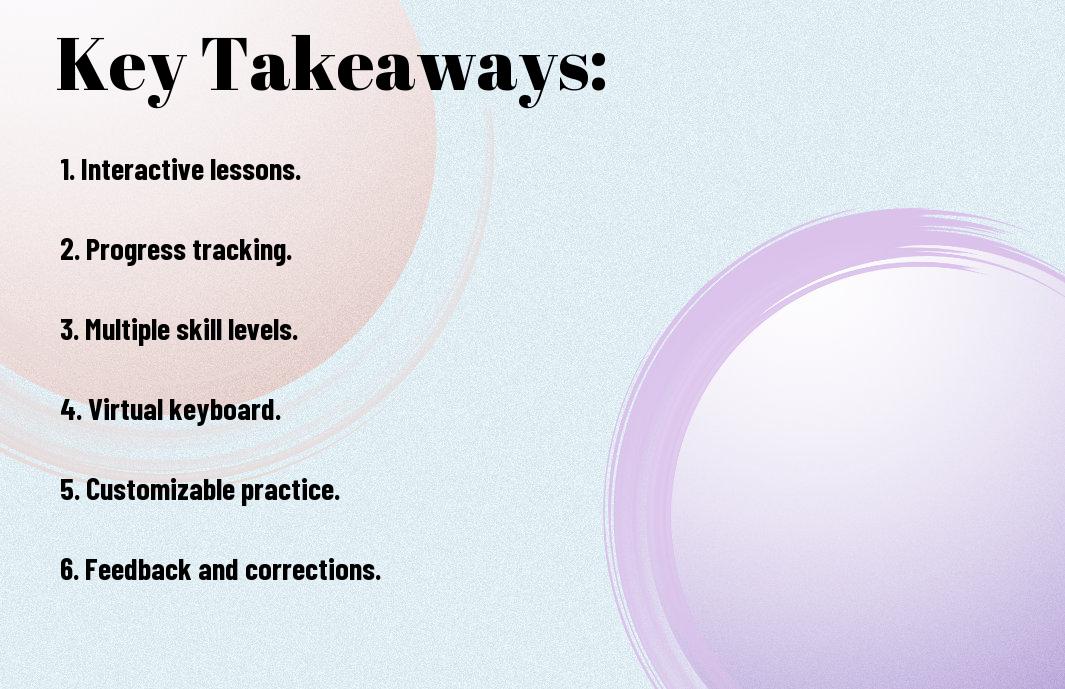
  • Interactive Lessons: A good piano learning app should offer interactive lessons that engage users and provide feedback on their progress.
  • Customized Learning Paths: The app should allow users to set their own learning goals and provide a personalized learning path based on their skill level and objectives.
  • Practice Tools: The app should include practice tools such as metronome, recording features, and sheet music to help users improve their skills outside of structured lessons.

Essential Features for Effective Learning

Interactive Lessons and Exercises

Interactive lessons and exercises are crucial for effective piano learning. Through interactive features, you can engage with the material in a hands-on way, which helps improve your understanding and retention of key concepts. These features could include interactive keyboard simulations that allow you to practice playing notes and chords, as well as interactive lessons that adapt to your skill level and pace.

Personalized Progress Tracking

For efficient learning, personalized progress tracking is imperative in a good piano learning app. By keeping track of your progress, you can see how far you’ve come, which areas you need to focus on, and set achievable goals for improvement. These features can include personalized practice recommendations based on your strengths and weaknesses, as well as regular assessments to monitor your development over time.

A good personalized progress tracking system not only motivates you to keep practicing but also provides valuable insights into your learning patterns and areas that need more attention. With this information at your fingertips, you can make informed decisions on how to adjust your practice routine for maximum results.

Engaging Practice Tools

Virtual Keyboard and Real-time Feedback

One vital feature that a good piano learning app should have is a virtual keyboard that allows you to practice anytime, anywhere. This tool enables you to play notes and chords on your device’s screen as if you were playing on a real piano. Additionally, real-time feedback is crucial for your improvement. The app should provide instant analysis of your playing, pointing out areas for improvement such as hand positioning, timing, or note accuracy.

Song Library and Play-along Functionality

One engaging aspect of a piano learning app is its song library and play-along functionality. A diverse library of songs across different genres and difficulty levels keeps your practice sessions exciting and varied. The play-along feature allows you to practice playing along with pre-recorded tracks, helping you develop your sense of rhythm and timing.

Keyboard Understanding the theory and practice of playing songs in the app’s library is a great way to enhance your skills. By learning to play different styles and genres, you can broaden your musical horizons and improve your overall piano proficiency. The play-along functionality further immerses you in the music, making practice sessions more engaging and enjoyable.

Guidance and Support

Video Tutorials and Demonstrations

Tutorials are an necessary component of any good piano learning app. They provide you with visual and auditory guidance on how to play different pieces, techniques, and exercises. Video tutorials and demonstrations allow you to see and hear the music being played, providing a clear example for you to follow. This visual aid can help you understand the hand positioning, movement, and overall technique required to play the piano effectively.

Access to Expert Teachers and Mentors

In addition to video tutorials, having access to expert teachers and mentors through a piano learning app can significantly enhance your learning experience. These professionals can provide personalized feedback, guidance, and support to help you improve your skills and overcome any obstacles you may encounter. Whether it’s through live online lessons, pre-recorded video feedback, or messaging features, having access to expert teachers and mentors can take your piano learning journey to the next level.

Video calls with teachers can give you the opportunity to ask questions, receive real-time feedback, and have a more interactive learning experience. This direct access to knowledgeable and experienced piano instructors can help you progress more efficiently and effectively in your musical journey.

Customization and Adaptability

Adjustable Difficulty Levels and Pacing

Not everyone learns at the same pace or with the same level of difficulty. A good piano learning app should allow you to adjust the difficulty levels and pacing to suit your individual learning style. This means that whether you are a beginner just starting out or an advanced player looking to refine your skills, you can tailor the app to meet your specific needs.

Learning Style Accommodations (Visual, Auditory, Kinesthetic)

To cater to your unique learning style, it’s important for a piano learning app to accommodate different preferences such as visual, auditory, and kinesthetic learning. Visual learners may benefit from interactive graphics and video tutorials, while auditory learners might prefer audio cues and practice sessions. Kinesthetic learners, on the other hand, may require hands-on activities and interactive exercises to effectively grasp concepts.

Adaptability is key when it comes to learning a new skill like playing the piano. A good app should be able to adapt to your preferred learning style, ensuring that you receive the most effective instruction and practice sessions tailored to how you learn best.

Adjustable features that cater to visual, auditory, and kinesthetic learning styles can help you make the most out of your practice sessions and improve your piano skills more efficiently.

Motivation and Accountability

Despite your best intentions, practicing the piano every day can be a challenge. A good piano learning app should help keep you motivated and hold you accountable for your progress. When choosing an app, look for features that will inspire you to keep practicing and track your improvement over time.

Reward Systems and Achievements

On your piano learning journey, it’s important to have a sense of accomplishment and progress. A good app will offer reward systems and achievements to celebrate your milestones, whether it’s mastering a difficult piece or completing a certain number of practice sessions. By earning virtual rewards and unlocking achievements, you will stay motivated to continue learning and growing as a pianist.

Social Sharing and Community Features

On your musical quest, it can be beneficial to connect with others who share your passion for the piano. Some apps offer social sharing and community features that allow you to interact with fellow users, participate in challenges, and receive feedback from peers. By being part of a community of like-minded individuals, you can stay inspired, learn from others, and keep yourself accountable for your progress.

Accountability plays a crucial role in your piano practice routine. When you have a supportive community cheering you on and holding you accountable, you’re more likely to stay committed to your goals and push yourself to improve. So, don’t underestimate the power of social sharing and community features in a piano learning app.

Technical Requirements and Compatibility

Once again, if you are considering developing a piano learning app, it is crucial to understand the technical requirements and compatibility aspects. For a comprehensive guide on this topic, you can refer to Best Piano Learning Apps: How To Develop One for You?.

Device and Platform Support

Requirements for device and platform support are vital when developing a piano learning app. Your app should be compatible with various operating systems such as iOS and Android to reach a broader user base. Ensuring that the app functions seamlessly across different devices, including smartphones and tablets, will enhance user experience and accessibility.

Offline Access and Syncing Capabilities

Requirements for offline access and syncing capabilities are vital for a good piano learning app. Users should be able to access lessons and practice offline, allowing them to learn at their convenience without requiring a constant internet connection. Syncing capabilities enable users to track their progress across devices, ensuring a seamless learning experience no matter where they are.

Device synchronization is crucial so that you can seamlessly switch between your smartphone and tablet, for example, without losing any progress. This feature allows you to pick up your lessons right where you left off, making your learning journey uninterrupted and efficient.

To wrap up

So, when looking for a piano learning app, remember that a good one should have features that cater to your individual learning style and pace. It should offer a variety of lessons, exercises, and songs to keep you engaged and motivated. The app should also provide feedback and progress tracking to help you monitor your improvement over time. Additionally, interactive features such as virtual keyboards, metronomes, and recording options can enhance your learning experience and make practicing more enjoyable.

Ultimately, the best piano learning app for you is the one that fits your preferences and helps you achieve your musical goals. So, take the time to explore different options, try out free trials, and read reviews to find the app that best suits your needs. With dedication and the right app by your side, you’ll be well on your way to mastering the piano.

Q: What features should a good piano learning app have?

A: A good piano learning app should have features such as interactive lessons, a variety of songs to learn, progress tracking, and practice exercises.

Q: How important is an interactive lesson feature in a piano learning app?

A: Interactive lessons are crucial in a piano learning app as they provide real-time feedback, keep learners engaged, and offer a personalized learning experience.

Q: Why is progress tracking an important feature in a piano learning app?

A: Progress tracking allows users to monitor their improvement, set goals, and stay motivated to continue learning and practicing the piano.

Skip to content