As you navigate online education, understanding your learning style is crucial to maximizing your potential. You will encounter various digital resources and teaching methods, and identifying your individual learning approach will help you make the most of these tools. Your learning style influences how you absorb and process information, and recognizing it will enable you to tailor your study habits and optimize your online learning experience, leading to greater success and achievement in your academic pursuits.
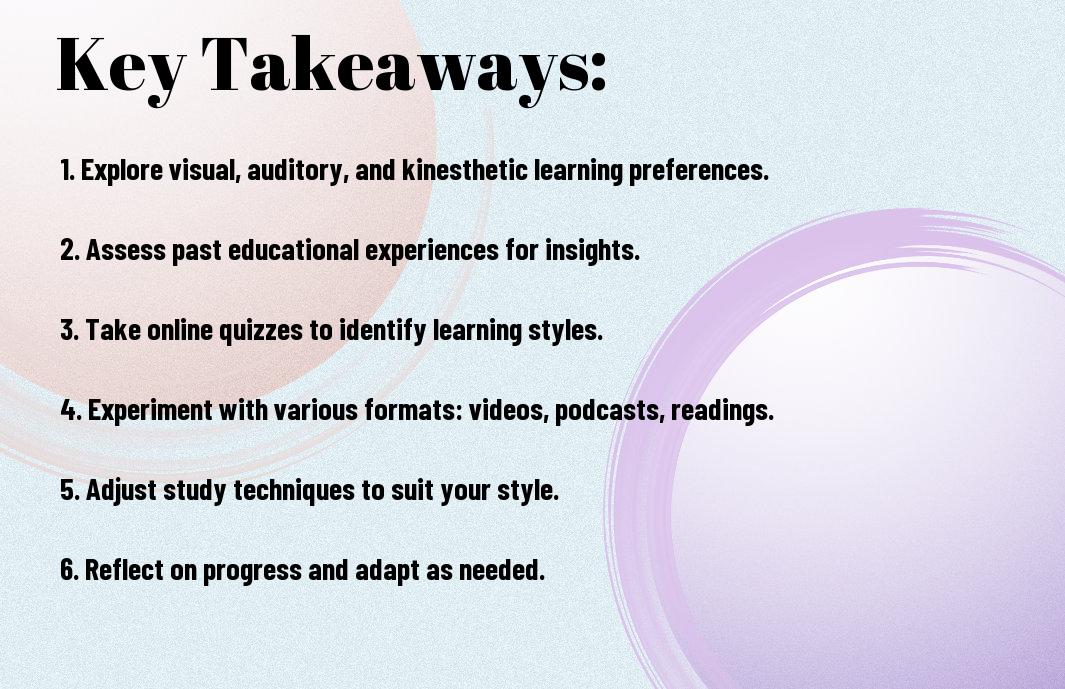
Key Takeaways:
To optimize your online learning experience, consider the following points:
- Identify your learning preferences to determine whether you are a visual, auditory, or kinesthetic learner, and choose online courses that cater to your style.
- Understand your self-motivation levels and develop strategies to stay engaged and motivated throughout your online learning journey.
- Explore different learning platforms and tools to find the ones that best suit your needs and preferences, such as video lectures, interactive simulations, or discussion forums.
- Develop a personalized learning plan that sets clear goals, outlines a study schedule, and tracks progress to help you stay focused and achieve your objectives.
- Seek support and feedback from instructors, peers, or mentors to address any challenges or concerns you may encounter during your online learning experience.

Identifying Your Learning Style
Your learning style plays a significant role in online education, and you can discover it by visiting Learning Tips: Discover Your Learning Style to learn more about your strengths.
Visual Learning
Across various online platforms, you can identify if you are a visual learner by checking if images and videos help you understand concepts better, making learning more engaging and effective for you.
Auditory Learning
Among the different types of learning styles, auditory learning involves processing information through sound, which means you learn best by listening to audio materials, such as podcasts or audio lectures, to grasp new concepts.
For instance, if you find it easier to recall information from audio recordings or voice notes, you may have an auditory learning style, and incorporating more audio materials into your online learning routine can help you achieve better results, allowing you to make the most of your online education experience.
Online Learning Platforms
Any online learning platform you choose should cater to your learning style. You can find more information on How to Identify and Use Your Learning Style to make an informed decision.
Interactive Tools
Platforms like online course providers offer interactive tools to enhance your learning experience. You can explore these tools to discover what works best for your learning style.
Virtual Classrooms
Across various online learning platforms, you can access virtual classrooms that simulate a traditional classroom environment. You can engage with instructors and peers in real-time, making online learning more engaging and interactive.
It is worth noting that virtual classrooms often include features such as video conferencing, live chats, and screen sharing, allowing you to interact with your instructor and fellow students in a more immersive and engaging way, which can help you stay motivated and focused throughout your online course.
Personalized Learning Approaches
Unlike traditional classroom settings, online education offers you the flexibility to tailor your learning experience to your individual needs and preferences, allowing you to learn more effectively.
Self-Paced Learning
Alike other forms of learning, self-paced learning enables you to proceed at your own speed, reviewing material as many times as you need to, and taking breaks when necessary, making it an ideal option for those with busy schedules.
Collaborative Learning
Following your own learning path, you can also engage in collaborative learning, where you work with peers and instructors to achieve common goals, share knowledge, and gain new insights, enhancing your overall learning experience.
SelfPaced learning is a great starting point, but once you engage in collaborative learning, you will find that your learning experience is enriched by the interactions and feedback from your peers, and you will be able to apply your knowledge in a more practical and meaningful way, as you learn from others and they learn from you.
Strategies for Effective Learning
Despite the numerous online resources available, you need to develop a strategy to learn effectively. You can do this by identifying your strengths and weaknesses, and then creating a personalized learning plan that suits your needs.
Time Management
By organizing your schedule, you can allocate specific times for learning, breaks, and other activities, helping you stay focused and avoid procrastination, allowing you to make the most of your online education.
Goal Setting
Goal-oriented learners tend to achieve more, as they have a clear direction and motivation, you can set specific, achievable goals for your online education, breaking them down into smaller, manageable tasks to track your progress.
This approach to goal setting enables you to maintain a consistent pace, celebrate your accomplishments, and make adjustments as needed, ensuring you stay on track and motivated throughout your online learning journey, and ultimately, achieve your academic and professional goals, enhancing your overall learning experience.
Overcoming Challenges
Now that you’ve identified your learning style, it’s time to tackle the obstacles that may hinder your online learning journey. You’ll encounter various challenges, but with persistence and the right strategies, you can overcome them and achieve your goals.
Staying Motivated
Among the key factors that contribute to your success is maintaining your motivation. You can stay motivated by setting achievable goals, celebrating your progress, and rewarding yourself for your accomplishments.
Seeking Support
Before you start feeling overwhelmed, consider seeking help from your instructors, peers, or online resources. You can reach out to them whenever you need guidance or support, and they can provide you with valuable advice and assistance.
Indeed, seeking support is an imperative part of your online learning journey. You can join online communities, forums, or discussion groups where you can connect with fellow learners, share your experiences, and learn from their perspectives. By seeking support, you can gain a deeper understanding of the subject matter, clarify any doubts, and stay on track to achieve your learning objectives.
Evaluating Progress
Once again, you’ll need to reflect on your learning journey to understand what works best for you. Tracking your progress helps you identify what you’ve achieved and what you need to work on.
Assessing Strengths
For instance, you can start by evaluating your strengths, focusing on the subjects or topics where you excel, and understanding what makes you successful in those areas.
Identifying Areas for Improvement
On the other hand, you should also identify areas where you struggle, analyzing what’s not working and what you can do to improve, which will help you develop a more effective learning strategy.
Strengths in certain subjects can often be leveraged to improve weaker areas, as you can apply similar learning techniques or mindsets to enhance your understanding and performance, allowing you to grow and develop as a learner, and ultimately, achieve your academic goals, with your unique learning style guiding your path forward, helping you to stay motivated and engaged in your online education journey, as you continue to learn and improve.
To wrap up
From above, you now have a better understanding of how to find your learning style in online education. You can explore Learning Styles and the Online Environment to learn more. By identifying your strengths and weaknesses, you can optimize your online learning experience and achieve your academic goals. You will be able to create a personalized approach to learning, making you more effective and efficient in your studies.
FAQ
Q: What is the first step in determining my learning style in online education?
A: The first step in determining your learning style in online education is to reflect on how you have learned best in the past. Consider your experiences in traditional classrooms and other online courses. Ask yourself questions like: Do you learn better through watching videos, reading texts, or listening to audio? Do you prefer hands-on activities or theoretical explanations? Identifying your past learning strengths and weaknesses will help you narrow down your learning style preferences and guide you in selecting the most effective online educational resources.
Q: How can I discover whether I am a visual, auditory, or kinesthetic learner in an online setting?
A: To discover your learning style in an online setting, try experimenting with different types of content delivery. For example, if you’re taking an online course, try watching video lectures, then reading the transcript of the same lecture, and finally, engaging in a related interactive simulation or quiz. Pay attention to which method helps you understand and retain the information best. Additionally, many online educational platforms offer quizzes or assessments to help determine your learning style. Utilizing these tools can provide insights into whether you are a visual learner (learning through images and videos), an auditory learner (learning through sound and audio), or a kinesthetic learner (learning through physical activities and hands-on experiences).
Q: Can my learning style change over time, and how can I adapt to new learning environments in online education?
A: Yes, your learning style can evolve over time due to changes in personal preferences, improvements in technology, or variations in the subject matter. As you continue your online education, be open to trying new methods of learning. You might find that what worked for you in one course doesn’t work as well in another, due to differences in content or delivery. Be flexible and willing to adapt your learning approach as needed. Moreover, online education often provides a variety of resources and tools, so don’t hesitate to explore different learning paths within a course to find what works best for you. Keeping a learning journal or seeking feedback from instructors can also help you identify areas where you might need to adjust your learning strategy to achieve the best outcomes.