
Cultural immersion is key to truly mastering a language, and online language learning courses understand this importance. By infusing cultural context into their curriculum, these courses provide you with a well-rounded learning experience that goes beyond grammar and vocabulary. According to a study on the role of culture in English language learning, delving into cultural nuances enhances your understanding and appreciation of the language. Explore how online courses integrate cultural elements to enrich your language learning journey here.
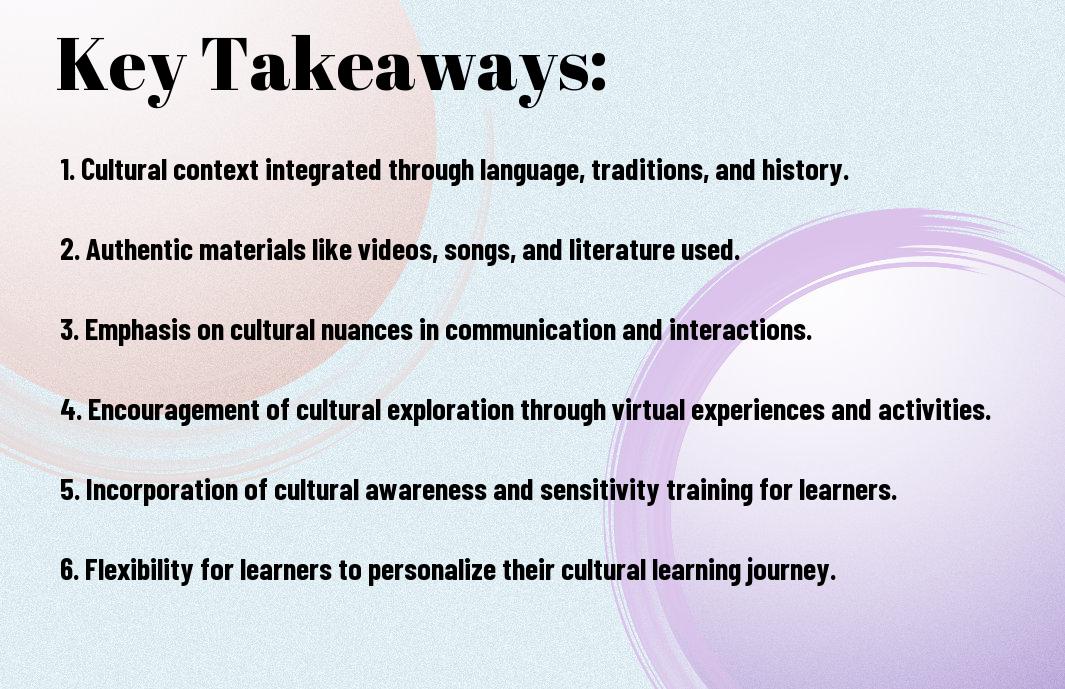
Key Takeaways:
- Cultural content inclusion: Online language learning courses incorporate cultural context by including aspects such as traditions, customs, and cultural norms within their curriculum.
- Interactive activities: These courses use interactive activities like virtual field trips, cultural games, and multimedia resources to immerse learners in the cultural context of the language they are studying.
- Native speaker interactions: Utilizing real-life scenarios, role plays, and conversations with native speakers help learners understand cultural nuances, idioms, and expressions, thereby enriching their language learning experience.
The Importance of Cultural Context in Language Learning
Why language is deeply rooted in culture
Context is crucial in understanding the intricacies of a language, as language and culture are deeply intertwined. Language is not just a set of words and grammar rules; it is a reflection of the history, values, and beliefs of the people who speak it. When you learn a new language, you are not just memorizing vocabulary and syntax; you are gaining insight into a whole new way of thinking and perceiving the world.
The limitations of language learning without cultural context
An understanding of cultural context is crucial for truly mastering a language. Without it, your communication may lack nuance and could even lead to misunderstandings. For example, a simple phrase like “How are you?” can have different connotations and appropriate responses depending on the cultural context. If you don’t understand these nuances, your language skills may plateau, and you may struggle to connect with native speakers on a deeper level.
It is important to remember that language is not just a means of communication; it is a reflection of society’s norms, values, and beliefs. Without cultural context, you may miss out on crucial aspects of language use such as idiomatic expressions, humor, and social etiquette. Embracing cultural context in your language learning journey will not only help you become more proficient in the language but also open doors to meaningful cross-cultural connections and experiences.
Approaches to Incorporating Cultural Context
Immersion-based learning
Some online language learning courses incorporate cultural context through immersion-based learning. With this approach, you are exposed to the language in real-life situations, such as conversations, videos, or virtual reality scenarios that reflect cultural norms and practices. This method helps you not only understand the language but also the customs, traditions, and social etiquette associated with it.
Cultural references and authentic materials
Any credible online language learning platform will integrate cultural references and authentic materials into their curriculum. By including music, films, literature, and other cultural artifacts from the target language’s origin, you get a deeper understanding of the context in which the language is spoken. Plus, these materials expose you to various accents, dialects, and regional nuances, enriching your learning experience.
Furthermore, learning from authentic materials allows you to grasp colloquial expressions, slang, and idiomatic phrases that are commonly used by native speakers but might not be covered in traditional textbooks.
Interactive activities and discussions
The interactive activities and discussions provided in online language learning courses are another effective way to incorporate cultural context. Through group projects, role-playing exercises, and virtual cultural exchanges, you not only practice using the language but also learn about the social norms and values of the target culture.
Interactive platforms often feature forums or chat rooms where you can engage with native speakers or other learners from different cultural backgrounds, fostering a sense of community and providing valuable insights into the cultural nuances of the language you are studying.

Language Learning Platforms and Cultural Context
Duolingo’s approach to cultural context
For language learners, understanding cultural context is imperative for truly mastering a language. Duolingo recognizes this and incorporates cultural elements into its curriculum to provide a comprehensive learning experience. Context is infused into lessons through interactive exercises, where learners not only practice vocabulary and grammar but also learn about cultural nuances.
Rosetta Stone’s cultural immersion features
Duolingo’s emphasis on cultural understanding enhances your language learning journey by immersing you in the context of the language. By incorporating cultural references, idioms, and customs, Rosetta Stone goes beyond just teaching vocabulary and grammar. You will find yourself not only learning the language but also gaining insights into the culture, making your learning experience more enriching.
A key aspect of Rosetta Stone’s cultural immersion features is the inclusion of real-life scenarios and conversations in the language’s cultural context. This approach helps you grasp not just the language itself but also how it is used in everyday situations, giving you a deeper understanding of the language.
Babbel’s focus on conversational skills in context
With Babbel, the focus is not just on building vocabulary and grammar knowledge but on honing your conversational skills within the appropriate cultural context. By practicing dialogues, role-plays, and cultural insights, you are better equipped to engage in real-life conversations in the language you are learning. Through this contextual approach, you not only learn the language but also how to use it effectively in different social settings.
Skills are developed through Babbel’s tailored lessons that simulate real-life conversations, ensuring that you not only understand the language rules but can also apply them in context. This focus on practical communication skills within cultural contexts makes your language learning experience more relevant and applicable to real-world scenarios.
The Role of Instructors and Cultural Ambassadors
The importance of native speaker instructors
Ambassadors of language and culture, native speaker instructors play a vital role in online language learning courses by providing authentic insights into the target language’s cultural nuances and societal norms. Their firsthand knowledge and use of the language help you not only grasp grammar and vocabulary but also understand the context in which these linguistic elements are used.
Furthermore, native speaker instructors can offer anecdotes, local idioms, and colloquial expressions that textbooks might overlook. This personal touch helps you develop a more profound appreciation and comprehension of the language beyond just its technical aspects.
Cultural ambassadors and language learning
The presence of cultural ambassadors in online language learning courses enhances the overall educational experience by bridging the gap between language acquisition and cultural understanding. By immersing you in the customs, traditions, and values of the native speakers, these ambassadors provide a holistic approach to learning a language.
The insights shared by cultural ambassadors go beyond language instruction; they offer a glimpse into daily life routines, celebrations, and social norms, fostering a deeper connection to the culture you are learning about. This symbiotic relationship between language and culture enriches your learning journey and broadens your global perspective.
Creating a sense of community and cultural connection
Instructors in online language courses play a significant role in creating a sense of community among learners from diverse backgrounds. By facilitating discussions, organizing cultural events, and encouraging peer-to-peer interactions, instructors help you not only improve your language skills but also forge connections with fellow learners who share your passion for the language and its associated culture.
One notable aspect of having dedicated instructors in online language courses is their ability to personalize the learning experience based on your interests and goals. Whether through virtual excursions to cultural landmarks or themed language activities, instructors make your language learning journey engaging and relevant to your individual learning needs.
Challenges and Limitations of Incorporating Cultural Context
Balancing cultural sensitivity and accuracy
Despite the importance of incorporating cultural context into language learning courses, there are challenges that educators face in finding the right balance between cultural sensitivity and accuracy. For example, while it’s crucial to be respectful of different cultures and avoid stereotypes, it’s also necessary to accurately represent the cultural nuances and diversity within a language.
For online language learning courses, striking this balance can be particularly challenging due to the lack of face-to-face interaction with students. Educators must rely on course materials and activities to convey cultural context effectively without misrepresenting or oversimplifying it.
Addressing cultural stereotypes and biases
Accuracy in representing cultural context in language learning courses is crucial to avoid perpetuating stereotypes and biases. Educators need to be mindful of how they present cultural information to ensure it is authentic and respectful. This involves examining the materials used in the courses, as well as the language and examples employed to teach cultural aspects.
- Understanding the diversity within cultures and avoiding generalizations
- Recognizing and addressing biases that may influence course content
Knowing the cultural background of your students can also help in addressing and dispelling stereotypes that may arise during the learning process.
| Accuracy | Cultural Sensitivity |
| Authentically representing cultural nuances | Respecting different cultural practices |
| Avoiding oversimplification | Acknowledging cultural diversity |
| Fostering understanding | Promoting inclusivity |
| Challenging biases | Dispelling stereotypes |
| Ensuring accuracy | Embracing cultural sensitivity |
Ensuring cultural relevance in a globalized world
Cultural relevance is necessary in language learning to prepare students for a globalized world where intercultural communication plays a significant role. By incorporating current cultural references, customs, and practices into the curriculum, online language learning courses can better equip students to navigate diverse cultural contexts.
To ensure cultural relevance, course developers must regularly update materials to reflect the evolving nature of cultures and societies. This may involve collaborating with native speakers, cultural experts, and educators to incorporate authentic cultural content into the curriculum.

Best Practices for Effective Cultural Context Integration
Using authentic materials and real-life scenarios
After all, language is intertwined with culture, so to truly grasp a language, you must immerse yourself in the cultural context. Online language learning courses that incorporate authentic materials such as newspapers, videos, and real-life scenarios help you understand not just the language but also the underlying beliefs, values, and practices of a culture. By learning from real-world examples, you gain a deeper insight into how language is used in everyday situations, making your learning experience more engaging and effective.
Encouraging learner reflection and self-awareness
Authentic cultural experiences are vital for your language learning journey. Online courses that encourage you to reflect on your own cultural assumptions and biases help you develop a greater sense of self-awareness. When you understand how your cultural background shapes your perceptions and communication style, you can better appreciate and respect the diversity of others. This self-reflection not only fosters cultural sensitivity but also enhances your language learning by encouraging you to adapt your communication style to different cultural contexts.
Context plays a crucial role in language learning. By reflecting on how cultural norms and values influence communication, you become more adept at navigating cross-cultural interactions. This heightened awareness allows you to adapt your language usage to suit various cultural contexts, leading to more effective and nuanced communication.
Fostering a growth mindset and cultural curiosity
Reflection is key to developing a growth mindset and fostering cultural curiosity in language learning. By challenging yourself to step out of your comfort zone and engage with unfamiliar cultural practices and perspectives, you not only expand your linguistic skills but also develop a broader understanding of the world. Online language courses that encourage you to explore different cultures with an open mind inspire you to embrace diversity and see language learning as a journey of discovery.
Reallife cultural experiences are invaluable for nurturing a growth mindset and cultivating cultural curiosity. By immersing yourself in authentic cultural contexts, you can appreciate the richness and diversity of human expression through language. Embracing new cultural experiences with curiosity and an eagerness to learn empowers you to not only master a language but also develop a deep appreciation for the interconnectedness of language and culture.
Conclusion
Upon reflecting on how online language learning courses incorporate cultural context into their curriculum, you can see the importance of understanding cultural nuances in language acquisition. By integrating cultural elements into the lessons, these courses offer a more holistic approach to learning a new language. This not only enhances your language skills but also helps you navigate real-life situations with cultural sensitivity.
If you are interested in further exploring how English speaking classes incorporate cultural understanding into language learning, you can research into resources like How do English speaking classes incorporate cultural understanding into language learning. This will provide you with additional insights and perspectives on the topic, enriching your understanding of the intersection between language and culture.
Q: How do online language learning courses incorporate cultural context into their curriculum?
A: Online language learning courses incorporate cultural context into their curriculum through various methods such as including cultural readings, videos, music, and real-life scenarios in the lessons. This helps students understand not only the language but also the customs, traditions, and values of the culture they are studying.
Q: Why is it important for online language learning courses to include cultural context in their curriculum?
A: Including cultural context in language learning courses is crucial as language and culture are deeply interconnected. Understanding the cultural norms and practices of a language helps students communicate effectively, avoid misunderstandings, and appreciate the richness of the language. It also engages students more deeply with the language and enhances their overall learning experience.
Q: How can students benefit from learning about the cultural context in online language courses?
A: Students can benefit from learning about cultural context in online language courses by gaining a deeper understanding of the language they are studying. They also develop cross-cultural communication skills, empathy, and cultural awareness. Learning about the cultural context enriches the language learning experience, making it more meaningful and rewarding.