Learning.

How to Use Social Media for Online Learning

As you explore ways to enhance your online learning experience, you’ll find that social media can be a valuable tool. You can leverage platforms to access educational content, connect with instructors, and engage with peers. If you’re interested in promoting your own educational content, you can learn How to use social media to promote my online courses and educational content effectively. By utilizing social media strategically, you can optimize your online learning and make the most of your educational pursuits.

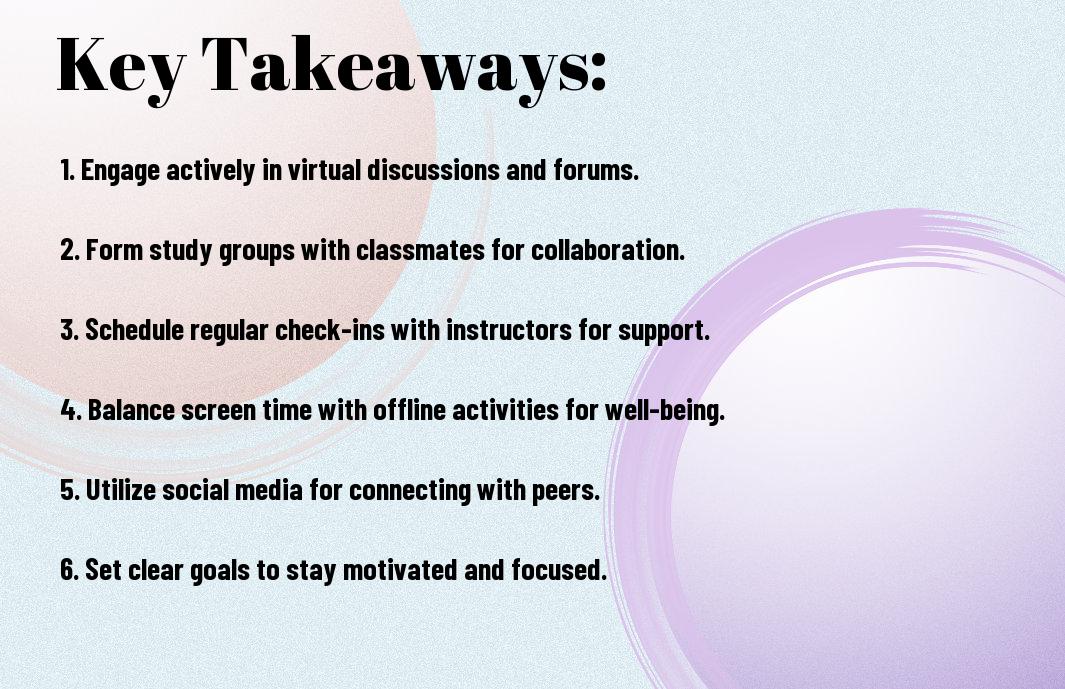
Key Takeaways:

To effectively utilize social media for online learning, consider the following points:

  • Establish a strong online presence by creating profiles on relevant platforms such as Twitter, LinkedIn, or Facebook to connect with educators, peers, and industry experts.
  • Leverage interactive tools like videos, podcasts, and live streams to enhance engagement and facilitate real-time discussions, making online learning more immersive and dynamic.
  • Utilize social media groups and forums to foster collaboration and knowledge sharing among learners, promoting a sense of community and belonging in online learning environments.
  • Tap into educational resources and curated content shared by experts and influencers in your field, using hashtags to discover and organize relevant information and stay updated on the latest trends and developments.
  • Develop a personalized learning approach by using social media analytics to track your progress, identify areas of improvement, and adjust your learning strategy to achieve your academic goals and maximize the effectiveness of your online learning experience.

Setting Up Social Media for Online Learning

Before you start using social media for online learning, you need to set up your accounts and create a plan. This will help you stay organized and ensure that you’re using social media effectively.

Creating a Professional Online Presence

Presenting yourself professionally online is important for online learning. You will want to create a profile that showcases your skills and interests, and helps you connect with others in your field.

Choosing the Right Social Media Platforms

Social media platforms vary in their features and user bases, so you’ll want to choose the ones that best fit your needs. You should consider which platforms your peers and instructors are using, and which ones have the most relevant content and discussions.

Further investigation into the different social media platforms will help you determine which ones are most suitable for your online learning goals. You can explore the features and tools of each platform, and consider how you can use them to engage with course materials, connect with others, and share your own knowledge and experiences.
Finding and Sharing Educational Resources

While navigating social media for online learning, you can discover a wealth of educational resources to enhance your knowledge. You can find and share valuable content, such as articles, videos, and podcasts, to support your learning journey.

Locating Online Courses and Tutorials

Online learning platforms and social media groups can help you locate online courses and tutorials tailored to your interests and needs. You can search for specific topics and find relevant courses, tutorials, and educational resources to expand your knowledge.

Sharing Knowledge and Experiences

For instance, you can share your own learning experiences, ask questions, and engage with others to create a collaborative learning environment. You can also share relevant content, such as articles, videos, or blog posts, to contribute to the discussion and help others learn.

Even as you share your knowledge and experiences, you can learn from others and gain new insights. You can participate in online discussions, join social media groups, and follow educators or experts in your field to stay updated on the latest developments and best practices, which can help you achieve your learning goals and expand your professional network.

Engaging with Online Communities

To maximize your online learning experience, you need to engage with online communities related to your field of study. This will help you stay updated with the latest developments and trends, and provide opportunities to network with like-minded individuals.

Participating in Forums and Discussions

Interacting with others in online forums and discussions can be a great way to deepen your understanding of a subject. You can ask questions, share your thoughts, and learn from others who have experience in the field.

Collaborating with Peers and Experts

About the benefits of collaborating with others, you will find that it enhances your learning experience. You can work on projects, share resources, and get feedback from your peers and experts, which can help you improve your skills and knowledge.

For instance, you can join online groups or forums where you can collaborate with others on projects, share your work, and get constructive feedback. This will help you develop your critical thinking and problem-solving skills, and prepare you for real-world challenges. You can also learn from experts in the field, who can provide valuable insights and guidance to help you achieve your learning goals.

Creating and Curating Content

Once again, you’ll find that social media platforms offer a wealth of opportunities for creating and curating content to support your online learning. You can share your own educational materials, such as videos, podcasts, and blog posts, to engage with your audience and facilitate learning.

Developing Educational Content

Content creation is key to providing valuable learning experiences for your audience. You can develop educational content, such as tutorials, webinars, and online courses, to share your expertise and knowledge with others, making it easily accessible and convenient for them to learn from you.

Curating Relevant and Useful Information

Before stepping into the world of content curation, you need to identify relevant and useful information that aligns with your learning goals. You can use social media to discover and share relevant articles, research papers, and other educational resources that support your online learning journey.

Another aspect of curating relevant and useful information involves organizing and presenting the content in a way that makes it easy for others to access and learn from. You can use social media tools, such as hashtags and playlists, to categorize and share your curated content, allowing you to create a valuable learning resource for yourself and others.

Managing Online Presence and Time

Your online presence is a reflection of your personal brand, and it’s imperative to maintain a professional image while using social media for online learning.

Maintaining a Professional Online Image

With a consistent tone and style, you can establish a strong online presence that showcases your expertise and interests, helping you connect with like-minded individuals and educators.

Effectively Managing Time Spent on Social Media

Beneath the surface of social media lies a plethora of resources, and you must allocate your time wisely to maximize your online learning experience, avoiding distractions and staying focused on your goals.

For instance, you can set aside specific times of the day to check your social media accounts, using tools like website blockers or apps that track your time spent on social media to help you stay on track, and prioritize your online activities to ensure you’re making the most of your time, achieving a balance between learning and socializing.

Measuring Success and Overcoming Challenges

Despite the many benefits of social media for online learning, you will need to track your progress and tackle any obstacles that arise. This involves assessing your goals, identifying areas for improvement, and adjusting your strategy as needed.

Evaluating the Effectiveness of Online Learning

Around the time you start using social media for online learning, you will want to establish metrics to evaluate its effectiveness, such as engagement rates, completion rates, and learner feedback, to help you refine your approach.

Addressing Common Challenges and Obstacles

Across various social media platforms, you may encounter challenges such as technical issues, distractions, or difficulty in measuring impact, which can hinder your online learning experience, and it’s important to be prepared to address them.

Understanding the common challenges that can arise when using social media for online learning, such as privacy concerns, information overload, or inadequate support, will help you develop strategies to overcome them, ensuring you get the most out of your online learning experience, and achieve your goals, with your chosen social media platforms and tools.

Final Words

Conclusively, you have learned how to effectively utilize social media for online learning, enhancing your educational experience. You can now leverage platforms to access resources, connect with peers, and engage with instructors. By applying these strategies, you will optimize your online learning, making it more productive and enjoyable, thus achieving your academic goals with your newfound skills.

FAQ

Q: What are the benefits of using social media for online learning?

A: Using social media for online learning offers numerous benefits, including increased accessibility, flexibility, and connectivity. Social media platforms provide a wide range of educational resources, such as video tutorials, podcasts, and online courses, which can be accessed from anywhere with an internet connection. Additionally, social media enables learners to connect with instructors, peers, and experts in their field, facilitating collaborative learning, feedback, and networking opportunities. By leveraging social media, learners can also stay updated on the latest developments and trends in their field, enhancing their overall learning experience.

Q: How can I effectively use social media to find and share educational content?

A: To effectively use social media for finding and sharing educational content, start by identifying relevant social media platforms and hashtags related to your field of study. Follow educators, experts, and organizations that share valuable content, and engage with their posts by liking, commenting, and sharing. Utilize social media search functions to discover new content, and use platforms like Pinterest or Flipboard to curate and organize relevant resources. When sharing content, use clear and concise descriptions, include relevant hashtags, and tag relevant users to increase visibility and engagement. Furthermore, consider creating and sharing your own educational content, such as blog posts, videos, or infographics, to contribute to the online learning community.

Q: How can I maintain a safe and respectful online presence while using social media for online learning?

A: To maintain a safe and respectful online presence while using social media for online learning, it is imperative to establish clear boundaries and guidelines for your online interactions. Be cautious when sharing personal information, and avoid engaging with suspicious or unverified accounts. Use strong, unique passwords, and enable two-factor authentication to protect your accounts from unauthorized access. When interacting with others online, be respectful and professional, avoiding inflammatory or offensive language. Additionally, be mindful of copyright and intellectual property laws when sharing content, and always cite sources and give credit where credit is due. By being aware of these best practices, you can maintain a safe and respectful online presence, and focus on achieving your online learning goals.

The Role of Personalized Learning in Online Education

As you navigate the ever-evolving landscape of online education, you’re likely to encounter a variety of learning approaches. Your educational journey is unique, and personalized learning acknowledges this by tailoring the learning experience to your individual needs and preferences. You can expect a more effective and engaging experience, as personalized learning adapts to your learning style, pace, and goals, allowing you to achieve your full potential in a digital learning environment.

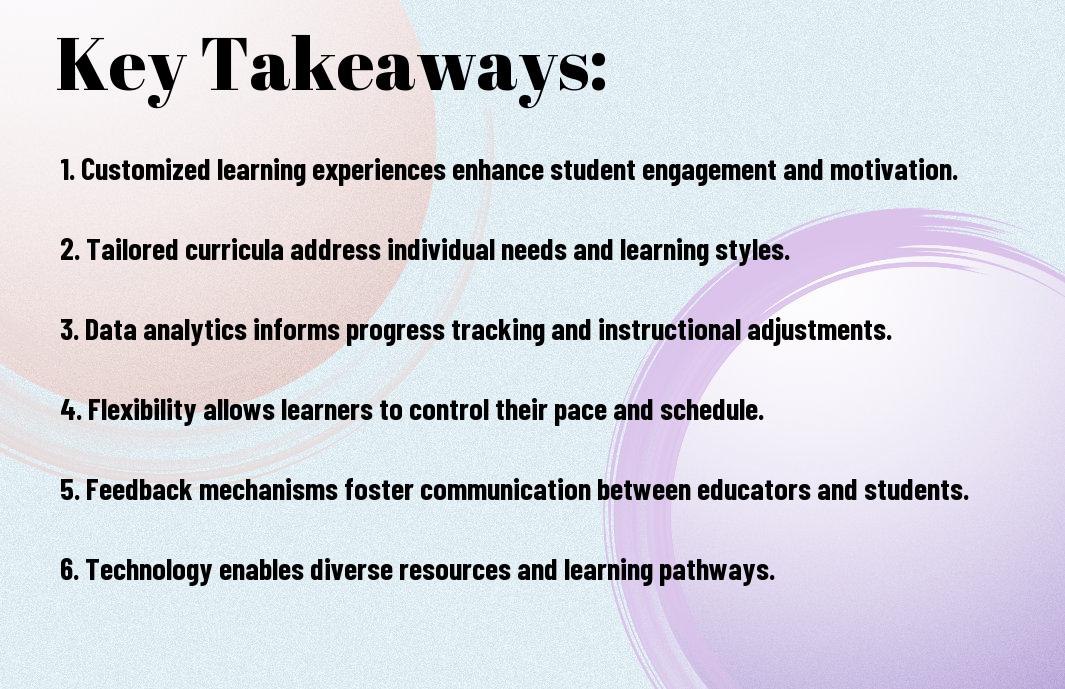
Key Takeaways:

  • The implementation of Personalized Learning in online education enables students to learn at their own Pace, allowing for a more effective and efficient learning experience.
  • Artificial Intelligence and Machine Learning play a significant role in personalized learning, as they help to create tailored learning pathways and adaptive assessments for individual students.
  • Student Engagement is increased through personalized learning, as students are more likely to be motivated and invested in their learning when it is relevant and meaningful to their individual needs and interests.
  • The use of Learning Analytics and Data-Driven Insights helps educators to track student progress, identify areas of improvement, and make data-informed decisions to optimize personalized learning experiences.
  • Flexibility and Accessibility are key benefits of personalized learning in online education, as students can access learning materials and resources from anywhere, at any time, and on their own schedule.

Benefits of Personalized Learning

To maximize your online learning experience, personalized learning plays a significant role. It allows you to learn at your own pace, focusing on areas where you need improvement.

Increased Student Engagement

Benefits such as interactive learning materials and real-time feedback keep you engaged and motivated throughout your course.

Improved Learning Outcomes

With personalized learning, you can track your progress and identify areas that need improvement, leading to better retention of information.

And as you progress through your course, you’ll find that personalized learning helps you develop a deeper understanding of the subject matter, allowing you to apply your knowledge in practical situations, which enhances your overall learning experience and prepares you for real-world applications.

Technology in Personalized Learning

There’s no denying the significant impact technology has on personalized learning in online education, as it enables you to tailor your learning experience to your individual needs and preferences, making it more engaging and effective.

Adaptive Learning Systems

Besides traditional learning methods, adaptive learning systems use algorithms to adjust the difficulty level of course materials based on your performance, allowing you to learn at your own pace and focus on areas where you need improvement.

Learning Analytics

Around the clock, learning analytics tools collect data on your learning activities, providing insights into your strengths, weaknesses, and learning behavior, which can be used to refine your learning strategy and optimize your educational outcomes.

And as you investigate deeper into the world of learning analytics, you’ll discover that it offers a wealth of information about your learning patterns, helping you to identify areas where you need extra support and enabling you to make informed decisions about your educational path, ultimately enhancing your overall learning experience.

Effective Implementation

Keep in mind that effective implementation of personalized learning in online education requires careful planning and execution. You will need to consider various factors, including your students’ learning styles, preferences, and abilities, to create a tailored approach that meets their unique needs.

Teacher Training and Support

Following the development of your personalized learning strategy, you will need to provide your teachers with the necessary training and support to ensure they can effectively deliver this type of education. You will need to equip them with the skills and knowledge required to create and implement personalized learning plans.

Student Assessment and Feedback

Once your personalized learning approach is in place, you can begin to assess your students’ progress and provide them with regular feedback. You will need to use a variety of assessment methods to gauge their understanding and adjust your teaching approach accordingly.

Understanding the importance of ongoing assessment and feedback is key to the success of personalized learning. You will need to continuously monitor your students’ progress, identifying areas where they may need additional support or challenges, and adjust your teaching approach to meet their evolving needs, allowing you to make data-driven decisions to optimize your personalized learning strategy, and ultimately, improve your students’ learning outcomes.

Overcoming Challenges

Now that you have implemented personalized learning in your online education, you will face challenges. To address them, you can learn from Personalized Learning: What It Really Is and Why It Really Matters, which provides valuable insights.

Addressing Equity and Access Issues

Accessibility to resources is crucial for personalized learning. You need to ensure that your students have equal access to devices and internet connectivity to participate in online learning.

Managing Teacher Workload

By managing your workload effectively, you can focus on providing high-quality personalized learning experiences. You will need to prioritize tasks, delegate responsibilities, and use technology to streamline your workflow.

This approach will help you reduce your workload and create a more sustainable and scalable personalized learning environment, allowing you to focus on what matters most – your students’ learning outcomes and your own professional development as an educator, enabling you to refine your teaching strategies and better support your students.

Real-World Applications

Unlike traditional teaching methods, personalized learning is being implemented in various settings, and you can learn more about it through Personalized Learning and Technology: 4 Things to Keep in Mind. This approach is becoming increasingly popular in online education.

Online Courses and MOOCs

The emergence of online courses and MOOCs has made it possible for you to access personalized learning materials from anywhere, allowing you to learn at your own pace and explore topics that interest you the most.

Blended Learning Environments

Around the globe, educators are combining traditional teaching methods with online learning tools to create blended learning environments that cater to your individual needs and learning style, making the learning experience more effective and engaging.

Online learning platforms are being used to supplement traditional classroom teaching, and you can use these platforms to access additional resources, participate in discussions, and submit assignments, making it easier for you to manage your time and learn more efficiently in a blended learning environment.

Future Directions

All indications suggest that personalized learning will continue to play a significant role in shaping the future of online education, and you can expect to see significant advancements in this area.

Emerging Technologies and Trends

Along with the rise of AI and machine learning, you will see new technologies emerging that will further enhance personalized learning experiences, allowing you to tailor your education to your individual needs.

Expanding Access to Personalized Learning

With the increasing demand for online education, you will have more opportunities to access personalized learning platforms, enabling you to take ownership of your educational journey and make informed decisions about your learning path.

Another significant aspect of expanding access to personalized learning is the potential to reach underserved populations, and you will be able to see how this can help bridge the educational gap, providing you with a more equitable and inclusive learning environment that caters to your unique needs and abilities.

Summing up

Considering all points, you can see that personalized learning is revolutionizing online education, allowing you to tailor your learning experience to your needs. As you explore this concept further, you can learn more about The Future of Personalization in Learning, enabling you to make informed decisions about your educational path and maximize your learning potential.

FAQ

Q: What is personalized learning and how does it impact online education?

A: Personalized learning refers to an educational approach that takes into account the individual learning needs, abilities, and learning styles of each student. In the context of online education, personalized learning involves using technology and data to tailor the learning experience to each student’s unique requirements. This can include adaptive assessments, customized learning pathways, and real-time feedback. By providing a personalized learning experience, online education can become more effective, increasing student engagement, motivation, and ultimately, academic success.

Q: How does personalized learning in online education support students with different learning styles and abilities?

A: Personalized learning in online education supports students with different learning styles and abilities by providing a range of learning materials and activities that cater to their individual needs. For example, students who are visual learners can access video tutorials and interactive simulations, while students who are auditory learners can access audio recordings and podcasts. Additionally, students with disabilities can access customized learning materials and assistive technologies that help them to participate fully in the learning process. By providing a range of learning options, personalized learning in online education helps to level the playing field, ensuring that all students have an equal opportunity to succeed.

Q: What are the benefits of implementing personalized learning in online education, and how can educators and institutions effectively implement it?

A: The benefits of implementing personalized learning in online education include improved student outcomes, increased student engagement, and enhanced teacher efficiency. To effectively implement personalized learning, educators and institutions can use a range of strategies, including learning analytics, adaptive technology, and competency-based progression. Educators can also use data and feedback to continually assess and refine their teaching practices, ensuring that each student receives a high-quality, personalized learning experience. Additionally, institutions can provide professional development opportunities for educators to learn about personalized learning and how to effectively integrate it into their teaching practices, ensuring that all students have access to a personalized and effective online education.

How to Overcome Isolation in Online Learning

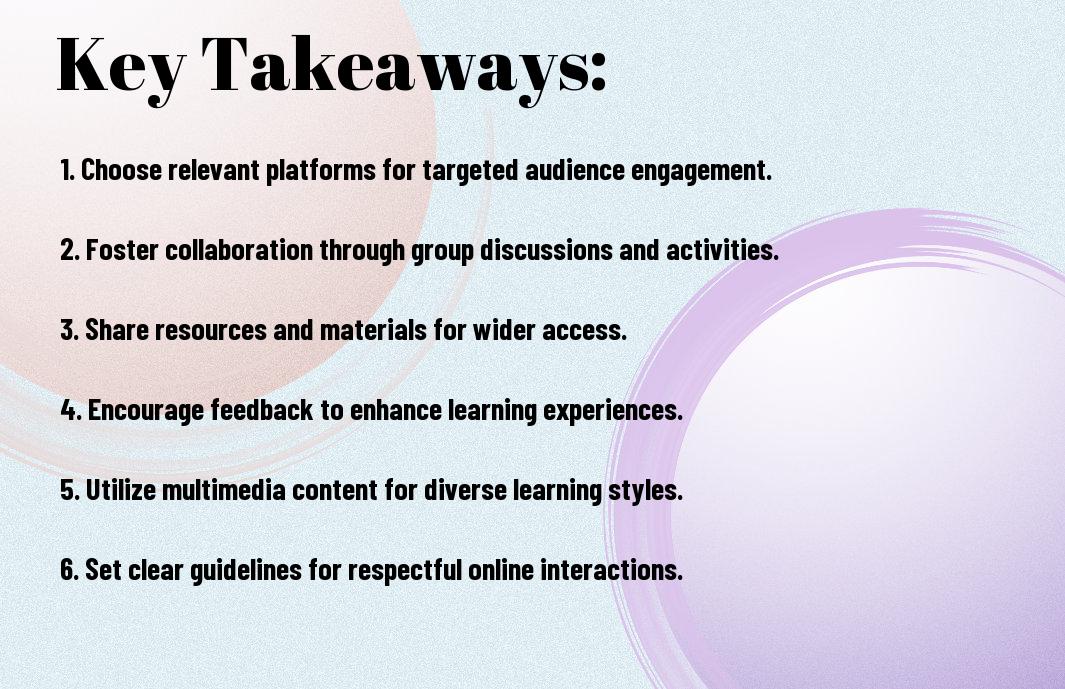
Key Takeaways:

To tackle the challenges of online learning, consider the following points:

  • Establish a routine to provide structure and help you stay on track with your studies.
  • Utilize technology to connect with peers and instructors through video conferencing tools, discussion forums, and social media groups.
  • Seek out support from family, friends, or a mentor to help you stay motivated and address any concerns you may have.
  • Take breaks and prioritize self-care to avoid burnout and maintain a healthy work-life balance.
  • Set goals and track progress to help you stay focused and achieve academic success in an online learning environment.

Setting Up a Supportive Environment

For a successful online learning experience, you need to set up a supportive environment that fosters productivity and motivation. This involves creating a dedicated space for learning, free from distractions and interruptions.

Creating a dedicated learning space

Before you begin, designate a specific area for learning, and make it your own by adding personal touches that inspire you, such as favorite books or quotes.

Minimizing distractions and staying focused

Distractions are inevitable, but you can minimize them by turning off notifications, logging out of social media, and using website blockers to stay on track.

A key part of staying focused is establishing a routine and setting clear goals for each study session, allowing you to stay motivated and engaged, and helping you to make the most of your online learning experience, as you navigate the vast expanse of digital knowledge, crafting your own path to success.

Staying Connected with Peers and Instructors

The online learning environment can often feel isolating, but it doesn’t have to be. You can combat this by reading about Combatting online learning’s loneliness epidemic and taking steps to stay connected with your peers and instructors.

Joining online communities and forums

Besides the structured learning environment, you can also engage with others through online communities and forums, where you can discuss topics related to your course and get support from your peers.

Participating in virtual discussions and meetings

For a more interactive experience, you can participate in virtual discussions and meetings, which allow you to engage with your instructors and peers in real-time, facilitating a sense of connection and community.

Joining these virtual discussions and meetings can help you feel more connected to your learning community, and you can take an active role by sharing your thoughts, asking questions, and engaging with others, allowing you to build relationships and collaborate with your peers, making your online learning experience more enjoyable and enriching.

Building a Routine and Staying Motivated

Many online learners struggle to stay motivated, but establishing a routine can help. You can start by setting achievable goals and tracking your progress, which will help you stay focused and motivated throughout your learning journey.

Creating a schedule and sticking to it

Establishing a schedule is key to staying on track. You can begin by allocating specific times for learning, breaks, and leisure activities, and then stick to your plan as much as possible, allowing for some flexibility when needed.

Rewarding yourself for milestones achieved

By acknowledging and celebrating your accomplishments, you can reinforce positive behaviors and stay motivated. You can treat yourself to something special when you reach a milestone, such as completing a difficult course or finishing a project.

Hence, rewarding yourself for milestones achieved is an effective way to boost your motivation and engagement in online learning. You can choose rewards that are meaningful to you, such as taking a break to read a book, watching a movie, or going for a walk, and make sure to celebrate your progress along the way, no matter how small it may seem, to keep yourself motivated and inspired to continue learning.

Overcoming Technical Challenges

Now that you’ve commenceed on your online learning journey, you’ll inevitably encounter technical hurdles that can leave you feeling frustrated and disconnected. But fear not, for these challenges can be overcome with the right mindset and strategies.

Troubleshooting common technical issues

Around the time you encounter a technical glitch, take a deep breath and try to identify the source of the problem, whether it’s a faulty internet connection or a software compatibility issue, and attempt to resolve it using your intuition and troubleshooting skills.

Seeking help from technical support teams

Unlike other challenges you may face, technical issues can often be resolved with the help of a dedicated support team, so don’t hesitate to reach out to them when you need assistance, and they will guide you through the process of resolving the issue.

The technical support team is there to help you navigate the complexities of online learning, and by seeking their help, you can get back on track with your studies, and they will provide you with the necessary tools and guidance to overcome any technical obstacles that may arise, allowing you to focus on what matters most – your learning and growth.

Prioritizing Self-Care and Wellbeing

All online learners face unique challenges, and taking care of your physical and mental health is crucial to success. You must make time for activities that bring you joy and help you relax.

Taking breaks and practicing self-care

Thereby, establishing a routine that includes self-care activities will help you stay focused and motivated. You can try meditation, reading, or spending time with loved ones to reduce stress and increase productivity.

Staying physically and mentally active

Physically, you need to get moving to stay healthy and energized. You can try simple exercises like stretching or yoga to get started, and find activities that you enjoy to make it a habit.

Taking care of your physical health will have a significant impact on your mental wellbeing. You will feel more confident, focused, and prepared to tackle challenges as you engage in regular physical activity, and your mind will be sharper and more receptive to new ideas and knowledge, helping you to stay engaged and motivated in your online learning journey.

Seeking Help and Resources

Despite the flexibility of online learning, you may still feel isolated, but there are ways to overcome this. You can seek help and resources to stay connected and engaged, such as online forums, tutorials, and support groups, to help you navigate your course and connect with others.

Accessing online resources and tutorials

Seeking out online resources and tutorials can be a great way to supplement your learning and connect with others who share your interests. You can find a wealth of information online, from video lectures to interactive simulations, to help you deepen your understanding of the material.

Reaching out to instructors and peers for support

Accessing support from your instructors and peers can be a powerful way to combat isolation. You can reach out to them via email, discussion forums, or video conferencing, to ask questions, share your thoughts, and get feedback on your work, helping you feel more connected and supported.

In addition, when you reach out to your instructors and peers, you open yourself up to a wealth of knowledge, experience, and perspectives, which can help you stay motivated and inspired. You can participate in online discussions, join study groups, or collaborate on projects, allowing you to build relationships and a sense of community, even in a virtual environment, and helping you to overcome the feeling of isolation and stay engaged in your learning journey.

To wrap up

Presently, you’ve gathered the tools to break free from the shackles of isolation in online learning. You’ve learned to weave a web of connections, to nurture your curiosity, and to transform your learning space into a realm of wonder. As you initiate on this journey, your path will be illuminated by the thrill of discovery, and the boundaries of isolation will fade away, allowing you to tap into the limitless potential of online learning, and unlock the secrets that await your curious mind.

FAQ

Q: What are the main challenges of online learning that can lead to isolation, and how can I identify if I’m experiencing them?

A: Online learning can sometimes lead to feelings of isolation due to the lack of face-to-face interaction with peers and instructors. The main challenges include difficulty in staying motivated, lack of immediate feedback, and technical issues. To identify if you’re experiencing these challenges, pay attention to your engagement level in your courses, your ability to manage your time effectively, and your overall satisfaction with your learning experience. If you find yourself struggling to stay motivated, feeling disconnected from your learning community, or facing recurring technical difficulties, it may be a sign that you’re experiencing isolation in your online learning environment.

Q: How can I maintain social connections and a sense of community while learning online to overcome feelings of isolation?

A: Maintaining social connections is key to overcoming isolation in online learning. You can achieve this by actively participating in online forums and discussion groups, attending virtual events and webinars, and using social media platforms to connect with your peers and instructors. Additionally, consider joining online clubs or study groups related to your course of study. These interactions can help you build relationships, share experiences, and feel more connected to your learning community. Regular communication with your instructors can also provide support and help you stay engaged with your coursework.

Q: What strategies can I implement to stay motivated and engaged in my online courses, thereby reducing the likelihood of feeling isolated?

A: To stay motivated and engaged in your online courses, set clear goals and deadlines for yourself, and create a dedicated and distraction-free study space. Establishing a routine and sticking to it can help you stay on track. It’s also beneficial to use a variety of learning materials, such as videos, podcasts, and interactive quizzes, to keep your learning experience interesting and engaging. Furthermore, celebrating your achievements and seeking help when needed can boost your motivation. Connecting with family and friends about your learning progress and involving them in your goals can provide an additional layer of support and accountability, helping to mitigate feelings of isolation.

The Best Online Tools for Collaborative Learning

As you explore ways to enhance your learning experience, you’ll find that collaborative learning is an effective approach. You can leverage technology to facilitate teamwork and knowledge sharing. Your search for the right tools ends here, as you’re about to discover the top online platforms designed to foster collaboration and productivity. You’ll learn how to utilize these tools to achieve your learning goals and stay connected with your peers.

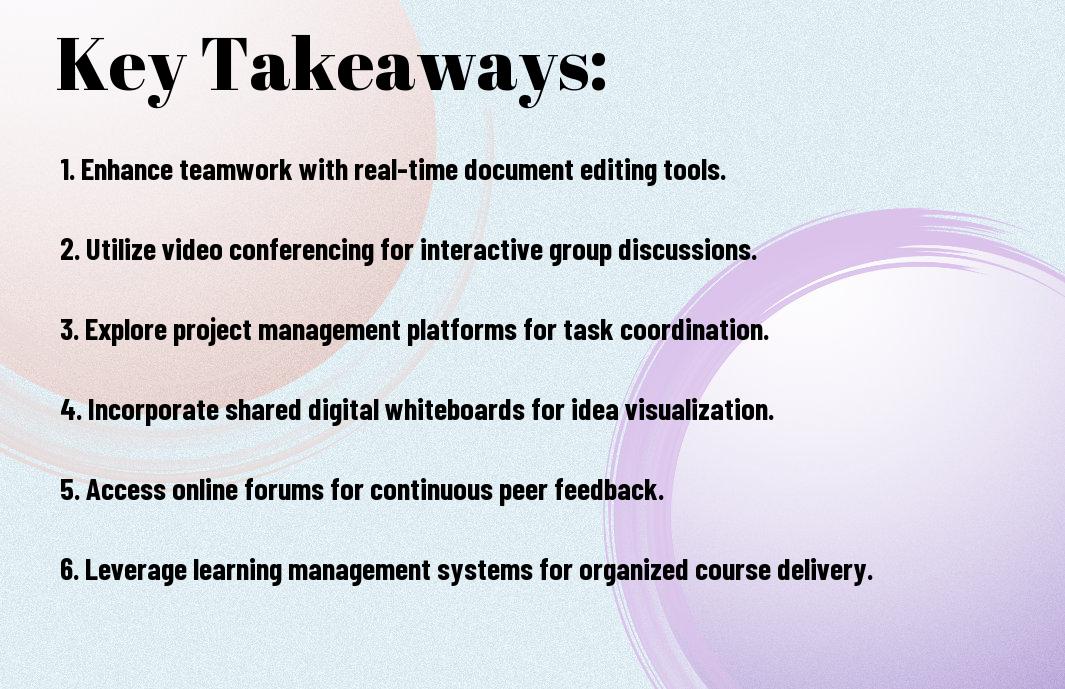
Key Takeaways:

To enhance collaborative learning experiences, utilizing the right online tools is vital. Here are some key points to consider:

  • Virtual Whiteboards like Mural and Google Jamboard enable real-time collaboration and idea sharing among team members, fostering a creative and interactive learning environment.
  • Communication Platforms such as Slack and Microsoft Teams facilitate seamless communication and file sharing, allowing teams to stay organized and work efficiently on group projects.
  • Video Conferencing tools like Zoom and Google Meet provide face-to-face interaction, screen sharing, and recorded sessions, making it easier to engage with remote teams and track progress.
  • Project Management tools such as Trello and Asana help assign tasks, set deadlines, and monitor progress, ensuring that team members are on the same page and working towards common goals.
  • Feedback and assessment tools like Kahoot and Quizlet enable instant feedback, peer review, and self-assessment, promoting a growth mindset and continuous learning among students and team members.

Benefits of Collaborative Learning

While collaborative learning offers numerous advantages, you can expect to see improved academic performance and increased student engagement. By working together, you’ll develop skills that are important in the workplace, such as problem-solving and conflict resolution.

Enhanced Creativity

Above all, collaborative learning fosteres an environment where you can share ideas and build upon each other’s strengths, leading to innovative solutions and approaches.

Improved Communication

Any collaborative effort requires effective communication, and as you work with others, you’ll develop your ability to articulate your thoughts and listen to others, ensuring that your message is conveyed clearly.

And as you continue to engage in collaborative learning, you’ll find that your communication skills extend beyond the classroom, enabling you to express your ideas and opinions with confidence, and work seamlessly with others to achieve your goals, making you a more effective team player in your future endeavors.

Top Online Tools for Collaboration

You have numerous options when it comes to online tools for collaborative learning, each with its unique features and benefits, allowing you to choose the one that best suits your needs and enhances your learning experience.

Google Workspace

On the platform, you can access a suite of productivity tools, including Google Docs, Sheets, and Slides, which enable seamless collaboration and real-time feedback, making it an excellent choice for your collaborative learning endeavors.

Trello

Above all, Trello stands out as a versatile and user-friendly platform, utilizing boards, lists, and cards to organize tasks and projects, allowing you to visualize your workflow and collaborate with others efficiently.

Google may offer a range of collaborative tools, but Trello’s visually appealing interface and adaptability make it an excellent addition to your toolkit, enabling you to manage complex projects and assign tasks to your team members, track progress, and achieve your learning objectives more effectively.

Virtual Classrooms and Meetings

Keep your online learning sessions engaging with virtual classrooms and meetings, which enable you to interact with your students in real-time, regardless of their location.

Zoom

At this point, you’re likely familiar with Zoom, a popular platform for hosting virtual meetings and classes, allowing you to share screens and collaborate with your students effortlessly.

Skype

Any learning environment can benefit from Skype, which offers free video conferencing, enabling you to connect with your students and facilitate discussions, presentations, and group work.

Among the features that make Skype an excellent choice for your online classes are its user-friendly interface, high-quality video, and screen sharing capabilities, allowing you to create an immersive and interactive learning experience for your students, and you can use it to hold office hours, provide individual feedback, and promote collaboration among your students.

Project Management and Organization

To enhance collaborative learning, you can utilize various online tools, such as those listed in 22 Collaborative Learning Tools to Boost Your L&D Strategy, which provide a comprehensive overview of available options.

Asana

By choosing Asana, you can streamline your project management, allowing your team to focus on their tasks and collaborate more efficiently, thereby improving your overall learning experience.

Basecamp

Any project can benefit from a centralized platform, and Basecamp offers you a unified space to organize your work, Set deadlines, and track progress, making it easier for your team to collaborate and learn together.

It provides a range of features, including message boards, file sharing, and schedule sharing, which enable you to work together seamlessly and stay informed about your project’s status, allowing you to make adjustments as needed to achieve your learning goals.

Interactive Whiteboards and Screen Sharing

Many educational institutions are leveraging interactive whiteboards and screen sharing tools to enhance collaborative learning. You can use these tools to share content, annotate documents, and engage with your students in real-time.

SMART Boards

One of the most popular interactive whiteboard solutions is SMART Boards, which offers a range of features to support collaborative learning, allowing you to create interactive lessons and share them with your students.

ScreenFlow

After exploring various screen sharing options, you may consider ScreenFlow, a powerful tool that enables you to record and share your screen, making it easier to create tutorials and presentations for your students.

This tool allows you to record your screen, add annotations, and share your videos with your students, making it an excellent option for flipped classrooms and online courses, enabling you to create engaging content and track your students’ progress.

Feedback and Assessment Tools

Once again, you’ll find a plethora of online tools at your disposal to facilitate collaborative learning, particularly when it comes to feedback and assessment. You can leverage these tools to track your students’ progress, identify areas of improvement, and provide constructive feedback.

Kahoot

Around the globe, educators are utilizing Kahoot to create interactive quizzes and games that make assessment a fun experience for your students. You can create your own quizzes or choose from a vast library of existing ones, making it easy to assess your students’ knowledge.

Quizlet

Quizlet offers you a comprehensive platform to create and share study materials, including flashcards, tests, and study games. You can use Quizlet to assess your students’ understanding of various subjects and topics, and track their progress over time.

At the heart of Quizlet’s success is its ability to provide you with real-time feedback and assessment results, allowing you to identify areas where your students need extra support. You can use this information to adjust your teaching strategies and provide targeted support to your students, helping them to achieve their full potential.

Summing up

Presently, you have a wide range of options for collaborative learning. You can explore various online tools to find the best fit for your needs. For a comprehensive review, you can visit 16 Best Online Collaboration Tools (Pros, Cons, And Costs) to make an informed decision. Your choice of tool will depend on your specific requirements, and with the right selection, you can enhance your collaborative learning experience.

FAQ

Q: What are the best online tools for collaborative learning, and how can they enhance student engagement?

A: The best online tools for collaborative learning include platforms like Google Workspace, Trello, and Slack, which offer features such as real-time document editing, project management, and team communication. These tools can enhance student engagement by providing a flexible and interactive environment for students to work together, share ideas, and learn from one another. For instance, Google Workspace allows students to collaborate on documents, presentations, and spreadsheets simultaneously, while Trello and Slack facilitate organization and communication among team members. By leveraging these tools, educators can create a more collaborative and inclusive learning experience that fosters teamwork, creativity, and problem-solving skills.

Q: How can online collaborative learning tools support different learning styles and abilities, and what features should educators look for?

A: Online collaborative learning tools can support different learning styles and abilities by offering a range of features such as text-to-speech functions, closed captions, and adjustable font sizes. Educators should look for tools that provide accessibility options, multimedia resources, and adaptable interfaces to cater to diverse learning needs. For example, tools like Padlet and VoiceThread allow students to contribute to discussions through text, audio, or video, making it easier for students with different learning styles to participate. Additionally, features like translation services and language support can help cater to students with language barriers, ensuring that all students can engage with the learning material and collaborate with their peers effectively.

Q: How can educators ensure the effective implementation and management of online collaborative learning tools in their teaching practices?

A: To ensure the effective implementation and management of online collaborative learning tools, educators should start by setting clear learning objectives and outcomes, and then selecting tools that align with these goals. They should also provide students with technical support and training on how to use the tools, as well as establish guidelines and expectations for online collaboration and communication. Regular monitoring and feedback are also crucial to ensure that students are using the tools effectively and staying on track. Furthermore, educators can use analytics and reporting features offered by many online collaborative learning tools to track student engagement and progress, making data-driven decisions to adjust their teaching strategies and optimize the learning experience.

How Online Learning Promotes Continuous Improvement

As you begin on your journey of personal and professional growth, you’ll find that online learning plays a significant role in shaping your path. You’ll discover that it offers a flexible and accessible way to acquire new skills, fostering a mindset of continuous improvement. Your ability to learn at your own pace, anytime and anywhere, will empower you to take ownership of your development, driving you to strive for excellence and unlock your full potential.

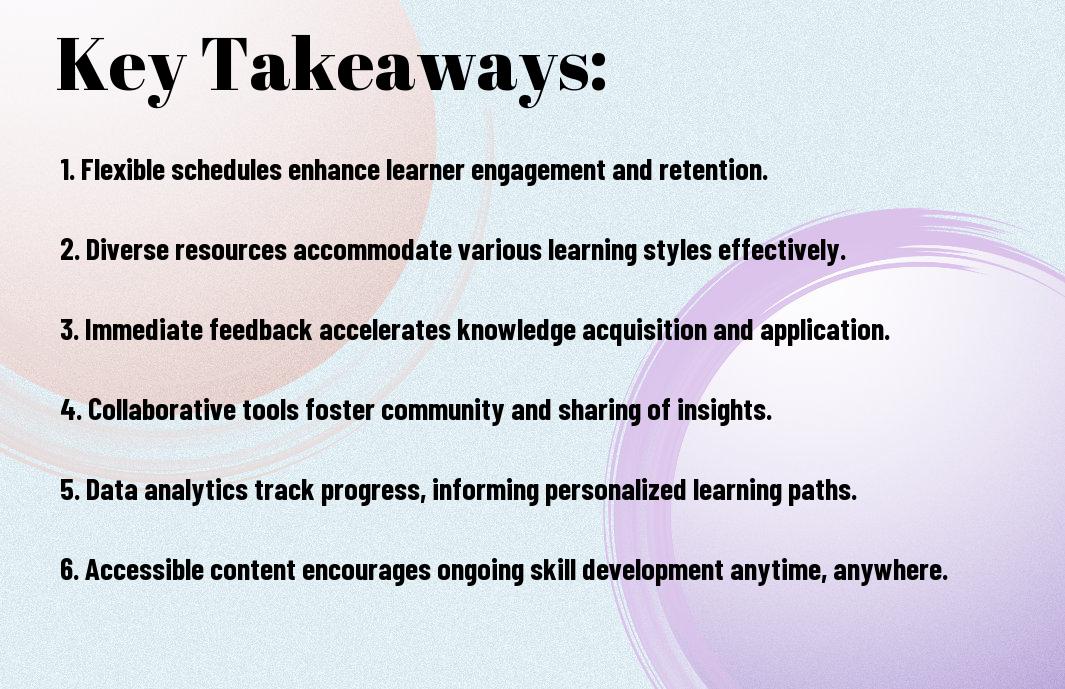
Key Takeaways:

To understand the impact of online learning on personal and professional development, consider the following points:

  • Online learning facilitates Self-Paced Learning, allowing individuals to learn at their own speed and convenience, which leads to better Knowledge Retention and understanding of the subject matter.
  • The Accessibility of online learning platforms means that individuals can access courses and educational resources from anywhere, at any time, making it easier to fit learning into a busy schedule and promoting Continuous Learning.
  • Online learning provides opportunities for Personalized Learning, enabling individuals to focus on areas where they need improvement and skip content they already know, making the learning process more Efficient.
  • The use of Technology in online learning enables the implementation of Interactive Tools and Real-Time Feedback, which can enhance the learning experience and facilitate Improved Understanding of complex concepts.
  • Online learning supports Lifelong Learning by providing access to a wide range of courses and subjects, allowing individuals to Upskill and Reskill throughout their lives, adapting to changing career requirements and industry needs.

Benefits of Online Learning

For individuals seeking to enhance their skills and knowledge, online learning offers numerous advantages. You can acquire new skills, expand your professional network, and stay updated with the latest developments in your field.

Flexibility and Accessibility

Accessible from anywhere, online learning allows you to balance your work, family, and education effortlessly. You can learn at your own pace, whenever and wherever you choose, making it an ideal option for those with busy schedules.

Personalized Learning Experience

Around your unique needs and preferences, online learning is tailored to provide a personalized experience. You can focus on areas that interest you the most, skip what you already know, and learn at a pace that suits your learning style.

In fact, as you progress through your online course, you will discover that your learning experience becomes more engaging and effective. You will be able to track your progress, identify areas for improvement, and make adjustments to optimize your learning outcomes, ultimately leading to a more satisfactory and fulfilling experience.

Enhancing Skills and Knowledge

Even as you pursue online learning, you’ll find that it offers a flexible and accessible way to enhance your skills and knowledge, allowing you to stay competitive in your field and achieve your personal goals.

Up-to-Date Course Materials

Around the clock, you have access to the latest course materials, which are constantly updated to reflect the latest developments and advancements in your field, ensuring that your knowledge stays current and relevant.

Expert Instruction and Feedback

Only through online learning can you receive guidance from experienced instructors who provide personalized feedback, helping you to identify areas of improvement and develop a customized plan to achieve your learning objectives.

Instruction from seasoned experts in the field is a key benefit of online learning, as you’ll gain valuable insights and practical advice from those who have real-world experience, enabling you to apply theoretical concepts to real-life situations and accelerate your growth and development.

Overcoming barriers to Learning

Now, as you commence on your online learning journey, you can overcome barriers to learning by understanding the Benefits of Online Learning – All You Need to Know, which can help you stay focused on your goals.

Self-Paced Learning

Before entering into online courses, you can learn at your own pace, allowing you to absorb and process information effectively, which enhances your overall learning experience.

Building Confidence and Motivation

Similarly, self-paced learning helps you build confidence and motivation as you progress through courses, achieving your goals and celebrating your successes.

Barriers to learning can be overcome by recognizing your strengths and weaknesses, and online learning provides you with the flexibility to work on areas that need improvement, helping you to stay motivated and engaged in the learning process, which ultimately leads to your personal and professional growth, as you continue to learn and develop your skills.

Technology-Enhanced Learning

Many educators are embracing technology to enhance your learning experience, as seen in the session Making Continuous Improvement a Best Practice for Online Teaching and Learning, which showcases innovative approaches to online education.

Interactive Tools and Resources

On the path to continuous improvement, you’ll discover a variety of interactive tools and resources that cater to your learning style, making online learning more engaging and effective.

Virtual Collaborations and Networking

Networking opportunities in online learning environments enable you to connect with peers and instructors, fostering a sense of community and promoting collaborative learning.

With virtual collaborations, you can participate in discussions, share ideas, and learn from others, which helps to enrich your online learning experience and encourages you to strive for continuous improvement in your academic and professional pursuits.

Real-World Applications

All online learning platforms offer you the opportunity to apply your knowledge in real-world scenarios, making it easier for you to understand the practical implications of your learning. You can analyze case studies, participate in simulations, and engage in discussions with your peers to develop a deeper understanding of your subject matter.

Practical Examples and Scenarios

At this stage, you will encounter various examples and scenarios that mimic real-life situations, allowing you to test your knowledge and skills in a safe and controlled environment. You will be able to explore different approaches and strategies, and learn from your mistakes, which will help you to develop your critical thinking and decision-making skills.

Developing Problem-Solving Skills

Beside the theoretical knowledge, online learning helps you to develop problem-solving skills, which are important for your personal and professional growth. You will learn to identify problems, analyze data, and develop effective solutions, which will enable you to tackle complex challenges with confidence.

Skills such as critical thinking, creativity, and resourcefulness are important for your success, and online learning provides you with the opportunity to develop these skills in a supportive and interactive environment. You will be able to practice solving problems, and your ability to think critically and creatively will be enhanced, enabling you to make informed decisions and achieve your goals.

Measuring Progress and Success

To assess the effectiveness of online learning, you need to track your progress and set achievable milestones. This helps you identify areas of improvement and make data-driven decisions to optimize your learning experience.

Assessments and Evaluations

Any moment you invest in evaluating your knowledge and skills will pay off in the long run. You will gain valuable insights into your strengths and weaknesses, allowing you to adjust your learning strategy and stay focused on your objectives.

Setting Goals and Objectives

An necessary part of online learning is defining what you want to achieve. You start by setting specific, measurable, and attainable goals, which serve as a roadmap for your learning journey.

Consequently, as you establish clear objectives, you will be able to prioritize your time and effort, allocate resources more efficiently, and make steady progress towards your desired outcomes. You will find that setting goals and objectives helps you stay motivated and directed, enabling you to get the most out of your online learning experience.

Conclusion

Following this exploration of online learning, you can see how it empowers your personal growth, allowing you to pursue knowledge at your own pace. You can reflect on your learning, identify areas for improvement, and adjust your approach accordingly. By embracing online learning, you take ownership of your development, fostering a mindset of continuous improvement that benefits all aspects of your life, helping you to become a more effective and inspired individual.

FAQ

Q: What role does online learning play in promoting continuous improvement in individuals and organizations?

A: Online learning plays a significant role in promoting continuous improvement by providing learners with access to a wide range of courses, training programs, and educational resources. This allows individuals and organizations to acquire new skills, update their knowledge, and stay abreast of the latest developments in their field, thereby driving continuous improvement. Online learning platforms also offer personalized learning experiences, enabling learners to learn at their own pace, set goals, and track progress, which fosters a culture of continuous learning and improvement.

Q: How does online learning facilitate the process of continuous improvement in a rapidly changing work environment?

A: Online learning facilitates the process of continuous improvement in a rapidly changing work environment by offering flexible, scalable, and on-demand learning opportunities. This allows individuals and organizations to respond quickly to changing circumstances, such as advancements in technology, shifts in market trends, or new regulatory requirements. Online learning platforms also provide access to a vast array of learning resources, including videos, podcasts, and interactive modules, which can be easily updated to reflect the latest developments, ensuring that learners have the knowledge and skills needed to adapt and improve in a rapidly changing environment.

Q: What benefits do individuals and organizations derive from using online learning to promote continuous improvement?

A: Individuals and organizations derive numerous benefits from using online learning to promote continuous improvement, including improved knowledge and skills, increased productivity, and enhanced competitiveness. Online learning also helps to bridge knowledge gaps, addresses skill shortages, and supports career advancement, leading to increased job satisfaction and employee retention. Furthermore, online learning can help organizations to reduce training costs, improve compliance, and enhance their overall performance, ultimately driving business growth and success. By leveraging online learning, individuals and organizations can create a culture of continuous improvement, where learning and development are ongoing and integral to their success.

Skip to content