Online

The Impact of Online Learning on Mental Health

Key Takeaways:
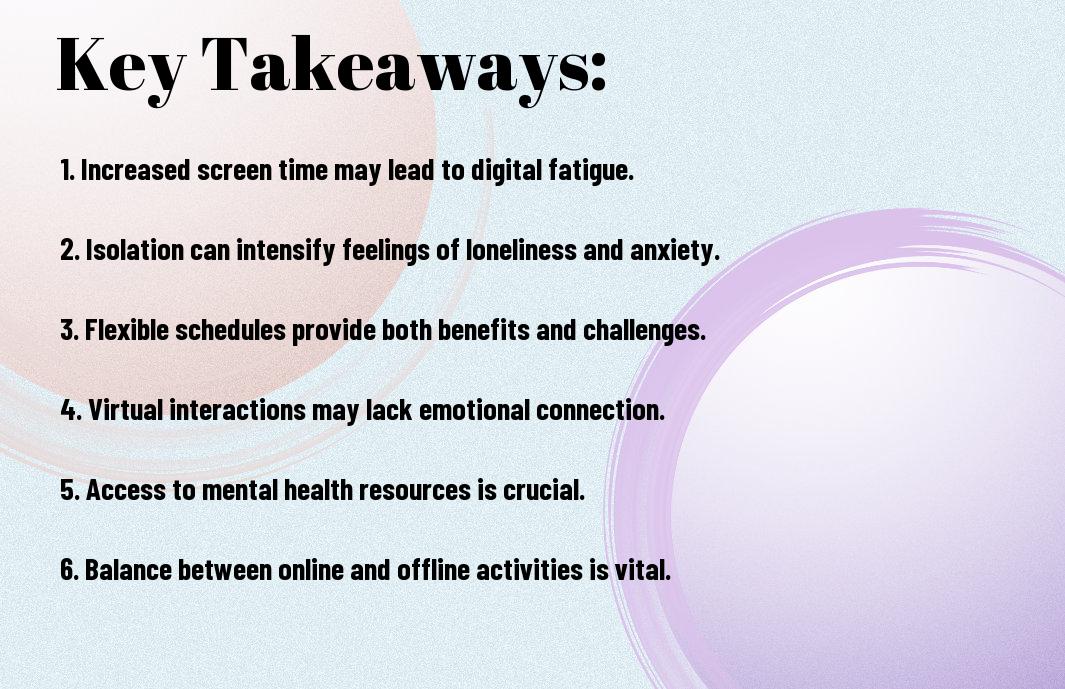
  • The shift to online learning has brought about a significant change in the way students interact with educational content, which can have both positive and negative effects on mental health.
  • Increased screen time and reduced social interaction can contribute to feelings of isolation and loneliness among students, potentially exacerbating anxiety and depression.
  • On the other hand, online learning can provide students with more flexibility and autonomy, allowing them to manage their workload and reduce stress levels.
  • The lack of face-to-face interaction and human connection in online learning environments can make it more challenging for students to develop emotional intelligence and coping skills.
  • It is important for educational institutions to implement support systems and resources to help students navigate the challenges of online learning and promote positive mental health outcomes.

The Dark Side of Online Learning

To research into the world of online learning, you must consider its impact on your mental health, as the isolation and pressure can be overwhelming, leading to a downward spiral of anxiety and depression.

The Isolation Factor

For many, the lack of human interaction in online learning environments can be debilitating, leaving you feeling disconnected and alone, without the support and camaraderie of traditional classroom settings.

The Pressure to Perform

Darker aspects of online learning emerge when you consider the constant pressure to perform, as you strive to meet deadlines and achieve academic success, often at the expense of your mental well-being.

With the weight of expectations upon you, the pressure to perform can become suffocating, as you struggle to balance academic demands with the need to maintain a healthy and balanced lifestyle, ultimately affecting your overall mental health and wellbeing.
Mental Health Implications

It is well-documented that online learning can have a profound impact on your mental health, with studies such as Online Learning’s Impact on Mental Health highlighting the need for support. As you navigate the virtual classroom, you may find yourself vulnerable to a range of mental health issues.

Anxiety and Depression

The pressures of online learning can take a toll on your mental wellbeing, leaving you feeling isolated and alone, and increasing your risk of anxiety and depression.

Sleep Deprivation and Burnout

Deprived of the structure and routine of a traditional classroom, you may find yourself working irregular hours, leading to sleep deprivation and burnout, as the demands of online learning blur the lines between work and rest.

In fact, as you struggle to keep up with the demands of online learning, you may find yourself sacrificing sleep and self-care, leading to a vicious cycle of burnout and exhaustion, which can have serious consequences for your mental and physical health, making it necessary to prioritize your wellbeing and seek help when needed.

The Role of Social Media

Your online presence is inevitably tied to your mental health, and social media plays a significant role in this complex relationship, affecting your self-esteem and overall well-being.

Cyberbullying and Harassment

About the darker side of social media, you’ll find that it can be a breeding ground for bullying and harassment, which can have severe consequences for your mental health.

Unrealistic Expectations and Comparisons

Beside the curated highlight reels of others’ lives, you may find yourself comparing your own life, leading to feelings of inadequacy.

Platform Impact on Mental Health
Instagram Negative self-comparison
Facebook Unrealistic expectations

In fact, exposure to Multimedia Content can lead to unhealthy comparisons, as shown in the following table:

Content Type Effect on Self-Perception
Photoshopped images Low self-esteem
Manipulated videos Distrust of reality

, and this can further exacerbate the issue of unrealistic expectations, making you feel like you don’t measure up, and affecting your mental health as a result.

The Impact on Students

After delving into the world of online learning, you may find yourself questioning its effects on your mental wellbeing. As you navigate this virtual landscape, consider the potential consequences on your psychological state.

Decreased Motivation and Engagement

Beneath the surface of online learning, you’ll discover a subtle yet pervasive issue: decreased motivation and engagement. Between the lack of face-to-face interaction and the comfort of your own home, you may find yourself struggling to stay motivated and engaged in your studies.

Increased Stress and Anxiety

With the isolation and uncertainty of online learning, you may experience increased stress and anxiety. With each passing day, you’ll feel the weight of your coursework bearing down on you, making it difficult to cope with the demands of your studies.

Students, you are not alone in feeling overwhelmed by the pressures of online learning. As you strive to meet deadlines and submit assignments, you’ll encounter a myriad of stressors that can take a toll on your mental health, from technical issues to lack of support, all of which can exacerbate feelings of anxiety and uncertainty, leaving you to wonder if you’re truly cut out for this virtual academic environment.

The Consequences of Ignoring Mental Health

Many students who engage in online learning may overlook the potential risks to their mental health, but you will eventually face the devastating consequences of neglecting your well-being. As you probe deeper into the world of online education, you may start to experience increased stress, anxiety, and feelings of isolation.

Long-term Effects on Well-being

Wellness is deeply intertwined with your ability to cope with the demands of online learning, and as you struggle to maintain a healthy balance, you may find your overall quality of life suffering. You will begin to notice the negative impact on your relationships, physical health, and emotional stability.

Decreased Academic Performance

Mentally, you will start to feel the strain of online learning, and your academic performance will likely suffer as a result. You will find it challenging to focus, and your grades will begin to slip, leaving you feeling frustrated and defeated.

In addition, as your mental health declines, you will struggle to retain information, and your ability to think critically will be impaired, making it even more difficult for you to succeed in your online courses, and you will be trapped in a vicious cycle of poor academic performance and declining mental health.

Finding a Balance

All aspects of your life are affected by online learning, including your mental health. As you examine into the world of distance education, consider The research on the impact of distance learning on students’ mental health to understand the potential risks and benefits. This knowledge will help you navigate the challenges of online learning.

Setting Boundaries and Priorities

One of the most effective ways to maintain your mental well-being is by establishing a routine and prioritizing your tasks. You should set clear boundaries between your academic and personal life to avoid burnout and maintain a healthy work-life balance.

Seeking Support and Resources

Beneath the surface of online learning lies a complex web of support systems and resources. You can find numerous online forums, support groups, and counseling services that cater to your specific needs and concerns.

But as you explore these resources, you will discover that seeking help is not a sign of weakness, but rather a sign of strength. You will find that many online institutions offer counseling services, mental health resources, and support groups specifically designed for online learners. By taking advantage of these resources, you can mitigate the negative effects of online learning on your mental health and thrive in your academic pursuits.

Conclusion

Upon reflecting on the impact of online learning on mental health, you may find that it has a profound effect on your well-being. As you navigate the digital landscape, you can discover that online learning can be a double-edged sword. However, you can learn more about the benefits of online learning on your mental health by visiting 6 Reasons Online Learning Is Good for College Students’ Mental Health, which sheds light on the positive aspects of this phenomenon, allowing you to make informed decisions about your own educational journey.

FAQ

Q: What are the potential negative effects of online learning on mental health?

A: The shift to online learning can have several negative effects on mental health, including increased stress, anxiety, and feelings of isolation. The lack of face-to-face interaction and social support can lead to decreased motivation, reduced self-esteem, and a sense of disconnection from peers and instructors. Additionally, the constant exposure to screens and the pressure to constantly be connected can lead to eye strain, headaches, and decreased physical activity, further exacerbating mental health concerns.

Q: How can students mitigate the negative effects of online learning on their mental health?

A: To mitigate the negative effects of online learning on mental health, students can take several steps. First, they can establish a dedicated learning space that is quiet, comfortable, and free from distractions. They can also set regular schedules and stick to them, taking regular breaks to stretch, move around, and engage in physical activity. Additionally, students can prioritize self-care activities, such as meditation, deep breathing, or journaling, to help manage stress and anxiety. Finally, they can stay connected with peers and instructors through online forums, social media, or video conferencing, to maintain a sense of community and social support.

Q: What strategies can educators use to support the mental health and well-being of online learners?

A: Educators can play a significant role in supporting the mental health and well-being of online learners by incorporating trauma-informed and inclusive practices into their online courses. They can provide clear instructions, expectations, and feedback, and offer flexible deadlines and accommodations to reduce stress and anxiety. They can also encourage open communication, provide resources and referrals to mental health services, and foster a sense of community and connection among students. Furthermore, educators can incorporate wellness and self-care activities into their courses, such as mindfulness exercises, stress management techniques, and self-compassion practices, to promote overall well-being and resilience among online learners.

How to Excel in Online Certifications

Preparation

For your journey to excel in online certifications, you’ll need to start by building a strong foundation. You can achieve this by taking online courses, such as Best Microsoft Excel Courses & Certificates [2025], to improve your skills and knowledge.

Setting Goals for Online Certifications

By setting clear and achievable goals, you’ll be able to focus your efforts and stay motivated throughout your certification journey. You’ll need to define what you want to achieve and create a plan to get there.

Choosing the Right Certification Program

With so many options available, you’ll need to select a program that aligns with your career goals and interests. You should consider factors such as the program’s reputation, curriculum, and certification requirements.

Choosing the right certification program is a personal decision that depends on your individual needs and goals. You should take your time to research and evaluate different options, and consider seeking advice from professionals in your desired field to ensure you make an informed decision that will help you achieve your goals.

Key Takeaways:

To achieve success in online certifications, consider the following points:

  • Set clear goals and define what you want to achieve through the certification, as this will help you stay motivated and focused throughout the course.
  • Choose a reputable online certification program that aligns with your career objectives and offers quality course materials and support.
  • Develop a study schedule and stick to it, as consistent effort and dedication are important for completing the certification within the given timeframe.
  • Utilize online resources and study materials provided by the certification program, and supplement them with additional learning tools and practice exams to reinforce your understanding of the subject matter.
  • Seek support from instructors, peers, or online communities when faced with challenges or difficulties, and be persistent in overcoming obstacles to achieve success in your online certification.

Fundamentals

Some of the key elements to focus on when pursuing online certifications include understanding your learning style, setting clear goals, and creating a conducive learning environment. You will be able to absorb and retain information more effectively by doing so.

Essential Skills for Online Learning

Time Management Techniques

Unlike traditional learning, online certifications require you to be highly organized and focused, as you will be managing your time and schedule, and avoiding procrastination is key to your progress. You must prioritize tasks and allocate sufficient time for studying and reviewing course materials.

Indeed, effective time management is vital to your success in online certifications. You will need to strike a balance between studying, working, and relaxing to maintain your productivity and avoid burnout. By doing so, you will be able to stay on track, meet deadlines, and achieve your certification goals with confidence and poise.

Strategies

To succeed in online certifications, you need to develop effective strategies that work for you. You will learn how to create a schedule, set goals, and track your progress, which will help you stay focused and motivated throughout your online course journey.

Effective Study Habits for Online Courses

Courses that are taken online require discipline and dedication, and you can achieve success by creating a study routine, setting aside a specific time and space to study, and minimizing distractions, allowing you to stay on track and make the most of your online learning experience.

Overcoming Procrastination and Staying Motivated

Between the comfort of your home and the flexibility of online courses, it can be easy to procrastinate, but you can overcome this by breaking down your study material into smaller chunks, rewards, and celebrating your achievements, which will help you stay motivated and engaged throughout your course.

A key aspect of overcoming procrastination is to identify the reasons behind it and address them, you can do this by asking yourself what is holding you back, is it fear of failure, lack of interest, or something else, once you understand the root cause, you can develop strategies to overcome it, and stay motivated, focused, and committed to your goal of excelling in online certifications.

Resources

Not having the right resources can hinder your progress in online certifications. You can find valuable information on Microsoft Excel Certification Training to help you achieve your goals.

Utilizing Online Resources and Tools

Besides traditional study materials, you can leverage online platforms and tools to enhance your learning experience, making it more engaging and effective for your certification journey.

Building a Support Network

Support from like-minded individuals is vital to your success, and you can find online communities and forums where you can connect with others who share your interests and goals.

Consequently, as you build your support network, you will gain access to a wealth of knowledge, advice, and motivation, helping you stay focused and driven to achieve your online certification goals, and you will be able to learn from others, share your own experiences, and get the encouragement you need to push through challenges.

Application

Despite the challenges you may face, applying for online certifications can be a straightforward process. You will typically need to create an account, submit your application, and pay any required fees. As you navigate this process, you will begin to feel a sense of accomplishment and excitement for the opportunities that lie ahead.

Applying Learned Skills to Real-World Scenarios

Along with the knowledge you gain, you will start to see how it can be applied to real-world situations, enabling you to make a meaningful impact in your field. You will begin to think differently, approaching problems with a newfound sense of confidence and expertise.

Preparing for Certification Exams

Any preparation you do will be beneficial, and you should focus on understanding the exam format and content. You will want to review the material, practice with sample questions, and develop a study plan that works for you.

Learned skills and knowledge are the foundation of success in certification exams. As you prepare, you will become more comfortable with the material, and your confidence will grow. You will start to see yourself as an expert in your field, and this mindset will serve you well as you move forward in your career, taking on new challenges and pursuing your goals with passion and purpose.

Review

After completing each module, take time to assess your understanding of the material. You can find helpful resources, such as discussions on what Excel course is well regarded, to support your learning journey.

Reviewing and Reflecting on Progress

For maximum impact, regularly evaluate your progress and identify areas where you need improvement. You will be able to track your growth and make informed decisions about your study plan.

Adjusting Study Plans as Needed

Adjusting your approach as you go is key to success. You will encounter challenges, and being flexible with your study plan will help you stay on track and achieve your goals.

In addition, as you adjust your study plans, you will become more aware of your learning style and what works best for you, enabling you to make the most of your time and effort, and ultimately, excel in your online certification.

Execution

Unlike other endeavors, excelling in online certifications requires a strategic approach to stay on track and achieve your goals. You will need to create a schedule and stick to it, ensuring that you allocate enough time for studying and practice.

Staying Focused and Avoiding Distractions

Almost all successful certification holders attribute their success to their ability to stay focused. You can achieve this by eliminating distractions, such as turning off your phone or finding a quiet study space, allowing you to concentrate on your studies.

Maintaining a Healthy Work-Life Balance

Along with dedication, maintaining a healthy balance between your work and personal life is important. You should prioritize self-care and make time for activities that bring you joy and relaxation, helping you to stay motivated and focused on your certification goals.

Further, as you work towards maintaining a healthy work-life balance, you will find that you are more productive and efficient in your studies. You will be able to approach challenges with a clear mind, and your overall well-being will improve, leading to greater success in your online certification endeavors.

Summing up

The key to excelling in online certifications lies in your dedication and persistence. You have the power to take control of your learning journey, and by staying focused and motivated, you can achieve your goals. Your success is within reach, and with the right mindset, you will unlock your full potential and excel in your online certifications, transforming your life and unlocking new opportunities for yourself.

FAQ

Q: What are the most effective ways to prepare for online certification exams?

A: To excel in online certifications, it’s imperative to develop a study plan that includes dedicating a specific amount of time each day to reviewing course materials, practicing with sample questions, and seeking help when needed. Utilizing online resources such as video tutorials, study groups, and forums can also enhance your understanding of the subject matter. Furthermore, taking practice exams under timed conditions can help simulate the actual exam experience and identify areas where you need to focus your studying.

Q: How can I stay motivated and engaged throughout the online certification process?

A: Staying motivated and engaged is vital to successfully completing online certifications. Setting specific, achievable goals and establishing a routine can help maintain momentum. Additionally, tracking progress and rewarding yourself upon reaching milestones can provide a sense of accomplishment and encouragement. It’s also beneficial to connect with others who are pursuing similar certifications, either through online communities or local study groups, to share experiences and advice. By doing so, you can stay focused and motivated, even when faced with challenging material or tight deadlines.

Q: What strategies can I use to effectively manage my time and balance study sessions with other responsibilities?

A: Effective time management is key to balancing study sessions with other responsibilities while pursuing online certifications. Creating a schedule that allocates specific times for studying, work, and leisure activities can help maintain a healthy balance. Prioritizing tasks, avoiding procrastination, and minimizing distractions during study sessions are also important strategies. Moreover, leveraging tools such as calendars, to-do lists, and time management apps can aid in staying organized and on track. By adopting these strategies, you can efficiently manage your time, ensure consistent progress in your certification studies, and meet your goals without compromising other aspects of your life.

How Online Learning Helps Overcome Learning Barriers

As you navigate the complexities of education, you may encounter obstacles that hinder your progress. Your learning journey is unique, and traditional classroom settings may not always cater to your needs. With the rise of technology, you now have the opportunity to leverage online learning to overcome barriers that once stood in your way. By embracing this platform, you can tailor your education to fit your lifestyle, pace, and learning style, ultimately unlocking a more accessible and effective way to acquire knowledge and skills.

Key Takeaways:

  • Online learning helps to overcome geographical barriers by providing access to educational resources and courses from anywhere in the world, at any time, as long as there is an internet connection.
  • It also helps to break down socio-economic barriers by offering affordable and flexible learning options, making education more accessible to people from diverse backgrounds.
  • Physical barriers, such as disabilities or health issues, can be overcome through online learning, as it allows students to participate in classes and access course materials from the comfort of their own homes.
  • Online learning helps to overcome technological barriers by providing opportunities for students to develop digital literacy skills, which are imperative in today’s technology-driven world.
  • Finally, online learning helps to overcome cultural and language barriers by offering courses and resources in multiple languages and catering to different cultural needs, making education more inclusive and diverse.

Breaking Down Geographical Barriers

Before the advent of online learning, your location often determined your access to educational resources and opportunities. However, with the rise of digital platforms, you can now learn from anywhere, at any time, as long as you have a stable internet connection.

Reaching Remote Areas

One of the significant advantages of online learning is its ability to reach remote areas, where traditional educational institutions may not be available. You can access courses and degree programs from universities and institutions worldwide, without having to relocate.

Access to Global Resources

With online learning, you can tap into a vast array of global resources, including online courses, tutorials, and educational materials. You can learn from experts in your field, regardless of their geographical location.

A key benefit of accessing global resources is that you can gain a more comprehensive understanding of your subject matter. You can explore different perspectives, approaches, and methodologies, which can help you develop a more nuanced and informed understanding of the topic, and broaden your intellectual horizons.

Overcoming Socio-Economic Barriers

Assuming you face financial constraints, online learning provides a viable solution, enabling you to access quality education without incurring hefty costs associated with traditional learning methods.

Affordable Education

Boundaries to education are broken down as you can now access affordable courses and degree programs, allowing you to pursue your academic goals without financial stress.

Flexible Learning Options

Opportunities abound with online learning, offering you the flexibility to create your own schedule and learn at your own pace, thereby accommodating your unique needs and circumstances.

Plus, with flexible learning options, you can balance your academic responsibilities with work or family obligations, ensuring that you can maintain your lifestyle while pursuing your educational goals, and you can also revisit and review course materials as many times as you need, helping to reinforce your understanding of complex concepts.

Tackling Physical and Learning Disabilities

Unlike traditional learning environments, online learning provides you with the flexibility to access educational resources from anywhere, at any time, helping to overcome physical and learning disabilities that may hinder your participation in a physical classroom.

Accessibility Features

Along with the flexibility, online learning platforms offer you a range of accessibility features, such as text-to-speech functionality, closed captions, and keyboard-only navigation, allowing you to engage with course materials in a way that suits your needs.

Personalized Learning Experiences

Between the various options available, you can choose the learning approach that best fits your learning style, whether it’s through video lectures, interactive simulations, or online discussions, enabling you to take ownership of your learning journey.

Personalized learning experiences in online education allow you to learn at your own pace, pausing or replaying content as needed, and exploring topics in greater depth, which can be particularly beneficial for individuals with learning disabilities, as it enables you to focus on areas where you need extra support, thereby enhancing your overall learning outcomes.

Bridging the Language Gap

Many online learning platforms offer courses in multiple languages, allowing you to access knowledge that was previously inaccessible due to language barriers. This opens up a world of opportunities for you to learn from experts and peers from diverse linguistic backgrounds.

Multilingual Support

Building upon this concept, bridging linguistic divides becomes easier with online learning, as you can access translations, subtitles, and multilingual support, facilitating a more inclusive learning experience.

Cultural Exchange Opportunities

Operating on a global scale, online learning platforms provide you with opportunities to engage with people from different cultures, fostering cross-cultural understanding and exchange.

Language learning is also facilitated through online cultural exchange opportunities, as you can practice your language skills with native speakers, gain insights into their customs and traditions, and develop a more nuanced understanding of the world, enabling you to become a more empathetic and open-minded individual.

Addressing Technological Barriers

Your ability to access online learning platforms is often hindered by technological barriers, but fortunately, many institutions are working to resolve these issues, providing you with the support you need to succeed in an online environment.

Digital Literacy

Across various online platforms, you’ll find numerous resources designed to help you develop the digital skills necessary to navigate online courses with ease, ensuring that you can focus on learning without being held back by technical difficulties.

Technical Support

Behind every successful online learning experience is a team of dedicated professionals who are available to assist you with any technical issues that may arise, providing you with the help you need to stay on track.

Addressing technical support is an necessary aspect of online learning, as it allows you to concentrate on your studies without worrying about the technical aspects of the platform. As you engage with online courses, you’ll find that many institutions offer various forms of technical support, such as live chats, email support, and FAQs, all designed to help you overcome any technical hurdles that you may encounter, ensuring that you have a seamless and productive learning experience.

Fostering Inclusivity and Diversity

Now, as you explore the benefits of online learning, you’ll discover that it helps bridge gaps in education, allowing you to learn more about Overcoming Learning Barriers: 6 Strategies to Help All Students Succeed, and access a wide range of courses.

Diverse Course Offerings

Any student can now access various courses, regardless of their location or background, and this diversity in course offerings enriches your learning experience.

Inclusive Learning Communities

Any learner can participate in online discussions, sharing perspectives and engaging with peers from different walks of life, which helps create a sense of belonging.

But as you probe deeper into these inclusive learning communities, you’ll find that they also provide a safe space for you to express yourself, ask questions, and seek help when needed, ultimately enhancing your overall learning experience and helping you overcome potential barriers to success.

Conclusion

Ultimately, you will find that online learning empowers you to overcome various barriers, providing flexibility and accessibility to education. As you explore online courses, you can learn at your own pace, anytime and anywhere, bridging gaps in your knowledge and skills. Your learning experience is enhanced, and you can achieve your goals more efficiently, making online learning a valuable resource for you.

FAQ

Q: What are the primary learning barriers that online learning helps to overcome?

A: Online learning helps to overcome several primary learning barriers, including geographical constraints, financial limitations, and scheduling conflicts. With online learning, students can access educational resources and courses from anywhere with an internet connection, at any time, and at their own pace. This flexibility is particularly beneficial for individuals who live in remote or underserved areas, have limited financial resources, or have work or family commitments that make traditional classroom learning difficult.

Q: How does online learning accommodate different learning styles and abilities?

A: Online learning provides a range of tools and resources that can accommodate different learning styles and abilities. For example, online courses often include multimedia content, such as videos, podcasts, and interactive simulations, which can help to engage visual, auditory, and kinesthetic learners. Additionally, online learning platforms can provide accessibility features, such as closed captions, transcripts, and adjustable font sizes, to support students with disabilities. Furthermore, online learning allows students to learn at their own pace, which can be particularly helpful for students who need more time to absorb and process information.

Q: Can online learning provide equal opportunities for students who may have been marginalized or excluded from traditional educational settings?

A: Yes, online learning can provide equal opportunities for students who may have been marginalized or excluded from traditional educational settings. Online learning can help to level the playing field by providing access to high-quality educational resources and courses, regardless of a student’s background, location, or socio-economic status. Additionally, online learning can provide a safe and inclusive learning environment, where students can feel comfortable sharing their thoughts and ideas without fear of judgment or discrimination. By providing equal access to education, online learning can help to promote social mobility, reduce inequality, and support the development of a more diverse and inclusive society.

How to Stay Inspired During Online Classes

You sit in front of your screen, staring at your online class with a mix of boredom and disengagement. Your mind starts to wander, and motivation dwindles. But you need to stay focused and inspired to get the most out of your online learning experience. You’ll learn how to overcome the monotony of virtual classes and stay driven, with practical tips and strategies to help you succeed in this new learning environment, keeping your passion for learning alive.

Key Takeaways:

To stay inspired during online classes, consider the following points:

  • Establish a dedicated learning space to help you stay focused and avoid distractions during online classes.
  • Set realistic goals and track your progress to maintain motivation and a sense of accomplishment.
  • Stay engaged with your instructors and peers through interactive discussions and group activities to build a sense of community.
  • Take regular breaks to recharge and avoid burnout, allowing you to come back to your studies with renewed energy and inspiration.
  • Explore additional resources and materials beyond the course curriculum to deepen your understanding and stay interested in the subject matter.

Setting Up Your Online Learning Space

Your online learning space is where you’ll spend most of your time, so make it work for you. Invest in a good chair, a reliable computer, and a stable internet connection.

Creating a Dedicated Workspace

Working space is imperative for productivity. Designate a specific area for your online classes, free from clutter and interruptions, to help you stay focused.

Minimizing Distractions

Between your online classes and other tasks, it can be easy to get sidetracked. Turn off your phone’s notifications and find a quiet spot to study.

Dedicated to your studies, you must create an environment that fosters concentration. Consider using website blockers or apps that help you stay on track, and take regular breaks to refresh your mind and avoid burnout.

Staying Engaged During Classes

One key aspect of staying inspired during online classes is to stay engaged. You need to be fully present and attentive during virtual lectures to get the most out of your learning experience.

Actively Participating in Discussions

Beneath the surface of online classes, you’ll find opportunities to engage with your peers and instructors. You participate in discussions, share your thoughts, and learn from others to deepen your understanding of the subject matter.

Taking Detailed Notes

Around the time you start taking online classes, you’ll notice the importance of note-taking. You take detailed notes during lectures to help you stay focused and retain information better.

And as you develop your note-taking skills, you’ll find that it becomes an crucial tool for your learning process. You’ll be able to review your notes, identify key concepts, and prepare for exams with confidence, which will help you stay inspired and motivated throughout your online classes.

Managing Your Time Effectively

Not having a plan can lead to procrastination. You can find tips on how to stay motivated when learning remotely to help you stay on track.

Creating a Study Schedule

Among the first steps to effective time management is creating a schedule. You set your study goals and allocate time for each task, ensuring you make the most of your time.

Prioritizing Tasks

An vital part of managing your time is prioritizing tasks. You focus on the most important ones first, breaking them down into manageable chunks.

Considering your priorities, you can then allocate your time and energy accordingly, making sure you complete the tasks that matter most. You will be able to stay focused and motivated, achieving your goals with ease.

Finding Motivation and Inspiration

To stay motivated, you need to find what drives you. Check out 8 Tips for Motivation for Online Students – Gary W. Rollins College of Business for guidance.

Setting Achievable Goals

Any progress you make towards your goals will boost your motivation. Set specific, achievable targets for each online class.

Rewarding Yourself

One way to stay inspired is to reward yourself after completing a challenging task or reaching a milestone.

Overcoming Challenges and Obstacles

Despite the flexibility of online classes, you will face obstacles. You must adapt to new learning environments and self-motivate to stay on track.

Seeking Help When Needed

Challenges arise when you struggle with coursework or technology. You can reach out to instructors or peers for support to overcome these hurdles.

Staying Positive and Focused

Among the most effective strategies is setting clear goals and deadlines. You will stay motivated and directed, pushing through difficult times.

A key part of staying positive and focused is maintaining a routine. You can schedule dedicated time for studying and breaks, allowing you to recharge and come back to your coursework with renewed energy and attention.

Building Connections with Peers and Instructors

Keep your motivation high by interacting with your online classmates and instructors, you’ll feel more engaged and inspired to learn. This helps you stay focused and driven throughout your online courses.

Participating in Online Communities

Peering into online forums and discussions, you’ll find opportunities to connect with fellow students who share your interests and goals. You’ll be able to ask questions, share ideas, and learn from one another.

Reaching Out for Support

On occasion, you’ll need guidance from your instructors or support staff, don’t hesitate to reach out to them. You can send emails, make phone calls, or use online messaging systems to get the help you need.

Online courses can sometimes feel isolating, but by reaching out for support, you’ll find that you’re not alone. You’ll get the help you need to overcome challenges and stay inspired to continue learning, your success is just a click away, and you have the power to make it happen, so take the first step and connect with your online community.

Final Words

Upon reflecting on your online learning journey, you’ve discovered ways to stay inspired. You’ve learned to set goals, create a schedule, and minimize distractions. Your passion for learning will drive you forward. Stay focused, and you’ll find that online classes can be a powerful tool for growth. You’ll emerge with new skills and a renewed sense of purpose, ready to tackle new challenges. Keep your eyes on the horizon, and you’ll stay inspired.

FAQ

Q: How can I maintain my motivation during online classes?

A: To stay inspired during online classes, set clear goals for what you want to achieve and track your progress. Break down larger goals into smaller, manageable tasks to help you stay focused and motivated. Create a schedule and stick to it, just as you would with in-person classes. Additionally, try to eliminate distractions by choosing a dedicated learning space and minimizing social media and email notifications.

Q: What are some effective ways to stay engaged during online lectures?

A: Staying engaged during online lectures requires active participation. Take detailed notes and summarize key points in your own words. Ask questions and participate in discussions through live chats or forums. If possible, collaborate with classmates on projects or study groups to stay connected and motivated. You can also use different learning tools such as flashcards, concept maps, or video summaries to help reinforce your understanding of the material.

Q: How can I avoid burnout and maintain a healthy work-life balance while taking online classes?

A: Avoiding burnout is necessary to staying inspired during online classes. Establish a balance between your academic and personal life by setting aside dedicated time for study, work, and leisure activities. Take regular breaks to relax and recharge, and prioritize self-care activities such as exercise, meditation, or spending time with loved ones. It’s also important to communicate with your instructors and peers about any challenges you’re facing and seek help when needed. By maintaining a healthy work-life balance, you can stay energized and motivated throughout your online learning journey.

The Best Study Hacks for Online Learners

As you navigate the world of online learning, you’re likely looking for ways to optimize your study routine and achieve academic success. You can improve your learning experience by implementing effective strategies and techniques. For more insights, you can explore 10 Life Hacks for Online Students to Make Learning Successful and discover how to enhance your online education. By leveraging these tips, you can boost your productivity and make the most of your online learning journey.

Key Takeaways:

To achieve success as an online learner, consider the following strategies:

  • Set clear goals and priorities to help you stay motivated and focused on your objectives, ensuring you make the most out of your online learning experience.
  • Utilize time management techniques to balance your study schedule with other responsibilities, allowing for efficient use of your time and reducing stress.
  • Leverage technology tools such as digital calendars, note-taking apps, and online resources to streamline your learning process and enhance productivity.
  • Establish a dedicated study space that is quiet, comfortable, and free from distractions, enabling you to fully concentrate on your studies and retain information effectively.
  • Practice self-care and take regular breaks to avoid burnout, as maintaining your physical and mental well-being is imperative for optimal learning and overall success as an online learner.

Effective Time Management

For online learners, mastering time management is key to achieving academic success. You need to balance your study schedule with other responsibilities, ensuring you meet deadlines and complete tasks efficiently.

Prioritizing Tasks

Generally, you will have multiple tasks competing for your attention, so you must prioritize them based on importance and urgency, allowing you to focus on the most critical ones first.

Creating a Schedule

Around your daily routine, you can plan out dedicated blocks of time for studying, helping you stay organized and avoid procrastination.

Time management begins with creating a schedule that works for you, taking into account your learning style, pace, and goals. You can use calendars, planners, or apps to stay on track and make adjustments as needed, ensuring your study schedule aligns with your lifestyle and helps you achieve your academic objectives.

Active Learning Techniques

It is important to incorporate active learning techniques into your online learning routine to stay engaged and motivated. You can achieve this by setting goals, tracking progress, and rewarding yourself for milestones achieved.

Note-Taking Strategies

The most effective note-taking strategies involve organizing and reviewing your notes regularly, allowing you to reflect on your learning and identify areas that need improvement, helping you to stay on top of your coursework.

Engaging with Course Materials

Between interactive videos, discussions, and quizzes, you have numerous opportunities to engage with your course materials and deepen your understanding of the subject matter, making your learning experience more enjoyable and effective.

Understanding how to engage with your course materials is key to getting the most out of your online learning experience. You can start by setting aside dedicated time to review and interact with the materials, asking questions, and participating in discussions to clarify any doubts and gain new insights, which will help you to stay motivated and achieve your learning goals.

Staying Organized

Your study routine can greatly benefit from exploring Study Hacks Proven By Science to boost productivity. By implementing these strategies, you can create an effective learning environment.

Digital Tools and Resources

At the core of your online learning experience are digital tools and resources that can help you stay organized, such as calendars, to-do lists, and note-taking apps, which you can utilize to streamline your study process.

Physical Space Optimization

Tools like ergonomic furniture and noise-cancelling headphones can optimize your physical study space, allowing you to focus on your online coursework without distractions, thereby enhancing your learning experience.

It is vital to set up your physical space in a way that promotes productivity and minimizes distractions, enabling you to make the most out of your online learning experience, and you can achieve this by creating a dedicated study area that is quiet, comfortable, and well-lit.

Minimizing Distractions

Once again, as an online learner, you face the challenge of staying focused in a distracting environment. You need to identify and minimize distractions to achieve your learning goals.

Identifying Common Distractions

Along with social media and email, your phone and other digital devices can be significant distractions. You should be aware of what distracts you the most and take steps to eliminate or minimize these distractions.

Strategies for Staying Focused

To stay focused, you can use techniques such as the Pomodoro Technique, which involves working in focused 25-minute increments, followed by a five-minute break. You can also use website blockers to limit your access to distracting websites.

Even when you have identified your most significant distractions and developed strategies to stay focused, you may still find it challenging to maintain your concentration. You can try breaking your study sessions into smaller chunks, taking breaks to refresh your mind, and rewarding yourself for achieving your study goals. By using these strategies, you can stay focused and achieve your learning objectives.

Networking and Community

To succeed as an online learner, you need to establish a strong network and community, which can be achieved by exploring resources like 7 Study Hacks for College Students to enhance your learning experience.

Connecting with Peers

With online platforms and discussion forums, you can easily connect with your peers, share ideas, and collaborate on projects to achieve common goals, which helps to create a sense of community and support.

Building Relationships with Instructors

About building a strong relationship with your instructors, you should take the initiative to introduce yourself, ask questions, and seek feedback to get the most out of your online course.

Considering your instructor’s expertise and experience, you can gain valuable insights and guidance by being proactive and engaging with them, which will help you to better understand the course material and achieve your academic goals, and you will find that having a good relationship with your instructors will make your online learning experience more enjoyable and rewarding.

Self-Care and Motivation

Now that you are engaged in online learning, it’s important to prioritize your well-being and motivation to succeed. You need to manage your time effectively and stay focused on your goals.

Maintaining Physical and Mental Health

Minding your overall health is vital to your academic success. You should establish a routine that includes regular exercise, healthy eating, and sufficient sleep to help you stay energized and focused throughout your studying sessions.

Setting Achievable Goals

Motivating yourself to stay on track can be challenging, but setting realistic goals can help. You should break down your study material into manageable chunks and set specific targets for each study session to help you stay motivated and track your progress.

At the outset, setting achievable goals will help you build confidence and momentum in your studies. You can use a planner, calendar, or app to schedule your study sessions and set reminders to help you stay on track. By doing so, you’ll be able to celebrate your accomplishments and make adjustments as needed to ensure you’re making progress towards your academic goals.

Final Words

Upon reflecting on the best study hacks for online learners, you now have the tools to enhance your learning experience. You can optimize your study space, leverage technology, and manage your time effectively. By implementing these strategies, you will improve your productivity and retention, allowing you to achieve your academic goals. As you continue your online learning journey, you will find that your efforts yield better results, and your confidence grows, empowering you to succeed in your pursuits.

FAQ

Q: What are the most effective time management strategies for online learners to balance study and other responsibilities?

A: Online learners can benefit from creating a schedule that allocates specific times for studying, work, and leisure activities. Prioritizing tasks, setting realistic goals, and using time-tracking tools can help individuals stay organized and focused. Breaking down study material into manageable chunks, avoiding multitasking, and taking regular breaks are also crucial for maintaining productivity and reducing stress.

Q: How can online learners stay motivated and engaged in their studies when learning remotely?

A: Staying motivated as an online learner requires a combination of self-discipline and strategies to maintain engagement. Setting clear goals, celebrating small achievements, and finding a dedicated study space can help. Connecting with fellow students or joining online communities related to the course can provide support and a sense of belonging. Additionally, incorporating variety into study routines, such as watching video lectures, participating in discussion forums, and solving interactive quizzes, can keep the learning process interesting and enjoyable.

Q: What digital tools and resources can online learners utilize to enhance their study experience and improve retention of study materials?

A: Online learners can leverage a variety of digital tools to enhance their study experience. Note-taking apps like Evernote and OneNote are useful for organizing study materials, while flashcard apps such as Quizlet can aid in memorizing key terms and concepts. Video conferencing tools like Zoom and Google Meet facilitate communication with instructors and peers. Furthermore, accessing online libraries, academic databases, and educational platforms can provide learners with a wealth of study resources, including e-books, research articles, and practice exams, to support their learning journey.

Skip to content