Online

How to Track Progress in Online Classes

You’re taking online classes, and your goal is to stay on top of your work. You need to monitor your progress to achieve your objectives. Your success depends on tracking your assignments, grades, and deadlines. You’ll learn how to do this effectively, making the most of your online learning experience, in this guide.

Key Takeaways:

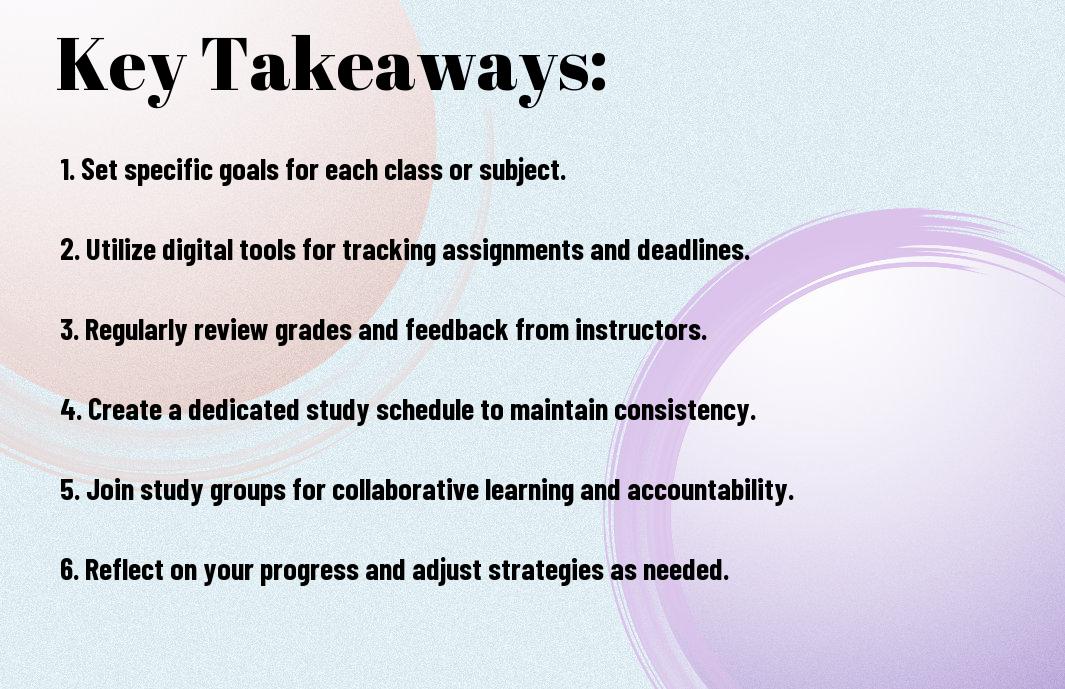
To effectively monitor your advancement in online courses, consider the following points:

  • Set Clear Goals to help you stay focused and motivated throughout the duration of the class, ensuring you understand what needs to be achieved.
  • Utilize Tracking Tools such as calendars, planners, or apps designed to help students organize assignments and deadlines, keeping you on schedule.
  • Establish a Regular Routine for studying and participating in online activities, maintaining consistency is key to staying on top of your coursework.
  • Engage in Self-Assessment regularly, evaluating your understanding of the material and identifying areas where you may need extra support or review.
  • Leverage Feedback Mechanisms provided by the course, such as discussion forums or direct communication with instructors, to gauge your performance and adjust your approach as necessary.

Setting Up Tracking Systems

Before you start tracking your progress, consider how you will set up your systems. You can learn more about How to Let Your Students Track Their Own Course Progress to get started.

Identifying Key Performance Indicators

For your tracking to be effective, you need to identify the key metrics that matter most to your learning goals, allowing you to focus on what’s working and what’s not.

Using Online Tools for Progress Monitoring

Below are some tools to help you monitor your progress, from built-in LMS features to third-party apps and plugins that simplify tracking and analysis.

Monitoring your progress regularly helps you stay on top of your coursework and make adjustments as needed, and by leveraging online tools, you can streamline this process and make the most of your time, allowing you to adjust your approach and achieve your goals more efficiently.
Establishing Goals and Objectives

While setting up your online class, you need to define what you want to achieve. Check out Tracking Online Learners’ Progress: Effective Strategies to get insights on how to monitor your progress. This will help you stay focused and motivated throughout your course.

Creating a Personalized Learning Plan

Any successful online learner knows that having a tailored plan is key. You should assess your strengths, weaknesses, and learning style to create a plan that suits your needs, allowing you to make the most of your online class.

Breaking Down Larger Goals into Smaller Tasks

To tackle your objectives, break them down into manageable tasks. This approach will make your goals less overwhelming, helping you to track your progress and make adjustments as needed.

Breaking down larger goals into smaller tasks is a simple yet effective way to stay on top of your work. You can create a schedule with specific deadlines for each task, allowing you to monitor your progress and make adjustments as needed, ensuring you’re always moving closer to achieving your objectives in your online class.

Monitoring Progress

Now that you’ve started your online class, tracking your progress is key. You’ll want to stay on top of your assignments, quizzes, and participation to ensure you’re meeting your goals.

Regularly Reviewing Assignments and Quizzes

Across the duration of your course, you’ll need to keep tabs on your assignments and quizzes, making sure you’re completing them on time and to the best of your ability.

Tracking Participation and Engagement

One way to gauge your progress is by tracking your participation and engagement in online discussions and activities, allowing you to identify areas where you need to improve.

And as you track your participation, you’ll start to see patterns emerge, helping you understand what’s working and what’s not, enabling you to make adjustments to stay on track and achieve your goals in the online class.

Adjusting the Learning Plan

Many online learners find that their initial plan needs tweaking as they progress through their course. You will likely encounter areas where you need more practice or review, and your plan should reflect these changes.

Identifying Areas for Improvement

Among the key steps in adjusting your learning plan is pinpointing where you need extra help. You can do this by tracking your assignments and test scores to see where you’re struggling.

Making Adjustments to Stay on Track

Identifying your weaknesses is the first step, and then you can make adjustments to your study schedule to focus on those areas. You will be able to allocate more time to the topics that are giving you trouble.

Hence, by making these adjustments, you can ensure that you’re using your study time effectively and making progress towards your goals. You can take additional online resources, such as video tutorials or practice quizzes, to supplement your learning in areas where you’re struggling, and this will help you to stay on track and achieve your objectives.

Staying Motivated

Your online classes demand a steady effort, and staying motivated is key to success. You need to focus on your goals and push through challenges to reach them.

Celebrating Small Victories

Against the tide of tough coursework, acknowledging small wins will help you stay afloat. You complete a difficult assignment, and that’s a victory – acknowledge it.

Finding Support from Peers and Instructors

Minimal as it may seem, connecting with your peers and instructors can help you stay on track. You can join online forums or discussion groups to get support.

Also, your instructors are there to guide you, so don’t hesitate to reach out when you need help. You can ask for feedback on your progress, and they can provide valuable insights to keep you motivated and focused on your goals.

Overcoming Obstacles

Once again, you’ll face challenges in online classes. Your progress may slow, but don’t get discouraged. Identify the obstacles and find ways to overcome them.

Managing Time Effectively

Above all, after setting your schedule, stick to it. You’ll stay on track and make steady progress in your online classes.

Seeking Help When Needed

When you’re struggling, don’t hesitate to ask for help. You can reach out to your instructor or peers for support, and get back on track with your online classes.

With the right mindset, you’ll be able to seek help when you need it. You’ll find that your instructor and peers are willing to lend a hand, and you’ll be able to overcome any obstacles that come your way. You’ll stay focused, and your progress will reflect your hard work and determination.

Summing up

On the whole, you’ve got the tools to track your progress in online classes. You can set goals, use calendars, and analyze your grades. Your progress is in your hands. You can adjust your approach as you go, staying on top of your work and achieving your goals. You’ll stay focused and motivated, pushing through challenges to succeed in your online courses.

FAQ

Q: What are the best ways to track progress in online classes?

A: To track progress in online classes, utilize the learning management system’s built-in tracking features, such as progress bars, quizzes, and assignment submission trackers. Additionally, create a schedule and set reminders for upcoming deadlines, and maintain a log or journal to record notes and reflections on your learning journey. Regularly reviewing course materials and asking instructors for feedback can also help you stay on top of your progress.

Q: How can I stay organized and keep track of assignments and deadlines in online classes?

Q: What role does self-assessment play in tracking progress in online classes, and how can I effectively self-assess my learning?

A: Self-assessment plays a significant role in tracking progress in online classes, as it enables you to evaluate your own learning and identify areas for improvement. To effectively self-assess, set clear learning goals and objectives, and regularly evaluate your progress towards achieving them. Use self-assessment rubrics and quizzes to gauge your understanding of course materials, and solicit feedback from instructors and peers to gain new insights into your learning. Reflecting on your learning experiences, identifying what works and what doesn’t, and adjusting your approach as needed can also help you stay on track and achieve your learning objectives.

The Importance of Feedback in Online Education

As you navigate online education, you will inevitably encounter the concept of feedback, a vital component that shapes your learning experience. Your ability to grasp and apply new knowledge is greatly influenced by the quality and timeliness of feedback you receive. To better understand this phenomenon, you can explore studies such as The Role of Feedback in the Distance Learning Process, which highlights the significance of this aspect in your academic journey, allowing you to refine your skills and achieve your goals.

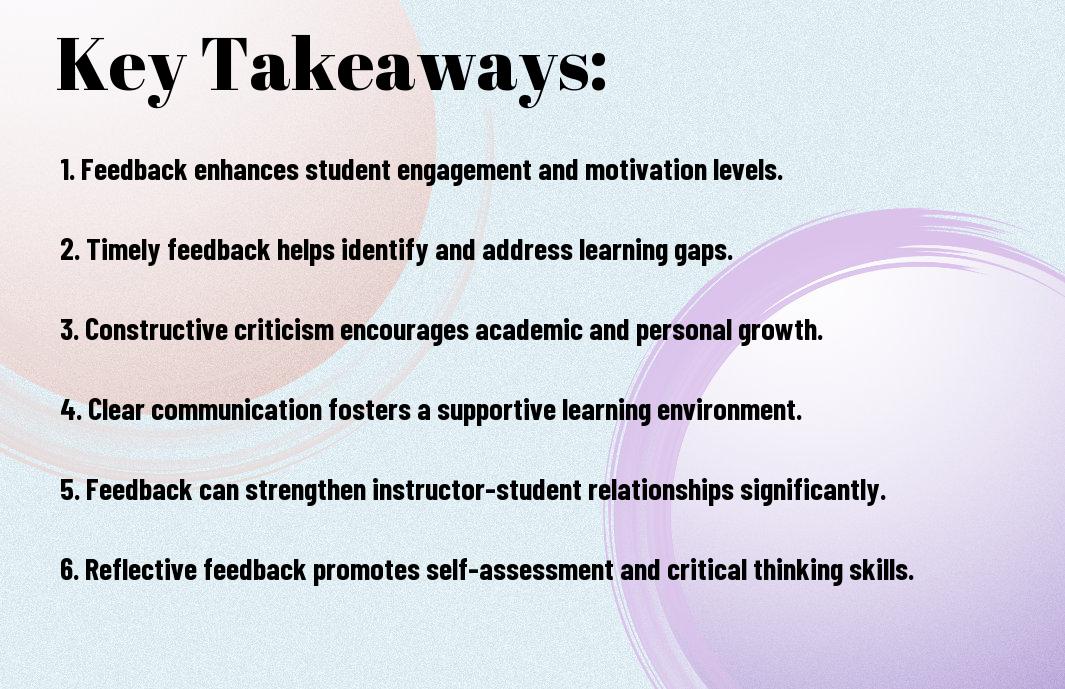
Key Takeaways:

  • The use of Timely Feedback in online education is vital for enhancing student engagement and motivation, as it helps learners to track their progress and understand areas that need improvement.
  • Constructive Feedback is crucial for online students, as it provides them with a clear understanding of their strengths and weaknesses, allowing them to adjust their learning strategies and achieve better outcomes.
  • Personalized Feedback is key to meeting the diverse needs of online learners, as it enables instructors to tailor their feedback to individual students’ learning styles, abilities, and goals.
  • The Quality of Feedback is more important than the quantity, as high-quality feedback that is specific, relevant, and actionable is more likely to have a positive impact on student learning and achievement.
  • Using Technology-Enhanced Feedback tools, such as online quizzes, discussions, and peer review platforms, can facilitate the feedback process and provide online students with more opportunities to engage with feedback and reflect on their learning.

Benefits of Feedback

For online learners, feedback is imperative to track progress and identify areas that require improvement. You will find that feedback enhances your learning experience and helps you achieve your academic goals.

Improved Student Performance

Along with guiding your academic growth, feedback enables you to refine your skills and knowledge, leading to improved student performance and a stronger understanding of the subject matter.

Enhanced Learning Experience

Beside the academic benefits, feedback facilitates a more engaging and interactive learning environment, allowing you to take an active role in your education and make the most of your online learning experience.

To further enhance your learning experience, you can use feedback to reflect on your strengths and weaknesses, setting realistic goals and developing strategies to overcome challenges, ultimately leading to a more personalized and effective learning approach that suits your needs and learning style.

Types of Feedback

Assuming you are familiar with the concept of feedback, you can categorize it into different types. The main types are:

  • Formative
  • Summative

The following table summarizes the characteristics:

Type Description
Formative Ongoing evaluation
Summative Final assessment
Peer Student assessment
Self-assessment Personal evaluation
Teacher Instructor feedback

The information will help you understand the types of feedback.

Formative Feedback

Around the midpoint of your course, you will likely encounter formative feedback, which is designed to monitor your progress and provide guidance for improvement.

Summative Feedback

Around the end of your course, you will encounter summative feedback, which is a final evaluation of your performance.

Feedback is an necessary component of summative assessment, as it provides you with an overview of your strengths and weaknesses, allowing you to adjust your approach for future courses. You will find that summative feedback is often more detailed and comprehensive than formative feedback, as it aims to provide a thorough evaluation of your overall performance. You can use this feedback to reflect on your learning and identify areas for improvement, ultimately enhancing your academic experience.

Effective Feedback Strategies

Unlike traditional classroom settings, online education requires deliberate and strategic approaches to feedback. You will need to prioritize feedback to ensure students stay engaged and motivated, as it directly impacts their learning outcomes and overall educational experience.

Timely and Regular Feedback

Around the time you assign a task or project, consider implementing a feedback system that provides students with consistent and timely evaluations, allowing them to adjust and improve throughout the course.

Constructive and Specific Feedback

Among the various aspects of effective feedback, you should focus on delivering constructive and specific comments that target particular areas of improvement, enabling students to understand their strengths and weaknesses.

This type of feedback is particularly beneficial as it allows you to tailor your feedback to individual students’ needs, providing actionable advice and promoting a more personalized learning experience. You can achieve this by setting clear expectations, using specific examples, and emphasizing what students do well, thereby fostering a growth mindset and encouraging them to take ownership of their learning process.

Overcoming Challenges

All online educators face numerous challenges when implementing feedback in their courses, and you must be prepared to address them to ensure the success of your students.

Technical Issues

Around the clock, you will encounter technical problems that hinder the feedback process, and you should have a plan in place to resolve these issues promptly.

Instructor Workload

Alongside other responsibilities, you will need to manage your workload effectively to provide timely and constructive feedback to your students.

With careful planning and time management, you can mitigate the impact of a heavy workload on your ability to provide quality feedback, and you will be able to help your students achieve their full potential by giving them the feedback they need to succeed in your course.

Student Perspectives

Many students consider feedback to be an important component of online education, as it enables you to gauge your performance and adjust your approach accordingly. You can use feedback to identify areas where you need improvement and develop strategies to address these weaknesses.

Feedback and Motivation

The timely receipt of feedback has a profound impact on your motivation, as it allows you to track your progress and stay engaged with the course material. You will find that meaningful feedback boosts your confidence and encourages you to take an active role in your learning process.

Feedback and Self-Assessment

Beneath the surface of online education, you will discover that feedback plays a significant role in self-assessment, enabling you to evaluate your own learning and set realistic goals. You can use feedback to reflect on your strengths and weaknesses, and adjust your learning strategy to achieve your objectives.

Consequently, as you probe deeper into the concept of feedback and self-assessment, you will realize that it is a powerful tool for personal growth and development. You will be able to analyze your own learning, identify areas for improvement, and develop a sense of autonomy and self-directed learning, ultimately leading to a more effective and efficient learning experience.

Implementation and Evaluation

Now that you have understood the significance of feedback in online education, it is necessary to consider the implementation and evaluation of feedback strategies in your online courses.

Feedback Tools and Platforms

To facilitate effective feedback, you can utilize various tools and platforms that cater to your specific needs, such as learning management systems, online discussion forums, and video conferencing software.

Assessing Feedback Effectiveness

The effectiveness of your feedback strategies can be assessed by analyzing student outcomes, such as improved performance and increased engagement, which indicate the success of your feedback approaches.

In addition, as you evaluate the effectiveness of your feedback, you will be able to refine your strategies to better meet the needs of your students, ultimately enhancing the overall quality of your online education programs, and enabling you to make data-driven decisions to improve student learning outcomes.

Summing up

Following this exploration of online education, you now understand the significance of feedback in enhancing your learning experience. As you reflect on your own online courses, you will appreciate how timely and constructive feedback facilitates your progress, helping you to adjust your approach and achieve your academic goals. Your ability to receive and act upon feedback is crucial to maximizing the benefits of online education, enabling you to refine your skills and knowledge in a personalized and effective manner.

FAQ

Q: What is the role of feedback in online education and how does it impact student learning outcomes?

A: Feedback plays a significant role in online education as it enables students to gauge their understanding of the course material, identify areas of improvement, and adjust their learning strategy accordingly. Effective feedback from instructors helps students to stay motivated, develop a growth mindset, and achieve their academic goals. Furthermore, feedback facilitates a sense of community and connection in online courses, which can sometimes feel isolative. By providing timely and constructive feedback, instructors can foster a supportive learning environment that promotes student engagement, retention, and overall success.

Q: How can instructors provide high-quality feedback in online education, and what tools or strategies can they use to facilitate this process?

A: Instructors can provide high-quality feedback in online education by using a variety of tools and strategies. For instance, they can utilize learning management system (LMS) features such as discussion boards, video recordings, and annotation tools to provide personalized and timely feedback. Additionally, instructors can leverage audio and video feedback, which allows them to convey tone and nuance, making the feedback more effective and engaging. Moreover, instructors can use rubrics and grading criteria to ensure consistency and clarity in their feedback, and provide students with opportunities for self-assessment and peer review. By using these tools and strategies, instructors can facilitate a feedback-rich environment that supports student learning and development.

Q: How can students make the most of feedback in online education, and what are some best practices for using feedback to improve their learning outcomes?

A: Students can make the most of feedback in online education by being proactive and open to constructive criticism. They should regularly check the course website and LMS for feedback from instructors, and carefully review and reflect on the feedback they receive. Students can also use feedback to adjust their learning strategy, set new goals, and develop a plan to address areas of improvement. Furthermore, students can use feedback to engage in self-assessment and self-reflection, identifying their strengths and weaknesses, and developing a growth mindset. By using feedback in a purposeful and intentional way, students can take ownership of their learning, develop greater autonomy and self-directedness, and ultimately achieve greater success in their online courses.

How Online Learning Prepares Students for Remote Work

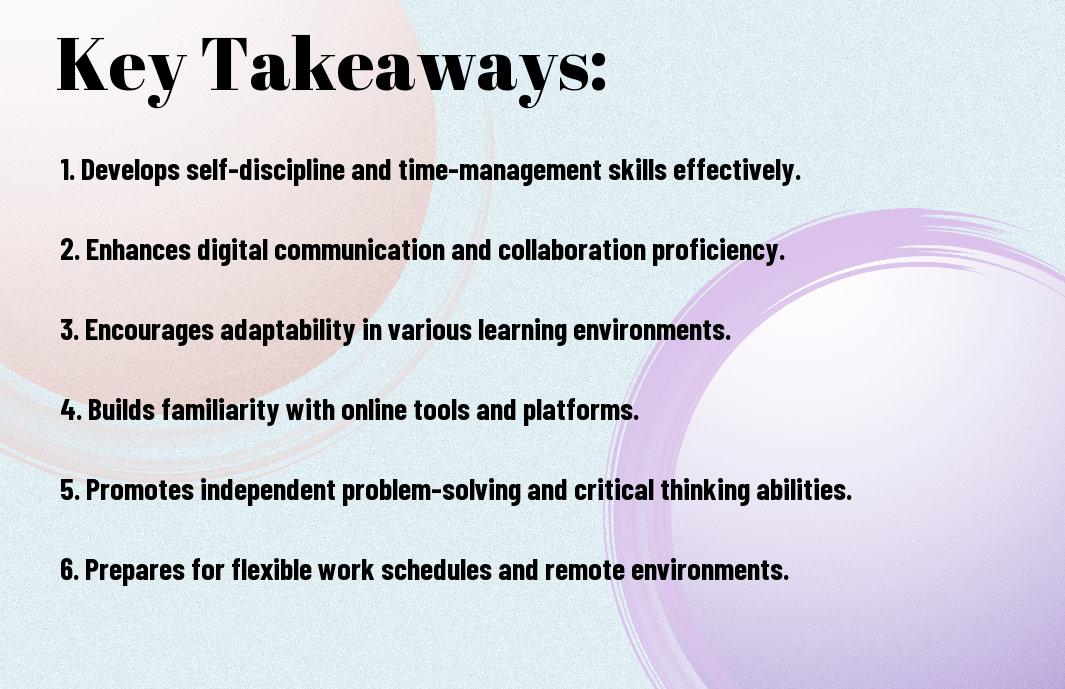
tips on online learning and remote work preparation to learn how you can benefit from this type of education.

Key Takeaways:

  • Online learning helps students develop self-motivation and time management skills, which are necessary for succeeding in remote work environments where employees often work independently.
  • Virtual collaboration tools and platforms used in online learning prepare students for the digital communication and teamwork required in remote work settings.
  • Online learning encourages students to become more tech-savvy and proficient in using various digital tools and software, making them more adaptable to the ever-changing remote work landscape.
  • The flexibility of online learning allows students to balance their academic and personal responsibilities, mirroring the work-life balance required for success in remote jobs.
  • By completing online courses, students demonstrate their ability to work independently and proactively, showcasing their potential to thrive in remote work environments where autonomy and self-directed learning are valued.

Benefits of Online Learning

While pursuing online education, you will discover numerous advantages that will benefit your future career. You will develop skills and knowledge that are highly valued in the remote work environment, such as self-motivation, time management, and technical skills.

Flexibility and Autonomy

Besides the traditional classroom setting, online learning provides you with the freedom to create your own schedule and work at your own pace, allowing you to balance your work and personal life more effectively. You can access course materials and participate in discussions from anywhere, at any time.

Access to Global Resources

On top of the flexibility, online learning also gives you access to a vast array of global resources, including online libraries, educational platforms, and international expert networks. You can connect with peers and mentors from around the world, broadening your perspective and understanding of different cultures and industries.

Apart from the convenience, accessing global resources through online learning enables you to stay updated with the latest developments in your field, as you can participate in webinars, online conferences, and workshops, and engage with professionals who are shaping the industry. You can also leverage these resources to build a professional network that spans the globe, opening up new opportunities for collaboration and career advancement.

Development of Remote Work Skills

Some of the most valuable skills you will acquire through online learning are those that prepare you for remote work, enabling you to thrive in a flexible and autonomous environment. You will learn to navigate digital platforms, manage your time, and communicate effectively with colleagues and instructors.

Communication and Collaboration

Across various online courses, you will engage with peers and instructors from diverse backgrounds, fostering your ability to convey ideas and work together towards common goals, regardless of physical distance. You will develop your written and verbal communication skills, allowing you to articulate your thoughts and collaborate seamlessly.

Time Management and Self-Motivation

Remotely, you will need to rely on your own initiative to stay on track, prioritizing tasks and managing your schedule to meet deadlines. You will cultivate self-discipline and motivation, imperative for success in remote work environments.

Development of your time management and self-motivation skills begins with setting clear goals and breaking them down into achievable tasks. As you progress through your online courses, you will learn to create schedules, avoid distractions, and maintain a healthy work-life balance, all of which will serve you well in your future remote work endeavors, enabling you to work efficiently and effectively from anywhere.

Technical Skills for Remote Work

To succeed in remote work, you need to acquire technical skills that enable you to work efficiently and effectively. Online learning provides you with the opportunity to develop these skills, which are crucial for your success in the digital workforce.

Digital Tools and Software

Similar to systems used in traditional workplaces, online learning platforms introduce you to a wide range of digital tools and software that you will use in remote work, helping you to become proficient in their use and application.

Data Analysis and Security

Technically, online learning prepares you to handle data analysis and security aspects of remote work, teaching you how to protect sensitive information and analyze data to make informed decisions.

Skills such as data interpretation, statistical analysis, and cybersecurity are vital in remote work, and online learning helps you develop these skills, enabling you to work confidently and securely in a remote environment, managing and analyzing data to achieve your goals and protect your work from potential threats.

Soft Skills for Remote Work

All online learning platforms require you to develop skills that are highly valued in remote work environments, such as communication, time management, and problem-solving. You will learn to work independently and navigate virtual tools, preparing you for the demands of remote work.

Adaptability and Resilience

Around the time you start online learning, you will notice that you are becoming more adaptable and resilient, able to adjust to new situations and bounce back from challenges, which is important for success in remote work.

Leadership and Teamwork

Behind every successful remote team is a group of individuals who know how to work together effectively, and as you participate in online learning, you will develop your leadership and teamwork skills, learning to collaborate and communicate with others in a virtual setting.

The more you practice leadership and teamwork skills in an online learning environment, you will find that you are better equipped to take on leadership roles and collaborate with others in a remote work setting, which will serve you well in your future career, as you will be able to effectively manage virtual teams and contribute to the success of your organization, and you will be able to achieve your goals and make meaningful contributions to your workplace.

Overcoming Challenges of Remote Work

Unlike traditional office settings, remote work requires you to be self-motivated and disciplined. As you navigate the challenges of remote work, you can learn more about how online learning prepares you for this setup by reading How Remote Learning is Preparing Students for Jobs of the Future, which offers valuable insights into the skills you need to succeed.

Staying Motivated and Engaged

To stay motivated, you need to set clear goals and deadlines for yourself, creating a schedule that allows you to manage your time effectively and maintain productivity. This helps you stay focused and avoid distractions while working remotely.

Building Professional Networks

With the rise of remote work, you have numerous opportunities to connect with professionals worldwide, joining online communities and forums related to your field to expand your network and gain new perspectives.

Professional networking is an important aspect of remote work, and as you engage with others in your industry, you’ll find that your skills and knowledge are enhanced through these interactions, allowing you to grow both personally and professionally, and preparing you for the challenges and opportunities that come with remote work, enabling you to achieve your goals and succeed in your career.

Real-World Applications

After completing online courses, you can apply your skills in various settings, as discussed in How online learning can prepare students for the future of work. This prepares you for the ever-changing workforce.

Entrepreneurship and Freelancing

Against the backdrop of a shifting job market, you’ll find that online learning equips you with the adaptability needed to thrive in freelance or entrepreneurial pursuits, allowing you to take charge of your career.

Corporate and Non-Profit Careers

Behind the scenes of corporate and non-profit organizations, you’ll discover that online learning has prepared you with the technical skills and collaboration tools necessary to succeed in these fields, making you a valuable asset to any team.

Plus, as you navigate your career in corporate or non-profit sectors, you’ll notice that your online learning experience has taught you to be self-motivated, disciplined, and able to work independently, skills that are highly valued by employers and will serve you well in your professional journey, enabling you to make the most of your career opportunities and achieve your goals.

Final Words

To wrap up, you now see how online learning prepares you for the realities of remote work. You have gained flexibility and self-motivation, vital skills in today’s digital landscape. As you navigate your career, your ability to work independently and manage your time effectively will serve you well, allowing you to thrive in a remote work environment and make the most of your online learning experience.

FAQ

Q: How does online learning help students develop the self-motivation and discipline required for remote work?

A: Online learning requires students to be self-starters, managing their time and workload independently. This helps them develop the self-motivation and discipline needed to stay focused and productive while working remotely. Through online courses, students learn to set goals, prioritize tasks, and maintain a schedule, all of which are crucial skills for success in remote work environments.

Q: What technical skills do students gain through online learning that are applicable to remote work?

A: Online learning provides students with hands-on experience using various digital tools and platforms, such as learning management systems, video conferencing software, and collaborative document editing apps. These technical skills are highly transferable to remote work settings, where employees often rely on similar tools to communicate with colleagues, manage projects, and complete tasks. By becoming proficient in these technologies, students are better prepared to adapt to the digital demands of remote work.

Q: How does online learning foster the communication and teamwork skills necessary for effective collaboration in remote work environments?

A: Online learning often involves participating in virtual discussions, group projects, and peer feedback, which help students develop strong communication and teamwork skills. These skills are vital for success in remote work, where team members may be geographically dispersed and rely on digital communication to collaborate. Through online learning, students learn to articulate their ideas clearly, provide constructive feedback, and work towards common goals with their peers, all of which are crucial for effective collaboration in remote work settings.

Top Reasons to Choose Online Education in 2025

As you consider furthering your education, you’re likely weighing the benefits of traditional versus online learning. You’re not alone in this decision, and many institutions, such as Harvard, have seen success with online programs, as discussed in Going the Distance: Why Online Learning Works. You’ll find that online education offers flexibility and accessibility, allowing you to balance your schedule and learning style, making it an attractive option for your educational goals.

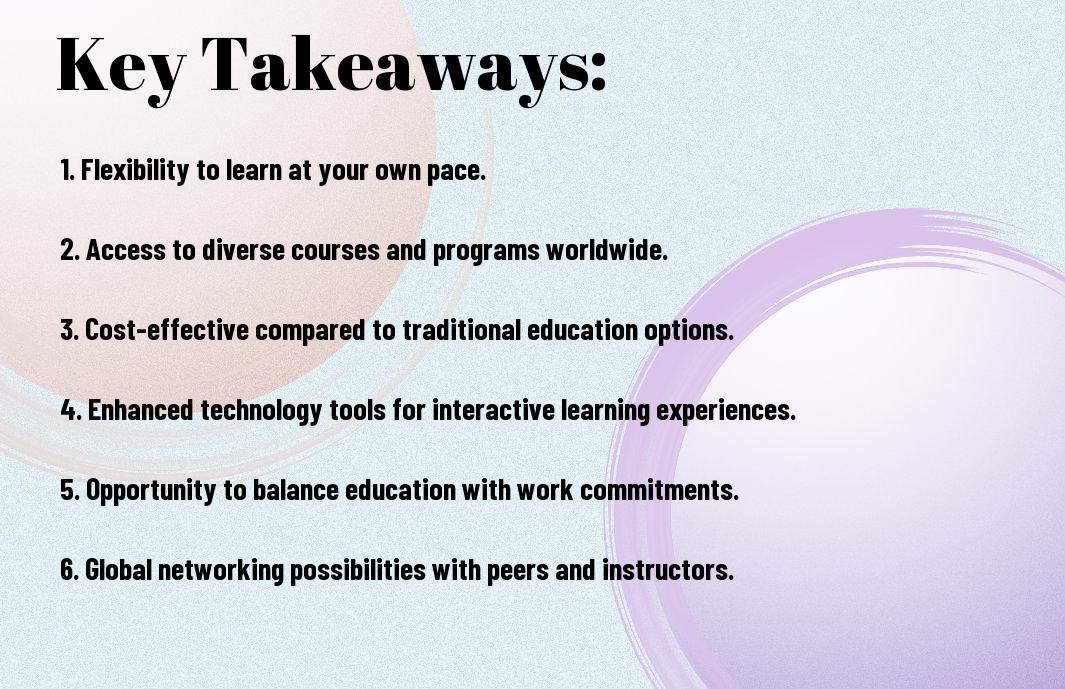
Key Takeaways:

To succeed in the ever-evolving educational landscape, consider the following points about online education in 2025:

  • Flexibility is a major advantage, allowing students to balance their studies with other responsibilities and learn at their own pace.
  • Online education provides access to a wide range of courses and programs that may not be available locally, giving students more options for their educational and career goals.
  • Cost-effective online education can help reduce tuition fees and other expenses associated with traditional campus-based learning, making it a more affordable choice.
  • Personalization is another significant benefit, as online learning platforms often use technology to tailor the learning experience to individual students’ needs and preferences.
  • Career advancement opportunities are enhanced through online education, as it helps students develop skills such as time management, self-motivation, and digital literacy, which are highly valued by employers.

Benefits of Online Education

To take advantage of the numerous benefits that online education has to offer, you can explore the advantages of online learning, such as those outlined in Benefits of Online Learning: 8 Advantages of Online Degrees, to make an informed decision about your educational path.

Increased Accessibility

By leveraging online education, you can access a wide range of courses and programs from anywhere in the world, allowing you to learn at your own pace and on your own schedule, which can be particularly beneficial for those with busy lifestyles or limited mobility.

Flexibility and Autonomy

Any online course or program you choose will provide you with the flexibility to create your own study schedule, giving you more control over your learning experience and allowing you to balance your academic responsibilities with other aspects of your life.

A significant aspect of flexibility and autonomy in online education is that you can learn from anywhere, at any time, as long as you have a stable internet connection, giving you the freedom to study in a setting that is most comfortable and convenient for you, which can help you stay motivated and engaged throughout your educational journey.

Personalized Learning Experience

It allows you to learn at your own pace, with content tailored to your needs and interests. Online education provides a customized experience, enabling you to focus on areas where you need improvement.

Adaptive Technology

Around the clock, you can access advanced learning tools that adjust to your learning style, providing real-time feedback and guidance to enhance your understanding of the subject matter.

Self-Paced Progress

Among the many benefits of online education, you will appreciate the ability to set your own schedule, allowing you to balance your learning with other aspects of your life, and making progress at a pace that suits you.

Further, as you progress through your online course, you will find that self-paced learning enables you to revisit challenging topics, reinforce your understanding, and apply your knowledge in a practical way, helping you to achieve your academic and professional goals, with your unique learning needs and preferences being consistently met throughout your educational journey.

Career Advancement Opportunities

For professionals and students alike, online education offers a flexible and accessible way to upgrade your skills and knowledge, leading to better career prospects and increased earning potential.

Enhanced Skills and Knowledge

Advancing your education through online courses, you can gain specialized skills and knowledge in your chosen field, giving you a competitive edge in the job market and enabling you to take on new challenges with confidence.

Broader Career Prospects

Opportunities for career growth and development are plentiful with online education, as you can pursue courses and certifications that align with your interests and career goals, opening doors to new and exciting career paths.

Enhanced by the flexibility and accessibility of online education, you can explore various career options and transition into new roles with ease, as your newly acquired skills and knowledge make you a more attractive candidate to potential employers, allowing you to achieve your career aspirations and succeed in your chosen profession.

Cost-Effective and Environmentally Friendly

Once again, you can benefit from online education, as it offers a cost-effective and environmentally friendly way to learn, allowing you to save money and reduce your impact on the planet.

Reduced Expenses

By choosing online education, you can significantly reduce your expenses, as you won’t need to spend money on commuting, accommodation, or textbooks, making it a more affordable option for you.

Reduced Carbon Footprint

Carbon emissions from transportation and energy consumption are significantly reduced when you opt for online education, allowing you to contribute to a more sustainable future and make a positive impact on the environment.

Even more importantly, as you continue with online education, you will be able to access a wide range of digital resources, reducing the need for physical materials and further minimizing your carbon footprint, which will not only benefit you but also the environment, as you pursue your educational goals.

Improved Student Engagement

After considering various aspects of online education, you’ll find that it offers a more engaging experience. Online courses provide flexibility, allowing you to learn at your own pace, which can lead to increased participation and motivation.

Interactive Learning Platforms

Enthralling online platforms foster a more immersive learning experience, enabling you to interact with course materials in a dynamic way, which can help you stay focused and interested in the subject matter.

Collaborative Learning Environments

Students like you benefit from collaborative learning environments, where you can engage with peers and instructors, share ideas, and work together on projects, promoting a sense of community and social learning.

Also, as you participate in online discussions and group activities, you’ll develop important skills such as communication, problem-solving, and teamwork, which are valuable in both academic and professional settings, and will help you become a more confident and effective learner.

Access to Global Resources and Networking

Despite geographical constraints, online education offers you access to global resources and networking opportunities. You can explore The 10 Benefits of Online Learning – School of Education to learn more about the advantages of online learning.

International Perspectives and Connections

Across the globe, you can connect with peers and instructors from diverse backgrounds, broadening your understanding of different cultures and perspectives.

Expanded Access to Information

After enrolling in an online course, you gain access to a vast array of digital resources, including e-books, articles, and online libraries.

International students like you can access information from renowned institutions and libraries worldwide, facilitating your research and learning experience.

To wrap up

Conclusively, as you consider your educational options in 2025, you will find that online education offers numerous benefits tailored to your needs. You can access a wide range of courses, learn at your own pace, and enjoy flexibility in your schedule. Your decision to choose online education will likely enhance your career prospects and provide you with a high-quality learning experience, making it an attractive option for you to achieve your academic and professional goals.

FAQ

Q: What are the benefits of online education in terms of flexibility and accessibility?

A: Online education offers unparalleled flexibility and accessibility, allowing students to learn at their own pace and on their own schedule. With online courses, students can access course materials, attend virtual lectures, and submit assignments from anywhere with a stable internet connection. This makes online education an ideal choice for individuals with work or family commitments, or those living in remote areas with limited access to traditional educational institutions. In 2025, online education is expected to become even more sophisticated, with the use of artificial intelligence, virtual reality, and other cutting-edge technologies to enhance the learning experience.

Q: How does online education compare to traditional education in terms of cost and quality?

A: Online education is often more affordable than traditional education, as it eliminates the need for commute, accommodation, and other expenses associated with attending a physical campus. Additionally, online education can offer the same quality of education as traditional institutions, with many online courses and programs designed and taught by industry experts and renowned faculty members. In 2025, online education is expected to become even more mainstream, with many top-ranked universities and institutions offering online courses and degree programs that are equivalent in quality to their on-campus counterparts.

Q: What kind of support and resources can students expect from online education providers in 2025?

A: Online education providers in 2025 are expected to offer a wide range of support and resources to help students succeed, including online tutoring, mentoring, and career counseling. Many online education platforms will also provide students with access to virtual libraries, online communities, and other resources to facilitate learning and collaboration. Furthermore, online education providers will prioritize student engagement and feedback, using data analytics and other tools to continuously improve the learning experience and ensure that students are well-prepared for the workforce or further education. With the advancement of technology, online education providers will be able to offer more personalized and effective support to students, leading to better learning outcomes and higher student satisfaction.

How Online Education Reduces Environmental Impact

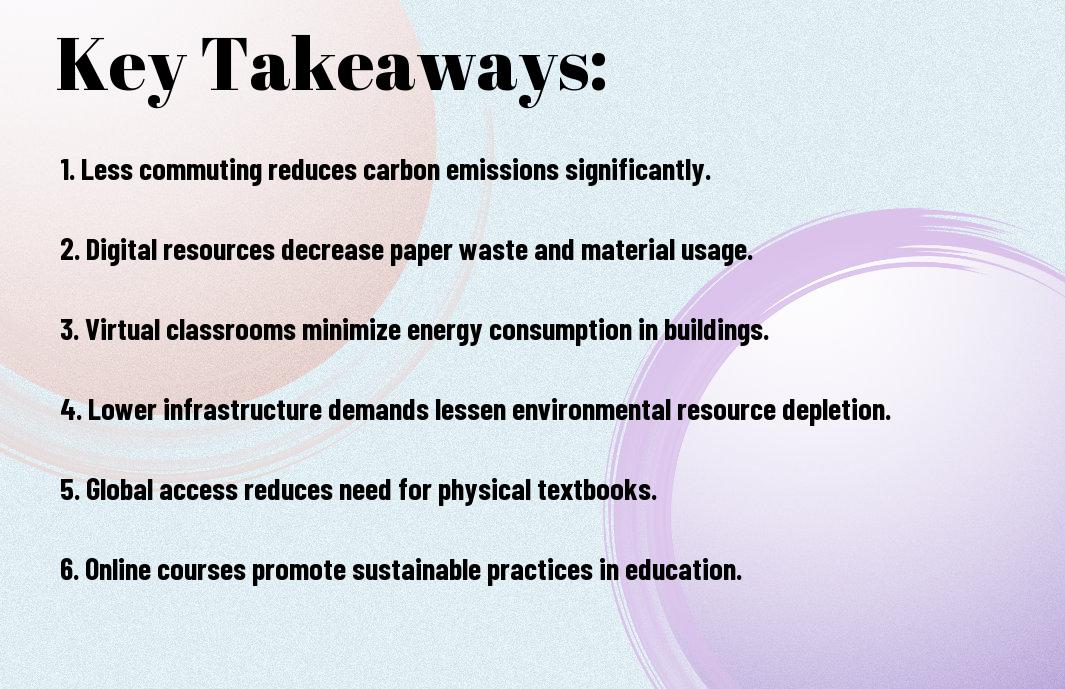
Key Takeaways:

  • Online education helps in reducing the carbon footprint by minimizing the need for transportation to and from educational institutions, resulting in lower greenhouse gas emissions.
  • The shift to online learning reduces the demand for physical infrastructure, such as buildings and classrooms, which in turn reduces the need for energy consumption and water usage.
  • Online education promotes the use of digital resources, reducing the need for printed materials and minimizing waste generation.
  • By reducing the need for commuting, online education helps decrease air pollution and contributes to a cleaner and healthier environment.
  • Overall, online education offers a more sustainable approach to learning, allowing students to access quality education while minimizing their ecological impact.

Environmental Consequences of Traditional Education

The traditional education system has a significant impact on the environment, and as you investigate into the details, you’ll find that it’s affecting the planet in various ways. You can learn more about the Impact of E-learning on the environment and its benefits and how it compares to traditional methods.

Carbon Footprint of Physical Infrastructures

Between the construction of buildings, energy consumption, and transportation, traditional education institutions have a substantial carbon footprint, and as you consider the alternatives, you’ll see that online education offers a more sustainable solution.

Waste Management in Educational Institutions

An overlooked aspect of traditional education is waste management, and as you explore this topic, you’ll discover that educational institutions generate a significant amount of waste, from paper and plastic to food and electronics, which can have a lasting impact on the environment.

Indeed, as you investigate further, you’ll find that the waste generated by traditional educational institutions is not only harmful to the environment, but it also reflects a lack of consideration for the planet’s well-being, and by choosing online education, you can significantly reduce your contribution to this problem, creating a more sustainable future for yourself and future generations.

Digital Learning and Its Benefits

One of the most significant advantages of online education is the flexibility and accessibility it offers you, allowing you to learn from anywhere, at any time, and at your own pace, thus making it an attractive option for those seeking to expand their knowledge and skills.

Reduced Paper Consumption and E-Waste

Similarly, one of the key benefits of digital learning is the significant reduction in paper consumption and e-waste, which not only helps minimize your environmental footprint but also reduces the costs associated with traditional learning materials, making education more sustainable and affordable for you.

Virtual Classrooms and Energy Efficiency

Around the world, you are witnessing a shift towards virtual classrooms, which are not only more energy-efficient but also provide you with a unique opportunity to engage with a global community of learners, fostering a more collaborative and dynamic learning environment that is tailored to your needs and preferences.

Indeed, as you examine deeper into the world of virtual classrooms, you will discover that they offer a multitude of benefits, from reducing the need for physical infrastructure and energy consumption to providing you with access to a vast array of educational resources and tools, thereby enhancing your overall learning experience and empowering you to take control of your educational journey.

Online Education and Resource Conservation

Keep in mind that online education plays a significant role in reducing your environmental footprint. By transitioning to digital platforms, you contribute to a more sustainable future, conserving resources and minimizing waste.

Access to Digital Resources and Reduced Textbook Waste

About the benefits of online education, you’ll find that accessing digital resources significantly reduces textbook waste, allowing you to learn without the guilt of contributing to deforestation and pollution.

Cloud Computing and Data Storage

Any doubts you may have about the environmental impact of online education should be alleviated by the fact that cloud computing and data storage enable you to access vast amounts of information without the need for physical infrastructure, reducing your carbon footprint.

This facet of online education is particularly noteworthy, as it enables you to store and access vast amounts of data without the need for physical servers, thereby reducing energy consumption and minimizing electronic waste, allowing you to focus on your studies while contributing to a more sustainable world.

Impact on Student Transportation and Commuting

All aspects of your daily commute are significantly altered when you switch to online education, as the need to travel to a physical campus is eliminated, thereby reducing your carbon footprint.

Reduced Fuel Consumption and Air Pollution

Altogether, the decrease in fuel consumption has a profound impact on air pollution, as you are no longer contributing to the emissions from vehicles, thus creating a cleaner environment for yourself and your community.

Increased Accessibility for Remote Students

The notion that online education can reach you regardless of your geographical location is a significant advantage, as you can now access educational resources and opportunities that were previously inaccessible due to distance or mobility constraints.

Considering the vast array of online educational platforms and tools available, you can now participate in courses and degree programs that cater to your interests and career goals, without having to relocation or compromise on your personal circumstances, ultimately enhancing your overall learning experience and potential for personal growth.

Innovative Technologies for Sustainable Education

After embracing online education, you can explore various innovative technologies that promote sustainability. You will discover new ways to reduce your environmental footprint while accessing quality education.

Virtual Reality and Immersive Learning Experiences

Sensibly, you can utilize virtual reality to create immersive learning experiences that mimic real-world environments, reducing the need for physical infrastructure and travel.

Artificial Intelligence and Personalized Learning

On the path to sustainable education, you will encounter artificial intelligence as a key player in personalized learning. You can leverage AI to tailor your educational experience, making it more efficient and effective.

Understanding how artificial intelligence works in personalized learning, you can appreciate the potential to minimize waste and optimize resource allocation. As you investigate deeper, you will find that AI-driven adaptive learning systems can help you learn at your own pace, reducing the need for repeated lessons and minimizing energy consumption.

Challenges and Limitations of Online Education

For your consideration, as you probe into online education, you will encounter challenges that hinder its potential to reduce environmental impact. You can explore Practical Strategies to Reduce Environmental Impact to understand the complexities involved.

Digital Divide and Accessibility Issues

Apart from the obvious benefits, you will notice that online education also raises concerns about accessibility, as not all individuals have equal access to digital resources, thereby limiting your reach and effectiveness.

Technical Challenges and Infrastructure Limitations

Beneath the surface of online education lies a array of technical challenges, including poor internet connectivity and outdated hardware, which can hinder your ability to fully engage with online courses and materials.

Technical infrastructure plays a significant role in determining the success of online education, and as you navigate this landscape, you will need to consider factors such as bandwidth, server capacity, and software compatibility to ensure seamless delivery of educational content, thereby enhancing your overall learning experience.

To wrap up

Drawing together the threads of this discussion, you can see that online education plays a significant role in minimizing your ecological footprint. As you explore the benefits of virtual learning, you may want to explore into the Pros and cons of online education as a measure to reduce carbon emissions, and discover how your choices can contribute to a more sustainable future, shaping your approach to education and the environment.

FAQ

Q: How does online education reduce carbon footprint?

A: Online education significantly reduces carbon footprint by minimizing the need for commuting to educational institutions. With online learning, students can access courses and educational resources from anywhere, eliminating the need for transportation, which is a major contributor to greenhouse gas emissions. Additionally, online education reduces the demand for physical infrastructure, such as classrooms and buildings, which also helps to decrease carbon emissions. By reducing the carbon footprint, online education plays a significant role in mitigating climate change and promoting sustainability.

Q: What role does digitalization play in reducing waste in online education?

A: Digitalization plays a significant role in reducing waste in online education by minimizing the need for physical materials such as textbooks, paper, and other printed resources. Online educational platforms provide digital access to course materials, readings, and assignments, which reduces the amount of waste generated by traditional educational methods. Furthermore, digitalization enables the reuse and sharing of resources, reducing the demand for new materials and minimizing electronic waste. By adopting digitalization, online education contributes to a more sustainable and environmentally-friendly learning environment.

Q: How does online education promote sustainable resource utilization?

A: Online education promotes sustainable resource utilization by optimizing the use of resources such as energy, water, and land. With online learning, educational institutions can reduce their energy consumption by minimizing the need for lighting, heating, and cooling physical classrooms. Additionally, online education reduces the demand for water and land, as there is no need for physical infrastructure. Online education also promotes the use of renewable energy sources and encourages the adoption of sustainable practices, such as reducing paper usage and minimizing electronic waste. By promoting sustainable resource utilization, online education contributes to a more environmentally conscious and responsible learning environment.

Skip to content