Online

How to Network in Online Learning Communities

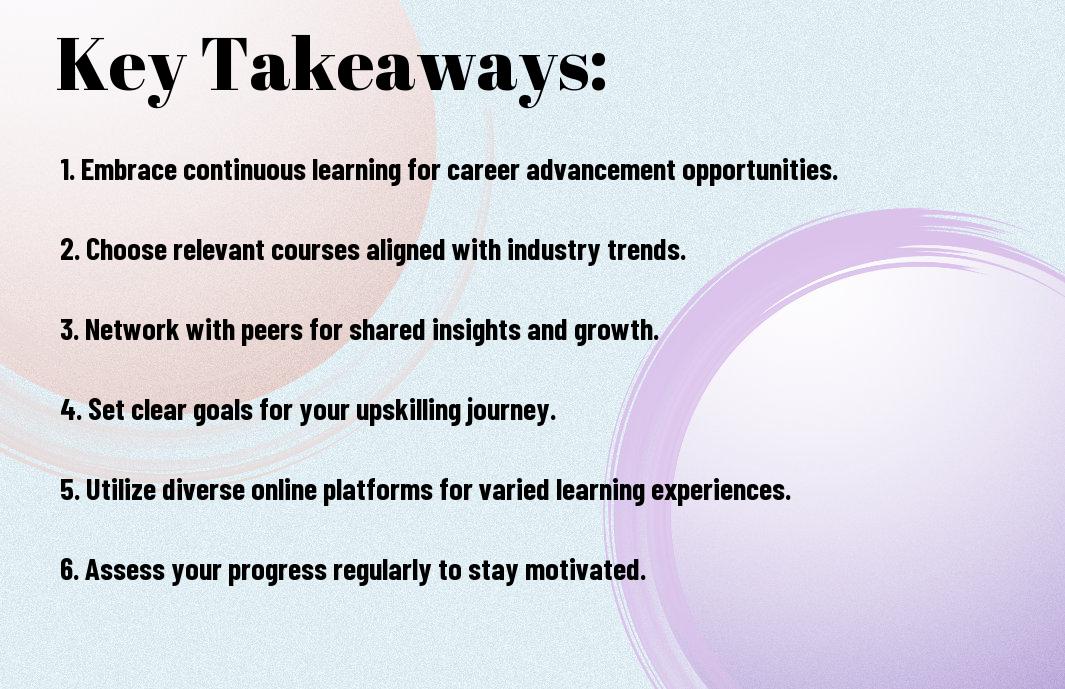
As you engage with online learning communities, you’re likely looking to expand your knowledge and connect with like-minded individuals. You’ll find that building relationships with your peers and instructors can greatly enhance your learning experience. Your ability to effectively network in these communities will enable you to tap into valuable resources, gain new insights, and stay updated on industry trends. By following the right strategies, you can leverage online learning communities to advance your skills and achieve your goals.

Key Takeaways:

To effectively navigate and benefit from online learning communities, consider the following points:

  • Establish a strong online presence by creating a professional profile, including a profile picture and bio that showcases your interests and expertise.
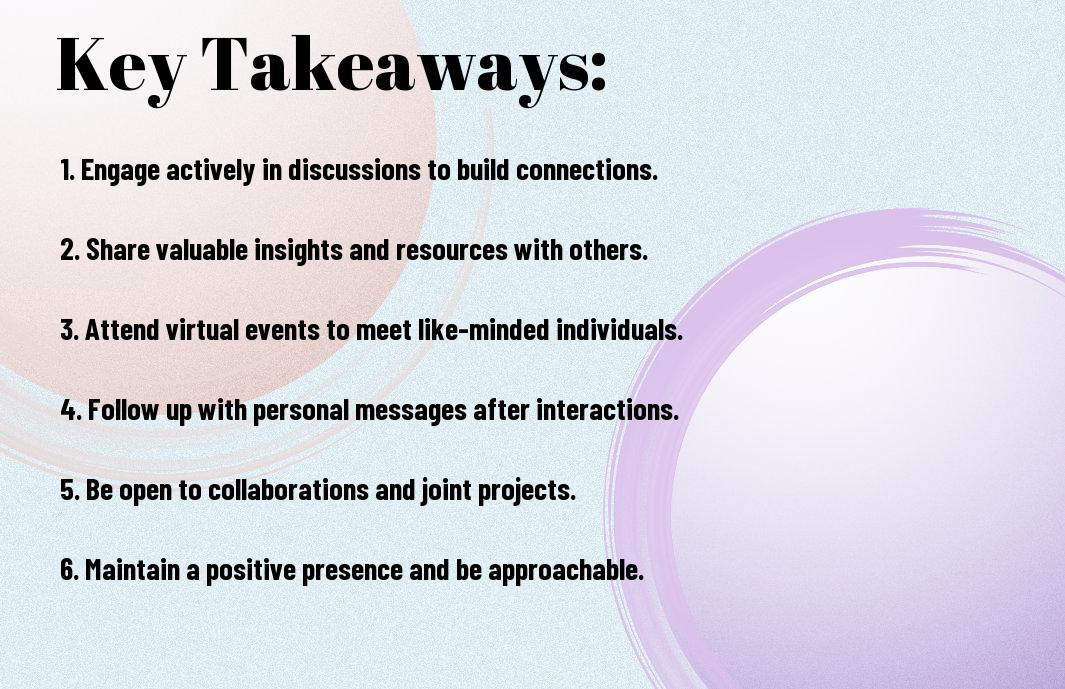
  • Be an active participant in discussions, engaging with others by asking questions, sharing relevant experiences, and providing helpful feedback to foster meaningful connections.
  • Utilize keyword searches to find and join groups or forums related to your field of study or interest, allowing you to connect with like-minded individuals and stay updated on industry trends.
  • Develop effective communication skills for online interactions, including clear and concise writing, active listening, and empathy, to build trust and rapport with fellow community members.
  • Leverage online networking tools such as video conferencing, messaging apps, and collaboration software to facilitate interactions, share resources, and work on projects with others in the community.

Getting Started

A key aspect of networking in online learning communities is to begin by understanding the benefits and opportunities they offer. You will be able to connect with peers, instructors, and professionals in your field, which can lead to valuable relationships and opportunities.

Finding Online Learning Communities

Behind the scenes of many online courses and educational platforms, there are dedicated communities where you can engage with others. You can search for online forums, social media groups, and specialized platforms related to your field of study to find these communities.

Creating a Professional Online Presence

Learning to present yourself professionally online is imperative for making a good impression in online learning communities. You should ensure your social media profiles and online profiles are complete, consistent, and professional, as they will be visible to your peers and potential employers.

For instance, you can start by creating a LinkedIn profile, which will allow you to showcase your skills, experience, and education. You can also use other platforms like Twitter or Academia.edu to share your thoughts, engage with others, and establish yourself as an expert in your field. By doing so, you will be able to build your professional online presence and increase your visibility in online learning communities.
Building Relationships

The key to networking in online learning communities is to establish meaningful connections with your peers. You can achieve this by being an active participant, sharing your thoughts and ideas, and showing genuine interest in others. As you engage with your fellow learners, you will start to build relationships that can benefit your academic and professional career.

Engaging with Others in Online Discussions

Around the virtual classroom, you will find numerous opportunities to interact with your peers through discussion forums and live chats. You can start by introducing yourself, sharing your thoughts on a particular topic, and responding to others’ comments. This will help you get to know your fellow learners and establish a presence in the online community.

Participating in Group Projects and Activities

Participating in collaborative activities is an excellent way to network with your peers. You will be working together to achieve a common goal, sharing ideas, and learning from each other’s strengths and weaknesses. This will not only help you develop vital teamwork skills but also expand your professional network.

Online group projects and activities provide you with the opportunity to showcase your skills and expertise, and you can leverage this to build your personal brand. As you work with your team, you can identify potential mentors, collaborators, or even future business partners, and you can start building relationships that can benefit your career. You can also use these opportunities to learn from others, gain new insights, and develop new skills, which will help you become a more competitive professional in your field.

Effective Communication

Your ability to communicate effectively is vital in online learning communities, and you can learn more about it by checking out 6 Networking Tips for Online Learners to improve your skills.

Active Listening and Responding

Efficiently, you will be able to engage with others when you practice active listening and responding, which helps to build meaningful relationships in online communities.

Clear and Concise Writing

Among the key aspects of effective communication is writing clearly and concisely, allowing you to convey your thoughts and ideas in a way that others can easily understand.

Also, when you write clearly and concisely, you will be able to avoid misunderstandings and ensure that your message is conveyed effectively, which is especially important in online learning communities where nonverbal cues are absent.

Networking Strategies

Once again, developing a strong network is imperative in online learning communities. You can learn more about building a learning community by visiting A Complete Guide to Building Your Online Learning Community to enhance your networking skills.

Identifying Key Contacts and Influencers

Around the online learning community, you will find key contacts and influencers who can help you achieve your goals, and it’s up to you to identify them and start engaging with their content.

Building Meaningful Connections

About the connections you make, it’s not just about the number of people you meet, but about the quality of relationships you build, and you should focus on finding common interests and shared goals to establish a strong foundation.

Even as you build these connections, you will start to see opportunities for collaboration and mutual support, and you can leverage these relationships to gain new insights, access valuable resources, and stay motivated throughout your learning journey, and you will be able to achieve your goals more efficiently.

Overcoming Challenges

Keep in mind that online learning communities can present unique challenges, but with the right strategies, you can overcome them and achieve your goals. You will encounter obstacles, but staying focused and motivated is key to success.

Dealing with Technical Issues and Distractions

For instance, you may face technical difficulties or distractions that hinder your learning experience. You can minimize these issues by ensuring a stable internet connection and creating a conducive learning environment that fosters productivity.

Managing Time and Staying Motivated

Around the clock, you have the flexibility to learn at your own pace, but this also means you need to be disciplined in managing your time. You should establish a schedule and stick to it to stay on track and motivated.

At the heart of managing your time and staying motivated is setting clear goals and tracking your progress. You can break down larger goals into smaller, achievable tasks, and celebrate your successes along the way, which will help you stay engaged and motivated throughout your online learning journey.

Maintaining Momentum

Despite the initial excitement of joining online learning communities, it’s easy to lose steam over time. You must make a conscious effort to stay engaged and motivated to get the most out of your experience.

Setting Goals and Tracking Progress

On a regular basis, you should set specific, achievable goals for yourself and track your progress. This will help you stay focused and driven, as you work towards your objectives in the online learning community.

Continuously Learning and Improving

The key to maintaining momentum is to continuously update your skills and knowledge. You should always be looking for new ways to improve and expand your understanding of the subject matter, and be open to learning from others in the community.

Even as you become more confident in your abilities, you should continue to seek out new challenges and learning opportunities. This will help you stay engaged and motivated, and ensure that you get the most out of your experience in the online learning community. You will be able to apply your new skills and knowledge in practical ways, and share your expertise with others, further solidifying your position within the community.

Final Words

To wrap up, you have now gained insights into effective networking in online learning communities. You can leverage these skills to expand your professional network, access valuable resources, and enhance your learning experience. By actively participating in discussions and engaging with your peers, you will be able to build meaningful connections that can benefit your academic and professional pursuits. Your ability to navigate online communities will undoubtedly enrich your learning journey.

FAQ

Q: What are the benefits of networking in online learning communities?

A: Networking in online learning communities offers numerous benefits, including access to a vast pool of knowledge and expertise, opportunities for collaboration and feedback, and the ability to connect with peers and instructors from diverse backgrounds. By participating in online discussions, sharing resources, and engaging with others, you can broaden your understanding of the subject matter, gain new insights, and develop valuable skills that can enhance your academic and professional growth.

Q: How can I effectively introduce myself and establish a strong presence in online learning communities?

A: To establish a strong presence in online learning communities, start by creating a complete and professional profile, including a profile picture, bio, and contact information. When introducing yourself, be clear and concise, and highlight your interests, goals, and relevant experience. Engage with others by responding to posts, asking thoughtful questions, and sharing relevant resources. Be respectful, open-minded, and willing to learn from others, and always follow community guidelines and etiquette to maintain a positive and respectful online presence.

Q: What strategies can I use to build meaningful relationships and maintain connections with others in online learning communities?

A: To build meaningful relationships and maintain connections with others in online learning communities, focus on being consistent, responsive, and genuine in your interactions. Participate regularly in discussions, offer help and support when needed, and show appreciation for others’ contributions. Use private messaging or video conferencing tools to connect with peers and instructors on a more personal level, and consider collaborating on projects or study groups to deepen your relationships. By being proactive, empathetic, and committed to ongoing learning and growth, you can foster strong, lasting connections with others in online learning communities and enhance your overall learning experience.

How to Find Your Learning Style in Online Education

As you navigate online education, understanding your learning style is crucial to maximizing your potential. You will encounter various digital resources and teaching methods, and identifying your individual learning approach will help you make the most of these tools. Your learning style influences how you absorb and process information, and recognizing it will enable you to tailor your study habits and optimize your online learning experience, leading to greater success and achievement in your academic pursuits.

Key Takeaways:

To optimize your online learning experience, consider the following points:

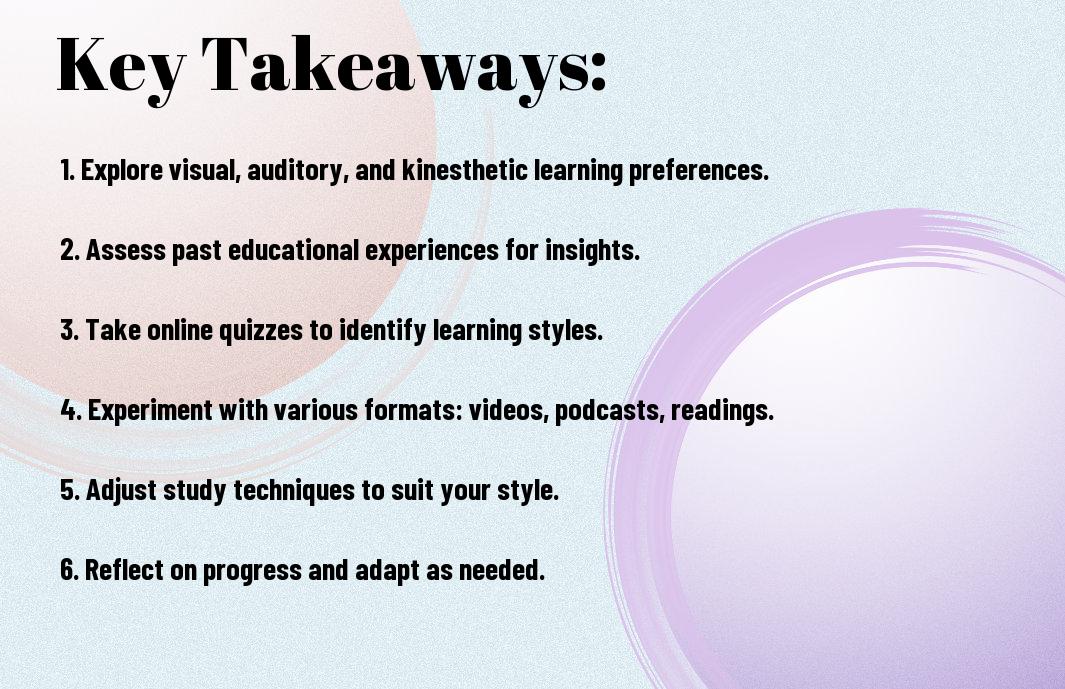
  • Identify your learning preferences to determine whether you are a visual, auditory, or kinesthetic learner, and choose online courses that cater to your style.
  • Understand your self-motivation levels and develop strategies to stay engaged and motivated throughout your online learning journey.
  • Explore different learning platforms and tools to find the ones that best suit your needs and preferences, such as video lectures, interactive simulations, or discussion forums.
  • Develop a personalized learning plan that sets clear goals, outlines a study schedule, and tracks progress to help you stay focused and achieve your objectives.
  • Seek support and feedback from instructors, peers, or mentors to address any challenges or concerns you may encounter during your online learning experience.

Identifying Your Learning Style

Your learning style plays a significant role in online education, and you can discover it by visiting Learning Tips: Discover Your Learning Style to learn more about your strengths.

Visual Learning

Across various online platforms, you can identify if you are a visual learner by checking if images and videos help you understand concepts better, making learning more engaging and effective for you.

Auditory Learning

Among the different types of learning styles, auditory learning involves processing information through sound, which means you learn best by listening to audio materials, such as podcasts or audio lectures, to grasp new concepts.

For instance, if you find it easier to recall information from audio recordings or voice notes, you may have an auditory learning style, and incorporating more audio materials into your online learning routine can help you achieve better results, allowing you to make the most of your online education experience.

Online Learning Platforms

Any online learning platform you choose should cater to your learning style. You can find more information on How to Identify and Use Your Learning Style to make an informed decision.

Interactive Tools

Platforms like online course providers offer interactive tools to enhance your learning experience. You can explore these tools to discover what works best for your learning style.

Virtual Classrooms

Across various online learning platforms, you can access virtual classrooms that simulate a traditional classroom environment. You can engage with instructors and peers in real-time, making online learning more engaging and interactive.

It is worth noting that virtual classrooms often include features such as video conferencing, live chats, and screen sharing, allowing you to interact with your instructor and fellow students in a more immersive and engaging way, which can help you stay motivated and focused throughout your online course.

Personalized Learning Approaches

Unlike traditional classroom settings, online education offers you the flexibility to tailor your learning experience to your individual needs and preferences, allowing you to learn more effectively.

Self-Paced Learning

Alike other forms of learning, self-paced learning enables you to proceed at your own speed, reviewing material as many times as you need to, and taking breaks when necessary, making it an ideal option for those with busy schedules.

Collaborative Learning

Following your own learning path, you can also engage in collaborative learning, where you work with peers and instructors to achieve common goals, share knowledge, and gain new insights, enhancing your overall learning experience.
SelfPaced learning is a great starting point, but once you engage in collaborative learning, you will find that your learning experience is enriched by the interactions and feedback from your peers, and you will be able to apply your knowledge in a more practical and meaningful way, as you learn from others and they learn from you.

Strategies for Effective Learning

Despite the numerous online resources available, you need to develop a strategy to learn effectively. You can do this by identifying your strengths and weaknesses, and then creating a personalized learning plan that suits your needs.

Time Management

By organizing your schedule, you can allocate specific times for learning, breaks, and other activities, helping you stay focused and avoid procrastination, allowing you to make the most of your online education.

Goal Setting

Goal-oriented learners tend to achieve more, as they have a clear direction and motivation, you can set specific, achievable goals for your online education, breaking them down into smaller, manageable tasks to track your progress.

This approach to goal setting enables you to maintain a consistent pace, celebrate your accomplishments, and make adjustments as needed, ensuring you stay on track and motivated throughout your online learning journey, and ultimately, achieve your academic and professional goals, enhancing your overall learning experience.
Overcoming Challenges

Now that you’ve identified your learning style, it’s time to tackle the obstacles that may hinder your online learning journey. You’ll encounter various challenges, but with persistence and the right strategies, you can overcome them and achieve your goals.

Staying Motivated

Among the key factors that contribute to your success is maintaining your motivation. You can stay motivated by setting achievable goals, celebrating your progress, and rewarding yourself for your accomplishments.

Seeking Support

Before you start feeling overwhelmed, consider seeking help from your instructors, peers, or online resources. You can reach out to them whenever you need guidance or support, and they can provide you with valuable advice and assistance.

Indeed, seeking support is an imperative part of your online learning journey. You can join online communities, forums, or discussion groups where you can connect with fellow learners, share your experiences, and learn from their perspectives. By seeking support, you can gain a deeper understanding of the subject matter, clarify any doubts, and stay on track to achieve your learning objectives.

Evaluating Progress

Once again, you’ll need to reflect on your learning journey to understand what works best for you. Tracking your progress helps you identify what you’ve achieved and what you need to work on.

Assessing Strengths

For instance, you can start by evaluating your strengths, focusing on the subjects or topics where you excel, and understanding what makes you successful in those areas.

Identifying Areas for Improvement

On the other hand, you should also identify areas where you struggle, analyzing what’s not working and what you can do to improve, which will help you develop a more effective learning strategy.

Strengths in certain subjects can often be leveraged to improve weaker areas, as you can apply similar learning techniques or mindsets to enhance your understanding and performance, allowing you to grow and develop as a learner, and ultimately, achieve your academic goals, with your unique learning style guiding your path forward, helping you to stay motivated and engaged in your online education journey, as you continue to learn and improve.

To wrap up

From above, you now have a better understanding of how to find your learning style in online education. You can explore Learning Styles and the Online Environment to learn more. By identifying your strengths and weaknesses, you can optimize your online learning experience and achieve your academic goals. You will be able to create a personalized approach to learning, making you more effective and efficient in your studies.

FAQ

Q: What is the first step in determining my learning style in online education?

A: The first step in determining your learning style in online education is to reflect on how you have learned best in the past. Consider your experiences in traditional classrooms and other online courses. Ask yourself questions like: Do you learn better through watching videos, reading texts, or listening to audio? Do you prefer hands-on activities or theoretical explanations? Identifying your past learning strengths and weaknesses will help you narrow down your learning style preferences and guide you in selecting the most effective online educational resources.

Q: How can I discover whether I am a visual, auditory, or kinesthetic learner in an online setting?

A: To discover your learning style in an online setting, try experimenting with different types of content delivery. For example, if you’re taking an online course, try watching video lectures, then reading the transcript of the same lecture, and finally, engaging in a related interactive simulation or quiz. Pay attention to which method helps you understand and retain the information best. Additionally, many online educational platforms offer quizzes or assessments to help determine your learning style. Utilizing these tools can provide insights into whether you are a visual learner (learning through images and videos), an auditory learner (learning through sound and audio), or a kinesthetic learner (learning through physical activities and hands-on experiences).

Q: Can my learning style change over time, and how can I adapt to new learning environments in online education?

A: Yes, your learning style can evolve over time due to changes in personal preferences, improvements in technology, or variations in the subject matter. As you continue your online education, be open to trying new methods of learning. You might find that what worked for you in one course doesn’t work as well in another, due to differences in content or delivery. Be flexible and willing to adapt your learning approach as needed. Moreover, online education often provides a variety of resources and tools, so don’t hesitate to explore different learning paths within a course to find what works best for you. Keeping a learning journal or seeking feedback from instructors can also help you identify areas where you might need to adjust your learning strategy to achieve the best outcomes.

How to Stay Ahead with Online Upskilling

You are constantly looking for ways to enhance your skills and stay competitive in the job market. Your career growth depends on your ability to adapt to new technologies and trends. By leveraging online upskilling, you can acquire new skills and knowledge at your own pace, giving you a significant edge over others. This approach allows you to take control of your professional development, ensuring you stay relevant and ahead in your field.

Key Takeaways:

To stay ahead in the competitive job market, continuous learning is necessary. Here are the key points to consider for online upskilling:

  • Stay updated with industry trends by taking online courses and attending webinars to enhance your skills and knowledge in your field.
  • Focus on developing in-demand skills such as digital marketing, data analysis, and cloud computing to increase your job prospects.
  • Utilize online platforms such as MOOCs (Massive Open Online Courses) and online tutorials to access a wide range of courses and training programs.
  • Set learning goals and create a personalized learning plan to help you stay focused and motivated throughout your upskilling journey.
  • Leverage professional networks and online communities to connect with industry experts and like-minded individuals, and to stay informed about new opportunities and best practices.

Identifying Skills in Demand

For your career growth, it’s important to identify skills in demand. You can find valuable insights on How to Stay Ahead of the Curve to help you make informed decisions.

Emerging Trends

By exploring industry reports, you can discover emerging trends shaping your profession, enabling you to focus on acquiring relevant skills.

Market Analysis

By conducting thorough market analysis, you gain a deeper understanding of the job market and the skills required to stay competitive.

Identifying your target industry’s needs is vital for your career development. You should analyze job postings, industry reports, and market research to determine the skills in high demand, allowing you to tailor your upskilling efforts accordingly and increase your chances of success in your chosen field.

Choosing the Right Online Platform

The selection of an online platform is a significant step in your upskilling journey. You need to consider various factors to ensure that the platform you choose aligns with your goals and learning style.

Overview of Popular Platforms

For instance, platforms like Coursera, Udemy, and LinkedIn Learning offer a wide range of courses and specializations. You can explore these options to find the one that suits your needs.

Key Features to Consider

Overview of the key features is necessary to make an informed decision. You should look for features such as:

  • Course variety and relevance
  • Flexible learning schedules
  • Interactive learning tools
  • Certification and accreditation

Thou should prioritize the features that matter most to your learning goals and objectives.

Further evaluation of the key features is crucial to ensure that you get the most out of your online learning experience. You should consider features such as:

  • Personalized learning paths
  • Real-time feedback and assessment
  • Collaboration and discussion forums
  • Lifetime access to course materials

Thou should take the time to explore and evaluate these features to find the platform that best supports your upskilling journey.

Creating a Personalized Learning Plan

After identifying your learning needs, you can create a personalized learning plan. To get started, you can check out Top 5 Ways to Upskill to Stay Ahead in the Game to understand the importance of upskilling in today’s competitive job market.

Assessing Current Skills

Along with understanding industry trends, you need to assess your current skills to identify areas for improvement. This will help you create a focused learning plan that addresses your knowledge gaps.

Setting Realistic Goals

Above all, setting realistic goals is vital to achieving success in your upskilling journey. You should define what you want to achieve and set specific, measurable objectives.

Due to the ever-changing job market, you will need to regularly update your skills to stay relevant. As you work towards your goals, you will be able to track your progress and make adjustments to your learning plan as needed, ensuring that you stay on track and achieve your desired outcomes.

Effective Learning Strategies

Many online learners struggle to stay on track, but with the right approach, you can achieve your goals. You need to develop strategies that work for you, such as setting schedules and tracking progress.

Active Learning Techniques

To maximize your learning, you should engage with the material, ask questions, and participate in discussions, allowing you to retain information better and stay focused on your objectives.

Staying Motivated

AFTER you’ve started your online course, maintaining motivation is key, and you can do this by setting achievable milestones and rewarding yourself for your progress, helping you stay driven and committed to your goals.

With your motivation intact, you’ll be able to overcome obstacles and stay engaged in your learning journey, and as you progress, you’ll find that your confidence and skills will grow, enabling you to take on new challenges and pursue your career aspirations with renewed enthusiasm and purpose, helping you to stay ahead in your field.

Overcoming Common Challenges

Unlike traditional learning, online upskilling requires discipline and self-motivation to overcome common challenges, and you will need to develop strategies to stay on track and achieve your goals.

Managing Time Effectively

Above all, you must prioritize your time and create a schedule that allows you to balance your online learning with other responsibilities, ensuring you make the most of your time.

Dealing with Distractions

Between your work, family, and social life, distractions can be a significant obstacle to your online learning, and you need to find ways to minimize them and stay focused on your goals.

To minimize distractions, you can start by identifying the most common distractions, such as social media or email notifications, and finding ways to eliminate them while you study, allowing you to concentrate on your learning and make progress towards your goals, and you will be able to stay motivated and engaged in your online upskilling journey.

Measuring Progress and Success

Your ability to measure progress and success is vital in online upskilling, as it helps you identify areas of improvement and track your growth over time.

Tracking Progress

On a regular basis, you should assess your performance and adjust your learning strategy to achieve your goals, ensuring you stay on track and motivated throughout your upskilling journey.

Evaluating Outcomes

An crucial aspect of measuring success is evaluating the outcomes of your upskilling efforts, which involves assessing the skills and knowledge you have acquired and how they align with your career objectives.

Considering the outcomes of your upskilling efforts, you will be able to determine the effectiveness of your learning strategy and make informed decisions about future investments in your professional development, enabling you to maximize your return on investment and achieve your long-term career goals.

Summing up

Drawing together the points, you now have a clear understanding of how to stay ahead with online upskilling. As you continue on your journey, you can stay competitive by exploring Reskilling and Upskilling: The Key to Staying Competitive, which will help you make informed decisions about your professional development and enhance your skills to achieve your goals. You will be well-equipped to navigate the ever-changing job market with your newfound knowledge and skills.

FAQ

Q: What are the benefits of online upskilling, and how can it help me stay ahead in my career?

A: Online upskilling offers numerous benefits, including increased flexibility, accessibility, and affordability. By leveraging online courses and training programs, you can acquire new skills and knowledge in a self-paced and convenient manner, allowing you to enhance your career prospects and stay competitive in the job market. With online upskilling, you can fill gaps in your skillset, explore new areas of interest, and demonstrate your commitment to continuous learning and professional development, ultimately leading to greater career advancement opportunities and improved job satisfaction.

Q: How can I choose the right online upskilling platform and courses that align with my career goals and interests?

A: To choose the right online upskilling platform and courses, start by identifying your career objectives and the skills you need to acquire. Research various online learning platforms, such as Coursera, Udemy, and LinkedIn Learning, and explore their course offerings, reviews, and ratings. Consider factors like course format, duration, and level of difficulty, as well as the credibility and expertise of the instructors. You can also seek recommendations from colleagues, mentors, or industry professionals and read reviews from other learners to ensure that the platform and courses you choose are reliable, engaging, and relevant to your career aspirations.

Q: How can I balance online upskilling with my existing work and personal commitments, and ensure that I stay motivated and engaged throughout the learning process?

A: To balance online upskilling with your existing work and personal commitments, create a schedule that allows you to dedicate a specific time slot each day or week to learning. Set realistic goals and deadlines, and break down larger courses into smaller, manageable chunks. Establish a dedicated learning space, free from distractions, and use tools like calendars, reminders, and to-do lists to stay organized and on track. Additionally, connect with fellow learners or join online communities to build a support network, share knowledge, and stay motivated. By celebrating your progress, rewarding yourself for milestones achieved, and applying your new skills and knowledge in practical contexts, you can maintain your enthusiasm and commitment to online upskilling, even in the face of competing demands and responsibilities.

How Online Learning Prepares Students for Leadership Roles

As you pursue your academic and professional goals, you may wonder how online learning can shape your future. You will discover that online learning provides a unique set of skills and experiences that prepare you for leadership roles. Your ability to work independently, think critically, and solve problems will be refined, setting you up for success in leadership positions, where you will be expected to make informed decisions and guide others. You will be equipped to take on new challenges and thrive in a rapidly changing world.

Key Takeaways:

To succeed in leadership positions, students must acquire a set of skills that can be developed through online learning. Here are a few key points to consider:

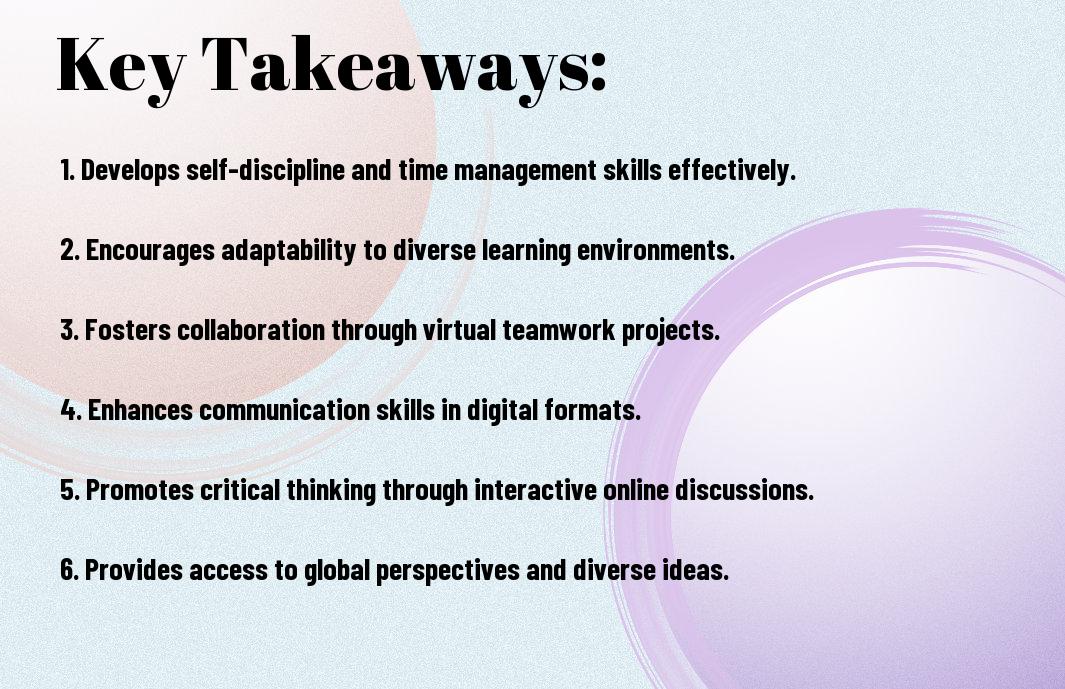
  • Develops self-motivation and time management skills, which are vital for leaders to prioritize tasks and achieve goals.
  • Enhances collaboration and communication skills through virtual interactions with peers and instructors, preparing students for team management roles.
  • Fosters adaptability and flexibility, as online learners must navigate different learning platforms and technologies, a skill valuable in fast-paced business environments.
  • Provides opportunities for global connectivity, exposing students to diverse perspectives and cultures, which can help them develop empathy and strategic thinking as future leaders.
  • Cultivates problem-solving and critical thinking skills, as online learners often encounter and overcome technical challenges, preparing them for complex decision-making in leadership roles.

Developing Essential Skills

Before entering leadership roles, you need to develop skills that will set you up for success. Online learning helps you build a strong foundation in areas such as critical thinking, problem-solving, and communication.

Critical Thinking and Problem-Solving

Above all, online learning encourages you to think critically and approach problems in a logical and methodical way, allowing you to develop effective solutions to complex challenges.

Effective Communication and Collaboration

Below the surface of online learning, you will find opportunities to develop your communication and collaboration skills, working with peers and instructors to achieve common goals.

Consequently, as you engage in online learning, you will find that your ability to communicate effectively and collaborate with others will improve, allowing you to work seamlessly with team members and lead with confidence, making you a more effective leader in your future roles.

Leadership Fundamentals

The fundamentals of leadership are imperative for students to master, and online learning provides a platform to develop these skills. You will learn to analyze situations, make informed decisions, and collaborate with others to achieve common goals.

Setting Goals and Priorities

By focusing on your strengths and weaknesses, you can set realistic goals and prioritize tasks to achieve success. You will develop a sense of direction and purpose, enabling you to make progress towards your objectives.

Time Management and Organization

Setting a schedule and sticking to it is vital in online learning, allowing you to balance coursework and other responsibilities. You will learn to allocate time effectively, minimizing distractions and maximizing productivity.

Considering your individual needs and learning style, you can tailor your approach to time management and organization. You will discover how to use tools and resources to stay organized, ensuring that you meet deadlines and achieve your goals, and as you progress, you will become more confident in your ability to manage your time and prioritize tasks, preparing you for leadership roles that require strong organizational skills.

Online Learning Platforms

Your online learning journey begins with a platform that provides access to a wide range of courses and resources, helping you develop the skills and knowledge needed for leadership roles.

Access to Global Resources

Above all, online learning platforms offer you access to global resources, enabling you to learn from renowned experts and institutions worldwide, broadening your perspective and understanding of different cultures and practices.

Personalized Learning Experiences

Platforms like these provide you with personalized learning experiences, allowing you to learn at your own pace and focus on areas that interest you the most, making your learning experience more engaging and effective.

This personalized approach helps you to identify your strengths and weaknesses, set goals, and track your progress, enabling you to take ownership of your learning and develop a growth mindset, crucial for leadership roles where adaptability and continuous learning are key to success.

Real-World Applications

Now, as you explore the advantages of online learning, you will discover that it offers numerous opportunities for applying theoretical knowledge to practical problems. You can learn more about How to Develop Leadership Skills in Virtual School and how it prepares students for future challenges.

Applying Theories to Practical Problems

For instance, you will be able to analyze case studies and develop solutions, allowing you to think critically and make informed decisions, preparing you for leadership roles.

Developing Adaptability and Resilience

Among the key benefits of online learning is the development of adaptability and resilience, as you navigate different learning platforms and collaborate with peers from diverse backgrounds.

Problems that you encounter during online learning, such as technical issues or difficulties with time management, can actually help you build your resilience and adaptability, important skills for future leaders, as you learn to approach challenges with a growth mindset and develop creative solutions to overcome them, preparing you for the demands of leadership roles.

Navigating Online Communities

All online learning platforms provide you with the opportunity to engage with peers and instructors from diverse backgrounds, helping you develop your communication and collaboration skills, imperative for leadership roles.

Building Professional Networks

Besides the academic benefits, online learning enables you to establish connections with professionals in your field, potentially leading to valuable mentorship and career opportunities that can aid in your growth as a leader.

Participating in Discussions and Feedback

Among the key aspects of online learning, participating in discussions and providing feedback allows you to hone your critical thinking and problem-solving skills, which are vital for effective leadership.

Participating in online discussions and giving feedback helps you develop a deeper understanding of different perspectives and ideas, enabling you to make informed decisions and lead teams more efficiently, which is a key aspect of your development as a leader in your chosen field, and you will find that your ability to analyze information and provide constructive feedback will serve you well in your future leadership roles.

Overcoming Challenges

Once again, you will face challenges in online learning, but these obstacles can help you develop valuable skills for leadership roles, such as resilience and adaptability.

Managing Distractions and Staying Motivated

By minimizing distractions and creating a conducive learning environment, you can stay focused and motivated, developing self-discipline and time management skills that will serve you well in leadership positions.

Seeking Support and Guidance

Before tackling a difficult task or assignment, you can seek help from instructors, peers, or mentors, learning to ask for support when needed and building a network of valuable contacts.

Indeed, seeking support and guidance is a key aspect of online learning, as you learn to navigate resources, ask questions, and collaborate with others, all of which are imperative skills for effective leadership, enabling you to make informed decisions and drive your team forward.

Final Words

On the whole, you will find that online learning plays a significant role in preparing you for leadership roles by fostering skills such as self-motivation and independence. As you navigate virtual classrooms, you develop strong communication and collaboration skills, important for effective leadership. To learn more about how virtual learning can benefit you, visit How Virtual Learning Prepares Students For The Real World to discover your potential and unlock your future leadership opportunities.

FAQ

Q: How does online learning help students develop the skills needed for leadership roles?

A: Online learning provides students with a unique opportunity to develop vital skills for leadership roles, such as self-motivation, time management, and independence. Through online courses, students learn to take ownership of their learning, set goals, and prioritize tasks, which are valuable skills for any leader. Additionally, online learning platforms often incorporate collaborative tools, allowing students to engage with peers and instructors, fostering teamwork, communication, and problem-solving skills, all of which are vital for effective leadership.

Q: Can online learning prepare students for the technological demands of modern leadership roles?

A: Yes, online learning is well-equipped to prepare students for the technological demands of modern leadership roles. Online courses often utilize cutting-edge technology, such as learning management systems, video conferencing tools, and digital collaboration platforms, which provide students with hands-on experience using the latest technologies. This exposure helps students develop the technical skills and digital literacy necessary to succeed in today’s fast-paced, technology-driven business environment. Moreover, online learning encourages students to adapt to new tools and platforms, making them more agile and responsive to changing technological landscapes.

Q: How does online learning foster the development of soft skills, such as emotional intelligence and adaptability, which are vital for leadership success?

A: Online learning offers a range of opportunities for students to develop soft skills, such as emotional intelligence and adaptability, which are vital for leadership success. Through online discussions, students engage with peers from diverse backgrounds, fostering empathy, active listening, and effective communication. Online learning also encourages students to be self-reflective, setting goals, and tracking progress, which helps develop self-awareness, a key component of emotional intelligence. Furthermore, online courses often incorporate real-world case studies and scenario-based learning, allowing students to develop adaptability, critical thinking, and creative problem-solving skills, all of which are vital for effective leadership in today’s complex and rapidly changing world.

How to Earn College Credit Through Online Courses

You can take control of your education and earn college credit from the comfort of your own home through online courses. Your path to a degree can be accelerated by leveraging online learning platforms that offer credit-eligible courses. You will learn how to navigate the process, from selecting accredited institutions to transferring credits, and get the most out of online learning to achieve your academic goals.

Key Takeaways:

To earn college credit through online courses, consider the following points:

  • Take accredited online courses that are recognized by colleges and universities, ensuring the credits are transferable and valid.
  • Look for flexible online courses that fit your schedule, allowing you to balance work, life, and studies.
  • Choose online courses that align with your degree requirements, ensuring the credits earned will count towards your desired major or program.
  • Verify the transfer policies of your desired college or university, understanding which online courses and credits will be accepted.
  • Consider cost-effective online courses that offer affordable tuition rates, helping you save money on your overall education expenses, while still earning valuable college credits.

    Benefits of Online Courses

    A key advantage of online courses is that they offer you a convenient and accessible way to earn college credit, allowing you to balance your academic goals with other responsibilities.

    Increased Flexibility

    For your benefit, online courses provide a flexible schedule, enabling you to complete coursework at your own pace and on your own time, making it easier to manage your workload and other commitments.

    Broader Course Options

    By taking online courses, you gain access to a wider range of courses and programs, including those that may not be available at your local college or university, giving you more opportunities to explore your interests and career goals.

    A significant advantage of this increased access is that you can now pursue courses that align with your academic and professional aspirations, even if they are not offered in your geographical area, allowing you to create a more tailored and relevant educational experience.

    Types of Online Courses

    The types of online courses you can take vary, including:

    • Credit-bearing courses
    • Non-credit courses

    Recognizing your goals will help you choose the right type.

    Course Type Description
    Credit-bearing Earn college credit
    Non-credit No college credit
    Certification Specialized skills
    MOOCs Massive open courses
    Professional Career development

    Credit-Bearing Courses

    By exploring credit-bearing courses, you can earn college credit that can be transferred to your degree program, allowing you to get closer to your goal of graduating.

    Non-Credit Courses

    By taking non-credit courses, you can gain knowledge and skills in a particular area without earning college credit, which can still be beneficial for your personal and professional development.

    Further, non-credit courses can provide you with flexibility and affordability, as they are often less expensive than credit-bearing courses and can be taken at your own pace, allowing you to balance your coursework with your other responsibilities.

    Eligibility and Requirements

    Now, to earn college credit through online courses, you need to check your eligibility. You can explore Online College Courses for Credit to learn more about the opportunities available to you.

    Age and Prerequisites

    Along with other requirements, you typically need to meet age and prerequisite criteria to enroll in online courses, which may vary depending on the institution and course you choose.

    Technical Requirements

    Against the backdrop of increasing online learning, you should ensure your device and internet connection meet the technical requirements for your chosen course.

    Even with a reliable internet connection, you will need to ensure your device has the necessary software and hardware to support the online course platform, allowing you to complete your coursework effectively and efficiently, which will help you stay on track to earn your college credit.

    Accreditation and Transferability

    Unlike traditional college courses, online courses require you to verify their accreditation and transferability to ensure your credits are recognized by your institution. You need to research the accreditation of the online course provider to confirm its legitimacy.

    Regional Accreditation

    At this stage, you should check if the online course provider has regional accreditation, which is typically accepted by most colleges and universities, allowing you to transfer your credits easily. You can check the accreditation status on the provider’s website or contact your institution for verification.

    National Accreditation

    By opting for nationally accredited online courses, you can ensure a wider acceptance of your credits across various institutions. You should verify the accreditation status with the relevant accrediting agency to confirm its validity.

    Also, national accreditation provides you with more flexibility in transferring your credits to other institutions, as many colleges and universities accept credits from nationally accredited providers. You can check with your institution to confirm their transfer policies and procedures, ensuring a smooth transition of your credits.

    Course Formats and Structures

    After selecting your online course, you’ll notice various formats and structures. If you’re looking for online college credit courses, check out the discussion on online college credit courses forum to learn more about available options.

    Synchronous and Asynchronous Learning

    On exploring online courses, you’ll find that they offer synchronous and asynchronous learning options, allowing you to choose the pace that suits your needs, enabling you to manage your time effectively.

    Self-Paced Learning

    Along with flexibility, self-paced learning provides an opportunity for you to take control of your education, progressing at a speed that suits your learning style and schedule.

    At the heart of self-paced learning is the ability to balance your academic goals with other responsibilities, as you can complete coursework on your own schedule, allowing you to work at a pace that is comfortable for you, which can lead to a more effective learning experience and better retention of course material.

    Tips for Success

    Your path to earning college credit through online courses requires careful planning. Consider the following:

    • Set achievable goals
    • Choose reputable platforms
    • The key to success lies in your ability to stay focused and committed to your goals.

      Time Management and Discipline

      Succeeding in online courses demands effective time management and discipline. You will need to allocate specific times for studying and stick to your schedule to make the most out of your online courses.

      Staying Motivated and Engaged

      Timing is everything when it comes to online learning. You should create a routine that allows you to engage with course materials regularly and stay motivated throughout the duration of the course.

      Consequently, as you progress through your online courses, you will find that staying motivated and engaged becomes easier. You will have the flexibility to learn at your own pace, which can be a great motivator, and you will be able to see the progress you are making towards your goals, which can help you stay engaged and interested in the course material.

      Final Words

      On the whole, you can efficiently earn college credit through online courses, enhancing your academic and professional prospects. You can explore various options, such as Online Courses for College Credit | Individual Classes, to find the one that suits your needs. By leveraging these opportunities, you can take control of your educational journey, making it more flexible and accessible, ultimately achieving your goals with greater ease and convenience.

      FAQ

      Q: What are the benefits of earning college credit through online courses?

      A: Earning college credit through online courses offers numerous benefits, including flexibility, convenience, and cost-effectiveness. Online courses allow students to learn at their own pace, anytime and anywhere, making it an ideal option for those with busy schedules or living in remote areas. Additionally, online courses often cost less than traditional on-campus courses, and students can potentially earn credits faster, saving time and money in the long run.

      Q: How do I get started with earning college credit through online courses?

      A: To get started, you should first research and identify online courses that align with your academic goals and are approved by your college or university. You can search for courses on websites such as Coursera, edX, or Udacity, or check with your institution’s online course catalog. Next, ensure you meet the course prerequisites and understand the course format, duration, and assessment requirements. You will also need to create an account, enroll in the course, and complete the coursework to earn the credits. It’s crucial to verify with your institution that the credits will be transferable and apply towards your degree.

      Q: What types of online courses are available for earning college credit, and how are they assessed?

      A: Various types of online courses are available for earning college credit, including MOOCs (Massive Open Online Courses), online degree programs, and credit-by-exam programs. These courses cover a wide range of subjects, such as business, computer science, humanities, and social sciences. Assessments for online courses may include quizzes, assignments, discussion forums, and proctored exams. Some courses may also require a final project or a cumulative exam to assess your understanding of the course material. The specific assessment methods will depend on the course and institution, so it’s vital to review the course syllabus and requirements before enrolling.

Skip to content