Online

The Role of Blockchain in Online Education

As you explore the frontier of online education, you may wonder how blockchain technology is revolutionizing this field. You can learn about the ways in which blockchain is transforming the way educational institutions operate by reading about BLOCKCHAIN IMPLEMENTATION AND BENEFITS in online education, enabling secure and efficient management of student records, certificates, and learning pathways. Your understanding of this technology will help you appreciate its potential to enhance your online educational experience.

Key Takeaways:

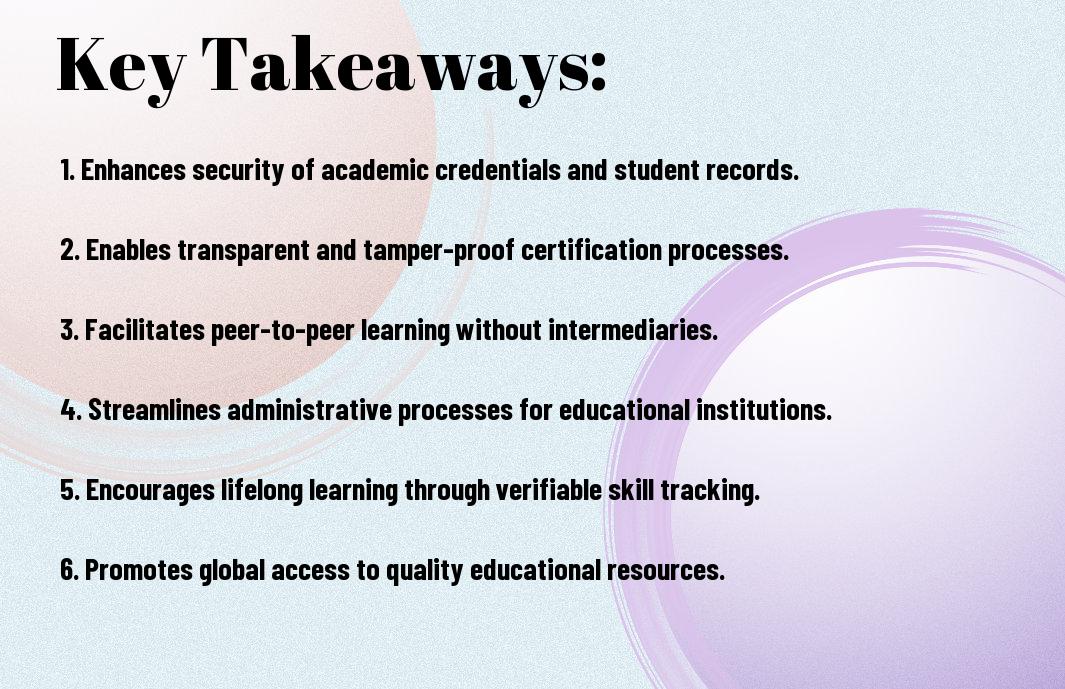
  • The Decentralized nature of Blockchain technology can provide a secure and transparent way to verify the authenticity of academic certificates and degrees, making it difficult for individuals to falsify their educational credentials.
  • Blockchain-based systems can facilitate the creation of a Decentralized and Immutable record of student learning outcomes, allowing for more accurate and reliable tracking of student progress and achievement.
  • The use of Smart Contracts on the Blockchain can automate the process of issuing and verifying academic credentials, reducing administrative burdens and costs associated with traditional methods.
  • Blockchain-based platforms can enable Secure and Private sharing of student data, ensuring that sensitive information is protected from unauthorized access and misuse.
  • The application of Blockchain technology in online education can promote Lifelong Learning by providing individuals with a Portable and Verified record of their educational achievements, which can be easily shared with employers, educational institutions, and other relevant parties.

Foundations of Blockchain Technology

Before entering into the applications of blockchain in online education, you need to understand the underlying technology. Blockchain is a decentralized system that enables secure and transparent data management. You will explore the core components of blockchain, including distributed ledger systems and cryptographic algorithms, to comprehend its potential in education.

Overview of Distributed Ledger Systems

Logically, a ledger system is at the heart of blockchain technology, allowing you to store and manage data in a decentralized manner. You will discover how distributed ledger systems enable multiple parties to access and update the ledger simultaneously, ensuring data consistency and integrity.

Security and Transparency in Blockchain

Technologically, blockchain offers advanced security features, such as encryption and hashing, to protect your data from unauthorized access. You will learn how these features ensure the integrity and transparency of the data, making it an attractive solution for online education.

Further, as you investigate deeper into the security aspects of blockchain, you will notice that the technology utilizes a consensus mechanism to validate transactions, preventing any single entity from manipulating the data. This ensures that your data is not only secure but also trustworthy, which is crucial for online education where accuracy and reliability are paramount.

Advantages of Blockchain in Education

There’s a multitude of benefits that blockchain technology can bring to the online education sector, and as you explore this innovative field, you’ll discover the vast potential it holds for transforming the way you learn and interact with educational institutions.

Enhanced Security and Authentication

Along with the integration of blockchain, you can expect a significant boost in security and authentication measures, allowing you to trust the integrity of your academic records and personal data, as it is stored and transmitted in a secure and decentralized manner.

Increased Efficiency and Automation

By leveraging blockchain’s capabilities, you can streamline various administrative tasks, such as certificate verification and payment processing, making the overall educational experience more efficient and convenient for you, the learner.

In fact, as you research deeper into the applications of blockchain in education, you’ll find that automation enables the instantaneous issuance of certificates and diplomas, reducing the administrative burden on institutions and allowing you to access your credentials at any time, thereby enhancing your overall learning experience and providing you with greater control over your academic achievements.

Applications of Blockchain in Online Learning

All educational institutions can benefit from blockchain technology, which offers a secure and transparent way to manage online learning. You can use blockchain to create a decentralized system for storing and verifying academic records, making it easier for you to manage your credentials.

Digital Badges and Certificates

Offering a secure way to store and display your achievements, blockchain-based digital badges and certificates provide you with a unique way to showcase your skills. You can use these badges to demonstrate your expertise in a particular area, and they can be easily verified by employers or academic institutions.

Personalized Learning Paths and Assessment

Around the concept of personalized learning, blockchain technology can help you create a tailored learning experience. You can use blockchain to track your progress, identify areas where you need improvement, and receive recommendations for further learning, allowing you to create a personalized learning path that suits your needs.

The ability to create personalized learning paths and assessments is a significant advantage of using blockchain in online education. You can use blockchain-based systems to track your learning outcomes, and the technology can help you identify the most effective learning strategies for your individual needs. As you progress through your learning journey, the blockchain-based system can provide you with real-time feedback and recommendations, enabling you to adjust your learning path accordingly, and helping you to achieve your academic goals more efficiently.

Potential Challenges and Limitations

To effectively implement blockchain in online education, you must consider the potential hurdles that may arise. You will encounter various challenges that can impact the adoption and integration of this technology in educational settings.

Scalability and Interoperability Issues

Towards addressing the limitations of blockchain, you should examine the scalability and interoperability issues that may hinder its widespread adoption in online education. You will need to consider how these issues affect your implementation plans.

Regulatory Frameworks and Compliance

Any attempts to integrate blockchain in online education will require you to navigate complex regulatory frameworks and ensure compliance with existing laws. You must consider how these frameworks impact your plans for blockchain implementation.

Understanding the regulatory frameworks and compliance issues is important for you to successfully integrate blockchain in online education. You will need to research into the specifics of data protection, intellectual property, and accreditation standards to ensure that your blockchain-based systems meet the necessary requirements, thereby facilitating a seamless and legitimate educational experience for your users.

Emerging Trends and Innovations

Not surprisingly, the integration of blockchain in online education is paving the way for new developments. You can explore more about The Future Of Blockchain Technology In Education to understand its potential. This emerging technology is transforming the way you approach online learning.

Artificial Intelligence and Blockchain Convergence

The synergy between artificial intelligence and blockchain is creating new opportunities for personalized learning experiences. You will notice that this convergence enables more efficient and adaptive education systems, allowing you to learn at your own pace.

Blockchain-based Virtual Learning Environments

Blockchain-based learning environments are becoming increasingly popular, offering you a secure and transparent way to access educational resources. You can expect to see more immersive and interactive learning experiences, making online education more engaging and effective.

In fact, as you examine deeper into blockchain-based virtual learning environments, you will discover that they provide a decentralized and autonomous way to manage educational data, allowing you to have greater control over your learning journey. You will be able to access a wide range of courses and educational materials, and even create your own customized learning paths, all while ensuring the integrity and security of your personal data.

Implementation and Integration Strategies

After considering the potential of blockchain in online education, you can explore ways to implement and integrate it into your existing systems, as seen in studies on Unlocking the power of blockchain in education, to enhance your educational offerings.

Technical Infrastructure and Support

Following the decision to adopt blockchain technology, you will need to assess your technical infrastructure and support to ensure a seamless integration, taking into account the necessary hardware, software, and networking requirements.

Faculty Training and Professional Development

Around the time you begin implementing blockchain, you should also consider providing your faculty with training and professional development opportunities to help them effectively utilize this new technology in their teaching practices.

This faculty training and professional development is imperative, as it will enable your educators to create engaging and interactive learning experiences, leveraging the unique features of blockchain, such as smart contracts and decentralized data management, to enhance student outcomes and overall educational quality, allowing you to fully harness the potential of blockchain in your online education programs.

Conclusion

Summing up, you now have a comprehensive understanding of the role of blockchain in online education. As you consider implementing this technology, you will be able to enhance the security and transparency of your educational platforms, allowing you to focus on providing high-quality learning experiences for your students. By leveraging blockchain, you can create a more efficient and trustworthy online education system, ultimately benefiting both educators and learners alike. Your exploration of blockchain’s potential will likely lead to innovative solutions in the field.

FAQ

Q: What is the role of blockchain in online education, and how does it enhance the learning experience?

A: The role of blockchain in online education is multifaceted, primarily focusing on enhancing security, transparency, and accessibility. By utilizing blockchain technology, educational institutions can securely store and manage academic records, such as diplomas and transcripts, making it easier for students to share their credentials with potential employers or other educational institutions. Moreover, blockchain-based platforms can facilitate the creation and distribution of digital badges and micro-credentials, allowing learners to demonstrate specific skills and knowledge acquired through online courses. This not only enriches the learning experience but also provides a more comprehensive view of a learner’s capabilities beyond traditional degree certifications.

Q: How does blockchain technology ensure the authenticity and integrity of online educational content and credentials?

A: Blockchain technology ensures the authenticity and integrity of online educational content and credentials through its inherent characteristics of decentralization, immutability, and transparency. Once educational content or a credential is recorded on a blockchain, it becomes part of a permanent and unalterable ledger. This means that any attempt to tamper with or alter the content or credential would be detectable, thereby preventing fraud and ensuring that the information remains trustworthy. Furthermore, blockchain-based systems can automate the verification process of educational credentials, saving time and reducing the administrative burdens on educational institutions and employers alike.

Q: Can blockchain contribute to making online education more inclusive and accessible, and if so, how?

A: Yes, blockchain can significantly contribute to making online education more inclusive and accessible. By leveraging blockchain technology, educational platforms can offer personalized learning pathways tailored to individual learners’ needs and preferences. Additionally, blockchain can facilitate the development of community-driven platforms where learners can contribute, share, and access educational resources, promoting a collaborative learning environment. The use of cryptocurrencies and blockchain-based payment systems can also streamline financial transactions related to online courses, potentially lowering barriers to access for learners from economically disadvantaged backgrounds. This democratization of access to educational resources has the potential to significantly expand the reach of online education globally.

How to Transition to Online Learning Seamlessly

You’re embracing the shift to online learning, and you want to make it a success. As you navigate this new landscape, you’ll need to adapt your approach to learning. Your goal is to create a seamless transition, and with the right strategies, you can achieve it. You’ll learn how to leverage technology, manage your time effectively, and stay engaged in online courses, ensuring your educational journey remains uninterrupted and productive. Your path to online learning starts here.

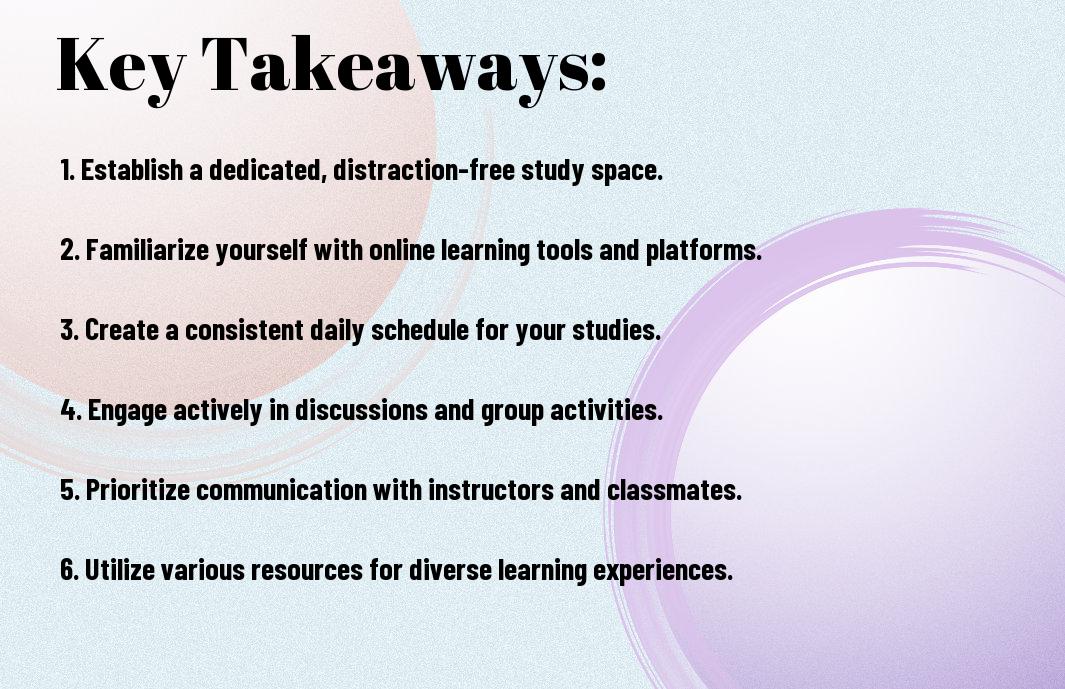
Key Takeaways:

To ensure a smooth transition to online learning, consider the following points:

  • Develop a Flexible mindset and be open to new teaching methods and technologies to facilitate effective online learning.
  • Establish a Structured schedule to maintain organization and consistency in the online learning environment, setting clear expectations for students and instructors.
  • Utilize Interactive tools and multimedia resources to create engaging online lessons, promoting student participation and Collaboration.
  • Focus on Personalized learning approaches, using data and analytics to tailor instruction to individual students’ needs and abilities in the online setting.
  • Leverage Supportive resources, such as online forums and technical support, to ensure students and instructors have the help they need to succeed in the online learning environment.

Preparing for Online Learning

A successful transition to online learning requires careful planning, as outlined in Ten strategies for a successful transition to remote learning, to ensure a seamless experience.

Setting Up Your Digital Workspace

Across various devices and platforms, you will need to set up your digital workspace to facilitate online learning, ensuring you have the necessary tools and software to participate effectively.

Familiarizing Yourself with Online Platforms

By exploring the online platforms and tools used in your course, you can gain a better understanding of how to navigate and utilize them to your advantage, making your online learning experience more efficient.

Learning the ins and outs of online platforms will enable you to access course materials, submit assignments, and engage with your instructors and peers with ease, allowing you to focus on your academic goals and make the most of your online learning experience, as you become more comfortable using your digital workspace and online platforms, you will be able to adapt to the online learning environment with confidence.

Effective Time Management

Clearly, managing your time effectively is vital to succeed in online learning, as you will be responsible for creating your own schedule and staying on track with your coursework, which can be challenging without a traditional classroom structure.

Creating a Schedule

Above all, establishing a routine is vital, so you should create a schedule that outlines your daily and weekly tasks, including dedicated blocks of time for studying, attending virtual classes, and completing assignments, allowing you to stay organized and focused.

Minimizing Distractions

To optimize your learning experience, you need to eliminate distractions, such as turning off notifications on your phone or finding a quiet workspace, which will help you stay concentrated on your studies and make the most of your time.

According to your learning style, you can also use various tools and techniques to minimize distractions, such as website blockers or apps that help you stay focused, and by doing so, you will be able to maintain your productivity and achieve your academic goals.

Staying Engaged and Motivated

To maintain your momentum in online learning, it’s necessary to establish a routine and stick to it. You’ll need to stay focused and motivated to achieve your goals, and this requires discipline and dedication. Your ability to adapt to the online learning environment will play a significant role in your success.

Setting Goals and Rewards

Beneath the surface of online learning lies a wealth of opportunities for growth, and setting specific goals and rewards for yourself will help you stay on track. You can set daily or weekly targets, and reward yourself when you achieve them, helping you to stay motivated and engaged throughout your online learning journey.

Finding Online Communities and Support

By connecting with other online learners, you can build a support network that will help you navigate the challenges of online learning. You can join online forums, discussion groups, or social media communities to interact with fellow learners and get help when you need it, making your online learning experience more enjoyable and productive.

Consequently, as you become more engaged with online communities and support networks, you’ll find that your learning experience becomes more enjoyable and rewarding. You’ll have access to a wealth of resources, including study groups, webinars, and online mentors, which will help you to overcome obstacles and achieve your learning objectives, and you’ll be able to share your own knowledge and experience with others, reinforcing your own understanding and staying motivated to continue learning.

Navigating Online Course Materials

Your transition to online learning will involve exploring various digital resources, and you can learn more about how to successfully move your child to online school by visiting relevant websites.

Accessing Digital Textbooks and Resources

Besides getting familiar with the online platform, you will need to access digital textbooks and resources, which are often available through the learning management system or online library.

Using Online Tools and Software

Below the surface of online learning, you will find a variety of tools and software that facilitate collaboration, communication, and engagement, such as discussion forums, video conferencing, and screen sharing.

And as you become more comfortable with these tools, you will be able to use them to enhance your learning experience, participate in virtual discussions, and submit assignments with ease, making your transition to online learning seamless and effective.

Communicating with Instructors and Peers

Once again, effective communication is key to a successful online learning experience. You will need to communicate with your instructors and peers through various digital channels, which can be a new experience for you. You should be prepared to adapt to this new way of communicating and make the most out of it.

Email and Messaging Etiquette

Across various online platforms, you will be using email and messaging tools to communicate with your instructors and peers. You should be aware of the etiquette and best practices for using these tools, such as using clear and concise language, including a clear subject line, and being respectful in your tone.

Participating in Online Discussions

About the online discussions, you should be prepared to engage with your peers and instructors through online forums and discussions boards. You will need to actively participate in these discussions, share your thoughts and ideas, and respond to others in a timely and thoughtful manner.

Online discussions are an crucial part of your online learning experience, and you should take them seriously. You will be able to learn from others, share your knowledge and experiences, and develop your critical thinking and communication skills. By participating in online discussions, you will be able to engage with the course material on a deeper level and gain a better understanding of the subject matter, which will ultimately enhance your overall learning experience. You should also be mindful of your online presence and ensure that your contributions are respectful, informative, and engaging.

Overcoming Common Challenges

Now that you’ve begun your online learning journey, you’ll likely encounter various obstacles that can hinder your progress. You’ll need to develop strategies to overcome these challenges and stay on track.

Technical Issues and Troubleshooting

Commonly, difficulties with technology can disrupt your learning experience. You can troubleshoot issues by checking your internet connection, updating software, and contacting technical support when needed, ensuring you can quickly get back to your studies.

Staying Organized and Managing Stress

Fortunately, you can maintain a healthy balance between your online coursework and daily life by prioritizing tasks, setting realistic goals, and taking regular breaks to manage your time effectively and reduce stress.

This approach will help you stay focused and motivated, allowing you to make the most of your online learning experience. You can achieve this by creating a schedule, dedicating a specific workspace, and minimizing distractions, ultimately helping you to successfully navigate the challenges of online learning and reach your academic goals.

Conclusion

Ultimately, you can transition to online learning seamlessly by being open to new technologies and strategies. You will find that your learning experience is enhanced when you take advantage of the flexibility and resources offered by online learning platforms. By staying organized and committed, you can achieve your academic goals and make the most of your online learning experience, adapting your approach as you navigate this new environment and leveraging its benefits to meet your needs.

FAQ

Q: What are the initial steps I should take to prepare for a seamless transition to online learning?

A: To ensure a smooth transition to online learning, start by familiarizing yourself with the online learning platform and its features. This includes understanding how to navigate through the platform, accessing course materials, and using communication tools such as discussion forums and video conferencing software. Additionally, establish a dedicated learning space with minimal distractions and ensure your device meets the technical requirements for online learning. It’s also necessary to develop a schedule and stick to it, setting aside dedicated time for learning and engaging with course content.

Q: How can I effectively manage my time and stay organized in an online learning environment?

A: Effective time management is key to success in online learning. Start by creating a study routine that balances online coursework with other responsibilities. Utilize digital calendars or planners to keep track of assignments, deadlines, and virtual meetings. Break down larger tasks into smaller, manageable chunks, and prioritize tasks based on their importance and urgency. Regularly check the online learning platform for updates, announcements, and feedback from instructors. Furthermore, establish open communication with your instructor and peers to clarify any doubts or concerns, and seek help when needed to stay on track.

Q: What strategies can I use to stay engaged and motivated throughout my online learning journey?

A: Staying engaged and motivated is vital for achieving success in online learning. One strategy is to set clear, achievable goals for each course or module, and celebrate your progress along the way. Actively participate in online discussions, sharing your thoughts and insights, and engaging with your peers’ contributions. Seek out additional resources, such as online tutorials or educational videos, to deepen your understanding of the subject matter. Moreover, find ways to apply what you’re learning to real-life situations, making the learning experience more meaningful and relevant. Lastly, maintain a healthy work-life balance, taking breaks and practicing self-care to avoid burnout and maintain your motivation throughout the course.

The Best Practices for Online Learning Success

As you launch on your online learning journey, you’re likely to encounter a variety of challenges and opportunities. Your success will depend on your ability to navigate these digital landscapes effectively. You’ll need to develop strategies to stay focused, motivated, and engaged. By adopting effective habits and techniques, you can maximize your online learning experience and achieve your goals. This post will guide you through the best practices to ensure your success in the online learning environment.

Key Takeaways:

To achieve success in online learning, consider the following best practices:

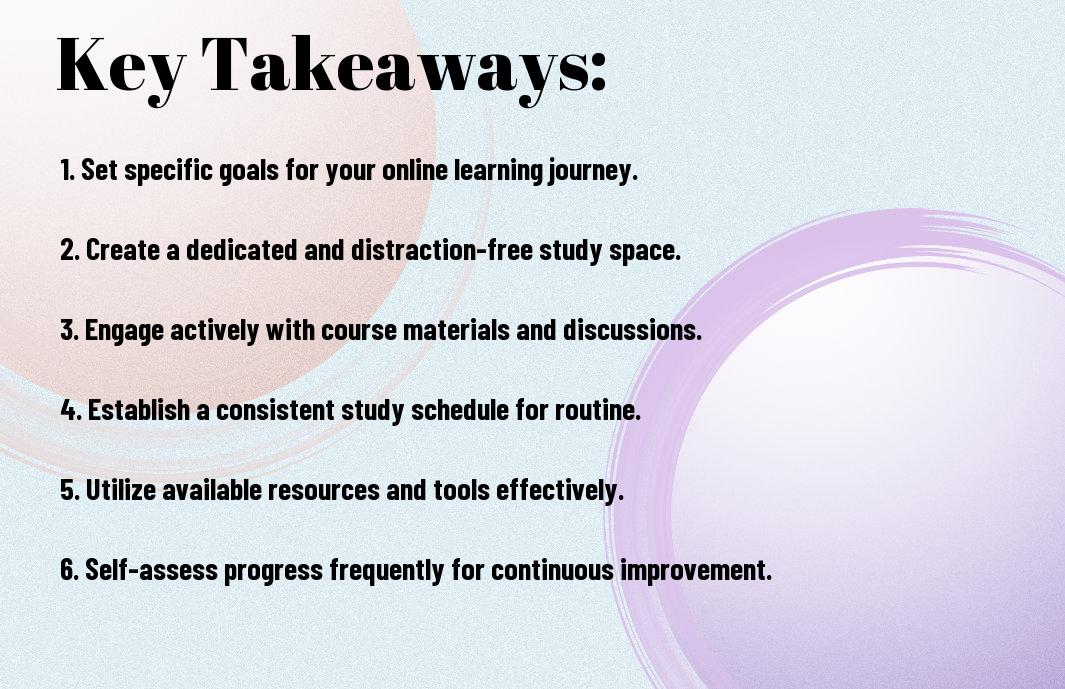
  • Establish a dedicated learning space that is quiet, comfortable, and free from distractions to help you stay focused and motivated throughout your online courses.
  • Develop a regular study schedule and stick to it, setting aside dedicated time for learning and avoiding procrastination to ensure steady progress.
  • Utilize technology effectively by familiarizing yourself with the online learning platform, using tools and resources provided, and troubleshooting technical issues promptly to minimize disruptions.
  • Engage actively with course materials by participating in discussions, asking questions, and seeking feedback from instructors to deepen your understanding and stay engaged.
  • Maintain open communication with instructors and peers through regular updates, notifications, and discussions to foster a sense of community and support throughout your online learning journey.

Setting Up for Success

To achieve online learning success, you need to set yourself up for success from the start. This involves creating a conducive learning environment and developing habits that promote productivity and focus.

Creating a dedicated learning space

About the space where you learn, consider dedicating a specific area for online learning, free from distractions and interruptions, to help you stay focused and engaged.

Establishing a routine and schedule

After settling into your learning space, establish a routine and schedule that works for you, including dedicated blocks of time for learning, breaks, and self-care activities to maintain your physical and mental well-being.

Establishing a routine and schedule helps you stay organized and motivated, allowing you to make the most of your online learning experience. You can prioritize your tasks, manage your time effectively, and make steady progress towards your learning goals, which will ultimately lead to your success.

Effective Online Learning Strategies

Some of the most successful online learners develop a routine and stick to it, setting aside dedicated time for studying and interacting with course materials. You can achieve online learning success by creating a schedule and following it consistently.

Active engagement with course materials

Often, the key to understanding complex concepts is to engage actively with the course materials, taking notes and summarizing key points in your own words. You will find that this helps to reinforce your learning and improve retention of the material.

Utilizing technology to enhance learning

Before you start your online course, familiarize yourself with the technology and tools provided, such as discussion forums, video conferencing, and online assignments. You can use these tools to interact with your instructors and peers, and to submit your assignments and track your progress.

This technology can be a powerful tool to enhance your learning experience, providing you with the flexibility to learn at your own pace and access course materials anywhere, anytime. You can use it to access additional resources, such as video lectures, podcasts, and online simulations, to supplement your learning and stay engaged with the course materials.

Time Management and Organization

Unlike traditional classroom settings, online learning requires you to be highly self-motivated and disciplined in managing your time. You need to create a schedule and stick to it, allocating specific times for studying, assignments, and breaks.

Prioritizing tasks and assignments

Besides having a schedule, you need to prioritize your tasks and assignments, focusing on the most important ones first. You should break down large tasks into smaller, manageable chunks, and set deadlines for each one, allowing you to stay on track and make steady progress.

Using tools to stay organized and on track

Between multiple assignments and deadlines, it can be easy to get overwhelmed. You can use digital calendars, to-do lists, and project management tools to stay organized and focused, helping you to prioritize tasks and manage your time more effectively.

In addition, using tools like time-tracking software and apps can help you identify how you spend your time, highlighting areas where you can improve your productivity and make adjustments to your schedule as needed, allowing you to make the most of your online learning experience.

Staying Motivated and Focused

Not surprisingly, online learning requires discipline and dedication. You can learn more about effective strategies by visiting Pedagogical Best Practices: Residential, Blended, and Online Learning to enhance your online learning experience.

Setting goals and rewarding progress

Around the time you start your online course, you will need to set achievable goals and establish a system to track your progress, which will help you stay motivated and focused on your objectives.

Minimizing distractions and staying engaged

Beside your computer, you should have a dedicated and quiet space to study, free from distractions, allowing you to stay focused on your coursework and assignments.

Plus, to minimize distractions, you will need to establish a routine and schedule, turning off notifications and finding ways to avoid multitasking, which can decrease your productivity and hinder your ability to stay engaged with the course material, ultimately affecting your overall learning experience and outcomes, as you work towards achieving your academic goals, and you will be able to engage more effectively with your online coursework.

Building a Support Network

Once again, having a strong support network is imperative for your online learning success. You will need to establish connections with others to stay motivated and engaged throughout your course.

Connecting with instructors and peers

Any opportunity to interact with your instructors and peers will help you build a stronger understanding of the course material and stay on track with your assignments.

Participating in online communities and forums

Along with connecting with instructors and peers, you can also participate in online communities and forums to expand your network and gain valuable insights from others.

Hence, as you participate in online communities and forums, you will have access to a wealth of knowledge and experience that can help you navigate challenges and achieve your learning goals, and you can use this collective knowledge to develop your skills and stay up-to-date with industry trends, which will ultimately enhance your overall learning experience.

Overcoming Challenges and Obstacles

For online learning success, you will encounter various challenges. You can find helpful advice at 10 Tips for Success in Online Classes | College of Education to overcome them.

Identifying and addressing technical issues

Issues such as connectivity problems or software bugs can hinder your progress. You should identify them quickly and contact your instructor or technical support for assistance.

Managing stress and maintaining a healthy work-life balance

Along with studying, you need to take care of your physical and mental health. You should prioritize self-care and set boundaries to maintain a healthy work-life balance.

Managing your time effectively is key to reducing stress and maintaining a healthy work-life balance. You can achieve this by creating a schedule that allows you to complete your coursework and still have time for relaxation and leisure activities, enabling you to stay focused and motivated throughout your online learning journey.

Summing up

The key to achieving online learning success lies in your ability to create a dedicated learning space and establish a routine. You will need to set clear goals and develop self-discipline to stay on track. By following these best practices, you can maximize your online learning experience and achieve your academic objectives, making the most of your time and efforts to enhance your knowledge and skills.

FAQ

Q: What are the most effective ways to stay organized and manage my time while learning online?

A: To achieve online learning success, it is necessary to establish a dedicated study space, free from distractions and interruptions. Create a schedule and stick to it, setting aside dedicated blocks of time for learning and breaks. Utilize digital calendars, reminders, and task lists to stay on track and ensure you meet deadlines. Additionally, prioritize self-care activities, such as exercise and meditation, to maintain a healthy work-life balance and reduce stress. By doing so, you will be able to stay focused, motivated, and make steady progress towards your learning goals.

Q: How can I engage effectively with online course materials and instructors to get the most out of my learning experience?

A: Active engagement with online course materials and instructors is vital for successful online learning. Start by thoroughly reading and following instructions, and participate in online discussions, forums, and live sessions. Ask questions, share your thoughts and experiences, and provide feedback to others to foster a sense of community and collaboration. Regularly check announcements, emails, and course updates to stay informed about upcoming events, assignments, and deadlines. Furthermore, take advantage of office hours, tutoring services, and other support resources to address any challenges or concerns you may have, and to receive personalized guidance and feedback.

Q: What strategies can I use to overcome common challenges and stay motivated during online learning?

A: To overcome common challenges and stay motivated during online learning, it is helpful to break down larger goals into smaller, manageable tasks, and celebrate your achievements along the way. Identify your strengths, weaknesses, and learning style to develop a personalized approach that works best for you. Seek support from family, friends, or a learning community to share experiences, exchange ideas, and stay accountable. Moreover, be patient and kind to yourself, acknowledging that setbacks and difficulties are a normal part of the learning process. By maintaining a growth mindset, being adaptable, and focusing on progress rather than perfection, you can build resilience, stay motivated, and achieve your online learning goals.

The Impact of Online Learning on Traditional Universities

As you consider the future of higher education, you may wonder how online learning is affecting traditional universities. You are likely aware that online courses and degree programs are becoming increasingly popular, but you may not know the full extent of their impact. Your understanding of this shift is important, as it will help you navigate the changing educational landscape and make informed decisions about your own educational path. You will explore the effects of online learning on traditional universities in this post.

Key Takeaways:

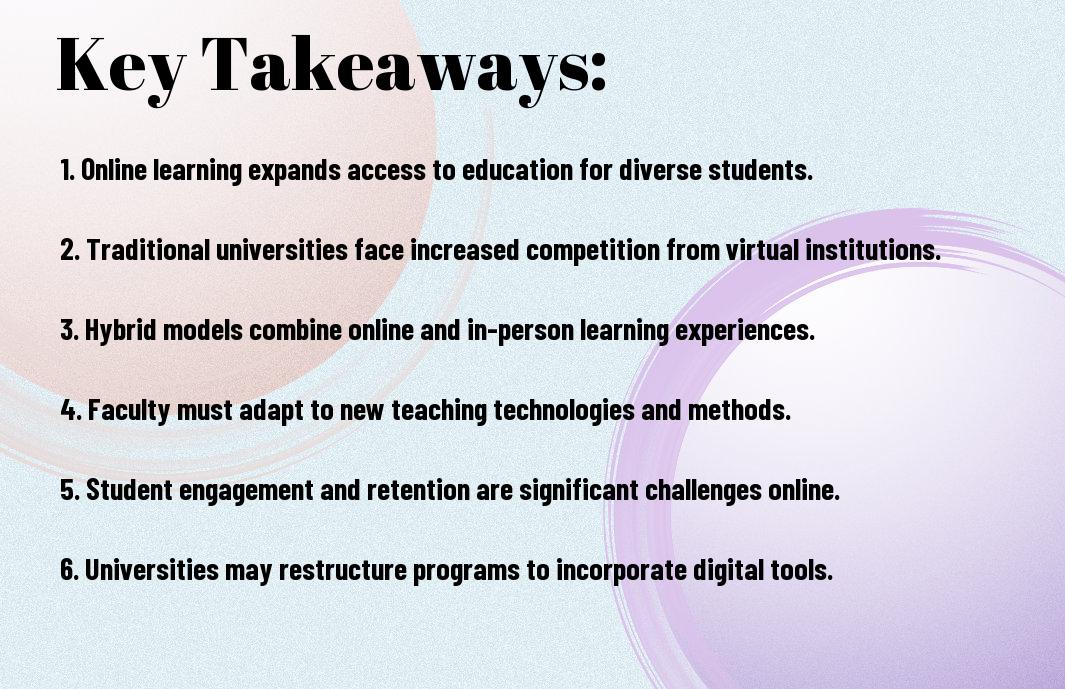
  • The rise of online learning has disrupted the traditional university model, offering students more flexibility and accessibility to education.
  • Traditional universities are being forced to adapt to the changing landscape, with many institutions now offering online courses and degree programs to stay competitive.
  • The cost-effectiveness of online learning is also a major factor, as students can often save money on tuition fees and other living expenses associated with attending a traditional university.
  • The quality of education is no longer seen as being exclusive to traditional universities, with many online institutions offering high-quality educational experiences that rival their traditional counterparts.
  • The future of education is likely to be a blended model, combining the best of both online and traditional learning to provide students with a more personalized and effective learning experience.

Traditional Universities in the Digital Age

While traditional universities have long been the cornerstone of higher education, you are now seeing a significant shift in the way students access knowledge. Your expectations and preferences are evolving, and universities must adapt to remain relevant.

The Rise of Online Learning Platforms

With the proliferation of online learning platforms, you have more options than ever before to access high-quality educational content. Your ability to learn from anywhere, at any time, is revolutionizing the way you approach education.

Shifting Student Preferences and Expectations

On the one hand, you are looking for more flexibility and autonomy in your learning experience. Your needs and goals are driving the demand for innovative and personalized education pathways.

Further, as you navigate the changing landscape of higher education, you are likely to encounter a range of new opportunities and challenges. You will need to consider how to balance the benefits of online learning with the value of traditional university experiences, and how to make informed decisions about your educational investments. Your choices will shape the future of higher education, and it is crucial to approach these decisions with a clear understanding of your options and their implications.

Impact on Academic Programs

The rise of online learning is transforming the way you approach academic programs, and traditional universities are feeling the effects. You may notice changes in the way courses are structured and delivered, and the role of faculty members is evolving to accommodate these shifts.

Changes in Curriculum Design and Delivery

Approximately, you will find that online learning platforms are forcing universities to rethink their curriculum design and delivery methods, and you can expect to see more flexible and personalized learning pathways emerging as a result, allowing you to have more control over your learning experience.

Faculty Roles and Responsibilities in Online Settings

Alongside this, you will notice that an adjustment in faculty roles and responsibilities is underway, and you can expect to see more emphasis on creating engaging online content and facilitating virtual discussions, which will help you to stay connected with your instructors and peers.

But as you research deeper into online learning, you will realize that faculty members are not just lecturers, but also mentors and coaches, guiding you through the online learning process, providing feedback and support, and helping you to achieve your academic goals, and you will appreciate the value they bring to your online learning experience.

Technological Advancements and Infrastructure

Not surprisingly, advancements in technology have enabled online learning to become a viable alternative to traditional universities. You can explore the impact of online education on higher education through resources such as (PDF) Exploring the Impact of Online Education on Higher Education, which provides valuable insights into this topic.

Learning Management Systems and Tools

Alongside the growth of online learning, you’ll find that an array of learning management systems and tools have been developed to support your educational journey, making it easier for you to access course materials and interact with instructors and peers.

Cybersecurity and Data Privacy Concerns

For your online learning experience to be secure, it’s important to consider the cybersecurity and data privacy concerns that come with it, as you’ll be sharing personal and sensitive information online, and you should be aware of the measures in place to protect your data.

Even as you engage with online learning platforms, you should be mindful of the potential risks and take steps to safeguard your personal information, such as using strong passwords and being cautious when clicking on links or downloading attachments, to ensure a safe and secure learning environment.

Student Engagement and Outcomes

Now, as you explore the impact of online learning on traditional universities, you’ll find that student engagement and outcomes are significantly affected. You’ll notice changes in how students interact with course materials and their overall performance.

Online Learning Environment and Student Motivation

Across various studies, you’ll see that online learning environments can greatly influence student motivation. You can observe how interactive tools and virtual discussions foster a sense of community, promoting your engagement and participation in the learning process.

Assessing Student Performance and Success

An vital aspect of online learning is evaluating student performance and success. You will be able to track your progress through digital assessments and feedback, allowing you to adjust your learning strategy and stay on track.

Online platforms provide you with a range of tools to assess your performance, from quizzes and exams to project-based evaluations. As you navigate these assessments, you’ll gain a deeper understanding of your strengths and weaknesses, enabling you to make informed decisions about your academic path and career goals. You’ll be able to identify areas where you need improvement and develop strategies to address them, ultimately enhancing your overall learning experience.

Financial Implications and Sustainability

Despite the rise of online learning, you can still explore its financial implications on traditional universities by visiting Impact of Online Schools on Traditional Education to learn more. As you consider the financial aspects, you’ll find that online learning affects your university’s budget.

Cost Savings and Resource Allocation

On one hand, you will notice that online learning can help your university save on infrastructure and resource costs, allowing for better allocation of your budget.

Revenue Models and Funding Strategies

Rather, you should focus on developing new revenue models and funding strategies to sustain your university in the face of online learning.

It is vital to understand that revenue models and funding strategies will play a significant role in your university’s sustainability, and you must explore innovative ways to generate revenue, such as offering online courses and degrees, to stay competitive in the education market.

Future Directions and Challenges

Once again, you will be faced with the challenge of adapting to the changing landscape of online learning, and you must consider how traditional universities will fit into this new paradigm.

Integration of Emerging Technologies

Beneath the surface of online learning lies the potential for emerging technologies to enhance your educational experience, and you can expect to see innovations like AI and virtual reality integrated into online courses.

Ensuring Accessibility and Equity in Online Education

Effectively, education is key to ensuring that online learning is accessible to all, and you should consider the ways in which your institution can promote equity and inclusion in online education.

Equity is a fundamental principle in online education, and you will need to consider how to address the disparities in access to technology and internet connectivity that may affect your students’ ability to participate in online learning, as you strive to create a more inclusive and equitable online learning environment that allows all students to succeed, regardless of their background or circumstances.

Summing up

To wrap up, you now have a better understanding of how online learning is changing the landscape of traditional universities. As you consider the future of education, you can explore the Impact of Online Education on Traditional Campus-based Universities to gain more insights. Your perspective on the role of online learning in shaping the future of education will help you make informed decisions about your own educational path.

FAQ

Q: What is the impact of online learning on the traditional university business model?

A: The rise of online learning has significantly disrupted the traditional university business model. With the increasing availability of online courses and degree programs, students are no longer limited to attending physical universities, leading to a potential decline in enrollment numbers and tuition revenue for traditional institutions. However, many universities are adapting to this change by offering their own online programs, forming partnerships with online education providers, and investing in digital infrastructure to enhance the learning experience and stay competitive in the market.

Q: How does online learning affect the quality of education provided by traditional universities?

A: Online learning has the potential to both positively and negatively impact the quality of education provided by traditional universities. On the positive side, online learning can enhance the educational experience by providing students with greater flexibility, access to a wider range of courses and resources, and the ability to learn at their own pace. However, there are also concerns that online learning may lack the interpersonal interaction and hands-on experiences that are often valuable components of traditional university education. To mitigate this, many universities are developing blended learning models that combine the benefits of online and traditional learning approaches.

Q: What strategies can traditional universities employ to stay competitive in a landscape dominated by online learning?

A: To stay competitive, traditional universities can focus on developing high-quality online programs that leverage their unique strengths and brand reputation. This can include investing in state-of-the-art digital learning platforms, forming strategic partnerships with other institutions or industry partners, and emphasizing the value of the traditional university experience, such as face-to-face interaction with faculty and peers, access to campus resources and facilities, and the potential for deeper, more immersive learning experiences. Additionally, universities can highlight their ability to provide students with a well-rounded education that prepares them for success in both their careers and personal lives, and emphasize the importance of the social and networking aspects of university life.

How to Make Friends in Online Classes

You’re initiateing on an online learning journey, and you want to connect with like-minded individuals who share your passions. As you navigate your virtual classroom, you may wonder how to build meaningful relationships with your peers. You can start by checking out resources on making friends in online classes, which offer valuable tips and advice to help you get started. Your online education experience can be more enjoyable and engaging when you have friends by your side.

Key Takeaways:

To make friends in online classes, consider the following points:

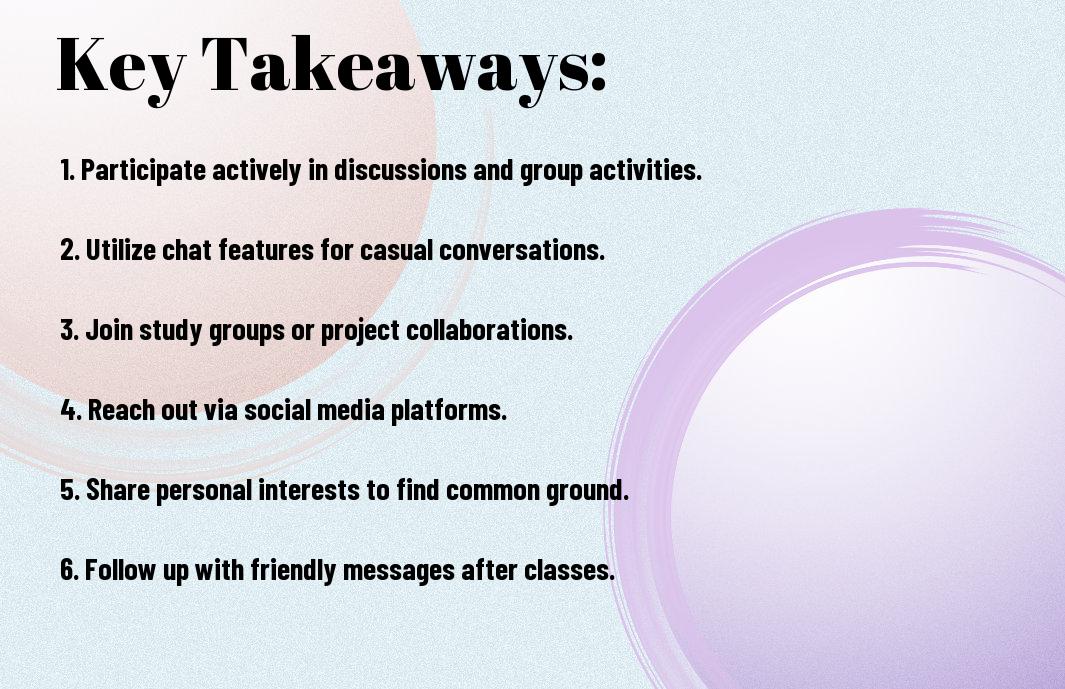
  • Be Proactive in introducing yourself and engaging with others in online discussions to establish connections with your classmates.
  • Participate in Group Chats and Forums to stay updated on course material and build relationships with peers who share similar interests.
  • Use Video Conferencing tools to attend virtual meetings and interact with instructors and classmates in real-time, facilitating more personal interactions.
  • Join Online Communities related to your course or interests to expand your network and meet like-minded individuals beyond your immediate classmates.
  • Be Consistent in your online presence and engagement to build trust and foster meaningful friendships over time.

Preparing for Online Classes

For a successful online learning experience, you need to be prepared. This includes having a reliable computer, internet connection, and a dedicated space for studying. You’ll also want to familiarize yourself with the online platform and tools used in your classes.

Creating a Conducive Learning Environment

Anyway, a quiet and comfortable space is important for focused learning. You can achieve this by designating a specific area for studying, free from distractions and interruptions, where you can easily access all the necessary materials and resources.

Setting Goals for Online Interactions

Optimally, you’ll want to set clear goals for your online interactions, including how you plan to engage with your peers and instructors. You can start by thinking about what you hope to achieve in your online classes and how you can build meaningful relationships with others.

And as you set these goals, you’ll begin to feel more confident and motivated to participate in online discussions, share your thoughts and ideas, and collaborate with others on projects. You’ll start to see your online classes as an opportunity to connect with like-minded individuals and build a community that supports your learning and growth. By doing so, you’ll be well on your way to making lasting friendships and achieving your academic goals.

Breaking the Ice

It is the first step in making friends in online classes, and it can be as simple as saying hello to your classmates or introducing yourself to the group.

Introducing Yourself to the Class

Above all, be authentic and genuine when introducing yourself, share a little bit about your background, interests, and what you hope to achieve in the class, and you’ll be surprised at how much you have in common with your fellow students.

Participating in Online Discussions

Toward the goal of building connections, participating in online discussions is a great way to engage with your classmates, share your thoughts and ideas, and get to know them better, you can start by responding to a post or comment from someone else.

Plus, as you participate in online discussions, you’ll start to feel more comfortable sharing your thoughts and opinions, and you’ll begin to build relationships with your classmates, which can lead to meaningful friendships and a more enjoyable learning experience, and you’ll find that your online class becomes a supportive and interactive community where you can learn and grow together.

Building Relationships

Now that you’re taking online classes, you’ll have the opportunity to connect with people from diverse backgrounds, creating a unique chance to form meaningful bonds and friendships that can last a lifetime.

Finding Common Interests with Classmates

Beneath the surface of your online classroom, you’ll discover that you and your classmates have more in common than you think, whether it’s a passion for a particular subject or a hobby that brings you joy, allowing you to build a strong foundation for your relationships.

Engaging in Meaningful Conversations

Relating to others is key to forming lasting connections, and engaging in meaningful conversations with your classmates is a great way to start, by sharing your thoughts, ideas, and experiences, you’ll be able to build trust and rapport with your peers.

And as you continue to engage in meaningful conversations, you’ll find that your relationships with your classmates will deepen, allowing you to support and encourage one another, both in and out of the online classroom, and you’ll be amazed at how these connections can positively impact your life and help you grow as a person, giving you a sense of community and belonging.

Effective Communication

Your ability to communicate effectively is vital in making friends in online classes, as it helps you connect with your classmates and build strong relationships.

Active Listening in Online Classes

Although it may seem challenging, attending to what others say in online discussions is achievable by minimizing distractions and focusing on the conversation.

Clear and Respectful Expression

With openness and honesty, you can express your thoughts and feelings in a way that is considerate of others, helping to avoid misunderstandings and build trust.

In fact, when you take the time to think before you speak or type, you can choose your words more carefully, ensuring that your message is conveyed in a respectful and considerate manner, which is vital for establishing meaningful connections with your online classmates.

Overcoming Challenges

Once again, you’ll find that making friends in online classes requires effort and perseverance. You’ll encounter obstacles, but with the right mindset, you can overcome them and build meaningful relationships with your classmates.

Managing Technical Issues

Besides the usual challenges, you’ll also face technical difficulties that can hinder your progress. You can troubleshoot common issues like poor internet connectivity or faulty audio by restarting your device or seeking help from your instructor.

Dealing with Online Conflict

On the occasion that you encounter conflict with a classmate, you can address the issue by communicating openly and honestly. You can resolve misunderstandings and find common ground, which will help you to build a stronger and more supportive online community.

The key to resolving online conflicts is to approach the situation with empathy and understanding. You can take a step back, assess the situation, and respond thoughtfully, rather than reacting impulsively. By doing so, you’ll create a safe and respectful environment where you and your classmates can thrive and support one another.

Maintaining Connections

Many online classes offer opportunities to connect with classmates, and it’s up to you to nurture these relationships. By doing so, you can build a network of supportive peers who share similar interests and goals.

Staying Connected with Classmates

Around the same time you’re taking your online class, you can engage with your classmates through discussion forums, social media groups, or video conferencing. You can ask questions, share your thoughts, and learn from one another, which helps to foster a sense of community and connection.

Continuing Relationships After the Class

Connected to your classmates through online platforms, you can continue to interact and support one another even after the class has ended. You can share updates, ask for advice, or collaborate on future projects, which helps to strengthen your relationships and expand your professional network.

To take your relationships to the next level, you can schedule regular check-ins with your former classmates, whether it’s a monthly video call or a quarterly meetup. You can also invite them to join you in other online communities or forums related to your field of interest, which can help you stay connected and motivated as you continue to learn and grow.

Summing up

Following this guide, you’ll be well on your way to making friends in online classes. As you start connecting with others, you’ll find that your online learning experience becomes more enjoyable and rewarding. If you’re struggling to get started, consider seeking advice from others who have been in your shoes, such as those who have asked I do online school and I have no friends, What should I do? You’ll find that making friends online is within your reach, and your efforts will be worth it.

FAQ

Q: How can I introduce myself to my online classmates and start building relationships?

A: To introduce yourself to your online classmates, start by creating a strong profile on the online learning platform, including a profile picture and a brief bio that shares your interests and goals. Participate in introductory discussions or icebreaker activities, and engage with your classmates’ posts and comments. You can also join online groups or clubs related to your course to meet like-minded individuals. Be genuine, friendly, and respectful in your interactions, and don’t be afraid to ask questions or share your thoughts and ideas.

Q: What are some effective ways to engage with my online classmates and build meaningful connections?

A: To engage with your online classmates, participate in online discussions by posting thoughtful comments and questions, and respond to others’ posts in a timely and respectful manner. Use video conferencing tools to attend virtual meetings or study groups, and take advantage of breakout rooms to work on group projects and collaborate with your peers. You can also use social media or messaging apps to connect with your classmates outside of the online classroom, but be sure to follow any guidelines or rules set by your instructor. Additionally, consider hosting or attending virtual social events, such as online game nights or movie nights, to help build camaraderie and a sense of community.

Q: How can I overcome feelings of isolation or disconnection in online classes and stay motivated to make friends?

A: To overcome feelings of isolation or disconnection in online classes, establish a dedicated study space that is quiet, comfortable, and free from distractions, and create a routine that includes regular check-ins with your online classmates. Stay organized and on top of your coursework by using a planner or calendar, and set realistic goals and deadlines for yourself. Celebrate your achievements and accomplishments, no matter how small they may seem, and don’t be afraid to ask for help or support when you need it. You can also join online communities or forums related to your course or interests, and participate in online events or webinars to expand your network and meet new people. By staying engaged, motivated, and connected, you can build meaningful relationships with your online classmates and succeed in your online courses.

Skip to content